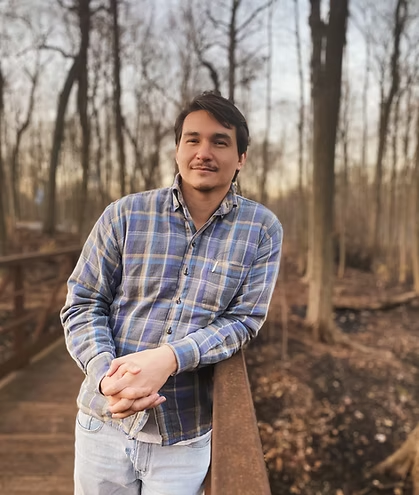
Category: Meditation

  • Edwin Kelley on 50 Years of Dharma Practice

    Edwin Kelley on 50 Years of Dharma Practice

    Introduction

    Edwin Kelley began practicing Buddhism in 1975 after attending a 10-day Vipassana retreat near Perth, Australia, following a serious motorcycle accident that had turned him toward questions of meaning, meditation, and spiritual practice.

    In 1992, he travelled to Burma with his wife, Myoshin, for six months of intensive retreat under Chanmyay Sayadaw, where he ordained temporarily as a Theravada monk and immersed himself in Mahasi-style insight practice, Abhidhamma, and metta meditation.

    He first encountered Vajrayana Buddhism in Dharamsala, India, in 1993, and became a student of Yongey Mingyur Rinpoche in 1998. Edwin later served as Executive Director of the Insight Meditation Society and helped establish the global Tergar Meditation Community in 2009, where he held roles including Executive Director, Co-Executive Director, and CFO.

    Retired from administration since 2022, Edwin continues to teach and support students of Mingyur Rinpoche as a Tergar instructor. His teaching draws on more than 50 years of practice across Theravada, Vajrayana, and Western Dharma communities, with an emphasis on clarity, kindness, and recognizing one’s true nature.

    Edwin Kelley can be found through Tergar International, Tergar Australia, and his author profile at Lion’s Roar.
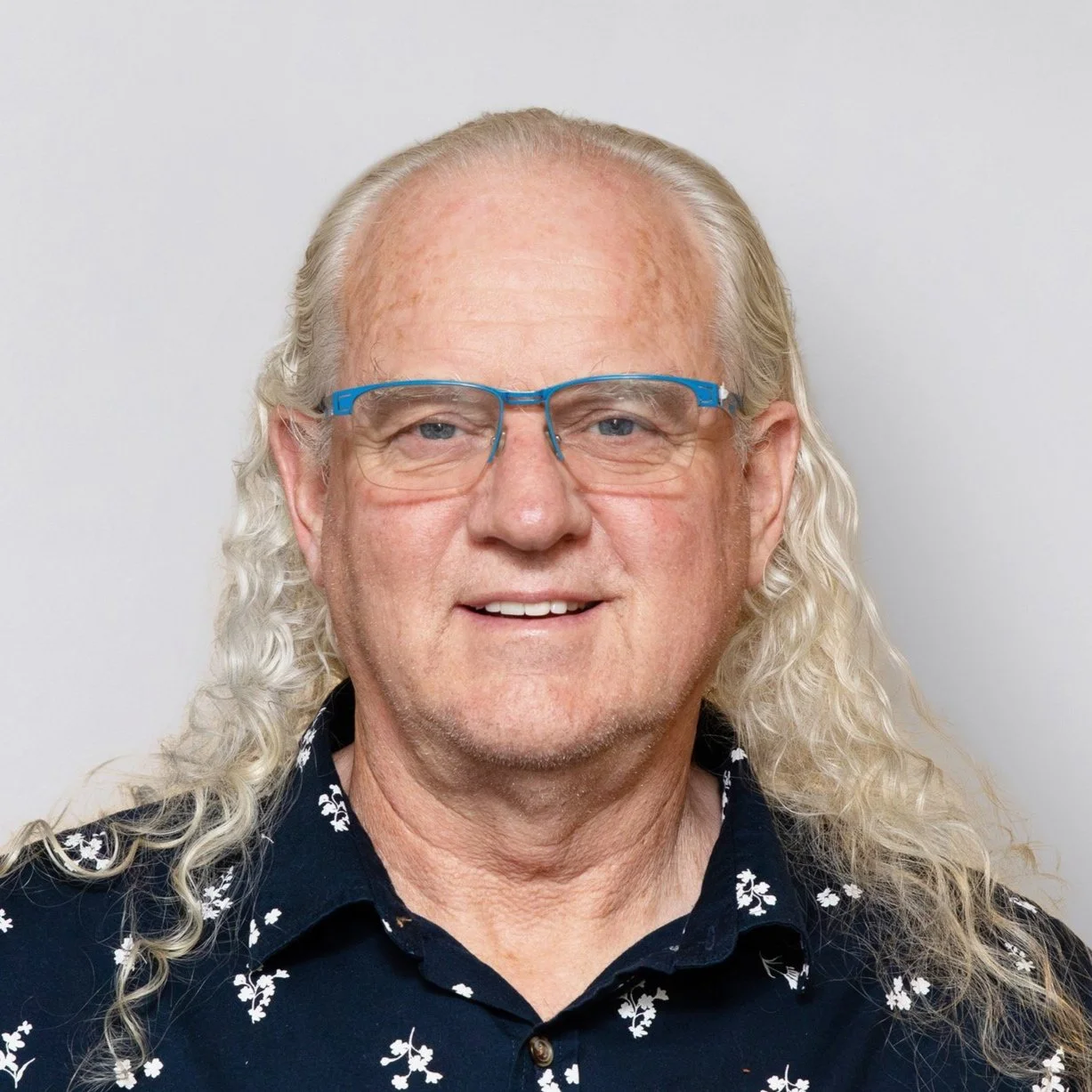

    Training and Early Journey

    PAA: Your journey began with a meditation retreat in 1975 near Perth. What first drew you to that experience, and how did it shape your path in meditation and the Dharma?

    Edwin Kelley: Although I attended my first 10-day meditation retreat outside Perth in 1975, my journey really began about three years before that, when I had a very nasty motorcycle accident during the mid-year break of my first year at university.

    I had gone back down to where I grew up in the Bega Valley for the break and had gotten a job milking cows on a local dairy farm. On the Saturday night, after finishing two weeks of milking, I was riding a motorcycle back to my friend’s place. Essentially, I ran out of road and left the road rather than hitting an oncoming motor vehicle. I was thrown through the air headfirst, hit an embankment, and was heavily concussed. I was unconscious for well over an hour, fractured my sixth thoracic vertebra, spent three weeks in hospital, and lost university time.

    It was a major shock to my system. I lost my drive to study and to be somebody. The next year I dropped out of university and, with a friend, hitchhiked to Perth. During those next two or three years, I spent a lot of time looking for the meaning of life: reading Western and Eastern philosophy, meditation books, and the classic books circulating in the early 1970s — Autobiography of a Yogi, Ouspensky, Alan Watts, Hermann Hesse, Ram Dass, and many others.

    I wound up in Perth in 1974 and was working two jobs because I was saving money to go to Europe. A woman I was working with at a restaurant in Perth was organizing a 10-day Vipassana retreat, and she talked me into signing up. I do not think I had any real idea what I was getting into, but it seemed like it might provide answers to what I was looking for.

    The retreat was about 100 km outside Perth, in a rural facility, completely in silence, with a teacher named Robert Hover, an American who had been a student of U Ba Khin in Burma. It focused primarily on anapanasati and body scanning, similar to the method taught by Goenka, though subtly different.

    That program irrevocably changed my life.

    When I had the motorcycle accident, I had lost the memory of what had happened. I knew I was going to leave the road because a car was coming, but I did not know how I left the road or how I hit the embankment. I had been severely concussed for well over a week, perhaps ten days.

    During that retreat, two or three years later, I had a dream in which I reclaimed the somatic experience of being thrown off the motorcycle and hitting the embankment. I woke up around four in the morning, bolted upright in bed, and thought, “Wow.” Then, sitting on the cushion over the next hour or two, I realized I had reclaimed the memories I had lost from the accident.

    That demonstrated to me the power of the practice.

    Early Communities, Disillusionment, and Karma

    PAA: Looking back on your journey, is there a particular moment or insight that felt truly transformative for you? What was the context of that moment, and how did it change your outlook or practice?

    Edwin Kelley: There is a part of my life that I do not normally put in any public bio. After that retreat in Perth, I spent another couple of years traveling around Australia. I finally wound back up in Perth at the end of 1976.

    Some of my friends from my earlier time there were getting into Bhagwan Shree Rajneesh and his teachings. I ended up going to a centre just outside Perth. The Rajneesh community had a very strong presence in Perth, but this was right at the beginning. There were hardly anybody involved, maybe half a dozen people.

    I went to the facility they had in the outer suburbs of Perth, ended up taking sannyas, and stayed there for the next 18 months or so before going to Pune, India, at the end of 1978. I spent the next two or three years, off and on, in Pune, until Bhagwan moved to Oregon. I spent about ten weeks getting from Pune to Oregon in 1981 and was in Oregon very early in the commune. I was there pretty much from the beginning to the end. I left in November 1985, after everybody else had left.

    This was a very formative part of my spiritual development.

    The strongest thing I recall from that experience was the sense of community. I shared intimate daily relationships with hundreds of people, many of whom, nearly fifty years later, I am still close friends with. Although our spiritual journeys diverged, the friendships remained.

    Why I got into the Rajneesh world is another story. How it fits into the whole Dharma or Buddhist experience is another story. But it was definitely a profound part of my early life and spiritual journey.

    Things also went horribly wrong. At one point I was personally drugged and made incompetent because of certain actions I had taken. I did not work in the inner circle, but I worked in the support team for someone who was in the inner circle, in accounting. That is where I learned the fundamentals of my accounting skills, which served me well later.

    In terms of my subsequent journey, it taught me what can go wrong. Although we can aim for ultimate reality, liberation, and freedom from suffering, if we do not attend to the details of the law of karma, things can go horribly wrong. We cannot use ultimate reality to circumvent the realities of relative reality.

    There is no question that this was the biggest lesson I took from there.

    It is also worth noting that this is where Myoshin and I met, in Oregon in 1983. Here we are more than forty years later. That has been a huge part of our lives together. So good came from my time there as well.

    Practice, Partnership, and the Return to Dharma

    PAA: In 2009 you and your wife Myoshin moved to help establish the global Tergar community. How has practicing and teaching alongside a lifelong partner influenced your perspective on the Dharma and on teaching?

    Edwin Kelley: After the Rajneesh community in Oregon fell apart in 1985, Myoshin and I spent about 12 months in the United States and Canada, got married, and moved to Australia at the end of 1986. We lived together in Sydney for a couple of years, then went up to Byron Bay. We were seven years together in Australia, except for about a year we spent in Burma and Asia, primarily in Burma.

    After we moved up to Byron Bay in 1989, Myoshin did a weekend retreat with an American teacher named Alan Clements, who had been a student of Mahasi Sayadaw and had been a monk in Burma. It had a major impact on her.

    In the meantime, I had gone back to university and enrolled in an accounting degree because that was the skill I had that could most easily support me. I thought that if I finished my degree, I would be more financially secure rather than just doing bookkeeping.

    Myoshin went down the rabbit hole. She started practicing. She went and did a month with U Pandita in Bowral, NSW, and later went to IMS in Barre, Massachusetts, and did two months with U Pandita. I was left at home working for a public accounting firm and doing my studies.

    It was a challenging time for me. Every now and again she would say, “Do you want to come and practice with me?” I was still quite reactive to anything spiritual, having gone through the disillusionment that occurred when the Rajneesh community collapsed. I did not want anything to do with it.

    Finally, a year or so later, she convinced me to do a 10-day retreat, which was a struggle for me. Then, a year later, Chanmyay Sayadaw, another Burmese teacher who had also been a student of Mahasi Sayadaw, came to Australia. I did two weeks with him, and that was a major turning point.

    I really got something from that retreat.

    When I came home and went back into my accounting office, I saw all the piles of people’s shoeboxes full of accounting receipts and had this epiphany: “Oh my dear, this will never really be satisfying.”

    Chanmyay Sayadaw had invited Myoshin and me to come to Burma. Within six months, we were both in Burma, where we spent six months, and I ordained as a monk.

    Burma, Ordination, and Theravada Practice

    PAA: In 1992 you spent six months on intensive retreat in Burma with master Chanmyay Sayadaw. Could you describe what that retreat was like and what insights or challenges emerged during that time?

    Edwin Kelley: We arrived in Burma in August 1992. Initially we went just for three months, but there was something incredibly enticing about the whole experience.

    Chanmyay Sayadaw was offering temporary ordination to anybody who wanted to ordain. For me, it was a little like “when in Rome, do as the Romans do.” Maybe it was also a kind of value-added thing: if I were really going to immerse myself in these teachings, then I would ordain. So that is what I did.

    It was difficult. The conditions in Burma were challenging: the monsoons, the bugs, and the very intense method of moment-to-moment concentration on psychophysical experience. I found my practice very difficult at times. I crashed and burned.

    Chanmyay Sayadaw encouraged me to get back on the horse. He also strongly supported me in doing loving-kindness meditation — metta meditation — for myself and for all beings. I think that was the saving grace for me.

    I did have remarkable meditative experiences. Sayadaw taught Abhidhamma every night, drip-feeding it to us as an approach to understanding psychophysical process. I had some remarkable experiences associated with the five aggregates, the Four Noble Truths, and the Four Foundations of Mindfulness. Seeing the way the mind creates reality was incredibly profound for me.

    After three months, although we had only planned to stay for three months, I could not leave. I felt that if I went back to Australia, I would end up being a public accountant again. I needed to stay beyond the point where I would pick up the mantle of accountancy again. I did not want to go back and put on the accounting robes, so to speak.

    So we stayed another three months in Burma, largely because I felt I needed to stay beyond the point of no return. I have no regrets about that.

    Burma was definitely a major experience in my life.

    Ordained bhikkhus coming together, chanting the Pali, doing these rituals — there was something incredibly deep and meaningful about it. A sense of belonging, I suppose, as ancient as the teachings themselves, going back to the time of the Buddha.

    Edwin Kelley

    PAA: During that Burmese retreat you also ordained temporarily as a Theravada monk. What was meaningful about that monastic experience, and how did living as a monk influence your understanding of the Buddhist path?

    Edwin Kelley: One thing to add about my time in Burma — and this was equally true when I returned in 2004 and ordained again for six weeks — was the sense of being part of an ancient brotherhood, a lineage going all the way back to the Buddha.

    The rituals we did as Sangha, reciting the Patimokkha, daily confessing our indiscretions, and then at the end of the rains retreat, the Kathina ceremony and the offering of robes to a monk — there was something about all of that which gave me a deep sense that this had been happening every year for over 2,500 years.

    Ordained bhikkhus coming together, chanting the Pali, doing these rituals — there was something incredibly deep and meaningful about it. A sense of belonging, I suppose, as ancient as the teachings themselves, going back to the time of the Buddha.

    That left a deep impression.

    I have no idea how many lifetimes I may have spent as a monk, but I am sure it has been many, both in the Theravada tradition and in the Tibetan tradition. Fascinating.

    IMS and Dharma as Work

    PAA: After returning from Burma, you joined the Insight Meditation Society and eventually became its Executive Director. How did your time at IMS, a major Western meditation center, influence your own practice and your approach to teaching the Dharma?

    Edwin Kelley: After returning from Burma, although I had been studying for an accounting degree, I had only finished two-thirds of it. I still had a full year to complete.

    I really did not want to go back to being a public accountant where I could only study part-time, so I enrolled full-time at university. For 12 months, I lived separately from Myoshin during the week and we would get together on weekends so I could devote myself to my studies.

    I did really well. I enjoyed it. It was much easier to focus on academic work when I was not working.

    At the same time, Myoshin and I helped form a local community that sponsored meditation teachers to come to the Northern Rivers area of New South Wales to teach retreats. We invited different teachers from the Insight Meditation Society, including Steven Armstrong, Steven Smith, and Michele McDonald-Smith.

    At one of those retreats in March 1994, I learned that the position of Director of Operations at IMS was vacant. I still had a couple of months to finish my degree, so I wrote off and applied for the job. After some back and forth, I was hired. IMS sponsored me, I got my green card, and I came to IMS in July 1994.

    I think I believed I would be able to do more practice. That was partly my motivation. But of course, if you have ever had a leading or executive role in any organization, even a Dharma organization, there is never a good time to take time off, go on vacation, or do retreat.

    I had to devote myself to running the place. Within about 18 months, I became Executive Director. A few years later, I was able to sit for six weeks, half of the three-month retreat there. During that retreat, I made a vow to myself that I would not be Executive Director when I turned 50. I saved up money, opened a CD, called it the “Edwin Liberation Fund,” and put money aside so I could quit work and devote myself to practice.

    One of the biggest lessons from running a major Dharma retreat center like IMS was that I got to know all the primary teachers in the Insight tradition in the United States and Europe personally, on a first-name basis. I helped organize their schedules and bring them to IMS to teach.

    But the deeper lesson was to give myself over to the job from the perspective that this is the path.

    After some time, I realized that although I was not spending time on the cushion every day, I was working with the paramis — the perfections of patience, generosity, loving-kindness, diligence, and so forth.

    My understanding now is that if we make our life and work the path, if we make our spiritual practice one of kindness, generosity, and presence of mind in all our dealings — our personal interactions and our business dealings — that is as powerful as any time spent on the cushion. It can totally and absolutely transform our hearts and minds.

    That was my major lesson from serving as Executive Director of IMS, and later from serving in executive roles with Tergar.

    Vajrayana, Mingyur Rinpoche, and Lineage

    PAA: You first encountered Vajrayana Buddhism in 1993 and became a student of Yongey Mingyur Rinpoche in 1998. What aspects of Mingyur Rinpoche’s teaching resonated with you, and how has his guidance influenced the direction of your practice?

    Edwin Kelley: After I quit as Executive Director of the Insight Meditation Society in 2003, I did a six-month retreat at the Forest Refuge. By this point, I had already met Mingyur Rinpoche.

    My connection to Vajrayana Buddhism began in 1993, after we had been in Burma for six months. I went to India and spent a month in Dharamsala, where the Dalai Lama lives, at Tushita Meditation Centre. That was my first real exposure to Vajrayana Buddhism.

    I was fascinated to see the similarities between the Theravada tradition and the Vajrayana tradition. Tushita was an FPMT centre, and there were a lot of similarities. It was also an absolute delight to get to see the Dalai Lama, shake his hand, and attend teachings.

    In 1998, before I quit as Executive Director, I met Mingyur Rinpoche. After I quit, I traveled around America and did many retreats with him. During that time, I got to know him personally. I was invited to help care for him. I helped sort out his visa; we drove to Montreal and back, he did teachings there, and we got his visa sorted out. That meant we got to know each other personally, which was quite profound.

    The first teachings I did with him in 1998 were when he was there with his brother. His brother gave Dzogchen pointing-out instructions and nature of mind teachings, while Mingyur Rinpoche taught from the Four Noble Truths and early Buddhism.

    I was struck by the similarities between Mingyur Rinpoche and Chanmyay Sayadaw, my Burmese teacher. In many ways, Mingyur Rinpoche provided the perfect bridge. I did not see any separation, distinction, or conflict between Vajrayana and Theravada.

    I felt that he tied a ribbon around all of my spiritual practice — the Rajneesh world, the Theravada world — and tied a big bow around it, as if to say: “Do not throw any of it away. It has all been in service of understanding your own heart and mind and eliminating confusion.”

    That reflects in my teaching now. Unless somebody is engaged in a practice that I feel is actually harmful or unsuited to their personality, I am not a black-and-white person when it comes to practices, lineages, or teachings. Whatever works for you, whatever you want to explore — another lama, another tradition, another religion — you should do it.

    It is your journey. It is your path. You need to discover what works for you. It is more about following your heart than deciding what is right and wrong in some rigid way.

    Theravada and Vajrayana: Relative and Ultimate Reality

    PAA: You trained intensively under Chanmyay Sayadaw in Burma and later under Mingyur Rinpoche. How do the methods and lineages of these very different teachers complement each other in your own approach to meditation?

    Edwin Kelley: Having said what I just said about the similarities between the Theravada and Vajrayana traditions, obviously there are also significant differences.

    For me, and I came to understand this through discussions with Mingyur Rinpoche and teachings from him later, the Mahasi Burmese Abhidhamma approach really focuses on relative reality: the way our psychophysical process happens, how it works, and how the three characteristics — impermanence, not-self, and suffering — are intimately embedded in all psychophysical experience and phenomena.

    When one practices in that way and goes deeply into awareness or mindfulness of that process, at some point wisdom arises and says: “Samsara sucks. I am out of here.”

    In the Visuddhimagga, it says the mind seeks nibbana as an object. That is very much a Theravada way of looking at it. In my mind, it is the causal vehicle. It is relative reality. It is primarily working with that.

    Vajrayana practice, particularly as it comes to us from Mahamudra and Dzogchen, is very much about ultimate reality: rigpa, the union of clarity and emptiness, the mind that is freed from clinging to anything.

    It is like going from the infinitesimal to the macrocosm: resting the mind in spacious, open clarity, the union of clarity and emptiness, where anything and everything that does not inherently exist is known and liberated upon arising.

    That is how I would characterize the two different styles.

    I think both are equally important. There are a lot of people who come to Vajrayana Buddhism wanting to touch the sky — Dzogchen, rigpa, nature of mind — who would be well advised to go back and take a look at their psychophysical process and deal with some of their own suffering before they attempt to realize their true nature.

    All the drama, kilesas, challenges, stress, worry, and conflict come from clinging to a sense of self, identification with who we think we are, and the appropriation of our experience: “I am,” “this is mine.”

    Edwin Kelley

    PAA: You emphasized that Abhidharma knowledge can itself “mitigate confusion and delusion” by informing how we view our experience. How do you help students translate such theoretical understanding into real insight through meditation practice?

    Edwin Kelley: From my own practice standpoint, I should say a little more about the differences between the Theravada and Vajrayana approaches, and why I think both are incredibly valuable.

    When one brings attention, mindfulness, and awareness to the minutiae of one’s psychophysical process, it is mind-boggling what one sees. It is really interesting to challenge the misperceptions we have about the single, solid, separate sense of self — a phrase I coined to capture what I perceive to be the way we cling, the Second Noble Truth, and how we create our suffering.

    All the drama, kilesas, challenges, stress, worry, and conflict come from clinging to a sense of self, identification with who we think we are, and the appropriation of our experience: “I am,” “this is mine.”

    There is something really valuable about the Theravada approach, and about the Abhidhamma approach, whether it is Vasubandhu, Buddhaghosa, or another system. Bearing witness to the process of mind-body experience is incredibly revealing. It compels one to understand the mechanism of the Second Noble Truth, and it compels one to seek the answer of the Third Noble Truth.

    Of course, all of that is also there within Mahamudra: shamatha, the Four Immeasurables, vipashyana. It is all there. It comes at it from a different or slightly different perspective.

    To be introduced to the nature of mind, to get a glimpse of ultimate reality, and to understand how to work with appearances from the perspective of the liberated mind is an incredibly valid tool.

    The view contained within Vajrayana — and within Mahayana too — that we are all endowed with inherent good qualities, that we are perfect, whole, complete, and that nothing is missing, is supreme. This is our true nature. This is Buddha nature.

    Of course, we do not believe it. We struggle to accept it. But the practice is to come to an acceptance and realization of that, to develop the capacity to understand it, take confidence in the recognition of it, pitch a tent there, take up shop, and live from that place of true nature.

    That is remarkably profound and transcends all other practice.

    Personal Practice, Struggle, and Transformation

    PAA: You once mentioned it took about ten years after your initial instructions to gain “any reliable level of confidence” in your meditation practice. Can you reflect on what sustained you during those years and what milestones or insights helped build that confidence?

    Edwin Kelley: It has now been over 50 years since I did my first 10-day Vipassana retreat in Perth in 1975. As is apparent, I have tried many methods, done different practices, had different teachers, and had the great privilege of being part of three major spiritual communities: the Rajneesh community, the Insight Meditation community in North America, and now the Tergar community.

    My practice has varied. I would not like to imply that it has all been a cakewalk.

    I definitely struggled with challenges, particularly beginning when Myoshin began to do deep practice and I was left alone. That was a difficult time for me. Even up until I did the six-month retreat at IMS in 2003, I would say I struggled with being alone.

    There was something incredibly rich and rewarding about life with a spiritual partner and all the intimacies that come from that. In Myoshin’s absence, I definitely felt challenged.

    I consider myself a greed type, a desire type, and I have had a lot of compelling thoughts around sexual desire. Chanmyay Sayadaw helped me work with that in Burma. I have also talked to Mingyur Rinpoche about it. Once, when I asked him about it, he pointed his finger at me with the most intense look I had ever seen from him and said, very briefly, “That has kept you in samsara since beginningless time.”

    That was a profound teaching in and of itself.

    Slowly, slowly, and particularly through the nature of mind teachings, I began to understand. I do not know how many times I have had the great benefit of receiving pointing-out instructions from Mingyur Rinpoche and his brother — twenty or thirty times, perhaps. I could try to count them.

    At some point, probably not until the late 2000s, around 2009 or early 2010, after having received pointing-out instructions many times, I began to really understand what it means to have Buddha nature, and what those qualities are: awareness, loving-kindness, compassion, and wisdom.

    I also began to understand how the paramis are the path, and how developing the capacity to simply rest one’s mind as it is can be profoundly transformative.

    That has now become my practice, pretty much exclusively.

    PAA: What does your current daily meditation practice look like, and how has it evolved from the early days of your practice?

    Edwin Kelley: My current daily practice is very simple.

    When I wake up in the morning, I have a little ritual of chants that I do: taking refuge, bodhicitta, loving-kindness, compassion, the basis of the Four Immeasurables, and guru yoga.

    Then I live my life.

    I was given a beautiful, succinct poem by Mingyur Rinpoche as a practice, and that is my daily practice. It is really about just resting in the present moment.

    Sometimes I will sit, but rarely do I do formal practice anymore. It is mostly trying, as often as possible, to remember to rest in recognition: short times, many times, anywhere, anytime.

    Sometimes it comes naturally. Sometimes it persists for a few minutes or whatever. There are many places where I have learned to do it: sitting, resting in nature, driving the car. I love driving meditation.

    I have coined the phrase for driving in traffic: when you stop at the traffic lights, when the car comes to rest, the mind comes to rest. Then remain there with the mind at rest until the lights change. I am convinced you would be the first person to know the lights have gone green.

    That is pretty much my practice.

    At night before I fall asleep, I dedicate the merit in whatever way. It is really that simple.

    I will do retreat from time to time, and that is basically what I do on retreat as well. I no longer do much formal liturgical practice, sadhanas, Mahamudra liturgies, or that sort of thing as daily practice. Occasionally I will do chants in a group situation, but they are not part of my daily practice anymore.

    Through Mingyur Rinpoche’s guidance, I have also practiced quite a bit with lucid dreaming, which is way too much fun to be called Dharma practice. I have enjoyed that thoroughly.

    Teaching and Dharma in the Modern World

    PAA: In our fast-paced, modern life full of distractions, what do you feel is the core message of the Dharma that Western practitioners most need to hear, and how do you convey that message in your teaching?

    Edwin Kelley: From the perspective of Dharma in modern society, I am not sure what to say.

    As a teacher, the biggest privilege I have been given is to have a front-row seat to the transformation of the minds of others. That is really what is most important to me.

    There is certainly a wealth of knowledge I have acquired from years of practice and study, and from time to time there are appropriate moments for me to share my understanding. It certainly informs my teaching. One of the things I hear most commonly from people is that I teach with clarity, or that I can articulate reality with significant clarity, which seems to be very helpful for people.

    But when communicating one-on-one with somebody in the context of their practice, what is most significant to me is being able to see the ways in which that individual’s mind might cling, grasp, or fixate on a person, idea, or perception.

    Invariably, that is what it comes down to: the Second Noble Truth, the cause of suffering. How do we as individuals misperceive reality? How do we, through perception, impute an understanding that is erroneous, false, or misleading?

    To the extent that I can reveal that to somebody and give them a key to help them see how their own particular brand of misperception is perpetuating their suffering, that seems to me one of the most significant things.

    There are many techniques out there. Unquestionably, this is a biased opinion, but I think Mingyur Rinpoche’s and Tergar’s approach — through awareness, Anytime Anywhere Meditation, Joy of Living, and Path of Liberation — is a complete path. For anybody who seriously wants to practice, there is no question that it is profound.

    I do think there are some practices out there that are very tight. I would steer away from practices that are too tight. I do not think the modern mind needs more tightness. We already worry too much. We are too stressed out. We are too fixated on perfection, making ourselves better, and improving our situation.

    I love Mingyur Rinpoche’s teaching: not meditating, but not distracted; not fabricating.

    There you are complete. There you are whole. There you are a Buddha in your true nature. It is just covered by confusion, delusion, misperception, and erroneous belief.

    We can work endlessly to purify those misperceptions, but the direct path is to understand how our true nature manifests here in this moment: the knowing, radiant quality of the mind; the open, loving, caring heart of kindness; and the capacity of the mind to see things truly as they are.

    These are the qualities of our true nature. These are the qualities of our Buddha nature.

    To live a life focused on recognizing how those qualities manifest in our own hearts and in the hearts and minds of others — that is the best practice, the best path, and the best commitment.

    Of course, it comes packaged with refuge, bodhicitta, guru yoga, and dedication. But seeing our true nature and dispelling the doubt that we have Buddha nature — that is the path.

    PAA: What an inspiring interview. Thank you for sharing the journey, perhaps in the future we can revisit some subjects after your retreat.


    Perseus Community

    Join the Perseus Community – It is Free!

    A Community for Practicing Magicians, Meditators and Internal Martial Artists

    Please join us, introduce yourself and begin sharing and learning. We have areas covering all aspects of the esoteric from both Eastern and Western traditions, Energy work and Internal training all freely available on the platform. See you inside.

    Join the Community
  • Fabio’s Cocoon: A Journey of Rebirth, Healing, and Inner Freedom

    Fabio’s Cocoon: A Journey of Rebirth, Healing, and Inner Freedom

    Introduction

    Today we have a wonderful interview with Fabio Sinicropi, he shares his journey, his experiences both up and down and how he came out the other side forever changed. Very grateful to Fabio who went to great lengths to make sure he gave us detailed and personal answers to the questions I presented.

    I hope you enjoy this interview, if you have questions or any thoughts please leave it in a comment below.

    To follow Fabios work you can see his about info on his website here.

    Lean about his sessions here.


    Interview

    PAA: Your life as a quest — Fabio, you’ve described your life as “a path of exploration, an inner and outer journey” and that “love is the key to every transformation.” How did this life quest begin for you? Can you share some early experiences or realizations that led you to commit to a path of inner freedom and to guiding others toward their own transformation?

      My life quest began long before I had words for it. As a child, I felt different, deeply sensitive and strangely connected to things I couldn’t explain. I perceived emotions, energies and unspoken suffering around me and I often took it upon myself to carry the weight for others. That made me an easy target… I was mocked, pushed aside and labeled as “too soft,” especially for a boy. Very early, I learned to hide who I was. On the outside I adapted but inside I felt lost, frustrated and disconnected from any sense of purpose.

      By the age of fourteen, that inner tension had become unbearable. I reached a point where I no longer wanted to live. My parents sent me to a psychologist and he asked me a question that changed everything:
      “Do you prefer to stay hidden, frustrated and accepted by others or do you prefer to be free, joyful and fully yourself even if it means not pleasing everyone?”
      That was the spark ! Something opened in me !

      From that moment, I began searching relentlessly. I devoured books on psychology, relationships, human nature anything that could help me understand why I felt so empty. Later, I came across my first spiritual book, The Four Agreements and it planted a seed.

      Growing up in a Catholic family, I had always felt a deep connection to the figure of Christ but not to the institution or the way the teachings were presented. I saw a contradiction between the living message of love in the scriptures and the lifeless atmosphere I perceived in churches. As a child, I asked questions that no one appreciated not even the priest. Something in me sensed that there was a truth beneath the surface but I couldn’t grasp it yet.

      Years later, while searching for answers in esoteric traditions and even exploring Freemasonry out of curiosity, something unexpected happened. I walked into a shop where two men were discussing Freemasonry. One of them suddenly turned around, looked straight into my eyes and said:
      “Stop searching. God loves you and has a plan for you.”
      He knew nothing about me, yet he spoke directly to the core of my struggle. I broke down in tears. That was the moment I met Christ not as a religious figure but as a living presence.

      I went home and started reading the Bible again but this time with new eyes. One verse, in particular, transformed everything for me:
      “The kingdom of God is within you.” (Luke 17:21)

      That sentence ignited something powerful. A seed awakened inside me. I understood that love, true, unconditional and inner love is the key to every transformation and slowly, without realizing it, my entire path began to shift.

      This inner journey unfolded gently until 2020, when life pushed me to make a radical choice. At 29, I was already a captain in the army, with a stable and promising career but every fiber of my being told me that this was not my path.
      I could either betray myself by continuing this path that was not for me or take a leap of faith into the unknown…
      I chose to follow my truth and I left the military and immediately, everything collapsed at once: I became unemployed, my relationship of eight years ended suddenly, I lost CHF 25,000 in the stock market, and I had to move back with my mother at 30

      I fell into addiction and reached the darkest place of my life… In December 2020, on my knees and in tears, I surrendered my life completely to God, to the Creator, the Universal Consciousness, whatever name one chooses. I said:
      “God, I give You my life, guide me ! Without You, I will die or destroy myself… I will follow You blindly.”
      And from that moment everything began to change.

      Guided by something greater, I walked my first pilgrimage to Santiago de Compostela: 900 km in 29 days. Along that path, I experienced miracles and encounters that shaped me profoundly.
      From there, my transformation accelerated: training in holistic coaching, energy healing, naturopathy, shifting to a fully raw, plant-based diet, walking across the Swiss Alps in autonomy, then a second pilgrimage to Santiago: 2,000 km on foot in 59 days across half of Europe. This journey is the subject of my upcoming book. I joined spiritual communities, including the Essene community in Greece and others in Portugal.

      In 2022, I created my holistic therapy practice, Fabio’s Cocoon. I also studied traditional Tantra for over a year.

      In July 2024, I sold all my possessions and embarked on a world journey dedicated to inner exploration and service. This path led me through: nomadic and shamanic traditions in Mongolia and Siberia, encounters with Tibetan monks in the Himalayas, long periods of yoga practice in India, Vipassana retreats and Taoist teachings in Thailand, the Maha Kumbh Mela ( the rarest and most sacred gathering in Hindu tradition in India: a massive spiritual pilgrimage that takes place only once every 12 years, and the “Maha” version only every 144 years. In February 2025, millions of seekers, monks, yogis, and sadhus gathered to bathe in the sacred rivers, believing the event to open an exceptionally powerful window of purification, awakening and divine alignment, time with the Shipibo tribe in the Peruvian Amazon, a semi-autonomous spiritual community in Guatemala and finally returning to India to complete a 500-hour Yoga Teacher Training.

      Throughout all this, I continue accompanying people online and in person, wherever I am in the world.
      Ultimately, my path began in pain, but it led me to love, the true force of transformation. What I lived became my calling: to help others free themselves, reconnect with their essence and rediscover the kingdom within.

      PAA: Awakening through crisis — You describe your life as a “pilgrimage” of experiences that shaped and awakened you, and in 2020 you underwent a “deep existential crisis” experienced as a symbolic death that led to your rebirth and spiritual expansion. Could you tell us about one or two pivotal awakening moments on this journey – for instance, that 2020 “dark night” and rebirth – and how they transformed you and set you on the path to creating Fabio’s Cocoon?

        Two moments radically transformed my life: the collapse of 2020 my “dark night” and the rebirth that followed on the Camino de Santiago.

        The darkest moment came right after I left the military. I had a clear vision for my future: buying a small place in the Belgian Ardennes, creating a retreat center and living a simple life. But when I returned to Switzerland, the pandemic was announced and everything fell apart almost overnight.
        Within a few months: I lost my job, I lost the opportunity to buy a property, I lost CHF 25,000 in the financial crash, my eight-year relationship ended and I fell into destructive addictions as I tried to numb the despair.

        By December 2020, I had to move back to my mother’s home. One evening, unable to carry the weight of my own life anymore, I fell to my knees on the floor, crying uncontrollably. Everything I had built; my identity, my plans and my sense of direction had collapsed.

        In that moment of total surrender, I said:
        “God, I give You my life, guide me ! Without You, I will die or destroy myself… I will follow You blindly.”
        This was the breaking point… and the beginning of everything.

        Shortly after, signs began to appear in an almost mystical sequence. I dreamt repeatedly of the Camino de Santiago. Someone gifted me a book about the Camino, even though I had never mentioned it. I stumbled upon documentaries about the pilgrimage. Then the father of a friend told me that his greatest life experience was walking the Camino.

        I understood: I had to walk !
        So I did… And the pilgrimage became the stage of my rebirth.

        Throughout the 900 km, I received insights, inner visions and moments of profound grace. I felt the presence of Christ guiding me, strengthening me and sometimes even confronting me with the shadows I had carried for years. Many things happened on that road, enough for an entire interview of their own but what matters is this:
        When I arrived in Santiago, something in me was liberated. I felt released from forces, traumas, and inner burdens that had shaped my life since childhood. And when I continued walking to Finisterre, the “end of the world” it felt like the beginning of a new one.

        It was on that stretch of the pilgrimage that I understood:
        My entire life; the sensitivity of my childhood, the pain, the crises, the collapse of 2020 had been preparing me to guide others through their own inner transformation.

        The second awakening moment was the decision I made in 2022 to create Fabio’s Cocoon as a holistic therapy practice. This was not just a business creation but a commitment to live my calling fully.
        I had come to realize that people didn’t need more information. They needed transformation.
        They needed a safe, loving container where they could reconnect with their body, heal their wounds, and remember who they truly are.

        The crisis broke me open.
        The pilgrimage rebuilt me.
        And Fabio’s Cocoon became the bridge through which I now accompany others through their own deaths and rebirths.

        PAA: Lessons from pilgrimage — You’ve literally walked the talk on your spiritual path – embarking on extensive pilgrimages like walking 905 km to Santiago de Compostela and later over 2,000 km across Europe on foot. Immersed in silence and nature on those journeys, what did you discover about yourself and life? How did weeks of walking and reflection “teach you humility, faith, and presence” and reveal “the guidance of Providence”? And how do those lessons influence the way you now guide others on their spiritual and healing journeys?

          Pilgrimage taught me what no book and no teacher ever could: that life is not meant to be controlled. It is meant to be walked.
          On the Camino, day after day, I had nothing but my backpack, my breath, my pain, my prayers and the horizon. I had to face myself without distraction. The mind cannot hide for long when you walk 30 km a day in silence.

          I discovered that humility is not something you “learn” intellectually. It is the natural result of realizing how small you are in front of something greater.
          When you are alone on a mountain path, exhausted, hungry and unsure where you will sleep that night, you don’t pretend anymore.
          You surrender. You ask for help. You listen.

          Faith also became real for me there.
          Not faith as a religious concept but faith as an inner trust that life will carry you if you keep walking.
          Again and again, Providence showed itself:

          • I would be lost and suddenly someone would appear to guide me.
          • I would have no place to sleep and someone would offer me a bed.
          • I would feel broken and a stranger would speak exactly what my soul needed to hear.

          Presence became the greatest gift.
          Because when you walk for weeks, the past no longer matters and the future becomes irrelevant. You learn to live in the now because the now is all you have.
          Each step becomes a meditation.
          Each breath becomes a prayer.
          Each sunrise becomes a miracle.

          These lessons influence my work deeply.
          When I guide others, I don’t try to “fix” them.
          I help them walk their own inner Camino:
          One step at a time.
          One breath at a time.
          One truth at a time.
          I remind them that they are not alone.
          That life is guiding them.
          And that their healing is not something to accomplish but something to allow.

          PAA: The cocoon of transformation — The very name “Fabio’s Cocoon” evokes metamorphosis. You describe this space as “a cocoon of transformation, a place of rebirth, a bridge between body and soul.” Why did you choose the cocoon as your guiding metaphor? What does it mean to you personally to enter a “cocoon” for inner growth? Can you share an example of someone (or even yourself) who entered this cocoon of deep work and emerged on the other side transformed – spread wings and all?

            The cocoon is the perfect metaphor because transformation is not a linear process. It is a death and a rebirth.
            A caterpillar doesn’t become a butterfly by improving itself. It dissolves. It lets go of its former identity completely. It enters a sacred unknown, a space of darkness, silence, rest and surrender.
            That is exactly what inner transformation requires.

            To me, entering a cocoon means creating a protected space where you can finally stop performing, stop running, stop adapting and return to your essence.
            It means allowing yourself to feel what you have avoided.
            To face your wounds with compassion.
            To release old stories.
            To reconnect with your body.
            To listen to your soul.

            Personally, I entered my own cocoon in 2020.
            When everything collapsed; my career, my relationship, my identity, my plans.
            I had no choice but to surrender.
            That was my cocoon.
            And inside it, I discovered something I had never known: myself.

            A powerful example from my work is a woman who came to me completely lost.
            She was successful on the outside but empty inside.
            She had anxiety, insomnia, and a constant feeling of “not being enough.”
            She had spent her whole life pleasing others, working hard, proving herself.

            In our sessions, she entered the cocoon:
            She began feeling her emotions instead of suppressing them.
            She began listening to her body instead of controlling it.
            She began speaking her truth instead of staying silent.
            She cried deeply for the first time in years.
            She released anger she had never allowed herself to feel.
            She reconnected with the little girl inside her who only wanted to be loved.

            After a few months, her whole energy changed.
            Her face softened.
            Her eyes became brighter.
            She started making decisions aligned with her truth.
            She ended a relationship that was draining her.
            She changed jobs.
            She started saying “no” without guilt.
            And she told me:
            “I feel like I am finally living my life, not surviving it.”

            That is the cocoon.
            It is not always comfortable.
            But it is always sacred.
            Because when you emerge, you don’t just change your life.
            You become someone new.

            I have witnessed countless times that a simple breathwork session can unlock grief that was trapped for years.

            Fabio

            PAA: Holistic healing approach — Your vision embraces “the five dimensions of being: physical, mental, emotional, spiritual, and energetic,” and you work across realms from self-knowledge and relationships to professional fulfillment and spiritual awakening. How do you weave together all these dimensions in practice? For example, when someone comes to you, how might working with their body or breath also touch their emotions or spirit? In what ways does addressing a person as a whole – body, heart, mind, soul – facilitate a more profound healing or transformation?

              For me, healing cannot be separated into compartments.
              A human being is a living system.
              The body holds the emotions.
              The emotions influence the mind.
              The mind shapes the energy.
              The energy affects the spirit.
              And the spirit influences everything.

              In practice, when someone comes to me, I don’t treat a symptom. I meet the whole person.
              For example, someone may come with anxiety.
              On the surface, they think it is “mental.”
              But anxiety often lives in the body:
              tight chest, shallow breath, tense jaw, nervous system dysregulation.

              So we start with breath.
              When the breath deepens, the nervous system softens.
              When the body relaxes, emotions rise.
              When emotions rise, memories surface.
              When memories surface, the soul begins to speak.

              I have witnessed countless times that a simple breathwork session can unlock grief that was trapped for years.
              Or that body awareness can bring a spiritual awakening.
              Because the body is not separate from the spirit; it is the gateway.

              Addressing a person as a whole creates profound transformation because it brings coherence.
              When someone heals only mentally, the body may still carry trauma.
              When someone heals only emotionally, the mind may still sabotage.
              When someone seeks spirituality without healing the wounds, they may bypass.

              But when all dimensions are touched; body, mind, heart, energy and spirit, healing becomes integrated.
              It becomes embodied.
              And that is the only kind of healing that lasts.

              PAA: Inside a Cocoon session — In a one-on-one session, you describe the journey moving from intention-setting into deep exploration – using dialogue, body awareness, breathwork, and energetic or spiritual practices to explore blockages and release limiting memories. Could you walk us through what a session like that feels like for a participant? How do you create a container where someone feels safe, free, and aligned enough to open up and transform? Perhaps share what someone might experience physically or emotionally as you guide them through that cycle of intention, release, and integration.

                A Cocoon session is not a conversation. It is a journey.
                It often feels like entering a sacred space where you are finally allowed to be fully yourself.

                We start by setting an intention.
                Not a goal from the mind but an intention from the heart.
                Something like:
                “I want to feel free.”
                “I want to release this fear.”
                “I want to reconnect with my truth.”

                Then we move into exploration.
                Through dialogue, I help the person identify what is truly underneath their surface struggle.
                Often, what they think is the problem is only the symptom.
                The real blockage may be a childhood wound, a trauma, a belief, a suppressed emotion.

                Then we bring it into the body.
                Because the body never lies.
                I guide them to feel where it lives:
                in the chest, the throat, the belly, the heart.
                We use breathwork to open the body and allow the emotion to move.

                This is where release happens.
                People may cry, shake, laugh, feel anger, feel grief, feel warmth.
                Sometimes memories surface unexpectedly.
                Sometimes they feel a presence, a spiritual guidance, a deep peace.
                Sometimes they feel a liberation they cannot explain.

                The safety comes from my presence.
                I don’t judge.
                I don’t rush.
                I hold the space with compassion and groundedness.
                I also guide them back when it becomes too intense.
                It is like being held in a cocoon; protected while you transform.

                Integration is the final phase.
                We anchor what has been released and what has been discovered.
                We bring clarity.
                We identify the new truth.
                And we often end with grounding practices so the person leaves feeling stable, aligned and connected.

                Many clients tell me:
                “I feel lighter.”
                “I feel like something finally left my body.”
                “I feel like I came home.”
                That is the essence of a Cocoon session.

                Nature accelerates awakening ! A single session can release a blockage or bring clarity but a retreat allows someone to unfold, layer by layer without rushing.

                Fabio

                PAA: Retreats and rebirth — You also lead immersive retreats like the Metamorphosis retreat in the Swiss Alps and the Life Review retreat. These journeys invite participants into nature with practices like breathwork, meditation, live-food nutrition, and methods to “liberate emotions, repetitive patterns and conditioning.” What inspired you to create these intensive group experiences? How does the energy of a multi-day retreat – being “cocooned” away from daily noise in a natural setting – facilitate transformation differently than single sessions? Can you share a story of someone who arrived seeking clarity and left feeling reborn?

                  I was inspired to create immersive retreats because I experienced their transformative power first-hand. Before guiding others, I myself participated in many multi-day retreats around the world, from India to South America to Europe. Every time, I witnessed how stepping out of daily life and entering a cocoon of nature, silence, breath and community opened doors inside me that I could never access in ordinary conditions. Those experiences changed me so profoundly that I knew one day I would offer the same kind of container; a space where people can go deeper than they ever imagined, safely and with guidance. This is how my retreats, including Metamorphosis in the Swiss Alps and Life Review, were born.

                  Nature accelerates awakening ! A single session can release a blockage or bring clarity but a retreat allows someone to unfold, layer by layer without rushing.

                  Participants often tell me that from the very first hours in the mountains, something shifts. The quiet, the altitude, the purity of the air and the absence of distraction it all creates a sacred cocoon. One participant described it as:
                  “three days of being nourished in every possible way; physically, emotionally, mentally and spiritually.”
                  Another wrote that the retreat felt like:
                  “a turning point in my life, a moment of clarity I will carry for years.”

                  The power of the group ! In a retreat, transformation becomes contagious. When one person releases an emotion, another gains courage. When someone opens their heart, the entire group expands. When someone finds clarity, the others remember their own path.

                  Participants experience:

                  • breathwork that opens the chest and liberates long-held emotions
                    – meditation that softens the mind
                    – life-food nutrition that revitalizes the body
                    – teachings on rest, elimination and natural health
                    – walking in nature, dancing, silence, fire and cold immersion
                    – deep sharing circles – laughter, tears, joy and a sense of family

                  One participant wrote:
                  “I left with joy in my heart, emotional peace and a body that thanked me.”
                  Another said:
                  “The program was powerful but always full of serenity and kindness; Fabio’s signature.”

                  My own experience as a participant, I include this because it matters:
                  Before guiding others, I was the one sitting on the mat, breathing through my own blockages, shedding old skins, crying, opening and receiving. I sill continue because everyday is a new initiation.

                  As for a rebirth story:
                  A man came to one of my retreats feeling completely stuck. He had lost direction in his career and was carrying years of suppressed emotions. During the retreat, through breathwork and group sharing, he finally allowed himself to feel grief he had been holding since childhood. He cried for hours. He released shame. He forgave himself.
                  By the end, he told me:
                  “I feel like I can breathe again. I feel alive. I know what I want to do with my life.”
                  A few months later, he changed careers and started living in alignment with his truth.
                  That is rebirth.

                  PAA: Healing the inner child — Many of us carry wounds from childhood or past trauma that affect our adult lives. In your holistic therapy, how do you help someone heal and integrate their inner child? You’ve mentioned guiding people to “heal deep wounds” and release old memories that limit them. What does that look like in practice – do you use visualization, somatic work, or emotional expression to reach that younger self? Can you share how embracing and healing that inner child can liberate someone’s life?

                    Healing the inner child is one of the most important keys to liberation because the wounded child inside often runs the adult life.
                    When someone has patterns of fear, people-pleasing, self-sabotage, anxiety, or emotional reactivity, it is often the inner child seeking love, safety and validation.

                    In my practice, we heal the inner child through presence, body and emotion.
                    First, we create safety.
                    Because the inner child only opens when it feels safe.

                    Then we bring the person back into their body.
                    The body holds the memory.
                    We locate where the wound lives:
                    tightness in the throat, heaviness in the chest, fear in the belly.
                    We breathe into it.
                    We feel it.
                    We allow the emotion to rise.

                    Sometimes we use visualization to reconnect with the younger self, not as an abstract exercise but as a real inner encounter.
                    The person may see themselves at a certain age.
                    They may remember a moment they had forgotten.
                    They may feel the pain that was never expressed.
                    And then we bring compassion, love, and truth into that memory.

                    Somatic work is crucial.
                    Because trauma is not only in the mind.
                    It is in the nervous system.
                    It is in the muscles.
                    It is in the breath.
                    So we may allow shaking, crying, sound, movement anything the body needs to complete what was frozen.

                    Healing the inner child liberates someone’s life because it removes the unconscious driver.
                    When the inner child is heard, held and loved, the adult no longer needs to seek approval, control everything, or run from emotions.
                    They become free.
                    They become whole.
                    And they regain access to their natural joy, creativity and authenticity.

                    PAA: Masculine energy and vulnerability — One of your early sparks on this path was reading Men Are from Mars, Women Are from Venus, which revealed to you “the invisible laws of human relationships” and the power of conscious communication. Now, as a healer and a man, how do you view the dance between masculine and feminine energies in personal healing? Do you find men on the spiritual path face unique challenges in opening up emotionally or embracing vulnerability? How do you support male clients in moving past conditioning and into authenticity?

                      The dance between masculine and feminine energies is at the heart of healing because both energies exist within every human being.
                      The masculine is structure, direction, presence, action.
                      The feminine is flow, feeling, intuition, receptivity.
                      When they are balanced inside, life becomes harmonious.

                      Many men struggle on the spiritual path because of conditioning.
                      We are taught early:
                      “Don’t cry.”
                      “Be strong.”
                      “Don’t show weakness.”
                      This creates emotional repression and disconnection from the heart.
                      Men may become stuck in the masculine; controlling, thinking, performing, achieving while starving for connection and truth.

                      Vulnerability is not weakness. It is strength.
                      But men often need a safe space to rediscover that.
                      In my work with male clients, I support them by first creating trust.
                      Then guiding them back into their bodies.
                      Because the body is where vulnerability lives.

                      Breathwork is powerful for men because it bypasses the mind.
                      It opens the chest.
                      It releases the stored emotion.
                      When a man finally cries without shame, something sacred happens.
                      He reconnects with his humanity.

                      I also help men redefine masculinity:
                      True masculine energy is not domination.
                      It is grounded presence.
                      It is integrity.
                      It is the courage to feel.
                      And when men reclaim that, they become authentic not only in healing but in relationships, leadership and life.

                      PAA: Embodiment of emotions — In your sessions, embodiment seems crucial – not just understanding, but really feeling. You’ve described “a process of inner transmutation, allowing insights to anchor deeply within the body and heart.” Why is it so important to move out of the head and into the body for healing? How do you help clients fully feel and move through emotions so that realizations become lived truth? Can you share an example where embodiment shifted someone’s healing process in a tangible way?

                        Healing cannot happen only in the mind because the mind is often the place of defense.
                        People can understand their trauma intellectually and still repeat the same patterns for years.
                        Because the body remembers.
                        The nervous system holds the imprint.

                        Moving into the body is essential because emotions are not thoughts. They are energy in motion.
                        If they are not felt, they stay stuck.
                        And what is stuck becomes suffering.

                        I guide clients into embodiment through breath, body awareness, somatic release and presence.
                        We bring attention to sensations.
                        We allow the emotion to rise.
                        We breathe through it.
                        We move if needed.
                        We give it sound if needed.
                        We let it complete its cycle.

                        When an insight is felt in the body, it becomes truth.
                        It becomes lived.
                        The person doesn’t just “know” they are enough.
                        They feel it.
                        And that changes everything.

                        A tangible example:
                        A client had spent years trying to overcome fear of rejection.
                        He understood where it came from childhood experiences.
                        But it never changed.
                        In one session, we went into the body.
                        He felt the fear as a tightness in his chest.
                        We breathed into it.
                        Then grief surfaced.
                        He began crying deeply, shaking.
                        He released years of pain.
                        Afterwards, he said:
                        “I can finally breathe. I don’t feel the fear anymore.”
                        And in the following weeks, he started showing up differently in relationships.
                        That is embodiment.
                        That is transmutation.

                        Reclaiming inner sovereignty means remembering that you are not a victim of life. You are a creator.

                        Fabio

                        PAA: Empowerment and inner sovereignty — You often speak about helping people “embody their truth and reclaim their inner sovereignty.” For someone who’s spent years feeling powerless or living to please others, what does reclaiming that sovereignty really look like? How do you guide someone to shift from feeling like life is happening to them, to becoming a conscious creator of their life? Can you share a success story where someone fully stepped into their own authority?

                          Reclaiming inner sovereignty means remembering that you are not a victim of life. You are a creator.
                          But for someone who has lived in people-pleasing or powerlessness, this begins with one thing: truth.
                          Truth in the body.
                          Truth in the voice.
                          Truth in action.

                          Sovereignty looks like:

                          • saying “no” without guilt
                          • setting boundaries
                          • making decisions based on inner alignment, not fear
                          • taking responsibility for your emotions instead of blaming others
                          • honoring your needs and desires

                          I guide people through this shift by helping them first reconnect to themselves.
                          Because you cannot be sovereign if you don’t know who you are.
                          We work on clarity:
                          What do you want?
                          What do you feel?
                          What do you believe?
                          What are you afraid of?

                          Then we work on embodiment:
                          Can you feel your “yes” and your “no” in your body?
                          Can you stay grounded when someone disapproves?
                          Can you choose yourself?

                          A success story:
                          A woman came to me completely burned out. She had spent her whole life living for others; her family, her partner, her job. She felt powerless and depressed.
                          Through our work, she began reconnecting with her truth.
                          She realized she had been betraying herself for years.
                          She started setting boundaries.
                          She left a toxic relationship.
                          She changed careers.
                          She began speaking her needs.
                          And she told me:
                          “For the first time, I feel like my life belongs to me.”
                          That is sovereignty.

                          PAA: Transcending fear — You’ve said, “It’s time to free yourself once and for all from your fears, your anxieties, and everything that keeps you from moving forward.” Fear is such a universal barrier on the path of growth. How do you help people face and move through their fears or limiting beliefs? What have you found effective in transforming fear into courage or trust? And did you personally have to leap through fear – perhaps in leaving behind a former identity or path – in order to become who you are today?

                            Fear is not the enemy. Fear is a guardian.
                            It appears when you are at the edge of transformation.
                            But most people try to avoid it, and avoidance becomes a prison.

                            To help people move through fear, I guide them to first understand it:
                            What is the fear protecting?
                            What belief is underneath?
                            What story is the mind telling?

                            Then we bring it into the body.
                            Fear is a sensation.
                            It is tightness, contraction, nervous energy.
                            When you breathe into it and stay present, it begins to soften.
                            The nervous system learns:
                            “I can survive this.”

                            Transforming fear into courage happens when someone reconnects with their “why.”
                            Because fear is strongest when life has no meaning.
                            But when your purpose is clear, fear becomes fuel.

                            Yes, I had to leap through fear many times.
                            Leaving the military was a huge fear.
                            I was leaving stability, identity, security and stepping into the unknown.
                            But my soul was louder than my fear.
                            And every time I followed my truth, life guided me to something greater.

                            The key is:
                            You don’t wait for fear to disappear.
                            You walk with it.
                            And each step builds trust.

                            I help others connect with the divine through very concrete gateways:
                            breath, body, silence, nature and sincere self-inquiry.

                            Fabio

                            PAA: Connecting with the divine — Spirituality is at the heart of your work. Many who come to you “feel the call to understand the meaning of their life and to unite with something greater.” In your view, what is this “something greater” we long to connect with? How do you personally experience the divine in everyday life? And how do you help others do the same – through nature, breath, silence, or other gateways?

                              What we long to connect with is our Source.
                              The Divine.
                              The Creator.
                              The universal consciousness.
                              The love that animates life.
                              Whatever name we use, it is the same reality:
                              A Presence that is within us and beyond us.

                              Personally, I experience the divine as something living.
                              In nature.
                              In silence.
                              In synchronicities.
                              In moments of deep love.
                              In the breath.
                              In prayer.
                              In the feeling of being guided.

                              The divine is not an abstract concept for me.
                              It is an inner experience.
                              It is a warmth in the heart.
                              A clarity in the mind.
                              A peace that cannot be explained.

                              I help others connect with the divine through very concrete gateways:
                              breath, body, silence, nature and sincere self-inquiry.
                              When someone breathes deeply for the first time in years, they meet something sacred.
                              When a person finally listens to their body without judgment, they meet something sacred.
                              When they sit in silence long enough to feel what they truly are beneath the noise, they meet something sacred.

                              The Divine is not far from us, it within us but it is veiled by our conditioning, our wounds and our fears.
                              My role is not to “bring” people to the divine but to guide them back to the space within themselves where the divine has always been waiting.

                              Many clients tell me that during a breathwork session, a moment of grounding or a guided meditation, they suddenly “recognize” something they had forgotten, like a homecoming.
                              It is a soft expansion, a warmth, an inner clarity, a sense of being held by something infinitely wise and infinitely loving.

                              That is the essence of my work:
                              helping people remember what they already are and guiding them to walk with the divine, not as an idea but as a lived, embodied truth.

                              PAA: One soul at a time – the bigger picture — You’ve said, “By freeing ourselves, we also help to free the world, one soul at a time.” That feels profoundly hopeful. In your experience, what ripple effects have you witnessed when one person heals? Do their families, communities, or creative lives transform too? Ultimately, what vision or impact do you hope to bring through this soul-by-soul transformation?

                                I can speak about this from my own life because I’ve witnessed the ripple effect with my own family in the most tangible way.
                                When I began to heal, to align myself and to take responsibility for my inner world, I didn’t expect anything to change around me.
                                But little by little, the people who were closest to me; my mother, my sisters, even my grandparents and my father began to shift too.
                                Not because I tried to change them and not even because I pushed anything onto them, but simply because when one person changes their frequency, the whole ecosystem around them reorganizes.

                                My mother completely transformed her way of seeing the world and her relationship with herself.
                                My sisters made major life decisions in their careers and in their relationships choices which they didn’t have the courage or clarity to make before.
                                Even my father softened, opened and released old burdens he had carried for decades.

                                What is beautiful is that in the beginning, these same people were afraid of the changes they saw in me.
                                They didn’t understand, they were skeptical and they projected their fears.

                                But six years later, their lives, like mine, have shifted toward more peace, more alignment and more love.
                                This is the ripple effect of one soul healing.

                                We sometimes underestimate how powerful a single human being can be, but families and communities are constellations.
                                When one star changes its orbit, the whole constellation moves.

                                The impact I want to bring through this “one soul at a time” transformation is simple:
                                I want people to realize that they have far more power than they imagine.
                                If they embody the world they want to live in not preach it, not force it but truly embody it, then the world around them will naturally reorganize.
                                This is not philosophy for me but It’s my daily reality.

                                PAA: Starting the journey – a message for seekers — You often remind us that “every transformation begins with a single step” and it’s about “remembering who you truly are.” For those feeling called to heal or grow but who are still standing at the threshold, what encouragement would you offer? What first small step can someone take to enter their own cocoon of transformation with courage? Is there a practice or insight you recommend as a gentle but powerful beginning?

                                  When people ask me how to begin their journey, I always invite them to look at the path they have already walked.
                                  To see every storm they have survived, every challenge they have faced, every chapter they believed impossible to cross and yet here they are still standing, still moving and still capable of more !

                                  The truth is: transformation begins with one decision and a decision is made in one second but it has to be rooted in a clear why because the why becomes your fuel, your compass and your anchor when the road gets uncomfortable.

                                  So if today your “why” no longer makes sense, start with one simple question:
                                  “If I had no limits right now; no fear, no judgment and no expectation, what would I choose for my life?”
                                  Write it down and please let your heart speak before your mind interrupts.

                                  Then ask yourself:
                                  “What is actually stopping me from doing these things?”
                                  Often, the list that appears is made of fears, beliefs, old stories and illusions that never truly belonged to you.
                                  That is already the beginning of your cocoon because clarity is the first crack in the shell.

                                  From there, the next step becomes simple: reach out for support.
                                  This is not a sign of weakness; this is a sign of courage.
                                  A good guide whether a therapist, a mentor, or a trusted friend, doesn’t walk the path for you.
                                  They simply shine a light where you were afraid to look and help you reconnect with the wisdom you already carry.

                                  If I can offer one gentle practice to begin, it would be this:
                                  Sit in silence for three minutes each day. Place a hand on your heart. And simply ask:
                                  “What do I need today?”
                                  Not tomorrow, not for the next ten years but just today!
                                  Because healing is not an Everest to climb, it is a return, step by step, to the truth of who you are.
                                  The moment you make that first honest step, you have already entered your cocoon of transformation.

                                  PAA: Fabio, thank you for sharing and going into so much detail, we appreciate it.


                                  Join the Community

                                  Perseus Community

                                  Join the Perseus Community – It is Free!

                                  A Community for Practicing Magicians, Meditators and Internal Martial Artists

                                  Please join us, introduce yourself and begin sharing and learning. We have areas covering all aspects of the esoteric from both Eastern and Western traditions, Energy work and Internal training all freely available on the platform. See you inside.
                                  Join the Community

                                  Explore COURSES

                                  Explore our Latest Course – Meta Magick

                                  This is an incredible course that provides you with practical skills. Read all about the teacher and the course in this huge 9000-word interview.

                                  Meta Magick Peter

                                1. Dan Brulé of Breath Mastery: The Art & Science of Conscious Breathing

                                  Dan Brulé of Breath Mastery: The Art & Science of Conscious Breathing

                                  Introduction

                                  Many thanks to Dan Brulé of Breathmastery.com for spending the time to answer our questions. I really like the open approach to this subject that Dan provides, you can see from his website and social media that he really wants his students to excel and walk their own path. If you enjoy this interview, then please like and share the post with others who may have an interest in this subject. Also, if you have questions or comments, please leave them in the comments at the bottom of the page. We have also included links to Dans work if you would like to learn more.


                                  Interview

                                  Personal Journey and Mission

                                  PAA: Early Inspiration: You’ve been a pioneer in the breathwork field since the 1970s, training hundreds of thousands of people worldwide. How did you first discover the power of breathwork, and what inspired you to dedicate your life to this practice?

                                  PAA: From Mission to Programs: Breath Mastery “started as a mission” rather than a company. Could you share the story behind this mission? What motivated you to develop it into the training programs and global breathwork movement that exist today?

                                  In Catholic school kindergarten, the pastor visited our class and spoke about the book of Genesis, how “God took the dust of the earth and formed the body of man, and breathed into the nostrils of man the breath of life…” there was something so exciting about that… I couldn’t understand why everyone wasn’t excited.. God is breathing into us!? The next breath is God breathing into me? I guess I became too animated.. I only remember the priest pushing on my shoulders trying to get me to sit down in my chair, and the nun tapping me on the head trying to calm me down… A spark was ignited… And I became the kid in the school yard organizing breath hold competitions and playing hyperventilation games to get dizzy until almost passing out! I had several near drowning experiences as a child and growing up, I got the wind knocked out of me more times than I can remember…my first job was as an xray technician and so I was literally taking pictures of people’s lungs everyday… I learned CPR and within a week i had an opportunity to apply it, and resuscitated someone in the intensive care unit of the hospital… to come upon someone who was clinically dead… pupils fixed and dilated… with no pulse… and blow into them and see them blink and wake up, felt like a miracle… I was high for a week! Then I went into the military during the Vietnam era and became a deep sea diver and underwater medical rescue specialist…held navy breath holding records, worked in recompression chambers, mixing gases, monitoring divers’ breathing patterns… my interest in breathing became a passion, an obsession… When I left the military, and since then throughout my life, I have made it my mission and purpose to seek out anyone who knows anything about the breath… and I have published an article or report on breathing every month since June of 1976, and have never missed a single month… so you can say I am a missionary for the breath. It is my passion (pass-I-on) and my profession (profess-I-on)… So far i have traveled to over 75 countries and personally trained over 300 thousand people to discover, explore, develop and master the art and science of breathwork. My book: “Just Breathe, Mastering Breathwork for Success in Life , Love, Business and Beyond” published by Simon & Schuster with a Foreword by Tony Robbins is an international best seller now in 15 languages.

                                  Breath Mastery Philosophy and Principles

                                  PAA: Integrating Diverse Traditions: Your background spans Breath Therapy, Rebirthing, Prana Yoga, and Qigong breathing. With such a rich blend of influences, what are the core principles of the Breath Mastery approach? In other words, how do you tie all these traditions together into a unique methodology for breathing and healing?

                                  Yes, I have studied every school and style and method of breathwork on the planet and developed my own approach… based on the fundamentals that are found in every style or school… I teach this as a Formula for Transformation, as the three Cornerstones or pillars: 1 Awareness, the consciousness factor, and the message is Wake up! 2. Relaxation, the release factor where the message is Let go! And breathing, the energy factor, where the message is Take Charge!

                                  PAA: Breath Awareness vs. Conscious Breathing: You often distinguish between breath awareness and conscious breathing. Can you explain the difference between these two concepts, and why are both of them important for someone looking to master their breath?

                                  Breath Awareness and Conscious Breathing are the yin and yang aspects of breathwork… active and passive aspects… like two wings that allow us to fly. Breath Awareness is passive, non doing, just being.. The witness…It is about allowing… being breathed… Conscious Breathing is active, It’s about doing… control. It’s a dance… sometimes we need to paddle our canoe if we want to get anywhere in life, and sometimes we need to put the oars in the boat and let life carry us…

                                  Benefits and Applications of Breathwork

                                  PAA: Scientific and Health Benefits: Modern science is beginning to confirm what breathwork practitioners have long observed. In your experience, how does conscious breathing affect our body and mind? Could you give some examples of the tangible health benefits – physical or mental – that people can achieve through breathwork?

                                  Yes, medical science is confirming what the ancient yogis discovered… that when you play with your breath you affect your chemistry, your nervous system, your heart rate and blood pressure, your immune system, digestive system, endocrine system, cardiovascular system–everything… breath is the link between the body and the mind, between the conscious and subconscious mind…we use it to manage stress and anxiety, to regulate mental and emotional states… that’s why everyone from olympic athletes, first responders, special forces, corporate executives, creative artists and peak performers use it… to find calm in the midst of chaos, to improve cognition, to trigger the flow state, to prepare and to recover…

                                  PAA: Emotional Healing and Trauma Release: Many of us tend to “hold our breath” during stress or store tension in our breathing. You’ve discussed how conscious breathing can help people access and release suppressed emotions or even past traumas. How does breathwork facilitate emotional healing? Are there any memorable transformations you’ve seen where breathing techniques helped someone overcome emotional blocks or trauma?

                                  Emotions are energy… when suppressed the emotions stay locked in the body, blocking energy, and becomes toxic to the body, causing illness and disease and injuries,… breathwork frees up this energy and releases it, restoring balance and clarity and healthy function… I’ve seen people clear major issues and lifelong patterns… everything from back pain and asthma, headaches, addictions, pain, phobias, depression… you name it! The list of issues and challenges and conditions that have been cleared with breathwork is too long to put here!:

                                  PAA: Peak Performance and Focus: You have worked with Olympic athletes, elite warriors, and even personal development leaders like Tony Robbins. What role does breathwork play in enhancing performance and concentration for such high achievers? For example, you’ve noted that learning to “relax into intensity” is a key advantage of trained breathers. How do conscious breathing techniques help people manage stress, sustain energy, or gain a mental edge in high-pressure situations?

                                  Breath control is self control… it is arousal control, it is mental and emotional state management.. It helps us to consciously respond rather than automatically react…it keeps us in the present moment… it awakens body intelligence and heart intelligence… it triggers the flow state and puts us in the “zone” … it enhances intuition, and deepens our connection to ourselves, each other, life and the world… it increases situational awareness… this gives us a great advantage

                                  I encourage my students to master the fundamentals and to explore many methods and to be open and creative

                                  Dan Brulé

                                  Breathwork in Context: Other Methods and Techniques

                                  PAA: Comparisons to Other Breathwork Schools: Breathwork has exploded in popularity with methods like Holotropic Breathwork and the Wim Hof Method becoming well-known. As someone who was among the first certified Rebirthers, how does your Breath Mastery approach compare to these other modalities? What do you share in common with techniques like Wim Hof’s or Holotropic breathing, and what would you say sets Breath Mastery apart from the rest?

                                  I don’t adhere to any single rigid dogma or system or technique or method… I don’t believe in the one size fits all or the cookie stamp approach. I encourage my students to master the fundamentals and to explore many methods and to be open and creative

                                  PAA: Relation to Traditional Practices: Breathing practices have been part of ancient yoga and martial arts for centuries, and you yourself are a master of Prana Yoga and Qigong breathing. In what ways does Breath Mastery build upon or differ from these traditional pranayama or meditative breathing techniques? Do you incorporate elements of these ancient practices in your teaching, or do you approach things differently for a modern audience?

                                  The modern breathwork movement is like a spontaneous reawakening of ancient traditions…I try to meet people where they are at, and to frame the principles in language they understand… it is easily understood in terms of buddhist principles or christian or jewish or muslim religious beliefs…and for scientifically minded people, there is plenty of unarguable studies to point to… and now with all the wearable technologies, we can track in real time the actual changes and measurable benefits of the practice.. Plus nothing convinces better than actual felt experience.

                                  We need to trust ourselves… when you find an exercise or technique that you like and feels comfortable, pleasurable, interesting, and if it works for you, use it.

                                  Dan Brulé

                                  PAA: Variety of Techniques: There are many styles of breathwork – circular connected breathing, box breathing, yogic breathing, and more. You’ve mentioned that exploring different styles of breathing expands one’s experience, whereas sticking to just one style can limit your growth. How important is it for people to experiment with various breathing techniques? Do you encourage your students to find a personal blend of methods, and how do you guide them in discovering which breathing practices work best for their goals?

                                  We need to trust ourselves… when you find an exercise or technique that you like and feels comfortable, pleasurable, interesting, and if it works for you, use it. But I also suggest you move in the direction of challenge… get equally comfortable with a wide range of techniques and exercises… explore, experiment, invent,

                                  Breathmastery Programs and Future Vision

                                  PAA: Training Programs and Courses: Breathmastery offers intensive programs like the one-year Breathwork Practitioner Certification, as well as workshops and events worldwide. What can participants expect from your training programs? For instance, how do you balance the scientific education with experiential practice in these courses, and what kind of personal transformation do you aim to deliver by the end of a program?

                                  Here are some areas of life and professions where the breath is a focal point for mastery: Anger Management Attention Training Childbirth Corporate Mindfulness Training Fitness Trainers Hypnotherapists Holistic Healers Meditation Military Training Martial Artists Olympic Athletes Peak Performers Personal Development Public Speaking Professional Athletes Situational Coaching Spiritual Development.
                                  Here are some things you can expect from breathwork:
                                  A massive release of stress Ability to manifest faster and more efficiently A new sense of clarity and deep knowing Expansion of consciousness and awareness (ability to see the bigger picture) New insights, revelations, and epiphanies (sometimes very mystical) Awakening to their higher purpose and mission A deeper connection to their higher-self and Source Overwhelming feelings of joy and bliss Deep relaxation and inner peace Feeling of oneness with the Universe and humanity Ability to quiet the monkey mind, a.k.a. “The Critic” Feeling of deep love for self and others never felt before The release of toxins and negativity from their energy field Profound healing from old wounds, trauma, and grief. Release of old emotions and negative patterns Transcendence of self (being reborn)…

                                  PAA: Global Breathwork Movement: You are the leader of a worldwide Spiritual Breathing movement, and you’ve observed several “waves” of public interest in breathwork since the 1970s. How has the breathwork community grown and changed over the years? Would you say the current surge in interest is different from the earlier waves you’ve seen, and what do you think is driving so many people today to “wake up” to the power of breath?
                                  Yes, i have seen interest in breathwork take the form of waves… often periods of great interest followed by luls… Covid created a surge of interest… I see change as a common denominator. People are drawn to breathwork when they are about to go thru a change to prepare for it or trigger it, and they turn to it when they find themselves in the middle of change–trying to navigate it, and also when they are recovering from change, to integrate it… whether personal or social, emotional, psychological, financial, relational…changes that come with phases and stages of life, in direction, vocation, etc.

                                  PAA: Looking Ahead: As a long-time pioneer in this field, what are your hopes or plans for the future of Breath Mastery and the breathwork movement in general? Where do you see breathwork heading in the next few years, and what legacy do you hope to create through your work?

                                  I see it becoming more and more mainstream… taught in schools, prescribed by physicians, recognized as vital and necessary and as important as eating, sleeping nutrition, exercise, brushing your teeth… it’s already happening more and more..

                                  Breathwork and Spiritual Growth

                                  PAA: Breath and Consciousness: The word “spirit” is literally part of the word “respiration,” and many traditions view breath as a bridge to the spirit or a higher state of consciousness. In your view, how does breathwork contribute to spiritual growth or self-awareness? Have you witnessed people achieve profound insights, altered states, or a deeper connection to themselves through the breathing practices you teach?

                                  Breathing is naturally a spiritual practice…I found God in the breath and have witnessed countless people have profound spiritual experiences and awakenings because of breathwork… it is more the rule than the exception. It’s not an accident that the lungs are wrapped around the heart… and the heart is the essence of all genuine spiritual paths and practices… the breath literally connects us–it’s not just a pretty spiritual idea.., breathwork gives people a biological experience of God, of divine energy… not just an intellectual or philosophical experience, but a direct and living and unarguable felt experience.

                                  Advice for Beginners

                                  PAA: Getting Started: For someone reading this who is intrigued by breathwork but not sure where to begin, what practices would you recommend? Are there any simple breathing exercises – even something as straightforward as a mindful sigh or conscious yawning – that a beginner can try right now to experience the benefits of conscious breathing? Any tips on how to incorporate breath awareness into daily life for those just starting out?

                                  Begin by watching your breath, become more aware of your breath, paying attention to it, tuning into it… don’t breathe in any special way… just become more conscious of your breathing–make it a meditative practice… how are you breathing when you first wake up in the morning? How do you breathe when stuck in traffic? When someone is praising you? Insulting you? When you are angry or afraid? When you are working on a math problem? Listening to music? Washing dishes? Watching a movie? Having an orgasm? An argument?
                                  And start practicing something… simple such as the triangle breath: breath in, breath out, and pause… breathe in, breathe out, and pause… Practice box breathing: inhale, pause, exhale, pause… inhale, pause, exhale, pause… practice coherent breathing: inhale five seconds, exhale five seconds… inhale five, exhale five… do exercises like this for five or ten minutes every day. When you look at a sunset, don’t just look–breathe it in! When you are listening to someone, don’t just listen, breathe in the energy behind the words.. When you feel something, breathe into the feeling. Take a breath before you speak. Give yourself a breath when something or someone touches you or triggers you or upset you. Bring simple breath awareness and conscious breathing into your everyday life in creative and useful ways.

                                  PAA: Thank you very much for sharing with us your approach to breathwork, very much appreciated.


                                  Learn More

                                  Arabian Articles Story: https://thearabianarticles.com/journey-with-dan-brule/
                                  UAE Article: https://uaestories.com/dan-brule-the-inspiring-power-of-breathwork/
                                  https://www.mypotenciaeducation.com/mastering-the-breath
                                  Visit: breathmastery.com
                                  Follow: Instagram | Facebook
                                  Download: BREATH TECH APP
                                  Read: JUST BREATHE
                                  linkedin.com/in/danbrule
                                  Festival: https://breathmastery.com/breathfest


                                  Perseus Community

                                  Join the Perseus Community – It is Free!

                                  A Community for Practicing Magicians, Meditators and Internal Martial Artists

                                  Please join us, introduce yourself and begin sharing and learning. We have areas covering all aspects of the esoteric from both Eastern and Western traditions, Energy work and Internal training all freely available on the platform. See you inside.

                                  Join the Community
                                2. Bridging Bardon and the Sedona Method: Emotional Release for the Soul Mirror — by Clint Sabom

                                  Bridging Bardon and the Sedona Method: Emotional Release for the Soul Mirror — by Clint Sabom

                                  Introduction

                                  After coaching hundreds of students on the work of 20th century mystic, Franz Bardon, I have noticed a real gap.

                                  Many people become very discouraged with the soul-mirror steps because the steps Bardon gives to complete this task don’t cover everything – a true statement because they do not. Washing, eucharist, breathing, autosuggestion and volitional acts just aren’t enough, especially for things on the dark mirror that are multi-factor, such as complex PTSD.

                                  As I reflected on this, I remembered the Sedona Method, a system of emotional release.  I am a Sedona Method graduate, and it has helped me a lot with Bardon work.

                                  So I am EXPANDING my practice to be more centered on the Sedona Method and emotional work to help students who are stuck on the soul mirrors EXPAND their tool kit so they can get through the initial steps (1 and 2) and move on to deeper work. But it can work on anyone, essentially, as emotional health is an issue for even advanced mystics or people who are on any part of their journey. 

                                  Additionally, I have also worked with others in different disciplines, different walks of life, who suffer daily from unresolved emotional issues. This can be problematic across the board, not merely in spirituality.

                                  Many of my clients are really experiencing difficulty on their spiritual path due to these unresolved emotional issues that are part of complexes residing deep in the shadow self. The Sedona Method is the right tool for such people, because no matter their spiritual path, I am dedicated to helping people resolve these issues so they can embrace their native power as human beings and experience more success in all areas of life.

                                  The Sedona Method

                                  All thoughts arise from emotions. In fact, entire thought patterns can arise from a single emotion. But once we can fully feel the emotion underneath these thought patterns will disappear. Emotional health has even been linked to physical diseases in studies. 

                                  So how do we get stuck in emotions? We can suppress them, which is very common. We can be ashamed to even have certain emotions and bury them. Or we may not even know these emotions are there until we fully feel and release other emotional material which is more prevalent. 

                                  Another way we can get stuck is expression. To some degree, expression can be healthy with a safe person, but it can also become sort of an addiction where we are expressing the same emotions all of the time. 

                                  Or we can self-medicate with alcohol or drugs or any variety of things. We can also project our feelings onto others, thinking they have them, not us. There are other ways, too, but in my experience suppression and expression are the most common.

                                  So now what? Well we can release them through a variety of ways. The first is to simply let go. If you grab a light object with your hand, such as a pen, and drop the pen, then you let go of the emotion. In this case, your hand represents your awareness, and the pen, the emotion. But the emotion is not stuck to your hand, just like emotions are not stuck to our awareness. We tend to talk and act as if these emotions are stuck to us. For instance, we say, “I am angry,” rather than “I feel angry,” which is closer to the truth. Of course, to simply let go like this, like you’re dropping a pen, is very difficult. It usually needs a high level of emotional health in most cases. 

                                  The second way is welcoming the feeling, and it is my favorite and the most effective with my clients. We welcome the feeling for what it is, like a neighbor moving all his stuff in next door – he’s not going anywhere. So we welcome the feeling fully, accept it, let it be. Then we ask ourselves three questions. “Could I let this go?” “Would I let this go.” “When?” One may need to run through this many times. “Yes,” and “No,” are perfectly acceptable answers. There may be no answer. Just pay attention to any shifts that occur.

                                  Accepting an emotion may seem contradictory to releasing it. But it is by acceptance that we truly feel it. It is resistance to emotion that keeps it stuck: acceptance lets it flow. With enough fully feeling an emotion and letting it flow, it moves through us and out of us. 

                                  Another way of releasing, which goes along with the idea of flow, is to exaggerate the emotion. For example, we can journal about anxiety. We write: “I feel so anxious, I feel so anxious, my anxiety is uncontrollable,” over and over, so on and so on. Exaggeration gets the emotion unstuck, bringing it to the surface.

                                  Another way, which can prove challenging for some, is the idea of polarity. We’ve all had people that we love and hate in our lives. Haven’t we at some point? One can feel all the love and then all the hate, back and forth between the two. Obviously, polarity can be done with any duality. Going back and forth wrestles the emotion out of the stuck space. 

                                  Going Further

                                  So what else? Well, it’s important to know the three main, core, wants we have: the need for control, approval, and security. In a sense, these three needs are the attachments of desire that Buddha taught as the root of suffering.  Each has an attachment side and an aversion side. For example, the need to control feels graspy, hard-edged. And the need to be controlled. Who wants to be controlled? But the aversion to control is the need to be taken care of, the need for someone else to do things for you, dependence and co-dependance. Approval is wanting someone to like you; the aversion is rejection of a person. Security, at its base, is the desire to live. And the aversion of security is the desire to die, again, at their roots. The aversion feels like just wanting to give up, while the attachment often leads to greed, wanting more security through money, homes, jobs, peace. I think all of these wants are healthy at different times: alas, they are the three main wants. But the great paradox here is that releasing them also gives you more peace, through questions I will ask on my zoom sessions.  It usually helps more for another person to ask all the questions mentioned so far in these exercises, rather than asking them to yourself. 

                                  The other factor I can talk about is the emotional chart. In brief the emotional chart runs from the bottom to the top as: apathy, grief, fear, desire, anger, pride, courage, acceptance, and peace. Most people get stuck in the bottom three, and each of these emotions in the chart has dozens of words that go with them. Note that this emotional chart is slightly different from the one David Hawkins lists in his book, Letting Go. Hawkins, in fact, though he published on a wide array of subjects, was a Sedona Method graduate. This emotional chart has much to it. First, most of us are often ashamed to have the bottom three, and the welcoming exercise mentioned previously can release them. Furthermore, working on the top three (courage, acceptance, peace) can lead to a release of the bottom emotions, in the same way focusing on the positives with gratitude is healthy for anyone. We have already talked about acceptance, and acceptance and surrender to an emotion can release the bottom three. Desire is the first emotion that gets us moving forward, rather than imploding in the bottom three.  There is much more to this emotional chart and The Sedona Method which will not be covered here.   

                                  The Power of Surrender

                                  To shift subjects a bit, surrender to an emotion is complete acceptance. Acceptance means accepting all that is, accepting all the aspects of one’s life, just the way they are. Acceptance does not mean not to also take action. We are always taking some action if we want to take action. And yet, taking action from a place of surrender usually results in us taking the action better. This is all hard to do, though, because there are usually aspects to all our lives that we don’t like. And yet, many of these aspects are out of our control. This all goes hand and hand with the famous serenity to prayer:

                                  Grant me serenity to accept the things I cannot change,

                                  The courage to change the things I can,

                                  And the wisdom to know the difference. 

                                  Of those three, acceptance is both the hardest and the most potent in its power to heal.

                                  The Way of The Cross

                                  There are accounts of Christian mystics and saints who endured great suffering, yet they accepted the suffering as their own sin and offered it to God as a living offering. Thus, they were able to achieve divine union, or theosis, which are akin to the Christian version of enlightenment. Indeed, surrender alone can lead one to enlightenment, if it becomes a permanent habit. And it’s not necessary to believe in God to do it. Yet it should also be noted that one translation of sin is “missing the mark.” It can simply be seen as imperfection in general. However, if the word sin and the word God are too loaded for you, then don’t do them. And if you’re not a Christian, no worries. Surrender can be done without all these by the process of full acceptance and the downward movement from head to feet that surrender usually is. I only mention this as the way of the cross because that is the Christian mystical path that can be used really in any path. You don’t even need to be spiritual at all to use these methods mentioned so far in this post. While The Sedona Method is essentially a spiritual path, it can also work on just a psychological level without spirituality. 

                                  Transmissions

                                  One thing I offer is energetic transmissions. It happened after a client wanted a transmission, and I really didn’t understand what he was talking about. But I decided to give it a try by using the Akasha, as Bardon refers to it. On our zoom call, I said: “What if this doesn’t work?” And the client then said: “Then I would question the spiritual power of the person.” I felt pressure, obviously, But I used my connection with the Akasha and tried. Afterwards he told me it was a powerful transmission, and he felt his third eye opening. So then I started doing it with more people, both on group sessions and individual sessions. It then became my most common type of session. Even higher level Bardon practitioners wanted transmission sessions. Many felt colors and images; many went into a state of deep peace; and some even had physical illnesses healed. I’d say I have about a 95% success rate. I then offered remote healings, where the clients didn’t need a zoom call. I sent them energy, and they all felt healed and refreshed. All I needed was the name of the client. I have hypnotized students remotely to go to sleep if they were previously sleeping poorly.  It’s still a bit of a mystery how I am able to do this. I take it purely as a blessing, a gift of Divine Providence. You can reach out to me here if you want remote healings. 

                                  In conclusion, this all has been quite a marvelous journey, and using the Sedona Method as well as Bardon’s books feels like I am sitting on a gold mine. I’m excited to use both, and I hope to hear from you. Many blessings to all!


                                  The Three Transformations – Free Course

                                  Join the Course
                                3. Mandy Wilde — The Wilde Medium: Healing, Hekate, and the Wisdom of the Oracles

                                  Mandy Wilde — The Wilde Medium: Healing, Hekate, and the Wisdom of the Oracles

                                  Introduction

                                  In this interview Mandy Wilde shares with us her approach to Astrology and Mediumship. Huge thanks to Mandy for spending the time to answer our questions. You can find links to her website below and I highly recommend taking a look if this interview attracts your interest in her work

                                  Mandy Wilde – Certified Psychic Medium, Astrologer & Educator

                                  Mandy Wilde is a certified psychic medium, professional astrologer, and goddess divination educator with years of experience helping clients connect with spirit, navigate life transitions, and align with their soul’s purpose.

                                  Credentials & Training

                                  Spiritual Educator – Mandy teaches classes and workshops on intuitive development, goddess archetypes, and oracular mediumship, blending ritual, divination, and energy healing

                                  Certified Medium – Trained and certified at the Los Angeles School of Spiritual Arts under master medium Hillary Michaelson. Mandy specializes in intuitive spirit communication, grief healing, and spiritual guidance.

                                  Certified Astrologer – Studied with renowned astrologer Dr. Craig Martin at the Los Angeles School of Astrology. Her approach combines traditional astrology with intuitive insight to offer clarity, timing, and soul-aligned direction.


                                  Interview

                                  Mandy Wilde – www.wildemedium.com

                                  PAA: You mention that your connection to the spirit world began in early childhood, with gentle visits from departed loved ones. How did those formative experiences shape your spiritual path and lead you to embrace mediumship?

                                  When I was little, I would have visits from loved ones who had passed, but it wasn’t something my family understood or accepted. I learned early on to keep it to myself, and that created a lot of anxiety. Carrying something that big without a safe place to talk about it definitely shaped how I saw the world.

                                  Over time, though, it taught me compassion. I know what it feels like to hold something sacred inside that others might not understand. That gave me a deep empathy for people and the things they quietly carry. Those early experiences opened my eyes to truths that weren’t being talked about, and that’s what led me to Mediumship. It became my way of helping people feel understood and healed through compassion and connection with spirit.

                                  PAA: Your site promises that every session is “guided by compassion, grounded in integrity, and tailored to your unique journey.” How do these values shape the way you connect with clients, and what practices do you use to create a safe, supportive space during readings?

                                  For me, holding space for someone is the heart of Mediumship. When people come to me, they’re often carrying something tender. I make it a priority to create a space where they feel safe. I listen closely. I honor what comes through. I meet each person where they are. You see, every reading is unique, because every person’s journey is different. My role is to make sure the client walks away feeling supported. That’s how I live those values in my work.

                                  PAA: You describe your sessions as “spirit-led and heart-centered.” Can you walk us through what a spirit-led mediumship reading looks like for you, and how you balance intuition with empathy during those sessions?

                                  To me, a spirit-led reading means I let spirit set the pace and direction. I start by grounding myself and opening the channel, allowing whoever needs to come through to take the lead. I trust the intelligence of spirit to bring forward what’s most needed in that moment. I also work closely with my primary goddess, Hekate, who acts as a gatekeeper so I don’t get overwhelmed. That helps me stay clear and focused on the person I’m reading for.

                                  My intuition helps me understand what’s being shown, and empathy keeps me connected to how the person is feeling. I make sure what comes through is shared with honesty and care.

                                  PAA: As both an astrologer and medium, you blend traditional astrology with intuitive insight. How do these two practices complement each other in your work, and how do you use astrology to enhance the guidance you give in a mediumship session?

                                  They’re separate services, but can absolutely overlap. For example, that overlap happens more when I’m doing an astrology reading, because there’s always a sense of Mediumship that comes through. I can’t really turn that off. When I’m doing a Mediumship, life path, or goddess reading, I’m always tuned into the current astrological weather. It helps me understand the timing and energy around what’s coming through, so I can share it in a way that feels grounded and relevant for the person I’m reading for.

                                  PAA: Your Oracular Mediumship course highlights how ancient Greek oracles served as mediums for divine communication. What fascinates you about these ancient oracle traditions, and how do you weave their wisdom into your modern practice and teachings?

                                  What draws me to the ancient oracles is how they remind us that Mediumship has a place in human history. We all have this ability, but for some, it can feel intimidating or out of reach. I thought teaching through the lens of the ancient oracles would be a really approachable way to explore contemporary Mediumship. Looking at how the ancients worked with oracles gives people a framework that makes it easier to understand and digest. In my course, I take that inspiration and bring it into a modern setting so students can learn to trust how spirit speaks to them, making this path accessible for anyone who’s genuinely interested in learning it for themselves.

                                  PAA: Mediumship readings can offer comfort to those grieving. How have your own experiences with loss or your work with grieving clients shaped your understanding of grief, and how do you help people find clarity and peace when communicating with loved ones in spirit?

                                  What I’ve learned through both my own losses and sitting with grieving clients is that there’s no set timeframe for grief. It shows up very differently for everyone. I think grief is one of the most complex emotions we carry as humans. Understanding that has shaped how I hold space in readings. I never expect someone to be in a certain “stage” or to process it the way anyone else has. Instead, I meet them exactly where they are. While messages spirit brings through provides comfort, they also bring validation. That validation proves that the bond still exists and that love doesn’t end. As a Medium, I help create a space where people can feel that truth for themselves and in that, find a measure of peace.

                                  It has been a joy to share these reflections with Perseus Arcane Academy! My path as a Medium is always evolving, but my intention remains to offer compassion and empowerment to those I work with.

                                  For readers who feel called to explore further, you can find my services at wildemedium.com and Patreon.com/WIldeMedium for my writing, courses and other offerings. I am @wildemedium on all socials.

                                  PAA: Many thanks for your time in answering our questions.


                                  The Three Transformations – Free Course

                                  Join the Course
                                4. André Consciência Courses on Perseus Arcane Academy

                                  André Consciência Courses on Perseus Arcane Academy


                                  Introduction

                                  André Consciência is a long-standing practitioner and teacher of Hermetic magic, introspection, and visionary traditions. On the Perseus Arcane Academy platform, he offers a complete range of programs—from free beginner introductions to multi-semester advanced training, I thought it was time that we made an updated post including all of his programs.

                                  This post lists all of André’s courses currently available through Perseus, including individual classes, multi-level series, and bundled options. Each entry links directly to the official course page or related material. But also remember Andre has a vast number of published books that also represent entire magical paths, so if you do not find what you are looking for in the courses on Perseus, then check his books.


                                  1. The School of Visionary Hermeticism

                                  Overview:
                                  The School of Visionary Hermeticism (SVH) is André’s most advanced program and the highest-level offering on Perseus from Andre and is unique in that part of what it hopes to achieve is a whole new generation of well trained practitioners. It is designed as a structured school dedicated to exploring mystical, philosophical, and esoteric traditions within a Hermetic framework.

                                  Structure:

                                  • Three semesters in total
                                  • Two courses per semester
                                  • Each semester runs for six months
                                  • Cohort-based learning with André’s direct guidance

                                  Focus:
                                  An immersive program that combines deep study of Hermetic principles with creative and practical application.

                                  Related paths:
                                  SVH is ideal for students who have already worked through Magical & Mystical Introspection or Elemental Magic and want to commit to a full, advanced curriculum.

                                  Official pages:


                                  2. Magical & Mystical Introspection (MMI)

                                  Overview:
                                  A multi-year, step-by-step training built around the soul mirror and related introspective practices. The structure aligns with Franz Bardon’s Initiation Into Hermetics, guiding students through elemental balance, mental discipline, and higher magical work.

                                  Structure:

                                  • Ongoing subscription course
                                  • Lessons and exercises in sequential stages
                                  • Based directly on André’s published work Through the Soul Mirrors to the Sun Sphere

                                  Prerequisites:
                                  None formally required. Designed for committed beginners through advanced practitioners.

                                  Related paths:
                                  Can be studied alongside Elemental Magic in the Elemental Magic + MMI bundle.


                                  3. Elemental Magic: The Foundation as Taught by the Elementals

                                  Overview:
                                  A practical foundation course in attuning to and working with the four classical elements—Earth, Air, Fire, Water—“as taught by the Elementals.” Also serves as a practice-based companion to André’s A Guide to the Elementals.

                                  Structure:

                                  • Progressive, multi-level format
                                  • Each element studied through perception, meditation, and practical exercise
                                  • Suitable as a stand-alone foundation or alongside MMI

                                  Prerequisites:
                                  None. Recommended for anyone starting a Hermetic practice.

                                  Related paths:
                                  Pairs well with Magical & Mystical Introspection via the combined bundle.


                                  4. Ceremonial Magic and the Bardon Tradition (Levels 1–3)

                                  Overview:
                                  A three-level program integrating ceremonial magic techniques (e.g., Golden Dawn–style ritual) with Bardon’s Hermetic system. Focuses on adapting structured ritual work to support the inner development taught in Initiation Into Hermetics.

                                  Structure:

                                  • Level 1–2: Core and intermediate ceremonial methods
                                  • Level 3: Culminates in a Grand Ritual of Invocation combining all prior work

                                  Prerequisites:
                                  None stated; prior experience with basic meditation or ritual practice is helpful.

                                  Course pages:

                                  Related paths:
                                  Can be taken on its own, or alongside Journey to the Spirit World: Exploring Neo-Shamanism in the combined Ceremonial & Neo-Shamanism bundle.


                                  5. Journey to the Spirit World: Exploring Neo-Shamanism (Levels 1–5)

                                  Overview:
                                  A five-level training in neo-shamanic practice and cosmology, exploring the Lower, Middle, and Upper Worlds and their inhabitants. Emphasizes practical journeying and integrating shamanic work with Hermetic principles.

                                  Structure:

                                  • Level 1 as the starting point
                                  • Progresses through Levels 2–5 for complete training

                                  Prerequisites:
                                  None. Accessible to both newcomers and experienced practitioners.

                                  Course pages:

                                  Related paths:
                                  Complements Ceremonial Magic and the Bardon Tradition through the Ceremonial & Neo-Shamanism bundle.


                                  6. Introduction to Magic (Free Course)

                                  Overview:
                                  A short, free course introducing the real fundamentals of magic—dispelling common myths and orienting students to essential practices.

                                  Structure:

                                  • Self-paced, concise
                                  • Acts as a gateway to André’s longer programs

                                  Prerequisites:
                                  None.

                                  Related paths:
                                  Ideal starting point before enrolling in Elemental Magic or Magical & Mystical Introspection.


                                  Bundles & Multi-Course Options


                                  References

                                  Free Courses on Perseus article

                                  André Consciência instructor profile

                                  The School of Visionary Hermeticism overview

                                  School of Visionary Hermeticism official site

                                  Magical & Mystical Introspection

                                  Elemental Magic

                                  Ceremonial & Neo-Shamanism bundle

                                  Seeking the Greater Mysteries – Intro article

                                  Journey to the Spirit World Level 1

                                  Journey to the Spirit World Levels 1–5

                                  Bridging Worlds – Course article

                                  Introduction to Magic

                                  Complimentary Magical Courses article


                                  Perseus Community

                                  Join the Perseus Community – It is Free!

                                  A Community for Practicing Magicians, Meditators and Internal Martial Artists

                                  Please join us, introduce yourself and begin sharing and learning. We have areas covering all aspects of the esoteric from both Eastern and Western traditions, Energy work and Internal training all freely available on the platform. See you inside.

                                  Join the Community
                                5. Perseus Community is Live!

                                  Perseus Community is Live!

                                  Introduction

                                  Welcome, I am excited to say that the Perseus Community is now live.

                                  We created this community for two reasons, firstly we wanted to have private areas where our students could discuss course materials and ask questions to our teachers. A place where there could be direct messages between student and teacher, a place where teachers could do live classes and events that was not reliant on social media platforms.

                                  Secondly, we wanted to recapture some of the magic of online forums and communities. Back in the early 2000’s when there was real excitement to see if you had replies on your post, to see threads unfold.

                                  So now it is over to the community, all our course groups are now on the new platform. If you think you should be in a group then do let me know either by emailing me at contact@perseusarcaneacademy.com or just join the platform and send me a direct message.

                                  Public Discussion Areas

                                  Any discussion space that says public can be joined, once joined you can post. The feed shows posts from all public discussion spaces even if you have not joined them. Private discussion areas are of course private, and you will only see those in your feed if you are a member of that area.

                                  View any Public Discussion

                                  You can click join and view any public discussion with no requirement to sign up. Though if you want to make a post or reply to a post then it will ask you to log in if you already have an account or sign up. If you do sign up it is a new log in and has no relation to our current course platform…but in future the courses will also all be on this platform as well.

                                  Students of Franz Bardon

                                  We started our group on Facebook many, many years ago and that group now has over 3,000 members! It is our hope that at least some of these members can come over to the new platform. The reason being is that what we have created is organised by topic labels for every step, this is not a resource that just disappears in an endless scroll as the years go on. With correct labelling which is part of the posting process everything will be searchable by IIH Step 1-10. This makes our long-term goal of this becoming an archive much more achievable as we are building with a clear system from the ground up.

                                  So we invite you over to share your questions and experiences. Join us.

                                  I will not go through every discussion area we have but we do cover all the major Eastern and Western Traditions and we are inviting experts in those fields to join the discussion.

                                  Leaderboard

                                  Every thriving community has its torch-bearers—the members whose insights are so valuable you want to copy-paste them before they vanish down-feed. Our Leaderboard is designed to spotlight those contributors and thank them in a tangible way.

                                  Here’s the plan:

                                  1. Track the Impact. The leaderboard automatically tallies posts, but quality counts most. Thought-provoking questions, clear walkthroughs, field reports, and generous troubleshooting all earn extra weight.
                                  2. Monthly Recognition. At the end of each month, we review the top names and the substance behind their scores.
                                  3. Real Rewards.
                                    • Course discounts on new and flagship programs
                                    • Priority seats for live training and workshops
                                    • Hand-picked books and resources to deepen your practice
                                  4. Tailored Appreciation. Rewards aren’t one-size-fits-all. We’ll match perks to each winner’s interests—whether that’s a Martial Arts intensive, an Alchemy lab session, or the next Bardon deep-dive.

                                  Contribute, inspire, and help your peers level up. We will do our best to make sure the effort never goes unnoticed.

                                  Events

                                  In the next development phase we are adding events with an event calendar. You will be able to RSVP to any event, and for the most part these events will be recorded and added to our event library so it can be rewatched at any time. These events will range from QnAs with our teachers, follow along training sessions, lectures and more.

                                  Direct Message and Chat

                                  To facillitate better communication between fellow students and teacher we have added the direct messaging and the option of having a chat function connected to each discussion area.

                                  We need your help

                                  At the end of the day even though it is nice to have lots of features and an attractive interface it is not the most important thing.

                                  Platforms thrive—or wither—on participation. A thoughtful question can ignite a week-long thread; a concise field report can become required reading for future students. Polite, constructive interaction is our bedrock. The more we converse, the faster this hub evolves into the definitive archive it’s meant to be.

                                  So choose a Space (or three), click Join, and leave your digital footprint: a greeting, a question, a resource, a revelation, even just an introduction.

                                  This is something we are putting together to last for years ahead to become something of an archive for the actual practice of these arts. Help us build something special.

                                  Join Here

                                6. From Samskara to Samadhi: Ryan Burton on Transforming Suffering into Insight

                                  From Samskara to Samadhi: Ryan Burton on Transforming Suffering into Insight

                                  Introduction

                                  In this interview with meditation teacher Ryan Burton he breaks down everything from tackling buried trauma on the cushion to what “awakening” really means in daily life. If you’ve ever wondered how raw suffering turns into deep clarity—or why effort and surrender both matter—then you will find this post interesting. Enjoy the read and let me know your thoughts in the comments. Many thanks to Ryan for spending the time to answer these questions.

                                  You can follow Ryan, his work and his training opportunities on his website here.


                                  Meditation

                                  PAA: You’ve spoken about the challenges of long retreats. How do you think intense suffering during meditation transforms into insight or clarity?

                                  In the process of meditation and awakening purification is occurring. The natural outcome of practice is the arising of shadow material or stored trauma within the physiology and psyche. Intense suffering can be the emergence of trapped energies in the body or the burning out of habitual tendencies known as samskaras which have accumulated over lifetimes. Often intense emotions and dark nights which emerge from sustained meditative practice are calls for integration and healing that will result in a more thorough thinning of the identity and aspects of oneself that lead to grasping. The more negative habitual tendencies a person has, which is a response to past trauma, the more difficult it is for a person to let go or see through false identification. Trauma keeps intact the me that does not wander to surrender, vanish or be dispelled in the dawn of awakening.

                                  PAA: Can you elaborate on the role of effort versus surrender in meditation? At what point does striving become counterproductive?

                                  It really depends on the practice one is doing. Certain methods require effort. Every approach has it’s pros and cons and while generally I disagree with the use of forceful effort in meditation because of potential unintended consequences, it certainly has it’s place in the practitioners toolbox and is integral to a variety of approaches. Generally some degree of effort is required for the stabilization of attention and continuity of mindfulness to arise in the midstream of the meditator. After this point, in my opinion, effort is counterintuitive and is the result of striving and attempting to get somewhere in the practice. With any approach in meditation I’d say it’s best to know what the goal is, but to remain always in the present moment. Whatever goal the meditator is attempting to achieve is something he or she has heard of and is thereby conceiving in the mind. On surrender, there are 2 forms— the first type of surrender is a volitional action. Letting go is something you intend to do. So this form of letting go is still a doing. The second form of surrender is the state of being surrendered, which is non-volitional and superior. 

                                  PAA: How has your understanding of mindfulness evolved over the years? Is it more about concentration or openness for you?

                                  Mindfulness is a mental action. It is something one is doing. Mindfulness is the gate of practice. Its benefit is known and received immediately every time mindfulness is applied. I’d say over the years what changed is the amount of effort involved and the subtle identity patterns, which are tied to mindfulness or the concept of being mindful. Often practitioners, even advanced ones feel that because they are not mindful all the time, they cannot possibly be awakened. Mindfulness is a path dharma not a fruition dharma. The mundane mindfulness of a beginning practitioner is not comparable to the mindfulness of a Buddha. Mindfulness also has several dimensions, which I find are neglected in modern discourse, mainly due to the mindfulness movement. For example, the teaching that mindfulness is a guard against unwholesome states is almost never mentioned. In general, mindfulness is seen as a total acceptance of whatever is arising. However in the early discourses it’s clear mindfulness has the function of guarding against unwholesome thoughts or states and remembering the object of meditation. Concentration, as I currently experience it, only refers to unification of mind— absorption with a meditative object or the continuity of awareness. It is rarely if ever forced.    

                                  PAA: In your experience, how do body-based practices (like observing sensations) intersect with more abstract realizations about self and reality?

                                  I never did enough Vipassana, either Goenka style or Mahasi style to be able to answer this experientially. It’s definitely clear that by observing body sensations you break through identification with the form aggregate and thereby cease taking the body, sensations and feeling to be self. It’s also possible to open or access specific states of samadhi through working with the various charkas, but I’m not sure how reliable body scanning is when it comes to realizing non-duality or progressing further into the realization of emptiness and non-arisen (anutpada). In the Mahasi system, noting sensations is used to initiate the 16 stages of insight which culminate in cessation, which is equated with Nibbana in many Theravadin circles, but I’m not sure how this is specifically approached in the Goenka systems. 

                                  PAA: What advice would you give to someone who feels “stuck” in their meditation practice, unable to progress or experience deeper states?

                                  There’s no such thing as actually being stuck. Being stuck is two things— the thought “I am stuck” accompanied with feelings of discouragement or confusion. Reality never gets stuck. How could reality get stuck? If you identify with your thinking and still have a goal before you which you have not met or accomplished, you will feel stuck. 

                                  Whatever goal you could attain is not apart from your mind. 

                                  Whatever goal you have attained was not apart from your mind. 

                                  Whatever goal you will attain will not be apart from your mind. 

                                  Being stuck is just as unreal as the notion of progression. 

                                  Neither exist. 

                                  Awakening

                                  PAA: You’ve described awakening as a cessation of identity and duality. Do you think this shift is accessible to everyone, or does it require specific conditions or karmic readiness?

                                  Everyone and everything is already awake and primordially free. Being ignorant of this we wander through samsara. All beings in truth are buddha. In my opinion, no special karma or specific conditions are required although both of these can be beneficial. I have some students who have been on the path for 2 or 3 decades, but say they have not had an awakening. I doubt this would remain the case if they lived with me or with any teacher for an entire year, meditating a few hours a day free from distractions. It is solely the thicket of thought, feeling, identification and busyness which obscures illumination. 

                                  PAA: How do you differentiate between temporary glimpses (like the one you had after your first retreat) and a more stable realization of awakening?

                                  An awakening is an event. A realization is an understanding. Both occur in time. What occurs is a realization to that which is not bound to time. The display of time & space is “happening” within the matrix of this spaceless and timeless present. This present has many names— Buddha-nature, Mahamudra, Dzogchen, Atman, Nature of Mind, Zen, Perfection of Wisdom, Reality, God… the names are endless. Before the moment of awakening, reality is obscured by misunderstanding and the absence of recognition. In the moment of awakening, this recognition occurs and realization arises. 

                                  Awakenings which arise and pass are still at the level of experience. When insight is sufficiently mature, realization dawns and the nature of experience is revealed. Reality is every experience, but it is not limited to any specific experience. Mindfulness and all the various enlightenment factors are subject to increasing and decreasing, but reality is neither coming nor going. The mind is unborn and cannot be found. When the mind is realized to be no-mind and reality is realized to be no-reality, samsara collapses and one is released from the illusions of personhood and time. Mind and reality are two words for the same thing. 

                                  PAA: What role does disillusionment with life’s “dream” play in catalyzing awakening? Is it a necessary precursor?

                                  I believe that is the case most of the time. Unless one is suffering there is no reason to seek awakening. 

                                  PAA: Awakening often disrupts relationships and social dynamics. How have you personally navigated these changes in your own life?

                                  I didn’t. My life fell apart many times. I lost everything and had to surrender things and people I loved. Awakening and meditation is easy compared to the choices you may be faced with. It is easy to sit still and release thought. It is not easy to change and correct our behavior and habitual tendencies. It is easy to go on retreats if you have the time and money. It is hard to restrain yourself, change yourself and to make the necessary sacrifices you’re called to make when you are called to make them. 

                                  Spirituality is not about having an ideal or best life. Spirituality is about seeing through the notion of life— realizing deathlessness and overturning habitual tendencies which perpetuate the wheel of samsara. Spirituality can be many things, actually it can be anything. Enlightenment is really just a matter of definitions as one teacher Peter Brown put it. The spirituality that I’d say really counts, is the spirituality which liberates oneself from oneself. It is the awakening which leads to the overcoming of the world through the realization that in truth there are no worlds and no beings. To be a disciple much is required. Spirituality is easy when it costs you nothing. Spirituality is the hardest thing when it costs you everything. Ultimately, this whole business of spirituality is about freedom. What is freedom really worth when it’s free? 

                                  PAA: Do you think there are stages or levels to awakening? If so, how would you describe them?

                                  There are stages of awakening yet all stages are one’s mind. The deepening of awakening occurs in time, however all process and change are occurring within the spaceless and timeless matrix of the here. The stages of awakening correspond to the falling away of afflictions, tendencies and ‘wrong views.’ Whatever happens occurs in mind, in reality and from this knowledge there are neither stages nor occurrences. The notion of ‘deepening awakening’ is referring to the arising or falling away of certain characteristics, all occurring within time. 

                                  Bliss, communion, rapture, and non-dual union are subject to increasing and decreasing. For reality— Mahamudra, Atman, Emptiness there is no increasing or decreasing. This must be clear otherwise the yogi remains bound to a process, when in truth there are no processes nor are there persons undergoing them. There are stages in the relative sense, but which stages are superior or higher is indeterminable. 

                                  What is determinable, without a doubt is that every stage and state is emptiness, which is just another word for here, your mind, Atman etc.  

                                  Out-of-Body Experiences

                                  PAA: Have you encountered out-of-body experiences in your practice? If so, how did they impact your understanding of consciousness and selfhood?

                                  I’ve had give or take a couple hundred out of body experiences since age 16, which is when I began developing that ability. Out of body experience revealed many things, primarily that consciousness is a spectrum and is not localized in either space or time. You exist in many places and on many levels. When you wake up in the morning, the totality of oneself localizes perception to your physical body here in space-time. When your body sleeps you awaken as infinity and the various levels of existence. Upon awakening in the morning again certain sections on this spectrum of consciousness are remembered. We call these dreams.  

                                  PAA: Some traditions view out-of-body experiences as distractions from deeper realizations like non-duality. What’s your perspective on their value or relevance?

                                  Out of body experiences can be as much of a distraction as any special meditative state like the jhanas or other samadhis. It’s not the state or experience itself that is the problem, but is ultimately about the craving and clinging within the practitioner, which of course can be directed at anything. The value of out of body experience is that eventually you will wonder what is guiding your nightly journeys. You will find that something is organizing synchronicity. If you seek that principle you will find what you are outside of time and outside the process of reincarnation. Some call this the Logos, the Holy Guardian Angel, the Guru principle or in modern discourse, the Higher Self. 

                                  PAA: Do you see any connection between out-of-body experiences and the dissolution of egoic boundaries that occurs during awakening?

                                  For most people I do not. In my case there was a connection because the out of body experience in sleep and non-dual unfolding in the waking state complemented each other. Higher levels of out of body experience can confer deep samadhi states such as cosmic consciousness or unity consciousness. In earth plane level out of body experience however things are quite mundane. You may meet strange or unusual beings, but this is very different from what occurs in deeper or higher levels of the out of body experience. 

                                  The limitation of OBE is that it does not seem to result in a permanent shift to non-duality or deeper realization like emptiness. These experiences can be part of the unfolding and tapestry of events and insights which lead to it, but rarely will a single or even many OBEs result in a permanent non-dual realization or falling away of self. Since OBEs are experiences it is rare that they result in insight into the nature of experience which is necessary for realization. In this regard they are similar to psychedelic states, which can be extremely profound but don’t result in a permanent or abiding realization. 

                                  Theravāda Buddhism

                                  PAA: Having roots in Theravāda Buddhism, how do you reconcile its traditional teachings with modern interpretations of awakening and non-duality?

                                  I can’t reconcile them. I don’t know if we’re even talking about the same thing. There is no way to verify if the jhanas or insight traditions as we practice them today are indeed the ones the Buddha taught. They might be but we don’t know for sure so I think it’s best to approach these matters with open-mindedness. I have no idea if the cessation of perception and feeling I’m talking about and describing is the same one that Buddha taught and spoke of. Some modern interpretations have revised the 4 path and 10 fetter models. I think just because we as modern practitioners have failed to eradicate craving and desire does not mean the Buddha’s words were metaphorical. I don’t claim to be enlightened or to be a Buddha so don’t take my word for it, but the Buddha seemed clear that when he meant destruction of conceit, lust and anger, he meant it in the absolute sense. 

                                  Many teachers, myself included, still have worries and vexations. I’m of the opinion that a truly and fully liberated being does not. I could be wrong of course, but we shouldn’t lower the bar to make Buddhism more compatible with our lives. Trying to make Buddhism what we need it to be is just a subtle form of egocentrism. We can take Buddhism on its own terms and accept it for what it is. Buddhism, Theravada in particular, is a monastic and ascetic tradition. It has nothing to do with mindful sex or finding a fulfilling vocation. It has nothing to do with finding your place in the world. You need other teachings to address such things. 

                                  PAA: Theravāda emphasizes practices like Vipassana and mindfulness of breathing. Do you see these as sufficient for awakening, or do they need to be complemented by other methods?

                                  It depends how we’re defining awakening. If we’re referring to awakening according to the Theravadin 4-path model then these methods are sufficient. Any method works if at some point mental activity and effort is abandoned. 

                                  PAA: What role do the Jhanas (states of meditative absorption) play in your own practice and teaching? Are they essential for progress?

                                  Let me provide some background information on this since the definition of Jhana isn’t as clear now as it used to be. Besides non-dual, I practice a specific form of Theravada meditation called Dhammakaya meditation which adheres to the standard of jhana set forth in the commentarial literature such as the Visuddhimagga. Currently, there are many forms of jhana due to the fact that in the last 5 years or so there has been greater popularity in jhanas as defined in the suttas versus jhanas as defined in the commentaries. 

                                  All current practicing traditions in regard to this make claims to presenting the authentic jhanas taught by the Buddha. I do not take any such claims as legitimate. That being said, there is a significant difference in the purification of mind available depending on the depth of absorption. The aim of both approaches is the cessation of perception and feeling (nirodha samapatti) and the falling away of the fetters. I have found that cessation is accessible without the depth of stillness required for the arising of the nimitta, which is a mental sign or object that draws one into the first jhana as defined in the commentarial literature. Jhanas are not necessary for non-dual awakening. Self-enquiry is sufficient. 

                                  Cessation of Perception and Feeling

                                  PAA: Can you explain what cessation of perception and feeling means experientially? How does it differ from other meditative states like deep concentration or equanimity?

                                  Cessation in my experience is of two types. The first is more commonly reported by meditators as a very, very quick break in the continuity of consciousness. The mind becomes so still that it vanishes for a split second and then reappears. Often this is followed by an immense sense of relief and is said to coincide with the falling away of the 5 lower fetters which confers the attainment of stream entry. Whether the falling away of the fetters part is actually true or not thus conferring stream entry is something I am skeptical about lol. In the second type of cessation, the same process occurs but the duration of the cessation is much, much longer— lasting several minutes or hours. It produces the effect of a gradual reconstruction of the experiential field. 

                                  This reconstruction phase, in my opinion, is a genuine and rare experience of reality prior to the arising of individuated consciousness, feeling and perception. It is entirely alien compared to ordinary perception. There— reality arises as dependent origination, the ‘building blocks’ you could say of individuated consciousness, feeling and perception. The effect of then emerging from this is indescribable. The purity of mind which follows seems sufficient for the attainment or partial attainment of the triple insight knowledge— knowledge of former existences, knowledge of the transmigration of beings and further knowledge of dependent origination thus destruction of the defilements. I have found none of the above possible through the very brief type of cessation.

                                  PAA: In Theravāda teachings, cessation is often linked to Nibbāna (nirvana). Do you see cessation as a glimpse into ultimate reality or simply a profound state of rest?

                                  A state of rest would mean that consciousness is present and thus resting. This is not the case in cessation which is an absence of consciousness. Cessation might be Nibbana. Many seem to believe this to be the case. I’m not sure. There isn’t consensus on what Nibbana is so it’s hard to say. Cessation opens a glimpse into what could be ultimate realities because it seems to be the transition phase between the individuated consciousness, feeling and perception and non-individuated reality free from both perception and feeling, which I call dependent origination. Reality at this point emerges as revelation and the nexus of defilements, ignorance and formations which generate the infinitude of individuated consciousnesses lost in samsara is ‘seen and known.’ 

                                  PAA: How can practitioners approach cessation without turning it into another goal to chase, given its subtlety and rarity?

                                  On one hand having it as a goal will give you the motivation to actually do the sufficient amount of sitting for it to arise. On the other it’s that very grasping which must be released in order for the mind to vanish. It’s hard to say because I’m not sure if my experiences are attributed to cessation, the practice I was doing or if they’re specific to me for unknown reasons. I’ve met other practitioners that have mentioned a similar process, but in their case it occurred on 5-meo DMT. I think it’s a worthwhile goal not because the vanishing and reappearance of consciousness in of itself is special, but because of what can occur after the fact. While it seems cessation doesn’t guarantee non-dual realization, I’ve met students and practitioners for whom this did occur as a result. 

                                  Past Life Recall

                                  PAA: Have past life memories surfaced for you during meditation? If so, how did they affect your understanding of karma or continuity of consciousness?

                                  I have a completely different view on it which in current form is not compatible with Theravada Buddhism. Recollection of past lives for me did not occur as mental pictures or images. The mind appeared as a room of screens and from these screens I would appear in a given mind and body of another life like a ghost in a machine. I could hear and know the person’s thoughts, feelings and intentions. It was as real as waking life. From that room, or level of consciousness, it appeared that a larger consciousness system was playing or engaging in thousands upon thousands of incarnations simultaneously. 

                                  The notion of linear time— past, present and future applies to the consciousness units or selves within space-time, but not to the levels of consciousness outside of it. Events within a given life reached and touched other lives elsewhere in time. It was not only linear but was quantum and entangled. It was revealed that the triple knowledge is not necessarily a one and done attainment, though for the Buddha it appears this was the case. The teachings also say however that he spent 7 weeks in meditation after his awakening. I doubt it was just to experience the bliss of the jhanas and am more inclined to believe he was exploring the mysteries of existence. 


                                  PAA: Do you think past life recall is a byproduct of deep meditation, or does it serve a functional purpose in spiritual development?

                                  It serves the purpose of generating dispassion which releases one from craving. When you see that everything you’ve tried, everything you’ve wanted to become, everything you’ve sought and everything you’ve attained is something you have done tens of thousands or even hundreds of thousands of times before, dispassion results. You either turn from Samsara as a result of this knowledge or you vow to become a Bodhisattva. 


                                  PAA: In Theravāda Buddhism, rebirth is a central concept. How do your personal experiences align with or challenge traditional views on this topic?

                                  Definitely there is rebirth. However Theravada Buddhism disavows the notion of soul as a refutation to the hindu doctrine of reincarnation. I have found indeed there is a soul or higher self. It’s just neither a singular thing nor is it a permanent, unchanging or immutable essence. There is a consciousness which is dreaming our waking life and a consciousness which is dreaming that consciousness. How far back it goes I really don’t know. I can only say what I’ve experienced and what I’ve remembered. 

                                  Non-Duality

                                  PAA: Non-duality often emphasizes the absence of separation between self and other. How do you guide students who struggle to grasp this experientially?

                                  Abandon self and ‘other’ vanishes. Abandon other and you find there’s only ‘Self.’ It has always been the same room of experience whether we call it Self or No-Self. Every ‘moment’ of every life was always reality. 

                                  In describing the Bardo in the ‘American Book of the Dead’ author EJ Gold wrote “I’m either just a human primate who has become a little confused and lost and has somehow found themselves in an eternal condition or one of the 3 original Gods (Brahma, Shiva, Vishnu) that has awakened from an unusually abrupt nap…  I surrender to the knowledge that It will go on again and again over and over and yet since there is only one Creation in one moment, it will all be the same. With a feeling of blissful ecstasy I resign myself to no-change. No one will ever come along from ‘outside’ to bail me out or help me escape from here, there is no ‘outside.’ For ever and ever it will always be my trip.”

                                  You are the universe sleeping. By your contact with the masters of consciousness your sleep is ending. Don’t worry about self and other. Don’t try to enter non-duality. Your field of experience is already non-dual. ‘Here’ is emptiness. Now is emptiness. Your body is emptiness. Your mind is emptiness. All things are illumination and even your problems are awake. There’s nothing to grasp but this. Now or at some point in time you will find you were never born and thereby the subjects of awakening and nirvana will be incinerated. You’ll find your heart was always the Buddha. 

                                  Integration After Awakening

                                  PAA: After awakening, how do you integrate profound insights into ordinary life without losing touch with them amidst daily distractions?

                                  There is one liberating insight— birthlessness. There is no life. No here. No there. No Samsara. No Nirvana— this realization is in fact Nirvana. There are no distractions. Whatever appears is actually your Self. There is nothing to integrate. The merging of heaven and earth is only the pouring of water into water. There is nothing to do outside the things you think you must do and although you must choose, whatever it is you become you decided upon before this life. What appears is Buddha and in truth nothing ever happened. This is freedom. Any other insight is relative. 

                                  If you are sick, take medicine. If you are broke, try to make some more money. If you are sad, find a way through and to the best of your capacity restrain yourself from harming others. All this can be done outside the context of awakening so awakening altogether is a different animal. There is no lasting freedom in what happens. Freedom is freedom from happenings. Seeing in truth there are no events and there is no progress. 

                                  Without this you will always be in time. 

                                  General Reflections

                                  PAA: Looking back on your journey so far—from childhood exposure to Buddhism to where you are now—what would you say was the most pivotal moment in shaping your spiritual path?

                                  When I was 19 years old I watched my father take his final breath. I realized in that moment life was not like the movies. That first noble truth of suffering left my heart nothing but a wasteland. For years I wandered in the desert of my life, trying to find myself and trying to realize spiritual enlightenment. I spent half my life on this journey of nearly 20 years. Often we seek enlightenment because we want our suffering to go away or because we believe deep within us somehow we can save and change the world and maybe we even can. My father said to me once “Son there are only two types of people in the world— people who serve themselves and people who serve others.”  

                                  Appearing in the minds of the Buddhas and Bodhisattvas whose vows sustain the awakenings of all beings in countless worlds, I have surfed the fabric of Deity and still after all this time I’m neither as compassionate nor as patient as my father was. I try to live up to that teaching he gave me all those years ago but often even now I fail to. He told me that whatever it is I wanted in life, it was up to me to take it. Whatever I have done, I was only able to do so because of my Thai mother who brought me to Buddhism and my American father who told me to find my own answers to life’s questions. I can’t say I know much more than when I began. I’m not any more certain, but without a doubt I found what I sought and realized the things I wished for so many years to realize. 

                                  PAA: Thank you Ryan for your time in answering these questions. Greatl;y appreciated.


                                  Learn About Sixty Skills

                                  SixtySkills is transforming the traditional transmission of meditative, and yogic, instruction from one of master to disciple to a modern online learning format. SixtySkills has covered the globe and over a thrity year period derived the key techniques from all the major schools of Buddhism, Hermetics, Hindu-Yogic, and Taoist practice.

                                7. Sixty Skills Curriculum Explained

                                  Sixty Skills Curriculum Explained

                                  Introduction

                                  Welcome. The aim of this post is to provide what is currently the most in depth look at the five part SixtySkills curriculum, below I post the video version and the transcript below.

                                  2026 UPDATE: We now have a new and improved page showcasing EVERY course in the 5-pillar curriculum. HERE.

                                  Comprehensive Overview

                                  PAA: Can you provide a detailed explanation of the five stages within the Sixty Skills curriculum? How does each stage contribute to a practitioner’s journey towards magical independence?

                                  Okay. We start with the master course, which is essentially Sixty skills that are universal in meditative practice that you need to master to engage all of the different magical, meditative, and yogic phenomena that are out there. It’s pretty comprehensive. It covers everything from mind to energy, or, if you will, uh, astral-type work, to body training and physical work. That’s the first stage. These are the basic skills, again, you need to engage in magical practice to begin with.

                                  Following that, we get into what is now known as letter magic, or sometimes referred to as quabbalah. This is probably the oldest form of known magic out there, and essentially you start with the elements, then you work with all of the sub-variants of the elements. This allows you to manipulate reality at an aosic, mental, astral or energetic, and physical level, depending upon how it’s applied.

                                  Following that, we go into planetary work. Now, the planets are largely energetic, or, if you will, magical in nature, but the reason why you want to learn to work with them is they are, unlike the elements, intelligent. By being able to work with the planets, you can engage various intelligences that cover every possible field of human endeavor. Additionally, the planets have a huge effect upon your emotions and mental stability, so by staging your exposure to them you become more immune to their effects and therefore more independent in your ability to act.

                                  Following that, we work through the zodiac, or the stellar or celestial formations. There are, in fact, 12 of these, and these are the ones associated with astrology, but, unlike in astrology, we will harness the forces of these directly. While they are largely mental in nature, they have a huge impact upon how people perceive the world.

                                  Following this, we reach the final stage in the Sixty Skills system, which is working with the powers of the Sephiroth at an akashic, or void, level, as these are essentially the foundation stones, if you will, of all material reality. This represents the path of mana, the path of enlightenment, or the upward arc. There is a path of manifestation as well, where you learn how to work with these things in a more terrestrial manner, but, as many individuals have said before me, and great masters included in this, if you achieve enlightenment first, magic is easy. If you only work on magic, you’re probably not going to get around to enlightenment. So that’s the whole of the Sixty Skills system.

                                  Join the Curriculum 20%OFF

                                  If you would like to get involved with the Curriculum then now is the time!

                                  Use Coupon Code: 20%OFF

                                  See Sixty Skills Courses

                                  Skill Progression and Integration

                                  PAA: Two, skill progression and integration. How are the skills distributed across these stages designed to build upon one another? Can you elaborate on the integration process as students advance through the curriculum?

                                  Sure. Again, the master course gives you the basic skills necessary to do the work.

                                  Now, as we start to advance our way from the power of the elements, which we quantify by the letters, to the power of the planets, to the power of the zodiac, to the power of the Sephiroth, we work through a process of what’s known as magical equilibrium. You learn how to generate all of these independent forces, let’s say at the planetary level, teach them to neutralize one another so you become more immune to their effects, and then you take those neutralized forces and elevate them up in a process of enlightenment. You do this at each level of reality. Therefore, by the time you get to Kether, or the top end of the Sephiroth, making that jump into non-dual light—or what we sometimes call the Godhead, or some people refer to as God, or complete enlightenment as in some other camps—is relatively easy to do and much more under your control. Most systems use a blunt-force method where they just build energy and then explode into that state of awareness, and while this works, it makes it very difficult to repeat.

                                  Time Commitment and Expectations

                                  PAA: What is the anticipated time commitment for each stage, and how does this align with the overall 18-month framework of the master course?

                                  It really depends upon how quickly you want to do things. Truthfully, what I’ve found over the last few years of teaching publicly is that if a student practices two hours a day, every day, they can easily complete the master course curriculum within a year and a half. A lot of people do it quicker because, quite frankly, they’ve had training and they don’t need the whole program.

                                  When it regards the letters and the planets and so on and so forth: the letters themselves should take you about six months to a year; the planets should take about six months—two weeks each; the zodiac, for practical purposes, will take a year; and the Sephiroth can probably be done in about six months. That represents the complete upward arc. You can do the math on that, but easily I’d say within 18 months for the first course, 28 months, 30 months—I’d say easily within three to four years you should be able to finish the whole system on the upward progression. The downward, or what I prefer to call the path of manifestation, should take about as long, so in theory, if you wanted to do everything, it would take two hours a day for about seven years, maybe eight.

                                  Foundation Importance

                                  PAA: The master course encompasses the entire 18-month curriculum, offering over 30 separate courses. How does this comprehensive approach establish the necessary foundation for advanced practices in the subsequent stages?

                                  Well, pretty easily. Mind training teaches you how to focus and relax your mind. The energetic training gives you the sensitivity to work with these various energies and establish things like clairvoyance and clairaudience. The body training makes everything work better, and the body training is somewhat key, because without this most practitioners get stuck at the mental or akashic level of performance because they can’t bring the energy down into their body very effectively. This is one of the unique aspects of the Sixty Skills curriculum: it’s one of the few places out there where you can find this openly explained. It also makes the mental and akashic-level work, or void-level work, much more effective. Of course, along the way you learn out-of-body projection and a bunch of other skills, but these allow you to engage with the latter portions of the curriculum effectively.

                                  PAA: Upon completing the master course, students are introduced to the quabbalah course. How does the master course prepare practitioners for the complexities of cabalistic studies and other advanced topics within the Sixty Skills framework?

                                  Well, as I said, it gives you all of those basic skills you need to engage things like the power of the elements via the letters, the planets, the zodiac, and, of course, the Sephiroth. What’s interesting about this form of studying, which is grounded in hermetics—specifically the Franz Bardon school of hermetics—is it gives you the ability to distinctly identify which level of reality you’re working at and specific tools for working at each of those levels of reality. Most schools expect you to figure this out, and it is one of the reasons why it takes so long in a lot of other traditions.

                                  Understanding Akasha and Its Variations

                                  PAA: Conceptualizing akasha. In various traditions, akasha is considered the first element created, serving as the basis and essence of all things in the material world. How does Sixty Skills define akasha, and what role does it play in your practices?

                                  Well, akasha is literally the power of the void, that thing out of which everything else came. In practical experience, terrestrial accasha is often perceived as a purple or dark-purple-colored energy that tends to dissolve things, has a penetrating aspect to it, and sometimes can be associated with the sound of shearing metal.

                                  In the Sixty Skills curriculum we give you very concrete ways of engaging with this, specifically through the creation of equilibrium using the four elements, which in this system are fire, air, water, and earth. By learning to establish the elements clearly and cleanly, and then doing them in a kind of balanced equilibrium manner, this allows you access to your own akasha. It is by far the fastest way to do this and, quite possibly, the safest way as well. Once you can generate your own akasha, this gives you access to non-dual light, or the power of the Godhead. At this point you are essentially an esoteric adult.

                                  This is the important part about the Sixty Skills system. When you do a lot of energetic practice you tend to attract the attention of various spirit entities, and they can be quite bossy, but there’s a catch: if you have your own akasha—non-dual light, on the other hand—you are more in the driver’s seat because you have the ability to banish or send those entities away that someone who does not have conscious control of this generally lacks. It really changes the nature of the relationship of a lot of these entities.

                                  PAA: Exploring different types of akasha. Some philosophical traditions classify akasha in different categories, suggesting a more nuanced understanding of the element. Can you elaborate on these classifications and how they influence your teachings?

                                  Sure. In our system we basically have five types of akasha we work with. These are defined according to letter magic, or Kabbalah. You have the letter E, which is that purple, terrestrial, penetrating akasha. You have the letter Y, which is a pink, kind of floating akasha. You have the letter A, which is an earthy, kind of yellow or gold-colored heavy akasha. You have the letter umlaut O, which is a kind of orange, hot, heavy akasha. Finally, you have the letter U, which is a silver, mercury, black-mercury-colored cosmic akasha. The main difference between the letter E and the letter U is the letter E grounds back to the body, whereas the letter U does not, which makes it a little trickier to work with. We break it down into five different basic categories. If you look at what we do with letter magic as a tuning-fork system, you can see how there are actually many other variations on this, but by learning to work with these five variations of akasha it tends to give most people the refined level of, let’s call it, attachment or discernment that allows them to work with akasha at large.

                                  PAA: Addressing knowledge limitations. Given the vast and subtle nature of accasha, our understanding might be limited. How do you approach these limitations in your practice, and what strategies do you recommend for practitioners to deepen their comprehension of akasha?

                                  Well, first of all, we encourage journaling. In fact, if you’re not journaling while doing these practices, you’re probably making a mistake. Additionally, we have an online community that is by private invitation only to course members, where you can meet and communicate with others regarding your experiences. You need to understand the power of the void is vast, tremendously vast, and predates time and form, so there’s really no ultimately knowing accasha; there’s just knowing it better than you did yesterday.

                                  PAA: Practical applications of akasha. Your teachings emphasize the importance of akasha in achieving magical independence. How do practitioners effectively harness akasha in their meditative, ritual practices? Are there specific methodologies or exercises that facilitate this connection?

                                  Absolutely. The basis of learning to control or work with akasha on your own is through, again, equilibrium—this balancing of fire, air, water, and earth. You’ll learn how to do it internally to your body; you’ll learn how to do it externally to your body. Once you have active control of this, achieving access to your own non-dual light—or what some would call the fine providence—is relatively easy. More importantly, because you now have the ability to dissolve the subtle bodies of various spirit entities, they tend to become very respectful. Also, in turn—and this is part of the path of manifestation—you gradually gain the ability to pull the other elements out of the akasha directly, instead of only being reliant upon what is available in the ambient atmosphere around you. This greatly reinforces your position within the universe and is a hallmark of an internal-power practitioner.

                                  PAA: Experiential outcomes. Based on your observations, what transformative effects have practitioners experienced while engaging deeply with akasha? Are there noticeable enhancements in spiritual awareness or capabilities?

                                  Absolutely. Access to akasha is often coincided in more traditional systems with activation of the kundalini or activation of the siddhis writ large. Most people develop some degree of clairvoyance and clairaudience upon working with akasha, and this, in turn, allows them to see the world as it is and not as we wish it to be, which is the case with most people, because belief really influences your perception of reality in ways that are quite profound. Akasha strips away some of these rose-colored lenses. Additionally, akasha allows you to see both your past and future on a limited level and allows you to deal with those issues directly, whereas most people have to deal with them passively. It is, to be blunt, a transformative experience.

                                  Integration of Zodiacal and Sephirothic Energies

                                  PAA: Conceptual framework. In your work you discuss the synthesis of zodiacal influences with sephirothic energies. Could you elaborate on the theoretical underpinnings of this integration and its significance within the Sixty Skills curriculum?

                                  Sure. On a basic level the letters represent the power and energy of the phenomenal world; the planets, that of the astral or energetic world; the zodiac, that of the mental world; and the Sephiroth, that of the akashic world. By the way, you have akashic, mental, astral, and physical bodies that you work with. These stack one on top of another, and by working with the zodiacal and sephirothic forces you begin to understand the mental influences and the akashic influences that occur to everybody in a very refined and tangible manner.

                                  Where this is important is it’s unclear if, say, the planets are the source of astral energy at large, but it’s very clear that they generate a lot of astral energy. It’s unclear if the zodiac is the source of mental energy, but it certainly generates a lot of mental energy that can be worked with, and the Sephiroth the same with the various aosic forces. By working with these, it gives you a more complete mastery of your environment around you and makes you a more effective magician.

                                  PAA: Practical applications. How do practitioners effectively combine the powers of the zodiac with the Sephiroth in their meditative or ritual practices? Are there specific methodologies or exercises that facilitate this fusion?

                                  Absolutely. Take something like Aries. Aries is part of the zodiac. It’s also associated with Mars and with a specific form of fire energy. In our system you learn how to stack these different forces one on top of another in your meditative and yogic practices. This results in a very powerful ability to generate unified forces with which you can work in your environment around you. So, for example, if you’re dealing with someone who’s ill from a kind of deficiency disease, this combined force of Aries, Mars, and fire energy can counteract that in them. If you want to take it one step further, you can use Geburah at the sephirothic, or akashic, level. That’s how this works. What’s interesting is you can generate very similar or like effects strictly using letter magic, but by learning to stack the forces things become much more potent, as it represents a more clear representation of reality at large.

                                  Explorations of Pluto and the Outer Planets

                                  PAA: Esoteric significance of Pluto. Your writings highlight Pluto’s role in refining the physical body and its association with hidden magics and nuclear power. How did your private practice group uncover these attributes, and what methodologies were employed in working with Pluto’s energies?

                                  Sure. Mainly by accident. I hadn’t really understood how the letters, the planets, the zodiac, and the Sephiroth stack one on top of each other when we began these explorations. My private practice group had finished their build-out of the letters of the elements, or Cabala, and we decided to start working with the planets. As we got further into that we were contacted by various entities through a process known as pathworking that encouraged us to explore Uranus, Neptune, and Pluto, and later on the extra-solar region. It was through this process of pathworking—by going from one planet to another—that every time we finished a planet we’d be given just a little bit of information about the next one. We had expected to stop at Saturn, but when we got to Saturn it was made clear that there was more to go, and that’s how we wound up in Pluto. So it was a combination of doing pathworking to develop the sigils and out-of-body projection into these planetary systems in which we engaged with various spirit entities there and were made aware of the properties of those places.

                                  PAA: Energetic strengthening through Pluto. You mentioned that after a month of working with Pluto your group experienced a notable increase in energetic strength without altering daily practice. Could you delve into the mechanisms behind this phenomenon and its implications for practitioners?

                                  Sure. Pluto is involved with a further refinement of the physical body. Depending upon who you ask, it has to do with three planets: Earth, Mars, and, interestingly enough, Saturn in its aspect of rebirth or regeneration. One of the skills that you learn when you work with Pluto is how to vibrate the power of the elements at a cellular level within the body. This is a very potent way of generating energy that doesn’t require you to pull energies from the outside world into you. You actually use the body as a crucible, if you will, or mandala. It’s quite potent and very interesting, and this was the first time I gained real experience of this method.

                                  PAA: Inner vibratory sensations. The discovery of generating inner-vibratory sensations without vocalization was a significant outcome of your Pluto work. How does this capability impact the practice of cabalistic letter magic, and what are its broader implications within the Sixty Skills framework?

                                  By being able to vibrate the letters at the cellular level it greatly increases your throughput of energy, and as you work your way through the Sixty Skills curriculum you learn additional methods that enhance your ability to generate these forces on your own without having to use more conventional approaches. In practice you end up stacking all of these, like the vibratory-mantric-type work, along with the inner vibration, establishing better equilibrium, and being able to increase your throughput, all of which, over time, greatly increase your ability not only to pinpoint which energies you’re working with but also your ability to increase the volume of energy, if you will, that is being employed.

                                  PAA: Challenges and safeguards. Engaging with outer-planetary energies, particularly Pluto, can be overwhelming and may pose risks such as psychological distress. What precautions and remedial measures do you recommend for practitioners to ensure safety during these advanced practices?

                                  Well, first of all, there’s counterbalancing. With the outer planets you’re going to be counterbalancing with solar energy, which, in turn, will need to be counterbalanced with lunar energy, so this can result in these meditations taking quite a lot of time. Additionally, the outer planets can result in the development of suicidal ideation amongst practitioners, so you have to watch out for this. However, in Bardon’s second book the first solar genius, or angel, in the sun sphere is known as Imnixut. Imnixut can literally draw that out of you and does so very quickly. So there are that and a few other things that are built into the system, but, suffice to say, there are many safeguards and let’s call them remedial techniques designed to address these problems in the greater curriculum.

                                  Private Group Practice and Methodologies

                                  PAA: Formation and objectives. Could you provide insight into weekend private practice groups? What were the primary objectives, and how did collective efforts enhance the exploration of advanced esoteric practices?

                                  Sure. The private practice groups we offer pretty much every weekend, unless I’m on the road, and I’ll work people through the letters and the planets and the zodiac and now the Sephiroth. By working in groups it is said the amount of energy, if you will, being developed squares or cubes, so two people working together have the power of four people working independently; three, that of nine; so on and so on. I don’t know if that’s exactly true, but what everybody will tell you is working in a group greatly enhances the overall effect. This serves as a kind of initiatory experience that your body remembers. This way, even when you’re working on your own with this—and it can be years or decades later when you actually choose to do this, which is why you should do it, quite frankly, now—your body will know, based off that experience, that specific frequency or wavelength of energy that it’s interacting with. This is super valuable, because if you don’t have this and you’re strictly working on your own it can take a really long time to figure out how to do things, and you’ll make mistakes, and I say this from experience. So working in a group enhances and speeds up your development.

                                  PAA: Collaborative discoveries. In the course of your group’s works, what discoveries emerged that might have been challenging to achieve individually, and how do group dynamics contribute to these insights?

                                  Well, one: the living-crystal device. When you’re working with the outer planets, and particularly the zodiac, the energies can become very subtle, and if you’re working by yourself it’s really easy to miss out on things. It’s frequent in my private practice group that, you know, I’ll have a bad day, or one of the other members will, but the other people who were there didn’t, so they can fill in the details. If I were working on my own through Bardon’s mandala on the cover of his third book, “Key to the True Quabalah,” I don’t know if I would have finished, because, again, some energies you’re just not going to resonate very well with, and that’s where working with others is really handy.

                                  PAA: Balanced individual and group work. While much of magical practice is solitary, what advantages do group settings—such as those in your private group—offer? Are there specific skills or experiences that are best cultivated in a communal environment?

                                  Like we talked about, working in a group environment allows for a higher volume or flow-through of, if you will, energy. This makes it particularly attractive or helpful if you’re working with a more advanced practitioner to positively identify an energy the first time you’re doing it; otherwise, a lot of times you’re sitting there wondering just what happened. Also, because of the profound nature of what goes on with some of these practices, it’s easy to second-guess yourself and say, “Did that really happen, or was this my imagination?” By working with others you have people to bounce this off of, and it’s just really, really, really valuable. Again, the majority of the work will be done on your own, but having others definitely speeds the process and results in additional insight, because, largely speaking, the entities reflect off the individual doing the practice, and we’re all different. The result is we all gain additional insights by talking to others and working with others that we could not gain on our own.

                                  Curriculum Development and Evolution

                                  PAA: Incorporating outer-planetary work. Given the profound experiences and insights gained from working with outer planets like Pluto, how have these findings influenced the evolution of the Sixty Skills curriculum? Are there plans to integrate these practices more formally into the training modules?

                                  Yes. These are living courses. Updates don’t happen very often, but they do happen from time to time. A good example is the continuing evolution of including pranayama, or breath retention, across the five levels of the curriculum. The fact of the matter is the courses work on their own. Now, there will be, like I said, improvements made from time to time as I simply find a better way to do things, and, keep in mind, by the time a course is released I’ve already worked multiple groups of people through the coursework before I choose to record it. This allows for a more nuanced discussion of what’s going on.

                                  PAA: Addressing contemporary practitioner needs. How does the curriculum adapt to meet the needs of contemporary practitioners, especially those interested in exploring beyond traditional hermetic practices? Are there resources or guidance provided for such advanced explorations?

                                  Sure. All the tools you need to do it with are there. But here’s the thing: it’s a commonly understood phenomenon in magic, or, if you will, meditative works, that when a work gets more than 70 to 100 years old it’s no longer directly perceivable by the person in the modern era. The Buddhists get around this by having their commentaries, which are invaluable; it keeps those older works alive, if you will. This video presentation of hermetic practice is just such a thing. It’s for the modern era.

                                  Keep in mind, historically finding teachers and working with people was really hard. You were moving at the speed of your feet or your horse if you were really wealthy. Now we can communicate across the planet almost instantaneously. I like to say that this helps contemporary practitioners more effectively dial into what they’re doing. A good example in the curriculum is the need for body training. If you were alive 100 years ago you didn’t have a whole lot of need for body training because it was a much more physical world than we have now. Also, back then you would have needed to spend more time on general-purpose visualization exercises. Things like television and the internet make modern people really good at visualizing things; in the past this simply wouldn’t have been the case. However, modern people aren’t nearly as physical as people in the past were, so there’s more remedial work on physical training in the coursework.

                                  Practical Applications and Outcomes

                                  PAA: Real-world benefits. How do the skills acquired in the master course translate into practical benefits in a practitioner’s daily life? Can you share examples of transformations or capabilities that students have reported upon completing this stage?

                                  Sure. There’s what we often refer to as the process of ennoblement. This is a fancy way of stating someone loses all their bad habits. In the case of a practitioner, this is done for purely selfish reasons because bad habits make it harder to practice, but the people in your personal life on the receiving end of your improved behavior don’t care; they just know that they treat you better. I’ve seen amazing transformations over a period of years in the behavior of people—overcoming addiction, sexual-behavior problems, financial irresponsibility, you name it—all because they simply wanted to be able to practice without being bothered. That, my friend, being able to change yourself, is the greatest magic of them all.

                                  On a more practical basis, very quickly, within learning to work with the power of the elements, you can increase your run times, get stronger, speed the rate of healing from injuries—so on and so on and so on. It’s a very practical form of doing things, which is the reason why it’s survived. Magic exists because, if you don’t have the technology to do something, there is one other way by which you can do it.

                                  PAA: Customization and personal focus. Given the comprehensive nature of the master course, how can students tailor their learning experience to focus on one specific area of interest or address individual weaknesses within the broader curriculum?

                                  You’ll know when you’re weak at something because it’ll be hard to do. Here’s the difference between a magician and a chi-guy or a dabbler: a magician, just like a pro athlete, works on things not until he can do them but until he or she cannot fail at them, which means you’re going to spend a lot of time working on things you’re not very good at. This practice can be pretty boring, but that’s where the magic happens.

                                  In terms of tailoring things, it really depends upon what you’re doing. If you’re working in a hands-on healing clinic using energetic healing, you’re going to want to do a lot of standing or movement-based practices that generate very terrestrial energies— a lot of the weightlifting. On the other hand, if, let’s say, you’re an industrial engineer and you want to get one step ahead of your contemporaries in terms of state-of-the-art design, you’re going to be doing a lot of out-of-body exploration of the planets to get your hands on that technology that can be manifested in the here and now. Functionally speaking, it gives you about a 10-year head leap on most people because of the availability of the things you would need to implement the technology.

                                  Conclusion

                                  That’s just a basic breakdown of the Sixty Skills curriculum and what goes on. If you have any other questions you can contact Perseus Arcane Academy and they will forward these to me. As per usual, train hard and be well.

                                  The Three Transformations – Free Course

                                  Join the Course
                                8. Introduction to Meta Magick Tarot

                                  Introduction to Meta Magick Tarot

                                  Introduction

                                  We have transcribed Dr Peter Duchemens introduction to Week 1 of the Meta Magick Tarot Course. We have done this as it is such an impressive course produced by someone who is very low profile and who has actually moved on into other disciplines. So this Meta Magick Tarot 32 Week curriculum is like a final gift to the community. It can take you from zero knowledge and practical ability to someone who is very capable about Magick in all its aspects in both theory and practice.

                                  To learn more you can read Peters first and second interviews. To view this introduction as a video please click here.

                                  Curriculum Overview

                                  First we want to talk about what this course is. This is a 32-week course on the tarot and many other things. We call it Meta Magick Tarot because of the philosophy that drives it, which is an idea of magic as suitable in a society that has gone through the Scientific Revolution. Traditional magic pre-existed the Scientific Revolution to the point where some would say that the discoveries made after this social movement cancel magic and are in conflict with a magical worldview. I don’t believe this is true. I believe a magical worldview has a place within a scientific framework, specifically within a heliocentric model of the cosmos. Earlier magical systems, of course, relied on traditional astrology which understood the Earth to be at the center of things.

                                  Meta magick is the driving philosophical perspective and we’ll see more about what it is as we go along.

                                  The Magical Calendar System

                                  I should say a little bit about the system that this course is based on, which is a magical calendar called The Forest of Life. I’ve been designing magical calendars since 2003. I designed and developed my first magical calendar on December 19, 2003, and it followed the orbit of Mercury. It’s quite an involved story about how I came to do this. I was inspired, and after creating this system, I went on to create calendars for every planet in the solar system based on heliocentric information. I had a heliocentric ephemeris—a heliocentric astrological book—and I used it to make calendars for all the planets in the solar system. I was inspired to do this so one could say that I invented them, or that I discovered them, or that I was drawn to this original approach. However it happened, I created these works and used them to time meditations. What I found is that by yoking the momentum of a planet around the Sun to a program of meditation, it creates an incredible, powerful inertia that brings about synchronicities and other kinds of experience.

                                  I’ve been doing this for over 20 years now, and the Forest of Life calendar I have been seriously following for about six years, even though it is roughly 18 or 20 years since I first invented it. I have been really studying it and following it for about six years and taking people on this journey with me, discussing and studying the tarot intensively over 32 weeks. This really does line up with the orbit of Venus as it crosses its New Year, which will be called its North Node, and then comes full circle. We’ll talk about that later in the course.

                                  Ritual and Meditation

                                  I call this course a buffet because, like a buffet, you are not going to eat everything; there is going to be more in this course than you can then use. This means that you will have an opportunity to decide what’s interesting to you. Not only that, but because these materials are yours, you will always have them, and because the course is always open to being taken again, either with me or simply by following the calendar while reading the materials or viewing the videos, you will always be able to return to this as a resource if you want.

                                  It is also a ritual—a magic circle. The planet is completely orbiting the Sun and we are casting a vast circle that involves an intensive invocation of every power in the tarot over the course of this great circle. With this in mind, the meditations are the key, the key rhythm, the key activity, the key magical action that lights the lamps so to speak. If we imagine a ritual of lighting 32 lamps, ringing 32 bells, or activating 32 pylons or crystals—however you want to frame it—there are 32 keys, and if, in the course of our ritual through meditation, we activate all 32 of them, those experiences will come together and create an energy or a resonance that is greater than the parts.

                                  This is the objective: to do the meditation at least every week for the next 32 weeks. This sounds easy but can be quite challenging because life does have a funny habit of getting in the way. We will be providing a recording of the meditation before every class on Sunday nights, and then we’ll listen to it as an audio file at the end of the class. You can use it as many times as you like and I recommend it as a way of enacting the ritual aspect of this course. It is also, and can be, a Tarot incubator. Sometimes this is something that people will do on a second or a third round through the course, but it means that you can use this rhythm to make a Tarot. As you’ll find, every week has a particular theme, and in the first 10 weeks there will be either four or eight cards that are discussed every week. So in the first 10 weeks, if you were making a Tarot—if you’re using this as a Tarot incubator—you might be making sometimes eight cards a week. That’s quite a lot, but sometimes they only need to be little sketches, drafts, or plans, and those have a habit of growing into fully fledged cards. In the following 22 weeks there will be only one card a week. We’re going to do the minor Arcana and the court cards first, and then we’re going to do the major Arcana.

                                  A Path of Transformation

                                  Needless to say, this is an original magical system of my own development. It’s been in the works for over 20 years and it runs from beginner to advanced, so there is material in this course that is highly advanced, particularly towards the end of the course. Bearing that in mind, if you really want to go down a rabbit hole of Atria and highly technical philosophy, you can, but you can also stay in a more comfortable zone or, you know, in a more intermediate or beginner mode of engagement if you like.

                                  It is a replayable program of transformation, using the orbit of Venus as a means to meditate on or invoke the powers of the tarot. Invoking means to call the powers in, to dramatize or involve oneself in those powers and ideas. By doing that, we engage in a transformative process, and the more engaged we are, the more that transformative process will bear fruit. Finally, it’s a pathworking. Pathworking is just another way of saying exactly what I just said—it is a transformational path, a transformational journey. Typically, pathworking referred to the meditation on the major Arcana as they were assigned to the paths of the Tree of Life. The Tree of Life is populated by spheres connected by paths, and the paths all have the major Arcana or the Hebrew letters assigned to them. A pathworking was a formal ritual visionary journey into one of the major Arcana for the purpose of affecting the balance of this cabalistic tree, which is quite a bit like the chakra system. It’s a set of spheres that reflect powers and potencies, some present and some latent within the human being. The idea is that by opening the paths and by journeying along the paths, we access these powers and potencies, ripen them, harmonize them, clear out any rubble or trauma which may be affecting them, and bring them into our conscious mind so that we may connect with them in a wholesome way. This is what pathworking is about, what the cabala is about, what the cabalistic tarot is about, and what the Meta Magick Tarot course is doing.

                                  About the Guide

                                  I’m your guide. My name is Dr. Peter Duchemen. I have a PhD in philosophy, religious studies, linguistics, sociology—really, I am a person who’s interested in everything. The Renaissance believed in universal knowledge, and I think we mistakenly characterize that as knowing everything, and so we dismiss the Renaissance men as attempting to know everything in an age in which knowledge was considered finite. Really, what I think the Renaissance people were about was being able to have meaningful encounters with anything. It’s not so much about knowing everything in volume but about tuning the spirit so that one can have a meaningful relationship and a universal way of knowing—not knowing everything but knowing things through a universal viewpoint. This is what astrology allows us to do and also sacred geometry. I’m an artist, a sculptor, an esotericist, an inventor, and a magical calendar designer, and I have been studying the cabalistic tarot since 1995 when I was 19 years old.

                                  Course Materials and Additional Projects

                                  The materials of the course include a weekly PDF, which ranges from fairly short to quite dense—quite large. The shortest one is probably five pages long and the longest one is 30 pages long. These are resources that you can study after the course is done; during the course, they contain my reflections on what is relevant to the paths at hand. Additionally, there is a weekly video lesson. I’m filming now in front of a live studio audience, but without a laugh track (except maybe my own laughter, but I don’t know what that says about me). I like to crack jokes and have some levity in the study of these matters. The video lesson will involve a slideshow and will mostly look at some of the material from the PDF. The PDF is denser and deeper, but hopefully the video lesson will unlock it. Finally, there will be a weekly meditation recorded as an audio file.

                                  Lastly, there are optional projects and materials throughout the course. In previous incarnations of the course I had many optional avenues of magical practice, and I’ve reduced these to some simple ones if people are taking the course for a second or third time. If you want to be in touch with me, we can talk about some more advanced projects to bring through this ritual system. This system doesn’t end after the course. Hopefully, you’ll be able to use it to do all sorts of awesome things, make your own tarot, time magical actions to very specific days, produce all sorts of creative materials, and so forth.

                                  Conclusion

                                  That then concludes a little introduction to the 32 Week curriculum of this Meta Magick Tarot. It is far more than Tarot and like nothing you would have seen before. Many thanks for reading this far, if you are interested in the entire bundle we have provided a discount for you. Why Because we want people to do the entire 32 weeks! It is life transforming. If you are only interested in part 1 – then use discount code 15off. We would ask if you do sign up then let us know your progress, you can see from the reviews on this post that once people jump in they are very pleasantly suprised.

                                  20% Discount for Meta Magick Tarot Bundle – Get Scrying Course for Free!

                                  Use coupon code: 20offbundle

                                  Join a Free Course


                                  Join one of our Free Courses

                                  Dive into one of these courses, these are serious courses, teaching important skills.

                                  We have (currently) four courses available from different teachers which allow you to learn, practice and experience their approach to Magick.

                                  See FREE Courses