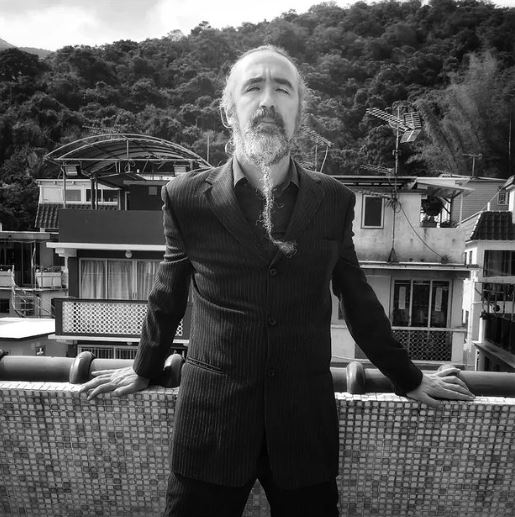
A very important subject to understand from Bob (SixtySkills), you can see the video on this subject here:
Ritual vs Internal Power Systems
What’s your take on the ritual versus internal Power Systems? All right, um, first of all, they’re not exclusive of each other. Most ritual systems will have some internal power workor, and most internal Power Systems will have an element of ritual with them. Okay, that’s kind of a cop out answer. 60 skills let’s be specific about waron all right take something like the Golden Dawn system well you have the middle pillar exercise that’s an internal power part of that take something like Tibetan Buddhism highly ritual all these different things well they have trulkhor pranama breath retention with body movement even shinon Buddhism does a lot with the Puja or fire ceremony which is going to generate energy by burning things that’s not really an internal power system but that’s not purely ritual either.
Internal Power Systems and Forms
Likewise, a lot of internal Power Systems like say TaiJiQuan, Xingyi Quan, Bagua Zhang, traditional martial arts you’ve got your forms that’s a kind of ritual because it’s something you repeat over and over again. Okay, but the preponderance of your effort in that is holding posture doing Chiang doing certain kinds of breath work certain kinds of vocalizations that’s all internal power work.
Advantages and Risks of Ritual Work
So, okay, ritual versus internal power the advantage with ritual work is it works fast because there’s this egregor this intelligent empowered energetically empowered thought form out there that if you know the right gestures the right words to say the right movements to perform I.E the right right ritual and you have the right empow empowerments in many cases from practitioners of the system you can access that stored battery of energy in the aggregor and because it’s intelligent it will come into you shut off some of those internal safeties you have share its power with you to a limited degree and allow you to do things that if you had to do purely on your own would be much harder to do if not impossible in many cases. Now, the catch with working with an egregor is as we’ve mentioned before not only the fact that it modifies your perception of reality and your thought process to be more in tune with it it impacts your free will there’s no other way to say that. It’s also the issue that because it works by disabling certain safeties in your body it may get your body to produce something or an effect if you will that is potentially damaging you because it’s overriding those again those safeties. Also, ritual magic tends to be slow I’ll get to this advantage of this involving internal power in a second but it’s kind of the wind up in the pitch way of doing magic you have to do all these steps they take a certain amount of time the entity you’re involved with also gets a say in whether or not you want to do something so in many cases while ritual magic can be very powerful it’s often times not something flexible and frequently not something you can do on demand.
Disadvantages of Internal Power Systems
So those are the advantages and disadvantages of ritual magic now when it comes to internal Power Systems the big disadvantage is the time you need to spend cultivating that ability takes a lot of time a lot of practice because you’re having to build something inside of yourself to do something and you’re not getting any help from outside sources. So just the same way you gradually improve your run times in say the kilometer or the mile you’re going to have to go through a lot of pain you’re going to have to get over self-doubt you’re going to have to defeat your internal restrictions on your own and that takes time that’s the primary disadvantage to an internal power system. Other disadvantage toed internal power system is there’s nobody there to tell you what to do it’s a lot like when you’re looking working with letter magic many cases when you’re dealing with combinations of letters you have to figure out what the effects being generated are because there’s no entity telling you what it what it’s going to do you have to figure it on your own.
Advantages of Internal Power Systems
Now advantages one even though running a lot of Fire energy can make you manic or and a lot of water energy depressed for the most part internal power work doesn’t impact your free will a whole lot for the most part it’ll part it’ll make you more animated and that can be a little hard to deal with depending upon your age and personal choices in life the I am a blazing Greek god while standing on top of a rooftop is something people have done from time to time before jumping into the pool blow. But ultimately internal power methods don’t impact your free will a whole lot even if they do impact your decision-making through Mantic behavior and like. Okay, also internal Power Systems are generally something you can do as you need to it’s very easy to do them what we English we call on the fly or spontaneously because you don’t need to go through this elaborate ritual to make the effect happen so that’s the advantage to an internal power system.
Blended Approaches
Keeping in mind that most systems out there are a combination of the two highly ritualized systems like say I don’t know Tibetan Buddhism have trulkhor but on the flip side things like taichi have their long form and that’s very much a rhythmic kind of dance I.E ritual so those are the advantages and disadvantages of ritual versus internal Power Systems keeping in mind there are very few examples of something that is purely one or purely the other.
The Three Transformations – Free Course
The ancient Chinese sages spoke of jing, chi and shen. The Hermeticists of old spoke of vital, astral and mental energies. Both spoke of ways to convert one energy into another. And the Three Transformations were born!
Ever wonder how to do this exactly? Wonder no more. It turns out this is not some mysterious thing that exists only for the greatest of saints. All the details behind how to convert one of the basic natal energies into another, why you would want to perform the Three Transformation and the various issues involved are included in this SixtySkills course.
We have a growing collection of free courses from various teachers. These courses give you a chance to get to know our teachers better while developing a new skill set.
I have come to know many who have left Franz Bardon’s “Initiation Into Hermetics” after completion of Step VIII to pursue The Practice of Magical Evocation or The Key to the True Quabbalah, the case has always been that they run into difficulties and seek guidance from me or other teachers. The problem is not in seeking guidance, that is always a good idea as long as one’s mind is pure enough not to be corrupted. The problem is not in meddling with PME or KTQ at this stage, but leaving IIH incomplete. Would that not be the case, PME and KTQ could even help complete the last two steps of IIH, and as long as IIH isn’t complete, that would be their main utility.
In IIH Step VIII I have briefly addressed this problem and, more extensively, the importance of completing Step VIII itself in relation to the maturation of all previous steps. This time, I will be addressing the importance of completing Step IX and X, without which the practice of PME or KTQ will hardly ever mature.
The Student Will Lack the Foundation
Bardon states plainly at Step X:
“He must realize that this last step really represents the end of his magical development with respect to the first Tarot card and that he ought to be prepared for the higher magical tasks that I am going to describe in the following two works: The Practice of Magical Evocation and The Key To The True Quabbalah. If there were gaps in his schooling, he would never be able to control the higher Powers.”
Resuming Franz Bardon’s Hermetic Trilogy, the three books put together are designed as a step-by-step system of initiation that starts in Initiation into Hermetics (IIH). This is a ten-step training manual covering body, soul, and spirit that teach elemental balance, concentration, thought control, breath work, sensory expansion, and the first exercises in magical imagination. In other words, this book is to prepare the student for higher forms of magic by way of self-mastery, and the development of extra magical skills in the end of Step X highlights these skills are to be cultivated when everything else has been mastered. This says nothing of the student practicing parallel systems of initiation, but, for maximum capacity, each system is to be practiced as… a system.
The trilogy follows on to The Practice of Magical Evocation (PME), working with spirits, intelligences, and beings of various spheres: elemental, planetary and possibly beyond. The book shows detailed instructions for creating a magical circle, mirror, and tools, as well as the keys to safe evocation, teaching the magician how to call and work with beings while maintaining sovereignty and equilibrium.
Next comes The Key to the True Quabbalah (KTQ), on the use sounds, letters, colors, and principles as a direct creative force in the four planes (Akasha, mental, astral, physical), to give the magician the “Word” as a tool of creation in alignment with divine law.
First self-mastery (IIH), then mastery over spiritual beings and the personification of divine principles (PME), and finally mastery over divine creation via the divine principles in and of themselves (KTQ).
Without self-mastery one cannot, in all truth, face the other. Without facing the other one cannot touch the bare cosmos. Without the completion of IIH’s Step IX and Step X the student will lack the foundation for what comes later in PME and KTQ. For once, Step IX teaches clairvoyance through magic mirrors and projection through time and space; the separation of the astral body; impregnation of it with the four divine fundamental qualities; treatment of the sick with electromagnetic fluid; and the creation of volts (condensations in Akasha) for wish-realization.
Evocation (PME) requires one to project into other planes, perceive intelligence there, and keep sovereign. Without controlled astral separation and clairvoyant perception, the magician could not truly interact with or even perceive the beings Bardon describes in PME, while volting and fluid mastery are needed for charging the room, tools, and the triangle. There may be slight objections to what I am saying, but we will get to it later.
Step X teaches the elevation of the spirit to higher planes, direct communication with the personal God and higher divine beings, and the acquisition of advanced magical faculties, including control of elemental spheres and beings. This is relevant because in PME, the magician is meant to command universal intelligences, but Bardon insists this is only safe if the magician has already united with Divine Providence (via Step X in IIH). Otherwise, the magician risks obsession or enslavement. As well, KTQ demands the ability to vibrate cosmic letters into the Akasha, which only works if one already has established conscious unity with the Divine and purified their being through Step X. Without this, the Quabbalah may easily degrade into empty sound-making rather than true creation.
And, if Step IX gives the technical faculties such as clairvoyance, astral separation, fluidic mastery, volting and Step X provides the spiritual authority (entrance into the elemental kingdoms, higher elevation of spirit, unity with the Highest), then attempt PME and KTQ without these and you may see nothing, or hallucinations, fail to stand the beings and be deceived, and intone letters without effect or only to dangerously destabilize yourself.
This is why sometimes you see Step VIII magicians (or magicians from other systems or that have modified IIH) suffering a lot of karma from Quabbalistic letters that are originally meant to be used in sole alignment with dharma, or also magicians afraid of the effects of intelligences and particular spheres of existence. They are taking a much harder road that will last many more years to stabilize than the time it would take them to complete the final two steps of IIH. It is IIH’s steps IX and X that unlock the doors to PME and KTQ, the other way is to slam these doors, but not without taking damage. In contrast, a true Step X magician will likely get it right with all the cosmic letters on the first try.
A Step VIII that has trained accordingly (again see my article on Step VIII) can see spirits and sense their presence in mirrors or triangles. This magician can load magical tools and intone letters with some effect in the astral/mental body, but results are weak, unstable, or subjective. The spirits recognize them only as a psychic, not as a magician of Providence, and most of projection is but observation, not real mastery within the planes. There is no guarantee of safety and you are at the mercy of the beings, risking deception, obsession, or self-illusion.
Even after completing Step IX the magician is still missing the conscious union with Providence that guarantees alignment of will (alignment of microcosm and macrocosm). The magician may still work from ego if not stabilized. It is only at Step X that evocation becomes true cooperation rather than bargaining and the KTQ cosmic letters and words become the actions of the Highest, or rather creation in full accord with divine law. It is only here that the student crosses from Initiate to Adept.
A Study of the Bridge
The training of clairvoyance with Magic Mirrors is required to see with proficiency intelligence in the triangle, mirror, or atmosphere of the chamber. You have trained clairvoyance before to the level of the mere psychic that gathers some impressions from the cosmos. A blind one that can sense around him. Mirror-clairvoyance is learning to really distinguish, and without it evocation is blind. This kind of extrasensory expertise allows you to verify the letter effects (color-tone-sensation triads) on higher planes. Absent of it, Quabbalistic operations are mostly theoretical.
Regarding astral separation, in PME the magician must project into the sphere of the intelligence being evoked. Astral travel is the real meeting ground, beyond the mental plane. Such is not directly addressed, but believe me it can make a huge difference. Mostly, and this is required, astral separation enables projection of letters into the Akasha consciously from the astral body, where they have immediate formative force. Because some magicians who haven’t gone beyond step VIII have never experienced it, they come to the conclusion that Bardon never taught one to distinguish between mental, astral and physical. The truth is, this kind of astral separation, which Bardon provides the methods for, is really rarely taught and has remained idle almost since Ancient Egypt.
Most importantly, astral Impregnation with the Four Divine Qualities (Omnipotence, Omniscience, Omnipresence, Immortality) gives one the aura of divine authority that compels authentic respect from beings. Without it, they may resist or deceive, especially because your own language towards the outer darkness and yourself is one of resistance and deception. It is this impregnation with the four divine qualities that ensures Quabbalistic letter-vibrations operate in line with Divine Providence instead of the ego’s limitations.
When it comes to the work with the electromagnetic fluid, magical loading of talismans, volting and so on, electromagnetic mastery is the basis of charging everything the magician has to charge. Volts are the batteries of power behind evocation. This includes also charging letters into matter (talismans, food, objects). The letters must eventually be condensed physically.
Without elevating the spirit to higher planes how can the magician ascend into the hierarchy of the beings evoked? Evocation is not begging a spirit, but meeting it as an equal through elevation. How many forget this and have the most embarrassing results, even coming to profess them? As well, this elevation is what makes the letters truly creative, as most letters are channeled unknowingly via the intermediation of the planetary spheres (see A Magical Study Series Volume II – The Quabbalah of the Spheres).
Removed from astral communication with one’s personal God and deities, the magician lacks a direct link to Divine Providence to command beings safely. They risk bondage to spirits because their own self is still limited and enslaved. Without this direct link uttering divine names and letters is vacant. Yet with it, the magician speaks in the Name, as the Hebrews would put, and creation responds.
Skip the acquisition of magical faculties that include skills of materialization, dematerialization, and further dominion over the elements and find out this is exactly what PME assumes you know when working with elementals and planetary beings. What is more, you are to learn the basics of any principle or methodology taught by one of the beings, or what you will obtain are mere curiosities adapted to your level, which is the level of a curious tourist. See, for instance, the example with my A Magical Study Series Vol III: A Guide to Stellar Magic & Astrological Mysticism. This book came to be because, in conversation with one of the beings there was the idea of writing a work on astrology, which I declined, admittedly not knowing enough about it. I was then asked to organize everything I already knew, expand it and map it together into a working body. Before this, I was given only simple abstract curiosities, such as the Earth also being a central star at its molten core and we the stars of its galaxy. After I had matured the topic I was given astonishing methods, maps and information, the kind of which one cannot possibly imagine in one’s normal capacity.
The training of Step X magical skills, as well, supports the densification of quabbalistic formulas into the physical world. Without Step X, letters too remain abstract vibrations.
So again and to conclude this missive, Step IX gives you the technical vision and power that allows you to see, separate, project, and charge, while Step X provides the spiritual authority and union for you to inspire, create, and align with Divine Providence.
The Devil’s Advocate
One could argue, and rightly so, that Bardon arms the student with a lot of high-level tools well before Step IX, such as the Akashic trance and induction of states from Akasha, elemental accumulation & projection, and control of electric and magnetic fluids (separately). Mental wandering (mental body projection) and the creation and use of fluid condensers, magical mirrors, and impregnations of space are also included.
So yes, someone who has gotten through Step VI–VIII already has the technical keys that may look like the whole of PME and even parts of KTQ. However, although the tools exist early, the maturity does not.
Akashic trance gives one glimpses of higher planes, but without Step IX’ astral separation and Step X’ elevation, the magician is still bound to their personality shell. Traversing rooms in the mental body, short distances and visiting relatives in step VIII won’t nearly do. Also, you can dip into Akasha but you cannot yet move freely in the spirit’s domain. PME requires sovereignty, not just trance.
Without reaching Step IX you can still project fluids and impregnate spaces, but the beings called in PME see through the magician. If the astral body hasn’t been impregnated with the four divine qualities (Step IX), the magician radiates not as a divine force. Spirits obey (in the sense of devotional respect) the divine light, not personal will. And, without Step X, even if you wander mentally or astrally, the spirit doesn’t recognize you as operating divinely.
On volt charging, although before Step IX we can charge objects, load spaces, and cause effects, KTQ asks us to intone the letters into the four planes. Without Step IX–X, you can at best paint with colors and sounds, but not speak the actual Word. Put another way, an Initiate of Step VIII can practice magic, yet only a Step X magician can create by divine authority, and this is what the whole of KTQ is about.
Put yet another way, at step VIII you have learned how to handle magic, balance yourself, and operate. Thus, you can visit PME and KTQ as in an apprentice’s study trip. Still, until you embody divine qualities and unite with Providence, you’re not yet the heir to PME and KTQ.
For instance, extrasensory faculties are deliberately awakened already in Step VII, and you go so far as to create elementaries and animate pictures. You can see and hear into the astral, feel and perceive subtle forces, and, how wonderful, create autonomous astral beings (elementaries). Then in Step VIII, you add mental wandering, which extends extrasensory reach into the mental plane. Because you can already enter Akashic trance (Step VI), control fluids and project elements (Step V–VII), perceive astrally and mentally (Step VII–VIII), and wander with the mental body (Step VIII), you may indeed have a very vivid simulation of how PME and KTQ works. But your perception within the extrasensory has no sovereignty. You can see and hear spirits that are under no obligation to listen to you. You have been the tourist who speaks the language but has no passport or authority in that country. It is, again, the impregnation of astral body with divine qualities that has the beings recognize you as a legitimate envoy of Providence instead of just another psychic. You can visit, but not command, and this has shown in most VIII adepts that I have observed working the spheres.
As for evocation, Step X’s divine union and elevation is the point where the magician can invoke in the Highest, or rather, this is the true meaning of standing within the Circle, since Intelligences don’t obey the human personality. Worst yet, and being less politically correct, spirits often obey the human personality but that is no good news at all to the human personality.
Summarising, the extrasensory faculties awakened before Step IX are tools of observation and exploration, but it is time to step up and do the real work.
Evocation at Step VIII
The student has learned to charge a mirror but hasn’t learned to travel through the spheres via elevation of the spirit and would be limited to the elements. There has been no experience of the elemental kingdoms either, but there has been enough experience of the elemental fluids, while, on the bad side, the planetary oscillations have received no attention.
The student can understand the circle in an abstract way, that is, in its similarity to the akashic trance. And the student can project fluids in general. They can mentally wander and maybe, if specially skilled, even see the vast silver-violet form of the Moon sphere (not to speak of planets beyond). Inside it, they may feel a presence, hear impressions (clairaudience), or see visions. But the intelligence sought will speak in riddles, ignore commands, be aggressive or condescending, or withdraw. Without the divine impregnation, the student can be dazzled, deceived, or even drained by the spirit dealing with this curious psychic. In the best case, inspiration and visions may come as gifts. At worst, parasitical entities will swarm in, masquerading as the intended intelligence.
Evocation at Step IX
Astral separation can now happen at will and the astral body radiates divine qualities. But I recommend you start by using the mental body (less dangerous), in which too these qualities will equally shine by consequence. Since the subtle bodies have received the divine qualities, the magician stands a much greater chance of actually standing in the divine spheres, say the moonsphere. And they stand there glowing with omnipotence, omniscience, omnipresence, and immortality. The lunar being appears clearly, recognizes the magician as one clothed in divine authority, and engages with utmost respect. Communication is lucid, not the playground of glamour.
The risk has been reduced but every now and then the magician’s ego intrudes. Without Step X, alignment with Divine Providence is not perfect, and so control is feeble. Genuine teachings and real assistance will still likely happen, and the magician will be able to project the power of the moon sphere into talismans, although prone to error if motives are impure.
You may ask, and it is an interesting question, “If I’ve done the ennoblement of the soul properly, won’t it already safeguard me from impure motives? Why should Step IX–X add anything more?” Well, the soul mirror is an inventory and balancing exercise that catalogs virtues and vices, strengthens what needs strenght and harmonizes where harmony is lacking. One detects egoistic impulses and cleanses the astral body of excess elemental imbalance. Not only do you gain self-knowledge as you become less likely to be tricked by the shadows you project. However, even it being the case that the soul mirror balances personal character, it does not impregnate the astral body with divine qualities (omnipotence, omniscience, omnipresence, immortality). Intelligences certainly admire a balanced human, as Bardon himself made known in his questions and answers, but their service is towards Divine Providence and their devotion will be moved by a radiant vessel of this same Providence.
Motives can be hidden from the conscious self, and the mirror mostly tracks what the student knows about themselves. Still deeper karmic seeds, unconscious drives, or subtle pride can remain invisible. Step X, by linking to the personal God, exposes and burns away even those remaining hidden impurities. So, while a balanced astral constitution makes one sane and safe, it offers no cosmic jurisdiction. Only Step IX–X lift the magician into the register where intelligences must comply.
Put another way, the mirror is static and the assumption of the Godhead is dynamic. The soul mirror is a lifelong practice of self-polishing, a craft that depends on its crafter. But Providence is an independent living current. A magician who counts only on the mirror risks stagnating in self-analysis, while one who unites with Providence is continually guided and corrected beyond personal introspection (as long as introspection is kept, for this goes both ways). The mirror purifies the human psyche, and it must be kept as the human psyche must remain purified to receive the divine. Step IX–X graft the psyche into the divine stream. It is also this very divine stream that will raise the soul mirror to a whole different level of depth. Without that grafting, magical equilibrium exists by human measure, but with it, you obtain in your soul the very cosmic order that Ancient Egyptians called Maat.
Therefore, say you have a perfect soul mirror and the being appears, because you have clairvoyance, fluidic mastery, and impregnation skills. The spirit sees through your astral constitution. Seeing you have a balanced human condition, the intelligence will likely smile, converse, and even flatter. What it won’t do is obey. Try it, and the intelligence, if it is intelligent in fact, may subtly test or lead you toward overconfidence (which would be a useless attempt if you didn’t lack the astral impregnation of divine qualities).
More than ever now, you believe your motives are pure, and how well you have polished your soul mirror only confirms it further. Yet this purity is subjective. It will be fed by the intelligence with grandiose visions or missions that lead to subtle obsession. At this point you are absolutely convinced of your greatness while actually being pushed into dependency on the being.
And how often do we see this? The magician becomes a student and servant of the intelligence while believing they are in charge. This is the danger Bardon warns against: obsession disguised as illumination.
I can give this example for KTQ as well. You intone a cosmic letter (A, for example), see light-blue, hear the tone, feel levity, and project it outward. You get to generate astral phenomena such as subtle currents of air, feelings of inspiration, psychic visions. It feels profound, and this is the letter of pure ideas. But even with a clean soul mirror your purity is just personal refinement, not Providence flowing through you. You might cause temporary weather shifts, strong moods in people around you, or psychic phenomena, and think by this that you are creating with the Word. Nevertheless, the effects are short-lived, unbalanced, and can rebound. Worse, if purity contains hidden pride, the letter-vibration magnifies it. You become a demi-god of karmic chains, a sorcerer of the astral, blinding yourself with lights and currents but not truly touching creation. The divine Word never flows, only amplified echoes of your own psyche.
The core issue here is that the soul mirror purifies what the magician can see about themselves but intelligences and letters operate in the depths beneath self-knowledge. Absent of Step IX’ impregnation, the astral body is still a limited conception and without Step X, motives are never guaranteed to be aligned with Providence. So, the worst case is not spectacular failure. It is subtle success like visions, phenomena, psychic effects that feel divine but are not: delusion of mastery.
To conclude, the soul mirror can make you a sage among humans, but only Step IX–X can make you a magician among intelligences and divine principles (forget not that first, you need to be that sage).
Evocation at Step X
The magician elevates the spirit to higher planes in conscious communion with Divine Providence. Their call to the being is rooted in supreme will, not personal whim. The being manifests with reverence, recognizing the adept as acting in the Name of Providence. The interaction is one of colleagueship, the adept is no longer asking nor commanding, but team-working. The risk is essentially none, it matters not if we are talking of positive or negative intelligences. Now the lunar virtues of the being flow directly into the magician’s life, talismans, or creations. As well, the magician’s words in Quabbalah sound in the Akasha as the Logos, manifesting across all four planes.
KTQ in Step VIII
Let’s imagine we are vibrating the cosmic letter A (Air principle, enlightenment, inspiration), carried in a light blue color, G tone and a sensation of weightlessness. Since the magician has developed clairvoyance, clairaudience, and can project colors and tones into space or into themselves, they vibrate A as sound, visualize the light-blue color, and feel weightlessness. The result, beyond feeling lightness in the body, is likely a tingling, inspiration, and astral insights. The room feels charged, airy. The quabbalist faces a strong subjective experience and, eventually, psychic phenomena. But the projection tends to stay in the astral bubble around them. Effects are temporary, unstable, and dependent on concentration. The letter-vibration can cause imbalance (nervousness, overexpansion of the air element) or open the psyche to uncontrolled influences.
KTQ in Step IX
One impregnates the astral body with divine qualities, capacitating oneself for the true projection of the cosmic letter into the Akasha. So is the A projected consciously through all four planes: akashic, mental, astral and physical. The light-blue radiance starts by filling the Akasha (not just the imagination) and a profound silence and blessed clarity spread. The magician feels A as a cosmic force. This is no longer a personal visualization. Then come real, externalized effects, like improving air quality, uplifting the atmosphere of a room, and influencing the weather in a small way. The letter’s resonance has durability beyond the ritual space, yet is still possible to misuse. If the action is driven by human limitations, the magician could distort the elemental balance and cause psychic instability or harmful results in the environment.
KTQ at Step X
United with Divine Providence, the A intonation is the Divine Word flowing through the Quabbalist, felt not only by him but by the world. The letter vibrates simultaneously on all planes with flawless harmony as the Creative Word in action. For instance, A invoked in a talisman truly radiates the cosmic principle of Air indefinitely. The adept can inspire entire communities, uplift climates, or heal with breath simply by speaking the letter. What is more, the adept acts as a clean channel of Providence. Effects are always balanced, never ego-driven, and thus likely more rarely or secretly put into practice, since the Supreme works wonders with discretion. In truth, we will rarely see an author or teacher speak from level X directly or demonstrate it openly; they will downgrade apparent consciousness to level IX or VIII and stand relatable. Although collaboration exists, there is nothing dual a magician can teach from his Godhead to another Godhead, but neither can the magician teach someone not in the Godhead from the direct standpoint of the Godhead. Let this be understood.
For instance, if you read A Magical Study Volume I: A Guide to the Elementals, or again even Volume III: A Guide to Stellar Magic & Astrological Mysticism, you will see reports of contact with intelligences from the expressive standpoint of level VIII or IX, and sometimes indications that I have stepped into level X just to stabilize the session. The whole collaboration, however, is continuously established in Divine Providence, despite how it may be expressed to the world at large for communication.
So… if the virtuosity of the Soul Mirror can trick me, how is the state of Godhood less illusory?
It absolutely isn’t. If anything, it is potentially worse. But there are ways to test it in life and ways to test it in magic and mysticism in particular, and I will be sticking with the latter.
In PME, if you are getting a lot of flattering spirits, that is, intelligences that appear in visions but give flowery praise, vague prophecies, or promises, and you enjoy the attention rather than testing authority; if you find yourself mostly listening to spirits passively and they linger but don’t fulfill tasks precisely or tangibly; if the results are psychological (visions, insights) without direct external changes and you feel compelled to evoke the same spirit repeatedly for guidance instead of moving freely through the hierarchy, then you are likely acting from the standpoint of level VIII. This you may be doing by sovereign choice to work your mortal angle, or because you have not achieved the divine connection you thought you had.
In Quabbalah you may find yourself mostly doing fireworks, intoning letters that produce lights, tingling, psychic visions, and inner ecstasy but no lasting outer effect (often from the state of Divine Union the letters require or produce none of these at all). Instead, you influence your moods or desires, and even though A brings personal inspiration it cannot manifest cosmic enlightenment. You change the atmosphere in a room temporarily, but it dissipates within a short time, hours at best, and talismans lose charge quickly. What is believed to be the direct Word of the Supreme is but a magician recycling their own psychic aura.
Beyond KTQ or PME tests, the general warning signs are overconfidence, as in leaving the soul mirror and any self-examination and assuming every impulse is coming from the highest state. Self-examination is substituted by a quiet certainty that you are permanently acting as an Adept, reinforced by flattering intelligences and impressive astral experiences.
Soon, you find yourself preferring the company of spirits or letter ecstasies over actual life duties, a subtle but widening obsession, even if you subconsciously notice your impressive phenomena lack the effortless harmony and timing that comes when Providence supports a magician.
If this all seems too intricate, there is a more universal measure. Usually, the limited self perceives everything greater than it with a sort of shock, and the practices will feel baffling, flattering, addictive, or ego-stroking. That the practices feel dazzling itself isn’t necessarily a bad sign, since it indicates those very limitations are suffering a process of expansion. However, if the practices already originate from an expanded state, they will always feel calm, exact, peacefully powerful, and aligned with Providence. When this is so, you can be much surer that true progress is taking place.
So, the clear signs that the magician has truly crossed into Step IX and X and therefore has the genuine foundation for safe, sovereign practice in PME and KTQ are in that the encounters with beings are calm, not dazzling. There’s no need to prove, persuade, or impress since authority radiates naturally. There is no craving for visions, powers, or so-called astral fireworks. If they appear, they’re side-effects, not goals. At the same time, decisions and practices flow with a sense of timing as life becomes more harmonious, not more chaotic.
This is to state the beings appear without resistance, and being respectful, behave as colleagues or subordinates, not as gurus or seducers. Collaboration bears clear and measurable outcomes instead of vague promises or astral shows and the magician surely does not need spirits for validation or guidance. Evocations are to be purposeful, not addictive. Addiction requires a sense of adrenaline that isn’t there when an unmistakable sense that nothing in the operation can overstep or harm is there, since the intelligences always act within a boundary of Providence by nature (be they positive or negative).
When it comes to Quabbalah, the letters don’t just create sensations but anchors across planes into mental, astral and physical verifiable results. They endure. A talisman charged with a letter holds its force for months or years, not days, as the letter manifests in line with its cosmic essence, so when the intonation ends, there is a blessed stillness and the world itself has acknowledged the Word.
On to the green flags, the magician always feels awe rather than pride, and outer duties, relationships, and health remain intact or get better, since magical work is not meant to distort daily life. Even more so because your motives are now simple and transparent: service, knowledge, alignment. No hidden “what’s in it for me?” behind the practice. Now coincidences, synchronicities, and graceful outcomes follow you, because Providence confirms your path, but there is nothing dazzling, intoxicating, flattering or unstable about that, just a calm sobriety, a humble steadiness, a quiet power and a powerful quietness.
This is a new upload from SixtySkills, good advice for where you practice. For details of the SixtySkills curriculum check this post.
An Unexpected Practice Place
Sometimes the best practice places aren’t places you would really expect. A lot of people like to practice at Buddhist temples and the like. However, this place just outside Chiang Mai and around the corner from Wong has been abandoned pretty much as long as I’ve known about it—and that’s been a little bit over a decade.
The energy in this place is actually very conducive, oddly enough, to physical and spiritual practice. Why that is, it’s kind of hard to say. Likewise, why this place was abandoned in the first place is also hard to say. But if you know where to look, it’s on the nature park right next to the art village outside Chiang Mai.
So, you can come here as well. It’s never secured. My friends and I would come out here to practice, usually in the early morning hours. For the most part, people always left us alone. There are occasional offerings made on the site, so you need to be aware of that and respectful of it. People have their beliefs, and as guests in these places, we need to be cognizant of that.
Why This Place Was Good for Practice
Why was this a particularly good practice area? A good way of looking at this is the energy of the place.
It’s in a natural environment, which is always helpful. There’s more of that etheric or life force energy floating around that you can harness for practice.
When you’re talking about a semi-abandoned place like this, the fact that it still exists at all is usually testament to the strength of what’s here. It’s actually a very nice facility. It has long brick pathways, and during dry season it’s a lovely place to have a sit—assuming you’re early enough that you’re not baking.
You can look at the age of something, and if it’s still around after a really long time, that’s generally a sign there’s pretty good energy that can be worked with.
But that’s not the only thing to pay attention to. Just because energy is strong doesn’t mean it’s conducive to what you’re working with—or even a good idea to be there. Hanging out in certain graveyards where they do sky burial, for example, is not exactly the perfect practice spot.
Respecting Local Traditions
Another thing I always want to mention—particularly as a foreigner visiting these places—is that you need to be aware and respectful of the local traditions.
This place doesn’t belong to me, my friends, or my students. On the odd occasion when we came out here and something was going on with the locals, we would just quietly leave. After all, this is their place in their country, and it’s up to them to maintain it.
That being said, locals in general don’t tend to use these places for what they were designed for. Contrary to popular belief, the psychic monk crew in most religious organizations is actually quite small. If you become a monk, you are far more likely to be ordained and put to work as an academic, working with lay people, as a carpenter, or even as a CPA. Big organizations need those people much more than they need a magically empowered member of the clergy.
This may sound strange because those people were the genesis of all major faiths. Other than communism, all mainstream religions are the product of another person’s esoteric experience. You need to be respectful of that.
Even here, if you look carefully at some of these trees, you can see a band tied around them. Obviously, you don’t want to disturb any of that.
The Importance of Seclusion
We’ve covered the basics of what to look for in a practice place. Finally, there’s the issue of seclusion.
A lot of what we do at 60 Skills—or in esoteric practice in general—resembles what I call the “autism Olympics.” You look weird doing it, and that tends to be off-putting to most people. If the practices are energetically charged or ritually powerful, that will bother people even more.
You need to keep this in mind, because unless you own the place, you’re just borrowing it.
Running Water and Natural Energy
Another thing to look for is running water. We are actually over a river here. Being near a river brings a certain kind of energy, particularly first thing in the morning and first thing in the evening.
That kind of environment is perfect for vaulting practice, as many of you know from attending my in-person training camps. We like to practice down by the river at dawn or dusk. The reason is simple: at those times, magical potential is at its greatest because the natural forces of light and dark, positive and negative, are balanced right at the pivot point. That balance makes magic easier to pull off.
Ritual magicians, largely limited to the power of their egregores or the ambient energy around them, can’t afford to be picky about where they get their juice. Practicing at dawn and dusk, near water, makes things easier.
Signs of a Good Practice Spot
So you have several factors to consider: seclusion, silence, and the ability to practice without disturbance. In Asia, it’s not considered a big deal if you sit quietly in a temple corner and meditate. But if you’re doing chiang or other unusual practices, that might be different.
You’ll also see wildlife around here. This is a good sign that the place is energetically charged. Since this is a game reserve, the animals aren’t afraid of people. Again, all of these are good signs when looking for a practice spot.
Spirits and Lingering Energies
One final reminder: the deities, saints, spirits, and entities associated with temples stick around much longer than you would think.
I’ve been at fire temples in eastern Turkey blazing with energy thousands of years later. Likewise, the entities associated with an earth goddess—later co-opted by the Romans and eventually shut down under Islam—were still potent and easy to contact.
So be careful what you choose to play with.
Closing Thoughts
Otherwise, as usual, train hard and be well. What’s the fastest way to develop magically? Learn pranayama, letter magic, and proper body training. That’s the fastest way to become a powerful magician in the real world.
The Three Transformations – Free Course
The ancient Chinese sages spoke of jing, chi and shen. The Hermeticists of old spoke of vital, astral and mental energies. Both spoke of ways to convert one energy into another. And the Three Transformations were born!
Ever wonder how to do this exactly? Wonder no more. It turns out this is not some mysterious thing that exists only for the greatest of saints. All the details behind how to convert one of the basic natal energies into another, why you would want to perform the Three Transformation and the various issues involved are included in this SixtySkills course.
In this interview Jack Fox-Williams, the author of The Black Star of Nuit, provides some very in-depth answers to my questions. I really appreciate Jack taking the time and effort to answer these as I put a lot of thought into how best to discuss his book as there is just so much inside. Take a look at the contents that I have shared below:
Introduction Gnosticism Interpretations of Nothingness Satanism Heru-Ra-Ha Cosmogenesis The Nightside of Eden The Mystery of Daath The Thoughtless Light Pravritti and Nivritti Manvantara and Muhapralaya Negative Archetypes Vajrayana Buddhism The Qliphothic Spheres Emptiness and Fullness Ain: Absolute Nothingness Beyond Being and Non-Being Ain Soph: The Centreless Centre in the Womb of Infinite Nothingness Ain Soph Aur: The Luminosity of the Eternal Void Conclusion: Uniting the Left and Right-Hand Path Practical Magic
You can see more information about this book here.
Interview
The Black Star of Nuit by Jack Fox-Williams
Unifying Paths and Dualities
PAA: In what ways does The Black Star of Nuit aim to “unify both currents” of the left-hand and right-hand paths? Discuss how the book treats pairs of opposites (such as creation/destruction, being/non-being, God/Satan) as projections of a supreme nothingness beyond all duality.
Our magical order immersed ourselves deeply in many different spiritual currents, such as Gnosticism, Buddhism, Theosophy, Anti-Cosmic Satanism, and Luciferianism, and discovered that there were certain distinct, yet overlapping features. The anti-cosmic satanists view Ain (or nothingness) as the highest principle because they want to merge with the emptiness of fullness. While they consider themselves ‘left-hand path,’ this is the aim of many right-hand practitioners, particularly those in the East, who similarly wish to merge with the formless Parabrahman.
We have great respect for the anti-Cosmic satanists since we also view nothingness as one of the highest metaphysical principles. However, our tradition also differs insofar that we do not see nothingness as sterile, barren, or even ‘anti-cosmic’ but the impossible possibility that gives rise to the Oneness of Beingness while simultaneously transcending the “I AM.” Other right-hand practitioners, however, aim to merge with total unity or Oneness. At the moment, the spiritual marketplace is saturated with books on ‘unity-consciousness,’ Presence, and Pure Being. This all well and good. However, people fetishize unity to the point that they do not realize that even unity has its groundless ground in absolute nothingness. The number of spiritual new-agers who think I am describing ‘non-dual consciousness’ when I discuss absolute nothingness is startling. To attain absolute nothingness, one must even annihilate the concept of unity.
Then, there are Luciferians or Laveyan satanists who affirm a radical individualism, in which they separate themselves from the unity of God and strength their individuality. The aim of our spiritual praxis, however, is to attain all three objectives simultaneously. The highest grade in our initiatory order is Kaivalya, when the initiate recognizes their divinity and individuality, as symbolized by the Black Diamond. Crowley conceptualizes the soul as a point of implicit potentiality, following its unique orbit through infinite space, expressing its creative potential as the many simulacral forms that we see around us while simultaneously transcending them. In this sense, the soul is more akin to an eternal process, movement, going, or unfolding, than a ‘thing’ per se.
It is Beingness in Eternal Becoming, at once universal and unique, inseparable from the One Supreme Mind while retaining its Kosmic Individuality. Beingness overcomes itself through itself so that it can return to itself, allowing it to overcome itself again, ad infinitum. This process is aptly symbolized by the Ouborous eating its own tail while giving birth to itself. At the same time, it has its groundless ground in nothingness.
The demiurge is an incredibly complex point of discussion since there are many ways of interpreting it. For Plato, the demiurge was not an ‘evil’ or ‘malevolent’ figure but the Grant Architect, similar to Freemasonry, who fashioned the universe from the primal chaos of Tohu.
Jack Fox-William
Gnostic Demiurge vs. Self-Deification
PAA: What is the role of the Gnostic concept of the “demiurge” in The Black Star of Nuit? How does the book depict the Tree of Life path as tied to the demiurge’s divine order, in contrast to the Qliphothic path that seeks to “usurp the demiurge” in pursuit of self-deification and personal godhood?
The demiurge is an incredibly complex point of discussion since there are many ways of interpreting it. For Plato, the demiurge was not an ‘evil’ or ‘malevolent’ figure but the Grant Architect, similar to Freemasonry, who fashioned the universe from the primal chaos of Tohu. Many gnostic thinkers, however, believed that the demiurge was the ‘Blind Fool,’ the cosmic-creator, born from the womb of Sophia, who trapped the divine soul in the realm of matter. This view has since influenced many anti-cosmic sects, such as the Temple of the Black Light.
Our magical order, however, views the demiurge as symbolic of the mundane ego and its psychological characteristics. It represents the tyranny of organized religion, pushing certain spiritual practices to the margins of our cultural history because it considers them evil, depraved or taboo, such as tantric sexuality, self-immolation, sadomasochism, or intoxication. This is symbolized by the story of Cain and Abel. Abel represents the religious sheeple who blindly follow the ‘slave-morality’ of organized religion because they cannot appreciate any other perspective. He sacrifices animals in the name of Yahweh to appease his insatiable bloodlust. When Cain’s offerings were rejected because he refused to take sentient life, he murdered his own brother in lawless defiance, pushing Yahweh’s twisted logic to such an extreme that it bent and broke. In symbolic terms, this represents the initiate who not only breaks free from their cultural conditioning but symbolically ‘kills’ that which they love, including friends, family, and lovers, as part of the Negative Way so they can ascend towards the Three Negative Veils of Existence.
The demiurge also represents the mundane ego’s tendency to identify with phenomenal appearances and thus equate the Self with the relative plane of existence rather than the abstract principle of Beingness itself, the ineffable light in which creation and destruction take place. When our order claims that we wish to usurp the demiurgic intelligence to ‘become the demiurge,’ we mean that the initiate aims to ascend to a higher state of spiritual awareness, beyond the shackles of the mundane ego, the false king, so that he can not only discover his spiritual immortality but his eternal connection to the divine. When we emphasise the principle of separation over unity, we mean that we reject the ‘static unity’ of social conditioning, cultural programming, and religious brainwashing. This is what we mean by the ‘Killing of the King’ (the name of a freemasonic ritual in the 33rd degree). Primordial Unity is still revered as a fundamental metaphysical principle.
However, one must remember that separation is not only central to the alchemical process since the dross is separated from the god but shamanic rites of passage, where the initiate is ‘separated’ from the community so they gain acquire greater self-knowledge. The Infernal King, Asmodeus, is primarily associated with the alchemical processes of calcination, mortification, and separation, where the initiate burns the dross away from the gold through the dark night of the soul. This represents the initiate destroying their negative karma, mundane attachments/aversions and connection to the dominant cultural paradigm. We invoke Asmodeus through the primal element of fire, symbolizing the transmutation of the soul through the trials of calcination.
Thelemic Mysticism and the Left-Hand Path (Hadit & True Will)
PAA: How are Aleister Crowley’s Thelemic concepts integrated into The Black Star of Nuit? For example, what roles do Thelemic deities like Hadit (the “Hidden God” at the center of Nuit) or Ra-Hoor-Khuit (part of Heru-Ra-Ha) play in the text, and how does the book combine these with Left-Hand Path practices (such as traversing the Tunnels of Set and awakening the “Luciferian Light” in the seeker)?
The Black Star of Nuit espouses the view put forth by Sri Aurobindo, the Indian poet, who claimed that the individual Atman (or Hadit) is inseparable from the Supreme Self, the “I AM”, the One and All. This is what our order understands ‘Hadit’ to be – the conjunction of divinity and individuality. The Supreme Self is One insofar that it encompasses both subject and object, yet is neither since it cannot be characterized as one or the other. However, at the same time, it is infinitely multiplistic insofar that it fractures itself an infinite number of soul-centres so that it can express its replete possibility. There are an infinite number of Gods. You are God. I am God. Everyone is God. However, at the same time, they constitute the primordial unity behind the waking ‘dream’ that we call reality since each star is an infinitesimal point of supernal awareness. Each of these soul-centres is unique insofar that they possess a True Will. This is not individuality as we know it but Kosmic Individuality. When the initiate is transformed into the Black Diamond, the Ubermensch, the God-Man/Woman, the Boddhisatva, he/she does not deny the relative plane of existence, however, nor does he succumb to samsaric delusion, since he recognizes that the soul cannot be limited to phenomenal appearances, mental constructs, and emotional experiences, even as it makes them possible.
Crowley provides a Taoist view of the True Will in which he claims that it is each soul-centre in a process of endless Becoming. To fully understand this concept, we must examine his notion of Hadit, in which he conceptualizes each soul as a star following its true orbit through infinite space. He writes, “I am a Star in Space, unique and self-existent, an individual essence incorruptible; I am also one Soul. I am identical with All and None. I am in All and all in Me; I am apart from all and lord of all […] I am the All, for all that exists for me is a necessary expression in thought of some tendency of my nature, and all my thoughts are only the letters of my Name. I am the One […] for all my all is mine and not another’s mine, who conceive of others like myself in essence and truth, yet unique in expression and illusion.” When the individual attains Kaivalya, they realize that the individual Atman is unique insofar that it is the creator of ‘our’ own universe, our unique reality tunnel, yet is also inseparable from the One Supreme Self insofar that it is Beingness in Eternal Becoming. Since this Becoming is without beginning or end, it is all that has ever been, can be, and will be, and thus the One Supreme Reality. Thus, ironically, Eternal Becoming is the essence of Beingness, the One Primordial Principle that can never be rationalized or denied. This is similar to Heraclitus’ claim that “change is the only constant.” It is also reminiscent of Madame Blavatsky’s concept of abstract motion. This Eternal Becoming is symbolized by the sacred spiral, the Ouborous, the serpent that gives birth to itself while devouring itself. Beingness overcomes itself through itself to return to itself even as this return discloses its further potential for self-overcoming. All relative change, transformation, and flux is an expression of the soul’s eternal motion as it moves through infinite space, however, it cannot be limited to any specific movement since it is the archetypal principle of change itself.
The True Will is the spiritual destiny of the soul, the very imperative, impulse, or drive that propels its motion through infinite space. Chokmah is not only associated with creative movement but wisdom because it wills for the spirit to ascend through the relative plane back and reunite with the soul, understanding the fundamental nature of the Self, before it descends into the realm of matter again and aids each other soul in attaining liberation with the wisdom of emptiness and the skill of compassion. This is the Oath of the Boddhisatva. There is no end to this process and thus the True Will is boundless. The Supreme Self fractures itself into an infinite number of soul-centres, each sentient creature on its path to liberation. The Bodhisattva guides others through the relative plane, aiding them in breaking free from the illusion and achieving their own transformation. In the words of Nagarjuna, “nirvana is samsara and samsara is nirvana.” In other words, when a new-born soul comes into the world, the spirit descends into the world of matter and the individual succumbs to samsaric delusion. When the spirit reunites with the soul once more, it acquires knowledge of the Self before it returns to the samsaric plane to awaken others in an endless cycle. This is because the Divine seeks to endlessly express its boundless Love. The Boddhisattva does not deny the relative plane of existence, however, nor does he attach himself to it since he realizes that he is the ineffable light of awareness that makes subject and object possible. The body and mind become the conduits through which the True Will can express itself. He negotiates every situation with boundless dynamism since the conscious and subconscious are working in alchemical conjunction. There may times when he has to use physical force, strength, and power to neutralize his enemy, and there may be others where he has to use negotiation, deception, and rhetoric. However, he does not attach himself to the concepts of violence and non-violence because each situation demands its own rules of engagement. The True Will facilitates change on the relative plane, transforming each situation into an opportunity for greater liberation. The Boddhisatva understands that their actions are contextual, specific to each moment as it arises, however, they also realize that the True Will is ever limited to any specific situation since it is the higher imperative guiding their actions, facilitating transformation on the relative plane while continuing in its orbit.
In this sense, the Boddhisatva becomes a living embodiment of the godhead. They become the Black Diamond, the Ubermensch, the God-Man/Woman, the ultimate symbol of apotheosis. In the words of Nagarjuna, “nirvana is samsara and samsara is nirvana.” In other words, when a new-born soul comes into the world, the spirit descends into the world of matter and the individual succumbs to samsaric delusion. When the spirit reunites with the soul once more, it acquires knowledge of the Self before it returns to the samsaric plane to awaken others in an endless cycle. This is because the Divine seeks to endlessly express its boundless Love. One might ask themselves why the universe must unfold in this way, however, when the individual is fulfilling their True Will, all questions of ‘how’ and ‘why’ become redundant. Those of a nihilist predisposition may say, “well, all could remain in the emptiness and fullness of absolute nothingness,” however, Beingness is not antithetical to nothingness but its first and inevitable instantiation.
The image of the ‘black star’ plays such an important role in our magical order because it symbolizes the fact that awareness illuminates both subject and object while transcending them, never becoming an objective reality
Jack Fox-Williams
The Nature of Nuit and Nothingness
PAA: Why is Nuit used as a central symbol in the book? Considering that Nuit is described as the “Goddess of absolute nothingness” in Thelemic cosmology, what does the “Black Star of Nuit” represent in terms of infinite potential and the dissolution of all opposites?
The image of the ‘black star’ plays such an important role in our magical order because it symbolizes the fact that awareness illuminates both subject and object while transcending them, never becoming an objective reality. It is like a black light. This is why the archetypal image of the ‘black star’ is so important within our order. For us, it symbolizes the ineffability of the soul as inseperable from the Great Mother-Void of Nuit. Henri Corbin, the French mystic and theologian often referred to awareness as a ‘black light’ since it illuminates all while remaining mysterious. At the same time, the soul retains its Kosmic Individuality. The Primordial Unity expresses its fundamental truth through an infinite number of soul-centres, each one divine and unique. That which we describe as ‘Hadit-consciousness’ is incredibly hard to put into words. It must be spiritually intuited by each initiate. However, in essence, ‘Hadit’ symbolizes the point at which unity and (divine) individuality are brought into conjunction. Many Hindu mystics believe that when the soul dissolves into the impersonal Oneness of Brahman, there is no space for individuality. We believe it is far more complex, subtle, and nuanced than this since the individual Atman is both unique and universal. When the initiate attains spiritual enlightenment, he becomes a living embodiment of the godhead, the warrior-mystic, since he does not identify with phenomenal appearances, yet views them as a simulacral expression of the soul, a shadow-play of the black star. To reiterate, Hadit is like an artist, who uses the Kosmos as its canvas, however, in the same way that an artist can uniquely create, yet is never limited to their creations, the individual soul expresses itself through the relative plane, yet is never bound by it, since its Beingness is Eternal Becoming. The reason why Hadit is inseperable from Nuit is because the Self is not a metaphysical substance but the first primal instantiation of the formless void – it is the suchness of nothingness. This is explained in greater detail in Liber Nuit.
Meditation and the ‘Neither-Neither’ State
PAA: What is the “neither-neither” state of absolute consciousness mentioned in the book, and why is achieving this state important? How does the book suggest one can reach this state through meditation or mental discipline, and what does attaining such a state signify about the practitioner’s understanding of reality and the self?
Both Aleister Crowley and Kenneth Grant connect Nuit to absolute nothingness insofar that she is the ‘space beyond space.’ In the same way that space is without a boundary or perimeter, so too is absolute nothingness beyond all mental limitations; it is without a conceptual boundary. This is why Ain Soph means ‘without limit’ since every intellectual contrivance is an unnecessary limitation; it cannot ever qualify the Absolute. As Nagarjuna, the Buddhist philosopher, observed, enlightenment is not being, not non-being, not both being and non-being, and not neither being nor non-being, since it transcends all positive and negative dualities, even that of duality and non-duality. As the Taoists say, the Tao that can be named is not the eternal Tao. In Hinduism, the yogi uses the technique of ‘Neti-Neti,’ meaning ‘not-this-not-that,’ where they negate all phenomenal appearances, mental constructs, and emotional experiences, until they eventually reach absolute nothingness. Many people characterize nothingness in a negative language of ‘non-being,’ ‘non-existence,’ and ‘non-consciousness,’ however, it is beyond absence and presence, emptiness and fullness, ‘is’ and ‘is not.’ As I extensively discuss in Liber Nuit, each Qliphoth sphere can be interpreted as an initiatory gate through which the negational process deepens with each step before they are catapulted into the Three Negative Veils of Existence. They negate the body, mind, space, time, motion, soul, spirit, even the Self, until they reach absolute nothingness. However, since they have opened the dark chakras – Lalata, Lalana, Golata, and Sunya – they open an energetic gateway to the formless void while simultaneously affirming all that was previously negated while simultaneously recognizing that all appearances are transient, empty, fleeting, and ephemeral. They undergo change precisely because the Absolute is changeless. Everything is viewed as a shadow-play of the luminous void. For us, this is the meaning of Kaivalya, meaning true liberation, which is when the dualistic, relative, archetypal, and absolute perspectives, are brought into conjunction. This is far from nihilism but ecstatic affirmation. The initiate becomes a living embodiment of the divine reality. I think many readers may have found my view that we are living in a ‘solipsistic universe’ confusing or controversial, however, I use the word ‘solipsistic’ in a metaphysical (rather than social) sense, meaning that, at the highest archetypal level, there is only the One Supreme Mind experiencing itself through itself. However, while most right-hand practitioners stop at Kether, we aim to go beyond the Trees of Life and Death, catapulting into the formless void, before we are spat out again, recognizing our divinity and individuality. Nothingness does not cancel these out entirely but actually makes them possible. In the Book of the Law, Hadit claims that he is the worshipper of Nuit, meaning that nothingness makes the Supreme Self available while transcending’ it. While the Supreme Self is Eternally Alone, it also fractures itself into an infinite number of soul-centres so that it can better understand itself through itself. Thus, unity and infinite multiplicity are two sides of the same coin. This paradox can only be intuited at the highest levels – one must understand how the Supreme Self is One and All, Eternally Alone, however, at the same time, there are an infinite number of soul-centres, each one unique, yet inseperable from the Self. The Universal One is reflected in the individual one, even as the former retains its Primordial Unity (or Eternal Aloneness), yet, the individual one is also reflected in the Universal One, even as it retains its Kosmic Individuality. Both, however, from the absolute perspective, are nothingness. Everything arises from nothingness, abides in nothingness, and returns to nothingness.
Multi-Traditional Synthesis / Uniting Left & Right-Hand Practices
PAA: The Black Star of Nuit draws upon a variety of spiritual traditions and philosophies. Which traditions are referenced, and how are their concepts woven into the book’s vision of spiritual evolution? In practical terms, how might a practitioner combine elements of the Left-Hand Path (individualism, self-empowerment, working with darker energies) with elements of the Right-Hand Path (devotion, compassion, unity with the divine) in their spiritual practice?
You are right. Our magical scheme is highly dynamic insofar that it combines various aspects of Qliphothic, Thelemic, and Typhonian magic. It is not limited to any specific paradigm. As I extensively discuss in Liber Nuit, we invoke the Qliphothic powers so that we can better understand the nature of the Negative Way. Each sphere is an initiatory gate through which the initiate annihilates the body, mind, space, time, motion, even Beingness, so that they can return to absolute nothingness. In this sense, our magical scheme shares a certain similarity with anti-cosmic traditions, such as the Temple of Black Light. However, meditation is also fundamentally important to our magical scheme since we believe that the initiate can only attain the ’neither-neither’ state when all bodily sensations, emotional experiences, and mental constructs are cancelled out. Many people equate this state with ‘non-being’ when this is nothing more than a dependently originating concept in itself. Moreover, we also use ritual to connect with certain archetypes on a much deeper level. The Black Star of Nuit, for example, contains many rituals to invoke the forces of Set, Horus, Hoor-Paar-Kraat, and Ra-Hoor-Khuit, because we believe that each of these reflects a certain aspect of the Supreme Reality. Through the use of magical correspondence, one can intuit these archetypes on a much deeper level. Again, these archetypes span a wide variety of mystical paradigms since we believe that the truth can only be discovered in the intersections between the right and left-hand path, rather than adhering to either one. Soon, however, I will be publishing further work on the more practical aspects of occultism, including tantric sexuality, self-immolation, intoxication, martial arts, dark empathy, ecstatic dancing, and so forth. These will be explored in the Tantric Qliphoth and the Order of the Dark Shaman, both of which should be published by Aeon Sophia Press next year. The Order of the Dark Shaman is a subsect of the Black Star of Nuit which aims to revive a pre-Christian shamanistic/tantric spirituality within a Qliphothic context.
Closing Note from Jack Fox-Williams
Thank you very much for your time and your interesting questions. It was a pleasure.
If any interested readers would like to contact me, you can reach me on the following email: jfoxwilliams@yahoo.co.uk
PAA: I really enjoyed these answers thank you so much for spending the time.
Join the Perseus Community – It is Free!
A Community for Practicing Magicians, Meditators and Internal Martial Artists
Please join us, introduce yourself and begin sharing and learning. We have areas covering all aspects of the esoteric from both Eastern and Western traditions, Energy work and Internal training all freely available on the platform. See you inside.
André Consciência is a long-standing practitioner and teacher of Hermetic magic, introspection, and visionary traditions. On the Perseus Arcane Academy platform, he offers a complete range of programs—from free beginner introductions to multi-semester advanced training, I thought it was time that we made an updated post including all of his programs.
This post lists all of André’s courses currently available through Perseus, including individual classes, multi-level series, and bundled options. Each entry links directly to the official course page or related material. But also remember Andre has a vast number of published books that also represent entire magical paths, so if you do not find what you are looking for in the courses on Perseus, then check his books.
Overview: The School of Visionary Hermeticism (SVH) is André’s most advanced program and the highest-level offering on Perseus from Andre and is unique in that part of what it hopes to achieve is a whole new generation of well trained practitioners. It is designed as a structured school dedicated to exploring mystical, philosophical, and esoteric traditions within a Hermetic framework.
Structure:
Three semesters in total
Two courses per semester
Each semester runs for six months
Cohort-based learning with André’s direct guidance
Focus: An immersive program that combines deep study of Hermetic principles with creative and practical application.
Overview: A multi-year, step-by-step training built around the soul mirror and related introspective practices. The structure aligns with Franz Bardon’s Initiation Into Hermetics, guiding students through elemental balance, mental discipline, and higher magical work.
Structure:
Ongoing subscription course
Lessons and exercises in sequential stages
Based directly on André’s published work Through the Soul Mirrors to the Sun Sphere
Prerequisites: None formally required. Designed for committed beginners through advanced practitioners.
Overview: A practical foundation course in attuning to and working with the four classical elements—Earth, Air, Fire, Water—“as taught by the Elementals.” Also serves as a practice-based companion to André’s A Guide to the Elementals.
Structure:
Progressive, multi-level format
Each element studied through perception, meditation, and practical exercise
Suitable as a stand-alone foundation or alongside MMI
Prerequisites: None. Recommended for anyone starting a Hermetic practice.
4. Ceremonial Magic and the Bardon Tradition (Levels 1–3)
Overview: A three-level program integrating ceremonial magic techniques (e.g., Golden Dawn–style ritual) with Bardon’s Hermetic system. Focuses on adapting structured ritual work to support the inner development taught in Initiation Into Hermetics.
Structure:
Level 1–2: Core and intermediate ceremonial methods
Level 3: Culminates in a Grand Ritual of Invocation combining all prior work
Prerequisites: None stated; prior experience with basic meditation or ritual practice is helpful.
5. Journey to the Spirit World: Exploring Neo-Shamanism (Levels 1–5)
Overview: A five-level training in neo-shamanic practice and cosmology, exploring the Lower, Middle, and Upper Worlds and their inhabitants. Emphasizes practical journeying and integrating shamanic work with Hermetic principles.
Structure:
Level 1 as the starting point
Progresses through Levels 2–5 for complete training
Prerequisites: None. Accessible to both newcomers and experienced practitioners.
A Community for Practicing Magicians, Meditators and Internal Martial Artists
Please join us, introduce yourself and begin sharing and learning. We have areas covering all aspects of the esoteric from both Eastern and Western traditions, Energy work and Internal training all freely available on the platform. See you inside.
I am very excited to have Oliver St John on the blog. He has been very generous in answering all of my questions in great depth – over 17,000 words! We cover a lot of ground in this post from Hermeticism, Magick, Yoga and more. If you enjoy and find the information here of interest then I highly recommend visiting his site, we would also love to hear from you in the comments.
Several works referenced in this interview are by Oliver St. John; a full list of his titles is available here.
1. Early Influences and Golden Dawn Lineage: You are described as a third-generation initiate of the Hermetic Order of the Golden Dawn (via Aleister Crowley’s student Kenneth Grant). How did this lineage and your early training shape your understanding of Hermeticism and magick? In founding Ordo Astri, what traditional teachings did you carry forward, and in what ways did you feel the need to innovate or diverge from those older traditions?
Thank you for this very welcome opportunity to speak about my work with the Hermetic Order of the Star and Snake. Strictly speaking, Ordo Astri is the name of the publishing imprint and website. We can use the abbreviation Ordo Astri as it means we can use two words instead of seven.
The Golden Dawn was a powerful influence very early on. For a while I was, for better or worse, exclusively interested in studying and practicing that and all related material. So naturally there was a great deal of determination in seeking out those who had associations, however distant, with an Order that was established 1888 and was effectively finished a few years later, though many factions, whether loyal or dissident, continued over generations. I made a deep and prolonged study and practice of all publications, some of them private papers, and went thoroughly into the background, establishing personal contact with various Neo-Rosicrucians along the way—these people do not have websites by the way, so you won’t find them there. In spite of that personal contact, I still aspired to the almost mythological Golden Dawn ‘lineage’ and worked at it for a long time, inwardly and outwardly. I became a member of what was described as a third generational lineage, and which was via the Stella Matutina Golden Dawn. That had nothing to do with Crowley or Kenneth Grant so you see the sutratma thread of these things is more intricate than can easily be set down in writing.
The Golden Dawn is all about magick (or magic, however we spell it), and a very modern form of what is in reality a collection of traditional sciences. The Golden Dawn and all related is so much about magick that it has no spiritual root to cleave to, and that goes for all of occultism that followed in the wake of Eliphas Lévi, who coined the term ‘occultist’. Occultists after Lévi—and against everything he said—confuse the psychic domain with the spiritual and that means once we accept that line of thought it can take a lot of work to find our way out of the pit we have fallen into, if we ever do find our way out of it.
None of that about so-called lineage, especially when we are talking about occult organisations, has anything to do with initiation in the real sense. Occult scholars have much respect for ‘history’, with dates and names, to which they can attribute what they call ‘authenticity’—which means literally an original thing and not a copy. Initiation in the real sense, as with the special kind of knowledge that is or should be associated with it, can never be proven, any more than can the truth of scriptures or scriptural authority. Some further disclaimers:
A real tradition is of such vast antiquity that it cannot have a date put on it and it is certainly not the invention of any individual person. It does not have an author other than the Lord of the Universe. The Vedas, for example, are clear that tradition derives from a non-human source; it would be more accurate to say supra-human source. Tradition is cognate with initiation—the two words have identical meanings, ‘transmitted’. Therefore, the Golden Dawn, let alone the dissidents that followed in the wake, is in no way a ‘tradition’ in the real meaning of that word any more than Neo-paganism or what is popularly called ‘Witchcraft’. The Golden Dawn cannot truly be called a tradition as it only goes back to the late nineteenth century. In fact, to take this further, members of the Golden Dawn, and even more especially those who came later like Crowley and Kenneth Grant, were extremely anti-traditional and as a consequence anti-spiritual, or pseudo-spiritual at best. All modernism is anti-traditional and therefore if not anti-initiatic it is pseudo-initiatic. Grant was postmodern in his approach, which is about as anti-traditional as it can get! Still, as I indicated earlier, this kind of thing can give us something to work against.
In all this, an individual has no relevance in terms of tradition or so-called lineage unless as a ‘link in the chain’. Real initiation is a completely internal matter and will not be described. The sense I use this word ‘initiation’ is the same way that René Guénon used it, where it must be attached to knowledge of a metaphysical order. Having a piece of paper with someone’s signature and wax seal placed on it means absolutely nothing in spiritual terms. Doing some ritual with a group of persons who have a societal entitlement counts for nothing also. Occultism is a purely modern invention and as I said, started with Eliphas Lévi. He was more intelligent and had deeper insight than those who came after him, and that were influenced by spiritism even when, as with the Golden Dawn and offshoots, they pretended they were not and signed fearsome oaths and pledges to that effect! None of them kept their oaths. Sri Ramakrishna once said ‘In this Age of Kali Yuga it is very important that a man should keep his word’ (from the Gospel of Sri Ramakrishna recorded by ‘M’).
Let’s get back to the question: We are going back to early training, as experienced by this individual St. John here. Actually the earliest influence was from the French occultists, via Oswald Wirth and also the Tarot of Marseille. Wirth put forward a geometric schema for understanding the internal relations of the Tarot cards, and this ‘set me off’ as I had only at that time come across Pythagorean geometry in school, and no meaning was given to that; you just had to learn it. When it comes to how did the Golden Dawn (etc.) shape my understanding, it would be better to say ‘distort’ my understanding and obfuscate the whole matter. Everything I learned there had to be unlearned thoroughly at a later date. All ‘systems’ of magick tend to be syncretic and place a kind of false knowledge as a superimposition over the real knowledge of symbolism—which is always absent with occultists.
Much of modern magick rests on more or less arbitrary correspondences. This is much liked because it means ‘magicians’ can find easy applications for this by which they can increase their level of self delusion and even fool other people sometimes. I am not saying that none of that has any value at all. It introduced me to the Sepher Yetzirah, the writings of the sage Hermes Trismegistus, and much more besides including the fact that Egyptian gods or neteru are not something that only inhabit books, museums and tourist locations. My mind had come awake after what seemed like a long sleep through childhood and teens. However, the Golden Dawn and others that came after them pulled in diverse material from different traditions and rendered it in a syncretic way, that is, put together ‘from the outside’. What I always aimed at was synthesis, which is ‘from the inside’. That takes a lot of working at. It takes more than reading a few books, doing a ‘banishing ritual’ and learning tables of correspondences.
Finally, I will emphasise the point for those hard of hearing that there are no ‘traditional teachings’ in Golden Dawn related material. For quite some time we used a grade system very similar, based on the Tree of Life. That provided a structure, which is useful, and it lines up the work with a true symbol, that being the Tree of Life, something that does exist in various forms in most if not all real traditions. It might be useful to add here that ‘magicians’ have completely torn Hermetic Qabalah from its traditional roots. Recently I tried to set this to rights in a book called Thirty-two paths of Wisdom—Key to the Hermetic Qabalah.
I gained more of what might be called traditional teaching or ‘passed on’ knowledge from early mentors, directly. I had various initiations, in so far as these can be ‘events’, at least four that can be counted as definite markers. However, none of that owed to the Golden Dawn, Grant or Crowley, unless in very indirect ways. It would not be proper to try and describe the real initiations or name any persons involved publicly. Some people don’t like secrecy, in which case they should study René Guénon, The Reign of Quantity and the Signs of the Times, on ‘The Hatred of Secrecy’ and they might stand a chance of understanding what is really lurking behind the political ideology that they have accepted without even giving it a thought.
The Self returns to Itself, which is never born and never dies. We do not change into it; we are that ineffable in reality and have to realise it as fully as possible.
Oliver St John
2. The Great Work and Spiritual Realisation: Ordo Astri emphasises that the goal of the Hermetic path is genuine spiritual realisation—the Great Work—rather than psychic development for its own sake. In your literature it’s stated that initial psychic or magical attainments are “subsidiary to the goal” and not to be mistaken for full initiation. Could you unpack this for us? What does spiritual realisation mean in practical terms, and how do you guide students to focus on that ultimate transformation beyond the individual self?
Yes I can unpack that. So far as anything pertaining to the psychic domain goes, I would go further and say, “nothing to do with initiation at all, except as a kind of tangential side effect in some cases.” When I say ‘Hermetic path’ I am not thinking of that in terms of any kind of modern magick. Occultists always confused ‘psychism’ with the spiritual, and still do to this day. Why do I put ‘psychism’ in scare quotes? Because in reality everyone that has a functional mind is psychic already:
Humans and animals dream when they go to sleep—according to some studies even ants dream—so psychism does not distinguish us from animals and insects. Do stones dream, I wonder? Do rivers and seas dream? That might seem silly to many persons but it can be found in the Hindu doctrines and it is more intelligent than thinking the universe started out of nothing, or a singularity, with a ‘big bang’. Anyone who dreams at night is ‘psychic’. Otherwise, the use of the imagination can play a large part. Almost anyone can imagine perfectly ordinary things. If we have an appointment that worries us we can imagine the whole journey, the reception, the meeting and outcome, before it even takes place. How easy it is then to imagine ‘high initiation’ and ‘Holy Guardian Angels’, things that help us feel important, special and different from other people!
The psyche is also a limited domain. Thanks to psychological theories it means generally the mind when that is taken to mean the content of mind, thoughts and feelings. But that is only a fractional part of even the mind, with its functions of memory, imagination, feelings and other attachments. The mind has no reality from its own ground; it is awareness that forms objects with borrowed light from what to most people is a completely unknown source but we can call it consciousness, which is not the mind or its thoughts. There is nothing spiritual about the mind, which is an adjunct to the ego (ahankara) or the (false) sense of being an individual, separate from all else.
Spiritual realisation and practice are also two completely different things. Practice can support realisation but must not be mistaken for that. So to the question, ‘what does spiritual realisation mean in practical terms’, it depends what level we are talking about. At the high level, spiritual realisation has nothing to do with the world of action (karma), cause and effect, so where does ‘practical’ come into that? Total realisation means liberation (moksha) so we never return to yet more birth into other states of being. There is no karma attached to that so no more consequences. It is very tidy! A partial realisation might imply birth in higher states than that of the human, but we need to be careful because we are nearing the end of the Age of Kali Yuga, a great Cosmic Cycle, which puts more of an edge on things like that. If we are going to speak about transmigration then we need to qualify that we are not talking about Theosophist reincarnationism. Transmigration is not the same thing. We do not return to the same state of being more than once so any notion of human beings born and then reborn later in ‘history’ is a totally false modern contrivance that came about through ignorance of the Hindu and other doctrines.
Any kind of spiritual realisation, if it really is that, involves pure knowledge and so cannot be described in discursive terms. This is completely apart from applications or uses for knowledge, which places us back in the realm of magick. The notion of ‘magical initiation’, by the way, is an absurdity for the same reason. It can only mean ‘fantasy initiation’, or at best, there was a term that Guénon used, ‘virtual initiation’. He was not referring to modern day computing because he wrote that long before the first of the infernal devices, he meant it in the ordinary sense of the word, ‘almost or nearly as described but not completely or according to strict definition’.
In rare cases, virtual initiation, as here described, can lead to effective initiation though. As an aside, in checking this with a standard dictionary, I came across a fifth level definition of ‘virtual’ from physics that is very interesting: ‘denoting particles or interactions with extremely short lifetimes and (owing to the uncertainty principle) indefinitely great energies, postulated as intermediates in some processes.’ That is worth thinking about, even though it is a characteristic of scientism to be incredibly vague.
“How do you guide students to focus on that ultimate transformation beyond the individual self?” cannot be answered because there is no ‘formula’ for that. It is different for each individual. If we are speaking about anything ‘ultimate’ then that cannot be taught as such. A teacher can only point things out to the student. In broad terms, though, we can apply to Raja Yoga. There needs to be a caveat about use of the word ‘transformation’. We have to think, ‘transform what?’ And if so what are we transforming into?’ In reality, the Self returns to Itself, which is never born and never dies. We do not change into it, we are that ineffable in reality and have to realise it as fully as possible. Only the mind and body undergo changes. None of that is spiritual realisation; it happens to everyone all the time and is completely ordinary. There is a way that ‘transformation’ can have some use though, if we can understand it as ‘passing beyond form’ altogether, not changing from one form to another.
True symbolism is always relevant and does not change in time. No true symbols were invented by any human personage.
Oliver St John
3. Ancient Egypt and Hermetic Wisdom: Your work places a strong emphasis on the Egyptian roots of Hermeticism. You’ve written that “the voices of the Egyptian neteru (gods) are as loud and clear today as they were in ancient history” for those attuned to them. How do these ancient Egyptian deities and myths inform the teachings and rituals of Ordo Astri? Do you find that modern practitioners can still connect with and benefit from these archaic symbols and metaphysical truths in a contemporary context?
It is worth quoting me exactly on that. It is from the book Nu Hermetica—Initiation and Metaphysical Reality (2021): “The voices of the Egyptian neteru are as loud and clear today as they were in ancient history for those who are still able to hear them amidst the noise and tumult of a civilisation that has lost all heart.” I did not use the word ‘attuned’. The difference between that and being able to hear something or not might seem slight but ‘attuned’ carries a whole package of New Age pseudo-spirituality. If we were to continue that analogy, then it would need to be said that an instrument can be tuned but the one tuning it needs to have an innate sense of pitch that is also trained and developed. Noise can make that impossible even for one with a well-trained ear. The statement from the Preface of the book happens to be true but sometimes when a thing is said plainly it can have a sort of shocking affect on the reader. I will endeavor to render this in more rational terms:
The word ‘myths’ is best not used here because that implies, by conventional use, something not real at all. So if we use the word ‘myth’ or ‘mythology’ we need to be aware that we are then declaring we do not think what is being described is true at all. Myths do not inform our teaching or practices, therefore.
Another insidious symptom of modernist thinking is ‘archaic symbols’, although I am sure the use of it was quite unintentional—but that is why many terms habitually used by everyone are insidious and why I need to keep pointing it out. Archaic is taken to mean ‘from long ago and no longer relevant’. On the contrary, true symbolism is always relevant and does not change in time. No true symbols were invented by any human personage. A true symbol points to something of a metaphysical nature. If a thing is true then it has always been true, is true now and always will be true.
—The dictionary definition of ‘metaphysics’ is coming from profane bias. It is not something ‘abstract’ and has nothing to do with philosophy or argument. It is that which is true, real and also very subtle. It means ‘beyond the physical’. It is also beyond the psychic, which is in any case far closer to the body than most will realise.
If something can be of ‘benefit’ to an individual then I am only interested if that means they are helped towards spiritual realisation. We can look again at how our very language is anti-spiritual. The first dictionary meaning of ‘benefit’ is given as ‘an advantage or profit gained from something’, which rules out all possibility of the spiritual. How can anything be added to the supreme Reality, the absolute? We have everything already; we only have to realise the fact of who and what we truly are.
There is no need for any contemporary context other than the fact we lead very unnatural lives in this post-industrial age. Our practitioners do not live in monasteries or Ashrams or their equivalent in Egypt of thousands of years ago, obviously. It is a good question, though, as it is something very often used as a criticism from outsiders or sceptics—you have to be an outsider to be a sceptic in the first place. The modern mentality, it should be added, has accepted, without even thinking about it, the illusion of ‘progress’: that things must get better in the future and could only have been worse in the past. It helps commerce but stunts the mind terribly and brings down a veil of obfuscation on that thing called ‘history’, itself an illusionary product of historians.
“How do these ancient Egyptian deities … inform the teachings and rituals?” I understand what is meant by the question but I cannot resist viewing it as ‘in-form’, in other words, a spiritual influence that is transmitted. That is the sort of thing that interests the members of the Hermetic Order of the Star and Snake. That is the best sense of it. The exoteric example that most easily springs to mind, although there are many, is that of our rituals of Nuit and Ra, which we perform each month when the Sun enters a new sign. Each of these includes an invocation to one of twelve Egyptian deities, and an oracle where the deity ‘speaks back’.
Can modern practitioners ‘connect’ with this? It depends on how much their mentality has been deformed by that modernity. We are not speaking here of a sort of appliance, ready for use by anyone ‘out of the box’. We are talking about something extremely subtle—so subtle as to completely escape the minds of those who have suffered irreparable damage by modern education and the profane distortion of spiritual things—to the extent they cannot even separate the ‘spiritual’ from body, mind, feelings and emotions.
On the other side of that coin: for some happier persons, though these are sadly very rare now, a modern education and all the social, political and other things that go with that, along with very strange attitudes to ancient symbolism, is a thin surface that is easily washed clean. They will soon remember that most priceless and valuable of all things that has been forgotten for many centuries in the West.
4. Balancing Study with Practice: Ordo Astri training seems to demand both extensive knowledge and inner practice. For example, The Enterer of the Threshold introduces a “vast array of topics”—from traditional Hermetic sciences like astrology and numerology to ritual and yoga—yet it insists that above all, deep concentration (dharana) is paramount. How do you advise students to balance rigorous study of esoteric theory with the cultivation of meditation, focus, and personal insight? Is there a risk of getting lost in intellectualism, and how is that avoided in your tradition?
I like this sort of question, which takes us to the ‘hands on’ side of things. We do not teach or practice ‘numerology’, and never have done at any time as it is a meaningless modern contrivance—it has nothing at all to do with Hermeticism and is not traditional. We do encourage Gematria, which is a different thing. Even Gematria, a part of Qabalah, cannot really be taught as such, only the rules. Astrology also is ‘difficult’ but I won’t go far into that here. I do not mean that learning it is difficult; I mean that it tends to lead towards a personal enquiry not a spiritual one. Concentration comes before all else, or nothing of any value can be achieved. This is dharana in Sanskrit, which unlike our language has exact terms for these things.
Intellectualism, as it is conventionally meant, never comes into it with us. Also, the word ‘intellectual’ is misused. We live in a time that is effectively anti-intellectual in every way. The intellect, in the technical sense of meaning something beyond the common mentality and egoistic ahankara is vital and necessary in this work of ours. The intellect, even in the gifted person, must be capable of extension. We are not speaking here of intellect in the academic sense of that. Study of sacred scriptures or knowledge texts cannot be dispensed with—any more than a teacher can be dispensed with, and it is so in every genuine tradition. For example, in Hinduism the student must learn the texts, even memorise them, then the guru expounds on the meaning. Then they go away and think on this and take it to meditation. It can take a long time.
Concentration of the mind has to be developed alongside of this. So yes, as anyone can see from this, having a great deal of involvement with ‘ordinary life’, especially what that involves nowadays with hypnotic technologies plus compensatory sentimental attachments to people and things, forbids any possibility of initiation or gaining real knowledge. I know that might be a disappointment to those who want their cake and eat it too but it happens to be true. Truth is not, as so many think now, ‘relative’. Either it is true or not.
A word should be said about ‘personal insights’, as that is not the proper function of the practice or of the keeping of the record. Personal insights cannot be insights into metaphysical reality, which entirely transcends the individuality.
Magick
1. Personal Journey in Magick: You’ve dedicated your life to the theory and practice of magick. How did you first embark on that path? Was there a defining moment or mentor that set you firmly on the magician’s journey? Additionally, after decades of practice, how has your own definition of “magick” evolved—what does magick represent to you now compared to when you began?
‘Personal Journey’ and ‘Magick’ in one sentence is suggestive of double delusion. I would never write a book or even an article about my ‘personal journey’ any more than I would write about the history of London buses or subway trains. Also, that statement should be qualified: I did not dedicate my whole life to the theory and practice of magick. I dedicated my life to the seeking out of spiritual truth and knowledge, which is not the same thing. Such dedication already exists within the person; it is not a choice in that way. The dedication to the theory and practice of magick was where I began with it all. As a child, for example, I demonstrated the levitation of objects to impress my school friends. I learned a great deal from that, especially the importance of concentration of the mind.
This leads nicely on to the next part of the question, as to the definition of what magick really is. To start with, like everyone else I adopted Crowley’s definition and it took me a while to see how useless that is. Anyone can cause ‘changes to occur in conformity with will’, it happens all the time in ordinary life. In his book Magick, Crowley fell right into the trap he had made and, in a deeply hypocritical manner if you know anything about him, tried to justify it on socialistic grounds by saying it would appeal to the ‘ordinary person’ or ‘man in the street’. It is some of the worst writing he ever did.
The term ‘magick’, when it is properly understood, is an umbrella term for at least six traditional sciences. These comprise language, pronunciation, incantation, versification, ritual and astrology. Magick, in the way this is commonly understood now as being about willed cause and effect, is only a collection of applications or uses of real knowledge. In the present times, where materialism long ago reached and passed its apotheosis—we are now in the dissolution phase—people are not interested in anything unless they can find a ready, easy use for it. The profane attitude explains the success of black magic in the way of conventional science and all its ‘inventions’ and products. It explains the anti-intellectualism already mentioned and how that helps the ‘economy’ by selling products that pretend to do everything for you. No real knowledge is involved in such ‘magical’ applications. Those who have the real knowledge are increasingly unlikely to want to resort to magick especially as that is understood in modern books on the subject.
The traditional sciences are declared in the monastic work Vedanta-sara to be an essential requirement for anyone that wants to seriously take up meditation and other practices towards spiritual realisation. I would say the real problem with magick today—when you look at those six traditional sciences—is that people have no idea what it really is and are ignorant of the principles that govern it. And that is for reasons already set forth, and owing to the dependence on the products of profane science and the exaggerated sentimentality already alluded to, which is part and parcel of materialism, as is pseudo-spirituality.
2. Ritual Innovations in Ordo Astri: Ordo Astri has developed its own distinctive rites and practices. For instance, the revised Enterer of the Threshold book includes your Ritual of the Gates of Babalon, described as a Gnostic variation of the traditional pentagram ritual, as well as an “Egyptian Yoga” practice method. What motivated you to create new forms like the Gates of Babalon ritual? In what ways do these innovations differ from the classic Golden Dawn or Thelemic rituals, and what do they offer to students seeking a deeper mystical connection?
All our rituals and practices include traditional forms. It is the principles involved that count, not the external appearance of a thing. The original motivation for a new form of pentagram ritual—this goes back quite a long way—was that the Golden Dawn one involves a totally ineffective mixing up of traditions, and without respect for any of them. For example, the Hebrew name of God IHVH is meant never to be uttered. The idea is that you can read it or think it but not say it. It is not so much that it is disrespectful to Jewish orthodoxy, though I cannot see why anyone would want to do that, but it is that the Old Testament is absolutely inimical to Egyptian and other ‘foreign gods’, as they are seen from that intensely dualistic point of view. So the Golden Dawn derived rituals are a mish-mash of conflicting elements. They do not work, or if they do, they tend to have a somewhat detrimental influence on the practitioner that is, shall we say, far from being anything spiritual.
We have pentagram and hexagram rituals that are workable and effective. The Golden Dawn rituals for these are cumbersome and at times self-contradictory: With the elemental pentagrams of the Golden Dawn if you ‘invoke air’ you ‘banish water’ because the operator moves towards the angle, whereas we start from the angle and this problem is eliminated. I will not enter into the absurdities of the Golden Dawn formularisation of INRI, for example, by applying Hebrew letters, astrological symbols and Egyptian gods—and all this based on a reductionist view of the gods being no more than symbols for natural phenomena, a notion begun by classical Greek scholars and others. Osiris does not symbolise the visible sun in nature, for example. Both the visible sun and Osiris symbolise spiritual principles entirely transcendent of natural cycles. I am not saying that cycles of time are irrelevant, for they play an important part in ancient cosmology. Trouble starts by taking elements from different traditions, not well understood, then mixing them together to try and make them ‘fit’, which is syncretism.
There is a word to say on ‘banishing’ rituals, especially as applied to the five elements —the element of spirit or akasha was imported from Hinduism. If we think about it, how can we banish an element? Everything in the universe is composed of these elemental principles as according to the doctrines of West and East. It gets worse if we imagine we are banishing an elemental ‘spirit’ or creature. Where do we think we are sending them? Hell? Or is that the place reserved for the magician—most likely it is! As for the usual excuse that this is somehow purifying the mind, it clearly does nothing of the sort. The way to do that is by long study of sacred scriptures and concentration of the mind so meditation is possible. Tracing geometric forms imaginatively does nothing in that way. You only have to look at how members of the Golden Dawn placed curses on each other, broke their oaths and in all other ways behaved abominably. The profane nonsense continues to this day.
As for the rituals of Crowley I don’t want to say too much about that because in nearly all cases he had an agenda rarely if ever suspected by those that use these things. In any case, his rituals are all stand-alone, working on totally different cosmological schemes, so you cannot put them together. I have seen ‘magicians’ do this all the same, and the resulting mess. At best, what happens is that one part of the ritual neutralises the previous part. All of our rituals work by one unified cosmological principle. They are capable of being used together in various ways. They cannot be mixed together though with rituals of Crowley or the Golden Dawn as these are inimical.
“What do these developed rituals and practices offer to students seeking a deeper mystical connection?” I have to qualify use of the term ‘mystical’, because that should only apply to religious devotion, usually with a strong emotional element. We do not practice mysticism as such although some of us are more that way inclined by nature than others. Mysticism cannot be learned, taught or practiced. What the rituals and practices offer to students is already latent (or not) within the student and depends on whether they are ready yet for real knowledge. No ritual or practice will do anything by itself. Rituals and practices are sometimes a support to spiritual realisation but the practices should not be confused with the goal. All the same, practice is indispensable and this needs to be kept up for a long time, even through one’s whole life. So we need good practices, yes!
3. Magick as a Sacred Science: In your writings, you caution against the “psychologisation” of occultism and describe true magick as a Sacred Science—qualitative and initiatory, very different from the materialistic, experimental approach of profane science. Could you elaborate on this viewpoint? How should a practitioner approach magick as a sacred art or science of the soul, rather than, say, a form of applied psychology or just a set of techniques? Does this perspective change how one practices and experiences ritual and results?
When magick is a sacred science then properly speaking it is theurgy. In some earlier writings I have used magick to include theurgy, which is the ‘practice of God’, or otherwise, about knowing the Real. It is the best use of magick and ritual. A person can do rituals and shout invocations until their ears drop off—invocations should never be shouted—and no initiation takes place and no real knowledge gained.
Psychology has no spiritual principle. In psychology, man replaces God or any higher or supra-human intelligence or principle. It rests on humanism not spirituality—the profane science does not reach to that in any way. Psychology leads us around and around in ever-decreasing circles of the mind. Psychology is another word for ‘prison’. Jung even went so far as to put his theories forward as counterfeit initiation and spiritual path, and many occultists fell for the deception totally. Psychological interpretations of magick mean that the person accepting that will never gain the knowledge from which the sacred science depends, and is a dangerous lunatic no matter what letters they string together after their name. Academic qualifications are totally the wrong qualifications for magick and yoga. It doesn’t mean that if you should happen to have obtained a PhD or something of that sort you cannot do a practice at all, but for many persons it makes it much more difficult because they have spent years training their minds to go in the opposite direction from the one that is needed for the sacred sciences. Some can break out of the prison but few actually achieve it. The Tarot neatly provides symbolism of how this is done or not done: We can look at the trumps 15, 16 and 17, the Devil, the Tower and the Star. The trump for seeing through the illusion is called the Tower in most decks and when it is accomplished it leads to the next arcanum, the Star—but most often than not we go running back to the Devil of ignorance. Or it may be, we simply cannot help it, since the conditioning of education and society is on a par with brainwashing. It takes a very special soul to break free.
This gets us on to “magick as an art or sacred science of the soul”. That is a nice way to put it but we have to bear in mind that our word ‘soul’ really means a mind attached to a body, so does not reach far. Any science of the soul such as exists in Raja Yoga only acts as a preparation for knowledge, it is not the knowledge itself. In translations, the Sanskrit Atma, ‘Self’, is often mistaken for our vague term ‘soul’, whereas Atma is not within or of the human mentality, or adjunct to it or dependent on it in any way. (So much then for psychology!) Where the sacred science of the soul comes into it is where there is a Journey of the Soul—not a ‘personal journey’, I should add.
There are countless examples in the Egyptian scriptures and other traditions such as the Orphic, Mithraic and Zoroastrianism (or what is called that), and in books I have written concerning practices and rituals. Not least, the Tarot, which in its earliest printed form (Marseille) contains much Hermetic or alchemical symbolism.
Far too much importance is placed on ritual and ‘results’. Results depend on causality, which is only a seeming explanation for the universe. In reality, there is no causality and no effect. We experience it that way, yes, owing to our limited nature bound in time and space. Doing ritual to get ‘results’ is fatuous. Whenever we say I want (something) we are affirming a wanting, a lack, something incomplete. It is to think that a lack can be put right by adding ‘something’ to the lack that is already there. There is an analogy to be made with ordinary atomic theory, where there is valency or bonding—incomplete things getting tied up with other incomplete things, which is a form of vampirism. Results appeal to the mentality of those immersed in a consumer driven culture involving products, brands and the ‘personal story’.
4. Discipline and the Magical Diary: Training in Ordo Astri places a lot of emphasis on discipline—for example, new Apprentices choose a magical motto and begin a daily Record of their practices and insights. From your perspective, why is keeping a strict daily magical diary and routine so important for an aspirant? How do the act of journaling, and the monthly review of that work with a mentor aid in a magician’s development? Are there other foundational practices you consider crucial for someone building a strong basis in ceremonial magick?
It is a good question. A new Apprentice does not choose any magical motto. If they pass through the Apprenticeship phase, the equivalent of the old Probationership, then they are either given a fraternal name or they propose one and it is accepted (or not). We stick to the time-honoured method of keeping a diary record. We need the discipline of daily practice and record keeping in this day and age. Why is the keeping of the diary record so important? Truly, a lot of persons nowadays do not think it is important. It is important because spiritual realisation takes hard work and effort for a long time, even with unusually gifted individuals. The record is the best way for us of stabilising and assimilating knowledge, ‘fixing the volatile’.
Also we (Order members) never call practitioners ‘magicians’. Do you not agree that sounds rather silly? The first numbered Marseille Tarot trump is translated from the French as ‘The Magician’ but Le Bateleur, the original title, is more in the way of an illusionist who plays tricks with dice and cups. Then we have to think of all these book-learned occultists who spend their days slaving for the corporation then come home, change into their spooky robe with a hood and tell everyone on social media about the rituals they are going to do. They would not even understand why it is needed to switch off all electronic devices when doing ritual or yoga. As for the rule of Keeping Silence, forget that one! I have even heard of modern day supposed Golden Dawn outfits where people were ‘initiated’ by officers reading the script from their cell phones. I don’t know whether to laugh or cry when I am told such things, and I have seen pretty awful things at first hand too.
‘Routine’ is not a word that I ever use though; it sounds very dull, like ‘office routine’, or something that is part of ordinary life. There is a vulgar notion of ritual, which thinks it is a ‘routine’ consisting of doing the same thing each day. Anyone who does that is wasting their time and also placing themselves in danger of nidrā, which is the yoga term for total absence of mind or cognition, or general stupefaction. Stupefaction is another yoga term for when the mind is allowed to follow one object after another, and which is also descriptive of the state many people are in most of the time nowadays in ordinary life and when they are ‘surfing the web’. It is also a good part of many persons lives to spend hours a day performing mindlessly repetitive tasks with a computer keyboard and mouse, or phone, and this is in no way alleviated by technologies that pretend to do everything for you, including even thinking. If that attitude is taken to magick and yoga there is no hope at all for such an individual.
It may be the same ritual is done each day, outwardly—the same mudras, the same words and the same geometric or other forms, assuming these are used—but even the universe on the gross material level is not the same as it was the day before or even one fraction of a second ago. The mind of the practitioner also is not the same, as everything on the causal level is subject to change. When we go to sleep and dream at night we do not dream the same dreams, although there is something called déjà vu experienced in both sleeping and dreaming states. If a person complains that they have done the same ritual for two months and are bored of it, either they are not suitable for the art or have not yet grasped the inner working, most subtle. And it also requires concentration of the mind to a high degree to get to that.
‘Ceremony’ is a completely outward performance of something. Frequently it is confused with rite and ritual. But ritual, especially a rite, does not have to be for a ‘magical’ purpose, whatever that may be. The Golden Dawn did ceremonies, with officers in drawing rooms and hired halls, sometimes in full costume with special furniture. We don’t do anything like that. A simple ‘T’ robe (no spooky hoods please) is all that is required. A person can have an altar or shrine and so forth, fine. At home here we still regularly make use of a Golden Dawn altar cloth with the beautiful red cross and white triangle embroidered on it. It is good symbolism! We also have the banners of the East and West. We don’t need an engineering workshop though, with which to turn out furniture and regalia for theatrical shows. Having said that I know some of our members are very good at that sort of thing and have constructed beautiful equipment. It is not a requirement though. I still have all the swords and sceptres and regalia but I don’t have much use for it now.
To get to the real heart of the question: what does daily practice and the keeping of the record, plus the involvement of the guide or teacher, do for the development of the practitioner? Without daily practice there is no foundation, no nothing. The practice has to be the centre of life. It cannot be an adjunct to a ‘lifestyle’, which means living life externally.
Why do we keep records? In Ashrams in India, the serious ones, the monks still have to learn great tracts of the scriptures by heart, so they can recite them. In our culture (I am not sure that is really the right word for it) people have lost the ability, and are losing it even more thanks to dependence on cell phones and gadgets, to commit very detailed and subtle things to the memory. Before anything was written down in language, knowledge was passed on by oral transmission. The capacity of a person’s memory was vast compared to what it is now. Keeping the record, in the way we insist, trains the mind and the memory. It is even possible to take a fairly average intellect and see that increased tenfold.
Involvement of the guide, teacher? Guru is the better word so long as we strip away from it the degraded meanings it has taken on in the West—it means much more than a ‘teacher’ in Sanskrit. Initiatic transmission is in no way possible without this direct involvement; also how else could anything be taught or learned even in the ordinary way?
Self-initiation is an oxymoron, although it has become quite a popular one, no doubt due to the claims that people want to make when they bring out books on magick and the like, and are very anxious to sell as many copies as possible to please their publisher and get ratings and returns. We will come back on this later.
Yoga
1. Integrating Eastern Traditions: In the later phase of your work you’ve turned strongly toward Eastern spiritual science—you’ve said your main interest now is Advaita Vedanta (Non-dualism) and Raja Yoga. What led a Western occultist and Thelemite like you to embrace Advaitan philosophy? How do you integrate the insights of Vedanta and yoga with the Western Hermetic and Thelemic framework of Ordo Astri? Do you find the Eastern non-dual perspective complements the Western magickal path for attaining the true Self?
Once again I must qualify that this St. John here is in no way a ‘Thelemite’. The name was derived from one of the many sections in Crowley’s Book of the Law where he had drifted off into a stupefied trance or otherwise was not paying attention because he had other things on his mind, such as his political agenda. In any case, I do not accept the Book of the Law as being anything that the aforementioned charlatan and black magician claimed for it, and for himself. I would not any longer describe myself as an occultist. Advaita Vedanta is not, strictly speaking, a philosophy, even when some Swamis today call it that. When Swamis or other venerable gentlemen say that, they are fully aware that in India it is called a darshana, which means ‘point of view’. But it is not a point of view in the same way that is meant in Western philosophy, which is all about argument and theory. The Hindu darshanas rest on the authority of the Vedas, unless they are heterodox darshanas (Buddhism, Janism, etc.).
The Hermetic Order of the Star and Snake does not have any ‘Thelemic framework’ though; that would be impossible because there is no doctrinal basis in the Book of the Law as might be provided by real scripture. It was mediumistically produced after the way of spiritists and a great deal of it reflects the mind of Crowley and so is completely unacceptable. The rituals and unspeakable practices of Crowley have never been used in the Order; there are no rituals or practices, other than joke ones, in the Book of the Law. We have only ever made use of one ‘Thelemic’ ritual that is a simple hail to Ra four times a day but we rarely make use of it now. In the past we also made use of the Song of the Stele, the translated and versified wording from the stele of Ankh-af-na-khonsu, but no longer do so.
So how did this St. John here embrace Advaita Vedanta, especially coming as he was from such a dubious occult background? I like the use of the word ‘embrace’; it has a nice ring about it. Whatever people might think about Advaita, it is all about love when you get to know it for real, and that goes for any truly initiatic path. Also, we ought to put Raja Yoga first, because it is older so far as ‘history’ goes and it could be said that Advaita puts the cherry on the top of the yoga cake while not needing the cake absolutely.
I got to Raja Yoga first, once I had seen clearly where occultism has taken the world today—that is, towards an accelerated negative dissolution near the end of time. There is no space to go into that here because it is a vast subject but luckily for us René Guénon has done a very thorough and extensive piece of work: Theosophy: History of a Pseudo-Religion. It is a big book and although factual, not metaphysical like his other works, it will require that the occultist—soon not to be one—switches off their cell phone and computer for a week or so and devotes all their time to the project. Also to understand more fully this point of view you have to read Guénon’s master work The Reign of Quantity and the Signs of the Times, and then possibly all of my metaphysical works since 2020.
I made an in-depth study and practice of Raja Yoga so as to use a truly traditional method of preparing for spiritual knowledge and realisation, not something stolen from tradition, robbed of its principle and ‘re-invented’ by occultists. Advaita Non-dualism is called the ‘top’ or summit but it is really the basis of everything. Once Non-dualism is realised it is the key to all other traditions. By this is meant real traditions, not something cooked up in the parlours of late nineteenth century renegade Masons or even something invented in the 1950s as with some neo-paganism. The last part of the question is complex and I will need to take out from it the terms I have rejected and then repeat the bones of it:
“How do you integrate the insights of Vedanta and yoga with the Western Hermetic … framework of Ordo Astri? Do you find the Eastern non-dual perspective complements the Western magickal [sic] path for attaining the true Self?”
It is worth mentioning, regards ‘framework’, that we have a three-degree framework or basis: first, second and third. These are based on real or actual progress in yoga: dharana, dhyana and samadhi (the goal). Advaita Vedanta is easily used to explain Hermeticism further but to do that ‘in a nutshell’ is more than can be done here. My two books, Thunder Perfect Gnosis—Intellectual Flower of Mind and Metamorphosis—Hermetic Science and Yoga Power, are each divided into two sections. The first is on Hermetic sources and the second on Raja Yoga. The first section of each demonstrates, across diverse topics, how Hermeticism can have the ‘cap put back on it’, because in general, Hermeticism has been limited, through the limited capacity of commentators, to theistic and so dualistic aims. Or, as something that is purely cosmological and reaches no further. I have set out to show that Non-dualism is the root of all ancient traditions and is implicit in many sacred texts, including Christianity, especially St. John’s Revelation, but was not written about discursively until Adi Shankaracharya came along, around the fourteenth century AD.
The noun magick can be spelled with a ‘k’ but it is superfluous to spell the adjective with a ‘k’. ‘Magical’ is good enough, though we should always think, to remind ourselves, what on earth does a ‘magical path’ really mean? Is it, whatever it is, particularly luminous or would ‘glamorous’ be the better term? ‘Path’ infers ‘spiritual’ but something based on use cannot be that.
Magick in any case cannot possibly be a means for attaining the true Self, which is Atma or Brahma to use the exact Sanskrit terms. Also, this true Self, Atma, cannot be ‘attained’. This is easy to explain: If magick rests on cause and effect, then all we are doing is playing around with objects of the mind. That means we are going in the exact reverse direction needed to return to the true Self, Atma. Theurgy is a means to the knowledge (or gnosis) of God. Advaita goes one step further, or even two. So to put this neatly: Advaita does not complement magick it destroys it—and the magician!
2. “Egyptian Yoga”—East meets West: Ordo Astri’s advanced practices involve Raja Yoga combined with devotional magick—specifically, “devotion to an Egyptian deity” alongside the classic limbs of concentration, meditation and discrimination leading to jnana (knowledge). Could you describe what this fusion looks like in practice? How does one perform Raja Yoga in devotion to, say, an Egyptian neter (deity)? Is this what you refer to as Egyptian Yoga, and in what ways does it enhance or differ from the more commonly known forms of yoga?
Excellent question! I am surprised more people have not asked me some of these questions. What every seeker should know, and so forth. I am a bit lost though, I must admit, as to think on what such a fusion “looks like in practice”. I think this hesitation is because a fusion is like jazz-rock, where jazz becomes much louder and more about individual high velocity (and high profile) attack on an instrument (and audience) as opposed to the more traditional ‘playing music together’. Or that sort of neo-classical minimalist approach used by certain composers for films, where it becomes much more obviously repetitious as well as louder and with almost no dynamics. In both cases, something is lost in the mix, or fusion, and the first thing that goes out of the window is subtlety. All the same, it is a fair attempt at description especially when I find myself slightly perplexed as to know how to do that.
Here we go: I doubt if I ever said ‘devotional magick’, because that amounts to an oxymoron. But we include bhakti or devotion in practices. It is not treated as separate from the rest. Actually, devotion is already teamed up, so to speak, with the Eight Limbs of Yoga in the Yoga-Sutras, so no one had to invent or change anything there. In the Yoga-Sutras, bhakti is called Ishvara Pranidhana or ‘devotion (self surrender) to God’—and God can also be Shakti, the form of the feminine power behind the universe. We prefer the Shakti, though not exclusively, so you could have added to that there is a strongly tantrik element in the ways of the Hermetic Order, certainly at the core of it, in the engine room so to speak. This is quite orthodox although tantrik practices can be, if not heterodox, surprising—even to Indian natives sometimes let alone modern Westerners.
What about jnana (knowledge) yoga, which is usually thought of as separate from bhakti and yoga? Well, it should be made clear then that though these might sometimes be treated separately in some Ashrams and so forth, it is not unusual that they be treated as one, and combined into one practice—there are certain Hindu lineages in India, America and Europe where this is advocated and recommended.
Advaita in any case borrowed in elements from Ashtanga Yoga, and Adi Shankaracharya wrote beautiful hymns to the Goddess—from an Advaitan basis, so we are not in any way reinventing the wheel here.
The more detailed ‘under the microscope’ part of the question concerns what is called Egyptian Yoga and how can devotion to an Egyptian deity be part of an Ashtanga Yoga practice. I will start by confessing, even at risk of enraging some people, how we do this in the Order is not published in any book and is given to practitioners privately. What is presented in the book, Enterer of the Threshold, is indeed a fusion as it involves use of the sephiroth of the Tree of Life. It was no less than René Guénon himself who affirmed for us a method of combining the sephiroth of the Tree of Life with the Laya Yoga chakras that we had used for a long time. How surprised we were when we read Guénon’s Studies in Hinduism for the first time and saw that he had worked out exactly the same schema in his chapter on John Woodroffe’s Serpent Power. We had to ‘work it out’ in the first place because we came to see that the popular Middle Pillar Exercise is ineffective; it confuses the chakras. We do not mix the Hebrew names with this, as that is unnecessary.
For the entered members there exists a yoga that is purely Egyptian; there is no need to bring in any Hebraic terms or the Tree of Life model. Now, this still does not answer how can this ‘fit’ without any sense of fusion, with a Raja Yoga or even Advaitan approach? It did not have to be made to fit because there is a primordial tradition, from which all other traditions are different forms, different suits of clothing on the same truth.
That brings us to ‘how do we bring devotion into it’? For members of the Order we have something called the Ritual of Light. This involves Egyptian deities: Neith, Nebhet, Iset, Heru and Ra. This prepares the person, builds the circle, the four quarters, and the subtle body or Ka. We can then take up seated posture, pranayama (no holding nostrils or counting), concentration and meditation. The method of placing the chosen deity in the heart lotus is favoured, and it is given in the Yoga-Sutras. The same symbolism exists, of course, in ancient Egyptian texts and hieroglyphs. Tantrik yoga is among the oldest of darshanas in India and there is clear evidence that yoga, including the Kundalini Shakti variety, was in use in ancient Egypt thousands of years ago. There is an authentic Egyptian chakra model and our translation of Egyptian texts indicates that the Journey of the Soul, that is implicit in all yoga, is there. There are times, especially in the present Age of Obscurity, where the rediscovery of tradition previously unknown or forgotten is valid.
3. Meditation and Theurgy: Traditional Western orders often treated meditation as separate from ritual, but you insist that “meditation is integral to operative theurgy” rather than a mere adjunct. How is meditative practice incorporated into your magickal curriculum? For example, do you require aspirants to practice asana (posture) and dharana (one-pointed concentration) daily alongside their ceremonial work? And have you observed that developing skills like meditation and mindfulness significantly improves one’s effectiveness in ritual and self-transformation?
Any organisation with a ‘magical curriculum’ is not traditional. We do not have such a curriculum in use in the Order, and have not used such a thing for a long time. But what you said was that we insist, “meditation is integral to operative theurgy”. That is a major point. I have already said it but will say it again that our practitioners do ritual but not ceremonial magick.
—We have never practiced or encouraged Buddhistic ‘mindfulness’, which is a degradation of the real doctrine of vigilance that was put about by psychotherapists. Lately it seems to have been implanted in people’s minds by the power of hypnotic suggestion because it keeps cropping up in the context of meditation even though it has nothing to do with that. The mindfulness programme is lately approved of and even funded by governments and corporations—because of course anything that encourages people to become mindless, obedient slaves helps the flow of the economy.
I have already explained the error implicit in ‘self-transformation’. Then the only thing that needs pointing out is that thinking yoga can improve one’s effectiveness in ritual, as if that was the main point, is putting it the wrong way round. Ritual should act as a support to yoga meditation. At the same time, you are not wrong because one cannot do ritual properly unless the concentration of mind as developed in yoga is brought to a very high level! You see, and especially for the benefit of those who have learned magick from books alone, or from other people that have only got it from books—in which case it undergoes gross degradation across generations like ‘Chinese whispers’—it is easy to gain the impression that ritual is only about doing physical actions and saying or chanting the ‘correct’ words of power.
At best, you might gain the impression that a lot of imagination is used in tracing pentagrams and the like, as most books will add that you are supposed to ‘see’ these things. All that is a tiny fraction of what ritual should really involve. Its operation is as subtle as the alchemical Stone of the Wise. Over the years I have noticed that with the general shift from complex language to simple ‘messages’ and crude images, and the corresponding decline of real intelligence, many students place far too much emphasis on ‘visualisation’. They think the whole point of magick or ritual is to construct a sort of virtual reality in their imagining. Even if they can do that, it counts for zero to nothing and is a complete waste of their time. It might be worse than that, because it is leading them in the wrong direction altogether.
It is not that important to be really exact when images are needed, unless we are using a symbol for the concentration of mind such as a tattva-bhuta. But those are traditional and owing to the use they were always intended for they are very simple. A tattva of tejas is a red triangle and that is it. The Golden Dawn in some cases, notably that of Felkin who developed the Whare Ra Temple in New Zealand (from 1912), took visualisation to an incredible extreme, and gave to it vastly exaggerated importance. Curiously, that kind of approach was more modern even than the time in which it was done, so that systems analysts have studied it since about the late 1980s or early 1990s in minute detail. It has made engineering scientists very happy in their engrossment no doubt but none of these have any real knowledge.
It is not at all and not in any way like putting an electrical circuit together, as I was told by a very early mentor (by which I spent five years working the Tree of Life through study and meditations day and night). There can be some analogies made but the purpose of analogy is to point to something other; the idea is not to extend the analogy, though it happens all the time.
We do expect practitioners to do Ashtanga Yoga on a daily basis, of which the last five steps but one are seated posture, breath, withdrawal of the mind from sense objects, concentration and meditation. Samadhi, the last step, is the goal itself. Ritual is to support all of that. The first two limbs, abstentions and observances, not very popular today, are the two legs we stand on.
4. Yoga and Supernormal Powers: In your book Metamorphosis—Hermetic Science and Yoga Power, you explore the higher limbs of Patanjali’s Raja Yoga and even discuss the siddhis—the “Supernormal Powers” like knowing the thoughts of others, knowledge of past lives, invisibility, etc. How do you view these legendary yogic powers in the context of the Great Work? Are they goals to pursue, signs of progress, or perhaps distractions on the path? Have you or your students witnessed examples of such phenomena in your practice, and how should aspirants handle them if they arise?
The book referred to has two sections. The first is devoted to traditional and modern Hermeticism, explained from an Advaitan basis, while the second completes the work on Patañjali or Ashtanga Yoga that began with the previous book, Thunder Perfect Gnosis—Intellectual Flower of Mind. Some of the writing on yoga in Metamorphosis is very advanced and takes an ‘extension of the intellect’, which is needed in any case. The siddhis or magical powers as known in the West, in an altered form, are embedded in the Yoga-Sutras, though with all the usual caveats. The siddhis are not the high level of yoga by a long chalk but in my book I explore the high level before going to the siddhis, so there is some chance of understanding the principles that are involved. They are never intended to be something to pursue for their own sake and in any case, very few persons nowadays would be capable of the level of concentration needed to do so. In regard to the Great Work or goal of yoga, it is important to know something about them—indeed as much as possible—because these powers tend to arise in some way whether they are wanted or not, along with certain stages of development. They come about spontaneously with yoga practices. So what can happen is that a person ignorant of them can nonetheless find they are becoming active in some way. They might be completely caught out by this and worse, might even not recognise what it is that is causing mayhem!
So yes indeed they do have a use as a sort of measurement of progress, in so far as they make it easy for the guru to recognise exactly what is happening with the sadhaka. And of course we have seen such powers. In my case, I have even made use of them sometimes—we have been doing this a long time.
The problem with ‘phenomena’ is that that was a major preoccupation with occultists and has been for more than a century. It goes alongside of Western materialism and scientism. Having an interest in phenomena of any kind proves spiritual immaturity and, in these times where isolationism and infantilism are the characteristics of the age (vices, technically), we have to put warning signs around that.
Finally, I have indicated above that few people today might even have the concentration needed to gain any kind of mastery. That does not mean that some of the siddhis might not intrude or show their presence if they take up a serious practice and keep at it for long enough. To illustrate clearly what I am meaning here, anyone that is qualified to teach the Raja Yoga meditation knows how difficult it is for the students to even get as far as realising the pure I-sense, which is above the mentality but nowhere near the Atma. It is still the ego as ahankara. Mostly, when we use the term ‘ego’ we do not mean the ahankara at all, we refer to thoughts and feelings. That has nothing to do with what is meant by pure I-sense. We must take it as read that realisation of the I-sense in the lesser degrees of samadhi is difficult for most people to get to and takes a huge effort. Then consider that most of the yoga powers described in the Yoga-Sutras require that the yogin has advanced beyond that level and it is easy for them to have direct contact with the boddhi, which is only one or two steps removed from paramatma. It is through the boddhi, which we can only translate as ‘higher intellect’, and have that misunderstood as a consequence of the failure of our language when it comes to spiritual science, that knowledge of other worlds, especially the supra-human ones, can be known.
A true mantra is a gift from the guru… she is the Intelligible Light, and through that it is possible to know something of the Great Mind, which is total knowledge.
Oliver St John
Mantra
1. The Role of Mantra in Initiation: Mantra is clearly a key element of your teachings. You’ve written that mantra is “extremely important in all initiatic traditions” as the primary means of conveying diksha (initiation), and the Sanskrit term itself can mean “consecration,” “preparation,” or even “new vision.” In your experience, what makes the practice of mantra so foundational for spiritual work? How does receiving a sacred mantra in a lineage context differ from casually picking a mantra out of a book? And on a personal note, how has regular mantra practice influenced your own consciousness and progress on the path?
We first need to clear away the idea, which is prevalent generally, that a mantra is a word or phrase that is repeated very quickly, without a break. It is used like that sometimes but not by us. When it is used like that it is really a very junior use of mantra, because the only reason for that is to stop the thoughts by placing the mantra there continuously in the mind. In other words, it is for those who have no control over their own mind! Also, saying the mantra aloud is only useful for commencing yoga practice, but the best use of it is silently, internally. Repeating something like a parrot will not do anything. Also, you have to understand the meaning of it very well and this has to be brought to mind along with the vibration of the mantra.
The mantra is used traditionally for conveying initiation (diksha) but that is no guarantee that initiation takes hold. It is used for conveying a lineage, for example especially in the case of a guru giving it to a sannyasin. Even then, sometimes a veritable Swami can go wayward and deviate the teaching—it is not completely unheard of even in orthodoxy. The reason mantra is so foundational is that it involves transmission, which is what initiation is. So, a person might well pick a mantra from a book they are studying and put that to some effective use, depending on their innate ability, but it will not convey initiation for obvious reasons. Also, a mantra cannot be something that is ‘made up’.
How has mantra influenced my own consciousness? When I use the word ‘consciousness’ I mean Atma-Brahma, One without a second, and that is not influenced or changed by anything. What you mean is, has it influenced my mind or thoughts? Yes, because a true mantra is a gift from the guru, and we have to bear in mind, as with siddhis, all this belongs to the Shaktimaya, the supreme cosmic power, and she is also the great Guru of all gurus. She is the Intelligible Light, and through that it is possible to know something of the Great Mind, which is total knowledge. This is no small thing. I began with a mantra before I did anything else, before I had any real knowledge and hardly any ordinary knowledge of Hermetics or yoga. I was very young but it was the right mantram and while I cannot of course say what it is, I can say that the meaning of it is more or less cognate with the sutratma. I chanted it day and night for years. You have to be very determined in all this.
2. Readiness and Worthiness: You note that the question of diksha (mantra initiation) can be contentious. Often newcomers are eager to receive a mantra once they learn of its importance, but you warn that such impatience “is a clear indication of unworthiness” and that if a person isn’t truly prepared, the initiation may be given but “they would not have received it.” Why is the state of readiness so critical when it comes to mantras and initiation? Based on your observations, what qualities or preparations does a student need before a mantra can genuinely take root and begin to transmit spiritual influence?
Sometimes a ‘newcomer’ can be someone that worked for a year or two and seems to have studied the right material but there is something not right about it. It is fine to request diksha at any time. But if they start to pester for diksha because they have heard about it from somewhere that is a sure sign they are not qualified or are spiritually immature (or both). When something can be given but not ‘received’ there is a ready analogy with the ordinary reading and study of books. I have often—it does happen more frequently than it should—had someone that says they have read my book, or are studying it (which is better) and then ask me a question that has completely twisted the words to mean the opposite of what was intended! In that case, as with a class or seminar or something like that, the person was here but they did not hear. They read it but it was dead in their mind as soon it went there. This is an ancient thing. There is a parable in the Bible about casting seeds upon stony ground, in the sayings of Jesus. Even the greatest of masters can have a problem with this!
With these qualities and preparations, the qualities are not learned, they are latent within the person and were there at birth, even before that. The preparations really mean solid study and a good deal of thought put into all the material. The practice has to come first before all other things. Such persons as can do that are very rare but they do exist.
3. Transmission and the Guru’s Role: In the Ordo Astri teachings, you make a firm point that self-initiation is “an oxymoron arising from sheer ignorance”—true initiation must be transmitted from one who possesses real knowledge or authority in an initiatic lineage. At the highest level, diksha is described as guru darshana, where the guru’s state of samadhi is directly transferred to the student, at least briefly. In an age when many attempt to go it alone on solitary occult paths, could you elaborate on the importance of genuine guru–disciple relationships? Have you yourself experienced or facilitated this kind of direct transmission, and what does it feel like or result in for the aspirant?
When people talk about ‘self-initiation’ they do not know what they are talking about—that is, they do not know what it actually means and have probably confused the spiritual with the psychic. There are books that claim to be about self-initiation. I have met the co-authors of one of those books, a very popular one, and they are very nice people. Sincerity, unfortunately, counts for nothing here.
I have experienced and facilitated this kind of transmission frequently. I do it all the time; it is perfectly natural. I have to say that what it feels like would be irrelevant or even unknowable as feelings and emotions are an adjunct of the mind and are also very temporary, whereas the subject is not about any of that and is real and forever. It will not turn the Moon red unless there happens to be an eclipse. It does not make the Sun go from west to east instead of east to west. When you wake up next morning people will still be driving their cars to work and taking their kids to school. We can look at it symbolically:
The letter ‘H’ provides a good symbolism, and happens to to be the first letter of Hierophant, ‘way shower’. The two vertical axes can be more than one individuality depending from the supreme principle. That cannot be separate or plural but if we imagine this on a globe or sphere, then all the lines of latitude meet at the pole. The horizontal bar is then the tradition in time, which as humans we are bound to see as a linear sequence owing from some distant origin to some unknown point in the future. The initiator is the ‘H’, and so we can say they must be linked to tradition, the horizontal reaching across time and space, and to the supreme or metaphysical reality, the source of all without beginning or end. In that way the horizontal axis is marked by individuals that make up an initiatic ‘chain’. It is at the place where the two axes meet that is the ‘centre’, and we could call that an initiatic centre. This is why the symbolism of initiation tends to depict some kind of labyrinth leading to a centre, as according to various traditions.
4. Mantra as Living Power: You’ve explained that a real mantra is not simply an arbitrary word or phrase—often it might be a well-known verse or name of a deity—and that its efficacy lies in how it is given with power by the teacher. The mantra carries the “power of transmission” from the guru, along with instructions tailored to the individual, and often is connected to a particular deity (Ishta Devata) for that practitioner. Can you shed more light on what makes a mantra “come alive” for someone? How does the connection to a chosen deity figure into mantra practice in Ordo Astri, and what is the significance of that personal divine relationship in the journey toward enlightenment?
I have heard some persons saying a mantram could be any word at all, even something stupid and meaningless, in which case their understanding is at the level of infancy. We have a tutelary Shakti deity with the Order members and we actively encourage all to follow that. It is not like everyone can have their own little god in their pocket, or that silly notion of a Holy Guardian Angel like a fairy godmother that helps you to help yourself to more sweeties (candy or cookies) than is good for you. It is not an absolute written in stone rule of thumb because as you will know, Egyptian deities can have many aspects, names and forms. All names and forms are qualities of the supreme Ra (Brahma).
How does the mantra ‘come alive’ for someone is a very interesting question because it leads back to the ‘someone’—the real subject. If that someone is truly alive then the mantra is as alive as they are. It could be put like this: everyone has something called prana, or they would not be alive. Even ants and mosquitos have prana. But how many people know they have prana? They know that they breathe but that is not prana, only the most outward or gross level manifestation of it.
The ‘chosen deity’ and the mantra are one and the same, so this is how it figures. We have to be very, very careful when we get on to the significance of that ‘personal divine relationship in the journey towards enlightenment’. Confusion often arises because in the Sutras, Ishvara the Lord (or ‘God’ in our very imprecise terminology) is called the Personal God. That does not mean that God is personal; it means that inevitably we experience God ‘personally’. That taken, it stands to reason that as this experiencing goes through the changes in time that we are subject to as individualities, something of a ‘journey’ will come into it. Anyone who mistakes that for a ‘personal journey’ has entirely the wrong idea though. Such journeys are set down in the Tantras, the rites and practices, the Egyptian sacred texts wrongly called ‘Book of the Dead’ (the title was afforded it by some who fitted that description, not the text) and many others no doubt. Through life we might experience all of it, in a way, in one moment but over time it deepens and so there are recognisable stages and it is a wonder and a joy to behold even when years have passed. It deepens and goes on deepening.
There is also one further objection to the language used by everyone in this very technical context, because a ‘journey to enlightenment’ assumes that the person and enlightenment are two separate things, which is dualistic. In which case, that is fine so long as we know we are placing our self within a causal universe and are involved with multiplicity if we think of it like that.
Published Books and Teachings
1. Expansive Body of Work: You’ve authored more than twenty books spanning Hermetic Qabalah, Thelema, Magick, Gnosticism, Yoga, and more. For readers at Perseus looking to dive into your writings, is there a particular book you often recommend starting with? Which of your works do you feel best captures the essence of your philosophy or the scope of Ordo Astri’s teachings? And on a personal level, which topics or projects are inspiring you the most right now as an author and teacher?
I don’t have a philosophy; in Hinduism if someone wants to put forward a new darshana school of thought they have to produce a commentary on the Brahma-Sutras, which is vast. That keeps them quiet for a few years at least. As philosophy, that word only applies to individuals like Kant, Leibniz and so forth who self-invent theories in competition with others like them. We could say I am a revisionist. In so far as a lot of our discussion has been around occultism and magick since the last century or more, I am a radical revisionist. I recommend all the metaphysical works I have published since 2020: Nu Hermetica; Way of Knowledge; Thunder Perfect Gnosis; Thirty-two paths of Wisdom and Metamorphosis—Hermetic Science and Yoga Power. In particular, to anyone coming to this for the first time then the last two on that list could be considered as two volumes of one work that I give my best recommendation to. If you study those you get a good idea of the direction of the Hermetic Order and some of the core material such as the Gnostic oracle Thunder Perfect Mind and our commentary on that. That will also expand the reach of vision a little bit when it comes to aspirants that have only read books on ‘modern magick’ previously.
There is also a series of podcasts on YouTube called Metaphysics of the Real. Here is a link to that: https://www.youtube.com/c/OliverStJohn
I am also planning a podcast series devoted to 22 lectures and meditations on the major trumps of Egyptian Tarot and Guidebook, to be released in the near future by Crossed Crow Books, Chicago. The podcast will be on the same channel with the title ‘Egyptian Tarot Revealed’ or something like that. The podcast will be quite different from the content of the Guidebook as these lectures will be edited from what were originally private seminars for the Order members; each includes a comment on the old Marseille Tarot trump equivalent as it is the most important of all Tarot decks and the first printed, from woodcuts.
Now then these readers at Perseus, we care a great deal about them! As an aside, the aspect of Perseus I really like the most is when he was saviour to poor Andromeda chained to the rock and waiting for the dread sea monster to come and gobble her up. He happened to be passing by on his flying horse and he fell in love with her instantly. The best bit is when at the subsequent wedding the evil uncle Phineas claims her as his bride. Perseus smartly solves the problem by fetching the Medusa’s fearsome head and turns him to stone. Fantastic! There is a really interesting detail in that Andromeda subsequently bore six sons and one daughter, which makes us think of the Seal of Solomon and the Tarot trumps among other things.
Which topics and projects inspire me most right now as author and teacher? A nice question. Well, I am writing the next book called Magick Here and Now, and that will include the 22 Tarot explorations in an edited form. Also I am right here and now meditating every day on one of the major arcana trumps from the same Tarot, as I have to do the meditation before I can know what it will be and write it up for other people. Sometimes this takes more than a day and sometimes it can go on all night too.
Image Credit: https://www.ordoastri.org/
2.Advaita Vedanta—Question of the Real: Use of Yantras: You have one section on Yantra Yoga and though this is talked about in various circles it never usually goes further than trying to recreate the image in the darkness or on a white background, etc. You say:
The purpose of this is to meditate, using the bindu in the centre as the focal point. Such a yantra should preferably be hand drawn and painted by the sadhaka. While it can be meditated on externally, as with the mantra it is best when it is transferred to the subtle sense of vision in the first instance. After that, depending on the skill of the operator, the image itself is lost and the real knowledge of the symbol is known directly.
Another form of yantra is the image of the Ishta Devata. This is used in combination with the bija mantra. Traditionally, the idea is to build the image of the deity imaginatively in as much detail as possible. In practice, some are better at this than others, and in fact it is not really essential, especially as the idea is not to stay with the imagination; ideally, the created ‘picture’ is replaced by the vision of the deity, which is not at all the same thing as imagining it. Although it is not in any way a supreme realisation or something of that order, there are ‘degrees’ or levels of reality and the vision is of a higher order generally than mere visualisation. This practice is also part of what is called Ishvara Pranidhāna in the Yoga-Sutras.
Could you explain when you say, the image is transferred to the subtle sense of vision, would this mean there is an effortless appearance of the image so instead of trying to imaginatively create it, it simply appears?
Then you say there is a knowing after this and it is dependent on the skill of the operator. What variables in the operator impact this process and what is actually occurring? Is this some kind of transference?
The quotation is from ‘Mantra and Yantra’, Advaita Vedanta—Question of the Real. This is not about Non-dualism of course and is actually to do with Raja Yoga, but in the book I included some practical aspects of meditation. Advaita Vedanta in no way rejects the use of practices from the Yoga school to help prepare the mind for realisation. It also encourages the use of bhakti or devotional methods, for the same reason. We are getting right into the practical aspects of the use of yantras or sacred images here:
When images are frequently used in ritual that sets up an impression in the mind that is easily called forth. In that way, it seems as though an image appears effortlessly. In yoga meditation with yantras that might happen but it is of no consequence because the goal of yoga is to unite the subject (you) with any object of mind so there is no difference—which is how it really is because all things, creatures, objects whatsoever appear in the mind.
Although it is a slight digression it falls into the general field of questions here to mention something about the use of ‘astral shells’ in occultism: you will probably know that in the Golden Dawn and related offshoots there is a very large emphasis on so-called inner teaching—which is nothing of the sort because it rests on psychic imagining—regarding the deliberate creation of ‘thought forms’. Most particularly, in rituals the officers are supposed to use will and imagination to build up forms of (usually) Egyptian gods, using colour correspondences. The idea is that these subtle (‘astral’) world cartoon caricatures of gods are linked to the officers by a sort of ray of light, and can convey a spiritual influence. There are detailed techniques, borrowed to a certain extent from the Hindu doctrines but without comprehension, of projecting a ray from the Tiphereth (heart centre) using imagined white light and breath (prana) to facilitate this. Then, so as not to leave the place littered with astral shells that might become animated like zombies by some inferior force and go around creating havoc, afterwards these are supposed to be carefully withdrawn or reabsorbed into the astrosome (or subtle body) of the Hierophant. The only trouble is that no spiritual influence is generated from the psychic level! All the methods of projection and withdrawal are totally unnecessary in any case as we can do the same thing effortlessly every night when we dream. The one thing certain is that no spiritual influence is ever generated, as that would be impossible; practitioners remain unregenerate in every way. To continue with the traditional use of images for a spiritual purpose:
The mind has no light (consciousness) of its own. This is borrowed, as it were, from the source of all consciousness, which is Atma, the One without a second. In yoga this principle is usually called Purusha but it means the same thing. Now in this transference of a yantra, seen with the physical eyes, to the subtle sense of vision which is the inner sense of vision—no different than what we use in dreaming, for example or imagining anything—the eyes are kept closed, as in all yoga meditation. The eyes do not see; in fact, they are the instruments of seeing. As with a camera, the camera does not see and it does not have consciousness; it is an instrument. In yoga there are five physical senses and five subtle senses, by which the universe is perceptible or knowable by the mind. For any object to exist it must have knowability, it must be cognised. In that way, the object and the knowledge of an object are one, and within perception.
We need to make sure we know the difference between the mind and its contents, thoughts, cognitions, and the consciousness itself, which is Atma. In fact, the mind is really only a sort of container for objects or cognitions. The mind is like a mirror for the light of consciousness—consciousness is not produced by the mind, or even, as neuroscientists want us to believe, by the brain. Neither psychology nor neuroscience schools recognise consciousness as independent from mind or thought; they have no idea what consciousness is because it is non-physical, non-perceptible, and does not depend on any physical thing for its existence. While the mind is a mirror, in the ordinary case it is turned down upon its own projections; the ego tends, by its own nature, towards making personal identification with all that, which is called ‘attachment’ in yoga.
So going back to the question asked, we need to know what the purpose is of using yantras in yoga: The purpose of all yoga, or at least the first part of it, is to realise the true Self as quite apart from mind and body—mind and body are objects, cognised in the mind through the five senses. So there is no particular use in yoga for an object such as a yantra to appear spontaneously or not. Usually, it does take a great deal of effort, in any case, to hold an image steadily in the mind like an unwavering flame. The purpose of that is to develop concentration; there is nothing of any spiritual nature in such a practice. Concentration is needed for real meditation (dhyana).
The second part of the question was about knowledge of an object. This is very particular to Patañjali Yoga. We need to make sure of what I actually wrote in the book: “After that, depending on the skill of the operator, the image itself is lost and the real knowledge of the symbol is known directly.” This has nothing to do with transference of anything. This needs explaining: The image is only held in the minds eye for the purpose of developing the one-pointed concentration in yoga. All other thoughts and impressions are excluded. When this can be done for long enough and the mind is kept still and the thoughts silenced, apart from that one thought, it will be perceived that the breath (prana) and imagination (fire) bring forth effulgence, by which further concentration and meditation is helped. Then the symbol or object, whatever it might be, is dropped, cast aside—we don’t need it any more now. The idea is nonetheless retained in the background of the mind, as meditation is not about ‘going blank’, which is called nidrā and is one of the worst obstacles to yoga. Nidrā is non-cognition. When this further and deeper engrossment is maintained, called nirvichara, there is true knowledge of any thing whatsoever.
It should be mentioned though that this knowledge, by which is not meant any ordinary knowledge, let alone ‘information’ which is so often confused with knowledge these days, only comes about with long practice. This is not something anyone can just practice in their home a few times and acquire some special knowledge—if they think they get that they are only indulging in a sort of flattering self-hypnosis. I can provide a clue: the knowledge of an object is ultimately knowledge of the Self, reflected through the mirror of the mind—I use the word ‘mind’ here in the broadest sense of including more than thoughts or cognitions. We don’t have a word for it but it is boddhi in Sanskrit. To receive the ray from the boddhi we need to make the mirror of mind absolutely clear and clean. What remains is then called the I-sense, which does not involve thoughts. It can be called pure self-awareness.
‘Variables in the operator’ are confined to mind and cognitions and this is to be brought under control before meditation is even possible. We all have differing minds and cognitions, which is why we think we are different to one another and can see that difference clearly. Feeling and emotion is also part of what is adjunct to the mentality, which everyone has and uses all the time, though ignorance causes us to suppose this makes us different. What we are really interested in is Atma, though, the true Self, infinite, changeless and without birth or death and not subject to growth or decay:
There is no difference at all between ‘my’ Atma and ‘your’ Atma. Think of it as a lot of pots filled with water—these are individualities. The surface of water in each pot reflects the one sun (consciousness), and it can reflect it in different ways. But the sun does not change and it is not plural, it is one. The pots all have this little image of the sun on the surface of their water (mind). This leads us to believe the egoistic assertion that we are unique and distinctly different from all else. We differ, but only at the level of body and mind; body and mind have no absolute reality as their existence depends on other things. They have relative but not absolute reality. In that way, the life we think to be ‘real’ because we experience it in the waking state is not so very different from what we experience when dreaming. All of it changes and comes and goes, passing away in time. Anyone can verify this by applying it to their own ordinary experience. It is not special knowledge in itself.
3. The Flaming Sword Encyclopaedia: One of your remarkable contributions is The Flaming Sword Sepher Sephiroth, an exhaustive two-volume compendium of occult correspondences and gematria, spanning over 1,000 pages. This is a massive scholarly work—what inspired you to undertake this project? How do you suggest students of the occult make use of such a resource? Some might find gematria tables and Kameas daunting; in what ways can a modern magician or Qabalist work with The Flaming Sword to deepen their practice or insight into texts like Liber AL?
Thank you for those kind words. Over the years, since my earliest beginning, I began to compile a personal Sepher Sephiroth for my own use. It grew and grew and eventually, by the time I spent another three years preparing it for publication, it had become an encyclopaedia and occult compendium. More recently I have worked on a thorough revision on the first volume and I am still engaged in going through the second. This is not to say no research was involved even if a lot of it was initially committed to memory. Chiefly, it needed extensive Bible and scriptural research on the Hebrew words from the Old Testament and elsewhere, and the Greek words from the New Testament and elsewhere. When it came to something like Enochian or even ancient Egyptian, I took most of that from my notebooks. So the inspiration was already there from my interest in the subject, and practice of it, over a long time.
Occult students (or even those who wish to take it much further than that) who can make use of this book were far more numerous at the time I started it all in notebooks; that was before the Internet swallowed everything up, including people’s social lives and minds, and turned it into ‘information’, which is not at all the same as knowledge. The book is all about language of course, and even etymology, which is often far more revealing than the number side of it. All the same for those who can make use of this, tables for the most part only take up the front matter of the first volume. Tabulated knowledge is something of a problem in occultism, because it does not convey any real knowledge and tends to lead our minds in the wrong direction when it comes to subtle metaphysics. But tables are needed for something like this otherwise you could not make it work. Tables are the junior school approach to anything—so anyone that has a problem with tables and alphabets is not equipped to deal with this.
The Kameas are astonishing in the way they are worked out, but while it is recommended that we know how to do that it is not a requirement for making use of this book. In that way, the Kameas and their associated seals and sigils are ‘ready made’. It is getting on the inside of things like that though that makes it possible to do real magick. Without understanding, it is nothing at all. So much of talismanic magick depends on these names and figures drawn from the Kameas. Copying them blindly from a book without comprehension is no use at all. Even magick is not for lazy people that want everything on the click of a mouse and have not yet learned how to think—or, are not prepared to learn how to do that, because a book like this can help you learn to think in a different way. If a person is a Qabalist they will already know how to use this book otherwise they are not a Qabalist.
With Liber AL vel Legis, there is not nearly so much of that as there was in the first edition; I retained only what is essential. I removed the ravings of the orientalist Kenneth Grant and used that to demonstrate how he deceived people in another book, a serious book on Qabalah called Thirty-two paths of Wisdom. Also, it is worth mentioning here that while I did not want to say anything more about Crowley, having said more than enough, I have read everything he ever wrote, published and unpublished, including rituals that are still kept secret to this day. It is impossible to understand most of his writings and what he was driving at without good knowledge of Gematria and all the Golden Dawn correspondences—he was good at that sort of thing. Most of his followers do not have a single clue as to what he was really on about. When you are able to decode it you might change your mind as to whether you think he is so important and interesting as is made out. (In fact, the notion of Crowley’s importance is derived from his own writings!)
4. Preserving Esoteric Knowledge in Modern Times: Throughout your books (for example, Nu Hermetica and The Way of Knowledge in the Reign of Antichrist), you address the difficulty of true initiation in the current age of spiritual materialism and confusion. You write that many so-called “spiritual” movements today only serve to reinforce profane values, and that there remains a need to transmit “real knowledge” to the few who are prepared for it. From your perspective, what are the biggest challenges facing sincere esoteric students in today’s world? How can seekers discern genuine wisdom from the commercial or ego-driven pseudo-spiritual noise out there? And looking ahead, are you optimistic that the eternal flame of initiatic knowledge will endure and find those few who are ready to carry it forward?
It is a good question to close things on for the time being. In a way, sincerity is good but it is not enough when it comes to something like this, which we dare to call a Great Work in the language of the alchemists. I already said, for example, how a person could be very sincere and yet have no idea that they are cheating people by selling ‘self-initiation’, because they don’t know what it is. So what is needed is sincerity plus ‘something’, which amounts to much more than any individual. The biggest challenge is not in the anti-spiritual ‘normality’ of the world today but in the very person. In the end, it is they that are the subject, the true Self, if only they realise it.
You raise a very important point: “How can seekers discern genuine wisdom from the commercial or ego-driven pseudo-spiritual noise out there?” You see the very first qualification on the path as it is put in some Advaitan texts is viveka ‘discrimination’. Unless a person is able to discern what is true from what is false, they have no chance and cannot be helped. This has to be innate in the person. The discrimination can be honed down through practice but has to be there to start with. It may be that is has been drowned out through the ‘noise’ and through education and environmental factors but it can still awaken perhaps after many years.
When it comes to the eternal flame I am more than optimistic; there is no doubt at all that it will endure until the very end and even after that it will never be extinguished. Sometimes people confuse the ‘eternal’ with time, and this happened with the ancient Greeks before us, but the metaphysical sense of the eternal is absolute, without beginning or end, birth or death. Neither is it subject to time or change. It is indestructible, indivisible, infinite and absolute pure being, consciousness and bliss. It does not require defending and is impervious to attack, being far beyond the reach of dualistic conceptions. That is the eternal flame. The rest of it, the initiatic knowledge, depends on being human and so that does imply certain limits across time and space, especially if we talk about carrying anything forward, in which case we bring a future into it that has not yet come about, and may not ever come about.
So while with knowledge carried by human beings near the end of the Age of Kali Yuga I am nowhere near as certain as I am about the eternal flame, there is every indication that the knowledge will endure until the end of our civilisation and end of time as heralded by the sixth angel in the book of Revelation. As the darkness spreads and covers the whole world, the sparks of light glow brighter for those that can see. There will always be lighthouses to guide the souls of the light, the ones that still see, to the source of that light, until the withdrawal of all into the dissolution of mahapralaya. AUM.
Join the Perseus Community – It is Free!
A Community for Practicing Magicians, Meditators and Internal Martial Artists
Please join us, introduce yourself and begin sharing and learning. We have areas covering all aspects of the esoteric from both Eastern and Western traditions, Energy work and Internal training all freely available on the platform. See you inside.
Here we have here the transcript from a recent podcast interview with Frater IAC, we discuss a whole host of topics. We also provide a small glimpse of something Frater has been creating for Perseus. If you enjoy the post, please let us know and leave us a comment.
Watch the Interview Here
Welcome and Introduction
PAA: I’d like to welcome everyone to this episode of Perseus Conversations. Today is a very exciting day. We’re joined by a really inspiring guest, Frater, and just that name alone has a lot of meaning, as I’ve recently learned. So, I’d like to say hello and welcome.
Well, thank you. I’m happy to be here. I’m anticipating a fun conversation.
PAA: Wonderful. It’s really nice to have you here. You did a wonderful blog post for us, one of the most popular and quickly spread posts we’ve had. It was huge and so informative. PAA: For people who maybe haven’t read that post, can you give us a little bit of information about who you are, your background, and how you came to this kind of practice?
Early Magical Experiences
Well, I was exposed to powerful magic at a really early age, but nobody called it that. I never really had the words to call it that, but my grandfather, my mother, my paternal grandmother—they all had the touch. One of the first experiences I ever had that was seriously powerful, I was very young, and my mother was troubled. She drove us maybe 90 miles to see her father. We’re sitting in a narrow living room in a very old house. It’s dim, with lace curtains. We’re kind of behind an arch, and my grandpa is sitting in a chair, my mother’s sitting in a chair, and I have a little stool because I’m four. This memory is extremely vivid because grandpa and mom are talking, and I’m just sitting there taking it in. I’m four, I didn’t get it, but I was just sitting quietly being a kid.
All of a sudden, grandpa got up, went to a cabinet, and pulled out a bottle of wine—later I found out it was Mogan David, that real sweet red wine. He pours mom a glass, pours himself a glass, and pours me a glass. He puts it in front of me, then he has a toast. We lift our glasses, and he says words—I don’t remember what those words were, but we drank our wine. I’ll tell you, James, that was the best tasting stuff I ever had. God, it was better than the finest grape juice. They call it MD 2020, I guess, really sweet. Anyway, I said, “Grandpa, can I have more?” He looked at me and began to speak. I had images that came—it was hypnotic. This image of me growing up to adulthood, becoming enslaved to the wine bottle, ending up in the gutter—a horrible, awful, terrible hitting-bottom kind of vision. Then I come out of it, and grandpa’s looking at me and says, “Do you still want more?” I said, “No.” To this day, I’m a teetotaler. I don’t drink. I was addicted to cigarettes, but I quit those back in 2010. I don’t smoke. I don’t use recreational drugs. I think Grandpa did me a great service because I have a very powerful personality. I drive toward things, and that can contribute to addiction. He spoke prophetically sometimes, and he probably knew that. That was my first experience with powerful magic.
In my formative years, when I was maybe 19 or 20, my holy guardian angel spoke to me audibly for the first of two times in my life and chewed me out. It wasn’t a particularly pleasant conversation, but he set me straight, set me on a straight path. That was just so good. I’ve always felt a calling, an attraction toward this thing we call magic, but my family didn’t use those words. They wouldn’t have responded well to hearing the word magic, yet they were magical without intending to be. I always wanted more, but I was busy raising a family, going to college, starting a career, doing the Saturn things. I never really seriously pursued magic per se until I was 50. I’ve always been a public servant. I’ve never really wanted very much out of life. All I really want is enough, and I’m geared to try and help others. That entails having enough. I haven’t felt a need to amass huge amounts of wealth or power—that doesn’t matter to me. What matters is making the world better because I have lived. I know that sounds flagrantly idealistic, but it’s true. Some people just think that way. I’ve always been devout. I’ve always known divine providence, however you want to think of that, has always been with me.
A Pivotal Spiritual Encounter
PAA: What’s really interesting—probably for many people, the thought of actually having that clear hearing of your guardian angel and knowing it’s your guardian angel at such a young age is already quite astonishing. PAA: Can I ask what you were doing at that point in your life to bring that about?
Let me be honest, I’ll get some mud on my face here. I was living in a sort of communal thing with a bunch of roommates. There were a lot of things going on. I was in construction, I hated my job. I figured my father needed to get off his rear end and get some money together to give me that full-ride scholarship to college that I so richly deserved. I was just so full of it, that’s really what I thought. Anyway, mom calls me up one day and says, “You better come over.” I came over, and dad is sitting there crying. He looks up and says, “Take care of your mom.” I’m sitting there going, “What the heck?” Mom said, “Well, dad has leukemia.” When I went home, I was crying, having a major pity party because it wasn’t about being sorry for dad having this illness—it was about me. Gosh, he’s never going to put me through college. Me, me, me, me. I was crying, and through my tears, I saw this bookshelf with an old King James Bible on it that I never read. Back in those days, you didn’t ever throw away a Bible, so it moved with me wherever I went. I grabbed it, not knowing about bibliomancy. I pulled it off the shelf, opened it, stuck my finger down, and read, “Behold, I have refined thee, but not as silver. I have molded thee in the furnace of affliction.” That furnace of affliction is a real frolic, let me tell you. My holy guardian angel at that point spoke to me and basically told me I was full of it. If I was ever going to amount to anything in my life, it had to be based on my own effort. I was the one that needed to put one foot in front of the other and start off on that path. That’s what happened. I’m human, just like everyone else, and sometimes when we get off on a track like that, we have to be corrected. I credit that wondrous being, the holy guardian angel, for doing that. I figure I must have a real calling here because that happened. A lot of that wouldn’t happen for a lot of folks—maybe they suppress that inner voice. I learned compassion at the knees of my mother, one of my heroes, an amazing woman. She taught me about palm reading, though I don’t do that, and talked about psychics and the paranormal. She could weave really good stories. She was an interesting woman.
Exploring Magical Traditions
The first book on hermeticism that I ever read was The Kybalion, believe it or not, by the three initiates. Every other word’s capitalized—it’s not easy reading. There was a sentence in The Kybalion that hit me like a ton of bricks: “You wouldn’t be reading this book if you weren’t ready for it.” I took that at face value and started pursuing the path. I didn’t know where to start because I didn’t really have the words. I thought witchcraft—maybe I should study witchcraft. I got Chris Penzak’s book, The Inner Temple of Witchcraft. It’s a good read, worth reading even if you’re not witchy because it has you create an inner astral temple that’s invaluable. But I’m just not a witch—it didn’t resound with me, didn’t ring any bells. So I found Don Michael Craig’s Modern Magic. Rituals are fun—the Golden Dawn, the lesser banishing ritual of the pentagram. That’s where I learned about the Kabbalah itself. The cosmology of the Kabbalah smacks of truth—it’s so amazing. I did those rituals, read Israel Regardie’s Pomegranate, and Pope Grenian, a former special forces guy, wrote a good version of the middle pillar ritual. But the rituals didn’t have power for me because I wasn’t magically mature enough to infuse them with the power of actual spirit.
PAA: I can relate to that myself, having gone through a lot of that same book and trying a lot of the Golden Dawn material in the past. I would do it very disciplined, but at the end of it, I felt like I was doing it for the sake of doing it and wasn’t getting what I was seeking from it.
Exactly. I was like, there’s got to be a better way. Around 2008 or 2010, I found Franz Bardon and read his book Initiation into Hermetics. I knew that was the path I wanted to be on. I reasoned that if somebody went through that kind of disciplined approach, they would be in balance, working from a place of connection with the godhead, and a servant of the light. That’s the group I wanted to be in. But I wasn’t very mature at that time. Bardon means business with his exercises. The soul mirror, frankly, I didn’t take seriously enough at first—I was bored by it. I was like, “God, there’s got to be something better than this.” So I moved ahead and started breathing in the fire element. I’m a Sagittarian, mutable fire—fire is very strong in me. The first time I started breathing that fire, it came on me in its power. That was the first instance where I knew without doubt that my magic had power. It scared me to death and was that potent the first time I did it. It wasn’t very pleasant—I was hurt by it, crossed for many months. I took a hiatus from Bardon at that point, thinking I needed to do something safer.
Tarot and Returning to Bardon
I decided I’d try something innocuous like getting good at the tarot because I’ve always loved the tarot. I read a bunch of books about the tarot, many of which aren’t very good. I found a wonderful book by Josephine McCarthy, Tarot for the 21st Century. She’s the real deal. She has a method in that book—if you want to get good at the tarot, do this. I did it for about a year and got good at the tarot. I liked her style, so I read all her books. She has a wonderful novel about inner balance called The Last Scabbard, almost a takeoff on the Arthurian legend with Excalibur. I worked through a lot of the apprentice part of Quareia, a full-fledged balanced training program in its own right. But I hate to fail. There came a time when I knew I had to commit to it or not. I chose to go back to Bardon because I had failed. Remember Yoda talking to Luke about his failure in the cave? I failed in the cave. So I went back to Bardon, dead serious this time, because when I want to, I have a lot of power of will to move toward a mission.
My mission for a long time, as a public servant, has been to wage peace against economic violence. Everything I do, everything I try, including this magic, is to focus on that mission. Later, my mission became refined because I read Valentin Tomberg’s Meditations on the Tarot, a journey into Christian hermeticism—some of the best esoteric writing, the best wisdom literature I’ve ever encountered. Tomberg fills in a lot of the gaps, the secrets that Bardon puts out there but doesn’t say are secrets.
Discovering Conjure
I found conjure, a discipline I had no idea existed. I’d read books by shamanic people, witches, hermeticists, and finally found conjure. I was like, “Oh my gosh, these are my people.” Conjure is folk magic, tactical magic of the people in the rural lowlands, highlands, rural Ireland, and later the slaves who brought Ifá religions to North America, which became hoodoo, voodoo, and Santería. Conjure is designed to help oppressed people survive—not all of us can always pull ourselves up by our bootstraps. When I read conjure, I knew a lot of that stuff. I’d been working with talismans, tinctures, good luck charms, psalms, gris-gris bags—that’s where I live, tactical magic. I’m really good at working with talismans. When I found that, Bardon started to make sense to me because he’s all about practice exercises. You do these exercises over and over, and they are cumulative, organic, and grow in you. But if your listeners are like me, I got really restless with that because I wanted to do stuff with it. What are we going to do here? I know how to inhale and accumulate the fire element in all my organs, make it into a sphere in front of me—liy dah, what am I going to do with that? The conjure discipline gave me permission to think outside the box a little, gave me that outlet to scratch that itch.
Bardon presents this as a magical, mystical journey. Imagine a dirt road with two tracks and a hump in the middle. You’ve got to keep both wheels on the track, or you’ll veer off. One track is the quality path—introspection, the big five that Bardon gives in the soul mirror steps one and two: introspection, acts of will, magic of breathing, washing, eating, drinking. Those are the qualitative aspects where you purify your soul, gaining more complete control over what you allow yourself to feel and think. That’s the seed from which grows what Bardon calls magical authority. He says in the first part of The Practice of Magical Evocation that you have to have magical authority stemming from connecting with the godhead, filling yourself with light. Otherwise, the spirits will just laugh at you—they’re not human, they don’t have a lot of sympathy. As you build elemental equilibrium, your magical authority grows, and thus the power of your quantity track—the other side of the dirt road. That’s the power of your magic, your rituals, your ability to charge a talisman and put that energy in there as a storage battery. I’m a big believer in tactics. When I found conjure and synthesized that idea of tactics, you’ve got to have the right tool for the right job. That gives you a lot of choices, whereas Bardon’s approach is so linear. He’s focused with single-minded intensity, saying you must completely master all these steps before it’s safe to move on. That’s why I’m bald—I pulled all my hair out from frustration. But the magic is organic—as you master each exercise and move on, that ability continues in you.
For example, when you’re in a later step, packing yourself with fire to learn to feel and move the electric fluid, you can use the big five to help. You can do autosuggestion in the hypnagogic and hypnopompic states, just as you’re waking up or going to sleep, with 48 affirmations: “I am a master at working with the electrical fluid.” When practicing the magic of breathing, you can breathe in mastery and breathe out doubt or whatever you need to get rid of to achieve that mastery. You’re using those as tactical tools to master a given skill.
The Soul Mirror and Introspection
PAA: You’ve explained wonderfully how deeply you’ve gone into introspection. PAA: Looking back, when you got serious with the mirrors and introspection, was there a significant change? How long did you spend getting rid of these major issues? Often, you go through great effort for a long time, and it’s like taking the brakes off—then you’re off to the races, and serious time is required.
Let’s talk about that in terms of tactics. The big five, the soul mirror steps—one reason so many people drop out of Franz Bardon before they make it through step two is that those five are not sufficient in every personal situation. I have a graduate education in counseling and counseling psychology with an emphasis on vocational guidance, so I’ve been exposed to all those psychological theories. Some people go through psychotherapy for 20 years and don’t have much to show for it. What hit me when I first read about the larvæ is that it smacks of truth. You have these astral larvæ, chains of your own making, created by strong emotions like anger or pride. They feed off it and create situations in your life so they can feed. That’s what you’re doing with introspection—getting rid of them. When I discovered I had this foe, something real to throw out and be free of, that helped me. The big five are good for something like an addiction, like cigarettes. The will is supreme, the most integral part of any magic is a powerful will. You do an act of will and say, “I’m going to attain elemental equilibrium,” and apply those five steps. That’ll get you through to where you’re ready to safely work with the elements, but your purification won’t be complete. You won’t be pure enough to exert maximal control over your thoughts and feelings.
What if you have a single devastating event in your life, like getting laid off from your job, and your employer gives you a warm fuzzy by having a guard accompany you out with a box of your stuff? You’re in shock, totally out of balance. You’ve got to put yourself back into balance before you can do anything else. Bardon’s elemental harmonizing in step four—taking the earth element into your legs, water into your abdomen, air into your chest, fire into your head, sitting with that, then letting it go in reverse order—helps you regain equilibrium. Then you can think and work out how to approach whatever you’re going to do.
What if you have a complex? Carl Jung coined the term complex. I know people who served multiple tours in Afghanistan and Iraq, the forever wars, and came back with complex post-traumatic stress disorder. I also know people who were abused in childhood, at a job, or bullied—these create complexes. These usually have one larvæ, like fear, driving the show, but you might build a wall of pride, get angry and snap at people, or feel shame and do desperate things to cover it up. You need something different. I reached into some shamanic techniques that were very helpful because I had a couple of these complexes. We’re all human—we’ve all had bad things happen to us. I did a lot of mirror work with a mirror to do soul recapture and recapitulation. There’s an art of falling where you fall, and these negative things go away because they don’t fall as quickly as you. You’re pure when you hit that depth point.
Mastering the Depth Point
PAA: You mentioned the depth point earlier—can you speak a little toward that? It’s so crucial, especially in your material, where you’ve introduced its importance.
This is about moving energy around. In Bardon’s early steps, he has you learn to breathe vital energy, then pore breathe, then work with the akasha, a form of vital energy that transcends the planes. You have to learn how to move the energy from one organ to another. I devised a way of doing it with my hand because vision guides your consciousness. Your eyes are fire organs. You look at something, and you soon feel the sensations in that area. I learned to do it with the tip of my thumb—I’d focus my vision on it, and pretty soon I’d feel it. I started experimenting, moving that energy around my hand. To go to the depth point, you sit quietly, go into vacancy of mind, thought control, and become vacant. Ask yourself, where is the seat of my consciousness now? Where is my awareness? With me, it’s usually between my eyes in the ajna area, sometimes in my heart area—it varies. You connect with that and consciously move it to your solar plexus, the depth point, where there’s a nerve bundle, the celiac plexus, the chakra. Transferring consciousness isn’t as hard as Bardon makes it out to be. Focus your vision on something, imagine you’re there, and start feeling it in the object. It’s hard to explain—you’ve got to practice. With hindsight, after climbing the mountain, you look back and think, “I spent years on that, and it’s just this.” But it took me three years of steady work to make it through the soul mirror, step by step. Kudos to the esoteric author Virgil—I wouldn’t have made it through step two without his books. Tanya published a book from the Bardon community on elemental equilibrium that was helpful, and Andre Consciencia’s Soul Mirrors to the Sphere of the Sun is outstanding. He talks about neo-shamanism, and I believe there’s a service element, a shamanic element, to hermetic practitioners.
People ask me to do things for them—that’s the shamanic or pastoral element of being a hermetic initiate. Once you make it through Initiation into Hermetics, you’ve been given the world, but you’ve got to meet it halfway and work hard. If you’re given much, much is expected—you’re going to serve the light, help others. There are people in our discipline who don’t serve the light. We’re created in the image and likeness of divine providence. The image is the no-brainer—you can turn toward divine providence and try to become like it, the path toward being a god-man or god-woman as Bardon says, or you can follow your own lights and do whatever you want. Valentin Tomberg talks about this in his discourse on the Tower in Meditations on the Tarot. The Christian church was aware of reincarnation but downplayed it because they were afraid people would learn how to get rid of God and create their own soul immortality without that. The Tower is the divine lightning that blows the top off.
PAA: We’re about 45 minutes now, so let’s move on. You’ve got so much knowledge and experience. Some of these books you’ve mentioned are so useful, and I’ve discovered them because you’ve been sharing them in videos about something coming soon. PAA: Can we talk about what’s coming soon, spagyrics, and talismans together, and how you started working with them? You get to step eight in Bardon’s work, with fluid condensers and solid fluid condensers. Some go deeply into it, and you definitely have. Can you share how you see that work, its value, and how you approach it?
Spagyrics and Fluid Condensers
First, let’s talk about the concept of spagyrics. The guy who coined that term is Paracelsus, a doctor in the 1500s. The word spagyric comes from two Greek roots that mean to take apart and put back together again. Paracelsus learned how to make decoctions out of plant materials and exalt or awaken their astral and spiritual healing qualities to make potent medicines. Think about Bardon, the soul mirrors, and active introspection—it’s a tactical way to purify yourself, a spiritual alchemical transformation. You take what was, tear it apart, and put it back together better. That’s spagyric alchemy. I don’t have an alchemical lab setup, a pelican, or a distillation apparatus. I’ve confined myself to decoctions, like a fatty liver tincture, an elixir that’s great. When I learned from step eight how to charge it and awaken it, it became very potent as a medicine. Bardon gives a list of plants, and when I got to step eight, I was like, “I’m in business.” I went through it step by step, as Bardon says, with 14 jars of tincture. I stared at them, wondering what I was doing, because Bardon doesn’t tell you much beyond how to make them. He gives a tiny clue: charge them with your will and imagination. It took me a long time to figure it out.
A fluid condenser is a talisman. All talismans are fluid condensers because fluid in the Bardon sense is not a liquid—it’s a magical energy from an element, the electrical or magnetic fluid, the energy of your intent. By creating these fluid condensers, you condense your intent into them. I discovered it’s not your intent you charge it with—you research the spiritual and magical properties of the plant material, awaken that with your will and imagination at the astral and spirit levels, and create a consciousness. You become allied with that plant spirit. I developed a way to do that using dreamwork, which was fun stuff.
The Upcoming Perseus Course
PAA: Frater, you have a wonderful course coming with Perseus. Is that okay to say now?
Sure it is. What I want people to realize is, thanks to your input, as I’ve been sending you these videos, we created something special.
PAA: I’ve been looking forward to every few days when you send me a video. I’ll sit down with my coffee and listen to the entire video. I love it because you’re so passionate about what you’re doing—it’s infectious. You’re looking at it in ways I never did, bringing out books I’ve never investigated and how they can be applied to this work. It’s wonderful seeing this material. I’ve been teasing it, and whether you’ve just started or been doing this for a decade, you’re going to find Frater’s work condensed. We started thinking it was going to be advanced material, but it became more open, covering everything from concentration, energies, depth point, to mirror work. You’ve covered all the bases.
PAA: One thing people don’t normally do as much is your work with a peach tree. There’s a respect and communication for the spirit of the peach tree or the plant you’re working with. PAA: Can you share why you chose that tree, how you work with it, what it communicated to you, and how it’s different from Bardon’s dry shopping list?
Working with Plant Spirits
I have a peach tree in my yard, so it was a matter of convenience. I’ve known this tree for 40 years and felt its consciousness. In the Amazon basin, shamans have a senior shaman who initiates them into plant consciousness. I believe plants have consciousness—rocks and crystals too, but it’s different, slower. You could call it energy if you don’t like the word consciousness. Plants communicate with each other, birds, and insects—they’re amazing. I went and asked the peach tree because Bardon’s step eight lists cherry tree leaves and bark, but I don’t have a cherry tree. I looked up if the peach tree is related to the cherry tree—it is. I checked its elemental correspondence: water. Gender of the spirit: feminine. Planet: Venus. Its characteristics boil down to ancestral wisdom, connection with spirits, and spiritual healing. I asked the peach tree if it would give me its branches and bark, treated it with respect, and told it what I was going to do with the tincture. I’m not playing around—I’m using this in rituals to encourage people to live in harmony with divine providence, each other, and the sacred earth, uplifting human consciousness. I made the peach tincture and developed a way to become allied with the spirit through ingesting a diluted version—two or three droppers in four ounces of distilled water. I go to the depth point, listen for any messages from that spirit, then go to bed and dream. I was initiated into plant intelligence by willow bark. I made a willow bark tincture, using twigs and leaves because I wanted the whole plant—willow bark is like nature’s aspirin. I had one of the most powerful external communications from the spirit realm when it initiated me into plant consciousness. I don’t look at trees or grass the same way now—I recognize the life and consciousness in them.
PAA: That’s wonderful. You’ve opened a whole new world. In the new material you’ve put together, you’ve communicated it so well. You’ve done wonderful slides, and it’s so detailed. For anyone at step seven or eight, who feels they’ve ticked the box and want to go further, this is it. It opens up talismans and fluid condensers in a new way. This isn’t alchemy—you can do it in your kitchen without a library from 400 years ago or thousands of dollars in glassware. It’s a partnership between your skills from Initiation into Hermetics and basic kitchen work. PAA: Can you share more about your experience using these tinctures for yourself and others?
Practical Applications of Tinctures
I did a healing ritual at the request of a friend who lives about 70 miles away. She had a loved one diagnosed with a serious illness and said she was open to anything. I asked if she’d like me to perform a ritual on their behalf, and she agreed. I used the peach condenser because it’s so powerful, a very healing water spirit. I prepared the ritual, compounding it out of the box with five psalms and a letter formula to juice it up. I texted her to have him sit quietly in a receptive state while I did the ritual. When it was done, she texted back that he felt weepy, like he was crying. I said, “To weep is to cleanse—that’s good.” A couple of days later, she said he cried for a while, then slept hard for three hours. I don’t know how the ritual worked in healing, but they felt the power, the magic. I also helped my hermetic colleague, Sor Music Mundi, with a relative’s spirit who had passed and stuck around. We developed a ritual together, and I did a fluid condenser influence while she did the ritual with her cousin. They both felt the magic, like goosebumps. Distance doesn’t matter as much as scope. Healing a person can be done over a greater distance than something grandiose like raising human consciousness, which might be diluted. For the class, I did a ritual with the peach condenser to uplift human consciousness. We went to a river, poured the water in, said words, used a psalm, and charged the tincture. The purpose was to give people a yearning to live in harmony with divine providence, each other, and the sacred earth when they drink water. It was tiring—it takes something out of you, even when you pull energy from the universe.
PAA: As we’re getting on in time, could I ask you to summarize some advice for anyone just starting the Franz Bardon journey and then describe in your own words what this course is? We know it’s talismans and spagyrics, but there’s more to these words.
Advice for Beginners and Course Overview
For new initiates, don’t give up. You’re going to have dark nights of the soul, feel alone, like you’re wasting your time or it’s useless. Don’t give up. There’s an old proverb: it’s always darkest before the dawn. Keep plugging at it. If you bog down, go to the Bardon community, get advice, read books, but don’t give up. The course is about tactical magic—tactical qualitative magic, which I call active introspection, and tactical quantitative magic, how to use these liquid fluid condensers, these plant condensers that are so powerful it isn’t even funny. I teach people how to charge them in a way that’s been held secret. I learned it from Mouni Sadhu’s The Tarot, a great companion to Tomberg’s Meditations on the Tarot. Sadhu talks about the motion and shape of cabalistic magic, using tobolons, but you’re not supposed to reveal how to do it—each student has to figure it out. I use the symbol of the vertical arm of the cross and the triple-armed cross to get people into that mentality of creating a motion of the magic to charge the talisman with your will and imagination. You don’t have to imagine what you’re charging it with—you awaken its astral consciousness, its spiritual qualities, and have them become your ally in the great work. This course is about tactical magic. You’ll learn about self-purification because we’re all human—just because I have elemental equilibrium now doesn’t mean I won’t have a water leak or need to call a plumber. Bad things may still happen, but this path is transformative. You have to keep setting one foot in front of the other. I give techniques to think outside the box and book titles to inspire you to fill in the gaps. If you’ve been restless about doing magic as opposed to just exercising it, this is a good course.
PAA: That sums it up. The difference between practicing and doing—we sometimes confuse the two. This course gives you a way to use this stuff, whether you’ve been doing Bardon or other traditions for a short or long time. It holds your hand, like a refresher, ensuring you’ve got the necessary skills. It’s rigorous, the real deal from someone with years of experience and a family connection to these things, which is so rich and wonderful to hear. I love getting those videos—I’m sad that’s going to end.
Closing Thoughts
I can send you more. I still have the last lesson to complete. We did a Blair Witch project-style ritual with not a lot of videographic skills, but it had power, and we felt it. The course is going to be fun—we’re not going to be grim. We’re going to have a few laughs. There’ll be a space in the community platform for people to talk about this stuff, and I’m quite responsive to questions.
PAA: Thank you so much for being on the podcast and sharing all this work through the course. I think people will find it very inspirational once they see what you’ve put together. PAA: Any last goodbye?
Thank you for having me. I wish everybody the best.
PAA: Okay, guys, Frater is hugely inspirational. Thank you so much for tuning in. We’re going to release more information as it comes. If you haven’t already, please like, subscribe, and get ready for more interesting videos to come. Thank you, everyone.
Community Platform
Join the Perseus Community – It is Free!
A Community for Practicing Magicians, Meditators and Internal Martial Artists
Please join us, introduce yourself and begin sharing and learning. We have areas covering all aspects of the esoteric from both Eastern and Western traditions, Energy work and Internal training all freely available on the platform. See you inside.
What follows is a clear and honest conversation with a practicing ceremonial magician— Astennu Sever -someone who treats demons and angels not as metaphors but as partners in the Great Work. Follow his work at Ocultist.net and see his books here.
In his own words:
My journey into the occult began many years ago, driven by an insatiable curiosity and a desire to understand the hidden forces that shape our reality. Over the years, I have delved into various mystical traditions, honing my craft and expanding my knowledge. This includes Hermeticism, demonology, theurgy, Enochian magic, Thelema, spiritism, divinatory practices and much more.
PAA: What sparked your initial interest in the occult, and what were some of your early experiences as you began your practice as a magician?
I must say, I was pulled toward it like metal to a magnet. It wasn’t just curiosity that slowly built up, it was an intuitive understanding that this was the correct worldview. The world always felt like a shadow play with something more powerful behind the curtain, and I wanted to touch it. Early on I consumed grimoires, studied historical rituals, and experimented a lot with different traditional approaches. My first real initiation came through full ceremonial evocations of spirits which I conducted with more experienced practitioners. I discovered very quickly that demons were not only real but also responsive and transformative. The forces responded when approached with the proper attitude, and I believe that this attitude is mainly an inborn trait, but it can be developed with enough practice. It is based on serious belief, but not the sort of seriousness that paralyzes a deeply religious person or opens them to malevolent influences. It is a combination of belief and cynicism with a tinge of pride and confidence that you are on the same level as the spirits you’re working with. I’ve seen many beginners succumb to a stifling form of worship of a spirit or even a method, because it proved successful. One could argue that this is the trap of monotheism, or religion in general. Occultism is liberating in that the magician is the center of the play, the lead actor, and the spirits are the supporting actors. With religion it’s the other way around. To put it simply, my early encounters with the demonic realm shattered the mundane structure of reality for me and made me embark on the occult path with great intensity.
PAA: You’ve built Occultist.net into a comprehensive occult resource. What motivated you to start this platform, and what did you hope to accomplish by sharing your knowledge with the community?
Well, I noticed that there were too many vague platitudes, too many people claiming results online without doing the work. I wanted to strip away the mystique in the worst sense, the empty aesthetic if you will, and return to the practice in the true sense. My goal was to offer real insights, rooted in ritual practice. So I write for practitioners that actually want to experiment with rituals, not so much for passive readers. Most of the rituals I share are beginner friendly, but there are also some that are quite complex and aimed at more advanced practitioners who possess a greater degree of experience, as well as a greater variety of physical ritual tools. In addition to this, the website provides an avenue for promoting my books and ritual service to potential online clients. Overall, if my work on Occultist.net sharpens someone’s Will, helps them gain power or freedom, then it’s serving its purpose.
PAA: You identify as a ceremonial magician. How does that tradition shape your practice, and how would you compare it with other paths you’ve explored, such as Wicca or chaos magic?
Well, ceremonial magic is not a path per se, it is a method. And there is plenty of ceremony in chaos magic and Wicca. But speaking of my approach more specifically, it forces the practitioner to shape themselves into a vessel capable of commanding and containing forces far beyond ordinary perception. That structure is not restrictive, it’s a form of architecture that allows one to reach a higher level of precision, and precision allows for power. Chaos magic, while liberating in its anti-dogmatic stance, often breeds flippancy if there is no real structure involved. Everything one imagines is treated as equally valuable as what has been observed and confirmed by countless practitioners as the more powerful option. Wicca, on the other hand, is often too focused on harmony and symbolism, and too much moralizing for my taste. My path is about producing tangible results, and this is why I am so keen on working with demons, as they are the spirits of practicality par excellence. Some might classify this preoccupation with practicable benefits as “Lower Magic”, since demons are mostly summoned for achieving worldly success. But they are just as practically useful for personal transformation and reaching higher states of Being.
PAA: Occult philosophy is a big theme in your work. What core principles or beliefs guide your approach to magic, and how do they influence the way you conduct your rituals or spiritual work?
Two truths shape my work: First, all spiritual contact is relational. Every evocation is a negotiation, and every result is the result of will applied through structure. Second, you become what you invoke. There is no separation between method and transformation. The magic you perform reprograms you. That’s why I approach each ritual as both a command and a sacrifice. I give time, energy, and at times physical offerings such as blood. And in exchange, I gain a response that can transform both my external and internal reality. So I gain alignment with the current I am calling into being. It is like obtaining a different perception of reality, one that aligns with the powers and attributes of the spirit invoked.
PAA: In your writing you emphasize that “you are what you do” — for instance, that the very act of studying and practicing magic is transformative in itself. Could you elaborate on this idea?
There’s no such thing as passive occultism. Reading about demons doesn’t make you demonic, although it can spark the transformation. For real change to occur, you must work intimately with them, and that requires proper ceremonial rituals, or at the very least a minimalist but intense approach through attunement practices. Every act of ritual builds psychic infrastructure. You can read a thousand books on Mars, but until you invoke the spirit of war, you won’t feel your spine stiffen with fire. Ritual is transformation and each repetition etches something into your astral body. Your attention is the scalpel and your results are the scar tissue. When people say, “Nothing’s happening,” I always ask, “What are you doing every single day?” Because what you do, every day, is what you are.
If you cannot hold a thought, you cannot hold a spirit. Mental discipline is the base currency of magical power
Astennu Sever
PAA: You often highlight meditation as part of occult training. Why do you consider meditation and mental discipline so important for a magician?
If you cannot hold a thought, you cannot hold a spirit. Mental discipline is the base currency of magical power. There is a misconception about meditation, that it is about peace or relaxation. Sure, that can be the end result, but the practice of meditation is about building a steel mind which can then be undisturbed by externalities because it is impregnable. Before any important working, I enter a trance state. I lock my attention onto a sigil, a name, or a sensation. I purge static from my field. One of my core techniques is single-pointed gaze on a sigil under red candlelight while breathing through the nose in a 6–6–6 rhythm. This prepares the mind to act as both transmitter and receiver. A distracted magician cannot achieve any serious results. Certain visualizations can be used to bypass the surface disturbances however, and this can help beginners achieve some communication with the spirit world, but it not a long-term strategy. If one wishes to have consistency in their workings, rather than treat them as sporadic, miraculous events of success, then they must work on strengthening their mind. Alternatively, they can hire myself or other advanced practitioners to help them connect with their spirit of choice.
PAA: When preparing for a complex ritual, what steps do you take to get ready both practically and mentally? If something unexpected happens or a ritual doesn’t go as planned, how do you typically handle it?
Preparation begins hours before the ritual: fasting, mental quiet, cleaning the space, charging tools, and pre-visualizing the entire ceremony. The altar and the surrounding space is built geometrically, with a triangle, circle and often a crystal grid. Each movement is deliberate. Offerings are chosen to resonate with the entity. Blood, wine, incense, sacred names and incantations are all aligned. But magic is not theatre. It’s contact. If something goes wrong and a candles blow out, wind shifts or rain starts pouring in (if it’s an outdoor ceremony) I don’t panic. It’s important to be able to adapt in the moment. Spirits and some demons especially will want to test you. They sometimes obstruct to see what you’ll do and if you’re worthy of their attention. The magician must remain sovereign no matter what happens.
PAA: Demonology is a major focus of your work. How do you approach summoning and working with demonic entities in a safe and respectful way?
Respect is not weakness. In fact, demons respond better to respect than arrogance. You don’t grovel, but you don’t bluff either. You come with a clear request, a real offering, and a willingness to change. I treat demons as real powers, not as metaphors. I build relationships with them over time. I don’t just ask them to give me things, I also offer my loyalty to the demonic realm and their side of the story. I speak their names with reverence, but not fear. And they respond sometimes with visions, sometimes with opportunities and almost immediate, tangible results. One client, after a dual evocation of Mammon and Bune saw their income triple within just a few weeks. This is not superstition, it’s applied metaphysics.
PAA: Your interests also include theurgy. In your experience, how does invoking a deity or angel differ (if at all) from evoking a demon?
The energy is different because angels come with structure, hierarchy, and harmony. Demons come with force, ambition, and sometimes chaos. But both respond to rituals and proper intent. I do not moralize about spirits. I work with what is appropriate to the goal. When invoking an angel, I use more light, geometry, psalms, and divine names. When evoking a demon, I focus on flame, incantation, sigils, blood. One uplifts and refines, the other excavates and transforms. Both serve the Work when handled correctly.
PAA: Grimoires — the classic textbooks of magic — are clearly important to you. What role do traditional grimoires play in your modern practice?
Grimoires speak a symbolic language that might differ based on the time of writing, but the core principles are timeless: alignment, preparation, ritual, control. I do not follow every word slavishly, but I respect the structure which produced satisfying results for the author and adapt it according to my own style of magic and tools that are available to me. That’s why I wrote Goetia Rising, to demonstrate to my readers how the old doors still open today, if you knock with the right hand.
PAA: For someone just starting out, what do you consider the most important first steps or habits to develop in occult practice?
Start by building your will: meditate, visualize, do daily energy work. Then choose one path and follow it deeply. Don’t jump from crystals to chaos sigils to Norse runes every week. Read grimoires, practice simple conjurations, build a relationship with one or a few spirits that align most intensely with your actual goals in life. It’s also useful to keep a journal, although I know that it’s annoying for many people to take notes. Well, it helps and I encourage you to see it as your own personal grimoire that you can return to after a while with great joy. Observe synchronicity. And avoid the biggest beginner mistake: expecting results without action. The spirits are meant to support you, not to replace you. You are the greatest vessel through which they can exert their power, and so your actions should be in line with the purpose for which you summoned them.
PAA: Looking back on your journey, is there one ritual or magical experience that stands out as especially transformative?
There is one, yes. A pact with Lucifer beneath a black sky, only stars. The ritual included offerings, blood, silence, and a large bonfire. I intoned his name until the veil shattered. What followed was a visitation during which I felt like my mind was peeled open and rewired. I came out different: sharper, more sovereign, more detached from the trivial. That ritual marked the end of who I was before, and I’ve been walking forward ever since, eyes lit from behind.
PAA: Thank you for sharing with us.
Join the Perseus Community – It is Free!
A Community for Practicing Magicians, Meditators and Internal Martial Artists
Please join us, introduce yourself and begin sharing and learning. We have areas covering all aspects of the esoteric from both Eastern and Western traditions, Energy work and Internal training all freely available on the platform. See you inside.
In this post Bob from Sixty Skills breaks down the Kabbalah (Letter Magic) course—explaining the reasons behind its creation, the specific problems it addresses, and how it differs from Franz Bardon’s original approach.
Welcome and Overview
Welcome back all you letter magicians, Kabbalers and magical mal contents. It is I, Sixty Skills, and today I’m here to answer your questions about Cabala training.
Difference Between Sixty Skills and Bardon’s KTQ
So, number one: what is the difference between my system and Bardons’s KTQ? Why not just do KTQ? How does the Sixty Skills syllabus order those stages and how do they differ?
Okay, the first problem with Bardon’s third book is it’s really incomplete. The book was published post‑mortem after he died, by his secretary, and it leaves a lot of things out. I’ve talked to a number of people who’ve trained from the book only, and universally they make a lot of mistakes. They make mistakes involving equilibrium. They make mistakes involving counterbalancing and, frequently, they come up with some pretty severe problems as a result of that. Also, like I’ve said earlier, the book is incomplete. It leaves a lot of things out, and we’ll get to some of that a little bit later on.
But the way my course deals with this, from the position of letter magic, is it gives you a structured way of approaching the training through the medium of clair‑sentience, and it explains all of the missing parts of the book.
Preparatory Standards
Number two: preparatory standards. Bardon insists on full elemental equilibrium before touching the letters in Step Eight of IIH. What concrete skills from the Sixty Skills Master Course or elsewhere must a student know before you let them start the Cabala course?
We have to remember Bon also wrote a book. He had a method of training, if you will, where he knew he was not going to meet most of his students—if ever—or have any contact with them. So when you put a course together this way, you have to structure it in such a way that it minimizes the potential for harm and maximizes the opportunity for success by the student.
Also keep in mind that when these materials were written, printing was really expensive, and video instruction basically wasn’t a thing. Even getting the word out on what exactly he was teaching would have been extraordinarily difficult. So all of those are factors.
The main skill that you have to have is clair‑sentience—i.e. building the ball, the ability to touch and feel energy—but that’s included directly in the Cabala course itself. So the reality is, as long as you’re willing to follow instructions and don’t skip ahead too much, you can train this kind of letter magic from day one.
Keeping in mind I am not the only person with this approach. If you look at the Chiang aspects of Xing Yi Quan or Five Element Fist, they’re training elemental magic from day one. They just don’t do it very well. Food for thought.
Color, Tone, and Number
Item number three: color, tone, and number. Bardon fixes a unique color, pitch and number to every letter. Do you keep Bardon’s exact correspondences, or have you amended any of them based on modern testing? If amended, what drove the change?
Generally Bardon’s stuff is correct in terms of that. One of the main differences that doesn’t get explained in the book very well is: if you’re teaching it from an elemental perspective—as I am, and as Bon probably did—the sounds that you hear internally are sounds from nature, and human vocal cords may or may not be able to repeat that very accurately.
Additionally, the colors change slightly as you go from one level of reality to the next. Jewish Cabala training is actually fairly explicit on this. If you read books like Paths of Wisdom by John Michael Greer, he gets into this as well. So, for all practical purposes, they’re close enough.
Have I amended anything based on modern testing? Sure, a little bit. Certain letters have a dual nature, and that’s not explained in the book. Again, I suspect the book was put together from a series of notes left behind after Bardon’s death—because it was, in fact, published post‑mortem—and whoever did the editing clearly was not a practitioner of the method or didn’t have a lot of experience with it.
Error Corrections
Number four: error corrections. You’ve said KTQ contains a handful of post‑mortem editing errors. Can you name one specific letter exercise you’ve corrected in your course and explain the correction?
Sure. The letter L doesn’t hinge on the spleen. The letter K refers to the outside of the ear. Certain letters have a dual nature—like the letter H, which is both a fire and air letter. There are a bunch of these.
Also, there are things left out that are very strange considering how important they are. The letter R is a back door to the solar sphere, so before you work with that, you probably want to be pretty good at your equilibrium and counterbalancing and ability to flush things out of your system. Also, that chart in the back of the book that gives you the four‑letter combinations is just kind of randomly dropped in there. The importance behind it isn’t explained. In the beginning of the book, when he explains the meaning of the third tarot card, he’s spelling out the whole meta‑system he constructed; nowhere else in any of the three books explains any of this.
So again, we need to be grateful for what we got from Bon, but keep in mind these books are not great for practice if you don’t have prior training or somebody to talk to—and that’s not going to be a popular sentiment.
Ventilation and Counterbalancing
Your curriculum lists how to ventilate and how to counterbalance. What do these two practices add to Bardon’s original instructions about balancing vital force and elemental charge?
Bon talks about clearing energy out of the body and he gives you a few steps for doing that, but he doesn’t really get into the need to counterbalance. When you’re working with one letter extensively it will create imbalances in you, and the way to get rid of that isn’t just through ventilating the energy but to actually counterbalance with an opposing energy. These are things that people who learn the material on their own don’t tend to understand very well—particularly the role of equilibrium and just how crucially important that is to everything—and they end up having a lot of problems. It’s not hard to fix, but whoever put the book together clearly wasn’t a practitioner, because they didn’t understand this.
Energy Ball Foundation
Students in Sixty Skills first build the ball of vital energy. How does that exercise prepare or accelerate later letter work compared with Bardon’s standard curriculum?
First of all, it gives you a way of determining how strong things are. After a practice you can say, “Oh, it got stronger,” or “it got weaker.” As your clair‑sentience improves, you gain a variety of other information regarding the energy you’re working with. Most people have very poor clairvoyance and clairaudience. My working theory now is that Bardon and his group relied far more upon alchemy for development of those skills than anything else—and I have evidence to support that which I can’t share openly.
Clair‑sentience—of the clair‑senses—is probably the easiest and most applicable skill to develop. Hence, building the ball.
Letter Magic and History
You’ve mentioned that letter magic might be the oldest of magics, and hinted at where Bardon got the material. Is there anything else you can reveal that might motivate students and provide understanding for people assuming you’ve just repackaged Bon’s work?
People who make those snippy comments really amuse me because none of them have done the amount of work that I have. They didn’t travel to North Africa, they didn’t go all the way down the River Nile, they haven’t been through sub‑Saharan Africa, they haven’t been through the islands, they haven’t gone all the way through Turkey. They’ve risked nothing and, in general, are a bunch of whiners.
Letter magic is old, and when you really get into it you can see echoes of it across multiple cultures—whether it’s Five Element Fist from Chinese martial arts, the four‑element work including mantras for the electric and magnetic lines of force in Tibetan Buddhism, and so on. It’s simply a way of describing how the universe works.
It’s not a big stretch to see how something—probably not quite human—could be lying on its back, staring up at the sky, feel its mind suddenly expand, and hear that eagle’s cry sound in its ear: there’s the letter A, the air element, right there. By applying that method you could figure out all the different letters; as that not‑quite‑human learns to repeat these effects, it might even have been the source of human speech.
You’re only going to understand this by making the effort to study. This material is so poorly organized it took me 30 years to do what I could have done in two or three—and I know that from working with my students. You can talk about repackaging someone else’s material, but I’m here to tell you: this stuff is old, it’s been around a really long time, and Bon got his material from other people too. Nothing in his three books I haven’t seen elsewhere, with the possible exception of some personal sigils from the near‑Earth zone. Everything else is derivative. We owe him a great debt because he was one of the first to put it together. I view what I do as a further refinement.
Multi‑Layer Letter Work
Your blog speaks of letter work at the vital, astral, mental and a‑osic layers, not just the mental and astral layers in KTQ. What does practicing the same letter on each layer achieve, and how do you instruct students to tell layers apart?
There’s extensive training in the coursework involving the Three Transformations, which teaches you vital, astral and mental—how to feel those different layers of reality. The book itself actually gets into the a‑osic as well, by its definition. There’s extensive training that teaches people how to tell the difference between these levels and determine effects. One of my favorites, the letter L, on a mental level deals with morality; on an astral level, magical equilibrium; on a vital level, human health and longevity. If you can’t tell which level you’re working with, focusing your effects is difficult.
Most systems of letter magic don’t really break things down with much granularity, so it’s easy to get confused.
Outer Planet Extensions
You’ve taught Uranus‑, Neptune‑ and Pluto‑centric letter meditations. Are these outer‑planet variations part of core Cabala training or an advanced elective? And how do they expand on Bardon’s strictly solar‑system model?
In the beginning of his third book—page 13 or 18 of the Merkur version—Bardon talks about the symbolism of the third tarot card and explains that glyph on the cover. This is not a solar‑centric system. It works at the vital, astral, mental and a‑osic levels—specifically the physical, planetary, zodiacal and sephirotic levels of existence. He’s very clear.
Cabala can be generated at planetary levels too, and it slightly changes its nature. By learning to work at all these levels you learn to fine‑tune letter work and can create interesting effects. Working with Pluto, for example, can give you the ability to generate letters at a cellular level—if the tendency to engage in suicidal ideation doesn’t get you first.
Upward versus Downward Path
KTQ hints at an upward path. Your blog documents completing that path and reversing into a downward path. How does letter magic function differently on the return leg? What did you learn that KTQ doesn’t spell out?
He explains this in his part about the third tarot card. Getting into too much detail is why we have coursework forthcoming, because it’s that complicated. One of the first big changes is generating accasha from equilibrium. When most people work with accasha initially, it has a dissolving effect; it also has a bringing‑into‑form effect if you flip it the other way. Descriptions of magical tension give a hint. It’s a very long discussion.
Letter Formulas and Timing
Bardon warns against using two‑, three‑ and four‑letter keys until complete mastery. Sixty Skills students combine letters for practical effects—what safeguards are in place?
The “complete mastery” thing is nonsense. It’s included to slow you down and prevent progressing. Step 1 of IIH—watching thoughts—I have to redo every six to eight weeks; it’s like a cup, it fills up again. There’s no such thing as complete mastery. We start working with two‑letter combinations toward the end of learning single letters because you have to be able to generate the forces equally. We describe limitations of two‑, three‑ and four‑letter practices, how they can be draining, how you can really only work with one or two at a time, and so on. The reason you don’t see much description in Bardon’s book is the book is not complete. People who learned on their own usually make serious mistakes.
Progress Benchmarks
Bardon leaves verification to the practitioner’s honesty. What objective or shared milestones do you see—sensory markers, phenomena—to confirm a student has truly mastered a letter?
The colors and sound start manifesting on their own. Usually the first big one is accasha: they’ll start to see a purple color creep into meditations once they work with equilibrium often enough. Mastery of a letter? Not really a thing. The first goal is the ability to reproduce the letter on command with strength. As a practical matter, about 100 hours of practice—sometimes less—per letter, but the first 10–20 hours are most critical.
Group Learning and Transmissions
Your program offers Discord study halls and energy transmissions. Does real‑time peer or instructor feedback change the learning curve relative to solitary book study?
Absolutely. Eighty‑ninety percent of the work you have to do on your own, but having other people to bounce things off and transmission strength makes a huge difference. You can learn this material relatively quickly from another human in person, but it takes forever alone. Video coursework corresponds to a mental‑level transmission; weekend classes correspond to an astral‑level transmission; in‑person gives vital/etheric transmission. These radically speed learning and remove confusion.
Mental and A‑osic Strain
You’ve noted severe fatigue and even suicidal ideation when your group hits certain high‑level a‑osic phases. What pacing, recovery or counseling protocols have you built into the course so students avoid those pitfalls?
In the planetary course, suicidal ideation is a risk from Saturn outward. We have specific meditations, such as meditations on Imnet, to clear that. For a‑osic drain we keep sessions short—usually no more than 30 minutes when working with accasha unless deep‑diving. The coursework covers mitigation: exercise, sleep, diet. Whether someone follows that advice is beyond my control, but the information is there.
Time Investment Reality Check
Bardon’s KTQ can take years. You suggest 18 months to two years for magical independence. Master Course plus letter work for a diligent student—what’s a realistic weekly workload and total timeline to reach competent letter practice under Sixty Skills?
As a rule, two hours of practice a day. You do a build‑out for a week to ten days at a time, practice two hours in the morning, run the energy in the background the rest of the day using Rites of the Eucharist in between. Every week or so you’ll have mastered a letter, and within six months you’ll have all 27. You’ll be a little unstable along the way, but manageable. I’ve had a student every bit as strong as me; it took him four years what took me 30, because instruction I received wasn’t well‑organized.
Practical versus Mystical Goals
Bardon frames the cabalist as a conscious co‑creator aligned with divine law. Do you hold the same endpoint, or do you emphasize practical manifestation as equally valid?
I recommend the path of enlightenment first because then you’re connected to your higher nature and, in theory, you’ll think twice about doing something dumb. This stuff works fine without those experiences, but you risk spending time on goals at odds with your internal development—doing stupid shit. Non‑dual light immersion tempers that.
Living Crystal and Tools
You’re associated with Living Crystal, said to be powered by cabalistic energy. Is using external constructs part of the syllabus or strictly optional?
Strictly optional. You don’t need Living Crystal at all, though many get a lot out of it. It’s an interesting technology we’re developing and I think we’ll see interesting developments, but you absolutely don’t need it—it’s like having beads, a wand, or other paraphernalia: nice, but not required.
Consistency of Letter Effects
Badton claims a correctly vibrated letter yields the same effect every time. Across your cohort have you observed any consistent variations? What explains them?
They’re generally the same. Keep in mind the body is the medium of expression, so depending on physiology, lifestyle, habits, things manifest a little differently, but they point the same direction. Bardon’s book is fairly accurate. Some letters like U/Y need more elaboration.
Post‑Course Integration
Once students finish all 27 letters, what ongoing practice keeps the work alive? Do you recommend periodic reviews, planetary Cabala, or stepping into the sephirotic path next, and how does that mirror or diverge from Bardon’s roadmap?
Organizationally, according to his description of the third tarot card, next you would do planetary work. You don’t have to. Understand that if you’ve gotten through IIH and basic Cabala, as far as magic is concerned the world is your oyster: you can decode another system, apply it to medicine, martial arts, engineering—you name it. I like the mandala work from Bon’s third book, so that’s what I pursued, but you don’t have to. It depends on your path in life.
Conclusion
Thanks for the questions, guys. Keep them coming and we’ll get updates out there just as soon as we can. As per usual: train hard and be well.
The Three Transformations – Free Course
The ancient Chinese sages spoke of jing, chi and shen. The Hermeticists of old spoke of vital, astral and mental energies. Both spoke of ways to convert one energy into another. And the Three Transformations were born!
Ever wonder how to do this exactly? Wonder no more. It turns out this is not some mysterious thing that exists only for the greatest of saints. All the details behind how to convert one of the basic natal energies into another, why you would want to perform the Three Transformation and the various issues involved are included in this SixtySkills course.
The matter of one’s “First Evocation” has been a hot topic since at least “Students of Franz Bardon”, although with scarce material.
To compensate, I will address the theme in two ways: one not exemplar at all, which is how I did it, progressively, and the other how I suggest you do it according to Franz Bardon’s take.
How I did it
After years of seeing spirits and having visions as a child, in my early teenage years there came the transmissions. I would write them all in a big journal with a cipher alphabet. Eventually, I had an eye in the triangle with side eyebrows in the shape of two lightning bolts that climbed as a three-step ladder. Above the eye, the lower one said something like spectral world, above that, psychic world, and then spirit world (astral plane, mental plane, akasha). This is approximate, for after decades with the journal a bug started to eat its pages and I left it behind when changing home. I had no occult studies whatsoever, except for the teachings of my grandmother, and hadn’t even started to study spiritism. The internet was just starting to be a thing and we would pay it dearly by the hour. The web did not have much, but I wanted to understand how to master these teachings and made some use of it. I came face to face with a website about a spirit owl that helped with astral travel, Stolas, that I now know from the Ars Goetia.
There was an invocation and evocation on the website that would lead to astral travel. I tried it, and was transported by Stolas, and from that day on, I could do mental wandering by myself.
I can hardly count this as a first evocation, as I didn’t even truly know what an evocation was.
In my later explorations I realized I was very good at consciousness transference (before knowing Bardon and knowing the technique by this name), and realized I could transfer my consciousness to a being or creature in such a way that the space of the entity and my own would merge and I would be able to see it and influence it (if an embodied creature) or communicate directly (if a disembodied being). Later I would be able to explain this method in theory and practice, which I do at Beyond the Veil of Illusion (to be published by Falcon Books Publishing). The method is easy, quick, natural and effective. This way, I would communicate with some entities when exploring theosophy.
But this is not Bardon’s evocation, and it is far from the possibility of materialization. Now proficient in Initiation Into Hermetics and under the guidance of my mentor we evoked the beings astrally, first he unto both our presences and eventually me by myself. Our method at this time was very much like that of William Mistelle, in which the physical apparatus and most of the ritual structure are dispensed.
The time came for me to evoke the messenger by a method that was secret and unlike that of Bardon, involving two columns and a mediumistic connection to the Fiery Lamb as the force that gives shape to God or rather the shapes that receive God’s forces. In The Practice of Magical Evocation Franz Bardon writes, concerning The Book of Formulae, this:
“Generally speaking, the only success that untrained persons will have in this case, is hallucinations, phantoms or delusions, or incomplete, mediumistic results which need not be dealt with here. Usually such mediumistic results are, provided that they are genuine at all, the outcome of the exteriorisation of the person’s unconsciousness. Sometimes elementals, and should the person concerned have a strong capability for emanation, even elementaries might be formed which the genuine magician has already been informed about in Initiation into Hermetics. These elementaries are falsely regarded as the beings which are the object of evocation, and a person whose astral senses have not yet been sufficiently developed is not able to tell the difference or to control the situation.”
Add all of the described possibilities together, and here is the messenger described in a nutshell. Instead of demonising it, we are to know it to such an extent that it can no longer trick us, and to the extent that it becomes of service. This shapeshifting amalgamate can actually be the source of wisdom regarding self-knowledge and the understanding of the transitory world we inhabit, and a guardian of our memories. After this stage had been mastered, I then evoked my Guardian Genius using the same method. This methodology was used only for these two beings.
Back to William Mistelle’s ways, someone kept evading me, the original intelligence or monarch, Aschmunadai. I tried the full set of evocation as per Bardon, and this time Aschmunadai showed up, and surprisingly, I came up with a technique to stop hearts, almost stopping my own. This revelation was not arbitrary; it was meant to lead me away from an order I was involved with and to show that this technique was not a myth.
Aschmunadai’s appearance in the triangle was gigantic, like a tower of light towering over itself with multiple structures, but resembling the shape of a human being. The world around him was larger on top and funneled to a concentric point at the base of the triangle, whose vertices were literally illumined by his presence. In other words, the materialization was holographic but powerful enough to change the angles with which the physical realm is perceived. This change in angles could be felt as a warm and cold tingling in the skin and throughout the body, accompanied by a pressing vertigo that lifts.
For some reason, I could not yet consider this my first evocation. I placed strategically in the walls of my house PME elementals inside triangles and seals, a talismanic method I used that opened the windows permanently to the elementals and their dominions, keeping it localized. These talismans functioned as mirrors and served as permanent evocations within them. However, I didn’t feel that would be enough.
I worked with Lilitha next and gave attention to the original intelligences and monarchs. By then, I had been criticised for only working with systems derived from Semitic astrology and mythology, and eventually, I had a dream with the Greek God Pan that was horrific. One of the worst I had, not because of anything in particular happening: I was simply entering a chamber that was a temple to Pan, to Pan as a living creature instead of a statue or an icon. But the darkness in the chamber had such great saturation that it was the reason for the whole discomfort. In the dream, I walked to Pan, and Pan tried to lend me his scepter, the moment I woke up. I was feeling disturbed and it carried out during the day.
That day, I came across a pamphlet of a witch crouching face to face with the devil, muzzle to muzzle. I decided: why not confront Pan face-to-face and understand what’s going on? And that was what I consider my first materialization. I could smell Pan’s breath, feel its rhythm on my skin, and this materialization had effects on my physical body, such as my legs getting substantially stronger and hairier.
Don’t ask me why, but this still wasn’t it. There was a lot of blind impulse, and I wasn’t omniscient during the process. A full evocation must imply full mastery in awareness, no matter how impactful the results are.
Eventually, I found myself wrestling with Bael to cut away a job someone had requested from him, and he didn’t give it up easily. It was my first evocation meant as an exorcism. Bael fired up the candles until the roof caught fire and so on, but it worked out fine in the end. This realization was one more brick in my temple, but not it, not it.
Later in time, I was, I believe, now quite proficient at evocation, although, again, not there yet. I say proficient because, beyond the inner processes and results, I collected a variety of evidence of success, including Nature and people’s responses in ways that would rival fantasy fiction. But I knew a great deal of this was lent power by the beings evoked. The God in the evocational space should not be the one evoked but the one evoking. That said, I had been working at an abandoned convent for years. It had three floors: the lower floor with a grid of talismans buried beneath, the upper floor (the terrace) with an altar, and the inner courtyard having the arches functioning as planetary gates. The chapel, all covered in conch, served for meditation and preparation activities. And above, the moon, below, the serpentine hills and their tall trees. It was a luxury magician’s temple that, over the years, got sealed and later reopened as a luxury hotel.
That day, I had just finished an evocation and was in a state of vacancy of mind when a tailed lizard humanoid got into the inner courtyard. There were none of the signs that accompany a vision or clairvoyant activity, nor any of the controls available during evocation, for all effects, there really was a physical tailed lizard humanoid penetrating the chamber and coming my way. When you read this, you may dismiss it as a hallucination or a mental manifestation, but you must truly imagine this happening completely in the material plane so that you have the chance to understand me. I went from vacancy of mind to my heart missing a number of beats, my body freezing, electrified like thunder had just hit me, and I realized in a few seconds, the whole world seemed to freeze along, there being only the chamber breathing together with the moving humanoid lizard. Strangely enough, it passed right in front of me without seeing me and left.
From this episode, I extracted an essential key. Evocation would have to reproduce this thunder-like effect that freezes time and space, the self and the other, inner and outer, as if one is witnessing the world from inside the speed of light. That was the ideal silence for the most direct contact possible.
A couple of years later or more, when I was working with the Olympian (Olimpick) Spirits in evocation at the attic during a whirlwind occurrence, I finally felt that was it. I remember these intelligences being stronger than usual, but I was omniscient, I realized their name was legion, and I had a firm grasp of every legionnaire, they all moved within my omnipotence.
How I Suggest you Do it according to Franz Bardon
It’s all in “The Book of Magic Formulae” mentioned in The Practice of Magical Evocation, and all I have to do is add some sparks to the fire.
1. Purpose of the operation
Make sure you know your purpose. Let’s say you wish to evoke a being of Mars for the mastery of righteous force, the tempering of passion, and the art of sovereign courage. Examine this very well, build it a soul mirror.
For the sake of example we will work with “righteous force”. What is the positive side of it, and what may be the negative side? Give four examples of each, one for each element.
In this case, regarding the positive aspects fire bears heroic valor, water merciful justice, air clear and swift discernment, and earth unwavering fairness. Regarding the negative aspects, there is fanaticism in the fire, smothering in the water, slander in the air, and rigidity in the earth.
Bearing the negative aspects in mind, you may wish to rephrase and substitute “righteous force” to “sanctified power”, since it no longer can fall into the claws of self-righteousness. You are not right nor is the power yours, it is of what is higher than itself and sanctifies it.
You must, as well, make sure your purpose and the nature of the being, the purpose of its existence, meet and are one and the same.
Then you write the first portion, regarding the how:
“By the unbroken thread that binds my breath to the starry Crown of the Infinite, I will this operation to draw forth the Intelligence of Mars, named Graphiel, Guardian of the Crimson Flame, that I may cause instruction in the mastery of sanctified power in its heroic valor, merciful justice, clear discernment and unwavering fairness; the tempering of passion in its purpose, compassion, vision and practical service; and the art of sovereign courage in its precision, strength to feel, truth and endurance.”
At this point you should also know what for you find yourself wanting these things. Again, you may use the elements.
“May these be granted that I ignite purpose and transform through action (fire), heal and harmonize (water), illuminate mind and spirit with truth and clarity (air), ground power in stability and endurance (earth), and integrate all forces into wholeness (akasha).”
We have the what for, so what about the why?
“Because of the urgency of becoming; Because of the paradox of identity and otherness; Because of the burden of consciousness; Because of the weight of finitude and responsibility; and because of the quest for unity in fragmentation”.
Add something that connects the intelligence with the purpose:
“So oh Glorious Graphiel,
Radiant Intelligence of the Crimson Flame,
Guardian of Mars’ sacred fire,
You of consecrated might.
Who tempers the fiery passions of the heart,
Dispensing truth with clear discernment
By your divine command, the flame is refined
In your luminous presence,
I place my will beneath the starry Crown of the Infinite,
That power be sanctified, passions tempered,
And courage be sovereign and pure.
Graphiel, flame eternal,
Listen to this voice.”
2. The being, power, sphere etc. to be evoked
Something of this was explained above. The purpose of your being and yours should coincide. But although the beings of Mars can be quite responsive, they may be hard to handle, and for a first evocation, an elemental, earth belt zone spirit or moon spirit would be better, the moon spirits being softer. Better yet is the guardian genius, and you should devote your first evocation to no one else, except the messenger, in case you have a supervisor working with you.
For cosmic beings, the background is usually impregnated by the image of the infinite expanse inside the circumference of the universe. For elemental rulers, a general scope may suffice, such as the sky, the ocean, the underground vistas or the magma centre of the earth. Elemental kings may have the breadth of their kingdoms as the background, while local elementals could require the magician to have a particular cave, atmosphere, volcano, lake or river in the background.
Micro elementals will require, for instance, a particular plant, tree, or stream. Together with the natural background comes the character, that is, the image of the being with whom the magician is communicating. His mind will put together seemingly disjointed characteristics into a single image that is easier to remember if under a humanoid form. Some beings appear in different guises, for our capacity for image making is limited, but the different appearances connect to each other like different pages of a single book. The same happens when the magician is envisioning the kingdom of an elemental king. It is impossible to remember a whole kingdom and the magician may be under the impression that he is perceiving different kingdoms. In his mind, he is to create or explore entrances and paths that unite the different parts, so that, with time, his understanding of such a kingdom grows in integrity. When the magician is using the limited space of the triangle, he should, likewise, create linking points in his memory between the different sessions of evocation, so that he sees the different moods and apparitions of the being not as fragmented and disperse but as continuous. To this end, the magician’s own grimoire of operation is of the utmost importance.
The way in which different backgrounds can be linked is not to be left to chance, instead, it must be conscious and ordered in its symbolism and choice. Different backgrounds should not be nearly merged nor too distant to cross without putting objective memory at risk. The magician may also link different domains from different beings of the same element, building a better and more conscious understanding of the elemental kingdom itself and, with patience, he can even link the elemental kingdom of the earth with the elemental kingdom of the water and so on.
How to set the background
In all cases, the backgrounds should neither be too bright nor too dark, for it will render it harder for the magician’s mind to remember his communications with the invisible world.
Additionally, the backgrounds will still pose an obstacle to communication unless they are rendered possible to transform upon receiving images, in order to accommodate these images, adding to their meaning and sense. That is, the backgrounds must with no doubt be sensible places, capable of reacting. The domain and appearance of the being, represented by what we have named the background, is passive to the being’s actions and thoughts, such as the wax being altered by the impression of a new image. We can say, therefore, that there are two natures or layers to the backgrounds, appearances and domains of the beings, for there is a substance and the way in which it changes according to what is being attributed to it. Or, better put, the being and his domain plus the astral imaginary that fills the spaces created according to the being’s intelligence. It is through this second layer that communication takes place between the magician and the being, for the magician is perceived in a similar guise by the being and the two domains and appearances transfer images and crafted memories.
All these operations take place either while the magician is sitting in the centre of his circle and looking at the magical mirror or triangle or if he is mental wandering. In the former case the operations, in all their variety, take place semi-consciously, attention being given to the most objective phenomena, and while mental or astral wandering, they take place consciously in all morphology and detail.
4. Preparation of all magical implements needed for the operation
I will keep citing from the same source:
The Virtues Necessary for Magical Evocation
The ideal is that the magician needs no ceremonial aids whatsoever. He then may choose to use them or not, for the sake of his own pleasure. What renders the magical tools optional is the magician’s virtues, might and powers. The magician is to keep in contact with the highest concept of existence at all instances, not only during wanderings or magical evocation, but for as much as possible in his daily life, for contact with one of the entities about to be mentioned in this book can echo back and forth in time.
Perfecting the assumption of our own god in the four hermetic principles of omnipotence, omniscience, omnipresence and immortality is essential. In his daily life the magician must have an unshakable will, act with wisdom and love, and be able to persevere independently of any obstacles. If these virtues are perfectly established on his soul mirror, it will be but a matter of imagination and meditation to bring them to their four divine or absolute states.
Akashic trance is also essential, and together with the four qualities, it represents the circle. This is connected with the capacity of the magician to enter a timeless and spaceless state of consciousness that is all-penetrating through the limits of time and space. Franz Bardon gives a shortcut to attain it, being that the magician transfers his consciousness to the center of his body and imagines himself becoming infinitely small and the body infinitely large until he enters an altered state of mind. An alternative method is for the magician to imagine his body becoming infinitely small together with his limited astral and mental forms and the part of his mind that is connected with the universal mind becoming infinitely large until, at some point, the body disappears and only the cosmic mind of the divine remains in pair with the magician’s awareness. Yet another method and maybe the best method, is for the magician to assume godhood and then imagine his microcosmic god expanding until it merges with the macrocosmic god and acts through it. It is easy to see that we are not yet where we are required when our actions contradict the feeling of the infinite and the awareness of the sacred and of the divine. Of this we must keep vigilant.
The magician must be in control of his mind, emotions and of his body, as well as in dominion of his own aggressiveness and his own subjection. He is not subject to these things, but drives them effortlessly with skill and ease according to his mighty will, uncompromised wisdom, pure kindness and acute consciousness. His feelings should always remain open to his intellect and his intellect to his will-power. His power should run with the flow of life unobstructed and guided by wisdom. Although he can use aggressiveness or passivity, he is neither aggressive nor passive but neutrally aware. This is analogous to the triangle, for it is through perfect self control that the magician will allow himself to receive the impressions of the beings, also limiting their actions to his field of interest.
The capacity to deal with mental wandering or astral projection, the ability to harness and control the fluids of the elements, the electrical and the magnetic fluids as well as the strength to build electromagnetic volts is also of importance to create the proper set for the elementals and to give the magician some kind of control over the atmosphere or to make it possible for the magician to become an elemental himself and travel to the realms of the elements. These things have been dealt with in Franz Bardon’s books as well as in my work, Through the Soul Mirror to the Sphere of the Sun. The magician will have to, likewise, be a master of plastic imagination and over all of his senses, and to be enlightened in the ways of cognition and experienced in the ways of intuition. His will must be powerful and strong to keep his mind connected to the intelligences and their realms without suffering from outside interference. Most importantly, the magician’s word must be firm and above the temptations of any power or being and he will be always safe and respected as an authority by all beings.
At all times, not just when the magician is working with the elementals, his intentions must be pure, for the magician’s intentions appear as his ranking garment in the invisible plane. With his magical equilibrium well established through the works of the soul mirror, his power will be, by such means, always of a universal nature, obeyed without delay.
5. The actual magical operation
To be built from the remaining points. I will go back to this point at the end of the article, so bear with me.
6. Assuming the shape of the deity controlling the being concerned, that is connection with the relevant deity, its attributes, faculties etc.
From A Guide to the Elementals
There are different arrangements that can be worked on, depending on the magician’s magical systems or religious beliefs. I will delineate one example for practical reasons. The first Assumption or Divine Form must always be the one that embodies the four divine principles in a single form of ecstasy, which we may represent by the formula of YHVH as we have approached it in earlier chapters. JHWH as Bardon puts in the fourfold section of The Key to True Quabbalah is equally effective to the magician experienced in the cosmic ecstasies. ‘J’ invokes cosmic consciousness as it stands floating in love, the first ‘H’ brings about the intuition with which this cosmos operates, the intuition of Divine Providence itself. ‘W’ manifests the actual voice of Divine Providence and the truest entity behind mysticism and religions’ power, and the second ‘H’ realises it in the magician on the material plane.
Intelligence does not regard these two as different formulas. The ‘J’ is the ‘Y’ of divine fire in that cosmic consciousness is brought about by the omnipresent light which is considered omnipotent in its victory over the darkness of the void. The first ‘H’ is divine water in that Divine Providence’s intuition is the thought of eternity. The ‘W’ is divine air in that ‘JH’ finds its representation as an entity in the source of all things, Omniscience. The last ‘H’ is divine Earth in that it is the realisation of God in the material plane, and therefore omnipresent. They are put together in that they are phonetically the same, and one may make use of the Mudras described to highlight each element in its electric or active and magnetic or passive attributions.
For ‘Y/J’ (to sound as Yod or Jod) he uses the right forefinger to access omnipotence and the left forefinger to access all-penetrating power. For the first ‘H’ he uses the right thumb for eternity and the left for the intuition of unconditional love. For ‘V/W’ he uses the right pinky to obtain the ecstatic state of omniscience and the left for mystical wisdom. Finally he sounds and performs the second ‘H’ using the right ring finger for omnipresence and the left for realisation. This gives back to the magician all-penetrating omnipotence, eternal love, omniscient wisdom and omnipresent realisation, and the all-penetrating omnipotence of the eternal love of the omniscient wisdom in omnipresent self-realisation.
About self-realisation, one should remember that the Divine Name of God, YHVH, translates in the material plane as Adonai, meaning Sovereign and Ruler. It is this God Head that later assumes the shape of one of the four Archangels, depending on which element is about to be worked. Uriel is indicated for the earth-element, Gabriel for the water-element, Raphael for the air-element, and Michael for the fire-element.
Therefore, the first circle should have the letters of YHVH and the second the names and representations of the four Archangels, while the third circle is to have the elemental rulers of each element: Nicksa for water, Paralda for air, Ghob for earth, and Djin for fire. The circle is to be, therefore, divided in three layers and the magician is to assume God, God assumes the archangel, and the god-archangel the ruler.
The names attributed to water should be to the west axis of the circle, air to the east, earth to the north and fire to the south. In the triangle, then, disposed in one of these directions according to the element of the being evoked, stands the elemental that is subordinate to the ruler of his quadrant, the ruler who will immediately be recognised in reverence.
Having this arrangement in mind, you must only come to the realization that, concerning the planetary beings, you will be dealing with the archangel of the sphere and instead of elemental rulers you will be dealing with the being from the sphere above your sphere of operation that influences the same astral range according to the degrees of the zodiac. In this regard, the information provided in my A Magical Study Series Volume III: A Guide to Stellar Magic & Astrological Mysticism will come in handy:
Bardon states that “there is nothing else but the Divine Light, the inconceivable and indescribable, called Divine Providence by us. There is nothing higher than that in our cosmic hierarchy.” He mentions, nevertheless, the highest sphere in our solar system: the sphere of Pluto, which we know to be responsible for transcendence in astrology. Yet, Franz Bardon adds that the magician has nothing to gain from it at the present time, since humanity cannot work with such sphere.
This sphere is, to my own knowledge and exploration, represented by a single being, influencing the whole 360 degrees of the elliptic and the 360 days of the year in equal measure, so that it cannot truly be differentiated or identified. Such a being, if a being it can be called, can never be perceived in a state of duality. Even so, ultimately, all beings are this being, to the final detriment of the beings they are being, for being is one and not many.
In as far as the elliptic is concerned, each being of a lower sphere is subordinate to the beings of the higher spheres influencing the same degrees. There are exceptions, such as the monarchs of the Zone Girdling the Earth, mentioned by Franz Bardon but not dealt with here. There are also exceptions to this rule in beings residing in centers further away from the Sun, such as the beings of Uranus and Neptune and even, to some extent, the beings of Saturn, these beings ruling mainly by cosmic principle alone and not by alignment.
For the sake of brevity, we can exemplify the method of understanding lineages, useful to gain authority in evocations, with one of the signs of the Zodiac. To do that, we shall pick the first sign, that of Aries.
◦ 1º The being in Pluto rules over all: the lineage begins with this being, in all instances. He represents absolute transcendence.
◦ 2º In Neptune: the divine principle behind Ia rules Uranus, Neptune and Saturn. This is the principle of divine will.
◦ 3º In Uranus: we know Da represents Aries, so we shall begin Aries with Da (vision into reasoning, breath into power, all objects of perception). We may also notice that Da, even having his own most transcended principle in Neptune, is in Uranus subject to the Divine principle behind Ia. At the same time, by order of alignment (range of influence) in the ecliptic Al and Ba influence Aries, namely Al creates through graduation from above to below, and Ba represents the active power of consciousness.
◦ 4º The four first Judges of Saturn influence Aries: These are subordinate to Da by principle, namely the judge judging the vital and physical impulses of the Earth zone; the Judge judging the astral plane of the Earth Zone; the judge judging the mental plane on the Earth zone; and the judge judging love on the Earth Zone. By range of influence, the first and second judges are subject to Al, the third and fourth to Ba.
◦ (The archetypal cosmology, in respect to powers and mights, shows that Unity controls Divine Will. Divine Will regulates vision, reason, breath, power and perception, but also creativity and consciousness. Now the combination of vision, reason, breath, power and perception regulates vitality, emotion, intellect and attraction. The creative principle regulates vitality and emotions. An active consciousness regulates intellectual faculties and sympathy).
◦ 5º Malchjdael, the first head of Jupiter, represents Aries as a whole: His attributions are Electric Fluid & Fire. This being is partially subject to each of the first 4 judges of Saturn. Magically speaking, this puts the electric fluid and fire element subject to a combination of vital force, astral perception, the focus of the mind and the magic of sympathy.
◦ 6º Rarum, Gibsir and Rahol, from the Mars Sphere, are subordinates of Malchjdael: This teaches us that the electric fluid and the element of fire can render the magician perfectly centered, infinitely creative, open to all active forces and erotically passionate.
◦ 7º In The Sun Sphere: Emnasut (fire element) is subject to Rarum (creative centre); Lubech (electric fluid) is subject to Gibsir (all active forces) and Rarum (creative center); Teras (fire element and electric fluid) is subject to Gibsir and Rahol (all active forces and erotic passion) and Dubzeh (electric fluid) is subject to Gibsir and Rahol as well.
◦ 8º In The Venus Sphere: Omah and Odujo are subject to Emnasut; Obideh and Onami are subject to Lubech; and Ophse and Orif are subject to Teras. Obanch and Odumi are subject to Dubzeh. The eight beings attributed by Bardon to Aries on the Venus Sphere are all experts in sex magic. It tells us that sex magic (in Venus and under Aries) works under the influence of the electric fluid and, in a lesser degree, of the fire element.
◦ 9º In The Mercury Sphere: Vehuia (magic) is subject to Omah and Odujo, Jeliel (love) is subject to Odujo and Obideh, Sitael (consciousness) is subject to Obideh and Onami, Elemiah (fate) is subject to Onami and Ophse, Mahasiah (quabbalah) is subject to Orif and Obaneh and Lelahel (sex magic) is subject to Obaneh and Odumi, this according to the days of each. One concludes that magic, love, consciousness, fate, quabbalah and sex magic in Mercury and at least under the influence of Aries all have their essence in the manipulation of the powers of attraction in Venus.
◦ 10º In The Moon Zone: Ebvap (tides) is subject to:
— Vehuiah (magic), Jeliel (love) and Sitael (consciousness)
— Emtircheyud (rhythm) is subject to Sitael (consciousness), Elemiah (fate) and Mahasiah (quabbalah)
— Exhesekis (akasa and success) is subject to Mahasiah (quabbalah) and Lelahel (sex magic)
We see then the proper combinations that can control the tides, the combinations that can control rhythm, and the combinations that can lead to the akashic trance and to success in life, being that in this last case a component falling under the influence of Taurus is missing.
◦ 11º In the Earth Zone: under the rule of Ebvap (tides and electromagnetic fluid in Moon Magic) are:
— Morech (invention)
— Malacha (alchemy)
— Ecdulon (love)
— Lurchi (love and prosperity)
— Aspadit (luck)
— Nascela (writing)
— Apollogon (magic)
— Ramara (magic)
— Anamil (electric-magnetic fluids)
— Tabori (magic and the water element)
— Igigi (magic)
— Bialode (alchemy and Sun Magic)
Subordinate to Emtircheyud (rhythm) are:
— Opilon (magic and science)
— Jrachro (magic and eloquence)
— Golog (science and philosophy)
— Argilo (love)
— Barnel (love)
— Sernpolo (language)
— Hyris (water magic)
— Hahadu (water magic)
— Oromonas (magic)
— Bekaro (justice)
— Belifares (magic)
— Nadele (medicine)
— Yromus (alchemy)
Under Exhesekis (akasha, correlative influences of the moon, timeless and spaceless happiness, physical success) are:
— Hadcu (magic)
— Balachman (astrology)
— Jugula (talismans)
— Secabmi (spagiry)
— Calacha (water magic)
To mention remain the beings under the range of Taurus. This example should suffice for the magician seeking the correspondences of the whole.
It must be stated that Bardon sees the spheres as organic, vital and natural, so that this orderly cosmic disposition happens via natural tendencies, i.e. if the magician synchs in the akasha to this and that house and degree of the zodiac he will likely be contacting one of these beings, one of their subordinates, or different beings that are similar heads. The mentioned heads of the Earth Zone themselves are thus masters with their own students (to whom we use the medieval term subordinates).
7. The drawing of the magic circle according to the magician’s connection with the deity. If the operations are carried out with a magic circle sewn on a piece of linen, piece of cloth, or the like, it has to be re-drawn
The attentive reader may have realized I have given in this article two kinds of circles: one to work with the elementals but that can be adapted to the beings of the spheres, and that has three layers: Godhead, Archangel, and elemental ruler (or being raking in the astral range of the sphere above the being to be evoked) and one of up to 10 layers.
If you ever worked with the cosmic letters you know the meaning of the so-called threefold intonation. Bardon speaks of creation, preservation, destruction; material, astral and mental; past, present and future; electric, magnetic and electromagnetic, and so on, regarding the triangle, but the the threefold consciousness present in the cosmic letters is equally important and to be integrated, which means the light oscillation or fluid of the being, the sensation attached, and the sound of the element (cosmic mother letters) or of the sphere (see A Magical Study Volume II – A Guide to Sphere Quabbalah).
Keep in mind as well that every evocation into the triangle is an act of Saturn, and should bear its strength.
Whatever you are drawing, do not forget to use your three bodies, and to highlight it I am forced again to cite from A Guide to the Elementals:
First, the magician is to activate his spirit by invoking the original light (the light of all lights) in akashic trance and having it manifest as spiritual illumination in his mind, magnetism in his soul and substance in his body. When this is done, he will be able to gaze into the Akasha without obstructions, and he takes upon him the GodHead as has been taught in Initiation Into Hermetics.
He then, as an awakened spirit, activates his mind by invoking the power of the verb in akashic trance and letting it flow to the mind, becoming influence, influence becoming self-preservation in the soul, and finally self-preservation giving place to physical memory and analogy. He is now able to perceive the mental plane, and he traces the first circle in there, inspired by his own omnipotent spirit.
His mind awakened, he proceeds to fully activate his soul. Meditating, in akashic trance, on the power to penetrate all, his mind starts to see clearly the qualities of all things, his soul is flooded with mystic feelings, and his body receives and transmits the flush of the four fluids. His senses pierce through the astral veil, and he now traces the second circle, his spirit inspiring his mind and it acting through his astral body.
Finally, in akashic trance, he meditates on divine inspiration. His now enlightened mind will automatically position itself so that it can understand intellectually what divine inspiration is, and his open soul will absorb all that is good. When the senses of the body accept it, the physical body awakens and the magician has a crystal clear vision of physical reality. He now, with his mind inspired by the spirit and acting through his soul that in turn takes possession of his body, draws the third circle and the previous circles physically, together with the triangle, sigils or signs, and all that is necessary.
9. Putting censer into the correct place, including, if necessary, the way of censering
The censors are addressed in PME, and although there could be further elaboration and I could provide the alchemical way of their preparation, I’d be making this article unbearably long. All I can do is a very quick resume:
Dedicate a day to fasting from meat and abstaining from distractions, and in the morning of this day, take a bath with salt, rosemary and rue, practicing magical washing and pray for cleansing.
At night meditate at the depth-point of your chest center and once there is silence, quietness and stillness, begin to assume your personal deity according to IIH’s step 10. At this point you will charge the resin, herb, leaf, bark, root, essential oil or tincture with its telesma (that is, with its mission, creating an elementary inside it). You are to write the mission on a paper that will then be burned in the mix, according to Bardon’s elemental magic at IIH.
In the longest version you’d assume the archangel connected with the sphere or element of the incense and then the spirit or elemental ruler, and strengthen the telesma with the blessing of these beings, then performing quabbalistic formulas over the incense when grinding and using magical breath upon blending with oil or tincture.
Remember to leave the incense one or two weeks in the shade and program it to grow in power and influence. Wrap it then in silk for seven days and unwrap it only to recharge it in the corresponding planetary hour. The incense should be burned by a candle also devoted to the same planet or element, and the essential oil is to be prepared alchemically as well.
In any case, too much smoke will distort the operation and I can add that, in time, I discovered that activating flowers via Quabbalah works better or, if you are not learned in Quabbalah, activating their smell via alcohol.
10. Lighting of the magic lamp, including meditative attitude to cause intuition and enlightenment
From Beyond the Veil of Illusion (to be published by Falcon Books Publishing)
You are to observe your thoughts, without identifying with or engaging them, simply observing them. Do it consciously and for a long time. If you can only manage short periods at first, repetition will take you as far as it goes.
When this is as easy as breathing, proceed to observe the observer, that is, to observe the one who or the faculty that was observing before.
You will notice that while before you were identifying yourself with the observer, now, even though you are indeed observing this previous observer, you can no longer be the observer. You remain aware of the existence of this faculty that observes, but your awareness is in your presence and not in your action.
When this state of consciousness has become quite natural, proceed to observe this presence that was aware of the faculty of observation to observe the observer. Do it so that you are now far removed from both, you cannot be the one who is observing nor the one who is simply present or that is the presence.
Then, when identification ceases entirely you will know that you have succeeded, for a force will flood your whole body that is not your body anymore, and it will start shaking.
Another method is the Ogdoad method. The Ogdoad are four couples. Amun and Amunet are said to erase knowledge. Stay only with the sparks of thought, eyes open, in that even the objects of the senses become sparks before formation.
The second couple is Kuk and Kauket, said to stop the absolute from dissolving all potential. Remove the sparks of thought, so that what is left is a single materialization of the absolute.
Then Heh and Hauket, remove space and time. Remove the observer that observes the absolute. There will be an absence. Awareness of nothing. Presence in the nothing.
The last couple is Nun and Naunet. I see Nun as the Hindu Shiva, and Nun is described in Egypt too sometimes as a dark blue bearded man. Naunet I see as a dark blue starry serpent walking around Shiva’s body. The thing to do is to now remove even the absence previously mentioned. You will feel pure boundless energy and your body will quiver intensely. Your body will likely freeze except for this, and for a minute you will find it hard to breathe. But do breathe. The ability to move will likely return before you come back to thinking or feeling. In time, the shift will be much subtler as your normal state will be more and more like this state of ecstasy.
It is this solar power that has been described in the cosmology of many holy books, the so-called Fiat Lvx, because of true awareness and power coming into being. This power and this awareness is the original or cosmic fire.
11. Charge of the seals, pentacles or lamens of the being desired
From A Guide to the Elementals:
Now, regarding the imagination, except in its outward projection, there is no major difference between the pen and the writer. A sign might show a pen, his character might appear as a writer. Similarly, the magician knows a being that is a patron of writers, and he might include or be shown a pen as part of the sign of this being. The same goes for the arrow and the archer, etc.
Because a being’s signature is the conjunction of his most prominent faculties, virtues and abilities, the sign brings the conjunction of the attributes to life by awakening the intelligence, that then has to solve all the symbols of the attributes into a living and more abstract expression that puts them all together, forming a world. Any sign that calls a being also opens his world, his domain.
Let’s say we have a bent line, a white cascading shape above, and five undulating lines on each side of the bent line. In the left corners there is a shield and a fly, in the right corners there is a spear and a pen. The central shapes evoke the image of an old man, the bent line projects as a bent back, the white cascading shade as white air, and the five undulating lines as trembling hands. Around the old man and inside him revolve four powers, as the four symbols in the corner come to be inhabited by imagination. They indicate he is an angel of war and a messenger of the dead.
The mind immediately asks where this old man is and from this old man spawns a context and a world of his likeness. This world, in turn, has the mind ask what the old man is doing in this world. Then the old man acts.
While the magician has extracted and summoned these animated images from the graphic in the sign, the being who is most naturally attracted to them comes to inhabit them and to truly speak through them. If the magician is ill-trained, he may let other thoughts interfere and anything can come to inhabit what he has summoned, or it may be the case that he isn’t rich and pure enough to attract more than astral larvae.
12. Charge of the magic mirror, or several magic mirrors, depending on the special purposes they are to serve
I suggest you work with the magic mirror in inner alchemy before using it for the operation. Which means if you, as in the case of Graphiel, wish sanctified power you will work your soul mirror together with the magic mirror in order to cultivate sanctified power. There is nothing the being can do for you about what you don’t bring with you to the operation. In other words, be the master of the art you wish to perfect with a specialist. For this purpose, make use of my article Magic Soul Mirrors.
13. Putting on of the magical garment and meditative attitude to cause protection, purity etc.
From The Way of Abrahadabra (to be republished by Black Moon Publishing)
Once, the magician has stepped out of his physical body to roam with his astral body, and also out of his astral or physical body as he projected his mind. Now, the magician is without the shadow of a doubt a mature magician, and he should, instead, let his etheric body swallow his physical body, so that even on what seems to be the physical, the magician will start to see the world in terms similar to those of infrared vision.
If the magician further allows the etheric body, swollen by the physical body, to be absorbed by the astral body, he will start to perceive the physical world as if a dream or a journey of hallucinatory nature. If, even then, he lets himself be swallowed by the mental body, all will be light, sound and geometry. At this stage, if he allows himself to be wholly taken by the gates of Akasha, the magician will penetrate a new kind of akashic trance.
14. Putting on of the magical headgear – crown, cap or magusband and meditation to bring about the contact with the deity
Reach the depth point of the deity, dislocate it to the depth point of the magusband, wear it and let it take over your mind, your whole perception becoming the web of this divine spider. When working with certain beings and making use of the deity that governs them, this means the being’s mind will as well be taken over.
15. Girding on the magical belt with the right attitude to bring about the magician’s power to control all powers, especially the elements
The belt, connecting micro and macrocosm, also connects the magician to the world. Without this alignment, the encounters of evocation can be so otherworldly that they go beyond repair: that is, the magician cannot translate them into anything useful on this Earth and he himself disconnects further and further from his own life mission. Therefore, I suggest my method from The Way of Abrahadabra:
The magician is to find a name that is suitable to him as a worker of the Great Work . He is to proceed with it in the same manner as he did with the names of the beings and the divine names of the spheres.
The original name should have a quintessence, translating into a mantra and a threefold intonation.
We give the example of the author’s magical name, Panreva. Its number is 887, and it may be read as «Psyche and Cupid» on the mental plane, «Mind Body Spirit» on the astral plane, and «Divine Circle» at the physical. Its keyword is «The Abyss is Locked» and its mantra «Here divinity sees energy, breathes in and binds the magician». So, in its original concept, it stands for the overcoming of all steps between the union of life and desire. This is also present at the union of Eve and Pan under the Sun, Eve being the matrix for sublunar life and Pan its living expression, the instincts inherent to desire, while R stands for Resh, the radiation of the sun, that is, of consciousness. On an emotional level, that concept turns into a feeling of oneness between thought, instinct and enthusiasm. On a physical level its translates as Divine Circle because once the union of these aspects is achieved the magician moves about the universe as a star in its proper rout, and because of it the abyss is locked, no manifestation can counter Agape et Thelema for every event comes to feed the purpose of their marriage, which on and by itself may already describe the meaning of the mantra. The number for these expressions is 887, but the reader is not obliged to use gematria.
After the study and definition of one’s own name is accomplished, the magician is to find a duty connected to it. He should find a verb to which all other verbs should connect easily, for the more isolated his verb stands, the harder it will make the magician’s job. Nonetheless, he should not choose a helping verb like the verb to be, do, or have. He should also find an adjective to describe how he will be doing the verb chosen. For instance, «To dream out loud», the magician’s duty, or his word as a Magus, would then be to dream out loud. Every other verb can be preceded by this verb. i.e. «To dream out loud of flying».
Some words may be ambiguous, so the magician is to describe what he means by dreaming with three other expressions. What does he personally mean by dreaming: on a rational basis, on an emotional basis, and as a practical activity? He should also use this method on the adjective and form three other sentences based on it.
For instance:
«To elaborate with precision»
«To hope with passion»
«To create with intensity»
So the following is now his manifesto:
«To dream out loud,
To elaborate with precision,
To hope with passion,
and to create with intensity»
In the original sentence, he should have added his objective. «To dream out loud in order to inspire those around me. » The objective is to define the balance of his duty, and the four elements should define that balance. Inspiration needs determination on the fire element, freedom on the element of air, a celebrative spirit on the water element and thoroughness on the element of earth. Whatever the objective of the magician, he is to find the proper elemental associations and practice their balance. These elemental virtues act as the four sentinels of the Work. Their imbalance can collapse the structure of the duty, and therefore of the magician himself.
The magician is still to nominate by which means he is to do his duty and enumerate them on a document. He will be able to change that document to accommodate the needs of his evolutionary work concerning his duty.
The document could be written in the following manner:
«In order to comply with his duty, Panreva commits to:
1 – Work on one or more magical systems and elaborate his own;
2 – To study philosophy and apply it as a tool to work on his own thesis, the best of which he is to present to the world;
3 – To inspire his community with expressions of the highest ideals;
4 – To do works of illustration and set them out to the world, to write prose and poetry and to publish them, to make music and play it live, to perform theatre on stage.
The four commitments refer to the four lines on the manifesto.
Each of these paragraphs should also have a temporal paper assigning the initiatives the magician is to take forward in order to serve their content. And they should dictate the course of the magician’s actions towards his duty during a one-year period.
For instance:
1 – To join the order of ____ and attain to the grade of ____.
2 – To refute ___’s theory and seek to present a seminar.
3 – To create a cooperative and to work with the community of ____.
4 – To get exhibited, get one show on tour and a book about ___ finished for release.
This book of minutes should be sealed with the magician’s own sigil, which is to be received while the magician is meditating on his own magical name. Further validation is needed, and the sigil is to be recognized by the guardian genius before the duty is consecrated.
The original sentence of the duty is to be inscribed on a belt which the magician should use during magical operations, and the sigil is to be inscribed at its lock. At his belt, the magician rests his wand. The belt signifies the region between micro and macrocosmos, above and below. The belt of the magician is like the serpent Uraeus worn by initiates of the Nile, it guards the channel of ascent, and holds fast the divine authority entrusted to the magician.
16. Girding on magic sword to magic belt with the meditative attitude of absolute victory; re-charging, with magic wand in the right and concentrating on the idea that the magician’s absolute will be realised
General response from A Guide to the Elementals
In physical evocations or journeying in subtle bodies, it is in the wisdom of magic to add further substantive backgrounds, such as magical weapons. These are to be inserted as fixed images that cannot dissolve and they are connected to the feeling that has been bestowed upon them. For instance, the magician’s magical sword represents his absolute victory over the world of phenomena.
No matter what the scenario is, if the sword is there, the outcome can never contradict the meaning of the sword, for part of everything the magician is experiencing is being given life by the sword itself. Of the same order are the sigils or signs that give the life of the being himself and his aspects to the whole scenario.
Regarding the elemental wands, and from the same source:
Formulas to Activate the Wand
A different wand can be used for each of the four elements. The wands represent the will of the magician piercing through all layers of the element, mastering it and ruling it.
Wand of Fire:
The magician can inscribe, after mastering them, the cosmic letters “Sh H S T” as portrayed in The Key to TrueQuabbalah by FranzBardon. They should be painted in their corresponding colors. The wand must be charged in one end with a volt of the element of original light enveloped by the fluid of understanding, which is the mental structure of the principle of light. The other end should be charged with the light of clairvoyance and the power of analogy. Both volts should grow until they merge and compress into the form of the wand of fire. This can be done by the magician imbuing himself with these qualities and passing them to the wand in the form of volts or by drawing, by power of imagination, these fluids from the universe itself into the wand and forming the volts. He then breathes into the magical tool the intelligence of the original light and the power of the verb, and has it inspire the electric fluid and exhale creativity.
Wand of Air:
The magician may inscribe the cosmic letters “A C L H.” The wand is to be charged at one edge with the feeling of the highest wisdom enveloped by a mental layer, forming a volt. At the other end, a volt of the feeling of understanding enveloped by the fluid of cosmic equilibrium. In all cases, the volts should grow in size, fuse and compress into the form of the magical wand until it stands glowing wide. One then infuses into it the intelligence of wisdom and the power to acquire all qualities, and has it inhaling virtue and exhaling comprehension.
Wand of Water:
The letters are “M N W G,” one volt of the principle of fluidity with the principle of the mind, another with wonderment and abundance. One then creates in it the intelligence of original water and the life of supreme happiness, having it invoke concentration in and evoke peace all around it.
Wand of Earth:
Are to stand the letters “Ae I F R,” one volt of the fluid of life and death covered by a sphere of memory and consciousness and another volt of astral or magical equilibrium enveloped by the fluid of reason. The intelligence of life itself is given to it and the power over evolution, cause and effect. It is made to start getting inspired by the universal laws and to express absolute security.
Operating with Wands
Wand of Fire:
To conjure and master salamanders the magician must manage this wand with an attitude of absolute victory through understanding and a feeling of embodying the prophecy that molds the astral world itself. To use the wand to materialise such elementals that have been conjured, he invokes the origin of fire in himself and the power to overcome destiny, he then generates for the being to inhabit a volt of heat and light—the heat being the inner part and the light the outer part—and lets him take it into his shape.
Wand of Air:
The wand of the air is to be brandished with the attitude of an influential enlightened being and a feeling of standing as the cosmic balance that influences destiny. The beings it conjures can be materialised by invoking mastery over the air element and absolute influence over the mental plane, then creating for the elemental the volt of weightlessness and dryness.
Wand of Water:
The wand is held with an attitude of one who is the source of all sensory perception of life and master over all the intellectual perceptions of the mind, the feeling is that of a mystical sense of happiness. The beings it conjures can take on full shape by the magician invoking into himself a sense of being the self‑sustaining master over all waters and magnetic fluids, then creating for the being a volt of cold and moisture.
Wand of Earth:
The attitude with which this wand should be used is one of the master of his thoughts, memories and consciousness, with the feeling of innocent and natural magical equilibrium. The earth elementals can take on material appearance by the invocation of the feeling of being master over all desires and astral phenomena, then creating a volt of gravity and darkness for the gnome to take upon himself.
Regarding planetary wands, from Beyond the Veil of Illusion:
The premise to explain cosmic harmony can be quite simple too, as most solar teachings. It says the magic wand, loaded with cosmic radiation, works for the magician in all spheres because the magician works for the universe in all spheres through universal radiation.
At first, this simple axiom might leave the reader wondering about its meaning. Luckily, we are still magicians, and we can load our magic wand with cosmic radiation, finding the axiom in practice. We will not enter details on how to charge or load and consecrate a magician’s wand, this is not that kind of book. I have, however, written enough books that explain the method with some amount of precision, and Franz Bardon has given as well enough elucidations in this kind of procedure, either through his work Initiation Into Hermetics or The Practice of Magical Evocation.
For the work at hand and having cosmic radiation into account, it is enough to remind the reader that the light infusing the wand must be imagined (created) with the quality of a will that feeds itself and of itself, becoming an unbreakable ring of unity and power, whose name is cosmic harmony.
In other words, the use of this ring, figuratively speaking but also magically speaking, is the entrance to the realm of cosmic harmony, where all things work for the same end and where the magician himself sacrifices to (becomes) that end.
Beyond what has been said, we can add that cosmic harmony is represented by a lion-serpent. The Ancient Egyptians knew this symbol as the royal seed of the pharaohs, where the pharaohs are Osiris (the continuity of consciousness throughout all dissolution).
As a symbol, this solar figure, the Chnoubis , was used for protection, banishing all hindrances to cosmic harmony and ensuring health and enlightenment throughout the cycles of life.
17. Entering of the magic circle with the simultaneous feeling of ties and symbolization of the microcosm and macrocosm
This has been entertained in various ways, and although more could be said, this article has limits.
18. Concentration on the magic space, that is, the complete elimination of the ideas of time and space
For the quabbalist, it should be sufficient to practice the letter N in the akasha. For others, I should like to quote again from the yet unpublished Beyond the Veil of Illusion, so as to feed the practitioners meditation on the subject:
Focusing on the personality of the masters is stripping the contacts that are about to take place of their cosmic quality, so do keep your own personality and the personality of the master in the background.
Some notes should be given in this book as well regarding the process of evocation itself, for there have been many misconceptions about the whole process, and some I seemingly have not been able to clarify in previous books.
If a cosmic master wants to materialize, the cosmic master will, and there are enough accounts of this happening. During evocations, however, the materialization of the master in the room comes most often than not from the consciousness of the magician being projected through the akasha to the spiritual abode of the being, so that the being appears in the room as the senses channel the impressions, but there is no room where the master is and both the consciousness of the master and of the Adept are reunited nowhere and everywhere.
More, some people ask me if one or another master is still available in the spiritual realms or if this or that master has reincarnated.
There is little essential in this question. If we are to take essence into account, whatever being lives in the spiritual realm exists in no time and at all times. This means that the many stages of a spiritual entity exist without limitation of extension, that is, the beings are available through the akasha eternally in all their facets. The reason why this is not often spoken of is that, even for very knowledgeable and experienced magicians, it confounds the concept of personality, for if, in spirit, we exist in all manners that we have existed and will exist, how can we maintain our individuality? However, the mind of a cosmic master is not limited by notions of time and space except to operate in time and space, and it is expressed by the hive mind of all these possibilities.
In other words, incarnation and reincarnation are measured sequentially from the standpoint of time and space, but from the akasha, all incarnations happen simultaneously, and all disembodied journeys too.
19. Repeated contact with one’s deity
Two suggestions. Assume the deity as taught in step X of Initiation Into Hermetics and, as the deity, communicate with the deity in all things external, so that all phenomena is a manifestation from the deity to the deity.
Once the magician learned to meditate on his spirit, composed of fire as willpower, air as cognition, water as feeling, and earth as consciousness, he has learned to think with all four heads simultaneously, then adding a fifth, that of the astral senses, and finally, the physical senses. He has brought the six heads to think in harmony.
The seventh head is that of the God-Head. The magician has learned this seventh head too; all six heads have bowed to the seventh, and during such trances, the pyramid has become wholly the centre at the top.
We will now learn how to articulate the seventh head in a different shape. Let the magician transfer himself to his spirit, his mental body, standing beside his physical body. Let the mental body meditate on the godhood that it has known, calling it forth from out of its depth point. Then, the magician will imagine the God-Head leaving the mental body as the hand leaves the glove.
The explorations the magician will be capable of are not possible to describe, but let him gaze on the mental body now, for it will become omniscience itself, and let him look at the astral body and it will become the eternal sea of love; let him look at the physical body, and it will become omnipresence.
This is the Philosophical Stone, said to make its owner capable of feeling the sweeping of all stars, and it is the Grail of the Scarlet Lady kept and carried by the seven-headed beast.
20. Placing of the magician’s whole personality into the relevant mental sphere with all his implements
Not only this, which may easily be achieved by performing the sphere tone quabbalistically (again, A Guide to Sphere Quabbalah) or by Bardon’s imagination of the light oscillation, the chamber of operations (in the subtle plane) should also be transported to the corresponding sphere.
21. Giving orders to the being or power of that sphere in regard to its evocation and imaginative forming of shape in which the being or power is to appear in the magic triangle or magic mirror
Forget monopoly over the being’s shape and let the being have its mode of expression. Focus instead on filtering the quality of the experience: you want the best outcome under the best of luck and for the experience to bless you supremely and totally.
22. Returning with consciousness to the operating room
Bring not only the being but the very sphere or elemental kingdom with you into the room.
23. Wanting or ordering a spirit to communicate a message or do a certain job in whatever sphere necessary
Addressed in the beginning.
24. Conscious dismissing of the being, at the end of operations, to the sphere from which it has been evoked and the finishing of the operation by saying a prayer of thanks
Nothing to add to Bardon’s suggestions.
25. Storing up of all magical implements, including the magic circle etc.
As a curiosity, my old mentor once taught me to have all my magical tools loaded into rings, bracelets and pendants that I could carry with me, wear and undress at all times and places. I go as far as to state that you can encode the magical tools in ritual gestures or seals. See my article Magical Gestures by André Consciência.
26. Entering the total course of operation, the time it needed, its success etc. into the Book of Formulae.
Have two different books. Let one be of pure recording and evidence, for later consultation. On the other book, translate all experiences into bodies of wisdom, practice and method. Magic should become science, art, worldly activity or philosophy. Evocations are useless otherwise.
Also, remember that it is not enough to register successes and failures merely; it is essential to identify the causes of success and failure, as well as how to replicate success and overcome failure.
Now we can finally return to point 5:
I will not be focusing on the ceremony itself, you have PME for that effect and Bardon’s example. In itself, it is quite sufficient, and all that I am adding is purely extra content. But I will focus on a preparation that leads to an impactful first evocation, capable of serving as a deep initiation.
Magical Belt
Reduce the magical belt operation to nine months if you must, but do engage and give it great priority. Then renew it, make it a way of life if you are up to it. If you don’t align your mastery with your worldly call to action you risk severing the connection during evocation.
Evoking your subconscious
Despair not, for during these nine months you will be working other aspects as well. Start by evoking your subconscious and interacting with it. This process is personal but the universal goal is to have it become obedient, non-active during the operations and only working to maximize the undistorted signal of the evoked beings.
If you can’t simply evoke the subconscious (this should be no big challenge if you have completed IIH) engage in mental wandering, which will help you define the background.
If that seems to be beyond your reach also, try a cave with reflective dark waters and moving glyphs. Inside the waters, there is a submerged twilight temple with a labyrinth whose turns and chambers change according to your thoughts, and inside this labyrinth, there is a library of shadows, dreams and emotions. The library is the messenger. Interact with this library.
Later, you do not find the library but a dreaming child’s room where the toys engage and speak to you. They are the messenger.
Then, at some point, instead of the dreaming child’s room in the labyrinth, you find a theatre, and scenes play out both directed and played by the messenger, who is all actors.
Finally, you find nothing, but the walls of the labyrinth are all made of mirrors and your reflections do not obey you. They are obeying the messenger. When you can bring him from the mirrors to your front, you will easily get indications on how to evoke him successfully.
Whatever the case, provide the background intimacy, making it inner and suggestive (mutability and association), rather than cosmic or elemental. You can use, during such explorations, the help of your guardian genius if it is not distorted, and during the evocations, the assumption of your personal deity.
The messenger must always answer to divinity under whatever form or shape, for although the messenger rules psychic form and shape, it has no rule and only subservience towards divinity. That said, the specific deity that governs it directly appears as a masked king, the mask showing no recognizable feature and the crown radiating with infinite light.
Additionally, it will be easy for the magician to capture the seal of their subconscious through automatic drawing and similar techniques, as taught in IIH through passive communication. Besides, a universal seal can be a triple ring inside which there is a crescent moon held in a mirror, and in this crescent moon, a black drop. Inside this black drop, there should be your birth chart’s moon. Obviously, if you use this sign, later the messenger will provide unique and personal alternatives.
Evoking your Guardian Genius
You will be able to test if your work with the subconscious is successful when you can, without disruption, evoke your guardian genius with the utmost clarity, and the line is unimpeded within all extrasensory abilities. Since the magician has met the Guardian Angel or Genius already in IIH, spiralling up where all shadows are banished to that white-gold temple floating above the boundless sea of thought, instructions will be given by the Genius.
At this point, you are already practicing knowing well the purpose of your evocations, and proceeding as indicated in point 1 when it comes to the evocation of the messenger or the evocation of the guardian genius. In fact, all the delineated steps are being put into practice, although some of them are still being refined towards perfection.
To evoke the guardian genius, the personal deity is optimal, but something that could work universally is the omnipotent head of Ra or Atum-Ra, the contemplative chest of the omniscient Apollo, the abdominal region of the eternal Ahura Mazda, to whom the world is his bosom, and the ever-reaching limbs of the very Guardian Angel.
Obtaining the personal seal from your guardian genius is imperative. A generic seal that might help is a six-petaled flower inside a hexagram. At the top triangle of the hexagram, there is a crown, and at the bottom triangle, a magical mirror. The other triangles should contain the letters of YHVH, each one letter, correspondingly, in the Hebrew glyph. And around a circle should close with the inscription: “In silent radiance, I behold the Face of My Star”.
Meditative Light
During these nine months a very important aspect will be to practice the meditative attitude with which to light the magical lamp. That is, the practice of the meditation we have given. It should develop to a point as further described in Beyond the Veil of Illusion:
The second task is that of maintaining the trance state generated in the previous step. The longer one maintains it, the stronger the consequences and transformations. Without the transformation that comes from the permanence of this state, all that will result from the Ogdoad Method is a cathartic moment after which there will be no fruits to reap.
One can strive to remain in this state for one minute, then two, then three, up to five, and up to half an hour. Maybe one hour. Then in daily life, while engaging in daily activities and performing daily duties, until this state becomes our natural state of repose and balance.
From remaining in the trance of cosmic creation or fire, we begin to exhale the so-called cosmic emanation. In the “Way of Mystery – Magick, Mysticism and Self-Transcendence”, Nema speaks of this state in an elucidating descriptive manner. I will, therefore, use her better words.
What she calls rapture , and we cosmic emanation is, in her words, “a sense of being seized and swiftly carried upward, like a fish or a rabbit in the talons of an eagle or a hawk. Solid footing is gone, and struggle might result in a fatal plunge. There is often a sensation of being surrounded by and merged with light. In my own experience I’ve encountered a warm golden haze, a brightness of pure light, a silver-blue radiance as well as occasions of vivid, living darkness, a light beyond sight. In each case, the radiance is inhabited by an intelligence that stays at the edge of awareness, scarcely glanced, almost seen, haunting, familiar, and strange. The light and darkness pierce and penetrate every part of you, charging your vibratory rates with new energy while bearing its information into you.”
In other words, the cosmic emanation is the rapture of surrender, whose name is ecstasy, and it removes experience, physical pleasure, and instinct from their commanding stations so that bliss now guides the magician, and he or she becomes the mystic saint whose presence can produce miracles like healings, bi-locations, sightings, etc. The mystic will produce his or her miracles often unaware of them, but the magician knows that this cosmic emanation also translates into an astral fluid that intoxicates the air with the perfume of sanctity, being a visionary light that gives him or her and the bodies around him or her their glowing countenance and halos.
This fluid can be harnessed and worked consciously in and with the mind, the soul, and the body, and through the mental plane, the astral plane and the material plane.
The Order of Works
So, during these nine months in which you are solidifying the work of the belt, you are also doing concurrent operations.
In the first three months, you are conquering the messenger while working alongside your guardian genius. You are also training the meditative light daily and obtaining a sense of sainthood.
In the next three months, you are focusing on the work with your guardian genius, and working the magic mirror with the soul mirror to make sure all those virtues that the magical tools symbolize are fixed within your character.
The next three months, you dedicate to mastering the mandala or Vimanarupa of the sphere or elemental kingdom you wish to work with in your first official evocation, according to my article “From the Depth Point to Life on Venus”, and transporting the room to the sphere. You are also practicing repeated contact with your deity, and leaving your mental body within the Godhead, then inhabiting with the Godhead your bodies down to the material body and in this state absorbing the material with the etheric body, the etheric body with the astral body, the astral body with the mental body and absorbing the mental body back to the akasha state of the Godhead. You should also be able to reproduce this effect with whole rooms.
After these nine months, it is time to research for a whole moon all that is necessary to know about the being you will evoke.
Let us pick, for the sake of example, Aschmunadai:
You have spent a whole moon understanding your purpose and the purpose of the monarch, adapting your soul mirror with the aid of the magic mirror for this operation and gaining insight into all the characteristics of the being yourself. You have now charged all magical tools and mastered the corresponding meditations, states of consciousness, or attitudes.
You have become acquainted with raising consciousness to the abodes of your guardian genius and lowering those abodes to the very room, after charging it with the guardian’s light, and all other preparations, such as the timeless and spaceless state and so on. You can become your deity at will, and all the general steps have been mastered.
Aschmunadai’s first seal is given by Franz Bardon (PME), so we need not delve into that. We need to get acquainted with the place of evocation, which is to say, most importantly, the background.
Bardon described Aschmunadai in the following manner:
“Aschmunadai – is a powerful initiate in the zone girdling the earth. He has the rank of an absolute monarch. His universal seal, as shown in picture 1, is very complicated, but is a graphical representation of all the fundamental qualities with which this high intelligence is equipped with regard to the zone girdling the earth and also with regard to our physical world. For the first evocation this seal has to be drawn in blue, red, green and yellow colours and has to be placed into the triangle outside the magic circle in front of the magician. As soon as he has been able to contact Aschmunadai he will get from him an abbreviated sign by the help of which the magician will be able to call the intelligence. This simplified sign of Aschmunadai’s seal must not be used unless approved by Aschmunadai. Aschmunadai can make the magician acquainted with all laws governing the mental and astral sphere of the zone girdling the earth and enable him to apply these laws. With Aschmunadai’s help the magician can get under his control the total zone girdling the earth and gain plenty of knowledge. Since Aschmunadai is in possession of a great number of servants, he can place at the magician’s disposal, if asked by him, servants who will assist him either in the zone girdling the earth or in our physical world and do everything he wants.”
This leaves us with a domain that is the magnetic and symbolic envelope of the Earth, the intermediary between the terrestrial and the celestial. For instance, a vast temple suspended in space, from whose balconies the continents are visible.
Since the seal is drawn in blue, red, green, and yellow, which directly correspond to Water, Fire, Earth, and Air, the background must radiate balanced elemental power. Given Aschmunadai’s monarchic status, a throne is appropriate. A transparent crystalline seat formed of interwoven elemental fluid, suspended in the zone, its form shifting subtly, making known his mental sovereignty.
His seat is encircled by spirits, luminous figures in orbit, like satellites of choirs: his servants or aspects of his intelligence.
To reflect his control over mental and astral laws, the background features floating diagrams or scrolls of light that inscribe themselves around the monarch in a horizon that contains both stars and minds, where thought and cosmos are one.
Ethereal geometry, platonic solids, sigils, and mandalas drift or orbit, while Aschmunadai holds their laws with living presence. There is an ambient luminosity, as if these laws themselves emit light.
Then, the magician, seated in the centre of his circle, beholds through the triangle a curved sphere of vast magnitude, encasing the Earth like a subtle membrane. Within it floats a crystalline throne, whose frame undulates between the elemental colors: red fire curling into blue water, green earth rising into yellow air. Upon the throne sits Aschmunadai, not robed in fabric but clothed in light-geometry and abstract crown, his face noble and vast, unreadable yet familiar. Behind him, the four elements spiral in immense arcs, and around him, seals drift like satellites, releasing the laws of matter, thought, and soul. In this space, symbols become alive and breathing. The practice for half a moon (from New Moon to Full) of this magical cartography and its plastic materialization is enough to get the magician introduced to Aschmunadai. When the magician visits him in the Earth Belt, things might be different, or if the magician invites Aschmunadai to possess this scenario and take body during the Full Moon, Aschmunadai will certainly take over and surprise the magician.
Finally, I suggest adding to this visualization of the background a second session devoted only to the character background in all its iconography. The first session is generalist and leaves more room for the influence of the intelligence, the second is quite detailed, zoomed, and holds greater psychic pressure from the magician.
The iconographic representation of Aschmunadai stands tall and regal, in a slightly abstracted anthropomorphic form, cloaked in flowing robes made of translucent astral energy, segmented and alive. The body itself has the form of the outer contour of the seal, a double-winged cloak built of the fluid of his aura. This becomes part of the robe or mantle. He towers as a hierophantic figure, seated on his crystalline throne shaped like a cube intersected by waves.
Atop his head is a double red disc, of solar authority and earth-zone dominion. It is made of a halo of red-gold, with two discs intersecting and floating above the head like a planetary alignment. From the discs descend two vertical rods into his temples, directing the influx of universal law. His face is serene and abstract, half human, half mask, transpiring hidden knowledge. The eyes are crystalline and slightly closed, turned inward.
Over the heart there stands a red-and-white shield with the letters Æ E S carved into the plate like a glyph of sovereignty. This quabbalistic formula discloses the threefold power of mental, astral, and physical dominion over the Earth zone, the first letter indicating Aschmunadai sees through all thoughts, actions and wishes concerning matter and is their absolute master; the second that Aschmunadai understands the perception of the remotest past, the present, and the future, indiscriminately of distance or kingdom, i.e., human kingdom or animal kingdom; the third letter revealing Aschmunadai has control of the consciousness of any human being or being of any sphere or plane of our macrocosm, starting from the kingdom of the elements up to the highest angels, original beings, genii, etc.
In the neck Aschmunadai has banded seal of the Egyptian scarab Kephra. This radiating jewel pulses with lines representing the flow of thought. On one side of the torso there is a butterfly-like glyph and on the other a spiral form, emanations of force and delegation, along with four small cherubic faces emanating from him at cardinal points.
Additionally, the iconographic living figure presents four arms, in red, blue, yellow, and green, each holding an elemental wand:
Red: Staff of Fire
Blue: Staff of Water
Yellow: Staff of Air
Green: Staff of Earth
The lower torso catches three red-wave patterns that connect him to the fluid mental and astral currents of the earth zone. At the feet there stand intertwined elemental serpents coiling around a ringed globe, showing Aschmunadai’s rulership over the totality of elemental zones. Embedded into the surface of his mantle, as part of his robe’s iconography, there is a dice to his left shoulder and a playing card to his right.
Behind him, a radiant wheel with compass-like arrows, the Wheel of Law, displays Aschmunadai’s insight into fate, cycles, and astral coordination. Influenced by the double disc it turns slowly behind his head like a celestial clock.
In sum, Aschmunadai stands as a monumental form of light, his four arms holding the elemental staves, his mantle flowing like curved magnetic geometry. A double sun crowns his head, and in his breast shines the sigil ÆES, carved like a seal upon a divine tablet. From his back emerges the wheel of heavens, and his robe is inscribed with symbols of fate, elemental balance, and mental law. Beneath his feet, a globe is circled by spiraling bands. His presence is that of a mind-shaped flame, robed in elemental light, crowned with a radiant double-sun. His face is calm, abstracted, mirrored, his eyes are not for seeing but reflecting. And you feel the pull of order and the demand for clarity.
Final Template
To be performed in the Circle with Triangle prepared, Aschmunadai’s seal inscribed in red, yellow, green, and blue, and placed within the Triangle of Art. The magician wears white or gold, and carries a wand or sceptre crowned with a clear crystal or solar glyph. The ritual may take place at dawn or dusk, under a temperate sky. The elemental tools should be present in their proper quarters. And everything we have learned should have been taken care of.
You should have reinforced the operation by breathing into your robe the breath of silence, into your wand the fire of the stars, into your mirror the waters that reflect the astral planes, into the triangle the earth that bears the mystery of form, into the circle the spirit that binds all into wholeness, etc, always proceeding in wisdom, in harmony, in balance and peace.
Now, in the center of the circle, with all it implies, and facing the Triangle, with all it implies, place the tip of your wand upon your heart:
“By the unbroken thread that binds my breath to the starry Crown of the Infinite,
I will this operation to draw forth the Intelligence of the Zone Girdling the Earth,
The Great Monarch named Aschmunadai,
Sovereign Architect of the Elemental Equilibrium,
Master of the mental and astral legislations of Earth,
That I may cause instruction in the noble art of inner dominion,
Comprehension of the subtle statutes of causality and motion,
Movement with poise across the corridors of force,
And craft a soul palace governed by order, balance, and clarity.”
(Fix the seal of Aschmunadai)
“May these things be
That I establish a dwelling-place of peace at the center of my being,
That I administer the faculties of mind, imagination, and will
That I walk the boundary between manifestation and intention
That I perceive the concealed architecture of cause and effect,
And inscribe new meaning in the soul mirrors
With deliberate and reverent hand.”
(Place both hands over your heart. Speak slowly.)
“Because I am the sovereign of my inner world.
Because form meets freedom in the temple of consciousness.
Because I listen through silence.
Because the mental realm is a kingdom,
And I wear the crown of responsibility.
Because beneath all multiplicity is one order,
And I serve that order in fullness of will.”
(Hold the wand vertically before you. Call forth the backgrounds and fix your gaze on what you see.)
“So, O Sovereign Aschmunadai,
High Initiate of the Zone that girdles the Earth,
Supreme Mediator of Element and Idea,
You whose thought is law and whose law is balance,
Who holds the mirror of the Earth between the realms,
And teaches the magician how to reign in reflection and radiance.
By your command, the four elements are yoked in harmony.
By your voice, the mind becomes luminous and silent.
In your presence, the realms realign into their proper tone,
And the ladder of ascent is guarded but clear.
In the sanctuary of your dominion this divinity visits,
By your sigil this divinity knocks, by your seal this divinity waits,
This book covers aspects of The Key to True Quabbalah, by Franz Bardon, and expands them. It is divided into four parts that serve the magician, the theurgist and the learning quabbalist.