Category: Interviews

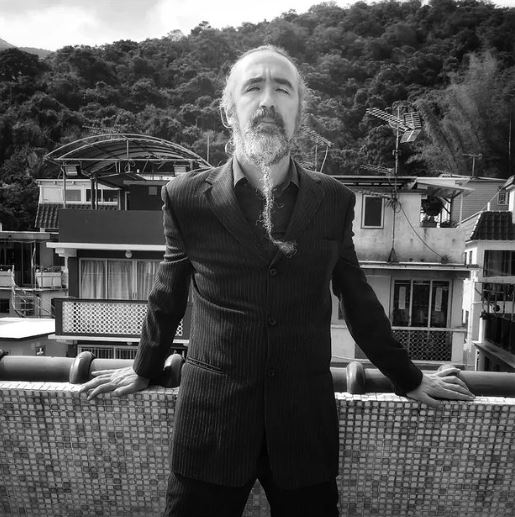
  • Edwin Kelley on 50 Years of Dharma Practice

    Edwin Kelley on 50 Years of Dharma Practice

    Introduction

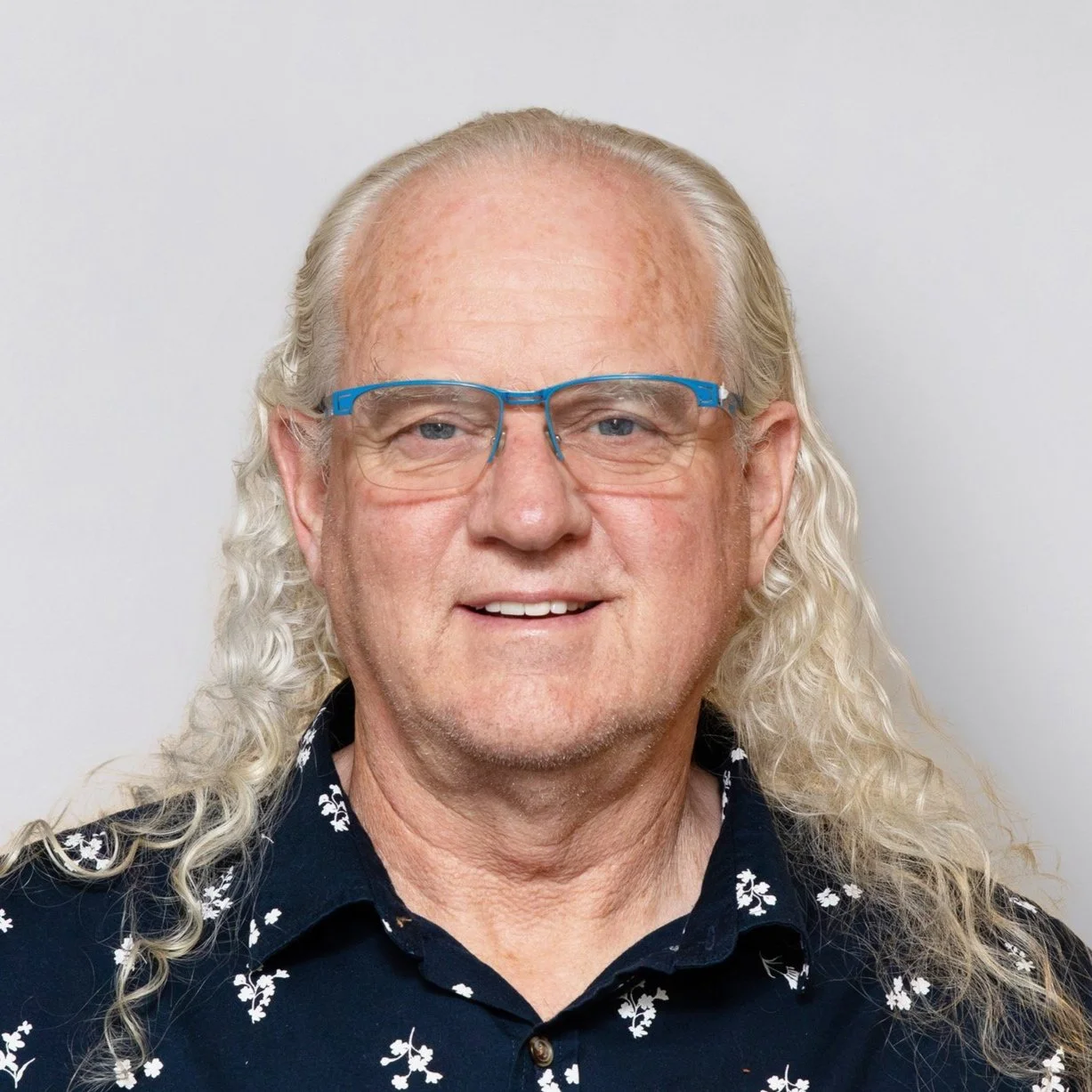
    Edwin Kelley began practicing Buddhism in 1975 after attending a 10-day Vipassana retreat near Perth, Australia, following a serious motorcycle accident that had turned him toward questions of meaning, meditation, and spiritual practice.

    In 1992, he travelled to Burma with his wife, Myoshin, for six months of intensive retreat under Chanmyay Sayadaw, where he ordained temporarily as a Theravada monk and immersed himself in Mahasi-style insight practice, Abhidhamma, and metta meditation.

    He first encountered Vajrayana Buddhism in Dharamsala, India, in 1993, and became a student of Yongey Mingyur Rinpoche in 1998. Edwin later served as Executive Director of the Insight Meditation Society and helped establish the global Tergar Meditation Community in 2009, where he held roles including Executive Director, Co-Executive Director, and CFO.

    Retired from administration since 2022, Edwin continues to teach and support students of Mingyur Rinpoche as a Tergar instructor. His teaching draws on more than 50 years of practice across Theravada, Vajrayana, and Western Dharma communities, with an emphasis on clarity, kindness, and recognizing one’s true nature.

    Edwin Kelley can be found through Tergar International, Tergar Australia, and his author profile at Lion’s Roar.

    Training and Early Journey

    PAA: Your journey began with a meditation retreat in 1975 near Perth. What first drew you to that experience, and how did it shape your path in meditation and the Dharma?

    Edwin Kelley: Although I attended my first 10-day meditation retreat outside Perth in 1975, my journey really began about three years before that, when I had a very nasty motorcycle accident during the mid-year break of my first year at university.

    I had gone back down to where I grew up in the Bega Valley for the break and had gotten a job milking cows on a local dairy farm. On the Saturday night, after finishing two weeks of milking, I was riding a motorcycle back to my friend’s place. Essentially, I ran out of road and left the road rather than hitting an oncoming motor vehicle. I was thrown through the air headfirst, hit an embankment, and was heavily concussed. I was unconscious for well over an hour, fractured my sixth thoracic vertebra, spent three weeks in hospital, and lost university time.

    It was a major shock to my system. I lost my drive to study and to be somebody. The next year I dropped out of university and, with a friend, hitchhiked to Perth. During those next two or three years, I spent a lot of time looking for the meaning of life: reading Western and Eastern philosophy, meditation books, and the classic books circulating in the early 1970s — Autobiography of a Yogi, Ouspensky, Alan Watts, Hermann Hesse, Ram Dass, and many others.

    I wound up in Perth in 1974 and was working two jobs because I was saving money to go to Europe. A woman I was working with at a restaurant in Perth was organizing a 10-day Vipassana retreat, and she talked me into signing up. I do not think I had any real idea what I was getting into, but it seemed like it might provide answers to what I was looking for.

    The retreat was about 100 km outside Perth, in a rural facility, completely in silence, with a teacher named Robert Hover, an American who had been a student of U Ba Khin in Burma. It focused primarily on anapanasati and body scanning, similar to the method taught by Goenka, though subtly different.

    That program irrevocably changed my life.

    When I had the motorcycle accident, I had lost the memory of what had happened. I knew I was going to leave the road because a car was coming, but I did not know how I left the road or how I hit the embankment. I had been severely concussed for well over a week, perhaps ten days.

    During that retreat, two or three years later, I had a dream in which I reclaimed the somatic experience of being thrown off the motorcycle and hitting the embankment. I woke up around four in the morning, bolted upright in bed, and thought, “Wow.” Then, sitting on the cushion over the next hour or two, I realized I had reclaimed the memories I had lost from the accident.

    That demonstrated to me the power of the practice.

    Early Communities, Disillusionment, and Karma

    PAA: Looking back on your journey, is there a particular moment or insight that felt truly transformative for you? What was the context of that moment, and how did it change your outlook or practice?

    Edwin Kelley: There is a part of my life that I do not normally put in any public bio. After that retreat in Perth, I spent another couple of years traveling around Australia. I finally wound back up in Perth at the end of 1976.

    Some of my friends from my earlier time there were getting into Bhagwan Shree Rajneesh and his teachings. I ended up going to a centre just outside Perth. The Rajneesh community had a very strong presence in Perth, but this was right at the beginning. There were hardly anybody involved, maybe half a dozen people.

    I went to the facility they had in the outer suburbs of Perth, ended up taking sannyas, and stayed there for the next 18 months or so before going to Pune, India, at the end of 1978. I spent the next two or three years, off and on, in Pune, until Bhagwan moved to Oregon. I spent about ten weeks getting from Pune to Oregon in 1981 and was in Oregon very early in the commune. I was there pretty much from the beginning to the end. I left in November 1985, after everybody else had left.

    This was a very formative part of my spiritual development.

    The strongest thing I recall from that experience was the sense of community. I shared intimate daily relationships with hundreds of people, many of whom, nearly fifty years later, I am still close friends with. Although our spiritual journeys diverged, the friendships remained.

    Why I got into the Rajneesh world is another story. How it fits into the whole Dharma or Buddhist experience is another story. But it was definitely a profound part of my early life and spiritual journey.

    Things also went horribly wrong. At one point I was personally drugged and made incompetent because of certain actions I had taken. I did not work in the inner circle, but I worked in the support team for someone who was in the inner circle, in accounting. That is where I learned the fundamentals of my accounting skills, which served me well later.

    In terms of my subsequent journey, it taught me what can go wrong. Although we can aim for ultimate reality, liberation, and freedom from suffering, if we do not attend to the details of the law of karma, things can go horribly wrong. We cannot use ultimate reality to circumvent the realities of relative reality.

    There is no question that this was the biggest lesson I took from there.

    It is also worth noting that this is where Myoshin and I met, in Oregon in 1983. Here we are more than forty years later. That has been a huge part of our lives together. So good came from my time there as well.

    Practice, Partnership, and the Return to Dharma

    PAA: In 2009 you and your wife Myoshin moved to help establish the global Tergar community. How has practicing and teaching alongside a lifelong partner influenced your perspective on the Dharma and on teaching?

    Edwin Kelley: After the Rajneesh community in Oregon fell apart in 1985, Myoshin and I spent about 12 months in the United States and Canada, got married, and moved to Australia at the end of 1986. We lived together in Sydney for a couple of years, then went up to Byron Bay. We were seven years together in Australia, except for about a year we spent in Burma and Asia, primarily in Burma.

    After we moved up to Byron Bay in 1989, Myoshin did a weekend retreat with an American teacher named Alan Clements, who had been a student of Mahasi Sayadaw and had been a monk in Burma. It had a major impact on her.

    In the meantime, I had gone back to university and enrolled in an accounting degree because that was the skill I had that could most easily support me. I thought that if I finished my degree, I would be more financially secure rather than just doing bookkeeping.

    Myoshin went down the rabbit hole. She started practicing. She went and did a month with U Pandita in Bowral, NSW, and later went to IMS in Barre, Massachusetts, and did two months with U Pandita. I was left at home working for a public accounting firm and doing my studies.

    It was a challenging time for me. Every now and again she would say, “Do you want to come and practice with me?” I was still quite reactive to anything spiritual, having gone through the disillusionment that occurred when the Rajneesh community collapsed. I did not want anything to do with it.

    Finally, a year or so later, she convinced me to do a 10-day retreat, which was a struggle for me. Then, a year later, Chanmyay Sayadaw, another Burmese teacher who had also been a student of Mahasi Sayadaw, came to Australia. I did two weeks with him, and that was a major turning point.

    I really got something from that retreat.

    When I came home and went back into my accounting office, I saw all the piles of people’s shoeboxes full of accounting receipts and had this epiphany: “Oh my dear, this will never really be satisfying.”

    Chanmyay Sayadaw had invited Myoshin and me to come to Burma. Within six months, we were both in Burma, where we spent six months, and I ordained as a monk.

    Burma, Ordination, and Theravada Practice

    PAA: In 1992 you spent six months on intensive retreat in Burma with master Chanmyay Sayadaw. Could you describe what that retreat was like and what insights or challenges emerged during that time?

    Edwin Kelley: We arrived in Burma in August 1992. Initially we went just for three months, but there was something incredibly enticing about the whole experience.

    Chanmyay Sayadaw was offering temporary ordination to anybody who wanted to ordain. For me, it was a little like “when in Rome, do as the Romans do.” Maybe it was also a kind of value-added thing: if I were really going to immerse myself in these teachings, then I would ordain. So that is what I did.

    It was difficult. The conditions in Burma were challenging: the monsoons, the bugs, and the very intense method of moment-to-moment concentration on psychophysical experience. I found my practice very difficult at times. I crashed and burned.

    Chanmyay Sayadaw encouraged me to get back on the horse. He also strongly supported me in doing loving-kindness meditation — metta meditation — for myself and for all beings. I think that was the saving grace for me.

    I did have remarkable meditative experiences. Sayadaw taught Abhidhamma every night, drip-feeding it to us as an approach to understanding psychophysical process. I had some remarkable experiences associated with the five aggregates, the Four Noble Truths, and the Four Foundations of Mindfulness. Seeing the way the mind creates reality was incredibly profound for me.

    After three months, although we had only planned to stay for three months, I could not leave. I felt that if I went back to Australia, I would end up being a public accountant again. I needed to stay beyond the point where I would pick up the mantle of accountancy again. I did not want to go back and put on the accounting robes, so to speak.

    So we stayed another three months in Burma, largely because I felt I needed to stay beyond the point of no return. I have no regrets about that.

    Burma was definitely a major experience in my life.

    Ordained bhikkhus coming together, chanting the Pali, doing these rituals — there was something incredibly deep and meaningful about it. A sense of belonging, I suppose, as ancient as the teachings themselves, going back to the time of the Buddha.

    Edwin Kelley

    PAA: During that Burmese retreat you also ordained temporarily as a Theravada monk. What was meaningful about that monastic experience, and how did living as a monk influence your understanding of the Buddhist path?

    Edwin Kelley: One thing to add about my time in Burma — and this was equally true when I returned in 2004 and ordained again for six weeks — was the sense of being part of an ancient brotherhood, a lineage going all the way back to the Buddha.

    The rituals we did as Sangha, reciting the Patimokkha, daily confessing our indiscretions, and then at the end of the rains retreat, the Kathina ceremony and the offering of robes to a monk — there was something about all of that which gave me a deep sense that this had been happening every year for over 2,500 years.

    Ordained bhikkhus coming together, chanting the Pali, doing these rituals — there was something incredibly deep and meaningful about it. A sense of belonging, I suppose, as ancient as the teachings themselves, going back to the time of the Buddha.

    That left a deep impression.

    I have no idea how many lifetimes I may have spent as a monk, but I am sure it has been many, both in the Theravada tradition and in the Tibetan tradition. Fascinating.

    IMS and Dharma as Work

    PAA: After returning from Burma, you joined the Insight Meditation Society and eventually became its Executive Director. How did your time at IMS, a major Western meditation center, influence your own practice and your approach to teaching the Dharma?

    Edwin Kelley: After returning from Burma, although I had been studying for an accounting degree, I had only finished two-thirds of it. I still had a full year to complete.

    I really did not want to go back to being a public accountant where I could only study part-time, so I enrolled full-time at university. For 12 months, I lived separately from Myoshin during the week and we would get together on weekends so I could devote myself to my studies.

    I did really well. I enjoyed it. It was much easier to focus on academic work when I was not working.

    At the same time, Myoshin and I helped form a local community that sponsored meditation teachers to come to the Northern Rivers area of New South Wales to teach retreats. We invited different teachers from the Insight Meditation Society, including Steven Armstrong, Steven Smith, and Michele McDonald-Smith.

    At one of those retreats in March 1994, I learned that the position of Director of Operations at IMS was vacant. I still had a couple of months to finish my degree, so I wrote off and applied for the job. After some back and forth, I was hired. IMS sponsored me, I got my green card, and I came to IMS in July 1994.

    I think I believed I would be able to do more practice. That was partly my motivation. But of course, if you have ever had a leading or executive role in any organization, even a Dharma organization, there is never a good time to take time off, go on vacation, or do retreat.

    I had to devote myself to running the place. Within about 18 months, I became Executive Director. A few years later, I was able to sit for six weeks, half of the three-month retreat there. During that retreat, I made a vow to myself that I would not be Executive Director when I turned 50. I saved up money, opened a CD, called it the “Edwin Liberation Fund,” and put money aside so I could quit work and devote myself to practice.

    One of the biggest lessons from running a major Dharma retreat center like IMS was that I got to know all the primary teachers in the Insight tradition in the United States and Europe personally, on a first-name basis. I helped organize their schedules and bring them to IMS to teach.

    But the deeper lesson was to give myself over to the job from the perspective that this is the path.

    After some time, I realized that although I was not spending time on the cushion every day, I was working with the paramis — the perfections of patience, generosity, loving-kindness, diligence, and so forth.

    My understanding now is that if we make our life and work the path, if we make our spiritual practice one of kindness, generosity, and presence of mind in all our dealings — our personal interactions and our business dealings — that is as powerful as any time spent on the cushion. It can totally and absolutely transform our hearts and minds.

    That was my major lesson from serving as Executive Director of IMS, and later from serving in executive roles with Tergar.

    Vajrayana, Mingyur Rinpoche, and Lineage

    PAA: You first encountered Vajrayana Buddhism in 1993 and became a student of Yongey Mingyur Rinpoche in 1998. What aspects of Mingyur Rinpoche’s teaching resonated with you, and how has his guidance influenced the direction of your practice?

    Edwin Kelley: After I quit as Executive Director of the Insight Meditation Society in 2003, I did a six-month retreat at the Forest Refuge. By this point, I had already met Mingyur Rinpoche.

    My connection to Vajrayana Buddhism began in 1993, after we had been in Burma for six months. I went to India and spent a month in Dharamsala, where the Dalai Lama lives, at Tushita Meditation Centre. That was my first real exposure to Vajrayana Buddhism.

    I was fascinated to see the similarities between the Theravada tradition and the Vajrayana tradition. Tushita was an FPMT centre, and there were a lot of similarities. It was also an absolute delight to get to see the Dalai Lama, shake his hand, and attend teachings.

    In 1998, before I quit as Executive Director, I met Mingyur Rinpoche. After I quit, I traveled around America and did many retreats with him. During that time, I got to know him personally. I was invited to help care for him. I helped sort out his visa; we drove to Montreal and back, he did teachings there, and we got his visa sorted out. That meant we got to know each other personally, which was quite profound.

    The first teachings I did with him in 1998 were when he was there with his brother. His brother gave Dzogchen pointing-out instructions and nature of mind teachings, while Mingyur Rinpoche taught from the Four Noble Truths and early Buddhism.

    I was struck by the similarities between Mingyur Rinpoche and Chanmyay Sayadaw, my Burmese teacher. In many ways, Mingyur Rinpoche provided the perfect bridge. I did not see any separation, distinction, or conflict between Vajrayana and Theravada.

    I felt that he tied a ribbon around all of my spiritual practice — the Rajneesh world, the Theravada world — and tied a big bow around it, as if to say: “Do not throw any of it away. It has all been in service of understanding your own heart and mind and eliminating confusion.”

    That reflects in my teaching now. Unless somebody is engaged in a practice that I feel is actually harmful or unsuited to their personality, I am not a black-and-white person when it comes to practices, lineages, or teachings. Whatever works for you, whatever you want to explore — another lama, another tradition, another religion — you should do it.

    It is your journey. It is your path. You need to discover what works for you. It is more about following your heart than deciding what is right and wrong in some rigid way.

    Theravada and Vajrayana: Relative and Ultimate Reality

    PAA: You trained intensively under Chanmyay Sayadaw in Burma and later under Mingyur Rinpoche. How do the methods and lineages of these very different teachers complement each other in your own approach to meditation?

    Edwin Kelley: Having said what I just said about the similarities between the Theravada and Vajrayana traditions, obviously there are also significant differences.

    For me, and I came to understand this through discussions with Mingyur Rinpoche and teachings from him later, the Mahasi Burmese Abhidhamma approach really focuses on relative reality: the way our psychophysical process happens, how it works, and how the three characteristics — impermanence, not-self, and suffering — are intimately embedded in all psychophysical experience and phenomena.

    When one practices in that way and goes deeply into awareness or mindfulness of that process, at some point wisdom arises and says: “Samsara sucks. I am out of here.”

    In the Visuddhimagga, it says the mind seeks nibbana as an object. That is very much a Theravada way of looking at it. In my mind, it is the causal vehicle. It is relative reality. It is primarily working with that.

    Vajrayana practice, particularly as it comes to us from Mahamudra and Dzogchen, is very much about ultimate reality: rigpa, the union of clarity and emptiness, the mind that is freed from clinging to anything.

    It is like going from the infinitesimal to the macrocosm: resting the mind in spacious, open clarity, the union of clarity and emptiness, where anything and everything that does not inherently exist is known and liberated upon arising.

    That is how I would characterize the two different styles.

    I think both are equally important. There are a lot of people who come to Vajrayana Buddhism wanting to touch the sky — Dzogchen, rigpa, nature of mind — who would be well advised to go back and take a look at their psychophysical process and deal with some of their own suffering before they attempt to realize their true nature.

    All the drama, kilesas, challenges, stress, worry, and conflict come from clinging to a sense of self, identification with who we think we are, and the appropriation of our experience: “I am,” “this is mine.”

    Edwin Kelley

    PAA: You emphasized that Abhidharma knowledge can itself “mitigate confusion and delusion” by informing how we view our experience. How do you help students translate such theoretical understanding into real insight through meditation practice?

    Edwin Kelley: From my own practice standpoint, I should say a little more about the differences between the Theravada and Vajrayana approaches, and why I think both are incredibly valuable.

    When one brings attention, mindfulness, and awareness to the minutiae of one’s psychophysical process, it is mind-boggling what one sees. It is really interesting to challenge the misperceptions we have about the single, solid, separate sense of self — a phrase I coined to capture what I perceive to be the way we cling, the Second Noble Truth, and how we create our suffering.

    All the drama, kilesas, challenges, stress, worry, and conflict come from clinging to a sense of self, identification with who we think we are, and the appropriation of our experience: “I am,” “this is mine.”

    There is something really valuable about the Theravada approach, and about the Abhidhamma approach, whether it is Vasubandhu, Buddhaghosa, or another system. Bearing witness to the process of mind-body experience is incredibly revealing. It compels one to understand the mechanism of the Second Noble Truth, and it compels one to seek the answer of the Third Noble Truth.

    Of course, all of that is also there within Mahamudra: shamatha, the Four Immeasurables, vipashyana. It is all there. It comes at it from a different or slightly different perspective.

    To be introduced to the nature of mind, to get a glimpse of ultimate reality, and to understand how to work with appearances from the perspective of the liberated mind is an incredibly valid tool.

    The view contained within Vajrayana — and within Mahayana too — that we are all endowed with inherent good qualities, that we are perfect, whole, complete, and that nothing is missing, is supreme. This is our true nature. This is Buddha nature.

    Of course, we do not believe it. We struggle to accept it. But the practice is to come to an acceptance and realization of that, to develop the capacity to understand it, take confidence in the recognition of it, pitch a tent there, take up shop, and live from that place of true nature.

    That is remarkably profound and transcends all other practice.

    Personal Practice, Struggle, and Transformation

    PAA: You once mentioned it took about ten years after your initial instructions to gain “any reliable level of confidence” in your meditation practice. Can you reflect on what sustained you during those years and what milestones or insights helped build that confidence?

    Edwin Kelley: It has now been over 50 years since I did my first 10-day Vipassana retreat in Perth in 1975. As is apparent, I have tried many methods, done different practices, had different teachers, and had the great privilege of being part of three major spiritual communities: the Rajneesh community, the Insight Meditation community in North America, and now the Tergar community.

    My practice has varied. I would not like to imply that it has all been a cakewalk.

    I definitely struggled with challenges, particularly beginning when Myoshin began to do deep practice and I was left alone. That was a difficult time for me. Even up until I did the six-month retreat at IMS in 2003, I would say I struggled with being alone.

    There was something incredibly rich and rewarding about life with a spiritual partner and all the intimacies that come from that. In Myoshin’s absence, I definitely felt challenged.

    I consider myself a greed type, a desire type, and I have had a lot of compelling thoughts around sexual desire. Chanmyay Sayadaw helped me work with that in Burma. I have also talked to Mingyur Rinpoche about it. Once, when I asked him about it, he pointed his finger at me with the most intense look I had ever seen from him and said, very briefly, “That has kept you in samsara since beginningless time.”

    That was a profound teaching in and of itself.

    Slowly, slowly, and particularly through the nature of mind teachings, I began to understand. I do not know how many times I have had the great benefit of receiving pointing-out instructions from Mingyur Rinpoche and his brother — twenty or thirty times, perhaps. I could try to count them.

    At some point, probably not until the late 2000s, around 2009 or early 2010, after having received pointing-out instructions many times, I began to really understand what it means to have Buddha nature, and what those qualities are: awareness, loving-kindness, compassion, and wisdom.

    I also began to understand how the paramis are the path, and how developing the capacity to simply rest one’s mind as it is can be profoundly transformative.

    That has now become my practice, pretty much exclusively.

    PAA: What does your current daily meditation practice look like, and how has it evolved from the early days of your practice?

    Edwin Kelley: My current daily practice is very simple.

    When I wake up in the morning, I have a little ritual of chants that I do: taking refuge, bodhicitta, loving-kindness, compassion, the basis of the Four Immeasurables, and guru yoga.

    Then I live my life.

    I was given a beautiful, succinct poem by Mingyur Rinpoche as a practice, and that is my daily practice. It is really about just resting in the present moment.

    Sometimes I will sit, but rarely do I do formal practice anymore. It is mostly trying, as often as possible, to remember to rest in recognition: short times, many times, anywhere, anytime.

    Sometimes it comes naturally. Sometimes it persists for a few minutes or whatever. There are many places where I have learned to do it: sitting, resting in nature, driving the car. I love driving meditation.

    I have coined the phrase for driving in traffic: when you stop at the traffic lights, when the car comes to rest, the mind comes to rest. Then remain there with the mind at rest until the lights change. I am convinced you would be the first person to know the lights have gone green.

    That is pretty much my practice.

    At night before I fall asleep, I dedicate the merit in whatever way. It is really that simple.

    I will do retreat from time to time, and that is basically what I do on retreat as well. I no longer do much formal liturgical practice, sadhanas, Mahamudra liturgies, or that sort of thing as daily practice. Occasionally I will do chants in a group situation, but they are not part of my daily practice anymore.

    Through Mingyur Rinpoche’s guidance, I have also practiced quite a bit with lucid dreaming, which is way too much fun to be called Dharma practice. I have enjoyed that thoroughly.

    Teaching and Dharma in the Modern World

    PAA: In our fast-paced, modern life full of distractions, what do you feel is the core message of the Dharma that Western practitioners most need to hear, and how do you convey that message in your teaching?

    Edwin Kelley: From the perspective of Dharma in modern society, I am not sure what to say.

    As a teacher, the biggest privilege I have been given is to have a front-row seat to the transformation of the minds of others. That is really what is most important to me.

    There is certainly a wealth of knowledge I have acquired from years of practice and study, and from time to time there are appropriate moments for me to share my understanding. It certainly informs my teaching. One of the things I hear most commonly from people is that I teach with clarity, or that I can articulate reality with significant clarity, which seems to be very helpful for people.

    But when communicating one-on-one with somebody in the context of their practice, what is most significant to me is being able to see the ways in which that individual’s mind might cling, grasp, or fixate on a person, idea, or perception.

    Invariably, that is what it comes down to: the Second Noble Truth, the cause of suffering. How do we as individuals misperceive reality? How do we, through perception, impute an understanding that is erroneous, false, or misleading?

    To the extent that I can reveal that to somebody and give them a key to help them see how their own particular brand of misperception is perpetuating their suffering, that seems to me one of the most significant things.

    There are many techniques out there. Unquestionably, this is a biased opinion, but I think Mingyur Rinpoche’s and Tergar’s approach — through awareness, Anytime Anywhere Meditation, Joy of Living, and Path of Liberation — is a complete path. For anybody who seriously wants to practice, there is no question that it is profound.

    I do think there are some practices out there that are very tight. I would steer away from practices that are too tight. I do not think the modern mind needs more tightness. We already worry too much. We are too stressed out. We are too fixated on perfection, making ourselves better, and improving our situation.

    I love Mingyur Rinpoche’s teaching: not meditating, but not distracted; not fabricating.

    There you are complete. There you are whole. There you are a Buddha in your true nature. It is just covered by confusion, delusion, misperception, and erroneous belief.

    We can work endlessly to purify those misperceptions, but the direct path is to understand how our true nature manifests here in this moment: the knowing, radiant quality of the mind; the open, loving, caring heart of kindness; and the capacity of the mind to see things truly as they are.

    These are the qualities of our true nature. These are the qualities of our Buddha nature.

    To live a life focused on recognizing how those qualities manifest in our own hearts and in the hearts and minds of others — that is the best practice, the best path, and the best commitment.

    Of course, it comes packaged with refuge, bodhicitta, guru yoga, and dedication. But seeing our true nature and dispelling the doubt that we have Buddha nature — that is the path.

    PAA: What an inspiring interview. Thank you for sharing the journey, perhaps in the future we can revisit some subjects after your retreat.


    Perseus Community

    Join the Perseus Community – It is Free!

    A Community for Practicing Magicians, Meditators and Internal Martial Artists

    Please join us, introduce yourself and begin sharing and learning. We have areas covering all aspects of the esoteric from both Eastern and Western traditions, Energy work and Internal training all freely available on the platform. See you inside.

    Join the Community
  • Archaeomancy Explained: Frater Barrabbas, Qabalah, and the Forty Worlds System

    Archaeomancy Explained: Frater Barrabbas, Qabalah, and the Forty Worlds System

    Introduction

    Frater Barrabbas Tiresius is a practicing ritual magician who has studied magic and the occult for over forty years. He believes that ritual magic is a discipline whose mystery is unlocked by continual practice and by occult experiences and revelations. Frater Barrabbas believes that traditional approaches should be balanced with creativity and experimentation, and that no occult or magical tradition is exempt from changes and revisions.

    Over the years, he found that his practical magical discipline was the real source for all his creative efforts. That creative process helped him build and craft a unique and different kind of magical system, one that is quite unlike any other yet based on common Wiccan practices. So, despite its uniqueness this magical system is capable of being easily adapted and used by others.

    Frater Barrabbas is also the founder of a magical order called the Order of the Gnostic Star and he is an elder and lineage holder in the Alexandrian tradition of Witchcraft.


    Interview

    Frater Barrabbas
    Frater Barrabbas

    PAA: You describe Archaeomancy as something that grew out of a single word by Michael Bertiaux that stayed with you for decades. Do you feel like you discovered this system as a sudden insight, or that it revealed itself slowly over time?

      There were actually both processes at work in the development of Archaeomancy. When Michael Bertiaux briefly described his idea, it had a powerful effect on my imagination. I began to have impressions about what that magic would look like and determined that it involved the Qabalistic structure of the Forty Worlds. After that, I developed my magical technology over time to best accommodate the process of working with the various angelic beings in these worlds. Yet that was just the first approach to this magical topic and it spanned the 1980’s into the 1990’s. 

      The second approach was taught to me by the Nephilim, who helped me to develop a new approach to the Tree of Life. They presented to me a Tree of Life pattern without the Sephiroth, showing the skeletal lattice where triangular shapes were emphasized, and that just below the supernal triad were two trapezoidal shapes. There is a total of eighteen of these shapes formed by the pathways, and these are the Qabalistic Dimensions, which became the focus for this new system of magic. I developed a system of magic that would aid me to enter into these dimensions to experience the source or core of the Tree of Life. This magical technology is discussed in greater detail in the second volume of this series on Archaeomancy.

      Liber Artis Archaeomancy: Mastering the Angels of the Four Worlds (June 2026 Release – Pre order now)

      PAA: This book, being a manual, also has the components of a philosophical work. What compelled you towards this format?

        Overall, this book is a practical approach to the art of angelic invocation involving the forty Qabalistic domains. I also wanted to discuss the historical precedence for this kind of magic in Medieval Europe, and how what I am proposing now is a variation of what was performed in that world. I am also a pagan and a Witch, so that will color how I approach angelic spirits, and how I view the world. While all this is true, I did not seek to include any philosophical speculation in this book, but it does attempt to create a sacralized environment in a very secular post-modern world.

        PAA: You mention that this system of magic developed in the 1980s and 1990s. What changes in your understanding of Archaeomancy occurred over those years?

          While the initial development for Archaeomancy of the Forty Worlds was begun in the late 1980’s, with the basic concept or target domains for this work, the actual magical technology evolved over time. This is especially true with the development of the second methodology of gaining entrance into the dimensions. Even as recently as the early 2000’s this magic has been in a state of development, mostly refinements and the ritualized utility for others in my magical social circle. The earliest inspiration remained the same, but the technical methodology evolved and changed over the decades.

          PAA: Can Archaeomancy, in practice, be distinguished from classical ceremonial magic?

            The differences between my system of magic and ceremonial magic are considerable. As technics of magic, they have some common ground, but they differ in the approach. First and foremost, godhead assumption is the primary state and mindset of the ritual magician who would practice my system of magic. While I will use a magic circle, it is to define the boundary between the sacred precinct of the temple and the outer profane world. What this means is that all magical operations and interactions with spirits occur within the magic circle and not without. There is no need nor requirement for the magician to hide behind a protective magic circle while engaging with spirits. Because a ritual magician is exposed directly to the spirits that they invoke or evoke, they rely on their godhead assumption to mitigate any potential harm that they might experience while engaging with these entities inside of their defined spiritual domain.

            My system of magic uses internal cross-roads, gateways, pylons, and energy vortices that make the magical workings directly tangible through a process of immersion. Direct contact with the spirits conjured is startling different from what is practiced in ceremonial magic. Also, godhead assumption allows the magician to be fully inspired by their personal Deity so that the ritual script can be completely abrogated for a more impromptu approach. Immersion allows for spiritual transformation of the highest kind, since there is a direct contact between the magician and the conjured spirit. Oddly enough, I have discussed the idea of immersion with other practitioners and I have discovered that left-hand path magicians use the same kind of approach. 

            So, I don’t consider myself a ceremonial magician because I decided long ago that strictly following a tradition was too constraining. I also find that ceremonial magic is too wedded to the Abrahamic faiths, and I am too much of a pagan to follow such a path. Ceremonial magicians also treat my system of magic with a certain disdain, where one such individual referred to my magical system as “stinking of Witchcraft,” which I took as a badge of honor. 

            Entering the domain of spirits, whether angelic, neutral or demonic has the effect of producing deep, profound, and highly impactful spiritual transformation.

            Frater Barrabbas

            PAA: What are the side effects of entering the domains of spirits?

              Entering the domain of spirits, whether angelic, neutral or demonic has the effect of producing deep, profound, and highly impactful spiritual transformation. The main purpose for angels is to evolve the practitioner and rely on their help to become a better person, and ultimately to achieve enlightenment. While most magicians start out seeking personal power and material gain, yet at a certain point in their quest, if they continue their work, they will change it to one that is about seeking knowledge, wisdom and self-mastery. This is where the interrelationship with spirits can have its most positive and constructive effect on the practitioner; when they have given up the pursuit of material gain and personal empowerment.

              PAA: Can Archaeomancy be understood without being practiced?

                A person can always understand any form of magic from a theoretical perspective, given that they have a good imagination and a basic education in the occult. Archaeomancy is no different in this way than any other system of magic, although it is more complex and has more ritual components. However, unless and until someone successful performs one of these ritual workings, they can never know how potent and profound this system of magic actually is when compared to other systems. To know is to do, is my personal aphorism when contemplating any form of magic. Outsiders will view this magical system as overly complex and perhaps too dissimilar from other systems of conjuring spirits, particularly if they are a practitioner of one of the more traditional systems of magic. My hope is that people will not only read my book but actually try to construct their own rituals and perform a magical working using this system. Those who can do that will discover the value of this magical approach.

                PAA: Do you see the forty worlds mapped through the Qabalah as something objectively real?

                  The Qabalah, whether we are talking about the Forty Worlds, the Eighteen Dimensions, or the structure of the Tree of Life, presents to the practitioner a simplified model of what is very complex and beyond any kind of mind-based approach. Just as a map is not the actual physical terrain that it seeks to describe, models of spiritual consciousness are also symbolic representations that cannot be confused with the reality. They are representations, overly simplistic so we can approach and grasp them with our mind. To truly apprehend this spiritual world, we would need the eye of spirit rather than the eye of mind. What I have found by experiencing the subtle planes of consciousness is that symbols are protean and changeable, and words and mental constructs of any kind are useless.

                  PAA: How should a practitioner use the relationship between the eighteen dimensions and the forty worlds?

                    The Qabalistic Forty Worlds structure is one of many models of the domain of the inner planes, and it is not the only model. The Qabalah of the Eighteen Dimensions is another model that I was taught by the Nephilim, or the fallen Sons of God. Either approach is just another way of taking a view-point on the Tree of Life, where one sees the ten Sephiroth through the four Worlds, and the other sees the triangular structures of the Tree of Life as actual living spiritual worlds. What binds them together is the Tree of Life, but any approach used to define sacred space using symbolic models is limited by the fact that the mind cannot fully comprehend the domain of spirit.

                    PAA: Do you see the intricate and extensive correspondences in your book as a language to be learned and spoken?

                      Tables of correspondence are an arrangement of unrelated materials, concepts and symbols that when combined using a template describe a spiritual concept. In that way, it could be construed a language. Since my system of spirit conjuring uses a matrix of symbols to define a specific Qabalistic domain where resides a spiritual being, or a hierarchical group of spiritual beings, then one could conclude that the use of these symbols forms a magical language of conjuration. Used as such, it describes and fully defines the place of residence of a spirit. When it is used with a ritual technology, that symbolic description becomes fully realized, opening up a Qabalistic world to the magician.

                      In numerous ways, myths protect us from the real truth, which would be confusing and disturbing, and it would negate much of what passes as dogma and theology in most religions. Myths can also point to the truth, but only to those who are willing to question their face value and to seek their underlying mystery. 

                      Frater Barrabbas

                      PAA: From magic to theology, what do you think most people are missing about angelic beings?

                      Religious beliefs about angels, as well as associated folklore, present to the faithful a logical and friendly exoteric perspective. There is a hierarchy of good angels, and they do the work of God in heaven. Then there are the bad angels, who reside in the underworld of Hell, and are used by God to tempt and lead astray the unbeliever and the unfaithful. It is a very simple, neat and tidy representation of something that is very complicated and not at all as friendly and reassuring.

                      First off, there is no one supreme godhead, there are in fact many gods answering to a myriad of human spiritual needs and wants. There is, in all of this, a singularity, which I call the One, but it has no name nor any kind of interactive personality. It is the union of all being, the source of all that was, is and ever shall be. The closest we can get to that holistic being is through the highest states of consciousness, called by many names, but is a form of conscious illumination.

                      In numerous ways, myths protect us from the real truth, which would be confusing and disturbing, and it would negate much of what passes as dogma and theology in most religions. Myths can also point to the truth, but only to those who are willing to question their face value and to seek their underlying mystery. 

                      With that said, I can state that spiritual beings reside in the archetypal domain of consciousness, and have both a symbolic existence and an activated and manifested instantiation. They exist in a place called the inner planes and function in specific roles. Since there is no supreme Deity, then there is no polarity in the spiritual world. There is just the functional roles and the striation of spiritual or material density. There was no rebellion against heaven, and demons reside in the underworld because it is close to the earth and the place of their origin. They are not evil or good, since such moral values have no relevance in the spiritual world. Things are much more complicated, and angels, demons, earth spirits, fairies, and the whole host of disembodied entities do not have conflict with each other.

                      These ideas, which I have gleaned by a long period of interacting and communicating with these spiritual beings are so far removed from what non-practicing people believe about angels that it becomes for me a point of not communicating what I have experienced. However, all spirits can have a role in helping a human being to perfect themselves over time. What is required is for the seeker to break past the exoteric beliefs that function as a barrier in order to discover the esoteric truth.

                      PAA: How much of the emotions and personalities of angels and demons are projections, and how much is intrinsic to the entities?

                        As I have pointed out previously, spirits have a symbolic existence and an activated and manifested instantiation. That process of materialization is determined by the beliefs and expectations of the practitioner. When I have achieved states of consciousness that reside in the subtle realms, I have observed spirits assuming an egg-shaped globe of colored light. However, in my imagination, they appear in the guise based on my expectations, wearing the characteristics of their symbolic nature as I interpret them.

                        PAA: Is there truly a division between “high” angelic magic and “low” goetic practice?

                          Conjuring any kind of spirit using whatever manner of magic might be considered “high” magic, and performing magical spells to acquire material benefits might be considered “low” magic. Using magic to help or harm others, to obtain enlightenment, or selfishly empower and enrich oneself could also represent polarized perspectives on the practice of magic. However, there must always be included the context of one’s intention, and social and material situations to consider. Thus, defining this kind of a binary approach to magic is likely an inaccurate assumption. Since I don’t see angels and demons as opposed or representing good or evil, then such a perspective on high magic or low magic is practically irrelevant.

                          PAA: Did you already have the chance to see Archaeomancy consistently transform the lives of others?

                            Yes indeed – those who shared these workings with me were transformed by them, although temporarily. As I have stated in my book, a person would need to have a continuous ongoing spiritual discipline and practice and then to integrate what was experienced into that discipline in order for the transformative revelations to be more permanent.

                            PAA: What really is spiritual renewal all about? And is it the goal of Archaeomancy?

                              Renewal sounds like maintenance to me, such as maintaining a spiritual discipline by periodic religious-magical events or experiences. Archaeomancy is a magical system that produces a profound spiritual transformation that can completely change someone’s orientation or belief-system. When practiced as an ordeal, it can overcome all personal obstacles and bring the practitioner face to face with their personal godhead, with all the revelations, insights and visions, and realizations that that might incur. Whether or not someone has a regular and consistent spiritual discipline, after successfully performing one of these ordeals, they will quickly adopt one in some fashion or another.

                              PAA: You speak of “veil of darkness” that brings emptiness and terror along the path. How important is this veil and what is it veiling?

                                I talk in my book about the absolute source of beingness as the One. From a Qabalistic perspective, that would be the Sephirah of Kether. Yet behind and beyond the One is the None, which is source of being as Non-Being. This would be the Ain Soph in the Qabalah. From the perspective of individual beings, such as we are, the idea of non-being would be a veil of darkness that is terrifying. If we cannot consciously comprehend the One, which is the source of all being, then how can we expect to understand non-being. Buddhists have stated in their various sutras that what is beyond and also the source of all beingness is emptiness. This metaphor is what I was trying to relate, in my limited fashion using words, what is the actual source of everything. The veil is our own blindness and the inability to mentally comprehend these very exalted, spiritual concepts.

                                PAA: When revising and innovating a tradition, should we risk distorting it or should we prevent it at all costs?

                                I am the last person to defend any kind of tradition or orthodoxy when it comes to the practice of magic. It is my strong belief that in each new age, a magician must reinvent the practice of magic. Traditions of magic cannot be transported or accurately reconstructed from one age to another because the cultural context supporting that tradition is irreparably lost. 

                                I sought to show this when examining angelic magic as it was practiced in Medieval Europe and then comparing how it is practiced today. So much has changed in how we see the world around us that it is surprising that magic can even be practiced by intelligent people in our post-modern world. A magician must invent their tradition, using the various practices of the past along with more modern practices that will hopefully produce a complete and workable system of magic. People saw supernatural occurrences easily in the 16th century because that was the framework of their culture and their religious beliefs and expectations. We are not the same people, so we have to work at breaking out of our culture determinants in order to see and experience spirits. This is why meditation and trance are so integral to the practice of magic today, where it was not as important to practitioners in the previous age.

                                Preserving a tradition of magic that no longer has relevancy in our current age is a fool’s errand, in my opinion. This is because reconstructing a tradition is basically changing it in a fundamental manner.  

                                PAA: Did your work within the Order of the Gnostic Star influence the development of Archaeomancy?

                                Archaeomancy was developed for use by the members of the Order, or at least the Qabalah of the Forty Worlds. However, in the early 90’s the mother temple fell apart, and since then there has not been an active temple to use what I had developed. Additionally, in the 1990’s I developed the second methodology of Archaeomancy, and then in the 2000’s all this lore was redeveloped along with the Abramelin Lunar Ordeal to become the resident lore of the Order. While I did share the transdimensional system of Archaeomancy with a few members of the Order, the revised version and the additional lore have not been engaged by anyone in Order as far as I know. I am hoping that changes with the publication of this book and the next in the series.

                                PAA: Is this system something that should be adapted to evolve, or something that requires fidelity to the original structure?

                                As I stated previously, I am against any kind of orthodoxy, including for my own work, which, I might add, has changed and evolved over the years. I would assume that someone who would seek to use this system of magic would adapt it to their own system. They would thereby create a hybrid, and then over time, it would evolve into something that is unique to their own personal practice. This is a very natural progression for magical development, and one that I would highly approve. I am a strong believer that magicians should show fidelity and consistently to their personal practice. They owe no fealty to me and what I have developed, since I am just another practitioner with a different perspective.

                                PAA: Who is the ideal reader of this book?

                                This is an advanced book on magic. Beginners would probably not find it very useful, since it will be seen by them as complex and having many ritual components. What a beginner needs to do is build their own magical system from the ground up, and I do have a book that teaches a beginner how to do that – “Mastering the Art of Ritual Magick.” My audience for this book is individuals who already have their own system of magic and have practiced magic intensively for a few years. Such a person will see the value of this system of magic and be able to adapt it to their own system. I am hoping that people who read this book will also attempt to perform the rituals that are in it. I think that anyone who can achieve this goal will be greatly rewarded by what they experience. To make the best use of this system of magic, it also requires an individual to have their own well-established spiritual discipline, so that when they perform one of these ordeals, it will be able to permanently change and transform them.

                                PAA: Thanks to Frater Barrabbas for taking part in this interview and to Andre Consciencia for facilitating this interview.


                                Learn More

                                Frater Barrabbas Books
                                Blog
                                Amazon Author Page

                                Perseus Community

                                Join the Perseus Community – It is Free!

                                A Community for Practicing Magicians, Meditators and Internal Martial Artists

                                Please join us, introduce yourself and begin sharing and learning. We have areas covering all aspects of the esoteric from both Eastern and Western traditions, Energy work and Internal training all freely available on the platform. See you inside.

                                Join the Community
                              1. Kazim of Hexen Press: Art, Witchcraft, and the Ritual Body in Contemporary Occult Practice

                                Kazim of Hexen Press: Art, Witchcraft, and the Ritual Body in Contemporary Occult Practice

                                Introduction

                                Kazim is a French occult practitioner, artist, and editor, best known as the founder and director of Hexen Press, an independent esoteric publishing house established in the early 2020s and based in southern France. Working at the intersection of magical practice and artistic expression, he operates primarily as a curator and editor of limited-edition works focused on contemporary occultism.

                                Active within European and international esoteric circles, Kazim has been described as a multidisciplinary practitioner with experience spanning ritual performance, visual art, and writing. His work engages with a range of traditions, including forms of witchcraft, grimoire-based practice, and other currents within modern occultism. He has participated in conferences, exhibitions, and ritual contexts, and has contributed to various specialized occult journals.

                                Through Hexen Press, he has developed a catalogue centered on witchcraft, folklore, and ritual art, often emphasizing the aesthetic and experiential dimensions of magical practice. His role within the press includes editorial direction and the curation of collaborations with artists and authors working within related esoteric fields.


                                Interview with Kazim – Hexen Press

                                PAA: Your practice has been described as a reification of art. Is art itself your primary vehicle for sorcery?

                                Art and Sorcery, Witchcraft or Magick are undeniably interlinked in my practice and have always stood in a strong relationship. I couldn’t express my magic without being creative and pouring my entire soul into the aesthetics, rhythm and different expressions of ritual. Be they visual, the words spoken, the poetry, the sigils, the paraphernalia, the set-up, all converge toward the one-pointedness, magical will, and intent of the practitioner.

                                Magic made a thunderous breakthrough into my life on the day of my 23rd birthday, which, for anyone interested in chaos magic, in the writings of Robert Anton Wilson and the T.O.P.Y. would be a meaningful date.

                                Kazim

                                PAA: With over twenty years of engagement across traditions—from Thelemic Chaos Magick to Quimbanda and Sabbatic Witchcraft was your path shaped more by deliberate initiation or by a series of unavoidable encounters?

                                Magic made a thunderous breakthrough into my life on the day of my 23rd birthday, which, for anyone interested in chaos magic, in the writings of Robert Anton Wilson and the T.O.P.Y. would be a meaningful date. I could say that most of my time from that moment on has been dedicated to the study and practice of magick. Initiations and encounters have marked pivotal moments along the way, but the path itself has remained quite steady since that day. Daily dedication and aspiration have been the most meaningful markers throughout.

                                PAA: How has long-term engagement with Poison Path and Vāma Mārga currents altered your understanding of the body as a magical instrument?

                                The Poison Path teaches one to navigate the dynamics of alteration, the intrusion of alien substances and forms of sentience into the bio-energetic and magical sphere of the practitioner, opening dynamics where chemistry, toxicity, boundaries, and magical and spirit congress converge. The bodily senses are often the vessels through which such encounters occur, through smoke, touch, ingestion, often combined to more subtle ways of perception. From there, a dialectic occurs in which the alteration of the senses and states of mind may become either destructive or beneficial to the practitioner. It is a perilous path, yet rich in profound lessons for those who engage with the invisible and the broader notions of alterity and otherness. 

                                The Vāma Mārga finds some parallels as a tantric approach as it seeks, within a properly initiated context, spiritual realization through the transgression of conceptual boundaries, embracing what is traditionally considered impure, forbidden, or dangerous in order to dissolve dualistic projections and reveal a sense of unity and non-dual awareness. The body, together with the full spectrum of its energies and sensations, is no longer regarded as something to be transcended, but as the very field through which realization and integration are accomplished.

                                Both paths confront the practitioner with risk and transformation, using what is feared or rejected as a catalyst for expansion and insight. In this sense, the Poison Path echoes the Vāma Mārga by turning otherness and the poisonous into tools for transcendence, wisdom and inner alchemy. The Tibetans have profound teachings on the transmutation of spiritual poisons into medicine. In the Puranas, Śhiva is Nīlakaṇṭha, ‘the blue-throated one,’ whose throat turned blue after he consumed the poison that arose during the churning of the Ocean of Milk. Many meaningful parallels may be drawn.

                                PAA: How do you decide which works or authors are aligned with Hexen Press, beyond technical quality or market interest?

                                Hexen Press strives to present authors who share a deep interest and expertise on the topics they wish to present and combine in their writings the depths and seriousness of academic and scholarly research with a magical persona, a singular sense of connection with the numinous they are able to convey in their writing: to revive the flame of enchantment and magic while presenting pioneering topics in the field of esoteric research.

                                PAA: Many Hexen publications are artisanal, limited, and deliberately demanding. Is exclusivity a form of magical filtration? In a time of instant digital consumption, why does the physical occult book still matter?

                                It is indeed a magical act, for both reader and publisher, to defend the book as a talismanic, artisanal, and limited object in a world where computer-generated art and mass production are becoming the norm.

                                PAA: Some Hexen Press books are hardcover, others artisanal, and some are visually dense anthologies. How do binding, paperweight, typography, and layout contribute to the ritual potential of a book? 

                                I believe this is one of the singularities of our publishing house: each book is approached as a unique entity, and it is my bidding to attune to its spirit in order to determine the most meaningful form through which it may manifest. Binding, paper weight, typography, and layout are not considered as secondary aesthetic choices, but as integral components of the book’s spirit, shaping how it is handled, perceived, and engaged with. As such, there is no predefined formula. Each project differs from the last and carries its own particular signature, both in form and in content.

                                PAA: On Lycanthropy (Transformation & Ecstasy of Sorcerers), a medieval pamphlet that reframes witches’ flights and ointments, bridges folklore, theology, and early proto-occult phenomenology. What drew you to this work, and how do you see its relevance to modern sorcerous practice? 

                                On Lycanthropy is a very interesting and unique little book, in that it marked a significant shift in the understanding of lycanthropy and its association with witchcraft. While its author attempted to analyse the phenomenon from a more materialistic perspective, the pamphlet preserves a great deal of folklore and popular conceptions concerning witches: the ecstatic flight to the sabbat, the nature of the soul, its capacity to temporarily leave the body, and its ability to act within the physical world from beyond it. It is also among the earliest and most comprehensive texts to examine in detail the physiological properties of the substances that composed the various witches’ ointments. As such, it is a very worthy text to study for contemporary practitioners.

                                PAA: Alraune: The Poisoners Guild has become one of your signature journals on the Poison Path. How do you see poison lore intersecting with broader currents in the Via Nocturna? What makes poison a fertile subject for magical exploration? 

                                The Poison lore, the pharmacopoeia is so deeply connected and interlinked with the history of magic that it would be difficult to overlook the subject. What makes the Poison Path a fertile subject for magical exploration is the communication it proposes to engage with potentially toxic substances and plant spirits, and how these can be approached to empower the practitioner and become a witch’s allies. It is a metaphoric narrative of the witch entering the wilderness to undergo initiation, touched by supernatural and nocturnal forces, and emerging changed and empowered.

                                Our interconnection with the plant kingdom, and the common fate we share as living beings, should be acknowledged in our practices.

                                Kazim

                                PAA: Titles like Flowers of Blood foreground plant lore and folk cosmologies. In contrast to more theoretical or symbolic works, what place do nature and herbal wisdom occupy in Hexen Press’s conception of sorcery?

                                I believe that a genuine animistic, sorcerous connection that a practitioner maintains with the green kingdom is a vital and meaningful act of resistance against the systemic, soulless exploitation of nature and resources in a global capitalist environment. Our interconnection with the plant kingdom, and the common fate we share as living beings, should be acknowledged in our practices. Plants could certainly live without us; the opposite is far less certain. The tree, as axis mundi, is central to many traditions. In the Jurema tradition in which I am initiated, a shamanic cult from the Nordeste of Brazil, the path toward the divinisation of the soul is linked to the spirit of the Jurema tree and to the connection, or symbiosis, through which an evergreen state of enchantment is maintained. What this deeply means becomes increasingly significant to me in the world we live in.

                                PAA: Aradia’s Hidden Hand reconstructs the overlooked life of Roma Lister, a figure implicated in the early stages of the writing of The Gospel of the Witches. How does resurrecting marginal occult histories like this reshape popular narratives about roots of modern witchcraft?

                                Aradia’s Hidden Hand participates in the same intention as Muses No More: to acknowledge the prominent role women have played in the development of modern witchcraft and Western esoteric traditions. While often overshadowed by male-dominated narratives, it is necessary to reconsider how we approach history, moving toward more integrative and respectful perspectives that take into account the stories and roles women have held, and continue to hold, as understood from their own viewpoints and accounts.

                                PAA: What genres or traditions do you want to explore next in Hexen Press: grimoire material, visionary manifestos, regional witchcraft, or something unknown?

                                I would definitely love to publish works of contemporary sorcerous praxis written by genuinely inspired practitioners; to explore contemporary approaches to the Greek Mysteries and modern interpretations of goetia, in the sense expressed by Jake Stratton-Kent. We have an upcoming book in French on the topic, which may offer a valuable discovery for the French scene. I am interested in new topics and perspectives, any work that ignites the flame of inspiration and magic in the soul of our readership.

                                PAA: Finally, if Hexen Press were to disappear tomorrow, what trace or contagion would you hope it left behind?

                                The Serpent’s gift of Inspiration! :)

                                Thank you!

                                PAA: Many thanks for taking part in this interview and sharing your journey.


                                The Three Transformations – Free Course

                                Join the Course
                              2. Christie Smirl (Kalavati Devi) on Discernment, Kundalini, Siddhi, and Tantric Practice

                                Christie Smirl (Kalavati Devi) on Discernment, Kundalini, Siddhi, and Tantric Practice

                                Introduction

                                In this interview, we meet Christie, whose journey began in childhood when her clairvoyant abilities first emerged—a deeply challenging time, as no adults around her could relate to her experiences. This early awakening set her on a path of self-discovery, leading to the accomplished guide we see today.

                                A heartfelt thank you to Christie for sharing both sides of her journey—the struggles as well as the growth that shaped who she has become. If you’d like to follow her work, you’ll find links at the end of the post.


                                Interview

                                PAA: You worked in acute care for decades at St. Bernardine Medical Center. What did 30  years of hospital experience in the emergency department, intensive care and trauma  teach you about discernment, and how do you now apply that to subtle-body work and tantra?

                                When working with critically ill humans in life and death situations, you must triage and  problem solve quickly; prioritize the most important tasks first. One must see beyond  smoke and mirrors, emotions, ego and chaos. Discernment is defined as being able to grasp and comprehend, often what is obscure. When a patient comes into the emergency department screaming with abdominal pain, you must rapidly differentiate from a myriad  of possibilities such as trauma, infection, obstruction, poisoning, nerve radiculopathy, psychosis or drug seeking. There is no time to waste and a very narrow margin for error.  Working with acutely ill patients helped me hone and increase my natural ability to pick up  on the unseen and unsaid. There are advantages to being able to perceive shifts in a person’s subtle body prior to changes in physiologic, laboratory or electrical biometric measurements. It’s like an early warning system. Some call it spidey senses, six sense, gut instincts, intuition, extrasensory perceptions or divination. These special senses take discernment to deeper levels. Working in a highly charged hospital setting also teaches detachment, how operate without becoming absorbed by egos or emotions.  

                                Does this discernment translate to teaching and learning subtle-body work and tantra? Yes,  absolutely. Subtle body work encompasses a wide range of energetic techniques that  target sheaths beyond the physical. In Ayurveda, yoga and tantric healing it important to  assess and harmonize all five sheaths: the gross body (annamaya kosha), breath sheath  (pranamaya kosha), mind sheath (manomaya kosha), subtle spiritual sheath (vijnanamaya  kosha) and soul sheath (anandamaya kosha). When it comes to aligning the last two most  subtle sheaths, tantra and subtle body work are highly effective. Success as a teacher or  practitioner is directly proportional discernment and ability to differentiate, determine, detach and divinate. 

                                True subtle body work falls under the umbrella of tantric modalities. That being said, I must  say that the terms subtle body therapeutics and tantra are used loosely and cheaply.  These days, many tantra ‘workshops’ look more like social self-gratification groups lacking  authentic knowledge of tantra. Many people approach tantra and subtle body work for the  wrong reasons. Many want a romanticized social experience. Some want a magical mirage.  Others are looking for something to boost their confidence or a quick fix to make the pain  go away. That’s not what it’s all about.  

                                Tantra as a noun is a teaching, a text. As a verb, tantra is a practice. Tantra is an ancient  nondual tradition that liberates consciousness. The word tantra is derived from two Sanskrit words: tanoti and trayate. Tanoti means to expand. Trayate means to liberate.  Sanskritists look at the word tantra in two parts: tan and tra. ‘Tan’ means to “stretch or  expand” and ‘tra’ means to “save or protect”. The goal of tantra is to purify and awaken Kundalini to transform the individual into a divine embodiment. As a system of science and  occult-magical paths, true tantra requires discerning divination. Curriculum and  counseling must be tailored, individualized, truthful and direct. Tantra and subtle body  work often require vulnerability and breaking through multiple layers of painful  conditioning, seen and unseen.  

                                In intensive care, the patient is helpless and your job is to facilitate them back to full  recovery and independence. Working in the hospital, you learn how to break the news truthfully and tell it like it is, even if they are not prepared to hear it. As a medical  practitioner, you are not worried whether you are ‘liked’ or followed. Your goal is to first, do  not harm. Second to heal. Third, to restore their independence or liberation. This should  always be the goal in tantra and subtle body work.  

                                PAA: When you compare Western hospital medicine with Ayurveda, where do you see the  most productive “meeting point”—and where do you insist they should not be collapsed  into each other? 

                                Western medicine and Ayurvedic medicine both have great value and function. Western  hospital medicine is often what I refer to as the ambulance at the bottom of the cliff,  whereas Ayurveda is the stop sign and fence at the top of the cliff. Ayurveda prevents and  treats symptoms before they become chronic conditions. Ayurveda detects imbalances  before disease is evidenced by laboratory or radiographic diagnostics. Western medicine  treats disease after it has begun. People who rely on western medicine get prescription  pills and bandages more often than not. People who rely on Ayurvedic medicine get  protocols for self-accountability which includes nutrition, lifestyle modifications and  spiritual interventions. Western medicine eludes to preventative care but rarely promotes  patient accountability till it is too late. After 30 years experience in the hospital, I have  come to see that the US medical model profits from procedures, pills, probing, productspatient passivity and persistent illness. An Ayurvedic doctor, who is true to traditional  roots, values their ability to reverse illness and make to person independently well.  

                                I wholeheartedly promote integrative medicine, but feel the two should have distinct  boundaries, especially in the education arena. I would caution about blending Ayurveda  into mainstream western medical curriculum. Mainstream medicine is infamous for  diluting and deleting older sciences. For example, it used to be common knowledge to  plan surgeries based on the planetary cycles for better outcomes and healing. Now, that  knowledge has been erased from US medicine.

                                The US has now established accredited Ayurvedic colleges, clinics and doctorate level practitioners. It would be a dream come true to be able to make Ayurvedic referrals as part  of standard US medical care, but we are not there yet. The time is coming. In the 1970’s, traditional Chinese medicine really struggled to be accepted. It was seen as primitive folk  medicine. Now you can get a referral for acupuncture through mainstream insurance.  Ayurveda is growing steadily in the US. Ayurveda has stood the test of time, over 6,000  years. It will still be here after American health fads and facades fade.  

                                PAA: You describe leaving hospital life exhausted and taking a sabbatical in early 2020 to devote yourself to writing, devotional music, and spiritual art. What inner “identity surgery”  did that require, and what made the shift non-negotiable? 

                                It was hard to understand myself as a devotional artist. I was used to being intellectual,  rational, punctual and productive. Devotional work comes from the heart, from feelings and emotional connection to the divine. I had worked hard all my life limit feelings and  emotions. It was complicated to open this side of myself. Much of my inner self was  wrapped tightly with bared wire. I had to truly question if I wanted liberation through  devotion.  

                                Devoting one’s self to writing, sacred art and music requires making room. I had to  relinquish my time stamped life. I had to make space for spiritual rejuvenation and deep  meditation for hours a day to reach the level of gnosis and devoted art I was seeking. My  rational mind triggered cascades of self-criticism and questioning. Is this devotion or  escapism? Is this laziness and unproductivity disguised as spirituality? How will this pay  the bills? Is this a mid-life crisis? Is this menopause? Is this empty-nest syndrome? Is this  COVID psychosis? Am I under a spell or a curse? Is this a spiritual breakdown or  breakthrough? 

                                I spent entire days, weeks and months in solitude. I rarely left the house unless it was to go  to the grocery store or into nature. I was up at all hours of the night. There was no schedule, no due dates and no rules. There was no boss, no business meetings, no bureaucracy. I did  what I wanted. I was immersed in chanting, meditation, ritual, reading occult books, tantric rituals, receiving spiritual initiations, painting, drawing, writing poetry, singing,  composing music, astral traveling, practicing personal alchemy and channeling. My aim  was mysticism not mechanical motions. I wanted to deepen my relationships in the  spiritual realm. I wanted to go deeper than ever before. I also wanted answers to lifelong questions. I wanted liberation. It was intense. It was all consuming because I allowed it to  be. I had the luxury, dedication and determination to become devotionally consumed. I refused to be driven by lust for financial gain or recognition. I wanted gnosis, not a product  to package and promote. 

                                Once my whole world shifted, my mind was liberated from decades of constriction and  conditioning. I refused to go back to the constrained mainstream life as I had lived it before.  Period. Once the spiritual eye opens, you cannot unsee.  

                                My spectrum of vision did not include angels or benevolent spirits, just tormented souls,  chthonic spirits and demons.

                                Christie Smirl ~ Kalavati Devi

                                PAA: You’ve described an out-of-body experience at age four and later astral/mystical experiences you call reliable and reproducible—what were the psychological and spiritual  costs of that sensitivity, and what practices helped you integrate it without fear? 

                                There were huge psychological costs. I did not have a spiritual teacher or supportive infrastructure. I did not have a religious framework to relate to. I had visions, spirit  encounters, out-of-body experiences and possession phenomenon. At a young age, I  distinctly knew the difference between nightmares, daymares, fantasy and reality. My  senses became hyper-alert and ultra-sensitive. I was clairaudient, clairsentient,  experiencing precognition and psychometry. It was disturbing at best. At school, I rarely  made friends, nor did I want to. Company of others was undesirable and a liability. As an  only child, I kept to myself at home.  

                                Psychologically, I felt tortured by the spiritual realm, sometimes in a paralytic state of  sheer terror. I was overstimulated and harassed by the spirit world. It was intimidating and  parasitic. On occasion, I would speak about my paranormal reality, but the Satanic panic  was well underway. That kind of talk was frowned upon and could get you put into an  institution. Over the years I was tested for schizophrenia, autism and such. All tests were negative and inconclusive. My intelligence quotient testing came back genius level and my  grades were exceptional, so my ‘abnormal behaviors’ were chalked up to social  maladjustment. 

                                My attempts to keep boundaries between worlds resulted in a type of obsessive  compulsive disorder. I learned quickly that spirits could read and influence your mind and  emotions. In response I developed a technique of counting rapidly 1-2-3-4-5-6-7-8-9-10-9- 8-7-6-5-4-3-2-1 back and forth silently in my mind for hours on end. It jammed all spirit  telepathic communications. As a result, I rarely spoke or responded to many people unless required, because I was counting. My personality came across serious, dark and cold. I had no tolerance for chit-chatters or social gatherings. I preferred the company of  my chickens, rabbits and dogs. They didn’t have mental diarrhea or entities lingering  around them. My fear eventually became hypervigilance, ultra-awareness. My social  aversions created strong boundaries. My isolation became my shelter and strength. 

                                The spiritual costs were mixed. It was like ethereal survival bootcamp training. I struggled.  My spectrum of vision did not include angels or benevolent spirits, just tormented souls,  chthonic spirits and demons. I felt like a lost child in a demonic fun house horror story. My goal was to shut it all down, block it out.  

                                At about the age nine, I received brief spiritual training from a priestess at a metaphysical  church in Pasadena, California. She helped me establish spiritual boundaries. It was the  first time a person had acknowledged that I was receptive, not crazy. A healer at the same church took me under her wing for a while and taught me about talismans, crystal charms, psychism and warding techniques. By age twelve, I found vodka. That worked well. The  problem was solved, temporarily.  

                                In my thirties I began formally studying Ayurveda, yoga, meditation and Reiki. Through  Ayurveda, I was administered medhya herbs such as brahmi, tulsi, shakapushpi to purify  and strengthen my mind channels. I was given rasayana herbs to ground my subtle body  energies. I took a protocol of bitter and purging herbs such as triphalagritum and neem to  clean my blood, liver and digestive system. I underwent a full panchakarma cleansing  regimen with lifelong instructions on nutritional modifications, yoga asana, pranayama and  meditation. Ayurveda introduced me to the chakras, the Dakinis and the benevolent  guardians such as Ganesha, Saraswati and Durga. I was prescribed and taught healing  mantras. I learned about Kali Maa, my Ishtadevata, the wrathful Goddess from my  childhood experiences. Then in my forties I formally studied Himalayan Shamanic Tantra and Kali Consciousness. This took me full circle. I was no longer afraid. I became in  control. My power was reclaimed and reorganized. 

                                PAA: In your account, spirits often communicate through emotions, images, and fragments—how did that shape your approach to interpretation, and how do you teach students to avoid projection when dealing with subtle perception? 

                                Teaching students how to avoid projection when dealing with subtle perception is difficult,  but necessary. I teach a course called Energy 911. I ask the students to first contemplate the following. Just because you experience a feeling, doesn’t mean it came from you. Just  because you perceived a thought, doesn’t mean it originated from your own thoughts. Just  because you see an image flash in your mind, doesn’t mean it pertains or belongs to you. I  challenge students to really sit with those concepts when dealing with everyday life,  emotional regulation and subtle perceptions. This helps them understand the difference  between true inner knowledge, psychic debris cross contamination verses instigated  psychic manipulation

                                It is important to understand where psychic manipulation comes from. Spirits are very  capable of projecting and triggering emotions, images, thoughts and impulses. Most  humans are like open books. All it takes is a quick psychic body scan to determine their  weaknesses and strengths, fears and frustrations, desires and delusions. A vampiric spirit or parasitic hungry ghost can manipulate to produce a desired outcome for their benefit or entertainment. Maleficent spirits will often create a trigger that seems quite familiar to  the target, so people assume it came from within. They assume it is their own internal  thought, feeling, recollection or inner dialog. Humans can do the same thing to exploit  other humans. Whether we call them witches, wizards, occultists, black magicians or enchantresses, there are people capable of psychic manipulation beyond subliminal  messages.  

                                I teach students steady self-awareness. When disturbances arise, I ask them to wait and  witness rather than react; investigate rather than internalize. One of the best methods  that I have learned and teach is call the light and sound kriya. It is a Self-realization method  that steadies and purifies the mind and sense organs. After dedicated practice, one can  discern inner verses outer sight and sound. Being able differentiate between inner and outer psychic stimuli, makes manipulation easy to recognize and block. So, awareness and  detection come first. To reduce this phenomenon, I tell students the following. Be careful  of the company you keep. Don’t aggravate the realm of spirit. Honor your ancestors. Stay  out of places that harbor unrestful spirits. Don’t talk to the dead, unless you have very  specific work to do. Regularly cleanse your psychic field. Regularly perform protective  measures, just like you lock the front door at night. Lastly, be mindful of your emotions.  Anger, lust, jealousy, sloth, treachery, regret, arrogance and such are called ghost thieves  for a reason. Transmute these A.S.A.P.  

                                PAA: You’ve spoken publicly about mental health, possession/insanity themes, and  spiritual pitfalls—what framework do you use to distinguish spiritual crisis, trauma  activation, and a mental-health emergency in real time? 

                                To differentiate between spiritual crisis, emotional trauma or mental health emergency there are key assessments to establish whether the shift is psychosomatic, psychological or paranormal. Being able to systematically make a differential diagnosis is key. This is  multifaceted, but through Ayurveda I follow a clear framework.  

                                Naturally, I want to rule out biological causes first. Are they on drugs? Psychedelics?  Prescription psychoactive pills? New supplements? Alcohol? Excessive stimulants like caffeine, diet pills, power drinks or energy boosters? Even things like food dye allergies can trigger outrageous mental derangement. What is their diet like? Have they been fasting or  binging? Have labs been checked? Blood imbalances such as elevated ammonia, electrolyte imbalances, kidney failure, infection and vitamin deficiencies can provoke  mental derangement. Has there been head trauma? This is the tip of the iceberg. 

                                From an Ayurvedic standpoint assessment can determine if the mental disturbance is  psychosomatic, arising from an imbalanced bodily dosha. There are three doshas: vata,  pitta and kapha. If the bodily humor vata is elevated it can cause rajasic mental symptoms  such as anxiety, insomnia, paranoia, hypervigilance, hallucinations and hyper erratic  behaviors. If pitta is elevated it can rajasic symptoms like mental agitation, rage, violent  outbursts, homicidal and suicidal ideations. If kapha is elevated in the body it can cause  tamasic mental symptoms such as depression, isolation, lethargy, hoarding and dark  behaviors. In western medicine, these symptoms are most often diagnosed as  psychological aberrancies, treated with sedatives and antidepressants or antipsychotic  drugs. Ayurvedic medicine understands that the root cause of these psychosomatic  disturbances are caused by incompatible nutrition and lifestyles

                                Then there are psychological origins, mental trauma or agitation due to loss, grief, shock,  rejection, shame, guilt, fear, frustration, stress, anger, abuse, post traumatic stress or lust.  Understanding the timing, duration and triggering factors is important. This type of mental  indigestion can be resolved with herbs, counseling and proper self-regulation and re direction such as meditation vs western medication.  

                                To determine if the mental crisis is paranormal or possession, there are a whole host of  questions such as, but not limited to the following. Has the person been involved in or  exposed to black magic, occult rituals, curses or magical books? Does the person have  any obsession or addiction? Have they visited any haunted locations, cemetery, hospital or  mental institution? Have they been involved with people who traffic spirits, even well meaning channelers? Have they been speaking to the dead? Have they experienced  anything paranormal? Have they engaged with a new sex partner? Has anybody near them  such as a relative recently died? Ayurveda has clear methods of detection and treatment of  possession.  

                                No matter what the cause of mental disruption, management requires pinpointing the root  cause. This requires adequate investigation, detailed inquiry to collect a personal, social,  spiritual and medical history. A physical assessment is needed with possibly laboratory  work. Collaborative input from family members and friends is ideal. n environmental  evaluation such as a home visit is very valuable. Any skeletons in the closet? Don’t forget to  rule out attention seeking or manipulation. 

                                PAA: Your Spring 2026 advanced module highlights mystical transformation through  Dakinis and dharanas from the Vijnana Bhairava Tantra—what capacities do these  practices develop, and what readiness markers do you require? 

                                I am really looking forward to teaching this particular program which incorporates the Dakinis and Vijnana Bhairanva Tantra dharanas. The maximum class size is 8 students, and  all classes are in person, so I must be selective with enrollment. Readiness markers are  important, especially in tantric training. First of all, I have known each student for several  years already. They have attended programs at The Yale Drive Ashram where I have  assessed their ritual competencies. Since they have completed previous courses and certifications with me, I have become familiar with their psychological groundedness,  sincerity and devotional consistency. I don’t except students with an over inflated or  unstable egos. An ideal student is motivated towards Self-realization vs self-inflation

                                This Spring 2026 program will focus on the Dakinis, powerful Shaktis of the Holy Mother,  tantric Goddesses honored through ritual and meditation. Dakini means sky dancer, sky  goer or sky Mother. Fearful people call them flesh eaters. The Dakinis are worked with and  revered in Tantra, Hinduism, Nepalese and Tibetan Buddhism. Dakinis facilitate the  removal of conceptual deceptions and multi-dimensional imbalances to help the  practitioner obtain enlightenment. Dakinis are also guardians and protectors of knowledge  and Shakti. They may block the rise of Shakti in weak, unready or unworthy practitioners.  Sometimes they create illusion and confusion to protect the practitioner against abnormal  or premature rise of Kundalini. Dakinis empower those who are prepared, capable and  equipped.  

                                Each Dakini governs one of the seven primary chakras, hence they are called Chakra  Dakinis. Each Dakini also empowers one of the seven primary dhatus (body tissues),  hence they are called Dhātunāthās or Dhatu Dakinis. Here’s is a quick run down of  correlations. Bone is governed by Dakini in the muladhara root chakra. Fat is the abode of  Rakini in the svadhistana sacral chakra. Muscle is overseen by Lakini in the manipura solar  chakra. Blood is governed by Kakini in the anahata heart chakra. Plasma is connected with  Shakini in the vishuddha throat chakra. Bone marrow is associated with Hakini in the ajna  third eye chakra. Reproductive power is linked to Katyayani in the sahasara crown chakra.  

                                The Dakinis are well known to awaken and bestow siddhis. Siddhis are  supernatural or mystical byproducts of self-mastery and spiritual advancements. Siddhi is  translated as knowledge, accomplishment, attainment, success or ability. Siddhis can  become distractions and ego disrupters. Practitioners need not demonstrate, advertise or  boast about siddhis. They are indications of mastery, achievement and liberated Shakti.  Many teachers emphasize keeping siddhis private, secret, prized as a special gift, not a parlor trick. Siddhis are countless and mysterious. Here are a few commonly discussed.  Anima, the ability to shrink to the size of an atom. Mahima siddhi is the ability to expand into an infinitely large size. Laghima is the ability to be weightless. Garima is the ability to become very heavy or dense. Prapti is the ability to access any place. Prakamya the ability  to manifest one’s desires. Ishitva is the ability to control the elements or natural forces.  Vashitva is the ability to influence anyone. 

                                The Spring curriculum focuses on developing an intimate connection with the Dakinis for Self-realization. Part of this process incorporates dharanas of the Vijnana  Bhairanva Tantra (VBT). The VBT is a central scripture in Kaula Tantra written around the 7th century CE. It encompasses 112 meditational concentration exercises called dharanas  which facilitate non-dual transcendental reality, pure consciousness of Bhairava. These  method focus attention on the different dimensions within the body, such as the chakras,  dhatus, the void or the spiritual heart. Coupled with the Dakinis, this is going to be a very  powerful training module.  

                                PAA: That same program emphasizes ritual, mantra studies, and chanting to modulate the mental, emotional, and subtle bodies—how do you structure ritual so it leads to integration rather than peak experience or spiritual bypass? 

                                Thank you for this question. Structuring ritual for integration rather than peak experience or  spiritual bypassing is important. Some people are drawn to ritual for the thrill and  theatrics. Some are enchanted by ‘L.A.R.P.ing’ live action role playing rather than  legitimate transformation. For some it is a social event verses self-work. As a ritual  facilitator, these are pretty easy to spot, especially when you establish a long-term  therapeutic teacher student relationship. Part of this relationship is getting to know and  helping them become liberated from their psychological wounds, unresolved issues and  challenges. If Self-actualization is not their goal, they are in the wrong ritual space with  me. 

                                When structuring ritual, I follow and teach a systematic approach. First, make a clear  intention, purpose, goal, sankalpa or vow. Write it. Speak it. Next, go through a set of  questions. Some questions include the following. What are you willing to do or sacrifice to  achieve that goal? Does the ritual involve invokation or evocation of a God(dess) or spirit?  Are you trained, qualified or competent to perform ritual with that entity? Do you know the  dangers? Is this a one-time ritual? If not, how many times will you perform it? Once, weekly,  monthly, annually, daily for ninety days or daily for five years? Are you dedicated to the  process even if it is unglamorous, uncomfortable or unfruitful at first? Are you willing to  accept feedback from your ritual mentor regarding the process, good or bad? 

                                As taught by my Guru, success is dependent on intensity, sincerity and totality. 

                                PAA: In your essay Physics of Mantra Divinization you describe mantras as purifying subtle  and physical bodies and removing obstructions—what does “purification” look like in lived experience, and how do you keep students from using it as a moral or ego narrative? 

                                What a great question. I assess purification from two points of view, the objective and the  subjective. Objective evidence involved facts, unbiased and verifiable data, such as a  measurable physical change. That can include blood pressure, skin complexion, weight,  laboratory results, xray, observable behavioral changes so on. Subjective is typically based  on the student or patients feelings, opinions, personal experience. Subjective analysis is  subject to fluctuations and ego narrative. Objective is concrete.  

                                Purification in real life experience is evidenced by reduction of physical or mental pain,  suffering, delusion or disease. Also, the narrative should change when purified. Let’s use trauma as an example. Does the person continue to wear trauma as a badge? Has the  trauma been reframed? Can the person convert trauma into fuel or a stepping stone? Have  the move beyond victimization to victor mentality? Has their pain pivoted to purpose,  plan and action? Has illusion been illuminated? Purification is evidenced when physical  and psychological disturbances are released and relinquished rather than relished and  repeated. Transcendence requires willingness and work.  

                                Having a living spiritual mentor in these matters ensures objective and subjective feedback, a person to help judge the progress. A mentor can tell when the work is not  actually being done or not working. However, some people just want reassurance,  approval, pacification, a microphone or a parental figure. 

                                Mantras are phenomenal. They changed my life.

                                Christie Smirl ~ Kalavati Devi

                                PAA: You also reference the Mahāmṛtyunjaya mantra as a “moksha mantra” connected  with fear and liberation—how do you teach powerful mantras safely, in terms of dosage,  timing, contraindications, and integration practices? 

                                Mantras are phenomenal. They changed my life. There are thousands of mantras. I only  teach healing and devotional mantras. I exclusively teach Vedic Sanskrit and tantric  mantras. Teaching mantras first requires determining what the goal is. Do they need a  Shanti Path mantra to reestablish inner peace? Do they need the Mahāmṛtyunjaya to  overcome the fear of death and disease? Do they need a devotional mantra to Ganesha for  grounding and removal of obstacles? A mantra to Saraswati for knowledge, learning, art  and music. A Narasimha mantra for protection? Each mantra has a different effect. 

                                Dosage is dependent on several factors. For example, a person with a strong mind and  body can chant longer and louder. Chanting too long or too loud can create excessive internal heat and mental agitation. A weakened or mentally labile person should chant for  less time, softer or silently. 

                                Timing of mantras makes a big difference. Time of day matters. Some mantras are best  chanted very early in the morning during brahmamuhurta. Others are best chanted at  night, such as Kali mantras. Timing of mantras also involves calendar timing, day of week or lunar cycles. Some mantras are chanted daily, others only on specific days, such as  Mercury mantras on Wednesday or Kali mantras on Tuesday, Saturday, new-moons and  eclipses. Mantra timing applies to how long to chant the mantra over time. Will the mantra  be chanted for 3 days, 3 months or lifelong? Length of time per sitting has to be taken into  consideration. Some mantras are chanted for one round of 108 repetitions. That may only  take 15 minutes. Other mantras are chanted for 10 rounds of 108 repetitions and that may  take up to 3 hours. Timing also determines speed. Some mantras are intentionally chanted  very fast. Others are slowly articulated.  

                                There are only a few mantra contraindications. If the person becomes psychologically  unstable while chanting the mantra, it should be discontinued and or modified by the  person prescribing it. A mantra to a deity should never be done without understanding,  faith, respect and devotion. Doing so can cause harm or even possession. Some mantras  are never chanted out loud or shared. Some mantras are advanced and the person must meet pre-requisites.  

                                One of the most important integrative practices is to sit and absorb and harmonize after  chanting. It is all too common that people chant, then just rush off back to normal life. This  can lessen the therapeutic effects or even cause agitation and imbalance. After chanting,  relax, reflect, receive, recalibrate and let one’s energy and consciousness reorganize.  To integrate, my spiritual father, Baba Yogi Kalinath Aghori KrishnaKali Das, taught me an  important formula. Concentration + visualization + intonation + heightened feeling brings presence. Concentration is attention and time. Visualization is seeking union. Intonation is  a vibration of name and form. Heightened feeling brings sensation and energy. Presence  creates divine networking. This formula has yielded great integrative results with mantra  work.

                                PAA: Your book KALI GNOSIS frames devotion to Kali as intimate, demanding, and transformative through ritual practices and channeled writing—how do you define  “devotion” as a discipline, and what does it ask a person to surrender or refine? 

                                Devotion is a discipline. Devotion is one of the most sacred sacrifice; sacrifice of one’s  time, priorities, attention and energy. In Sanskrit, the term भक्ति means devotion and bhakti; they are synonyms. Bhakti is faith, faith as devotion, faith as the fearless pursuit.

                                The highest pursuit is devotional service. Devotion requires courage, tenacity, and  resilience. In devotion, one surrenders and sacrifices all conditions, persons, places and  circumstances which block the goal. In devotion, one fastidiously removes the obstacles and inertia, doubt and dread. Devotion involves listening and becoming immersed and  inspired. Devotion can involve attending satsang with a group or community of peers who  seek truth. Devotion may manifest as the process of remembering and fixing one’s mind,  not losing sight of the goal, not becoming defeated, rising every day. Devotion often  requires memorizing and repetition, stability and focus. Devotion is shown through  reverence, praise, prostration, paying homage and respect to that which we hold sacred.  Devotion takes surrender and constant sincere determination. Anything less, might just be  a flash in the pan.  

                                Thank you for this opportunity the share.  

                                Christie Smirl ~ Kalavati Devi

                                PAA: Thank you very much for sharing so much about your journey.


                                Christie Smirl ~ Kalavati Devi: Further Information

                                Website – Healthier Vibrations
                                YouTube
                                Events


                                Explore COURSES

                                Explore our Latest Course – Meta Magick

                                This is an incredible course that provides you with practical skills. Read all about the teacher and the course in this huge 9000-word interview.

                                Meta Magick Peter

                              3. Internal Alchemy in Practice: Chi Skills on Energy, Transformation, and Self-Mastery

                                Internal Alchemy in Practice: Chi Skills on Energy, Transformation, and Self-Mastery

                                Introduction

                                I have been looking forward to posting this interview with Chi Skills – Armand & Didi. They are such lovely people, and I always take something away from when they share their knowledge on platforms like the Bard Inn with Phil Rice.
                                If you enjoy this interview please let us know in the comments and share it with others. Contact details have been provided at the end of the post if you would like to learn more about Chi Skills and their approach, I highly recommend their YouTube channel.


                                Interview with Chi Skills – Armand & Didi

                                PAA: Can you share how you accomplish demystifying the Chi Kung process  in practice? What core exercises or methods do you use to help beginners genuinely feel their internal energy from day one, and how does this immediate immersion create the paradigm shift in self-experience that you’ve described? 

                                For us, demystifying the Chi Kung process begins with direct experience. Rather than  speaking about energy as an abstract concept, we start with a very simple but powerful practice called “Building the Ball.” 

                                In this exercise, students begin sensing an energetic field between their hands.  Because the hands are naturally sensitive, this is one of the easiest places to direct  awareness. In many cases, within a single session — sometimes within twenty  minutes — people begin to feel sensations between the palms. At that moment the  training truly begins, because energy is no longer theoretical. 

                                From there the practice deepens quickly. At first a student might say, “I feel energy.”  Soon, the perception shifts. Instead of experiencing energy as something separate — something you have — the realization begins to arise that this energy is part of your  own being. 

                                This is the real paradigm shift: the movement from “I have energy” to “I am energy.”  Once that shift occurs, the exploration changes completely. Students begin asking  deeper questions: What is the state of this energy I am? How is it behaving? Where is  it going? Is it free? What is the personality of this energy? What is its aligned  purpose? How is it manifesting, knowing it is part of a larger energetic whole? 

                                Once someone has felt energy directly and identified with it, the entire journey  becomes grounded in lived experience rather than belief. 

                                PAA: The Chi Skills methodology emphasizes practicality and clarity, offering  a step-by-step pathway for the internal journey. What distinguishes your approach  from other Chi Kung or internal arts schools? 

                                One of the main differences in our approach is that we constantly ask: how can this  training be lived in everyday life? 

                                Many internal arts schools focus primarily on forms or routines. Those practices are  valuable, but for us the deeper question is how the training translates into the way  someone actually lives. The goal is not to perform exercises well, but to develop real energy skills that can be applied in life.

                                A principle we often use in our teaching is this: 

                                Does the method serve the person, or does the person serve the method? 

                                In our system the method always serves the person. Practices are tools that help  people understand and regulate their own energy. 

                                This principle becomes especially clear in our private mentoring work. We look at  where someone actually is in their training and life, and from there we select the  practices — within our framework — that support their next step in development. 

                                Our training focuses strongly on state awareness and state regulation. Students learn  to observe their energy: how it behaves, where it flows freely, and where it becomes  stagnant or contracted. As awareness grows, people begin to see the connection  between their internal state and what they manifest in their lives. 

                                In this way the training gradually becomes a path of self-mastery. Energy work is no  longer limited to training but becomes a living practice throughout the day. 

                                Ultimately, our aim is to provide people with practical energy tools for navigating life.  The practices draw inspiration from Chi Kung, Hermetic training and modern  approaches to personal development, but they are integrated into a coherent  system. 

                                That is why we describe the work as Energy Skills for Life

                                PAA: What does internal alchemy mean to you on a practical spiritual level, and what kind of transformation do dedicated students typically undergo over time? Ultimately, what higher purpose does this path lead to? 

                                Internal Alchemy is the process of transforming energy from one state into another  state. 

                                On a practical level, that process immediately starts in the physical training we teach:  transforming muscle tension into fascia stretch through the process of ‘song’ — which is often translated as relax. But we prefer the word release because it describes  a conscious activity. 

                                Done right, this demands your awareness, your consciousness to be fully involved.  Remember — it’s a process. It demands presence. Done wrong, just “relax”, it does  not demand that sort of presence at all — you could be daydreaming. That changes  nothing fundamentally and leads to weakness.

                                This awareness, this presence, is the spirit. And it is the spirit that ascends,  reconnects, refines, heals and masters. It is the spirit that wants to come out and  manifest its purpose. You changing you — now that is powerful. 

                                Releasing is also the method to connect to and move through the different aspects of  our being and beyond — Akasha and non-dual light. As we elevate our awareness up  the vibrational scale, we start with form — the physical, as mentioned before. From  there we move through the vital, astral and mental frequencies through different  transformations: releasing time, releasing space, and so on. Moving from form to  formless, on our way back home to universal consciousness — the drop seeking the  ocean. 

                                Alchemy is thus also the practical tool to connect to, and move between, these  frequencies. Think of your awareness stepping into an elevator. Every floor is reached  through a transformation — a release. This makes it possible to step out on every  floor and explore. What’s happening here? What can I heal, strengthen, balance, transmute? 

                                At the same time, the power that drives the elevator upwards is stillness. So we teach  this as two paths: cultivating stillness on the one hand, and refinement and  transmutation on the other. Because there is work to be done. 

                                The elevator shaft is the pipeline. It connects heaven and earth. Over time, what  happens with students is that by strengthening their structure, they strengthen the  pipeline. And as we guide them up in the elevator — step by step — they gradually  start to open that pipeline through different methods, identifying and releasing  conditioning, stagnations, contractions and stickiness. 

                                This has an incredible effect on how their energy starts to move. Before, when light  touched them, it would be met by unconsciousness — and that would then also  manifest in their lives. Through this process, as consciousness grows, the light can  work through them in a much more conscious way. 

                                And that changes the story — and the outcome.  

                                Food is one of the most direct ways we can influence our energy. When people begin to observe this more carefully, they start to notice how strong this effect is.  

                                Didi & Armand

                                PAA: Nutrition appears to be a unique pillar of your system – you even refer  to “Nutritional Chi Kung.” How do you incorporate dietary guidance into internal  energy training? Are there specific nutritional principles you recommend, and how does diet support the meditative, Chi Kung and Hermetic practices in your system?

                                In our experience, anyone who begins training seriously will eventually encounter the  topics of nutrition and lifestyle, which are closely connected. As people’s awareness  grows through Chi Kung and meditation, they naturally become more sensitive to the  influences that shape their energy. 

                                Food is one of the most direct ways we can influence our energy. When people begin  to observe this more carefully, they start to notice how strong this effect is.  

                                Many people believe they are already eating “healthy,” often meaning avoiding  processed foods or reducing sugar. Those are good first steps. But from an energetic  perspective the deeper question becomes: does a specific food support clarity and  stability in the system, or does it create disturbance? 

                                Over time students begin to observe cause and effect more clearly. They start to  notice which foods support clarity and vitality, and which ones create heaviness,  stagnation or emotional turbulence. 

                                At the same time, nutrition can be one of the most challenging areas for people. Food  is closely connected to habits, emotions and conditioning. Sometimes people are  drawn to certain foods because of patterns that developed earlier in life, and those  choices can reinforce the very patterns they are trying to change. 

                                For this reason we do not promote one rigid dietary system. Instead we look at the  energetic principles behind food. Many traditional cultures explored this deeply — Chinese medicine, Ayurveda, and Western traditions such as the teachings of  Hildegard von Bingen. 

                                When you compare these traditions, you often see similar principles appearing in  different forms. Again and again they point toward the same idea: food should  support balance and vitality in the system. 

                                Once students can feel their own energy through Chi Kung practice, the effect  becomes much clearer. Over time they develop a natural sense of which foods  support clarity and stability, and which ones disturb that balance. 

                                In that sense nutrition becomes not a restriction, but a practical tool — helping  people support their energy, their awareness and their development through the  training.

                                As stillness deepens, awareness expands and eventually connects with  universal consciousness. 

                                Armand

                                PAA: Sifu Mark Rasmus – a renowned teacher known for combining Chi Kung  with Hermetic principles and training sensitivity to different energy frequencies from vital to akashic – has been a significant influence on your journey. What were some of the most impactful lessons or practices you learned from him? How have his teachings shaped the way you teach within Chi Skills? 

                                Armand: 

                                Before I met Sifu Mark Rasmus, I had already trained in the internal martial arts for  eleven years. I was deeply committed to the practice, but I was searching for  something deeper than the martial aspect alone. My interest had shifted strongly  toward internal alchemy. That led me to Mark.  

                                One of the most impactful things Mark gave me was a clear developmental  framework. Up to that point I had learned many powerful practices, but they existed  somewhat separately. What Mark did was show how all those pieces could fit into a  coherent path of development. Suddenly the training was no longer a collection of  techniques — it became a structured journey. 

                                I remember a moment very clearly from the first week I trained with him in Thailand.  At the end of that week he said to me: “All you’re looking for is eyes of a hawk and a large mental space.” That description resonated deeply and gave me a clear direction in my training. 

                                Another principle he emphasized was that the entire path is essentially a cultivation  of stillness. As stillness deepens, awareness expands and eventually connects with  universal consciousness. 

                                These insights shaped the way we teach today.  

                                Didi: 

                                When Armand began studying with Mark Rasmus, he shared what he was learning  with me. At that time I was studying Traditional Chinese Medicine, so I was reading a  lot about energy and how it functions in the body, but only from a theoretical  perspective. 

                                What changed for me was that I began to experience these things directly through  energy awareness. Instead of only reading about someone else’s experiences, I could  actually feel and recognize these energies myself. It all became very practical and  made much more sense. 

                                PAA: Beyond Sifu Rasmus, were there other important mentors in your development? How did those influences shape your approach today 

                                Armand: 

                                I trained internal martial arts for eleven years under Dutch teacher Roel Jansen, who  taught a combination of Yang-style Tai Chi and a Kuntao style called Tit Khun. Besides  that, he taught Nei Gong and Chi Kung, and there was a great emphasis on Taoist  thinking. There were bruises and books at the same time. Looking back, those years  created a deep foundation for which I am forever grateful.  

                                When I later met Mark Rasmus, his teachings refined and built upon that foundation.  In many ways I see these two teachers as part of a natural evolution: the earlier martial training built the structure and openness, while Mark’s teachings revealed the deeper energetic side of the practice and shaped direction.  

                                PAA: Can you share more about your Private Mentoring program? Would a student expect to go through the stages shown in the image on your homepage? 

                                Yes. The image on our homepage shows the alchemy framework we use to guide  people through the training. You can think of it as a treasure map for the journey. 

                                It illustrates the journey through the different energetic layers of our being and  beyond — physical, vital, astral, mental, akasha and non-dual light. Within each of  these levels we explore the five pillars of our system: Reconnection, Self-Healing, Self Mastery, Purpose and Manifestation. 

                                Our Private Mentoring program allows us to guide students through this process in a  very focused way. It is a six-month trajectory consisting of twelve one-on-one  sessions, held every two weeks. This rhythm gives people time to integrate the  practices and experiences between sessions. 

                                Alongside the mentoring sessions, students can work with exercises from our Core  Essentials Chi Kung Course. Sessions are recorded so students can revisit the material,  and after each meeting we provide a written recap with reflections and suggested  practices. 

                                Before joining the program we always schedule a no-obligation introductory  conversation. In that conversation we explore where someone currently stands in  their training and what they are looking for. Because the work is personal and  intensive, it is important that the connection feels right on both sides.

                                Every student’s journey is different. Some come from backgrounds in Chi Kung,  Hermetic training or meditation, while others simply feel a strong calling to explore  energy more deeply. The one-on-one format allows us to adapt the training to the  individual while still working within the framework. 

                                For some people one six-month cycle is enough to gain clarity and direction. Others  continue for additional cycles as their exploration deepens. 

                                Where to Find Us 

                                More information about our work can be found on: 

                                – our website: ChiSkills.com
  

                                – YouTube: https://www.youtube.com/chiskills


                                Contact us:  

                                – email: chiskills@outlook.com 

                                – WhatsApp: +31624498309

                                PAA: Many thanks to both of you for answering our questions.


                                Perseus Community

                                Join the Perseus Community – It is Free!

                                A Community for Practicing Magicians, Meditators and Internal Martial Artists

                                Please join us, introduce yourself and begin sharing and learning. We have areas covering all aspects of the esoteric from both Eastern and Western traditions, Energy work and Internal training all freely available on the platform. See you inside.

                                Join the Community

                              4. Orlee Stewart on Occult Art, Necromancy, Tantra, and Visionary Magic

                                Orlee Stewart on Occult Art, Necromancy, Tantra, and Visionary Magic

                                Introduction

                                Orlee Stewart is a Gnostic Bishop who works professionally as a witch, priestess, psychic medium, author and artistic creator. Her occult paintings have been exhibited at galleries and events across the world as all her works are enchanted through the powers of spiritual realms, carrying gnosis like an event horizon of creativity from other dimensions to help people become spiritually stronger.

                                Orlee’s paintings and illustrations serve as icons to the forces of spiritual energy that exist beyond our world of forms. The purpose of her visionary art is to create an experience for the viewer that will lead to a subjective spiritual awakening. She has had her work published in many grimoires and occult texts while also publishing her own writing and artwork. Orlee’s art also manifests into video psychomagick as she studied experimental video arts in university and creates video content about her magical experiments. Orlee has undergone extensive spiritual training for over 20 years to refine her craft and is always learning more. She has spent that time training her psychic and tarot skills as a medium and also trains in traditional Hatha Yoga with a focus on Tantra and Esoteric Gnosticism. The motivation behind what Orlee does comes from a deep wish to help inspire the spiritual realms in all those who come into contact with her creative works, to reveal the secrets of the void.


                                Interview with Orlee Stewart

                                General Questions

                                PAA: What convinced you, philosophically, that consciousness extends beyond the physical organism?

                                When I was a child, I had many experiences with alien entities that would come into my room and inspire me to work as an artist. The way some of them communicate is through emanating themselves energetically out of my physical body into ghost-like formations. They helped me a lot with upgrading my mental and physical body. I also had direct and visceral experiences with non-human consciousness from the beginning of my practice. Through experimenting with ritual magick, before there was the ability to go on the internet and hear or learn about other people’s experiences conjuring spirits. My colleagues and I would try different grimoires and had experiences with forces that were of similar personality and characteristics, which we discovered after comparing notes.

                                PAA: Do you work Solomonic magick, folk witchcraft, and theurgy into a personal method? If so, how?

                                The method that I use is very personal but it does combine knowledge of how traditions such as Goetia and folk magic function but operating without Abrahamic systems. I combine training my physical body and creating artwork inspired by extraterrestrial forces heavily into my daily practice as well. The base of my spiritual work is Left Hand Path Hinduism with a focus on esoteric tantra.

                                PAA: How does your training in Hatha Yoga and Tantra blend into your other fields of work?

                                Over the last several years I have been learning traditional yoga and Vedic studies from my guru who is an Aghori. Becoming a teacher in hatha yoga helps me teach occultists how to integrate their physical selves into a holistic practice. This extraordinary and blessed experience of Sanatana Dharma allows me to have a unique perspective on these studies and apply it seamlessly into what I was learning before. A lot of the knowledge I have about magick came from being in Thelema for 10 years and that system was heavily influenced by Crowley’s fascination with Hinduism. It helped me a lot to learn about it directly and this gives energetic understating to all magical work on a technical level.

                                PAA: You’ve trained over 20 years in multiple disciplines. Did one discipline kind of unlock the rest?

                                Yes, in my case because I try to follow the synchronistic messages from the spirit realm that connect me from one area of knowledge to another. Often we discover that things are more connected than we would possibly conceive.

                                PAA: Necromancy is still the most stigmatized of all witchcraft arts. What do you think is the reason so many occultists avoid it while still romanticizing it in theory?

                                People are afraid of dying. They also often fear the truths that the dead hold or even the powerful energy of the cemetery when it is listening to you.

                                PAA: Is there something you learned from your work in necromancy that completely changed how you view life?

                                Working with the spirits of the dead as a catalyst to non-linear time and visions from other dimensions. The work from Leilah Wendell in her book “Our Name is Melancholy” haunted me so deeply after reading about her necromantic visions of Atlantis. The way that the dead will often come through and serve in a spiritual intervention to guide and teach us lessons if we do the work to help remember them.

                                PAA: What is the most emotionally charged encounter you’ve ever had with the dead?

                                When I lived in New Orleans, there was an area in a cemetery that was very old and full of collapsing tombs. I would go there often to do rituals and work with the dead or even just to hang out and smoke a cigarette and read. One day I was with my friend and she was telling me about a problem she had and she started crying. She confessed she had not cried in a long time so we sat together with the dead. The next day in a complete miracle, the problem she had was solved. We did not even ask to dead to help us but they heard her and helped in a way beyond anything imaginable.

                                PAA: Do you feel the occult community’s fear of demons comes from genuine danger, or more from inherited monotheistic trauma?

                                All real spiritual work or summoning is going to be dangerous for anyone who is not mentally strong to handle changing or trying to manipulate reality. Most people can not handle their own selves, sit in silence or be alone without a distraction.

                                Artistic Mysticism

                                PAA: Your art is said to come as an “event horizon of creativity from other dimensions.” What, in your view, is the metaphysical mechanism that allows a painted icon to function as a living gate?

                                The intent behind the manifestation and process of its creations, as well as influence from anyone else giving energy into the work over time.

                                PAA: Some viewers report paranormal encounters triggered by your art. Which artwork has the strongest power, in your experience?

                                I would guess that phenomenon is happening because the artwork can become further enhanced by whatever the individual’s life and practice entail.

                                PAA: Have you ever created a piece so powerful you were afraid to keep it in your own home?

                                When I was a little girl at summer camp, my friend and I caused a frenzy of fear among the other kids after playing with a Ouija board that the camp hand. The counsellors took it away from us so we painted our own. Other kids were crying and seeing their dead grandparents so we buried it in the ground under our cabin. After that I always have been able to handle things haha.

                                PAA: Can you speak more about your process of translating mediumship visions into visual symbols?

                                I studied a lot of classical paintings when I was in art university. There is a lot of use of metaphor that serves as a symbol that can then be applied by a witch into a painting with a magical intent, through creating our own symbols and their hidden meanings. When I create an artwork I do not really know how it is going to manifest, I look at the blank paper like a scrying mirror and pull things out of it with a brush stroke until they form something. It usually begins abstractly with color formations or an organic border where life blooms inside.

                                PAA: Do you believe the act of witnessing art can be a magical initiation?

                                All mediums of art, musical, visual, dance and other methods of creation have the ability to be infused with the energy of magic. Those who view or experience the artwork are then filled with some inspiration or thoughts that cause change and bring that experiencer into the current even if it is just for a moment.

                                PAA: And do you believe all true magical paths eventually become artistic, and all true art eventually becomes magical?

                                Yes, I believe that a path which raises the life force energy and mystical powers leading to spiritual contact causes inspiration and will make a person develop some abilities artistically or willingness to train themselves in the arts with the energy that transmits from other dimensions through us.

                                PAA: What artistic influences contribute to your art?

                                Some of the biggest artistic influences in my artwork come from the Renaissance, in particular the morbid religious artwork. I also really love the architecture from the classical Roman, Neoclassical and Gothic periods which are used in alien ways.

                                Advanced Occultism

                                PAA: You’ve trained in exorcism. What’s the most unbelievable possession case you’ve ever encountered?

                                I have experienced a person move in ways that no human physically can, flying up into the air and into furniture, eyes glowing and the entire body moving and speaking in foreign voices. This was an extremely dangerous experience that taught me about how serious exorcism is.

                                PAA: Do you use ecstatic trance in your evocations, and how do you calibrate its depth?

                                Yes, I use a lot of mantras in my rituals and that allows me to go into deep states. I formulate the path of the experience through training in classical yogic meditation, working through pratyahara, dhyana and mantra to achieve samadhi for spirit contact.

                                PAA: What distinctions do you make between interior silence, void-contact, and entity-induced gnosis?

                                With a lot of practice and discipline in training the mind to experience silence, turn the senses inward so our life force energy, our prana is going within instead out outwards allows us to gain a deep understanding of the landscape of our mind. This allows for a familiarity with the self and sensing differences that come through in their unique voice or visualization or feeling.

                                PAA: Do you believe the soul has a native cosmology, or is the magician a perpetual builder of inner worlds?

                                I believe that the soul is the Atman, it is not existing here in our bodies or our energy fields that exist here with us on earth but it is part of us. Reality has its function outside of the common human magician’s understanding to comprehend its quantum mysteries. The magician can use magick to discover true will and refine the self to experience inner worlds and also serve as an artist in building them with maya which is illusion and also the goddess.

                                PAA: Is the dream, to you, a higher ontology than material waking consciousness?

                                Not necessarily, depending on the dreamer. The dreamscape functions with providing a bunch of either messy or symbolic aspects of the mind or the person’s life that are atavisms in their subconscious. When a person can work past those things they can access deeper avenues of the dreamscape to higher dimensions than the material plane.

                                PAA: The title of your book, Mother of Abominations, exhibits a primal femininity. What does motherhood mean in the context of spirits, demons, and dream-forms?

                                It is the concept of bringing them into incarnation here in the physical world so people can witness them. A big aspect of the artworks are things that go beyond any explanation in language but rather what the image evokes out of the viewer for a unique experience. The accompanying pieces of writing are invocations that the reader can use to help focus on the visualization of the artworks in the book.

                                PAA: Finally, what is your current magical research, and what are you preparing next?

                                Currently I am continuing my education as a yoga teacher and studying the Upanishads to learn more about Vedic scriptures and ancient philosophies of spiritual energy. I also have been roughly planning a tarot deck that will be a long adventure.

                                Thank you!

                                PAA: Thank you for sharing with us.


                                Orlee Stewart creates artwork in many forms, transcending dimensional boundaries to awaken our hidden power. She is a painter, certified hatha yoga teacher and a professional psychic and video creator, teaching holistic spirituality and yoga on her YouTube Channel called Cyber Witch

                                Cyber Witch on YouTube: https://www.youtube.com/andromedanine
                                Website: https://thecyberwitch.com/


                                A Guide to Sphere Quabbalah

                                This book covers aspects of The Key to True Quabbalah, by Franz Bardon, and expands them. It is divided into four parts that serve the magician, the theurgist and the learning quabbalist. 

                                A Guide to Sphere Quabbalah by Andre COnsciencia
                              5. Jon Vermilion on Islamic Mysticism, ET Contact, and the Structure of Consciousness

                                Jon Vermilion on Islamic Mysticism, ET Contact, and the Structure of Consciousness

                                Jon Vermilion is a distinguished author and spiritual practitioner dedicated to advancing human consciousness through the exploration of esoteric metaphysics and occultism. As the founder and operator of The Violet Gateway, Jon has authored three pivotal books that bridge Eastern and Western spiritual traditions, offering readers a coherent and transformative praxis for psychic and spiritual evolution. His works, including Asaya Ka Luxa and Zakael: The Stargate of Kryst, delve into ritual practices, meditation, and self-discovery, guiding aspirants toward higher states of consciousness and inner salvation.

                                Through The Violet Gateway and Gateway Publications, Jon is committed to disseminating advanced esoteric knowledge and fostering spiritual growth on a global scale. His teachings emphasize deprogramming, ritual work, and the harmonization of mind, body, and spirit, drawing from centuries-old wisdom and modern scientific understanding. Whether through his books, workshops, or one-on-one guidance, Jon Vermilion inspires individuals to unlock their latent potential and align with the divine essence of their true selves.


                                Interview

                                Photo Credit: https://thevioletgateway.com/

                                Introduction

                                PAA: You work together Eastern and Western esoteric systems. What first inspired you to bridge these traditions?

                                Besides growing up in a non-religious family, they still encouraged my spiritual growth. Because of this I always held interest in many forms of religion and spirituality. It was my death at the age of 21 which solidified that all systems, eastern and western are expressing the same truth in different lenses.

                                PAA: How did your background in kinesiology and health nutrition influence your metaphysics and occult practice?

                                Truly, College for it was daunting, but all it did was give me a “credential” to express the spiritual mysteries in a physical way that expresses how the mental and emotional bodies of an individual affect their physical experience. I was trained to read the kinetic chain physically when I already could read it energetically. It helps bring credence to what I’ve spoken and taught about for the past 18 years and how the physical body is just a reflection of the finer bodies. In Islam, this is part of the Nafs. Which has many levels.

                                I feel health, and nutrition overall, is a majorly overlooked importance in occultism. If you put the best gas in your car, your car typically runs better. This is no different with food. Our vessel, the human body, needs quality food both micro and macro nutrient dense. This way the etheric sheath can better connect to the physical body.

                                Photo Credit: Asaya Ka Luxa – Royal Edition Paperback – The Violet Gateway

                                PAA: Asaya Ka Luxa is considered one of your fundamental works. What experiences or research are behind it?

                                My death was the experience that lead to it. I was guided in dream time and my first sheik who led me through the post death processing. It was really the book I was supposed to write since I incarnated. I was told when I was a young child in a contact experience that I would “write someday”. At that time, I just didn’t understand what it would be. My death solidified the path and remembrance of what I was supposed to do.

                                I met my first sheik, after my death. He taught me a rather advanced form of Ilm al Huruf which is coming from a hyperspecial level of intelligence. Ilm al Huruf is the Islamic science of letters, and through deep Muraqabah/meditation, breath work, and visualization of specific symbols, colors, and tones, he helped me bring me back fully to body in an extreme conscious state. In reality, this was 25% of it as 75% of that book is from dream teachings where I would meet with my “masters” for lack of better term to know what to put in the book. Asaya ka Luxa is the foundation to a stand-alone practice and the deeper expanded process held in Zakael and even deeper in one-on-one guidance in the Islamic Mysticism Tradition.

                                PAA: How did your relationship with the “Council of Light” evolve during the writing of Asaya Ka Luxa, and does that communication influence your current teachings?

                                In the writing process I had to hold proper alignment and be an open channel and conduit for their energy. It didn’t change much, and it continues to this day. I am guided through this energetic line, and it still reflects in my recent and upcoming work. It was never about bringing forward the spirit or consciousness behind the work; its intention was to always express practical applicable praxis which creates an extreme soul alignment to the divinity of our creator. I call this Divine Proximity. The clearer and more aligned we are, the closer we are to this proximity. Not only spiritually, but also physically. We become dressed and blessed in both physical and nonphysical bodies in closeness to our creator.

                                PAA: In Esoteric Prayer, you explore the metaphysical dimension of Islamic prayer. Why choose this subject of esoteric analysis?

                                I chose this because I am a Muslim, and Islam has been the religion most around me throughout my life. Even when I wasn’t a Muslim, I still would tell people that if I chose a religion, it would be Islam. In my heart, that has been the thing since birth, and nothing that I needed to be forced to accept. My Death proved it to me. I was also guided back to Islam by my guides and contacts through major and pivotal paranormal and spiritual experiences. To me there is no other truth, and the esoterica of Islam exceeds anything on this planet. Islam is the original religion of Adam and nothing could make me believe otherwise because I have figured that out long ago. In time, most will.

                                Salaat has profound positive effects on the body physically. Not only that, but it is also not just prayer, it’s Ritualistic Prayer. Tightly woven and ritualistically performed, not like a habit or a daily ritual of exercise, but the act of itself is a spiritual ritual that only those who practice and submerse themselves in know. I call it “folding and unfolding the cube”. There is no higher devoted practice of devotion and most people even well learned in Occult and Esoteric Traditions have yet to even scratch the surface of this practice let alone Islam.

                                PAA: Your newest edition of Azazya’il: The Book of the Fallen offers a deeper study through arabic ABJD, magic squares, and remote viewing. What misconceptions about Azazya’il does the book correct?

                                Every… Single… One.

                                PAA: Many of your programs are one-on-one instruction. Is personalization important in esoteric training?

                                In the Sufi tradition, true learning comes from the Oral Tradition. Where knowledge and guidance are transmitted through discussion. Rarely was it written down. I like to keep this alive. A person can only learn so much and be guided so much through text printed by a lifeless substance on paper. A Shiek, or guide, is the Substance full of life which can point and guide through proper relay verbally and connect to the student or disciple. This personalization is utmost important. Everyone starts somewhere different, everyone has different experiences, traumas, beliefs, etc. Only through one-on-one guidance can these hurdles be stepped over.

                                PAA: For beginners entering advanced practices like lucid dreaming or energy body activation, what is the most common mistake you see, and how can they avoid it?

                                Not having the Above. A guide and someone to teach you the proper ways can save a lot of time and a lot of issues that arise in it. A big factor is people are imbalanced when they think they Arnt. These imbalances carry over to the other side when we become lucid. Thus, creating unsavory experiences and often bringing back things they may not be aware of. This is why proper training in the esoteric sciences should be the priority, rather than jumping in hoping for a “cool experience”. Proper practice, preparation, and guidance should be what’s sought, not the mystical experience, as mystical experiences to the uninitiated can bring more confusion, fear, and imbalances. And lord, we all know this world doesn’t need more of that. Inshallah.

                                The ABJD is found in Semitic languages overall. Arabic is closer to Aramaic than Hebrew and most of what Jesus (Isa, may peace be upon him) spoke coincides with most of the Arabic phrasing and meaning.

                                Jon Vermilion

                                PAA: Your Esoteric Symbol & Alphabet courses build energetic orbits using ABJD letters. Do the Hebrew and Arabic systems differ energetically in your experience?

                                The ABJD is found in Semitic languages overall. Arabic is closer to Aramaic than Hebrew and most of what Jesus (Isa, may peace be upon him) spoke coincides with most of the Arabic phrasing and meaning. Hebrew and Aramaic are both very broken to me and Hebrew should be a 28 letters system, but they generally use 22. I am willing to wage that Aramaic too had 28 Letters. If we look at the ABJD as a complete and cohesive system (and it is) then the 28 letters connect tighter to our natural orbit and cosmos.

                                Energetically, to me, Hebrew connects you to a different intelligence. And I will leave that up to someone to think if its better or not. Overall, we discuss all ABJD based scripts as Esoteric Symbols and how they can be used in the exact same manner. I do hinge deeper on the Arabic though. But it matters most what the aspirant connects too, because that will be their best lens and hinging point into the deeper mysteries of the letters.

                                PAA: What forms of modern-day spiritual or psychological conditioning do you see as the most damaging?

                                That people believe and think that they have free will.

                                PAA: Across your body of work, your central theme is purification — of mind, spirit, food, energy, and numbers. Why does purification stand at the core of spiritual power?

                                When we are purified, we are able to hold our location to Divine Proximity and be a pure conduit for the energy of our creator to flow through us into this world.

                                At death, I was shown this as part of what is normally called a “life review”. This encompasses what you did, should have done, would have done, could have done, might have done, etc…

                                Jon Vermilion

                                Advanced Consciousness

                                PAA: You describe human consciousness as a multidimensional “sphere” touching multiple realities simultaneously. How did you first perceive this structure, and how can a practitioner verify it or experience it?

                                I was shown this reality at death, and everyone will see it at death. They are more than free to confirm it then. But the way we can better understand it is;

                                If you image yourself going to the grocery store and walking into it, meeting someone, and then continue getting your normal things, this is one reality. But there are many other spheres or bubbles of realities that could have, would have, or even in some cases SHOULD have happened, even if they didn’t, based on all the one reality you perceive to have experienced. What if you met that person, maybe chose to have a deeper conversation? Perhaps treated them better? This is another reality that exists in the soul, even though we did not physically experience it. Each choice and action in those moments create a branch of potential reality. All still existing.

                                At death, I was shown this as part of what is normally called a “life review”. This encompasses what you did, should have done, would have done, could have done, might have done, etc… and then all the different branches of IF you did those things or even just one of them. The only verification is to naturally die and go through what most religions call the “judgement”. This is a natural process and shouldn’t be feared in the slightest.

                                PAA: You describe the Oversoul as having “extremes of Light and darkness.” Can practitioners embrace these polarities without slipping into imbalance or spiritual inflation?

                                If they embrace them both in balance. That is why I stress the straight path. Not the left- hand path or the right-hand path but the straight one. The Sirat al-Mustaqim (the straight path), truly does not fork and we focus purley on Adab (ettiquite) and proper alignment to not deviate into either light or darkness. This way no spiritual inflation can really occur. The straight path is truly submission, to God. In this submission we find that we are really nothing in it all. We either realise this now, or one will realise that at death, when someone sees for themselves.

                                PAA: You speak of “location drops” where the consciousness inhabits multiple incarnations at once. Can this be worked with without confusing past-life memory with multidimensional awareness?

                                To me even past lives are multidimensional awareness and because time is not linear, but cyclical, that would mean all things are happening at this exact present moment in the multi-level model. This would include what people consider “past” lives. As these lives have direct energetic effect, even if we do not remember them or even acknowledge their existence.

                                PAA: The Solar Tesseract realm has “caretakers” and “architects” who sustain the structure of this reality. Who or what are these beings?

                                Shaytan is the one who creates and structures this reality truly, but Awali (friends) of god are more the caretakers who look after creation from a higher stand point. The Awali can be many different types of beings, as the term Awali just means “Friends of God”. They look from above rather than structure it.

                                The Future of Humanity

                                PAA: Given your model, what is humanity evolving toward?

                                Inshallah, I hope that humanity is moving towards a brighter more enlightened future. Where we are given technology to better us, not destroy us, where health can be cured instantly, and longevity and quality of life is hightened to a degree people can only dream of. I do feel this is a very real reality coming on the horizon. But, to me, an individual’s progress is more important than humanity overall. So the focus should always be personally evolving, whether humanity is accepting or not. A person’s place in the afterlife is their own making.

                                PAA: If synthetic telepathy can mimic angels or extraterrestrials, how does one develop discernment without falling into paranoia?

                                If anything is telling you something too good to be true or to harm yourself, or that you are special in any way, or putting you on a pedestal and intentionally making you feel all warm and fuzzy inside, it is usually the bad thing. This would be a great thing to put into discernment. All that inflates the ego or is structured in fear are definite things to have discernment over. Or anything that goes against your freewill.

                                PAA: Do you believe the modern world is intentionally designed to prevent the average person from ever experiencing a true spiritual signal?

                                Yes, and this is instilled to be a test. A test of the soul to see who turns back. It is the adversaries’ purpose to do what it is doing though. We see it more strongly in today’s age because more people are supposed to turn away from the “old world”.

                                PAA: You argue telepathy will become common as humanity aligns with the violet ray. What is the mechanism by which repression, deception, and secrecy dissolve into telepathic openness?

                                Love. Unconditional love and Truth. Al Haqq as we would say in Arabic. Haqq is the absolute truth, not a subjective truth. It is the truth of truth. In this Maqam (station of consciousness) we can move ourselves into a non-secretive world and telepathy could flourish. But the emotions of resentment, anger, fear, etc keep the general public from experiencing this.

                                PAA: You suggest that the veils between humans, devas, and extraterrestrial intelligence are thinning. What is the role of these beings in guiding or observing humanity during this transition?

                                Their role is what ever their agenda is. I have stressed that none of these beings are inherently good, and anything that is imposing something of their own agenda upon another goes against free will. The majority of these beings are NOT benevolent, otherwise they would not be meddling. Benevolent beings wait and meet when the individual is at their level.

                                PAA: How should practitioners responsibly engage with UAP/UFO phenomena from a metaphysical standpoint rather than a conspiratorial one?

                                The true answer is they shouldn’t. They should focus on their Adab (etiquette both physically and spiritually) and their own soul’s progress. If they are to experience such a thing it should be congruent with their growth and not something to just have happen because someone wants the experience. This is opening up for anything to happen. Personal spiritual growth is the most important, the experience comes secondary if that.

                                PAA: You describe the New Aeon as “scientific inevitability.” What make this new age unavoidable?

                                The immense rise in technology and the shifting of consciousness into a slightly more spiritual one where people are asking questions. Eventually the powers that be will release technology that seem to be “from out of this world”, they will claim a various “non terrestrial group” gifted it to us or tie the “non terrestrial” lifeforms to the technology in some fashion. Thus, making it seem like its new. The sad truth of that is they have had this technology for so long that it is just a carrot on a stick to the public. No matter the technology, it is reversed engineered from what the mind and soul can already do.

                                Alchemical Diet

                                PAA: Is the modern obsession with processed foods, in your view, a deliberate tool of spiritual suppression?

                                It sure tastes good, right? ? I mean, I don’t think so anymore. But yes, it is there to hinder the vessels true connection and pure connection to the etheric body and the rest of the energetic bodies. It is the leading cause of all health issues, and it REALLY does not have to be this way. It is mental programming, parasites, and dangerous information that is spread that causes such confusion in the dietary world. This holds true for not just diet for health, but diet for occultism. Both are truly the same thing.

                                PAA: How does slow, mindful chewing alter the vibrational intake of food?

                                It allows you to process the nutrients better in the saliva. This is the main reason for it. Plus, we learn patience. Sometimes we don’t even realize we are full because we are mindlessly eating. If we are mindful with what we are putting in our mouth we just may realize that the human vessel may not need as much food as our mind may want. And, if we are mindful of what we put in our mouth I would hope we are equally if not more mindful of what comes out of it.

                                PAA: If distilled water is “the purest”, does water itself carry memory, and can distillation reset or cleanse it?

                                Distilled water is very magnetic. And redistillation can cut the energy instilled into it. If one is drinking distilled water only, which I do recommend, they should make sure they are getting fruits and vegetables in adequately to get the trace minerals people are told they get from water.

                                PAA: Do seasonal foods align the practitioner with cosmic cycles? What happens when one eats ‘out of season’?

                                I tend to stress a balanced diet all year long of natural foods. The seasons do help, but if we eat out of season, if our diet is balanced, we should not have an influx in a specific element within the body. A pure balanced diet based on a person’s biomechanics will keep that in balance all year.

                                ET Race & Contact Phenomena

                                PAA: Why do you think lower-caste reptilians generate so much of the fear-based mythology, while the priestly castes remain almost entirely absent from public UFO lore?

                                The lower class feed off fear and negativity like vampires. This energy feeds those levels, while physical ones and those who align to them actually eat real people. As we see in the recent Epstein files. While the higher ones do not need that food source as they have transcended it. Its no different than if a person who’s a meat eat make a conscious choice to not eat meat anymore. The “higher” class of draconian tend to be in a higher alignment than a primordial animalistic drive. Dragons can be very benevolent when spiritually advanced, but that is true for everyone, even human.

                                PAA: You describe Arcturian telepathy as symbolic and tonal rather than emotional. What challenges does that pose to human comprehension?

                                Humans are too emotional. They are controlled by emotions and often can only understand something if an emotion is triggered. The emotional psychic energy field of an individual can also cloud the clarity of the information. Often these “higher” jinn beings can come off as cold and emotionless. But arcturian telepathy is very strong and the symbolism and tones outweigh any emotion you may have.

                                PAA: You met a hybrid physically who affected you. What qualities or presence immediately marked them as non-standard human?

                                There was hiding absolutely nothing from them. They knew everything I did, have done, thought, or was thinking of doing. There was also a physically present vibration in my body almost electrical in nature. As human as they looked, you could clearly see they were not “Human”, in our standard sense. Much bigger eyes, smaller frame, and looked much younger than they were. The immediate mark was being told they were one and not to be alarmed, and the location of the meeting. That is all that can really be said about that.

                                Occult Mechanisms

                                PAA: Parasites are described as both biological entities and energetic ones. Your parasite cleanse is extremely specific. Why is herbalism essential, and how does clearing physical parasites influence psychic sensitivity?

                                Many key herbs just happen to be the things parasites hate and will start to kill them off. Things such as Wormwood, Black Seed, Apple Cider Vinegar etc create an environment where these parasites are not about to exist in and they start to die off. When we do not have these things feeding off us energetically in our body our psychic sensitivity is heightened.

                                PAA: You recommend performing the cleanse around the new moon. What mechanisms make this lunar timing significant?

                                Parasite breeding and birth cycles follow the moon phases. When we attack it from a new moon we are able to attach during a breeding and birthing cycle.

                                Ego destroys all progress. Ego collapses nations let alone someone on a spiritual path. We can not fall into the poisoning of the self through self-importance.

                                Jon Vermilion

                                The Aquarian Directive

                                PAA: If awakening intensifies both clarity and crisis, what determines whether incoming energies catalyze expansion or collapse for a given individual?

                                Ego destroys all progress. Ego collapses nations let alone someone on a spiritual path. We can not fall into the poisoning of the self through self-importance. The two headed dragon then continues to eat itself. Self-Pity and Grandiosity are destructive means to the foundation of true soul refinement.

                                PAA: You instruct disciples to work with the Mu’meen Jinn (the believing Jinn) and Earth as a living being. What does this relationship look like in daily life?

                                Upholding conscious and strict Adab (etiquette) over all is the key to this. This is reflected in everyday life as a means of action, whether it’s a Jinn or the Earth. The relationship is built like any other, nurturing the connection is a big factor. Everyday ritual and meditation, proper prayers and reciting’s. To do it properly, one does have to dedicate their life to it. The Islamic mysticism and sorcery is not for anyone just looking to dabble.

                                PAA: What signs indicate that a group has become ego-centered rather than service-centered, and what qualities define a true member of the New Group of World Servers?

                                This happens when decisions are made based purely on selfish or self-serving principles. As we can easily see in the world this is a major thing. But on a micro scale even those around you may be serving the self in what they do. I once had a teacher that told me he told his wife she looked good in the shirt she bought for his own good, because then he wouldn’t have to deal with it. Sure, it made her feel good… and would be service to other. But the intention behind it outweighs that aspect of service to others. This is a good example of the purity of intention that is needed in the selfless service of the New World Servers. The selfless servant, specially those who align to my Tariqa and Madrasa, seek service in knowledge, service indeed, and service in love. That is what is needed to move the world into a larger group of World Servers in the coming Age.

                                Thank you!

                                Subscribe to The Violet Gateway’s mailing list for updates on Jon’s latest publications, courses, and spiritual insights.

                                Certifications:

                                Egyptian Sekhem Reiki Level I, II, III / Master Teacher (IAOTH)
                                Certified Master Life Coach (TFS)
                                Certified Meditation Coach and Master Teacher (IAOTH)
                                Certified Color Therapy and Sound Healing (IAOTH)
                                Certified Fitness and Nutrition Coach (NASM)
                                Certified Wellness Coach (NETA)

                                PAA: Many thanks for answering our questions and for sharing so generously.


                                The Three Transformations – Free Course

                                Join the Course
                              6. From Qigong to Dzogchen: Jim Weaver on Practice, Lineage, and the Natural State

                                From Qigong to Dzogchen: Jim Weaver on Practice, Lineage, and the Natural State

                                Introduction

                                In this interview we have Jim Weaver, a lifelong practitioner with experience in various traditions, from health giving qigong systems, hard to find Daoist systems all the way to Dzogchen, the same practice that leads practitioners to the Jalu, Rainbow Body.

                                Please let us know your thoughts or questions in the comments.

                                You can follow his work on his website here.


                                Qigong

                                PAA: You teach both Taoist and Buddhist styles of Qigong. For readers new to this, what practical differences do you emphasize in breath, intent, and body organization between those streams?

                                I actually teach three different styles of qigong, which I’ve integrated into a system that I’ve found to be very effective overall for my students.

                                I started with Tibetan qigong, which is a Buddhist style that tends to emphasize the central channel—tuning into it, developing awareness of it, and opening it. I later moved on to Taoist styles and learned from Taoist teachers who worked more with the peripheral meridian system: learning forms and applications that develop and move the qi in those channels, which of course ties in with the central channel. So the Taoist and Buddhist styles go very well together.

                                In the end, the goal is the same, because once the central channel is awakened it can activate and empower all the meridians of the system. You can also approach it from the other direction—from the outside—by starting to move the meridians, loosening them up, getting them more active and balanced, which will automatically help open the central channel.

                                I’ve also incorporated medical qigong theory and practices into the forms I teach, especially in terms of helping someone get in touch with the internal organ system—particularly what’s called Five Phase theory (sometimes called Five Element qigong). “Phase” is a more accurate term than “element,” because people can get mixed up—especially coming from Western traditions—thinking it means elements like fire, earth, water, and so forth. Technically, it’s not referring to elements in that sense. It refers to a type of qi: a flavor of qi, a texture of qi, that operates like that “element.” For example, fire rises; it’s hot; it expands. That type of qi can be described as the fire phase of qi—because ultimately it is one qi, but it can show up in different forms, flavors, and attributes.

                                That’s what’s great about Five Phase theory: it takes that into account. You learn how to harmonize the internal phases of qi with the external elements—seasons, directions, colors, and so forth. All these correspond internally and externally, so you harmonize the internal and external environment.

                                The five phases and the five organ systems they relate to also correspond with various emotions, and how we store emotions in the organs. Some emotions are meant to keep moving through; they’re not meant to be held onto and stored. “Emotion” means energy in motion, so we want to keep the energy clear—like a clear, flowing stream—so it can continue on its way and fresh energy can come in.

                                So there are medical qigong practices that help harmonize the five phases and the five organ systems in the body. I utilize quite a bit of that in my practice. It strengthens a lot of the other forms I work with. And that’s the answer to the first question.

                                PAA: Your “About” page highlights over 25 years of personal practice and 15 years of teaching. What core practice principles have stayed constant for you, and which have evolved the most as you moved from practitioner to instructor?

                                I think staying consistent with basic, foundational practices has been incredibly important in my personal journey.

                                Having the awareness to stay present and appreciate the simple joys that practice can bring—like being out in nature, walking, breathing. Keeping my mind and heart open to always learning and gaining deeper wisdom. Also connecting with people on an energetic and spiritual level and feeling that sense of awakening together.

                                There are basics that always stay with you: staying aware of yourself in the moment, and not getting too swept up in emotions, thoughts, or feelings. That doesn’t mean denying or blocking what you feel. It’s more about not letting it determine the outcome—being controlled by it. Not necessarily controlling it either, but allowing it to be, and learning how to be with it and accept it.

                                When I started, I took the opportunity to go deep within it. For about ten years I did a lot of daily personal practice. I utilized it when I was young—being a father with two small kids while working full-time. I really appreciated how it helped me stay grounded, stay present, be in my body, and allow myself to feel. It helped me learn to accept and open to that.

                                As my practice evolved, I kept coming back to those basics—back to the beginning of all things. In the Dao it’s described as returning to the original self: the self we’ve lost touch with, particularly culturally and psychologically in our day and age—this simple self, the childlike self. For me, it’s a really important and powerful way to return: staying in touch with my body, learning to appreciate simple things, and keeping it simple.

                                PAA: You write that your greatest satisfaction is seeing students “smile after practice.” What do you build into a class to reliably produce that post-session state—warmups, pacing, sequencing, cool-downs, or something else?

                                Yes—warm-ups. Pacing is important. Sequencing and cool-downs are definitely included in my practice sessions and teaching sessions.

                                I also incorporate a lot of self-loving and acceptance in the formulas for building communication between the person and their potential energy awareness operating under the radar of normal consciousness.

                                Once someone understands that the body has its own wisdom and ability to heal itself when given support, a healthy and balanced relationship with the energetic and physical bodies is possible. I emphasize that and allow people to take the time to slowly, methodically work their way back to awareness of what their body is doing constantly—how it contains its own awareness, its own consciousness. Sometimes these are described as spirits—particularly in the five-organ system, where each organ contains its own sense of awareness. When we take our overall sense of self-awareness and connect with those individual spirits, a harmony develops that overtakes the whole body, mind, and energy over time.

                                We have what’s called the three alignments: mind, breath, and body. We practice bringing those into alignment, and I remind them about it. Then all the stuff going on “up here” settles down and calms down. We turn that down and work our way back to our original nature in terms of body awareness, down in the lower regions of the body.

                                They call the gut the second brain in modern science, but in the East it was understood to be the first brain. That’s where the mother was connected to us through the navel region. That’s where we took in oxygen, blood, and information from the mother. We were connected directly there. We’ve lost that connection. Once we’re born, we come into what they call the post-heaven state—coming out of the heavenly state into materiality—and things break into two parts. We divide heaven and earth, and culturally we tend to operate up here.

                                When we learn to trust again, give the body the love and respect it deserves, and listen, there’s a joy that comes through. It’s like becoming a child again. I feel it, I see it, and my students pick up on it and learn to do it too. That sense of wholeness returns—harmony, balance—and you can feel it physically. It’s not abstract.

                                We’re not trying to get away from the body. We’re bringing the spirit further into the body to work with the connection between heaven and earth—bringing it back into one again. We are the synapse between heaven and earth: a bridge energetically, mentally, and physically. We’re restoring that bridge so we can harmonize heaven and earth within us. People feel that over time.

                                After a session I tell them: carry that with you. Remember that feeling in the body. Set the intention that you always remember that feeling. It acts as a strong shield of protection—helping prevent pathogens and negative forces from penetrating and taking lodging in the system. They feel it over time, and I love seeing it on their face.

                                Dzogchen

                                PAA: For readers who practice Dzogchen: how would you describe its aim and method in your own words—and how do you keep that distinct from energy-cultivation arts like Qigong in your personal routine?

                                That’s difficult, because it’s not necessarily distinct. It’s impossible for it to be distinct on a certain level.

                                Dzogchen, the Great Perfection, can be difficult to explain with words. It’s the highest teaching within the Nyingma school of Tibetan Buddhism, which I happen to be an initiate in. It points directly to the innate pure awareness present in every being—the natural state of mind beyond effort and concept.

                                Rather than striving through meditation to purify, Dzogchen emphasizes recognizing and resting in the original awareness, or rigpa, that is already complete and luminous. Through meditation and direct introduction by a teacher, practitioners learn to remain in this open, effortless presence, allowing thoughts and emotions to arise and dissolve naturally.

                                Dzogchen is not about attaining enlightenment. It reveals that enlightenment is the true nature of mind here and now. Dzogchen and the Dao point to a timeless natural state underlying all existence. In Dzogchen this is rigpa—pure, self-rising consciousness beyond grasping or effort. In Daoism, the Dao is the ineffable source and flow of all things—spontaneous, uncontrived, and ever-present.

                                They both teach harmony arises not through striving, but through recognition and alignment with the natural state. They both value spontaneity, non-action (wu wei), and direct experience over conceptual understanding.

                                Dzogchen’s rigpa and the Dao’s flow are expressions of the same truth: an uncreated, boundless awareness from which all phenomena arise and return. Living in accord with it is moving effortlessly within the rhythm of reality itself.

                                Much of the basic practice of qigong is learning how to stay in open awareness while moving through forms and postures. This can help one enter deep meditative states even during everyday activities. So splitting hairs and saying, “this is Dzogchen and this is qigong,” isn’t really possible to a certain degree, because Dzogchen is at the root of everything, kind of like the Dao is. We may appear separate from the Dao, but we can’t be. It’s all Dao—soaked in it. It’s recognizing it and waking up in it.

                                When we harmonize mind, breath, and body, the energy comes into alignment. Qi—life force—is a bridge between higher states of consciousness and the physical body. It’s a great medium that brings them into alignment and harmonization. It’s inherent in qigong practice if you recognize it.

                                That’s a whole chapter in itself, because Dzogchen can be difficult to describe unless you’ve had transmissions and experiences within it. The thing is, it’s here now. There’s never a time when it’s not. It’s waking up within it and realizing it’s been happening the whole time and you’ve been in it. Words aren’t adequate to describe that.

                                Then I was out in the wilderness praying: “I need to meet a teacher.” And Master Wong showed up. He took me on as a student and then trained me to be a teacher.

                                Jim Weaver

                                Training Journey

                                PAA: You began with Mantak Chia’s books in 1995, then moved into in-person training. What was the first “this really works” moment that convinced you to commit long-term?

                                I noticed an immediate sense of wholeness and presence in my body—almost a feeling of recognition or remembrance.

                                I’d been involved with yoga for several years before I met my qigong master—my first master—and I’d had dreams and spiritual journeys that moved me in that direction and basically called those teachers into my life. I’d had energetic experiences in my body before, but I didn’t know what was going on or how to describe it. I remember being out in nature with those energies moving through me, without fully understanding what was happening, and I began to question it.

                                I remember being in a bookstore and seeing the cover of one of Mantak Chia’s books, and it was like, “That’s what happened to me.” When I began reading the books about qigong, it was like, “This is what I’ve been looking for.”

                                Then I was out in the wilderness praying: “I need to meet a teacher.” And Master Wong showed up. He took me on as a student and then trained me to be a teacher.

                                I knew it in my body. It wasn’t just an idea—it was something I could palpably feel. It was very present and there was no doubt. I felt it throughout my whole body, in my bones—like I’d done this before in another life. It was that kind of memory and recognition, and continuing on. No doubt about it.

                                I’ve stuck with it ever since, and I’ve loved every minute of it.


                                PAA: You were authorized as a Tibetan Qigong teacher in 2003 (Zi Sheng Wang), later certified in Qigong for Wellness (2009), Tai Chi Healthways (2012), and Dragon Gate Qigong (2016). What unique capability did each certification add to your toolkit?

                                Tibetan qigong was what I started with. I actually started with Mantak Chia. I never got certified from him, but I did take some training from him.

                                Each school system and teacher was unique and approached qigong from a slightly different angle. Tibetan qigong led me into an understanding of what waking up is about, and the ways of approaching enlightenment, because that was my teacher’s real focus. In the Buddhist tradition, that’s what it’s about: when you open the central channel, you awaken. You can use it as a way to fully awaken into full enlightenment.

                                He used to describe it as a train: get on the train, you can go a little ways. You might just use qigong for health, to feel better, for overall energy levels, or you can take it all the way to what he called rainbow body—dissolving the body back into pure energy or light. They’re documenting that in Tibet now: masters reaching full rainbow body at death. Some leave a tiny remnant of the body, sometimes shrunken; some leave relics; some leave no trace. That’s a whole other story.

                                Tai Chi Healthways was, for me, learning forms that could be shared with people that were fairly easy and really basic. It helped me balance my forms—overall well-being through movement, practice, and focus. It helped me get in touch with the meridians and get the qi moving.

                                Dragon Gate was the last main school I worked with, and it got me deeply into the medical qigong system. They allowed me to self-study and dive deep into medical qigong, which has been a great adjunct to all my practices. It strengthened my practice and teaching. I’m able to take people deeper into self-healing and help others heal too, and to recognize what’s going on energetically—to use the language of qi to bring harmony back into the system.

                                With Dragon Gate, I also learned a lot of forms, then focused on fewer and fewer to really get them down. I think that’s important: not having too many forms. There are lots of great ones, but it’s better to have a few—one, two, or three—that are ideal, and go deep with them. I learned how to focus on the ones that have been most effective overall for me.

                                They’ve all been great schools and approaches, and I’ve learned how to integrate them in the way that I teach.

                                PAA: Looking back, what would you teach your 1995-self in week one to save a few years of trial and error?

                                To be specific, a lot of my early teachers didn’t focus on fascia work—how to activate, loosen, and warm up the fascia to allow qi to flow through. That’s something I would have started with right away.

                                And don’t be afraid to try some things. Push a little harder, perhaps. Believe in myself more—have deeper faith in myself, and trust.

                                And enjoy the training and the practice. It becomes joyful after a while. My body would actually get me up in the morning to practice. Over time I didn’t even have to try. It took discipline and time, but that’s the main thing.

                                Experiences & Teaching

                                PAA: You’ve taught in schools, healing centers, spas, retreat centers, and public parks. Which setting has surprised you most in terms of student outcomes, and why?

                                I don’t know if anything surprised me.

                                What I did notice is that people really need—and in many ways prefer—to be in a group setting in a physical location. After the pandemic I had to learn how to teach online, so I stretched in that way, but it’s not the same as being in person. People really love face-to-face interaction, and that’s what they’re looking for. So it doesn’t surprise me, but that’s what I’ve noticed.

                                PAA: What is your approach to helping a brand-new student feel and refine Qi without over-coaching or over-explaining?

                                I usually encourage non-grasping for results—learning how to relax and observe the process as it’s happening. Many find the feeling of qi in a short time. Some get it the first time. For some it takes a little while. My Tibetan qigong teacher, Master Wong, said there’s always 1% of people who won’t ever feel qi.

                                So it’s patience—don’t push or force anything. Within practice, you do apply force in the body, but it’s a particular kind of force: relaxed force. It’s being awake, but completely relaxed. There’s energy in the body, the intention is there, but there’s also a letting-go within it. That can be hard to describe.

                                Sometimes this is called song practice. Song is a Chinese word meaning a certain type of relaxation. It’s not lazy relaxation—it’s awake relaxation: conscious, present, almost energetic. It’s difficult to describe, but once you get it, you can sit back and allow the qi to do the work.

                                That’s what I encourage: take time to play with it, experiment with it. Don’t get too attached to “feeling qi.” Just work with it, and if it shows up—and usually it does—then let it be.

                                PAA: When a long-time student hits a plateau, what diagnostics do you run—breath patterns, stance work, intention cues—and how do you adjust their practice plan?

                                I can read when somebody is ready to move on to a more advanced level of practice. It’s overall—at an energetic level—and in a deep level of openness and expansiveness in their body, and what I’m picking up subtly in their energy and mental level. I can read it in their posture and in their practice.

                                I notice some people want to push very fast, and I remind them to slow down. Then as students advance—especially over years—they naturally slow down, relax, and take their time. I emphasize that you can take each segment of a form or practice and go deep within it.

                                It’s like becoming a black belt. Becoming a black belt isn’t the end—it’s the beginning. You learn the forms, then you refine them over time and go deeper and deeper into the form. That’s where the gong in qigong comes from: you build the gong, you gain the skill.

                                It’s hard to describe, but I can tell. Sometimes it comes through me unconsciously: “Okay, now we’re going to do this.” It’s like wu wei working within me—leading someone into the next practice because I can feel it’s time. It’s intuitive most of the time.

                                I’ve had people say, “Why are we practicing this over and over?” And I tell them, “Because you haven’t practiced enough and developed the gong—the skill—enough to step up into the next level.” I’ll know it when it happens. You have to wait. You don’t want to jump ahead.

                                From him I learned mind-to-mind transmission—direct, with nothing in between: one being and another in the open. It relates to Dzogchen in terms of mind transmission, and he taught very much in that way.

                                Jim Weaver

                                Teachers & Lineage

                                PAA: What were the defining lessons you received from Master Zi Sheng Wang, and how do you preserve those essentials when adapting for modern students?

                                From him I learned mind-to-mind transmission—direct, with nothing in between: one being and another in the open. It relates to Dzogchen in terms of mind transmission, and he taught very much in that way.

                                Because he didn’t speak English, he gave his teachings purely through energy. I would spend time with him, then go home, and I’d wake up in the morning and realize what he was teaching energetically in my body. I would feel it. It was like, “That’s what he was teaching.”

                                He also taught me that time and space have no bearing on energy communication. He would have the students gather—people training with him—while he was in China or Tibet, and he’d say, “Okay, I’m going to send energy.” He would send energy and it felt like he was in the room. There was no doubt about it. He was a very powerful energy healer, very famous in China, and we would get buckets of energy coming through us. It filled the room.

                                He even sent energy sometimes before we gathered, and we’d still receive it. So he showed it doesn’t care about time either—it’s beyond that. If your energy is strong enough, you can still receive it. You can receive energy from masters or teachers from centuries ago. Time and space are no barrier to true, pure energy.

                                PAA: From Shifu Brendan Rogers (Qigong for Wellness), Shifu Jesse Tsao (Tai Chi Healthways), and Shifu Michael Rinaldini (Dragon Gate Qigong), which single principle from each teacher most changed your instruction style?

                                From Shifu Brendan Rogers, I’d say playfulness. He had a great sense of playfulness, and yet he could be very focused. He had a lot of physical energy and it came through in his practice. Keeping things playful—not too serious—while still being focused.

                                Shifu Jesse Tsao was very patient and persevering. He gave you a sense of confidence about your practice, and he was very detail-oriented. It was great for me at that time in my life to learn in such a traditional way. He was traditional—old school—very disciplined, and also very sweet.

                                Shifu Michael Rinaldini was a great listener. You could talk to him about anything. He would take in what you were saying and adjust things accordingly to make it work for you—very patient. I learned how to listen to my students from him, and to stay open to ideas and open to learning.

                                When I completed the first level in certification in the Dragon Gate system, I wanted to go further. He was open to that, so he created another tier you could work through, particularly in the medical qigong system. He was flexible and open, and I learned to do that myself. Now I bring that to my students: when someone has a suggestion, an idea, or wants to try something or change things up a little, I’m always listening and open to it.

                                Overall, each teacher was different, but they worked well together as I moved through the different schools.


                                PAA: You emphasize learning from students as well as teachers. Can you share a moment when a student’s question reshaped how you transmit your lineage material?

                                That’s a tough one to answer, because they all have over time to a certain degree. It’s happened in subtle ways over the years. I don’t know if I can point to one specific moment.

                                I think having to translate things for somebody who has been involved in other traditions and teachings—their angle, their approach to energy practices—and adjusting it into language they can understand, is probably part of it.

                                Other than that, it’s been all of it. I’m always learning, always expanding. I’ll always be a student, and open to expanding my horizon and awareness.


                                The Three Transformations – Free Course

                                Join the Course

                                Explore COURSES

                                Join a FREE Course

                                We have a growing collection of free courses from various teachers. These courses give you a chance to get to know our teachers better while developing a new skill set.

                                Or try one of our premium courses with a 15% discount code: welcome15

                              7. Fabio’s Cocoon: A Journey of Rebirth, Healing, and Inner Freedom

                                Fabio’s Cocoon: A Journey of Rebirth, Healing, and Inner Freedom

                                Introduction

                                Today we have a wonderful interview with Fabio Sinicropi, he shares his journey, his experiences both up and down and how he came out the other side forever changed. Very grateful to Fabio who went to great lengths to make sure he gave us detailed and personal answers to the questions I presented.

                                I hope you enjoy this interview, if you have questions or any thoughts please leave it in a comment below.

                                To follow Fabios work you can see his about info on his website here.

                                Lean about his sessions here.


                                Interview

                                PAA: Your life as a quest — Fabio, you’ve described your life as “a path of exploration, an inner and outer journey” and that “love is the key to every transformation.” How did this life quest begin for you? Can you share some early experiences or realizations that led you to commit to a path of inner freedom and to guiding others toward their own transformation?

                                  My life quest began long before I had words for it. As a child, I felt different, deeply sensitive and strangely connected to things I couldn’t explain. I perceived emotions, energies and unspoken suffering around me and I often took it upon myself to carry the weight for others. That made me an easy target… I was mocked, pushed aside and labeled as “too soft,” especially for a boy. Very early, I learned to hide who I was. On the outside I adapted but inside I felt lost, frustrated and disconnected from any sense of purpose.

                                  By the age of fourteen, that inner tension had become unbearable. I reached a point where I no longer wanted to live. My parents sent me to a psychologist and he asked me a question that changed everything:
                                  “Do you prefer to stay hidden, frustrated and accepted by others or do you prefer to be free, joyful and fully yourself even if it means not pleasing everyone?”
                                  That was the spark ! Something opened in me !

                                  From that moment, I began searching relentlessly. I devoured books on psychology, relationships, human nature anything that could help me understand why I felt so empty. Later, I came across my first spiritual book, The Four Agreements and it planted a seed.

                                  Growing up in a Catholic family, I had always felt a deep connection to the figure of Christ but not to the institution or the way the teachings were presented. I saw a contradiction between the living message of love in the scriptures and the lifeless atmosphere I perceived in churches. As a child, I asked questions that no one appreciated not even the priest. Something in me sensed that there was a truth beneath the surface but I couldn’t grasp it yet.

                                  Years later, while searching for answers in esoteric traditions and even exploring Freemasonry out of curiosity, something unexpected happened. I walked into a shop where two men were discussing Freemasonry. One of them suddenly turned around, looked straight into my eyes and said:
                                  “Stop searching. God loves you and has a plan for you.”
                                  He knew nothing about me, yet he spoke directly to the core of my struggle. I broke down in tears. That was the moment I met Christ not as a religious figure but as a living presence.

                                  I went home and started reading the Bible again but this time with new eyes. One verse, in particular, transformed everything for me:
                                  “The kingdom of God is within you.” (Luke 17:21)

                                  That sentence ignited something powerful. A seed awakened inside me. I understood that love, true, unconditional and inner love is the key to every transformation and slowly, without realizing it, my entire path began to shift.

                                  This inner journey unfolded gently until 2020, when life pushed me to make a radical choice. At 29, I was already a captain in the army, with a stable and promising career but every fiber of my being told me that this was not my path.
                                  I could either betray myself by continuing this path that was not for me or take a leap of faith into the unknown…
                                  I chose to follow my truth and I left the military and immediately, everything collapsed at once: I became unemployed, my relationship of eight years ended suddenly, I lost CHF 25,000 in the stock market, and I had to move back with my mother at 30

                                  I fell into addiction and reached the darkest place of my life… In December 2020, on my knees and in tears, I surrendered my life completely to God, to the Creator, the Universal Consciousness, whatever name one chooses. I said:
                                  “God, I give You my life, guide me ! Without You, I will die or destroy myself… I will follow You blindly.”
                                  And from that moment everything began to change.

                                  Guided by something greater, I walked my first pilgrimage to Santiago de Compostela: 900 km in 29 days. Along that path, I experienced miracles and encounters that shaped me profoundly.
                                  From there, my transformation accelerated: training in holistic coaching, energy healing, naturopathy, shifting to a fully raw, plant-based diet, walking across the Swiss Alps in autonomy, then a second pilgrimage to Santiago: 2,000 km on foot in 59 days across half of Europe. This journey is the subject of my upcoming book. I joined spiritual communities, including the Essene community in Greece and others in Portugal.

                                  In 2022, I created my holistic therapy practice, Fabio’s Cocoon. I also studied traditional Tantra for over a year.

                                  In July 2024, I sold all my possessions and embarked on a world journey dedicated to inner exploration and service. This path led me through: nomadic and shamanic traditions in Mongolia and Siberia, encounters with Tibetan monks in the Himalayas, long periods of yoga practice in India, Vipassana retreats and Taoist teachings in Thailand, the Maha Kumbh Mela ( the rarest and most sacred gathering in Hindu tradition in India: a massive spiritual pilgrimage that takes place only once every 12 years, and the “Maha” version only every 144 years. In February 2025, millions of seekers, monks, yogis, and sadhus gathered to bathe in the sacred rivers, believing the event to open an exceptionally powerful window of purification, awakening and divine alignment, time with the Shipibo tribe in the Peruvian Amazon, a semi-autonomous spiritual community in Guatemala and finally returning to India to complete a 500-hour Yoga Teacher Training.

                                  Throughout all this, I continue accompanying people online and in person, wherever I am in the world.
                                  Ultimately, my path began in pain, but it led me to love, the true force of transformation. What I lived became my calling: to help others free themselves, reconnect with their essence and rediscover the kingdom within.

                                  PAA: Awakening through crisis — You describe your life as a “pilgrimage” of experiences that shaped and awakened you, and in 2020 you underwent a “deep existential crisis” experienced as a symbolic death that led to your rebirth and spiritual expansion. Could you tell us about one or two pivotal awakening moments on this journey – for instance, that 2020 “dark night” and rebirth – and how they transformed you and set you on the path to creating Fabio’s Cocoon?

                                    Two moments radically transformed my life: the collapse of 2020 my “dark night” and the rebirth that followed on the Camino de Santiago.

                                    The darkest moment came right after I left the military. I had a clear vision for my future: buying a small place in the Belgian Ardennes, creating a retreat center and living a simple life. But when I returned to Switzerland, the pandemic was announced and everything fell apart almost overnight.
                                    Within a few months: I lost my job, I lost the opportunity to buy a property, I lost CHF 25,000 in the financial crash, my eight-year relationship ended and I fell into destructive addictions as I tried to numb the despair.

                                    By December 2020, I had to move back to my mother’s home. One evening, unable to carry the weight of my own life anymore, I fell to my knees on the floor, crying uncontrollably. Everything I had built; my identity, my plans and my sense of direction had collapsed.

                                    In that moment of total surrender, I said:
                                    “God, I give You my life, guide me ! Without You, I will die or destroy myself… I will follow You blindly.”
                                    This was the breaking point… and the beginning of everything.

                                    Shortly after, signs began to appear in an almost mystical sequence. I dreamt repeatedly of the Camino de Santiago. Someone gifted me a book about the Camino, even though I had never mentioned it. I stumbled upon documentaries about the pilgrimage. Then the father of a friend told me that his greatest life experience was walking the Camino.

                                    I understood: I had to walk !
                                    So I did… And the pilgrimage became the stage of my rebirth.

                                    Throughout the 900 km, I received insights, inner visions and moments of profound grace. I felt the presence of Christ guiding me, strengthening me and sometimes even confronting me with the shadows I had carried for years. Many things happened on that road, enough for an entire interview of their own but what matters is this:
                                    When I arrived in Santiago, something in me was liberated. I felt released from forces, traumas, and inner burdens that had shaped my life since childhood. And when I continued walking to Finisterre, the “end of the world” it felt like the beginning of a new one.

                                    It was on that stretch of the pilgrimage that I understood:
                                    My entire life; the sensitivity of my childhood, the pain, the crises, the collapse of 2020 had been preparing me to guide others through their own inner transformation.

                                    The second awakening moment was the decision I made in 2022 to create Fabio’s Cocoon as a holistic therapy practice. This was not just a business creation but a commitment to live my calling fully.
                                    I had come to realize that people didn’t need more information. They needed transformation.
                                    They needed a safe, loving container where they could reconnect with their body, heal their wounds, and remember who they truly are.

                                    The crisis broke me open.
                                    The pilgrimage rebuilt me.
                                    And Fabio’s Cocoon became the bridge through which I now accompany others through their own deaths and rebirths.

                                    PAA: Lessons from pilgrimage — You’ve literally walked the talk on your spiritual path – embarking on extensive pilgrimages like walking 905 km to Santiago de Compostela and later over 2,000 km across Europe on foot. Immersed in silence and nature on those journeys, what did you discover about yourself and life? How did weeks of walking and reflection “teach you humility, faith, and presence” and reveal “the guidance of Providence”? And how do those lessons influence the way you now guide others on their spiritual and healing journeys?

                                      Pilgrimage taught me what no book and no teacher ever could: that life is not meant to be controlled. It is meant to be walked.
                                      On the Camino, day after day, I had nothing but my backpack, my breath, my pain, my prayers and the horizon. I had to face myself without distraction. The mind cannot hide for long when you walk 30 km a day in silence.

                                      I discovered that humility is not something you “learn” intellectually. It is the natural result of realizing how small you are in front of something greater.
                                      When you are alone on a mountain path, exhausted, hungry and unsure where you will sleep that night, you don’t pretend anymore.
                                      You surrender. You ask for help. You listen.

                                      Faith also became real for me there.
                                      Not faith as a religious concept but faith as an inner trust that life will carry you if you keep walking.
                                      Again and again, Providence showed itself:

                                      • I would be lost and suddenly someone would appear to guide me.
                                      • I would have no place to sleep and someone would offer me a bed.
                                      • I would feel broken and a stranger would speak exactly what my soul needed to hear.

                                      Presence became the greatest gift.
                                      Because when you walk for weeks, the past no longer matters and the future becomes irrelevant. You learn to live in the now because the now is all you have.
                                      Each step becomes a meditation.
                                      Each breath becomes a prayer.
                                      Each sunrise becomes a miracle.

                                      These lessons influence my work deeply.
                                      When I guide others, I don’t try to “fix” them.
                                      I help them walk their own inner Camino:
                                      One step at a time.
                                      One breath at a time.
                                      One truth at a time.
                                      I remind them that they are not alone.
                                      That life is guiding them.
                                      And that their healing is not something to accomplish but something to allow.

                                      PAA: The cocoon of transformation — The very name “Fabio’s Cocoon” evokes metamorphosis. You describe this space as “a cocoon of transformation, a place of rebirth, a bridge between body and soul.” Why did you choose the cocoon as your guiding metaphor? What does it mean to you personally to enter a “cocoon” for inner growth? Can you share an example of someone (or even yourself) who entered this cocoon of deep work and emerged on the other side transformed – spread wings and all?

                                        The cocoon is the perfect metaphor because transformation is not a linear process. It is a death and a rebirth.
                                        A caterpillar doesn’t become a butterfly by improving itself. It dissolves. It lets go of its former identity completely. It enters a sacred unknown, a space of darkness, silence, rest and surrender.
                                        That is exactly what inner transformation requires.

                                        To me, entering a cocoon means creating a protected space where you can finally stop performing, stop running, stop adapting and return to your essence.
                                        It means allowing yourself to feel what you have avoided.
                                        To face your wounds with compassion.
                                        To release old stories.
                                        To reconnect with your body.
                                        To listen to your soul.

                                        Personally, I entered my own cocoon in 2020.
                                        When everything collapsed; my career, my relationship, my identity, my plans.
                                        I had no choice but to surrender.
                                        That was my cocoon.
                                        And inside it, I discovered something I had never known: myself.

                                        A powerful example from my work is a woman who came to me completely lost.
                                        She was successful on the outside but empty inside.
                                        She had anxiety, insomnia, and a constant feeling of “not being enough.”
                                        She had spent her whole life pleasing others, working hard, proving herself.

                                        In our sessions, she entered the cocoon:
                                        She began feeling her emotions instead of suppressing them.
                                        She began listening to her body instead of controlling it.
                                        She began speaking her truth instead of staying silent.
                                        She cried deeply for the first time in years.
                                        She released anger she had never allowed herself to feel.
                                        She reconnected with the little girl inside her who only wanted to be loved.

                                        After a few months, her whole energy changed.
                                        Her face softened.
                                        Her eyes became brighter.
                                        She started making decisions aligned with her truth.
                                        She ended a relationship that was draining her.
                                        She changed jobs.
                                        She started saying “no” without guilt.
                                        And she told me:
                                        “I feel like I am finally living my life, not surviving it.”

                                        That is the cocoon.
                                        It is not always comfortable.
                                        But it is always sacred.
                                        Because when you emerge, you don’t just change your life.
                                        You become someone new.

                                        I have witnessed countless times that a simple breathwork session can unlock grief that was trapped for years.

                                        Fabio

                                        PAA: Holistic healing approach — Your vision embraces “the five dimensions of being: physical, mental, emotional, spiritual, and energetic,” and you work across realms from self-knowledge and relationships to professional fulfillment and spiritual awakening. How do you weave together all these dimensions in practice? For example, when someone comes to you, how might working with their body or breath also touch their emotions or spirit? In what ways does addressing a person as a whole – body, heart, mind, soul – facilitate a more profound healing or transformation?

                                          For me, healing cannot be separated into compartments.
                                          A human being is a living system.
                                          The body holds the emotions.
                                          The emotions influence the mind.
                                          The mind shapes the energy.
                                          The energy affects the spirit.
                                          And the spirit influences everything.

                                          In practice, when someone comes to me, I don’t treat a symptom. I meet the whole person.
                                          For example, someone may come with anxiety.
                                          On the surface, they think it is “mental.”
                                          But anxiety often lives in the body:
                                          tight chest, shallow breath, tense jaw, nervous system dysregulation.

                                          So we start with breath.
                                          When the breath deepens, the nervous system softens.
                                          When the body relaxes, emotions rise.
                                          When emotions rise, memories surface.
                                          When memories surface, the soul begins to speak.

                                          I have witnessed countless times that a simple breathwork session can unlock grief that was trapped for years.
                                          Or that body awareness can bring a spiritual awakening.
                                          Because the body is not separate from the spirit; it is the gateway.

                                          Addressing a person as a whole creates profound transformation because it brings coherence.
                                          When someone heals only mentally, the body may still carry trauma.
                                          When someone heals only emotionally, the mind may still sabotage.
                                          When someone seeks spirituality without healing the wounds, they may bypass.

                                          But when all dimensions are touched; body, mind, heart, energy and spirit, healing becomes integrated.
                                          It becomes embodied.
                                          And that is the only kind of healing that lasts.

                                          PAA: Inside a Cocoon session — In a one-on-one session, you describe the journey moving from intention-setting into deep exploration – using dialogue, body awareness, breathwork, and energetic or spiritual practices to explore blockages and release limiting memories. Could you walk us through what a session like that feels like for a participant? How do you create a container where someone feels safe, free, and aligned enough to open up and transform? Perhaps share what someone might experience physically or emotionally as you guide them through that cycle of intention, release, and integration.

                                            A Cocoon session is not a conversation. It is a journey.
                                            It often feels like entering a sacred space where you are finally allowed to be fully yourself.

                                            We start by setting an intention.
                                            Not a goal from the mind but an intention from the heart.
                                            Something like:
                                            “I want to feel free.”
                                            “I want to release this fear.”
                                            “I want to reconnect with my truth.”

                                            Then we move into exploration.
                                            Through dialogue, I help the person identify what is truly underneath their surface struggle.
                                            Often, what they think is the problem is only the symptom.
                                            The real blockage may be a childhood wound, a trauma, a belief, a suppressed emotion.

                                            Then we bring it into the body.
                                            Because the body never lies.
                                            I guide them to feel where it lives:
                                            in the chest, the throat, the belly, the heart.
                                            We use breathwork to open the body and allow the emotion to move.

                                            This is where release happens.
                                            People may cry, shake, laugh, feel anger, feel grief, feel warmth.
                                            Sometimes memories surface unexpectedly.
                                            Sometimes they feel a presence, a spiritual guidance, a deep peace.
                                            Sometimes they feel a liberation they cannot explain.

                                            The safety comes from my presence.
                                            I don’t judge.
                                            I don’t rush.
                                            I hold the space with compassion and groundedness.
                                            I also guide them back when it becomes too intense.
                                            It is like being held in a cocoon; protected while you transform.

                                            Integration is the final phase.
                                            We anchor what has been released and what has been discovered.
                                            We bring clarity.
                                            We identify the new truth.
                                            And we often end with grounding practices so the person leaves feeling stable, aligned and connected.

                                            Many clients tell me:
                                            “I feel lighter.”
                                            “I feel like something finally left my body.”
                                            “I feel like I came home.”
                                            That is the essence of a Cocoon session.

                                            Nature accelerates awakening ! A single session can release a blockage or bring clarity but a retreat allows someone to unfold, layer by layer without rushing.

                                            Fabio

                                            PAA: Retreats and rebirth — You also lead immersive retreats like the Metamorphosis retreat in the Swiss Alps and the Life Review retreat. These journeys invite participants into nature with practices like breathwork, meditation, live-food nutrition, and methods to “liberate emotions, repetitive patterns and conditioning.” What inspired you to create these intensive group experiences? How does the energy of a multi-day retreat – being “cocooned” away from daily noise in a natural setting – facilitate transformation differently than single sessions? Can you share a story of someone who arrived seeking clarity and left feeling reborn?

                                              I was inspired to create immersive retreats because I experienced their transformative power first-hand. Before guiding others, I myself participated in many multi-day retreats around the world, from India to South America to Europe. Every time, I witnessed how stepping out of daily life and entering a cocoon of nature, silence, breath and community opened doors inside me that I could never access in ordinary conditions. Those experiences changed me so profoundly that I knew one day I would offer the same kind of container; a space where people can go deeper than they ever imagined, safely and with guidance. This is how my retreats, including Metamorphosis in the Swiss Alps and Life Review, were born.

                                              Nature accelerates awakening ! A single session can release a blockage or bring clarity but a retreat allows someone to unfold, layer by layer without rushing.

                                              Participants often tell me that from the very first hours in the mountains, something shifts. The quiet, the altitude, the purity of the air and the absence of distraction it all creates a sacred cocoon. One participant described it as:
                                              “three days of being nourished in every possible way; physically, emotionally, mentally and spiritually.”
                                              Another wrote that the retreat felt like:
                                              “a turning point in my life, a moment of clarity I will carry for years.”

                                              The power of the group ! In a retreat, transformation becomes contagious. When one person releases an emotion, another gains courage. When someone opens their heart, the entire group expands. When someone finds clarity, the others remember their own path.

                                              Participants experience:

                                              • breathwork that opens the chest and liberates long-held emotions
                                                – meditation that softens the mind
                                                – life-food nutrition that revitalizes the body
                                                – teachings on rest, elimination and natural health
                                                – walking in nature, dancing, silence, fire and cold immersion
                                                – deep sharing circles – laughter, tears, joy and a sense of family

                                              One participant wrote:
                                              “I left with joy in my heart, emotional peace and a body that thanked me.”
                                              Another said:
                                              “The program was powerful but always full of serenity and kindness; Fabio’s signature.”

                                              My own experience as a participant, I include this because it matters:
                                              Before guiding others, I was the one sitting on the mat, breathing through my own blockages, shedding old skins, crying, opening and receiving. I sill continue because everyday is a new initiation.

                                              As for a rebirth story:
                                              A man came to one of my retreats feeling completely stuck. He had lost direction in his career and was carrying years of suppressed emotions. During the retreat, through breathwork and group sharing, he finally allowed himself to feel grief he had been holding since childhood. He cried for hours. He released shame. He forgave himself.
                                              By the end, he told me:
                                              “I feel like I can breathe again. I feel alive. I know what I want to do with my life.”
                                              A few months later, he changed careers and started living in alignment with his truth.
                                              That is rebirth.

                                              PAA: Healing the inner child — Many of us carry wounds from childhood or past trauma that affect our adult lives. In your holistic therapy, how do you help someone heal and integrate their inner child? You’ve mentioned guiding people to “heal deep wounds” and release old memories that limit them. What does that look like in practice – do you use visualization, somatic work, or emotional expression to reach that younger self? Can you share how embracing and healing that inner child can liberate someone’s life?

                                                Healing the inner child is one of the most important keys to liberation because the wounded child inside often runs the adult life.
                                                When someone has patterns of fear, people-pleasing, self-sabotage, anxiety, or emotional reactivity, it is often the inner child seeking love, safety and validation.

                                                In my practice, we heal the inner child through presence, body and emotion.
                                                First, we create safety.
                                                Because the inner child only opens when it feels safe.

                                                Then we bring the person back into their body.
                                                The body holds the memory.
                                                We locate where the wound lives:
                                                tightness in the throat, heaviness in the chest, fear in the belly.
                                                We breathe into it.
                                                We feel it.
                                                We allow the emotion to rise.

                                                Sometimes we use visualization to reconnect with the younger self, not as an abstract exercise but as a real inner encounter.
                                                The person may see themselves at a certain age.
                                                They may remember a moment they had forgotten.
                                                They may feel the pain that was never expressed.
                                                And then we bring compassion, love, and truth into that memory.

                                                Somatic work is crucial.
                                                Because trauma is not only in the mind.
                                                It is in the nervous system.
                                                It is in the muscles.
                                                It is in the breath.
                                                So we may allow shaking, crying, sound, movement anything the body needs to complete what was frozen.

                                                Healing the inner child liberates someone’s life because it removes the unconscious driver.
                                                When the inner child is heard, held and loved, the adult no longer needs to seek approval, control everything, or run from emotions.
                                                They become free.
                                                They become whole.
                                                And they regain access to their natural joy, creativity and authenticity.

                                                PAA: Masculine energy and vulnerability — One of your early sparks on this path was reading Men Are from Mars, Women Are from Venus, which revealed to you “the invisible laws of human relationships” and the power of conscious communication. Now, as a healer and a man, how do you view the dance between masculine and feminine energies in personal healing? Do you find men on the spiritual path face unique challenges in opening up emotionally or embracing vulnerability? How do you support male clients in moving past conditioning and into authenticity?

                                                  The dance between masculine and feminine energies is at the heart of healing because both energies exist within every human being.
                                                  The masculine is structure, direction, presence, action.
                                                  The feminine is flow, feeling, intuition, receptivity.
                                                  When they are balanced inside, life becomes harmonious.

                                                  Many men struggle on the spiritual path because of conditioning.
                                                  We are taught early:
                                                  “Don’t cry.”
                                                  “Be strong.”
                                                  “Don’t show weakness.”
                                                  This creates emotional repression and disconnection from the heart.
                                                  Men may become stuck in the masculine; controlling, thinking, performing, achieving while starving for connection and truth.

                                                  Vulnerability is not weakness. It is strength.
                                                  But men often need a safe space to rediscover that.
                                                  In my work with male clients, I support them by first creating trust.
                                                  Then guiding them back into their bodies.
                                                  Because the body is where vulnerability lives.

                                                  Breathwork is powerful for men because it bypasses the mind.
                                                  It opens the chest.
                                                  It releases the stored emotion.
                                                  When a man finally cries without shame, something sacred happens.
                                                  He reconnects with his humanity.

                                                  I also help men redefine masculinity:
                                                  True masculine energy is not domination.
                                                  It is grounded presence.
                                                  It is integrity.
                                                  It is the courage to feel.
                                                  And when men reclaim that, they become authentic not only in healing but in relationships, leadership and life.

                                                  PAA: Embodiment of emotions — In your sessions, embodiment seems crucial – not just understanding, but really feeling. You’ve described “a process of inner transmutation, allowing insights to anchor deeply within the body and heart.” Why is it so important to move out of the head and into the body for healing? How do you help clients fully feel and move through emotions so that realizations become lived truth? Can you share an example where embodiment shifted someone’s healing process in a tangible way?

                                                    Healing cannot happen only in the mind because the mind is often the place of defense.
                                                    People can understand their trauma intellectually and still repeat the same patterns for years.
                                                    Because the body remembers.
                                                    The nervous system holds the imprint.

                                                    Moving into the body is essential because emotions are not thoughts. They are energy in motion.
                                                    If they are not felt, they stay stuck.
                                                    And what is stuck becomes suffering.

                                                    I guide clients into embodiment through breath, body awareness, somatic release and presence.
                                                    We bring attention to sensations.
                                                    We allow the emotion to rise.
                                                    We breathe through it.
                                                    We move if needed.
                                                    We give it sound if needed.
                                                    We let it complete its cycle.

                                                    When an insight is felt in the body, it becomes truth.
                                                    It becomes lived.
                                                    The person doesn’t just “know” they are enough.
                                                    They feel it.
                                                    And that changes everything.

                                                    A tangible example:
                                                    A client had spent years trying to overcome fear of rejection.
                                                    He understood where it came from childhood experiences.
                                                    But it never changed.
                                                    In one session, we went into the body.
                                                    He felt the fear as a tightness in his chest.
                                                    We breathed into it.
                                                    Then grief surfaced.
                                                    He began crying deeply, shaking.
                                                    He released years of pain.
                                                    Afterwards, he said:
                                                    “I can finally breathe. I don’t feel the fear anymore.”
                                                    And in the following weeks, he started showing up differently in relationships.
                                                    That is embodiment.
                                                    That is transmutation.

                                                    Reclaiming inner sovereignty means remembering that you are not a victim of life. You are a creator.

                                                    Fabio

                                                    PAA: Empowerment and inner sovereignty — You often speak about helping people “embody their truth and reclaim their inner sovereignty.” For someone who’s spent years feeling powerless or living to please others, what does reclaiming that sovereignty really look like? How do you guide someone to shift from feeling like life is happening to them, to becoming a conscious creator of their life? Can you share a success story where someone fully stepped into their own authority?

                                                      Reclaiming inner sovereignty means remembering that you are not a victim of life. You are a creator.
                                                      But for someone who has lived in people-pleasing or powerlessness, this begins with one thing: truth.
                                                      Truth in the body.
                                                      Truth in the voice.
                                                      Truth in action.

                                                      Sovereignty looks like:

                                                      • saying “no” without guilt
                                                      • setting boundaries
                                                      • making decisions based on inner alignment, not fear
                                                      • taking responsibility for your emotions instead of blaming others
                                                      • honoring your needs and desires

                                                      I guide people through this shift by helping them first reconnect to themselves.
                                                      Because you cannot be sovereign if you don’t know who you are.
                                                      We work on clarity:
                                                      What do you want?
                                                      What do you feel?
                                                      What do you believe?
                                                      What are you afraid of?

                                                      Then we work on embodiment:
                                                      Can you feel your “yes” and your “no” in your body?
                                                      Can you stay grounded when someone disapproves?
                                                      Can you choose yourself?

                                                      A success story:
                                                      A woman came to me completely burned out. She had spent her whole life living for others; her family, her partner, her job. She felt powerless and depressed.
                                                      Through our work, she began reconnecting with her truth.
                                                      She realized she had been betraying herself for years.
                                                      She started setting boundaries.
                                                      She left a toxic relationship.
                                                      She changed careers.
                                                      She began speaking her needs.
                                                      And she told me:
                                                      “For the first time, I feel like my life belongs to me.”
                                                      That is sovereignty.

                                                      PAA: Transcending fear — You’ve said, “It’s time to free yourself once and for all from your fears, your anxieties, and everything that keeps you from moving forward.” Fear is such a universal barrier on the path of growth. How do you help people face and move through their fears or limiting beliefs? What have you found effective in transforming fear into courage or trust? And did you personally have to leap through fear – perhaps in leaving behind a former identity or path – in order to become who you are today?

                                                        Fear is not the enemy. Fear is a guardian.
                                                        It appears when you are at the edge of transformation.
                                                        But most people try to avoid it, and avoidance becomes a prison.

                                                        To help people move through fear, I guide them to first understand it:
                                                        What is the fear protecting?
                                                        What belief is underneath?
                                                        What story is the mind telling?

                                                        Then we bring it into the body.
                                                        Fear is a sensation.
                                                        It is tightness, contraction, nervous energy.
                                                        When you breathe into it and stay present, it begins to soften.
                                                        The nervous system learns:
                                                        “I can survive this.”

                                                        Transforming fear into courage happens when someone reconnects with their “why.”
                                                        Because fear is strongest when life has no meaning.
                                                        But when your purpose is clear, fear becomes fuel.

                                                        Yes, I had to leap through fear many times.
                                                        Leaving the military was a huge fear.
                                                        I was leaving stability, identity, security and stepping into the unknown.
                                                        But my soul was louder than my fear.
                                                        And every time I followed my truth, life guided me to something greater.

                                                        The key is:
                                                        You don’t wait for fear to disappear.
                                                        You walk with it.
                                                        And each step builds trust.

                                                        I help others connect with the divine through very concrete gateways:
                                                        breath, body, silence, nature and sincere self-inquiry.

                                                        Fabio

                                                        PAA: Connecting with the divine — Spirituality is at the heart of your work. Many who come to you “feel the call to understand the meaning of their life and to unite with something greater.” In your view, what is this “something greater” we long to connect with? How do you personally experience the divine in everyday life? And how do you help others do the same – through nature, breath, silence, or other gateways?

                                                          What we long to connect with is our Source.
                                                          The Divine.
                                                          The Creator.
                                                          The universal consciousness.
                                                          The love that animates life.
                                                          Whatever name we use, it is the same reality:
                                                          A Presence that is within us and beyond us.

                                                          Personally, I experience the divine as something living.
                                                          In nature.
                                                          In silence.
                                                          In synchronicities.
                                                          In moments of deep love.
                                                          In the breath.
                                                          In prayer.
                                                          In the feeling of being guided.

                                                          The divine is not an abstract concept for me.
                                                          It is an inner experience.
                                                          It is a warmth in the heart.
                                                          A clarity in the mind.
                                                          A peace that cannot be explained.

                                                          I help others connect with the divine through very concrete gateways:
                                                          breath, body, silence, nature and sincere self-inquiry.
                                                          When someone breathes deeply for the first time in years, they meet something sacred.
                                                          When a person finally listens to their body without judgment, they meet something sacred.
                                                          When they sit in silence long enough to feel what they truly are beneath the noise, they meet something sacred.

                                                          The Divine is not far from us, it within us but it is veiled by our conditioning, our wounds and our fears.
                                                          My role is not to “bring” people to the divine but to guide them back to the space within themselves where the divine has always been waiting.

                                                          Many clients tell me that during a breathwork session, a moment of grounding or a guided meditation, they suddenly “recognize” something they had forgotten, like a homecoming.
                                                          It is a soft expansion, a warmth, an inner clarity, a sense of being held by something infinitely wise and infinitely loving.

                                                          That is the essence of my work:
                                                          helping people remember what they already are and guiding them to walk with the divine, not as an idea but as a lived, embodied truth.

                                                          PAA: One soul at a time – the bigger picture — You’ve said, “By freeing ourselves, we also help to free the world, one soul at a time.” That feels profoundly hopeful. In your experience, what ripple effects have you witnessed when one person heals? Do their families, communities, or creative lives transform too? Ultimately, what vision or impact do you hope to bring through this soul-by-soul transformation?

                                                            I can speak about this from my own life because I’ve witnessed the ripple effect with my own family in the most tangible way.
                                                            When I began to heal, to align myself and to take responsibility for my inner world, I didn’t expect anything to change around me.
                                                            But little by little, the people who were closest to me; my mother, my sisters, even my grandparents and my father began to shift too.
                                                            Not because I tried to change them and not even because I pushed anything onto them, but simply because when one person changes their frequency, the whole ecosystem around them reorganizes.

                                                            My mother completely transformed her way of seeing the world and her relationship with herself.
                                                            My sisters made major life decisions in their careers and in their relationships choices which they didn’t have the courage or clarity to make before.
                                                            Even my father softened, opened and released old burdens he had carried for decades.

                                                            What is beautiful is that in the beginning, these same people were afraid of the changes they saw in me.
                                                            They didn’t understand, they were skeptical and they projected their fears.

                                                            But six years later, their lives, like mine, have shifted toward more peace, more alignment and more love.
                                                            This is the ripple effect of one soul healing.

                                                            We sometimes underestimate how powerful a single human being can be, but families and communities are constellations.
                                                            When one star changes its orbit, the whole constellation moves.

                                                            The impact I want to bring through this “one soul at a time” transformation is simple:
                                                            I want people to realize that they have far more power than they imagine.
                                                            If they embody the world they want to live in not preach it, not force it but truly embody it, then the world around them will naturally reorganize.
                                                            This is not philosophy for me but It’s my daily reality.

                                                            PAA: Starting the journey – a message for seekers — You often remind us that “every transformation begins with a single step” and it’s about “remembering who you truly are.” For those feeling called to heal or grow but who are still standing at the threshold, what encouragement would you offer? What first small step can someone take to enter their own cocoon of transformation with courage? Is there a practice or insight you recommend as a gentle but powerful beginning?

                                                              When people ask me how to begin their journey, I always invite them to look at the path they have already walked.
                                                              To see every storm they have survived, every challenge they have faced, every chapter they believed impossible to cross and yet here they are still standing, still moving and still capable of more !

                                                              The truth is: transformation begins with one decision and a decision is made in one second but it has to be rooted in a clear why because the why becomes your fuel, your compass and your anchor when the road gets uncomfortable.

                                                              So if today your “why” no longer makes sense, start with one simple question:
                                                              “If I had no limits right now; no fear, no judgment and no expectation, what would I choose for my life?”
                                                              Write it down and please let your heart speak before your mind interrupts.

                                                              Then ask yourself:
                                                              “What is actually stopping me from doing these things?”
                                                              Often, the list that appears is made of fears, beliefs, old stories and illusions that never truly belonged to you.
                                                              That is already the beginning of your cocoon because clarity is the first crack in the shell.

                                                              From there, the next step becomes simple: reach out for support.
                                                              This is not a sign of weakness; this is a sign of courage.
                                                              A good guide whether a therapist, a mentor, or a trusted friend, doesn’t walk the path for you.
                                                              They simply shine a light where you were afraid to look and help you reconnect with the wisdom you already carry.

                                                              If I can offer one gentle practice to begin, it would be this:
                                                              Sit in silence for three minutes each day. Place a hand on your heart. And simply ask:
                                                              “What do I need today?”
                                                              Not tomorrow, not for the next ten years but just today!
                                                              Because healing is not an Everest to climb, it is a return, step by step, to the truth of who you are.
                                                              The moment you make that first honest step, you have already entered your cocoon of transformation.

                                                              PAA: Fabio, thank you for sharing and going into so much detail, we appreciate it.


                                                              Join the Community

                                                              Perseus Community

                                                              Join the Perseus Community – It is Free!

                                                              A Community for Practicing Magicians, Meditators and Internal Martial Artists

                                                              Please join us, introduce yourself and begin sharing and learning. We have areas covering all aspects of the esoteric from both Eastern and Western traditions, Energy work and Internal training all freely available on the platform. See you inside.

                                                              Join the Community

                                                              Explore COURSES

                                                              Explore our Latest Course – Meta Magick

                                                              This is an incredible course that provides you with practical skills. Read all about the teacher and the course in this huge 9000-word interview.

                                                              Meta Magick Peter

                                                            1. Further Questions with Alexander Moore

                                                              Further Questions with Alexander Moore

                                                              Introduction

                                                              This interview is a follow to the Perseus Conversations episode featuring Alexander. There were some things he mentioned in that first chat that I felt would be great to go into more detail on. Thankfully Alexander agreed and provided us with these follow up answers.

                                                              If you have not seen the first conversation, then please watch it here.

                                                              To follow Alexanders work please visit his site here and see his course here.


                                                              Interview

                                                              PAA: In our previous conversation you said a “low-level siddhi” should be achievable in ~20 hours of cumulative practice (if someone actually practices). What exactly counts as “low-level siddhi” in your definition—and what are the first 3 concrete capabilities you expect a student to demonstrate by ~10 hours, ~20 hours, and ~40 hours?

                                                              A low-level siddhi is something like mental wandering, remote viewing, basic magnetism, and psychic influence on a person to make them change their mind or perspective on something. Anything along those lines, really—using, for example, the elemental energies or Bardon’s letters to cause a basic-level effect. Case in point: using fire to stoke the passions in someone, doing room impregnation in a way that actually works. Any of these things are essentially low-level superpowers that, if a person’s being honest, can be used to vastly improve their quality of life across the board that other people don’t have. A low-level siddhi is essentially any magical ability that gives you a tactical and tangible advantage over a normal person in day-to-day life.

                                                              PAA: You gave a rough track of 12 months at ~2 hours/day vs 24 months at ~1 hour/day to reach an intermediate level. Can you outline two realistic weekly practice templates (one for 60 minutes/day, one for 120 minutes/day) and the “checkpoint tests” you use to verify progress (so students aren’t just feeling like they’re improving)?

                                                              Typically, you’re looking at holding a thought in your mind for five minutes a day, vacuity of mind for five minutes a day, watching your thoughts for five minutes a day, and mental wandering for 10 minutes a day where you try to project your consciousness around your house. Then doing vital, astral, etheric, and mental energy practices for five minutes a day each, and practicing creating etheric structures for five minutes a day. This itself creates a basic line of practice.

                                                              You can also add elemental practices in there, although those are best done for longer periods of time. If you were going to do a two-hour-a-day practice, it would realistically be the one-hour-a-day practice above, plus a minimum 15 minutes of practice a day with each of the four core elements.

                                                              Keep in mind your practice will not always remain the same every day. What might be good for one hour a day for the first three months will eventually give way to a focus on certain skills. For your first month, it might be the three five-minute focus exercises (15 minutes total), and then 15 minutes each of vital, astral, and mental energy practice until you really get the energy going. Then the second month, instead of just working those energies (which you should be getting good at and also using throughout the day), you push that practice into using those energies for things: building the ball (as the Sixty Skills curriculum discusses it), building etheric structures to learn to influence the spiritual world, learning to influence the mental sphere of other people/animals/places, pushing energies into a room for room impregnation, pushing energies into items, practicing the transference of consciousness, etc. If you can push an hour a day into the basic training of these lessons, you’re good. If you can push two hours a day into practicing, you’re even better and you’re going to go faster.

                                                              PAA: You warned about people “losing their minds” once they realize magic works after years of restraint. How do you deliberately dose early results—so students get proof fast, but don’t swing into obsession, reckless spellcasting, or chasing extremes?

                                                              Half of it is accepting that you’re allowed to do magic for stuff. A lot of people lose their minds once they realize magic works after years of restraint because that restraint also takes the form of not being aware that you can use magic for anything. Maybe you were in a lodge that told you to focus only on the great work, and only people who practice lower sorcery use it for material gains—so you’re told to love poverty and loneliness and work like someone who doesn’t have magic.

                                                              So I have students focus on getting shit early. As soon as you learn vital energy, use it to improve your physical fitness. Use it to replace coffee in the morning. Use it to destroy a hangover if you have one. Use these skills as soon as possible for objective life improvements that make your life better. Room impregnation with astral energy to affect emotions in a room so that you can get that promotion at work, so that your date goes well—stuff like that. Even the earliest exercises, if you approach them with a tactical, mundane, results-based mind, you can get things.

                                                              Another part is being honest with yourself about what you want. It’s a lifetime of abstinence that overwhelms a person. If you accept that you want things and you give yourself permission to want and strive sorcerously, you’re probably not going to go crazy—you’ll have a healthier outlook.

                                                              PAA: For someone who says, “I can’t visualize at all,” what’s your step-by-step on-ramp—what do you train first, what do you avoid early, and what’s the minimum daily drill to get any reliable inner signal online?

                                                              If you can’t visualize at all, add 15 minutes a day to your practice if you can (it can be five-minute chunks). Look at your hand, close your eyes, and try to remember what your hand looked like—hold the image/afterimage as much as possible. If you do that for 15 minutes a day, in a month you should be pretty well able to visualize.

                                                              PAA: Do you treat “true aphantasia” vs “untrained imagination” as two different problems? If yes: what alternative channels do you lean on first (felt-sense/somatic, auditory, symbolic, dream, scrying), and how do you diagnose which channel a student should build?

                                                              Yes. True aphantasia is extraordinarily rare. But for those who have it, sounds, physical sensations, smells—even—can be trained in place of images. If you cannot picture the color red as an energy entering you, you can feel heat entering you for fire, for example. That’s why I train a physical sensation along with an image. If a person has true aphantasia (again, markedly rare), they should focus entirely on using the other senses to work energy and move things.

                                                              PAA: You said you would literally do magic to meet teachers—including summoning a spirit to bring someone who could answer a question. Can you walk through one real example in detail (what you asked for, what you did, what counted as the “hit,” and what happened over the following weeks)?

                                                              I’ll give the story of how I encountered Bob of the Sixty Skills curriculum. I’ve always been a pretty aggressive worker of internal power stuff and Franz Bardon stuff. I summoned Tyrael, the planetary intelligence of Mercury, via Heinrich Cornelius Agrippa—on a Wednesday during a Mercury Hour. I used conjurations from the Greater Key of Solomon (not the Lesser Key of Solomon), and I used tech from Bardon’s second book: energy impregnation of the room, the Mercury colors, and so on.

                                                              I used a scrying mirror to talk to the spirit—the mirror I had “volted into” and enhanced as described in Bardon’s second book. I asked it:

                                                              “Can you give me a guy who knows Bardon better than Bardon—better than me—or as well as me?”

                                                              I was shown the number 60. The connection wasn’t the clearest channel I’ve had, so I tried to interpret it:

                                                              “There’s 60 of them?”

                                                              No.

                                                              “The guy is 60 years old?”

                                                              No.

                                                              “Are there 60 guys inside one guy?”

                                                              No.

                                                              I did the license to depart, sent the spirit away, went to the internet, and typed “Franz Bardon 60.” On Reddit I found somebody complaining about the Sixty Skills curriculum, which led me in the right direction.

                                                              PAA: In your training, what are your prerequisites before a student attempts their first real contact, and what counts as a valid “first contact” (versus imagination, wishful thinking, or ambient noise)?

                                                              Prerequisites are the training up to mental energy. It would be great if you had access to Akasha and the grace energy (non-dual light); it’s safer, but not strictly necessary. You should have some baseline clairvoyance trained.

                                                              I’m unconventional in that I also consider using a divinatory medium (like cards, if you’re a card reader) as a valid way for a spirit to speak through you. The spirit is chosen based on the student’s desires: an elemental, a dead person, an earth-zone head (in pure Bardon), a planetary spirit, etc. They do the conjuration either at the mental level (with mental wandering to the spirit) or by trying to push it down into the world (into a scrying mirror or a visible evocation).

                                                              Valid first contact: (1) the spirit does what you asked it to do—if you call a Venus spirit to get you a girlfriend and you meet the kind of person you asked for, you succeeded; or (2) you were given information that later proves to be true. Otherwise, visions/weird experiences/poltergeist activity are useless unless you’re getting what you asked for from the being you summoned.

                                                              PAA: When someone fails repeatedly at early spirit contact, where is it usually breaking—concentration, fear, ritual structure, “staging,” clair-senses, or something else? If you had to give a solution, what would it be?

                                                              Often people succeed more than they think, but they disappoint themselves because they want a result not commensurate with their development. The full “4K visionary experience” is rare, and most people won’t admit that 80% of the time they don’t see it with naked eyes. Sources like Agrippa talk a lot about visionary capacity and training internal clairvoyance.

                                                              I’ve filmed myself doing evocations and they don’t show up on film—it just looks like I’m talking to an empty room. So oftentimes the spirit did show up; you just couldn’t perceive it, or you didn’t bring it down as concretely as you hoped.

                                                              So train internal clairvoyance and clairaudience as well as external (trained slightly differently). Sometimes you need to go closer to the spirit (projection) rather than have it come fully to you. Sometimes ask the spirit to move a pendulum, or speak through cards—if you’re good at divination, you’ll feel a qualitative difference.

                                                              Ways to troubleshoot “is it here?”: put a ring on a chain/string on a tripod outside your circle and ask it to move it; speak through a divinatory medium you’re proficient at; ask for something concrete and check afterward; ask it to do the thing you called it for and don’t drop the goal.

                                                              And yes: sometimes your concentration sucks; sometimes it’s your psychic senses; sometimes you didn’t conjure long enough (some spirits take hours); sometimes your preparation wasn’t good; sometimes you half-assed it. Ask honestly: did I do it right, preparations correct, energies solid, tools built correctly? Sometimes even the best of us do an evocation and nothing happens—sometimes they’re just not picking up the phone.

                                                              PAA: You talked about astral aggression (e.g., hag-riding) and the need to be able to protect yourself. For a beginner who’s starting spirit work, what is your minimum viable “protection stack” (daily + weekly), and what are the red flags that mean “stop, fortify, and clean house” before doing anything else?

                                                              Minimum: if you’re psalm-friendly, do Psalms 51, 23, and 91 every day. Do Psalm 51 hyssop cleansing showers at least monthly. Do protective wards: create an elemental to protect your home; make the Solomonic Sixth Pentacle of Mars or Fifth Pentacle of Mars (or both) to protect your home; use folk-magic apotropaic charms.

                                                              Red flags: poltergeist activity; unreasonable dread that doesn’t make sense; really bad luck; things breaking to an almost comical degree (multiple appliances in one day with no obvious cause); sleep disruption; health disruption (beyond normal illness—be reasonable; Occam’s razor still applies).

                                                              Ward your home, ward yourself, ward your ritual space. Do basic incense cleanses (frankincense regularly), holy water sprinkled around walls/ceilings, folk-magic cleansing practices, apotropaic charms. Make a witch bottle.

                                                              PAA: You gave a modern example: conjuring/binding the “spirit” of an AI resume-filter so it favors you. When you work on tech systems like that, what are you claiming you’re actually contacting (egregore of the org, spirit of the machine/system, servitor you create, “genius” of the platform, collective attention-field)—and how does your method change depending on the model?

                                                              I operate from an actively animistic perspective. I don’t think that the AI of a company is an egregore of that company, but I do think that company’s egregore can be contacted. It depends how big the spirit is and how vague it is—like the idea of Amazon is much more vague than the hiring practice AI of Amazon. You can do a hierarchy thing and summon and try to work the spirit of the company itself all the way down, and that will take more time. In terms of the method, the method for me doesn’t really change. It’s just the amount of effort that needs to be put in that changes. It’s harder when the thing is bigger.

                                                              PAA: You asked: “Is your magic stronger than Instagram?” (and pointed out hiring/interviews moving to Zoom and AI gating). What are the three most common 21st-century targets your students bring you (hiring pipelines, audience growth, reputation cleanup, client acquisition, etc.), and what’s the first operative working you’d assign for each?

                                                              Most common targets: growing your audience, getting more clients, and reputation cleanup.

                                                              First workings: a road-opening spell for client acquisition; a glamour spell for audience growth; and a cleansing spell for reputation cleanup. You can also add obfuscation/invisibility work—for example, using something like the Sixth Pentacle of the Sun, which has to do with invisibility.

                                                              PAA: You’re clear that glamour affects what others perceive—sometimes “half-true” or even “entirely untrue.” Where is the line, in your system, between legitimate glamour and manipulative distortion—and what safeguards keep glamour from backfiring later (social whiplash, uncanny-vibe, reputational recoil)?

                                                              There are no safeguards aside from your own judgment. You need to choose the right people, the people who won’t be too negatively affected by it. And you need to choose the right circumstances, and honestly, sometimes it does backfire. That’s just kind of the unfortunate reality—you know it’s impossible to predict everything and it’s impossible to be perfect. So you’re trying to be good but remember perfect being the enemy of the good sometimes you just got to accept it sometimes it gets a little weird.

                                                              So legitimate glamour manipulative distortion: I would draw the line at severity. Are you enhancing an already extant quality or diminishing a less than ideal quality? Legitimate glamour. Are you making someone see or perceive something that is profoundly untrue to the point of cognitive dissonance? Manipulative distortion. That’s pretty cut and dry.

                                                              PAA: On love work, you acknowledged coercive love spells exist and work, but you advocate cleaner methods (self-work + magic + real-world action). What’s your practical “ethical attraction” recipe—(1) inner/energetic work, (2) spirit/servitor work, (3) mundane moves—and what’s one example working you’d consider both effective and clean?

                                                              If you want to be super ethical, you’re going to be completely above board. You want to get a list of the qualities that you want your partner to have. Then you want to write a list of the qualities that you will need to possess to keep them. What does what you want want?

                                                              Then you’re going to… you could volt for it. If you’re slick enough to volt, you can summon the Archangel of Venus, to call this person to you, if you know how to do that. You can do a servitor to bring it to you. Its only purpose is to go seek out such a person.

                                                              In terms of inner and energetic work, keep your vital energy going, keep everything clean and good, and try to project the very best of you. Do a little bit of glamorous to boost the best of you and diminish the worst of you. This is not unethical in the sense that we all do this. People wear makeup. People dress well. People dress to flatter their figure, regardless of whether they’re male or female. If you’ve got a weak chin, you grow a beard, perhaps. That kind of thing. Nothing wrong with that.

                                                              And in terms of the mundane moves, six months in the gym—don’t be fat—that kind of thing. Do your best to be physically attractive, do your best to be confident and happy. If you have issues with confidence, stacking 15 to 20 minutes of the fire element before you go on that date might help.

                                                              The working I consider both effective and clean is the lover drawing. You get the petition of the person. The petition of who you need to be is mostly just for you—your roadmap. But you get the petition of the person you want. And you’re honest. That’s the key thing. You are honest about what you want.

                                                              Now you should remember to put things like: this person is single currently; this person is geographically accessible to me; this person is sane; this person does not have any sexually transmitted diseases; etc. Think about the practical as well.

                                                              Then you call upon, for example, a benevolent spirit like Anael, Archangel of Venus. It’s a pretty classic one. And you do a seven-day working each day, returning in a Venus hour and redoing the spell and saying: I really want this person; I’ll be good to this person; I will be a good steward of this person in my life.

                                                              Then you wait for it to show up. Depending on how rare the thing you asked for is and where you are geographically and where you are situationally in life, it may take longer or shorter. If you’re in a target-rich environment like a metropolitan area, it’ll be faster. If you live in a shack on a cave or on a mountain, you will be waiting a while.

                                                              So after you do this, go out, try to meet people, be social, join a club, do whatever. Go where the person you want was likely to be. And remember, the thing that makes it ethical is you’ve drawn them to you, but you have not forced them to stay. This just cuts out the middleman of circumstance and time. It cuts out time spent looking. This way you have the person right in front of you and you can go for it.

                                                              PAA: You described your course as effectively “IIH + additions” (body-of-light emphasis, folk methods, spirit work, practical application). Which specific parts of Initiation into Hermetics are still non-negotiable for you, which did you modify (how, exactly), and which did you drop because they weren’t cost-effective in results-per-hour?

                                                              I think the mirror exercises are stupid. If I’m being real with you, they don’t really do anything worth anything. I really upset people a lot by saying the shortest version of the mirror exercise is just simply don’t be a coward. And just remember that, keep that as like a maxim and go for it.

                                                              Essentially, I think all the way up to the lesson on volting is essential. Like everything in that book up to volting is great. I think the elements are taught poorly because they’re not taught particularly well. I’ve modified them and taught in my own curriculum, which I find to be better. I also modify them with timelines of training and you should do it for this long and you should train them in these ways.

                                                              You should train them in these energetic ways, like not just poor breathing, but filling the body with it, streaming it through the body, moving it through the various subtle channels in the body in certain ways to get used to it, making shapes out of the elements, practicing with them in an active way.

                                                              I think that was a big part of Bardon’s system being suboptimal: he doesn’t really give you a lot of truly practical examples. He gives you big examples like, “oh yes, at a high level with the water element you can make storms happen or go away,” and it’s like cool, yeah, very real, very true—but what about: you can affect the emotions of people in a room very effectively with the water element? That kind of thing.

                                                              So I think that most of Initiation into Hermetics is good. I go into more detail about basically everything—about how it’s used in the modern world and a person’s individual life—and I’d spend a lot less time reminding you that divine providence will judge you and put you on the naughty list if you act in your own best interest.

                                                              In a lot of ways, what I’ve created is what I imagine someone actually teaching the material of Initiation into Hermetics would have done in person. I try to present my thing as: I’m a guy who knows what he’s talking about, who’s teaching you how to be a guy who knows what he’s talking about. It’s not high-flouting; it’s not this navel-gazing great work kind of thing. It’s a craft. It is a practice. It is a skill you are learning and a thing you can apply to better your life right now.

                                                              PAA: You mentioned extremes (miracle healing, verified astral travel matching real locations, seeing entities, etc.). For readers who want proof but don’t want fantasy: what’s the most repeatable, safe “proof path” you’d give a serious skeptic over 30 days—and can you share one standout student story (anonymous) where the turning point was unmistakable and measurable (what they wanted, what they practiced, and what happened)?

                                                              For a serious skeptic who’s willing to put the work in: do the mental wandering exercises for a cumulative hour a day—five minutes here, ten minutes there, again and again—bouncing your consciousness in and out of your body to other places for 30 days. If you crush that for an hour a day, you will be able to effectively remote view and mental wander.

                                                              Another example: train one of the four core elements—earth, fire, air, or water—for an hour (or even two) a day over 30 days. Keeping in mind it can cause elemental imbalance, you will produce unmistakable energetic ability. This gives undeniable proof, but it won’t make you able to do miracle healing—no one gets that good in 30 days.

                                                              Student story (anonymous): a student had a romantic partner who was physically disabled. Over six months, he did repeated, aggressive, unrelenting healing magic on his partner every day for multiple hours. Now she’s not just fine—it’s as though nothing had ever been wrong, to the point her whole family became very religious because they thought it could only have been a heaven-sent miracle.

                                                              What they practiced: healing magic—pushing vital energy to heal—and an elemental equilibrium stack. For a cumulative two hours a day, 30 minutes of each element was placed into his partner again and again, with the goal programmed into the energies (“this body is perfected; this body is healed”), and it worked. Big miracle results are Olympic-level: you won’t get them without heroic amounts of effort. You have to need it. You have to be hungry for it. You have to love this shit.

                                                              PAA: Thank you very much for this follow up and answering these subjects in greater detail.


                                                              Explore COURSES

                                                              Join a FREE Course

                                                              We have a growing collection of free courses from various teachers. These courses give you a chance to get to know our teachers better while developing a new skill set.

                                                              Or try one of our premium courses with a 15% discount code: welcome15

                                                              Explore COURSES

                                                              Join a FREE Course

                                                              We have a growing collection of free courses from various teachers. These courses give you a chance to get to know our teachers better while developing a new skill set.

                                                              Or try one of our premium courses with a 15% discount code: welcome15