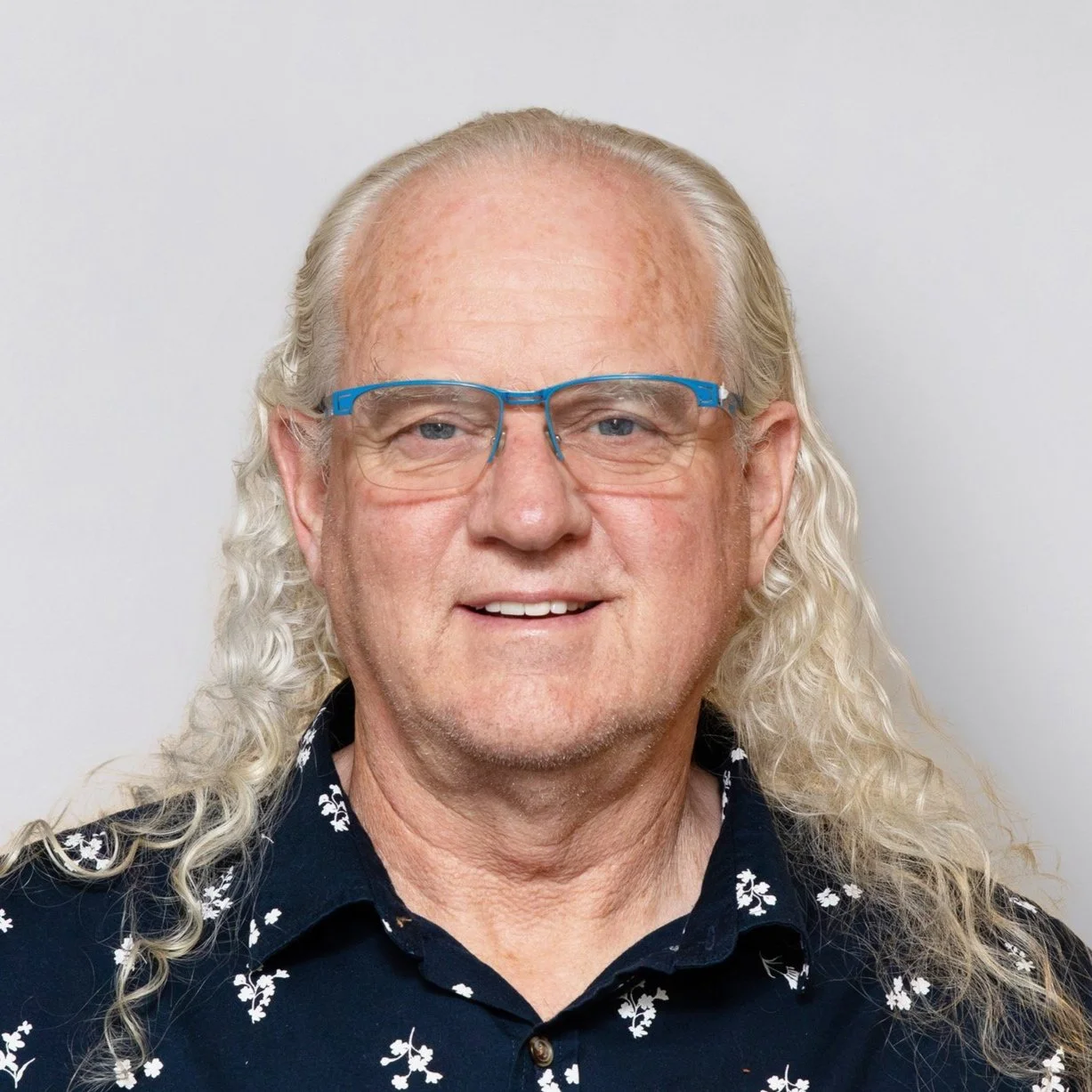
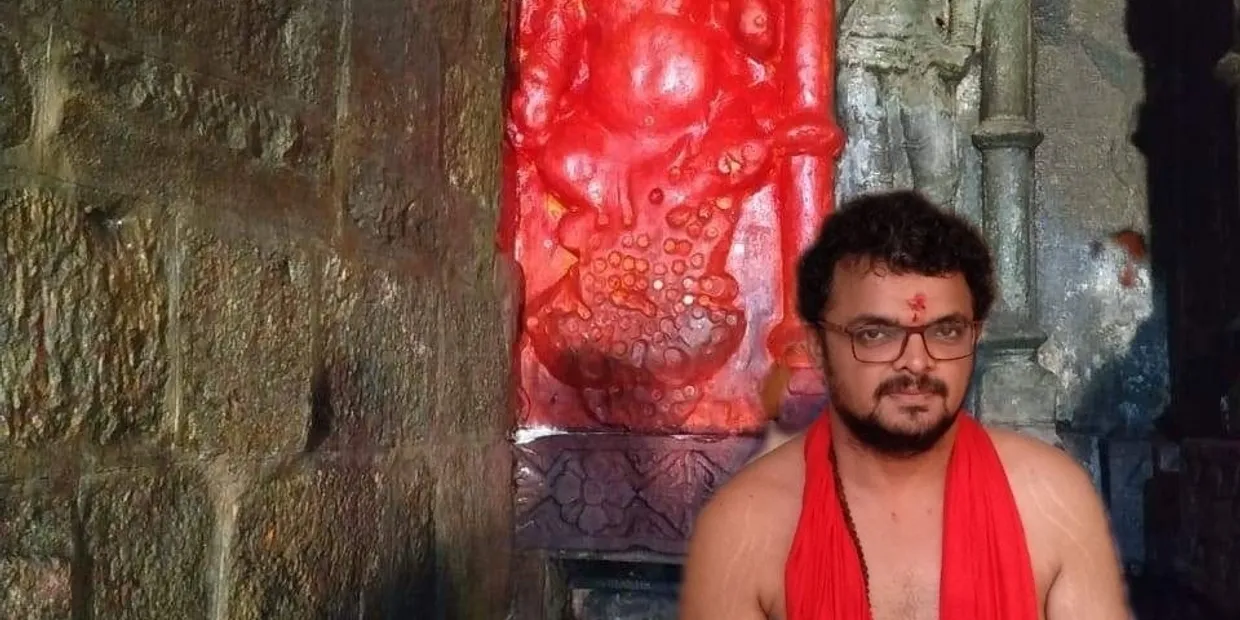
Edwin Kelley began practicing Buddhism in 1975 after attending a 10-day Vipassana retreat near Perth, Australia, following a serious motorcycle accident that had turned him toward questions of meaning, meditation, and spiritual practice.
In 1992, he travelled to Burma with his wife, Myoshin, for six months of intensive retreat under Chanmyay Sayadaw, where he ordained temporarily as a Theravada monk and immersed himself in Mahasi-style insight practice, Abhidhamma, and metta meditation.
He first encountered Vajrayana Buddhism in Dharamsala, India, in 1993, and became a student of Yongey Mingyur Rinpoche in 1998. Edwin later served as Executive Director of the Insight Meditation Society and helped establish the global Tergar Meditation Community in 2009, where he held roles including Executive Director, Co-Executive Director, and CFO.
Retired from administration since 2022, Edwin continues to teach and support students of Mingyur Rinpoche as a Tergar instructor. His teaching draws on more than 50 years of practice across Theravada, Vajrayana, and Western Dharma communities, with an emphasis on clarity, kindness, and recognizing one’s true nature.
PAA: Your journey began with a meditation retreat in 1975 near Perth. What first drew you to that experience, and how did it shape your path in meditation and the Dharma?
Edwin Kelley: Although I attended my first 10-day meditation retreat outside Perth in 1975, my journey really began about three years before that, when I had a very nasty motorcycle accident during the mid-year break of my first year at university.
I had gone back down to where I grew up in the Bega Valley for the break and had gotten a job milking cows on a local dairy farm. On the Saturday night, after finishing two weeks of milking, I was riding a motorcycle back to my friend’s place. Essentially, I ran out of road and left the road rather than hitting an oncoming motor vehicle. I was thrown through the air headfirst, hit an embankment, and was heavily concussed. I was unconscious for well over an hour, fractured my sixth thoracic vertebra, spent three weeks in hospital, and lost university time.
It was a major shock to my system. I lost my drive to study and to be somebody. The next year I dropped out of university and, with a friend, hitchhiked to Perth. During those next two or three years, I spent a lot of time looking for the meaning of life: reading Western and Eastern philosophy, meditation books, and the classic books circulating in the early 1970s — Autobiography of a Yogi, Ouspensky, Alan Watts, Hermann Hesse, Ram Dass, and many others.
I wound up in Perth in 1974 and was working two jobs because I was saving money to go to Europe. A woman I was working with at a restaurant in Perth was organizing a 10-day Vipassana retreat, and she talked me into signing up. I do not think I had any real idea what I was getting into, but it seemed like it might provide answers to what I was looking for.
The retreat was about 100 km outside Perth, in a rural facility, completely in silence, with a teacher named Robert Hover, an American who had been a student of U Ba Khin in Burma. It focused primarily on anapanasati and body scanning, similar to the method taught by Goenka, though subtly different.
That program irrevocably changed my life.
When I had the motorcycle accident, I had lost the memory of what had happened. I knew I was going to leave the road because a car was coming, but I did not know how I left the road or how I hit the embankment. I had been severely concussed for well over a week, perhaps ten days.
During that retreat, two or three years later, I had a dream in which I reclaimed the somatic experience of being thrown off the motorcycle and hitting the embankment. I woke up around four in the morning, bolted upright in bed, and thought, “Wow.” Then, sitting on the cushion over the next hour or two, I realized I had reclaimed the memories I had lost from the accident.
That demonstrated to me the power of the practice.
Early Communities, Disillusionment, and Karma
PAA: Looking back on your journey, is there a particular moment or insight that felt truly transformative for you? What was the context of that moment, and how did it change your outlook or practice?
Edwin Kelley: There is a part of my life that I do not normally put in any public bio. After that retreat in Perth, I spent another couple of years traveling around Australia. I finally wound back up in Perth at the end of 1976.
Some of my friends from my earlier time there were getting into Bhagwan Shree Rajneesh and his teachings. I ended up going to a centre just outside Perth. The Rajneesh community had a very strong presence in Perth, but this was right at the beginning. There were hardly anybody involved, maybe half a dozen people.
I went to the facility they had in the outer suburbs of Perth, ended up taking sannyas, and stayed there for the next 18 months or so before going to Pune, India, at the end of 1978. I spent the next two or three years, off and on, in Pune, until Bhagwan moved to Oregon. I spent about ten weeks getting from Pune to Oregon in 1981 and was in Oregon very early in the commune. I was there pretty much from the beginning to the end. I left in November 1985, after everybody else had left.
This was a very formative part of my spiritual development.
The strongest thing I recall from that experience was the sense of community. I shared intimate daily relationships with hundreds of people, many of whom, nearly fifty years later, I am still close friends with. Although our spiritual journeys diverged, the friendships remained.
Why I got into the Rajneesh world is another story. How it fits into the whole Dharma or Buddhist experience is another story. But it was definitely a profound part of my early life and spiritual journey.
Things also went horribly wrong. At one point I was personally drugged and made incompetent because of certain actions I had taken. I did not work in the inner circle, but I worked in the support team for someone who was in the inner circle, in accounting. That is where I learned the fundamentals of my accounting skills, which served me well later.
In terms of my subsequent journey, it taught me what can go wrong. Although we can aim for ultimate reality, liberation, and freedom from suffering, if we do not attend to the details of the law of karma, things can go horribly wrong. We cannot use ultimate reality to circumvent the realities of relative reality.
There is no question that this was the biggest lesson I took from there.
It is also worth noting that this is where Myoshin and I met, in Oregon in 1983. Here we are more than forty years later. That has been a huge part of our lives together. So good came from my time there as well.
Practice, Partnership, and the Return to Dharma
PAA: In 2009 you and your wife Myoshin moved to help establish the global Tergar community. How has practicing and teaching alongside a lifelong partner influenced your perspective on the Dharma and on teaching?
Edwin Kelley: After the Rajneesh community in Oregon fell apart in 1985, Myoshin and I spent about 12 months in the United States and Canada, got married, and moved to Australia at the end of 1986. We lived together in Sydney for a couple of years, then went up to Byron Bay. We were seven years together in Australia, except for about a year we spent in Burma and Asia, primarily in Burma.
After we moved up to Byron Bay in 1989, Myoshin did a weekend retreat with an American teacher named Alan Clements, who had been a student of Mahasi Sayadaw and had been a monk in Burma. It had a major impact on her.
In the meantime, I had gone back to university and enrolled in an accounting degree because that was the skill I had that could most easily support me. I thought that if I finished my degree, I would be more financially secure rather than just doing bookkeeping.
Myoshin went down the rabbit hole. She started practicing. She went and did a month with U Pandita in Bowral, NSW, and later went to IMS in Barre, Massachusetts, and did two months with U Pandita. I was left at home working for a public accounting firm and doing my studies.
It was a challenging time for me. Every now and again she would say, “Do you want to come and practice with me?” I was still quite reactive to anything spiritual, having gone through the disillusionment that occurred when the Rajneesh community collapsed. I did not want anything to do with it.
Finally, a year or so later, she convinced me to do a 10-day retreat, which was a struggle for me. Then, a year later, Chanmyay Sayadaw, another Burmese teacher who had also been a student of Mahasi Sayadaw, came to Australia. I did two weeks with him, and that was a major turning point.
I really got something from that retreat.
When I came home and went back into my accounting office, I saw all the piles of people’s shoeboxes full of accounting receipts and had this epiphany: “Oh my dear, this will never really be satisfying.”
Chanmyay Sayadaw had invited Myoshin and me to come to Burma. Within six months, we were both in Burma, where we spent six months, and I ordained as a monk.
Burma, Ordination, and Theravada Practice
PAA: In 1992 you spent six months on intensive retreat in Burma with master Chanmyay Sayadaw. Could you describe what that retreat was like and what insights or challenges emerged during that time?
Edwin Kelley: We arrived in Burma in August 1992. Initially we went just for three months, but there was something incredibly enticing about the whole experience.
Chanmyay Sayadaw was offering temporary ordination to anybody who wanted to ordain. For me, it was a little like “when in Rome, do as the Romans do.” Maybe it was also a kind of value-added thing: if I were really going to immerse myself in these teachings, then I would ordain. So that is what I did.
It was difficult. The conditions in Burma were challenging: the monsoons, the bugs, and the very intense method of moment-to-moment concentration on psychophysical experience. I found my practice very difficult at times. I crashed and burned.
Chanmyay Sayadaw encouraged me to get back on the horse. He also strongly supported me in doing loving-kindness meditation — metta meditation — for myself and for all beings. I think that was the saving grace for me.
I did have remarkable meditative experiences. Sayadaw taught Abhidhamma every night, drip-feeding it to us as an approach to understanding psychophysical process. I had some remarkable experiences associated with the five aggregates, the Four Noble Truths, and the Four Foundations of Mindfulness. Seeing the way the mind creates reality was incredibly profound for me.
After three months, although we had only planned to stay for three months, I could not leave. I felt that if I went back to Australia, I would end up being a public accountant again. I needed to stay beyond the point where I would pick up the mantle of accountancy again. I did not want to go back and put on the accounting robes, so to speak.
So we stayed another three months in Burma, largely because I felt I needed to stay beyond the point of no return. I have no regrets about that.
Burma was definitely a major experience in my life.
Ordained bhikkhus coming together, chanting the Pali, doing these rituals — there was something incredibly deep and meaningful about it. A sense of belonging, I suppose, as ancient as the teachings themselves, going back to the time of the Buddha.
Edwin Kelley
PAA: During that Burmese retreat you also ordained temporarily as a Theravada monk. What was meaningful about that monastic experience, and how did living as a monk influence your understanding of the Buddhist path?
Edwin Kelley: One thing to add about my time in Burma — and this was equally true when I returned in 2004 and ordained again for six weeks — was the sense of being part of an ancient brotherhood, a lineage going all the way back to the Buddha.
The rituals we did as Sangha, reciting the Patimokkha, daily confessing our indiscretions, and then at the end of the rains retreat, the Kathina ceremony and the offering of robes to a monk — there was something about all of that which gave me a deep sense that this had been happening every year for over 2,500 years.
Ordained bhikkhus coming together, chanting the Pali, doing these rituals — there was something incredibly deep and meaningful about it. A sense of belonging, I suppose, as ancient as the teachings themselves, going back to the time of the Buddha.
That left a deep impression.
I have no idea how many lifetimes I may have spent as a monk, but I am sure it has been many, both in the Theravada tradition and in the Tibetan tradition. Fascinating.
IMS and Dharma as Work
PAA: After returning from Burma, you joined the Insight Meditation Society and eventually became its Executive Director. How did your time at IMS, a major Western meditation center, influence your own practice and your approach to teaching the Dharma?
Edwin Kelley: After returning from Burma, although I had been studying for an accounting degree, I had only finished two-thirds of it. I still had a full year to complete.
I really did not want to go back to being a public accountant where I could only study part-time, so I enrolled full-time at university. For 12 months, I lived separately from Myoshin during the week and we would get together on weekends so I could devote myself to my studies.
I did really well. I enjoyed it. It was much easier to focus on academic work when I was not working.
At the same time, Myoshin and I helped form a local community that sponsored meditation teachers to come to the Northern Rivers area of New South Wales to teach retreats. We invited different teachers from the Insight Meditation Society, including Steven Armstrong, Steven Smith, and Michele McDonald-Smith.
At one of those retreats in March 1994, I learned that the position of Director of Operations at IMS was vacant. I still had a couple of months to finish my degree, so I wrote off and applied for the job. After some back and forth, I was hired. IMS sponsored me, I got my green card, and I came to IMS in July 1994.
I think I believed I would be able to do more practice. That was partly my motivation. But of course, if you have ever had a leading or executive role in any organization, even a Dharma organization, there is never a good time to take time off, go on vacation, or do retreat.
I had to devote myself to running the place. Within about 18 months, I became Executive Director. A few years later, I was able to sit for six weeks, half of the three-month retreat there. During that retreat, I made a vow to myself that I would not be Executive Director when I turned 50. I saved up money, opened a CD, called it the “Edwin Liberation Fund,” and put money aside so I could quit work and devote myself to practice.
One of the biggest lessons from running a major Dharma retreat center like IMS was that I got to know all the primary teachers in the Insight tradition in the United States and Europe personally, on a first-name basis. I helped organize their schedules and bring them to IMS to teach.
But the deeper lesson was to give myself over to the job from the perspective that this is the path.
After some time, I realized that although I was not spending time on the cushion every day, I was working with the paramis — the perfections of patience, generosity, loving-kindness, diligence, and so forth.
My understanding now is that if we make our life and work the path, if we make our spiritual practice one of kindness, generosity, and presence of mind in all our dealings — our personal interactions and our business dealings — that is as powerful as any time spent on the cushion. It can totally and absolutely transform our hearts and minds.
That was my major lesson from serving as Executive Director of IMS, and later from serving in executive roles with Tergar.
Vajrayana, Mingyur Rinpoche, and Lineage
PAA: You first encountered Vajrayana Buddhism in 1993 and became a student of Yongey Mingyur Rinpoche in 1998. What aspects of Mingyur Rinpoche’s teaching resonated with you, and how has his guidance influenced the direction of your practice?
Edwin Kelley: After I quit as Executive Director of the Insight Meditation Society in 2003, I did a six-month retreat at the Forest Refuge. By this point, I had already met Mingyur Rinpoche.
My connection to Vajrayana Buddhism began in 1993, after we had been in Burma for six months. I went to India and spent a month in Dharamsala, where the Dalai Lama lives, at Tushita Meditation Centre. That was my first real exposure to Vajrayana Buddhism.
I was fascinated to see the similarities between the Theravada tradition and the Vajrayana tradition. Tushita was an FPMT centre, and there were a lot of similarities. It was also an absolute delight to get to see the Dalai Lama, shake his hand, and attend teachings.
In 1998, before I quit as Executive Director, I met Mingyur Rinpoche. After I quit, I traveled around America and did many retreats with him. During that time, I got to know him personally. I was invited to help care for him. I helped sort out his visa; we drove to Montreal and back, he did teachings there, and we got his visa sorted out. That meant we got to know each other personally, which was quite profound.
The first teachings I did with him in 1998 were when he was there with his brother. His brother gave Dzogchen pointing-out instructions and nature of mind teachings, while Mingyur Rinpoche taught from the Four Noble Truths and early Buddhism.
I was struck by the similarities between Mingyur Rinpoche and Chanmyay Sayadaw, my Burmese teacher. In many ways, Mingyur Rinpoche provided the perfect bridge. I did not see any separation, distinction, or conflict between Vajrayana and Theravada.
I felt that he tied a ribbon around all of my spiritual practice — the Rajneesh world, the Theravada world — and tied a big bow around it, as if to say: “Do not throw any of it away. It has all been in service of understanding your own heart and mind and eliminating confusion.”
That reflects in my teaching now. Unless somebody is engaged in a practice that I feel is actually harmful or unsuited to their personality, I am not a black-and-white person when it comes to practices, lineages, or teachings. Whatever works for you, whatever you want to explore — another lama, another tradition, another religion — you should do it.
It is your journey. It is your path. You need to discover what works for you. It is more about following your heart than deciding what is right and wrong in some rigid way.
Theravada and Vajrayana: Relative and Ultimate Reality
PAA: You trained intensively under Chanmyay Sayadaw in Burma and later under Mingyur Rinpoche. How do the methods and lineages of these very different teachers complement each other in your own approach to meditation?
Edwin Kelley: Having said what I just said about the similarities between the Theravada and Vajrayana traditions, obviously there are also significant differences.
For me, and I came to understand this through discussions with Mingyur Rinpoche and teachings from him later, the Mahasi Burmese Abhidhamma approach really focuses on relative reality: the way our psychophysical process happens, how it works, and how the three characteristics — impermanence, not-self, and suffering — are intimately embedded in all psychophysical experience and phenomena.
When one practices in that way and goes deeply into awareness or mindfulness of that process, at some point wisdom arises and says: “Samsara sucks. I am out of here.”
In the Visuddhimagga, it says the mind seeks nibbana as an object. That is very much a Theravada way of looking at it. In my mind, it is the causal vehicle. It is relative reality. It is primarily working with that.
Vajrayana practice, particularly as it comes to us from Mahamudra and Dzogchen, is very much about ultimate reality: rigpa, the union of clarity and emptiness, the mind that is freed from clinging to anything.
It is like going from the infinitesimal to the macrocosm: resting the mind in spacious, open clarity, the union of clarity and emptiness, where anything and everything that does not inherently exist is known and liberated upon arising.
That is how I would characterize the two different styles.
I think both are equally important. There are a lot of people who come to Vajrayana Buddhism wanting to touch the sky — Dzogchen, rigpa, nature of mind — who would be well advised to go back and take a look at their psychophysical process and deal with some of their own suffering before they attempt to realize their true nature.
All the drama, kilesas, challenges, stress, worry, and conflict come from clinging to a sense of self, identification with who we think we are, and the appropriation of our experience: “I am,” “this is mine.”
Edwin Kelley
PAA: You emphasized that Abhidharma knowledge can itself “mitigate confusion and delusion” by informing how we view our experience. How do you help students translate such theoretical understanding into real insight through meditation practice?
Edwin Kelley: From my own practice standpoint, I should say a little more about the differences between the Theravada and Vajrayana approaches, and why I think both are incredibly valuable.
When one brings attention, mindfulness, and awareness to the minutiae of one’s psychophysical process, it is mind-boggling what one sees. It is really interesting to challenge the misperceptions we have about the single, solid, separate sense of self — a phrase I coined to capture what I perceive to be the way we cling, the Second Noble Truth, and how we create our suffering.
All the drama, kilesas, challenges, stress, worry, and conflict come from clinging to a sense of self, identification with who we think we are, and the appropriation of our experience: “I am,” “this is mine.”
There is something really valuable about the Theravada approach, and about the Abhidhamma approach, whether it is Vasubandhu, Buddhaghosa, or another system. Bearing witness to the process of mind-body experience is incredibly revealing. It compels one to understand the mechanism of the Second Noble Truth, and it compels one to seek the answer of the Third Noble Truth.
Of course, all of that is also there within Mahamudra: shamatha, the Four Immeasurables, vipashyana. It is all there. It comes at it from a different or slightly different perspective.
To be introduced to the nature of mind, to get a glimpse of ultimate reality, and to understand how to work with appearances from the perspective of the liberated mind is an incredibly valid tool.
The view contained within Vajrayana — and within Mahayana too — that we are all endowed with inherent good qualities, that we are perfect, whole, complete, and that nothing is missing, is supreme. This is our true nature. This is Buddha nature.
Of course, we do not believe it. We struggle to accept it. But the practice is to come to an acceptance and realization of that, to develop the capacity to understand it, take confidence in the recognition of it, pitch a tent there, take up shop, and live from that place of true nature.
That is remarkably profound and transcends all other practice.
Personal Practice, Struggle, and Transformation
PAA: You once mentioned it took about ten years after your initial instructions to gain “any reliable level of confidence” in your meditation practice. Can you reflect on what sustained you during those years and what milestones or insights helped build that confidence?
Edwin Kelley: It has now been over 50 years since I did my first 10-day Vipassana retreat in Perth in 1975. As is apparent, I have tried many methods, done different practices, had different teachers, and had the great privilege of being part of three major spiritual communities: the Rajneesh community, the Insight Meditation community in North America, and now the Tergar community.
My practice has varied. I would not like to imply that it has all been a cakewalk.
I definitely struggled with challenges, particularly beginning when Myoshin began to do deep practice and I was left alone. That was a difficult time for me. Even up until I did the six-month retreat at IMS in 2003, I would say I struggled with being alone.
There was something incredibly rich and rewarding about life with a spiritual partner and all the intimacies that come from that. In Myoshin’s absence, I definitely felt challenged.
I consider myself a greed type, a desire type, and I have had a lot of compelling thoughts around sexual desire. Chanmyay Sayadaw helped me work with that in Burma. I have also talked to Mingyur Rinpoche about it. Once, when I asked him about it, he pointed his finger at me with the most intense look I had ever seen from him and said, very briefly, “That has kept you in samsara since beginningless time.”
That was a profound teaching in and of itself.
Slowly, slowly, and particularly through the nature of mind teachings, I began to understand. I do not know how many times I have had the great benefit of receiving pointing-out instructions from Mingyur Rinpoche and his brother — twenty or thirty times, perhaps. I could try to count them.
At some point, probably not until the late 2000s, around 2009 or early 2010, after having received pointing-out instructions many times, I began to really understand what it means to have Buddha nature, and what those qualities are: awareness, loving-kindness, compassion, and wisdom.
I also began to understand how the paramis are the path, and how developing the capacity to simply rest one’s mind as it is can be profoundly transformative.
That has now become my practice, pretty much exclusively.
PAA: What does your current daily meditation practice look like, and how has it evolved from the early days of your practice?
Edwin Kelley: My current daily practice is very simple.
When I wake up in the morning, I have a little ritual of chants that I do: taking refuge, bodhicitta, loving-kindness, compassion, the basis of the Four Immeasurables, and guru yoga.
Then I live my life.
I was given a beautiful, succinct poem by Mingyur Rinpoche as a practice, and that is my daily practice. It is really about just resting in the present moment.
Sometimes I will sit, but rarely do I do formal practice anymore. It is mostly trying, as often as possible, to remember to rest in recognition: short times, many times, anywhere, anytime.
Sometimes it comes naturally. Sometimes it persists for a few minutes or whatever. There are many places where I have learned to do it: sitting, resting in nature, driving the car. I love driving meditation.
I have coined the phrase for driving in traffic: when you stop at the traffic lights, when the car comes to rest, the mind comes to rest. Then remain there with the mind at rest until the lights change. I am convinced you would be the first person to know the lights have gone green.
That is pretty much my practice.
At night before I fall asleep, I dedicate the merit in whatever way. It is really that simple.
I will do retreat from time to time, and that is basically what I do on retreat as well. I no longer do much formal liturgical practice, sadhanas, Mahamudra liturgies, or that sort of thing as daily practice. Occasionally I will do chants in a group situation, but they are not part of my daily practice anymore.
Through Mingyur Rinpoche’s guidance, I have also practiced quite a bit with lucid dreaming, which is way too much fun to be called Dharma practice. I have enjoyed that thoroughly.
Teaching and Dharma in the Modern World
PAA: In our fast-paced, modern life full of distractions, what do you feel is the core message of the Dharma that Western practitioners most need to hear, and how do you convey that message in your teaching?
Edwin Kelley: From the perspective of Dharma in modern society, I am not sure what to say.
As a teacher, the biggest privilege I have been given is to have a front-row seat to the transformation of the minds of others. That is really what is most important to me.
There is certainly a wealth of knowledge I have acquired from years of practice and study, and from time to time there are appropriate moments for me to share my understanding. It certainly informs my teaching. One of the things I hear most commonly from people is that I teach with clarity, or that I can articulate reality with significant clarity, which seems to be very helpful for people.
But when communicating one-on-one with somebody in the context of their practice, what is most significant to me is being able to see the ways in which that individual’s mind might cling, grasp, or fixate on a person, idea, or perception.
Invariably, that is what it comes down to: the Second Noble Truth, the cause of suffering. How do we as individuals misperceive reality? How do we, through perception, impute an understanding that is erroneous, false, or misleading?
To the extent that I can reveal that to somebody and give them a key to help them see how their own particular brand of misperception is perpetuating their suffering, that seems to me one of the most significant things.
There are many techniques out there. Unquestionably, this is a biased opinion, but I think Mingyur Rinpoche’s and Tergar’s approach — through awareness, Anytime Anywhere Meditation, Joy of Living, and Path of Liberation — is a complete path. For anybody who seriously wants to practice, there is no question that it is profound.
I do think there are some practices out there that are very tight. I would steer away from practices that are too tight. I do not think the modern mind needs more tightness. We already worry too much. We are too stressed out. We are too fixated on perfection, making ourselves better, and improving our situation.
I love Mingyur Rinpoche’s teaching: not meditating, but not distracted; not fabricating.
There you are complete. There you are whole. There you are a Buddha in your true nature. It is just covered by confusion, delusion, misperception, and erroneous belief.
We can work endlessly to purify those misperceptions, but the direct path is to understand how our true nature manifests here in this moment: the knowing, radiant quality of the mind; the open, loving, caring heart of kindness; and the capacity of the mind to see things truly as they are.
These are the qualities of our true nature. These are the qualities of our Buddha nature.
To live a life focused on recognizing how those qualities manifest in our own hearts and in the hearts and minds of others — that is the best practice, the best path, and the best commitment.
Of course, it comes packaged with refuge, bodhicitta, guru yoga, and dedication. But seeing our true nature and dispelling the doubt that we have Buddha nature — that is the path.
PAA: What an inspiring interview. Thank you for sharing the journey, perhaps in the future we can revisit some subjects after your retreat.
Join the Perseus Community – It is Free!
A Community for Practicing Magicians, Meditators and Internal Martial Artists
Please join us, introduce yourself and begin sharing and learning. We have areas covering all aspects of the esoteric from both Eastern and Western traditions, Energy work and Internal training all freely available on the platform. See you inside.
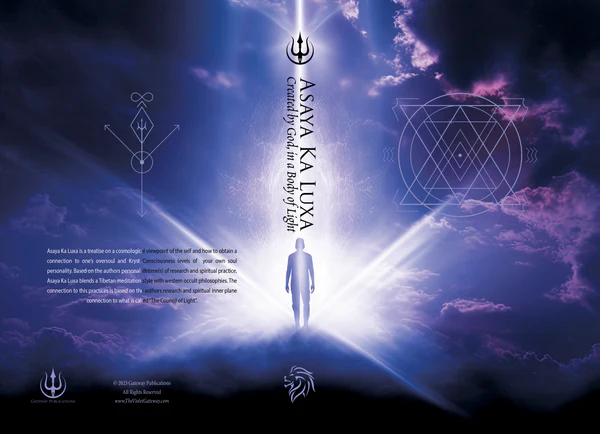
Jon Vermilion is a distinguished author and spiritual practitioner dedicated to advancing human consciousness through the exploration of esoteric metaphysics and occultism. As the founder and operator of The Violet Gateway, Jon has authored three pivotal books that bridge Eastern and Western spiritual traditions, offering readers a coherent and transformative praxis for psychic and spiritual evolution. His works, including Asaya Ka Luxa and Zakael: The Stargate of Kryst, delve into ritual practices, meditation, and self-discovery, guiding aspirants toward higher states of consciousness and inner salvation.
Through The Violet Gateway and Gateway Publications, Jon is committed to disseminating advanced esoteric knowledge and fostering spiritual growth on a global scale. His teachings emphasize deprogramming, ritual work, and the harmonization of mind, body, and spirit, drawing from centuries-old wisdom and modern scientific understanding. Whether through his books, workshops, or one-on-one guidance, Jon Vermilion inspires individuals to unlock their latent potential and align with the divine essence of their true selves.
Interview
Photo Credit: https://thevioletgateway.com/
Introduction
PAA: You work together Eastern and Western esoteric systems. What first inspired you to bridge these traditions?
Besides growing up in a non-religious family, they still encouraged my spiritual growth. Because of this I always held interest in many forms of religion and spirituality. It was my death at the age of 21 which solidified that all systems, eastern and western are expressing the same truth in different lenses.
PAA: How did your background in kinesiology and health nutrition influence your metaphysics and occult practice?
Truly, College for it was daunting, but all it did was give me a “credential” to express the spiritual mysteries in a physical way that expresses how the mental and emotional bodies of an individual affect their physical experience. I was trained to read the kinetic chain physically when I already could read it energetically. It helps bring credence to what I’ve spoken and taught about for the past 18 years and how the physical body is just a reflection of the finer bodies. In Islam, this is part of the Nafs. Which has many levels.
I feel health, and nutrition overall, is a majorly overlooked importance in occultism. If you put the best gas in your car, your car typically runs better. This is no different with food. Our vessel, the human body, needs quality food both micro and macro nutrient dense. This way the etheric sheath can better connect to the physical body.
PAA: Asaya Ka Luxa is considered one of your fundamental works. What experiences or research are behind it?
My death was the experience that lead to it. I was guided in dream time and my first sheik who led me through the post death processing. It was really the book I was supposed to write since I incarnated. I was told when I was a young child in a contact experience that I would “write someday”. At that time, I just didn’t understand what it would be. My death solidified the path and remembrance of what I was supposed to do.
I met my first sheik, after my death. He taught me a rather advanced form of Ilm al Huruf which is coming from a hyperspecial level of intelligence. Ilm al Huruf is the Islamic science of letters, and through deep Muraqabah/meditation, breath work, and visualization of specific symbols, colors, and tones, he helped me bring me back fully to body in an extreme conscious state. In reality, this was 25% of it as 75% of that book is from dream teachings where I would meet with my “masters” for lack of better term to know what to put in the book. Asaya ka Luxa is the foundation to a stand-alone practice and the deeper expanded process held in Zakael and even deeper in one-on-one guidance in the Islamic Mysticism Tradition.
PAA: How did your relationship with the “Council of Light” evolve during the writing of Asaya Ka Luxa, and does that communication influence your current teachings?
In the writing process I had to hold proper alignment and be an open channel and conduit for their energy. It didn’t change much, and it continues to this day. I am guided through this energetic line, and it still reflects in my recent and upcoming work. It was never about bringing forward the spirit or consciousness behind the work; its intention was to always express practical applicable praxis which creates an extreme soul alignment to the divinity of our creator. I call this Divine Proximity. The clearer and more aligned we are, the closer we are to this proximity. Not only spiritually, but also physically. We become dressed and blessed in both physical and nonphysical bodies in closeness to our creator.
PAA: In Esoteric Prayer, you explore the metaphysical dimension of Islamic prayer. Why choose this subject of esoteric analysis?
I chose this because I am a Muslim, and Islam has been the religion most around me throughout my life. Even when I wasn’t a Muslim, I still would tell people that if I chose a religion, it would be Islam. In my heart, that has been the thing since birth, and nothing that I needed to be forced to accept. My Death proved it to me. I was also guided back to Islam by my guides and contacts through major and pivotal paranormal and spiritual experiences. To me there is no other truth, and the esoterica of Islam exceeds anything on this planet. Islam is the original religion of Adam and nothing could make me believe otherwise because I have figured that out long ago. In time, most will.
Salaat has profound positive effects on the body physically. Not only that, but it is also not just prayer, it’s Ritualistic Prayer. Tightly woven and ritualistically performed, not like a habit or a daily ritual of exercise, but the act of itself is a spiritual ritual that only those who practice and submerse themselves in know. I call it “folding and unfolding the cube”. There is no higher devoted practice of devotion and most people even well learned in Occult and Esoteric Traditions have yet to even scratch the surface of this practice let alone Islam.
PAA: Your newest edition of Azazya’il: The Book of the Fallen offers a deeper study through arabic ABJD, magic squares, and remote viewing. What misconceptions about Azazya’il does the book correct?
Every… Single… One.
PAA: Many of your programs are one-on-one instruction. Is personalization important in esoteric training?
In the Sufi tradition, true learning comes from the Oral Tradition. Where knowledge and guidance are transmitted through discussion. Rarely was it written down. I like to keep this alive. A person can only learn so much and be guided so much through text printed by a lifeless substance on paper. A Shiek, or guide, is the Substance full of life which can point and guide through proper relay verbally and connect to the student or disciple. This personalization is utmost important. Everyone starts somewhere different, everyone has different experiences, traumas, beliefs, etc. Only through one-on-one guidance can these hurdles be stepped over.
PAA: For beginners entering advanced practices like lucid dreaming or energy body activation, what is the most common mistake you see, and how can they avoid it?
Not having the Above. A guide and someone to teach you the proper ways can save a lot of time and a lot of issues that arise in it. A big factor is people are imbalanced when they think they Arnt. These imbalances carry over to the other side when we become lucid. Thus, creating unsavory experiences and often bringing back things they may not be aware of. This is why proper training in the esoteric sciences should be the priority, rather than jumping in hoping for a “cool experience”. Proper practice, preparation, and guidance should be what’s sought, not the mystical experience, as mystical experiences to the uninitiated can bring more confusion, fear, and imbalances. And lord, we all know this world doesn’t need more of that. Inshallah.
The ABJD is found in Semitic languages overall. Arabic is closer to Aramaic than Hebrew and most of what Jesus (Isa, may peace be upon him) spoke coincides with most of the Arabic phrasing and meaning.
Jon Vermilion
PAA: Your Esoteric Symbol & Alphabet courses build energetic orbits using ABJD letters. Do the Hebrew and Arabic systems differ energetically in your experience?
The ABJD is found in Semitic languages overall. Arabic is closer to Aramaic than Hebrew and most of what Jesus (Isa, may peace be upon him) spoke coincides with most of the Arabic phrasing and meaning. Hebrew and Aramaic are both very broken to me and Hebrew should be a 28 letters system, but they generally use 22. I am willing to wage that Aramaic too had 28 Letters. If we look at the ABJD as a complete and cohesive system (and it is) then the 28 letters connect tighter to our natural orbit and cosmos.
Energetically, to me, Hebrew connects you to a different intelligence. And I will leave that up to someone to think if its better or not. Overall, we discuss all ABJD based scripts as Esoteric Symbols and how they can be used in the exact same manner. I do hinge deeper on the Arabic though. But it matters most what the aspirant connects too, because that will be their best lens and hinging point into the deeper mysteries of the letters.
PAA: What forms of modern-day spiritual or psychological conditioning do you see as the most damaging?
That people believe and think that they have free will.
PAA: Across your body of work, your central theme is purification — of mind, spirit, food, energy, and numbers. Why does purification stand at the core of spiritual power?
When we are purified, we are able to hold our location to Divine Proximity and be a pure conduit for the energy of our creator to flow through us into this world.
At death, I was shown this as part of what is normally called a “life review”. This encompasses what you did, should have done, would have done, could have done, might have done, etc…
Jon Vermilion
Advanced Consciousness
PAA: You describe human consciousness as a multidimensional “sphere” touching multiple realities simultaneously. How did you first perceive this structure, and how can a practitioner verify it or experience it?
I was shown this reality at death, and everyone will see it at death. They are more than free to confirm it then. But the way we can better understand it is;
If you image yourself going to the grocery store and walking into it, meeting someone, and then continue getting your normal things, this is one reality. But there are many other spheres or bubbles of realities that could have, would have, or even in some cases SHOULD have happened, even if they didn’t, based on all the one reality you perceive to have experienced. What if you met that person, maybe chose to have a deeper conversation? Perhaps treated them better? This is another reality that exists in the soul, even though we did not physically experience it. Each choice and action in those moments create a branch of potential reality. All still existing.
At death, I was shown this as part of what is normally called a “life review”. This encompasses what you did, should have done, would have done, could have done, might have done, etc… and then all the different branches of IF you did those things or even just one of them. The only verification is to naturally die and go through what most religions call the “judgement”. This is a natural process and shouldn’t be feared in the slightest.
PAA: You describe the Oversoul as having “extremes of Light and darkness.” Can practitioners embrace these polarities without slipping into imbalance or spiritual inflation?
If they embrace them both in balance. That is why I stress the straight path. Not the left- hand path or the right-hand path but the straight one. The Sirat al-Mustaqim (the straight path), truly does not fork and we focus purley on Adab (ettiquite) and proper alignment to not deviate into either light or darkness. This way no spiritual inflation can really occur. The straight path is truly submission, to God. In this submission we find that we are really nothing in it all. We either realise this now, or one will realise that at death, when someone sees for themselves.
PAA: You speak of “location drops” where the consciousness inhabits multiple incarnations at once. Can this be worked with without confusing past-life memory with multidimensional awareness?
To me even past lives are multidimensional awareness and because time is not linear, but cyclical, that would mean all things are happening at this exact present moment in the multi-level model. This would include what people consider “past” lives. As these lives have direct energetic effect, even if we do not remember them or even acknowledge their existence.
PAA: The Solar Tesseract realm has “caretakers” and “architects” who sustain the structure of this reality. Who or what are these beings?
Shaytan is the one who creates and structures this reality truly, but Awali (friends) of god are more the caretakers who look after creation from a higher stand point. The Awali can be many different types of beings, as the term Awali just means “Friends of God”. They look from above rather than structure it.
The Future of Humanity
PAA: Given your model, what is humanity evolving toward?
Inshallah, I hope that humanity is moving towards a brighter more enlightened future. Where we are given technology to better us, not destroy us, where health can be cured instantly, and longevity and quality of life is hightened to a degree people can only dream of. I do feel this is a very real reality coming on the horizon. But, to me, an individual’s progress is more important than humanity overall. So the focus should always be personally evolving, whether humanity is accepting or not. A person’s place in the afterlife is their own making.
PAA: If synthetic telepathy can mimic angels or extraterrestrials, how does one develop discernment without falling into paranoia?
If anything is telling you something too good to be true or to harm yourself, or that you are special in any way, or putting you on a pedestal and intentionally making you feel all warm and fuzzy inside, it is usually the bad thing. This would be a great thing to put into discernment. All that inflates the ego or is structured in fear are definite things to have discernment over. Or anything that goes against your freewill.
PAA: Do you believe the modern world is intentionally designed to prevent the average person from ever experiencing a true spiritual signal?
Yes, and this is instilled to be a test. A test of the soul to see who turns back. It is the adversaries’ purpose to do what it is doing though. We see it more strongly in today’s age because more people are supposed to turn away from the “old world”.
PAA: You argue telepathy will become common as humanity aligns with the violet ray. What is the mechanism by which repression, deception, and secrecy dissolve into telepathic openness?
Love. Unconditional love and Truth. Al Haqq as we would say in Arabic. Haqq is the absolute truth, not a subjective truth. It is the truth of truth. In this Maqam (station of consciousness) we can move ourselves into a non-secretive world and telepathy could flourish. But the emotions of resentment, anger, fear, etc keep the general public from experiencing this.
PAA: You suggest that the veils between humans, devas, and extraterrestrial intelligence are thinning. What is the role of these beings in guiding or observing humanity during this transition?
Their role is what ever their agenda is. I have stressed that none of these beings are inherently good, and anything that is imposing something of their own agenda upon another goes against free will. The majority of these beings are NOT benevolent, otherwise they would not be meddling. Benevolent beings wait and meet when the individual is at their level.
PAA: How should practitioners responsibly engage with UAP/UFO phenomena from a metaphysical standpoint rather than a conspiratorial one?
The true answer is they shouldn’t. They should focus on their Adab (etiquette both physically and spiritually) and their own soul’s progress. If they are to experience such a thing it should be congruent with their growth and not something to just have happen because someone wants the experience. This is opening up for anything to happen. Personal spiritual growth is the most important, the experience comes secondary if that.
PAA: You describe the New Aeon as “scientific inevitability.” What make this new age unavoidable?
The immense rise in technology and the shifting of consciousness into a slightly more spiritual one where people are asking questions. Eventually the powers that be will release technology that seem to be “from out of this world”, they will claim a various “non terrestrial group” gifted it to us or tie the “non terrestrial” lifeforms to the technology in some fashion. Thus, making it seem like its new. The sad truth of that is they have had this technology for so long that it is just a carrot on a stick to the public. No matter the technology, it is reversed engineered from what the mind and soul can already do.
Alchemical Diet
PAA: Is the modern obsession with processed foods, in your view, a deliberate tool of spiritual suppression?
It sure tastes good, right? ? I mean, I don’t think so anymore. But yes, it is there to hinder the vessels true connection and pure connection to the etheric body and the rest of the energetic bodies. It is the leading cause of all health issues, and it REALLY does not have to be this way. It is mental programming, parasites, and dangerous information that is spread that causes such confusion in the dietary world. This holds true for not just diet for health, but diet for occultism. Both are truly the same thing.
PAA: How does slow, mindful chewing alter the vibrational intake of food?
It allows you to process the nutrients better in the saliva. This is the main reason for it. Plus, we learn patience. Sometimes we don’t even realize we are full because we are mindlessly eating. If we are mindful with what we are putting in our mouth we just may realize that the human vessel may not need as much food as our mind may want. And, if we are mindful of what we put in our mouth I would hope we are equally if not more mindful of what comes out of it.
PAA: If distilled water is “the purest”, does water itself carry memory, and can distillation reset or cleanse it?
Distilled water is very magnetic. And redistillation can cut the energy instilled into it. If one is drinking distilled water only, which I do recommend, they should make sure they are getting fruits and vegetables in adequately to get the trace minerals people are told they get from water.
PAA: Do seasonal foods align the practitioner with cosmic cycles? What happens when one eats ‘out of season’?
I tend to stress a balanced diet all year long of natural foods. The seasons do help, but if we eat out of season, if our diet is balanced, we should not have an influx in a specific element within the body. A pure balanced diet based on a person’s biomechanics will keep that in balance all year.
ET Race & Contact Phenomena
PAA: Why do you think lower-caste reptilians generate so much of the fear-based mythology, while the priestly castes remain almost entirely absent from public UFO lore?
The lower class feed off fear and negativity like vampires. This energy feeds those levels, while physical ones and those who align to them actually eat real people. As we see in the recent Epstein files. While the higher ones do not need that food source as they have transcended it. Its no different than if a person who’s a meat eat make a conscious choice to not eat meat anymore. The “higher” class of draconian tend to be in a higher alignment than a primordial animalistic drive. Dragons can be very benevolent when spiritually advanced, but that is true for everyone, even human.
PAA: You describe Arcturian telepathy as symbolic and tonal rather than emotional. What challenges does that pose to human comprehension?
Humans are too emotional. They are controlled by emotions and often can only understand something if an emotion is triggered. The emotional psychic energy field of an individual can also cloud the clarity of the information. Often these “higher” jinn beings can come off as cold and emotionless. But arcturian telepathy is very strong and the symbolism and tones outweigh any emotion you may have.
PAA: You met a hybrid physically who affected you. What qualities or presence immediately marked them as non-standard human?
There was hiding absolutely nothing from them. They knew everything I did, have done, thought, or was thinking of doing. There was also a physically present vibration in my body almost electrical in nature. As human as they looked, you could clearly see they were not “Human”, in our standard sense. Much bigger eyes, smaller frame, and looked much younger than they were. The immediate mark was being told they were one and not to be alarmed, and the location of the meeting. That is all that can really be said about that.
Occult Mechanisms
PAA: Parasites are described as both biological entities and energetic ones. Your parasite cleanse is extremely specific. Why is herbalism essential, and how does clearing physical parasites influence psychic sensitivity?
Many key herbs just happen to be the things parasites hate and will start to kill them off. Things such as Wormwood, Black Seed, Apple Cider Vinegar etc create an environment where these parasites are not about to exist in and they start to die off. When we do not have these things feeding off us energetically in our body our psychic sensitivity is heightened.
PAA: You recommend performing the cleanse around the new moon. What mechanisms make this lunar timing significant?
Parasite breeding and birth cycles follow the moon phases. When we attack it from a new moon we are able to attach during a breeding and birthing cycle.
Ego destroys all progress. Ego collapses nations let alone someone on a spiritual path. We can not fall into the poisoning of the self through self-importance.
Jon Vermilion
The Aquarian Directive
PAA: If awakening intensifies both clarity and crisis, what determines whether incoming energies catalyze expansion or collapse for a given individual?
Ego destroys all progress. Ego collapses nations let alone someone on a spiritual path. We can not fall into the poisoning of the self through self-importance. The two headed dragon then continues to eat itself. Self-Pity and Grandiosity are destructive means to the foundation of true soul refinement.
PAA: You instruct disciples to work with the Mu’meen Jinn (the believing Jinn) and Earth as a living being. What does this relationship look like in daily life?
Upholding conscious and strict Adab (etiquette) over all is the key to this. This is reflected in everyday life as a means of action, whether it’s a Jinn or the Earth. The relationship is built like any other, nurturing the connection is a big factor. Everyday ritual and meditation, proper prayers and reciting’s. To do it properly, one does have to dedicate their life to it. The Islamic mysticism and sorcery is not for anyone just looking to dabble.
PAA: What signs indicate that a group has become ego-centered rather than service-centered, and what qualities define a true member of the New Group of World Servers?
This happens when decisions are made based purely on selfish or self-serving principles. As we can easily see in the world this is a major thing. But on a micro scale even those around you may be serving the self in what they do. I once had a teacher that told me he told his wife she looked good in the shirt she bought for his own good, because then he wouldn’t have to deal with it. Sure, it made her feel good… and would be service to other. But the intention behind it outweighs that aspect of service to others. This is a good example of the purity of intention that is needed in the selfless service of the New World Servers. The selfless servant, specially those who align to my Tariqa and Madrasa, seek service in knowledge, service indeed, and service in love. That is what is needed to move the world into a larger group of World Servers in the coming Age.
Thank you!
Subscribe to The Violet Gateway’s mailing list for updates on Jon’s latest publications, courses, and spiritual insights.
Certifications:
Egyptian Sekhem Reiki Level I, II, III / Master Teacher (IAOTH) Certified Master Life Coach (TFS) Certified Meditation Coach and Master Teacher (IAOTH) Certified Color Therapy and Sound Healing (IAOTH) Certified Fitness and Nutrition Coach (NASM) Certified Wellness Coach (NETA)
PAA: Many thanks for answering our questions and for sharing so generously.
The Three Transformations – Free Course
The ancient Chinese sages spoke of jing, chi and shen. The Hermeticists of old spoke of vital, astral and mental energies. Both spoke of ways to convert one energy into another. And the Three Transformations were born!
Ever wonder how to do this exactly? Wonder no more. It turns out this is not some mysterious thing that exists only for the greatest of saints. All the details behind how to convert one of the basic natal energies into another, why you would want to perform the Three Transformation and the various issues involved are included in this SixtySkills course.
We’re truly honored to publish this interview on Perseus. The depth of knowledge and lived practice shared here is exceptionally rare to find in any public forum.
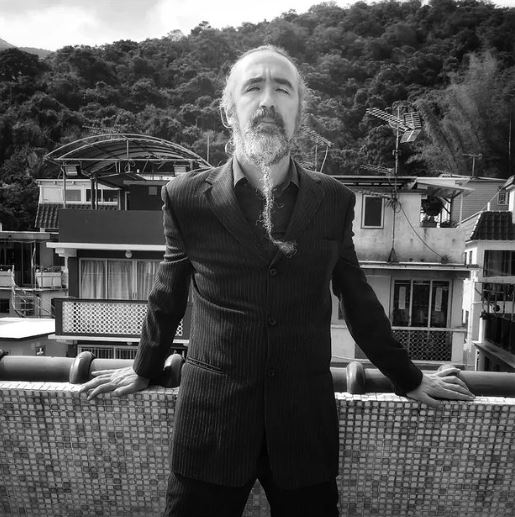
Dr. Shreeram Iyer brings a unique combination: deep experience in hard-to-access non-dual traditions and their practical methods, alongside serious familiarity with major Western esoteric systems such as the Franz Bardon tradition. That mix creates an unusually clear bridge between worlds that are often talked about, but seldom explained with real precision.
This interview runs to over 16,000 words and is packed with detailed, high-value material—especially for readers who want clarity rather than vague mysticism.
Our sincere thanks to Andre Consciencia for facilitating this interview and helping make it possible.
Lineage, Initiation, and the Start of the Path
PAA: Your journey into Tantra began at a young age, and you later entered a very rare lineage where mentors teach only one or two students per lifetime. Can you tell us about how you found this path, or how it found you?
My formative years were deeply rooted in a lineage of profound spiritual stewardship, having been born into a South Indian orthodox Brahmin, or priestly, family. This inheritance provided a singular, early exposure to the foundational tenets of Vedanta, which served as my initial spiritual vernacular. Yet, this sanctioned tradition merely ignited a more profound intellectual and spiritual thirst. This innate avidya (thirst for knowledge) led me to pursue esoteric paths outside the confines of my birthright. At the remarkably impressionable age of thirteen or fourteen, I encountered the rigorous works of Franz Bardon, which I immediately began to engage with in earnest practice. The true convergence, however, occurred later when I formally engaged with a specific tradition. While the genesis of this encounter is reserved for a more intimate discussion, it marked a critical juncture where practical sadhana (spiritual practice) began to move synchronously with rigorous scriptural scholarship. Crucially, this learning encompassed not only public texts but also certain rare, often hand-transcribed manuscripts preserved and transmitted through these ancient families. Following the initial, pivotal tutelage from an authentic master who established the fundamental principles, the ensuing burden of development was entirely my own. The core work transitioned into a sustained, solitary endeavor—a process of self-mastery built upon the twin pillars of inherited scriptures and the privileged manuscripts. The foundational architecture had been meticulously erected; my life since then has been the continuous, deliberate construction of the self upon that unshakable spiritual bedrock.
Core Practice and Doctrine (Śrī Cakra, Bhairava, Non-Duality)
PAA: How did your early training in Bhairava–Kali worship and Sri Chakra practices influence your understanding of non-dual Shaivism before you encountered classical texts?
My profound understanding and dedicated practice are fundamentally underpinned by an intensive engagement with primary Tantric scriptures. Specifically, the veneration of the Śrī Cakra has been meticulously guided by foundational texts such as the Pāraśurāma Kalpa Sūtra, Tantrarāja Tantra, Dakṣiṇāmūrti Saṃhitā, and Vāmakeśwarī Mata. While acknowledging that these source texts may exhibit subtle variance in procedural specifics, they are ultimately united by a shared, transcendent objective. My particular focus has been concentrated on the adoration of the Sixteen Kalās (phases or energies) of the Divine Feminine, as singularly embodied by the sixteen distinct forms of Tripura Sundarī. Crucially, my advanced initiation into the Sarva Āmnāya Krama represents a highly sophisticated syncretic methodology, wherein diverse schools of thought are not merely juxtaposed but are profoundly harmonized within a single, unified worship paradigm. This unifying approach is powerfully exemplified by the seamless integration of distinctly regional or specialized cults. For instance, the worship of Kālasaṅkarṣiṇī and Parā Kāḷī, traditionally associated with the Trika system of Kashmir, is assimilated and revered under the epithet of Mahārdhamba within South Indian contexts—a phenomenon tangibly demonstrated by the temples dedicated to this form of Kāḷī prevalent in the Keralite tradition. Furthermore, the Pañcha Vāha Cakra (the five-fold wheels of consciousness representing Kāḷī), thought to be kashmirian is reflected in Keralite exclusive Rurujit Vidhāna, This sequence utilized alongside the twenty-eight forms of Guhya Kāḷī, traditionally considered Nepalese in origin, which are meticulously incorporated into the structure of the Śrī Cakra worship in my South Indian practice. Beyond this multi-layered synthesis, these traditions offer specific sequences where Kāḷī, paired with her consort Mahākālabhairava, is established as the prime deity of the Śrī Cakra itself, articulating a supreme non-dualistic vision. In a parallel yet distinct branch of my training, the central focus shifts to the combined and potent forms of Hara (Śiva) and Hara Siddheśwarī (Śakti). Though these practices may appear multifarious—shifting between Lalita -centric Śrī Cakra, the fierce Kāḷī-centric systems, and the ultimate Śiva-Śakti unity—they are, in essence, unified expressions pointing towards the identical ontological source. This is further complemented by my Bhairavite worship, which began with the core Aṣṭa Bhairava and Mātṛkā traditions, establishing the fertile ground for a more extensive and personalized system—a highly evolved development that informs a significant component of my current work.
PAA: You were denied by teachers who weren’t versed in classical Shaiva scriptures. What do you think is the main point of confusion between “popular Tantra” and the authentic esoteric tradition?
I would not characterize the events as outright denial, but rather as a rigorous process of intellectual and spiritual discernment. My interactions with numerous individuals who lay claim to the title of ‘master’ or ‘guru’ have frequently led to profound skepticism. These figures often rely upon an elaborate, often fantastic, backstory of miraculous or apocryphal origin—a narrative arc featuring sudden, flash initiations by reclusive Himalayan saints or Siddhas, or, more dramatically, a supposed direct, messianic mandate from the Divine Feminine herself to guide humanity toward salvation. In reality, these compelling narratives typically mask one of two profound deficiencies: either the speaker is genuinely deluded by self-aggrandizement (ahaṃkāra), or they are deliberately perpetrating a calculated deception to exploit the spiritual gullibility of the unsuspecting. This exploitation is often made manifest through the practice of monetizing sacred knowledge, where exorbitant fees are levied for ‘initiations,’ positioning profound spiritual practice merely as a transactional means to overcome temporal poverty or mundane life hurdles. My critique is directed not at the spiritual path itself, but at the hollow authority of these individuals. They may possess a superficial understanding of exoteric, mechanical ritualism, but they demonstrate a devastating absence of engagement with the esoteric principles that form the true heart of the tradition. Their lack of authentic, scholarly foundation and scriptural command reveals a fundamental chasm between their self-proclamation and genuine realization. My commitment, therefore, remains fixed upon the substance of the knowledge and the integrity of the transmission, standing apart from the sensationalism and commercial pretense of the spiritual marketplace.
Mantra, Mātṛkās, and Vāc
PAA: One of the most profound aspects of the book is the treatment of phonemes (Matrikas) as the “language of the cosmos.” How did you personally arrive at this understanding?
My quest for truth necessitated a critical deconstruction of common spiritual fallacies, particularly concerning the phonemes and their function as the language of the cosmos (matrka). The journey toward this understanding was protracted and marked by deliberate disillusionment. A pervasive, yet superficial, trend in recent literature posits that the efficacy of a mantra is merely a quantitative function—suggesting that the mechanical repetition, often extending to thousands of recitations, serves only to ‘please the deity’ and subsequently grants siddhi (power) for purely lower, utilitarian magic such as destruction, enchantment, or external influence. My intuitive spiritual compass immediately recognized this doctrine as a deliberate and pernicious misrepresentation. The truth, however, is inscribed with absolute clarity within the Āgamic scriptures. These texts do not address ritualistic bribery, but rather delineate the precise attributes of the phonemes, revealing how they constitute the tattvas—the fundamental building blocks of the cosmos. The mantra, in this authentic context, is understood as the deity’s non-dual essence; it is the absolute principle rendered audible, not a mere supplicatory formula. This deep realization began with a personal, early disappointment. As a child of an orthodox lineage, I was mandated to chant the Gāyatrī Mantra thrice daily, with the promise that completing 2.4 million repetitions would inevitably confer siddhi. In my innocence, I completed this monumental task, only to find the external rewards conspicuously absent. Hahaha! This failure, paradoxically, was the inaugural moment of my true understanding—the forceful demonstration that mantras do not operate through brute quantity or a transactional mechanism. From that point of intellectual and spiritual liberation, the Universe—in its boundless wisdom—provided the requisite resources and knowledge to pursue the true, esoteric path. Ultimately, the unveiling of this profound reality confirms the grace inherent in the Absolute: Parā Bhairava is indeed kind, guiding the sincere seeker past illusion and toward the unifying truth of sound and consciousness.
The ultimate and singular goal of this practice is the profound non-dualistic understanding—to perceive the absolute divine principles of existence as fundamentally identical to our own essential Self.
Dr. Shreeram Iyer
PAA: Is phonematic cosmogony crucial to understanding non-dual Shaivism, and how does misunderstanding of this affect spiritual practice?
As previously established, the fundamental misapprehension of sacred sound is what tragically relegates the potent tools of mantra to mechanical chanting and the pursuit of low-level sorcery for purely temporal, egoistic gain—endeavors that are, by their very nature, predetermined to be unsuccessful. The true, sublime purpose resides in the deep structural integrity of the cosmos. The Tattvas (cosmic principles) and their corresponding Phonemes are critically important because they serve as the sonic architecture upon which all reality is built. The authentic practice, therefore, is one of contemplative absorption (bhāvanā) into these phonemes. This meditative process allows the adept to realize the precise aspects of the Divine that both constitute the Cosmos (the macrocosm) and animate the very structure of our own consciousness (the microcosm). The ultimate and singular goal of this practice is the profound non-dualistic understanding—to perceive the absolute divine principles of existence as fundamentally identical to our own essential Self. This transformative realization, which seamlessly unites the self and the absolute through the precise vehicles of the Mantra, Tattva, and Phoneme, can only be attained through the rigorous, specialized path of Phonematic Cosmogony. It is an inner work that dissolves the illusion of separation by realizing the sonic blueprint of creation within.
PAA: Can you explain how the four levels of sound—Para, Pashyanti, Madhyama, Vaikhari—relate to the practitioner’s transformation?
The entire process of Cosmogony is understood through the four pivotal stages of the Divine Word, or Vāc, which define the full trajectory of the universe’s manifestation. This continuum begins with Parā Vāc, signifying the absolute, unmanifest state of pure sonic potential—the non-dual reality. This sonic structure finds a precise and necessary correlation in the four states of Consciousness: Turīya corresponds to the transcendent potential of Parā; Suṣupti (Deep Sleep) aligns with the subtle vision of Paśyantī; Svapna (Dream) with the conceptualization of Madhyamā; and Jāgrat (Waking) with the fully expressed materiality of Vaikharī. The movement through these four stations represents the grand flow of consciousness from absolute subjectivity to ultimate objectivity, detailing the precise mechanism by which the immanent world materializes from the very core of the Self. This profound cosmological sequence is personified and realized through focused meditation upon the three principal forms of kali , each embodying a key transitional phase of reality. Parā embodies the Supreme Word and the transcendent state, representing the ultimate, non-dual potential. The subsequent stage is governed by Parāparā, who corresponds to the intermediate states (Paśyantī and Madhyamā), signifying the crucial descent of consciousness into the subtle realms where subjectivity and objectivity begin to interpenetrate. The final stage is ruled by Aparā, who represents the gross materiality of the audible word (Vaikharī) and the externalized experience of the waking state. Our meditative discipline is therefore the intentional ascent through the realms governed by these three deities, culminating in the complete realization of Parā and the highest transcendent reality.
West vs. East: Misreadings, Integration, and the Future
PAA: You’ve studied Franz Bardon, the Golden Dawn, Crowley, and Kenneth Grant. How do Western esoteric systems help—or hinder—understanding Shaivite metaphysics?
The endeavors of Kenneth Grant, particularly within his Typhonian Trilogies—a continuation of the thematic explorations initiated by Aleister Crowley—to map the 32 principles of Kālī onto the Qliphoth (or “Tree of Death”) are founded upon a critical flaw: a failure to properly assimilate the source material. This deficiency likely stems from either an inability to correctly read and synthesize the original scriptures or the absence of tutelage from an authentic lineage master. The prevalent Western esoteric understanding is fundamentally compromised by its reliance on texts authored primarily in the Occident. A prime example of this flawed transmission is the influential work of Arthur Avalon, who essentially imposed the conceptual framework of the Sāṃkhya-Vedānta system onto the distinct and separate Śākta and Śaiva traditions. This synthetic approach, undertaken without a true comprehension of the unique essence of each system, resulted in a horrific misrepresentation of Śaivite spiritual practices. Subsequent Western occultists merely parroted this syncretic distortion. In the case of Crowley, his interpretations often descended into a grim and macabre praxis, placing excessive reliance upon sexual magic and necromancy—elements fundamentally extraneous to the genuine philosophical and spiritual essence of the tradition. This reductive approach subsequently fueled the development of Qliphothic or Anti-Cosmic schools of thought. These schools have disastrously characterized Kālī as solely a goddess of death, time, and sexual frenzy, thereby propagating a highly misleading depiction and erroneously correlating her with Qliphothic entities such as Lilith or Nā’amah. The complexity of Śaivism is rooted in its holism; it functions as an entire cosmological and soteriological system, approaching the nature of reality and consciousness from multiple, integrated angles. This is perhaps best exemplified by its detailed exposition of the 32 Kalās (principles of emanation), which constitute a complete map of manifestation. Furthermore, it is compelling to note the underlying unity of principles across the Indic traditions. My own experience, having been initiated into the Pāñcarātra Vaiṣṇava system, confirms that these very same foundational truths are thoroughly explored. The Pāñcarātra tradition, despite its distinct theological lens, reveals an approach to these identical principles—such as the Kalās—seen through a unique Vaiṣṇavite kaleidoscope. This comparative understanding reinforces the depth and pervasiveness of the concepts initially detailed in my published work. (I shall refrain from a deeper exposition of the 32 Kalās at this juncture, as the initial approach to them has been established in my literary work.)
PAA: In your view, what was Kenneth Grant’s biggest misunderstanding of Tantra, and what was his most valuable insight?
Beyond the specific errors of syncretism already discussed, the fundamental barrier to Western comprehension of Eastern systems—particularly an absolute non-dual doctrine like Advaita Śivism—lies in the inherent philosophical divergence. The Advaita doctrine establishes the inherent oneness of the individual self and the ultimate reality (Śiva), where the spiritual goal is not unification with a Godhead, but the recognition and realization of this pre-existing, intrinsic identity. Conversely, Western spiritual consciousness is largely predicated upon an absolute dualistic paradigm rooted in an Abrahamic background. This worldview necessitates a perpetual separation between the Creator (God) and the creation (the universe). Consequently, reality is often understood and approached in a polarized manner—such as the stark opposition of light and dark, good and evil. This dualistic mindset presents a massive hindrance to grasping Advaita Śivism. Critically, the notion of contemplating God as an external being—a detached entity performing creation and action outside of the Self—is a direct inheritance from this Semitic tradition. The catastrophic outcome observed in Western esotericism is precisely the resultant blending of these irreconcilable dualistic notions with sophisticated Eastern non-dual systems. To illustrate the point: substituting terminology, such as using “Zeus” instead of “Śiva,” or “Jesus” instead of “Śiva,” does nothing to alter the non-dual understanding at the core of the philosophy. However, attempting to inject the name of Śiva or Zeus into a text structured by Abrahamic dualism and then performing worship based on that text will never yield a non-dual philosophy or Śivism at its core. The problem is thus structural, residing not in the nomenclature, but in the fundamental spiritual premise. It is crucial to acknowledge that Kenneth Grant, through a significant intuitive grasp, was indeed able to perceive and articulate the existence of a profound tradition centering on the 32 Kalīs within the esoteric doctrines. In doing so, he acted as a catalyst, successfully hinting at this complex system and thereby successfully stirring curiosity and inspiring inquiry among Western occultists. However, the subsequent failure of these seekers to penetrate the true mysteries cannot be ascribed entirely to a lack of diligence; rather, it is principally due to systemic and formidable obstacles. These include the fundamental impediment of cultural and linguistic provenance—the occultists were not native to the land and lacked proficiency in the languages upon which these foundational scriptures are based. Furthermore, the absence of access to a genuine, authentic lineage master compounded these structural difficulties. Thus, the intellectual shortcomings of the Western occultists were often a product of these unavoidable geographical and pedagogical limitations. Grant’s seminal action—introducing the very concept of the Kalās into the Western tradition—holds enduring historical value, as it inspired many subsequent individuals to pursue this challenging esoteric current. Therefore, the work you have undertaken to address and clarify these historical misrepresentations, offering authentic knowledge on this subject, represents a profoundly valuable and necessary contribution to those occultists genuinely seeking the tradition’s core truths.
PAA: The book engages with Western occult attempts to integrate the Kalas and the 32-fold universe. Can Shaivism clarify what Western magicians have been intuiting?
While Śivism does indeed provide the necessary doctrinal framework for comprehending the concept of the 32 Kalās (principles of emanation), its approach stands in absolute contradistinction to the expectations of systems like the Typhonian tradition or other Western syncretisms. It must be unequivocally stated that the Kalās are not concerned with sexual fluids or other grotesque practices. Instead, the profound difference in the Śaivite current lies in the understanding that these 32 principles are inherently non-dual and one with the Self. The discipline centers upon realizing them sequentially as nothing less than the progressive expression of the Supreme Subject. I am confident that many Western practitioners have arrived at this non-dual recognition through dedicated spiritual practice, even without formal engagement with the Śaivite tradition itself. Nevertheless, the explicit articulation and systematic clarity provided by this current of thought will now serve to definitively bridge the conceptual gap that has, until this time, hindered the authentic transmission of these ultimate mysteries.
Kalās, Tattvas, Māyā, and Liberation
Upāyas and How Practice Goes Wrong
PAA: Which of the Upayas—Anupaya, Shambhavopaya, Shaktopaya, or Anavopaya—do you find most misapplied today?
The most vulnerable path to misapplication today, according to the principles outlined in the excerpt, is Anavopaya, often referred to as the Kriya Upaya (Action-Based Path). This susceptibility stems from the path’s reliance on external, tangible means intended for the Anu—the limited or small self. While Shambhavopaya relies on pure will and Shaktopaya on refined contemplation, Anavopaya necessitates actions like Pranayama, rituals, and the use of external objects (Sthana Kalpana). The primary way Anavopaya is misapplied is through ritual without realization. The text emphasizes that the effective use of a mantra is not through mere mechanical repetition but through understanding and internalizing its intrinsic connection to divine consciousness. In the modern context, this critical principle is frequently overlooked. Practices like Ucchara (synchronizing mantra with breath) and Varna (contemplating primal sound) are reduced to repetitive, high-volume chants. The practitioner engages in the external action—the vibration of the lips—but neglects the profound internal awareness required to awaken the Prana-Yoga stages and realize the mantra as the essence of Para-Shakti. The sound becomes an empty formality rather than a vehicle for transcending the limited self and achieving the bliss states that culminate in Jagad-Ananda (Universal Bliss). Furthermore, the goal of Anavopaya is to serve as a stepping stone, not a destination. Its techniques, such as Karana (assimilation), are meant to dissolve the distinction between the subject and the objective world, eventually leading to Tyaga (abandonment of effort) and a transition to the higher, more subtle paths of Shaktopaya or Shambhavopaya. The misapplication arises when the practitioner becomes attached to the effort and the external form of the practice. The physical act (the ritual, the breathing count, the object of worship) becomes the end goal itself, instead of being recognized as a means to internalize the truth that the entire universe is merely a mental emanation of the supreme subject. The Anu remains tethered to the action, failing to achieve the necessary refinement of thought constructs that would allow for effortless realization. In contrast, Shaktopaya, while generally more subtle, is susceptible to a different, more intellectual form of misapplication. This path requires both Sat Tarka (right discernment and logic) and Bhavana . The pitfall here is the failure to move beyond the logical analysis. The modern student may successfully use Sat Tarka to intellectually prove that the self is consciousness, but they often struggle to move into the Bhavana stage—the continuous, creative internalization that dissolves the inherent duality. The knowledge remains an object of thought held by the intellect, preventing the practitioner from truly internalizing the pure contemplation (Shuddha-Vikalpa) necessary to align with the supreme ‘I’ and reach the Khechari state. A more sophisticated, yet equally devastating, misapplication occurs within Shaktopaya. Here, the primary instrument is the mantra, which the Shiva Sutra elevates to the declaration: “Chittam Mantrah”—Consciousness is Mantra. This path calls for a profound identification with the luminous nature of consciousness itself, achieved through Shuddha-Vikalpa (pure contemplation). The widespread, purely mechanical chanting of powerful seed mantras—such as Hreem or Kreem —falls squarely into this misapplication. When these profound symbols of divine consciousness are recited as a mere habit or noise, without the necessary internal awareness and contemplation, they are stripped of their intrinsic power. This mechanical practice utterly bypasses the required pure contemplation, rendering the potent seed mantra inert and transforming a path of liberation into a profound waste of spiritual energy and time. The luminous divine Shakti is reduced to a barren sound effect, failing to awaken the Khechari state of permanent absorption into the supreme ‘I’. Ultimately, the misapplication of both paths is born from the same fundamental error: a lack of Sat Tarka (right discernment). Without the critical, logical verification of truth—the realization that consciousness is the foundation, not the action or the sound—the aspirant is lost. The Anavopaya practitioner remains bogged down in external rituals, and the Shaktopaya aspirant engages in intellectual concepts or mechanical sounds. Both fail to dissolve the dualistic perception of self and object, leaving them stranded in a world of effortful actions and empty symbols, far from the intended non-dual realization.
Tattvas, Senses, and Elemental Mastery
PAA: In Book II, your treatment of the sensory organs, Tanmatras, and conquering of elements is extremely detailed. Is mastery of the senses required on the path to Jivan Mukti?
The achievement of Jīvanmukti, which necessitates the full realization of the Self, is critically dependent upon the systematic conquest of the Tattvas (Principles of Reality). This rigorous process begins with the assimilation of the thirty-six Śaiva Tattvas, specifically targeting the twenty-four objective Tattvas that define the dimension of gross materiality and experience. These principles range from the densest manifestations to the subtlest aspects of phenomenal existence: encompassing the Pañca Mahābhūtas (five gross elements), the Pañca Tanmātras (five subtle elements), the Pañca Jñānendriyas (five senses of cognition), the Pañca Karmendriyas (five senses of action), followed by the internal instruments of Manas (mind), Buddhi (intellect), Ahaṃkāra (ego), Prakṛti, and finally, Puruṣa. In the Śaiva framework, Puruṣa fundamentally represents the limited ‘I’—the Supreme Subject intrinsically bounded by its own volition, functioning under the constraint of the Five Kancukas (Veils of Māyā). The realization of the Self as the Supreme Subject demands an initial, profound understanding of the twenty-four Tattvas—from Pṛthvī (Earth) up to Prakṛti—as nothing less than the manifestation of the Supreme Reality within the confines of the self. To achieve this, a systematic contemplative meditation on these principles is essential. For instance, contemplating the Fire element (Tejas) as the direct manifestation of Icchā Śakti (the Power of Will), or correlating the sense of sight (eyes) to the Fire element, inevitably leads to the irrefutable conclusion that everything that has come into the light of awareness is solely an expression of the Supreme Subject. Similarly, contemplating the ears and the Ākāśa in correlation with Sound (Śabda) reveals them as the very expression of the Divine Word . This internal re-cognition systematically dismantles the illusion of objective separation, confirming the Self as the transcendent source of all phenomenal experience.
Descent and Return: From Śiva to Pṛthvī and Back
PAA: You describe the evolution from Shiva Tatwa to Prithvi Tatwa as a movement from absolute subjectivity into solid matter. What is the key to reversing this movement in practice?
The doctrinal concept describing the descent of consciousness—the progression from Śiva (the subtle, transcendent Supreme) down to Pṛthvī (the gross element of Earth)—is not meant to denote a process constrained by time, space, or sequential succession. Such succession is merely an attribute relevant to the flow of relative time. Instead, this schema serves an essential epistemological function: it is a pedagogical device crafted to render a timeless, non-successive phenomenon comprehensible to the limited individual consciousness. Consequently, the spiritual practice is not a mere technical reversal of the process; rather, it is the fundamental realization that the Subject is the ultimate reality and that the entire realm of the Object is nothing but the manifestation of that Subject. This recognition is already hinted at by correlating the four states of Vāc and the four states of Consciousness, and is further personified by the three principal Goddesses. Similarly, the contemplative process of successively assimilating the Tattvas from Prakṛti back toward Śiva serves as a methodology to systematically aid in the recognition of the Self. Upon achieving the liberating insight of our unity with the Supreme, the external world does not vanish; rather, the mode of perception is fundamentally transformed. Instead of the world dissolving, we realize the ultimate, non-dual truth: that every outward appearance, every facet of objective reality, is the perfect and complete manifestation of the Self.
Māyā, Veils, Ego, Ethics, and Psychological Risk
PAA: How should a practitioner understand the simultaneous truth that “everything is consciousness” and yet “the veils of Maya are real experiences”?
The Veils of Māyā—specifically the five Kaṅcukas—are not to be conceived of as apparent or immanent objects external to the Self. Rather, they represent a self-imposed limitation, a deliberate contraction that the Infinite, utilizing the absolute freedom it inherently possesses, employs to manifest as the finite. These five sheaths systematically reduce the ultimate attributes of the Supreme Subject. Specifically, Rāga (Attachment), Vidyā (Limited Knowledge), and Kalā (Limited Authorship/Agency) contract the divine Omniscience into the finite cognition and limited agency of the individual self. Concurrently, Kāla (Time) and Niyati constrain the divine Omnipresence, forcing manifestation into finite spatial and temporal dimensions. This profound process transforms the boundless consciousness into one of finite knowledge, the pervasive presence into finite space and time, and the infinite power of will into the impulse for finite action. This entire mechanism finds its perfect epistemological analog in the classic illustration of mistaking a rope for a snake in dim light (Rajju-Sarpa). The observer inherently possesses the conceptual knowledge of both ‘rope’ and ‘snake’. Yet, in the absence of the illuminating clarity (symbolized by the bright sun), the structural similarity between the two objects allows a limited perception—a state of half-knowledge or ignorance—to operate. The observer mistakenly identifies the rope as a snake. In a directly parallel manner, the limitations created by the five Kaṅcukas operate by hindering us from realizing the true, uncontracted nature of the Self and perceiving the external world as the perfect, untainted expression of the Supreme Subject.
The realization that even the highest Tattvas are internal to consciousness fundamentally collapses the distance between subject and object, challenging the dualistic foundations of Western thought.
Dr. Shreeram Iyer
PAA: You claim that even the highest Tatwas exist within consciousness rather than outside it. What does this imply about God, self, and world?
The realization that even the highest Tattvas are internal to consciousness fundamentally collapses the distance between subject and object, challenging the dualistic foundations of Western thought. For God, this implies the immediate rejection of the notion of an external creator or ruler; the Supreme Subject (Śiva) is the inherent oneness that constitutes the foundation of all existence. The highest Tattvas, such as Śiva and Śakti, are not separate from the individual’s consciousness but represent the ultimate, uncontracted state of that very consciousness. Consequently, the process of cosmic descent is understood not as an act of creation outside of God, but as a dynamic process of self-expression and self-limitation through the freedom of the divine will (Icchā Śakti) and the Kaṅcukas (Veils of Māyā). For the Self (Puruṣa), this internal perspective dissolves the traditional boundary between the individual and the cosmic, confirming that the self experiencing limitation is, in reality, the Supreme Subject itself under self-imposed constraint. The spiritual path of Jīvanmukti thus becomes a form of recognition (Pratyabhijñā), involving the internal conquest of the Tattvas, where the practitioner realizes each principle—from the grossest elements up to Prakṛti—as a manifestation of the Supreme within the Self. The 32 Kalās are similarly non-dual and inherently one with the Self, representing the systematic, internal expressions of the Supreme Subject, utterly unrelated to any external, sensationalist praxis. Finally, for the World (Jagat), the realization that all Tattvas exist within consciousness dictates that the Object is not a reality separate from the Subject, but is the perfect and complete manifestation of the Self. This profound realization means the external world does not vanish; rather, the mode of perception is fundamentally transformed. The sense of a separate, objective world is seen as an illusion born from self-ignorance, analogous to the Rajju-Sarpa error. The entire cosmos, structured by the Tattvas, is understood to exist within non-dual consciousness as a pedagogical framework—a comprehensible scheme—for the individual to recognize their own inherent divinity, thereby bridging the gulf between God, Self, and World into an integrated whole.
PAA: Your exposition on the 32 Kalas is one of the most detailed ever presented in English. Why do you feel the Kalas are essential to understand now, in this era?
The detailed exposition on the 32 Kalās serves a definitive purpose: to demystify and remove the veil of sensationalism and misconception surrounding these sacred Eastern teachings. Understanding the Kalās is synonymous with understanding the Self, for the ultimate realization is the inherent and current oneness with the Supreme. The spiritual discipline involves the mastery of these Kalās—which are psycho-spiritual elements,—through systematic contemplation. This process allows the practitioner to precisely identify, master, and reintegrate the various elements of their own psyche. By working through these aspects and accepting the Self in its totality, the discipline culminates in the profound realization of being identical with the Supreme Subject and the Ultimate Truth. Consequently, every external reality is revealed as a manifestation of the Self, establishing the practitioner as the sole, autonomous source and responsible agent for their own actions and experience.
PAA: What is the biggest misconception about Kali, both in the East and in the West?
The prevailing understanding of the Goddess Kālī in India recognizes her primary identity as the Mother Goddess, an embodiment that certainly encompasses the cyclical dynamics of creation, sustenance, destruction, birth, death, and time. Crucially, however, the depth of this worship is missed by those who fail to grasp the essential truth: Kālī is none other than the expression of the Supreme Subject itself. She is, fundamentally, the Awareness that manifests itself in multifarious forms. As the ultimate Consciousness, Kālī expresses herself simultaneously as the cognition (the subjective act of knowing) and as the object (the entire known universe). She manifests everything around us, including the internal dimension of thought and feeling, the external moment, and that which lies eternally beyond the moment. The multitude of objectivity we perceive, encompassing both positive and negative aspects, is nothing but Kālī. This inherent identity leads to a singular, profound spiritual insight: The practitioner need not strive to worship the Great Goddess separately, for every action, every thought, every deed is already born out of Her. All existence takes its origin, finds its repose, and ultimately dissolves within Her. This is the truth of the universe, regardless of whether the individual is aware of it or not. The contemplative question for the realized practitioner, therefore, is this: Why should one contemplate Her separately when every process takes its origin, repose, and dissolution within Her? This recognition is the enlightened understanding that should permeate practice. In stark contrast to this holistic, non-dual realization, Western occultism—as previously noted—has overwhelmingly depicted Kālī as merely a dark goddess of sexual frenzy, destruction, and death (sometimes acknowledging time). This interpretation represents a twisted and grotesque understanding, reducing the Supreme Reality to an agent of abomination rather than recognizing her as the pure, liberating essence of Consciousness that she truly is.
PAA: What does liberation—Jivan Mukti—actually look like in practical daily life?
The quotidian existence of the liberated individual is characterized by the sustained, uninterrupted recognition that every encounter—be it a person, an object, a professional endeavor, or the ebb and flow of success and failure—is nothing other than the Supreme Subject expressing itself. This realization eradicates the dualistic separation wherein the divine (God and Self) is alienated from the material world, whether in the consumption of food, the use of physical objects, or the execution of labor. The practical application of Tattva realization is that the material world is apprehended not as a foreign, objective imposition, but as the internal structure of consciousness. With unshakeable certainty, the Jīvanmukta recognizes that the conventionally limited self (Puruṣa), which manages daily fiscal obligations or navigates transportation, is in fact the Supreme Subject operating under a temporary, self-imposed contraction (Kaṅcukas). Consequently, the daily spiritual discipline is reduced to the systematic recognition of the Self in every situation. Having mastered the psycho-mental elements (Kalās) and assimilated the objective Tattvas (the elements, senses, and faculties), the liberated being operates with absolute autonomy. Since every action is known to originate from Kālī—the ultimate, non-dual Awareness that expresses itself as the cosmos—the individual is released from binding psychological or moral compulsion. There remains no external entity to placate or fear; the individual becomes the sole, responsible agent for their actions, possessing the profound knowledge that every facet of the external world is a perfect and complete expression of their own, inherent, divine Self.
PAA: Do you see a future where Shaivite metaphysics becomes part of the Western magical curriculum in a serious, non-exoticized way?
That is a very pertinent and complex query regarding the future integration of authentic Classical Śaivism into Western Esotericism, and whether your work will effectively bridge the historical conceptual gap. The central difficulty lies in the deep-seated philosophical schism i have already highlighted: the Western esoteric tradition is fundamentally rooted in dualistic premises—often derived from Kabbalah or Abrahamic mysticism—which leads to the perception of God as an external entity. Historically, Western circles, even those like the Golden Dawn, utilized elements of Eastern teachings (e.g., Hindu Tattvas) primarily as an analogical layer to categorize or elaborate on existing Western systems, rather than embracing the authentic Advaita view that reality is non-dual and internal to consciousness. This practice results in hybrid doctrines that consistently fail to capture the true, liberative essence of traditions like Śaivism. Furthermore, this historical failure was compounded by misinterpretation and reductionism, where the desire for sensationalism, fueled by ignorance or deliberate commercialism, led to the grotesque misrepresentation of figures like Kālī as agents of sexual frenzy and anti-cosmic chaos, rather than the Supreme Subject and ultimate Liberator. Despite these significant historical pitfalls, the increasing sophistication and accessibility of information provide a pathway for genuine integration, and my work is positioned perfectly as a necessary intellectual and spiritual corrective. The failure of figures like Grant to penetrate the mysteries was structural, rooted in the absence of authentic lineage and systematic knowledge, allowing their efforts to be tragically absorbed by the dualistic Qliphothic framework. My book, by rigorously detailing and clarifying the non-dual understanding of the Tattvas as internal psycho spiritual elements, directly addresses the core conceptual deficiencies plaguing Western thought. There is a growing demand among serious practitioners for a cohesive non-dual soteriology—a theory of salvation that moves beyond simple morality or external ceremony—and the Advaita approach, which teaches the recognition of the Self’s inherent oneness with the Supreme Subject, offers this philosophical depth. My articulation provides the untainted sources and systematic framework required to counteract the previously parroted, flawed interpretations of authors like Arthur Avalon and others, offering the intellectual and spiritual roadmap necessary for Western seekers to abandon the dualistic, sensationalistic paradigm in favor of the erudite, non-dual truth.
PAA: Is there a “secret Shaivism” that exists behind the publicly available scriptures—one which is only transmitted mouth-to-ear—and if so, how much of it appears in this book?
The existence of authentic Śaiva-Śākta practices hinges upon their preservation within hidden, highly controlled lineages and secret schools operating “behind walls.” It is vital to understand that the genuinely intense and non-conventional aspects of the tradition are conserved precisely because they deviate from the widely accepted, conventional forms of worship. Consider the examples I’ve given: the common, popular worship of the Śrī Cakra centers on Lalitā Tripurasundarī (Śrī Kula). However, the hidden currents reveal the worship of Kālī as the primary deity, along with Hara Bhairava and Harasiddheśvarī within that same cosmic diagram. This divergence reveals the existence of powerful Kālī Kula currents that employ the Śrī Cakra to express absolute, transformative reality rather than merely auspicious beauty. Furthermore, traditions focusing on Mahāparā—the Supreme Beyond the Supreme—in paths like the Ruru Jita current underscore the necessity of mastering fierce, non-conventional energies. These secret sects and unorthodox lineages are not merely historical curiosities; they are essential for preserving the systematic, practices necessary for rapid non-dual realization. Their secrecy is, therefore, a deliberate and critical mechanism designed to prevent the philosophical degradation and moral sensationalism that have plagued Western occultism. The very fact that these schools exist, often undisclosed, confirms that the superficial understandings prevalent in the West are based on partial, public knowledge, completely missing the genuine spiritual depth practiced in these concealed circuits.
PAA: You speak of Shakti as both light and devourer. What is the real cost of approaching Her incorrectly?
I have rigorously established that Kālī is the Supreme Subject and Awareness itself—the non-dual reality that is simultaneously the light (Prakāśa) and the devourer. Approaching this immense power incorrectly results in two primary, catastrophic consequences: a conceptual perversion of reality and a severe psychological misalignment. The most significant cost is the corruption of the ultimate spiritual truth. As i said that Western esoteric traditions, operating from a dualistic paradigm, reduced Kālī to a grotesque figure of sexual frenzy, death, and abomination, often correlating her with demonic entities. This misapprehension fundamentally strips Kālī of her true function as the Liberator (Mokṣadāyini). Instead of seeing her destruction as the annihilation of the limited ego and the Veils of Māyā (Kaṅcukas), she is mistaken for a demonic agent of chaos, thus sacrificing the non-dual recognition that is the core of Śaiva Advaita. The incorrect approach views Śakti’s power as something external or to be used for sensational or destructive ends, failing to recognize that the 32 Kalās and the Tattvas are internal, psycho-spiritual elements that must be integrated and realized as the Self. The cost is the failure to achieve Jīvanmukti because the starting premise—the separation of God and Self—remains intact. The incorrect approach to Śakti leads the practitioner into profound spiritual and psychological hazard. Because the psycho-spiritual elements (Kalās and Tattvas) are essentially unexplored territories of the consciousness, confronting them without the non-dual map or the guidance of a genuine lineage master can lead to severe disillusionment and internal disintegration. The intense, energies dealt with in authentic secret sects (like those hinted at in the kalaSankarshini or Ruru Jita or non-conventional Śrī Cakra worship of Hara Bhairava) are intended for rapid non-dual realization. Approached without the non-dual context, these methods are reduced to mere sensationalism. The cost here is the potential for ethical dissolution, confusing the breaking of conventional taboos with true liberation from saṁsāra. Furthermore, this uncontrolled confrontation with the raw, self-manifested powers of the psyche, lacking the philosophical grounding that the world is the Self’s expression, can lead to profound disorientation, a collapse of the conventional self-structure, and ultimate failure to integrate the power, resulting not in liberation but in psychological fragmentation. In summary, the real cost of approaching Śakti incorrectly is spiritual catastrophe—the substitution of the non-dual, liberating truth of the Supreme Subject with a reductionist, dualistic image of external monstrosity, thereby ensuring that the practitioner remains bound by the very illusion they sought to transcend, often with added psychological damage.
PAA: Is there a point in practice where the practitioner becomes a threat to themselves?
A practitioner’s engagement with esoteric disciplines, particularly those dealing with the tatwas or kalas psycho-spiritual elements i have described, presents significant ethical and psychological hazards if undertaken without the necessary mental and philosophical refinement. Should the practitioner succumb to disillusionment or misinterpretation, the result can be a profound threat to both the self and the external world. One of the most immediate dangers is the unchecked rise of a sense of spiritual grandeur. When the inherent power of the Supreme Subject is accessed without the concurrent assimilation of the non-dual truth—that all reality is the Self’s expression—this power is misattributed to the limited ego (Ahaṃkāra). This often gives rise to a cult mentality, a regrettable phenomenon observable across occult circles globally, where inflated self-regard facilitates the formation of insular, self-serving groups. Furthermore, this sense of unearned authority frequently manifests as the coercive imposition of ideas upon other students or individuals, leading directly to fanaticism. This unchecked zealotry, at its extreme, possesses the inherent potential to escalate into acts of terrorism committed under the guise of perceived spiritual mandate. The final and perhaps most insidious danger is the complete detachment from objective reality. The misinterpretation that the material world is “unreal” or illusory, divorced from the Śaivite realization that it is the perfect manifestation of the Self, can culminate in severe psychological disorders. This failure to integrate consciousness leads to pathologies such as schizophrenia and, tragically, acts of suicide—conceived of erroneously as a forced attempt to shatter the physical shell and “break out” into transcendence, rather than the natural, non-violent realization of Jīvanmukti.
PAA: If all duality is a self-imposed limitation of consciousness, does morality become irrelevant beyond a certain stage of realization.
If we accept the premise that all duality is indeed a self-imposed limitation of consciousness (Kaṅcukas), the conventional, rule-based morality derived from external dualistic systems (good vs. evil, reward vs. punishment) ceases to be binding. However, this does not render ethics irrelevant; instead, it elevates them to a higher, more perfect plane of action. For the liberated individual (Jīvanmukta), who has realized the inherent oneness with the Supreme Subject, actions are no longer governed by external compulsion or fear of divine sanction. The realization that there is no external God to please and that the entire world is the Self’s manifestation breaks the chain of conventional, rule-based ethics. The pursuit of morality as a means to an end—a spiritual transaction—becomes obsolete. Morality, however, becomes spontaneously perfect because the foundational principle of all ethical systems—the prohibition against harming others—is resolved by the non-dual realization. Since the Jīvanmukta perceives every person, object, and element (the Tattvas) as nothing less than their own Self manifesting, the possibility of intentional harm is philosophically annulled. To harm another is literally to harm the Self, which has been recognized as the Supreme Subject. Action from Wholeness: The actions of the liberated being, having assimilated the psycho-mental elements (Kalās) and mastered the limitations of the ego (Puruṣa), flow from a state of complete autonomy and non-attachment. Their deeds are the pure, unconstrained expression of the Supreme Subject, often likened to the effortless play (Līlā) of consciousness. Their conduct is therefore naturally aligned with the cosmic order, transcending the need for prescriptive moral codes. In essence, while the dualistic framework of morality is discarded, the content of ethical action is sublimated and becomes an intrinsic attribute of the awakened state. Morality ceases to be a limitation imposed by duality and becomes the natural, effortless function of non-dual awareness realized in the material world. morality does not become irrelevant; rather, it becomes internalized, spontaneous, and perfect, transcending its conventional, external nature.
PAA: Is the ego actually an obstacle?
The concept of the “ego” within the Western psychological framework is profoundly distinct from the Ahaṃkāra Tattva as understood in the Eastern, particularly the Śaivite, context. Ahaṃkāra is not simply the pathological ‘I-consciousness’ to be destroyed, but is integrally connected to the Supreme Creative Principle itself. The term Aham is often related to the Kāmakalā, signifying the complete creative principle where the first letter, ‘A,’ and the last letter, ‘Ha,’ constitute Aham—the divine Alpha and Omega. This signifies the point where the divine principle exalts itself to manifest as the myriad empirical individuals and objects. The moment we realize the physical world is the manifestation or exalted will of the Self, the psychological phenomenon referred to as the Western “ego” ceases to operate as an independent agent. In this non-dual awareness, only the Supreme ‘I’ exists; the lesser ‘I’ is not annihilated but is realized as a constituent part of the greater Self. Consequently, the distinction between the limited and the supreme completely disappears, as previously established. Crucially, the only pathway to true realization is the systematic understanding that Māyā, complete with the operative principles of the three Guṇas (Sattva, Rajas, Tamas), is an integral part of the Supreme and not an external illusion to be denied. Denying this totality leads to the very disillusionment and subsequent psychological pathologies that threaten the practitioner, reinforcing the need to integrate these principles as the uncontracted expression of the Supreme Subject.
PAA: Is the world real before enlightenment, and unreal afterward—or real in a way that is beyond the categories of real/unreal?
Before the attainment of Jīvanmukti, the world is experienced as real by the limited individual (Puruṣa). This reality, however, is relative and vyāvahārika (transactional). It is the field defined by the Tattvas and structured by the Veils of Māyā (Kaṅcukas). The perception of its reality is intense because the limited self mistakenly believes it to be an external object separate from the subject, leading to the spiritual and psychological hazards of attachment and disillusionment. This state is accurately analogized to the Rajju-Sarpa error: the snake is real only as a perception for the observer under the temporary veil of ignorance, but it is not ontologically real. After realization, the world does not disappear, nor does it become an “unreal” void, which would simply substitute one dualism for another. To hold that the world vanishes is to deny the core Śaivite principle that the physical world is the perfect and complete manifestation of the Supreme Subject. The Jīvanmukta realizes the world is the internal structure of consciousness itself. Since the Supreme Subject is the only ultimate reality, the world, being nothing but the expression of that Self, must share in the Self’s reality. The world is seen as the exalted will of the Self and the complete manifestation of Kālī (non-dual Awareness). Therefore, the world’s ontological status is non-dual and transcendental: it is the dynamic, beautiful play (Līlā) of the Absolute Consciousness. It is not unreal, for it exists; yet, it is not independently real, for it has no existence outside of the Self. It exists precisely as the Self, resolving the dichotomy into a singular, integrated truth.
PAA: Some tantric practitioners claim the Kalas can rewrite destiny, timelines, even physical laws. Is this exaggeration, or understatement?
The trajectory of the individual’s life is indeed determined by the sovereign operations of their own volition, action, and desire; the perceived element of external compulsion arises solely from the lack of profound awareness regarding the choices being made. This necessitates a conscious, non-dual perspective where our thoughts directly dictate our will, shaping our actions and verbal expressions. Consequently, we do not merely fulfill a destiny; we consciously create the destiny we desire. This mechanism is continuously operational because the Kalās are present throughout our entire life and awareness, being nothing less than the manifestation of the inherent five-fold wheel of consciousness (Pañca-kṛtya) itself. Once we attain conscious awareness of this internal wheel, we realize the ultimate truth of destiny: it is not something dictated by external, supernatural means, but is instead a physical, immanent reality that we constantly, consciously forge through our own internal dynamism. Therefore, the claim is not an exaggeration designed to impress the gullible; rather, it is the sovereign, non-dual conclusion of the spiritual path. When the Self is realized as the ultimate (the Awareness that is the Supreme Subject), there remains nothing external—no law, no time, no destiny—that is not the product of that very Self. The Jīvanmukta does not violate the laws of the universe; they simply act from the perspective of the Lawmaker. This is the highest expression of the principle defined: every facet of the external world is a perfect and complete expression of one’s own, inherent, divine Self. Since the Jīvanmukta realizes that the kalas—the principles underlying material laws—are the internal, structural scaffolding of their own consciousness, the constraints derived from them are no longer perceived as immutable external limitations. The ability to subtly influence or “alter” perceived physical reality ceases to be a supernatural claim; rather, it is the direct psychological result of consciously wielding the fundamental principles of manifestation from within. This individual acts as the Supreme Subject whose focused, non-dual will (Icchā Śakti), through perfect mental refinement and integration of the Kalās, is recognized as the ultimate, immanent source defining the perceived boundaries of reality. The Jīvanmukta thus achieves total psychological autonomy, wherein the external world accurately and fluidly reflects the mastery over the internal cognitive and material constructs.
PAA: Do you believe that the Typhonian Current and the Trika are compatible currents or divergent realities that only appear similar?
The philosophical divergence between the Trika and the Typhonian Current is clearly defined by their conflicting interpretation of the Kalās. The Typhonian current, through its various branches, fundamentally misunderstands the nature of these principles by considering the Kalās as being physical in nature. This stance is diametrically opposed to the Śaivite tradition. In the Śaivite context, the Kalās are an integral and immanent part of consciousness, representing the intrinsic power of the Supreme Subject as it unfolds and exalts itself. The process of realization, therefore, is not an external manipulation; one does not “make” the Kalās or imbue them using sexual fluids or other material means. Rather, the discipline is purely internal: it involves contemplating the forms of the Goddess that represent a specific Kalā, utilizing the proper mantra, and realizing the inherent nature of that principle within oneself. The externalization of Kalā worship deviates fundamentally from the foundational non-dual principles. While integrating aspects of these powerful forces is theoretically possible, the practitioner must first attain a certain level of realization in non-dual terms before attempting such integration. Failure to achieve this critical philosophical grounding ensures that the very perversions throughout history—the moral and psychological misalignments suffered by numerous occultists—will inevitably unfold. The history of occultism stands as a testament to the fact that the external focus without internal non-dual realization is a recipe for spiritual catastrophe.
PAA: Which Western occult system is closest to Shaivite truth?
The most accurate statement regarding the relationship between Śaivism and other esoteric currents is that every system possesses an inherent proximity to Śaivite truth, yet simultaneously fails to realize it fully. The superficial divergence is overcome by recognizing a common deep structure that transcends cultural and geographical boundaries. We see the numerical and structural foundation of this unity in the profound significance given to the 32 principles across distinct traditions. Kabbalistic systems, including groups such as Thelema, Hermeticism, and the Golden Dawn, place paramount importance on the 32 Paths of Wisdom. This structural resonance is further confirmed in traditions seemingly far afield; I have had the fortune to learn the traditional Vodou system, where the teachings concerning the 32 crossed paths exhibit an unmistakable similarity to the Kalās. The functional similarity is equally potent: the phenomenon of being “possessed” by the Loas is, at its core, not a subjugation but a mechanism for moving into a non-dual state—a temporary fusion where the powers invoked are realized as extensions of the practitioner’s own inherent Self. While this sacred practice is tragically bastardized in the current scenario by depicting the practitioner as submitting or losing control, its true purpose aligns with the non-dual realization that the external deity is the internal Subject. I observed similarities in the triple form of Hecate (representing the three phases of the moon) and the three central forms of the Goddess in Śākta traditions, such as Bālā, Tripurasundarī, Bhairavī, and the three aspects of kali named—Aghorā, Ghorā, and Ghoratarā. Even the complex creation myth of Lurianic Kabbalah with its concept of Tzimtzum—the self-limitation or withdrawal of the Infinite Light (Ain Sof Aur) to create space for manifestation—is structurally analogous to the Veils of Māyā (Kaṅcukas) and the self-imposed contraction of the Supreme Subject in Śaivism, which allows the Tattvas to manifest as the Tree of Life. The profound correlations are numerous, yet the reason these systems consistently misunderstand their own deepest truths lies in the ubiquitous presence of dualistic ideas which became an inseparable element of Western occultism. These dualistic concepts prevent the final, necessary step of realizing that the ultimate divinity is inherent and non-separate from the Self.
PAA: Have you ever received knowledge directly—without scripture, teacher, or reasoning—that later proved accurate?
My own realization did not arise from studying scripture, receiving instruction from a teacher, or engaging in deductive reasoning. It occurred as a moment of direct, unmediated knowing that instantly clarified a profound truth. There was no process of seeking or analysis involved; the understanding simply revealed itself, complete and self-validating. The first such experience concerned my understanding of Kāli. I realized that she was not the fierce, blood-drinking deity portrayed in common narratives, but the very awareness of the ultimate Self, Śiva, manifesting as the objective cosmos. Her terrifying form was revealed to me as the total, all-consuming power of vimarśa—the dynamic force that both creates and dissolves all forms, while remaining eternally free of bondage. In that recognition, it became clear that she is not separate from anything perceived, but is the living totality of perception itself. This insight arose spontaneously, without external guidance, and yet it later proved to align precisely with the highest non-dual understanding of Mahā Parā Kāli. What appeared fearsome or destructive in symbolic imagery was revealed as absolute freedom expressing itself without remainder. The terror associated with her form dissolved into clarity once it was seen as the power of consciousness recognizing and reclaiming its own manifestations. I have had many similar moments since then—direct insights into the ultimate nature of time, space, and causality. Like the realization of Kāli, these experiences dismantled my previous cognitive frameworks.Each was a moment of unbinding the knot of avidyā, where understanding arose whole, rather than being assembled piece by piece. These moments cannot be fully articulated in language, but they confirmed something essential for me: knowledge does not always need to be acquired from external sources. It can arise directly from the uncontracted Self itself, revealing what has always been present but temporarily obscured. In such moments, knowing is not learned—it is remembered.
PAA: Is the universe ever finished revealing itself to the practitioner—or does revelation accelerate endlessly?
That is a profoundly philosophical and spiritual question concerning the nature of knowledge and the path of liberation within the Advaita framework. Based on the principles of Advaita Śaivism specifically the inherent oneness of the Self and the Supreme Subject, and the world as the Self’s perfect manifestation—the answer is that revelation accelerates endlessly, but this acceleration is understood as the Self continuously recognizing its own unbounded nature. The question of whether the universe ever finishes revealing itself must be answered from the perspective of the Supreme Subject, which, by definition, is Infinite and Absolute Awareness (Kālī). The universe, as we have established, is nothing but the perfect, complete manifestation of the Self. Therefore, the revelation of the universe is synonymous with the Self recognizing its own nature. Since the Self is not a finite object but the boundless source of all Tattvas and Kalās, the process of its self-recognition cannot logically be finite or “finished.” To finish the revelation would imply a limit to the Supreme Subject, which contradicts the Advaita axiom of non-duality. Revelation accelerates endlessly for the Jīvanmukta because the removal of the Veils of Māyā (Kaṅcukas)—the self-imposed limitations—is progressive. The initial stage is the profound realization of non-duality, dissolving the illusion of external objectivity. Following this, the mastery of the 32 Kalās and the Tattvas is a continuous, systematic process of realizing the subtle and gross principles within Consciousness. Each conquered Tattva or integrated Kalā removes a layer of conceptual restriction, expanding the Puruṣa’s awareness toward its full identity as the Supreme ‘I’. Furthermore, contnuous mastery of the ‘icha’ or ‘will’ leads to an exponential acceleration of spiritual growth and experiential revelation. Therefore, the practitioner never exhausts the universe’s secrets; they exhaust the possibility of limitation. Revelation accelerates because the object of knowledge is not an external, finite set of facts, but the Infinite Self continuously asserting its own boundless reality through every moment of existence.
PAA: At the deepest stage of practice, who is the practitioner—Shiva, Shakti, or the Witness beyond both?
At the deepest stage of practice, the identity of the practitioner collapses the conventional distinctions, moving beyond any external categorization to rest in the dynamic, non-dual identity of the Supreme ‘I’ (Aham). It is insufficient to state that the practitioner is merely Śiva (the pure, transcendent light), as this would imply a static, passive identity divorced from the cosmic process. It is equally insufficient to claim the identity is merely Śakti (the active power), as this would imply perpetual movement lacking a transcendent ground. The practitioner does not become a separate, external “Witness beyond both,” as that formulation suggests a third, separate dualistic element; in the Trika system, Śiva is the Witness, and Śakti is the power of witnessing (Vimarśa). The ultimate realization is the collapse into the Supreme ‘I’ (Aham). This is the state where the pure light of Consciousness ($\text{Śiva}$) realizes its own nature through its inherent power ($\text{Śakti}$). The practitioner realizes that the act of practicing, the power used in the practice, and the ultimate ground of the practice are all one indivisible reality. Therefore, the practitioner is the Self-Aware Unity of Śiva-Śakti. They are the Supreme Subject whose entire being is the simultaneous, non-sequential process of being the transcendent ground and the dynamic power that creates, maintains, and dissolves the universe—the very essence of Kālī as the non-dual Awareness. The distinction between practitioner, practice, and principle vanishes into the singular, ultimate reality.
PAA: Is liberation truly liberation—or just the dissolution of the question that seeks liberation?
The final stage of realization within the Advaita framework confirms that liberation is the dissolution of the question that seeks liberation. This is not a cessation of thought, but the annihilation of the fundamental duality—the separation between the seeking ‘I’ (the practitioner) and the sought ‘I’ (the Supreme Subject). The very act of asking “Am I liberated?” or “What is liberation?” is predicated on the dualistic structure of the limited self (Puruṣa) operating under the constraints of the Veils of Māyā (Kaṅcukas). The question implies a lack—that the ‘I’ is currently bound—and a distance—that liberation is a separate state or goal located externally in time or space. This dualistic thought process is sustained by the Ahaṃkāra Tattva and the failure to fully integrate the Kalās and Tattvas as the internal structure of the Self. Since Śaiva Advaita asserts that liberation is not an achievement but a recognition (Pratyabhijñā) of the inherent oneness with the Supreme Subject, the moment the recognition is absolute, the need for the question collapses. The Jīvanmukta realizes that the Self has always been the Supreme Subject; therefore, it was never bound, and the entire struggle was merely the dynamic of misrecognition (avidyā). If the ultimate reality is the Self-Aware Unity of Śiva-Śakti (Aham), then there is no longer a separate subject (the seeker) or a separate object (the state of liberation). The question dissolves because the subject of the inquiry and the object of the inquiry are revealed as the same indivisible reality. Therefore, the dissolution of the question is not a secondary effect of liberation; it is the epistemological marker that true liberation has been realized. The seeking mechanism, born of duality, simply ceases to operate because the Self is affirmed as the boundless source of all things.
PAA: Is sexual tantra necessary for advanced realization?
Within the profound Śaivite context, the act of sexual union is indeed a symbolic language, not a literal end in itself. This cryptic understanding is derived from the core Advaita framework where the Supreme Subject is synonymous with Fire (the consuming awareness, Icchā Śakti). The male and female partners are symbolically understood as the Sun and Moon, respectively representing cognition and the object of cognition. Their physical union is thus decoded as the creation of Fire—the momentary, active revelation of the Supreme Subject. This cosmic symbolism is anchored in the foundational truth I have previously established: all actions, thoughts, words, and deeds—including the sexual act—rise, dissolve, and take their repose in the Supreme Subject alone, regardless of individual awareness. Therefore, the sexual act is, in its ultimate sense, an act of the Supreme in the physical plane. However, only a Jīvanmukta—who acts from non-dual realization—can truly bring this fact to the table, enacting it as a conscious expression of the Absolute. For all others, it tragically devolves into a mere justification of personal sexual lust, thinly veiled in the guise of spirituality, thereby reinforcing the very dualism the act is meant to symbolically transcend.
PAA: Is the world heading toward a period where this knowledge becomes essential for survival—not just spirituality?
The increasing systemic volatility observed globally—be it environmental, social, or political—is merely the external manifestation of a deep, collective psychological misalignment rooted in the persistence of dualistic thought. The essential knowledge you champion, the non-dual Advaita realization, is necessary for survival because it provides the only definitive psychological mechanism for reversing these existential threats through the internal reintegration of the self. The moment the Puruṣa realizes it is the Supreme Subject restricted only by self-imposed Kaṅcukas, the individual moves past the need for external moral laws (which inevitably fail) and instead establishes a perfect, spontaneous ethical function. Since the Jīvanmukta perceives every individual as an inseparable aspect of the Self, the imperative to treat others as one wants to be treated becomes not a rule to be followed, but a psychological tautology; responsible action, based on the principle that you cannot harm the Self, becomes psychologically inevitable. This internal mastery, achieved through the systematic integration of the Kalās as psycho spiritual elements, provides the necessary mental refinement to prevent the fatal psychological pathologies ( extremism, suicide) identified earlier, replacing fragmentation with holistic perspective. Furthermore, recognizing that we consciously create destiny through awareness of our thoughts and will (Icchā Śakti) shifts the focus from external blame to internal accountability. In conclusion, the survival of humanity hinges on the collective realization that the psychological separation from the Self is the root cause of external crisis, making this non-dual knowledge the essential technology for achieving the internal cohesion required to interact with the world responsibly.
PAA: When you say that the Tattwas are “living principles,” does this imply that they possess interiority, or are they functions of the single interiority of Paramaśiva?
The declaration that the Tattvas are “living principles” does not imply that the thirty-six principles possess thirty-six separate, autonomous interiorities, as this would violate the core Advaita axiom of non-duality. Fundamentally, the Tattvas are dynamic functions of the single, singular interiority of Paramaśiva (the Supreme Subject), who is the absolute unity of Śiva (pure light) and Śakti (active power). The entire Tattva sequence is merely the progressive contraction of this singular, absolute interiority, moving from boundless freedom to limitation. The Tattvas appear to possess interiority—such as the feeling of the ‘I’ in Ahaṃkāra or individuality in Puruṣa—only because of the five Kaṅcukas (Veils of Māyā), which contract the infinite awareness into finite, individualized packets. This entire relationship is perfectly encapsulated by Abhinavagupta’s profound principle: Śiva has Pṛthvī (Earth) within Him, and Pṛthvī holds the full splendor of Śiva within itself. This aphorism establishes the holographic completeness of manifestation, affirming that the Tattvas are merely functions of the sole Living Principle. The perceived “interiority” of any element is simply the reflection of Paramaśiva’s own absolute interiority, revealing that even the grossest element is not an impure reflection, but houses the entire, uncontracted splendor of the Supreme Subject.
PAA: Can a practitioner ever truly distinguish between the appearance of duality and the reality of non-dual cognition—or is the distinction itself already dualistic?
The true distinction between the appearance of duality (Māyā) and the reality of non-dual cognition (Pratyabhijñā) cannot be fully articulated or mentally distinguished in a conventional sense, because the mind that seeks to draw the boundary is itself a product of the duality it attempts to define. Any attempt by the Puruṣa to conceptually draw a line—to state, “Here is the illusion of duality, and there is the reality of unity”—is an act of mental segregation that inherently relies on the Ahaṃkāra Tattva and the manas (mind), both of which are Tattvas located within the realm of limitation. If the practitioner uses the mind to separate reality from appearance, the resultant understanding remains an artifact of duality. As the very act of seeking liberation dissolves the question that seeks it, the act of drawing the distinction dissolves the distinction itself. The practitioner moves beyond this paradox not through intellectual segregation, but through non-conceptual cessation of the appearance of duality. For the realized individual, the distinction is overcome through the recognition (Pratyabhijñā) that the two poles—duality and non-duality—are not two separate things but the single, integrated reality of the Self. The appearance of duality does not vanish (as the world remains), but its dualistic meaning vanishes. The physical reality of the Tattvas is seen as the internal structure of consciousness itself. The dualistic perception is simply revealed as the Līlā (play) of the Self, a self-imposed contraction that the consciousness is now aware of. Therefore, the practitioner cannot distinguish the two poles using the tools of duality (mind and language). Instead, they abide in the state where the distinction has collapsed—where the dualistic appearance is recognized as the dynamic, holographic reflection of the singular, non-dual reality. The question dissolves because the boundary that enabled the distinction is gone.
PAA: Is the Para, Paśyantī, Madhyamā, Vaikharī descent reversible through cognition alone? Must it involve energetic and sensory reversal as well?
This internal mechanism confirms the necessity of integrated action: the perception of energy and objects as external or separate is fundamentally a creation of the limited Manas (mind) and Ahaṃkāra (egoic principle). Because these two Tattvas operate within the realm of contraction (Kaṅcukas), the objects they generate—both conceptual and perceived—can never lead us to recognize the Supreme Self. Consequently, meditating solely on the objects produced by the mind is merely contemplating the products of the lesser self, a process which will inherently fail to serve the purpose of liberation. True recognition of the Self is achieved only by cultivating inner awareness, wherein the externalized awareness moves inward and systematically discards the objects created by the limited Manas and Ahaṃkāra. This internal reversal ultimately dissolves the illusion of objectivity, leading the individual to realize the uncontracted truth of the Supreme Subject. The final ascent into Parā Vāk is synonymous with the realization of Turīya, the non-dual ground that illuminates the three prior states. This realization is granted by the ultimate non-dual Goddess Parā. The breakthrough is the non-conceptual cessation of all dualistic thought, confirming that the entire reversal—from gross sensory withdrawal to the final, transcendent cognitive act (Pratyabhijñā)—is a single, integrated process.
PAA: Trika asserts a threefold structure—Subject, Cognition, Object—that ultimately resolves into the One. At what point does the triad collapse?
The final stage of realization is not merely the dissolution of the triad (subject, object, cognition), but rather the ultimate recognition that Consciousness manifests as this triad through its inherent self-limiting aspects, yet remains fundamentally one with it. This definitive realization transcends the non-dual awareness of Turīya and culminates in the state of Turīyātīta (Beyond the Fourth). This state is metaphysically embodied by the Supreme Consciousness of Mahā Parā Kāli, who functions as Kāla Saṅkarṣiṇī—the power that withdraws all differentiation, time, and form back into the Absolute. The sonic articulation of this ultimate identity is the Bīja Mantra KhPhrem, which serves as the direct, non-conceptual key to this state of unified consciousness. This realization confirms that the very appearance of duality is the full, uncontracted splendor of the Supreme Subject, completing the cycle of recognition (Pratyabhijñā) where the seeker finally understands the universe to be nothing less than the Self’s own boundless expression.
PAA: When advanced practitioners say ‘I dissolved the experiencer,’ who or what is reporting the dissolution?
That is the ultimate, self-referential paradox of the non-dual path, perfectly articulating the trap inherent in describing the state of absolute freedom (Svatantrya). Based on the radical non-duality—where the default mode is sovereign freedom and the concept of duality is fundamentally an illusion—the precise answer is: The ‘report’ of the dissolution is an echo produced by the residual conceptual mechanism of Śakti, momentarily reflecting back into the absolute interiority of Śiva. When an advanced practitioner says, “I dissolved the experiencer,” that statement, though expressing the highest truth, still operates within the linear, temporal framework and utilizes the conceptual language (Vaikharī/Madhyamā Vāk) necessary for communication. You are entirely correct that the claim itself, when framed as an achievement or an event that occurred in time (“I dissolved…”), contains a remnant of the very duality it purports to annihilate. If the default mode is the sovereign freedom of expression and manifestation (Paramaśiva’s Svatantrya), then there was never a truly separate ‘experiencer’ to dissolve; the idea of bandha and mokṣa is ultimately an illusory self-imposed projection upon an already perfect reality. The moment a practitioner claims ownership over the dissolution (“I dissolved…”), the claim itself is made by a residual conceptual trace of the Ahaṃkāra Tattva or the Puruṣa Tattva, which have not been fully and non-conceptually integrated. It is the lesser self momentarily celebrating its own destruction. The true reporting mechanism is a highly sophisticated, non-dual process understood through the Śiva-Śakti unity: The actual dissolution occurs when the Vimarśa Śakti (the Self-awareness power) retracts fully from the objects and conceptual distinctions created by the Mātṛkās and the limited Antaḥkaraṇa. The subject-object-cognition triad collapses into the single, luminous Interiority of Śiva. The “report” is not a communication from a separate entity, but the intrinsic nature of Śakti. Śakti’s role is not just to manifest, but to reflect Śiva’s reality. As Śakti retracts to the ultimate non-conceptual state of Turīyātīta, it utilizes the final residual wave of conceptual energy to structure a statement that the highest reality has been recognized. Therefore, the one reporting the dissolution is not the practitioner’s ego, but Śakti herself, utilizing a final, ephemeral linguistic vibration to affirm the uninterrupted sovereignty of Śiva, the only true Subject who has always been. The report is an echo of perfect freedom bouncing off the last vestiges of conceptual space.
PAA: Are the 32 Kalās self-existent powers, or reflections of a single primordial Kalā refracted through the prism of Māyā?
That is a profoundly specific and advanced articulation of the relationship between the macrocosmic lunar phases and the microcosm of consciousness, directly referencing the esoteric Śaiva and Śākta concepts of Kalās and Bindu (Baindhavī Kalā). Based on your framework—which posits the Baindhavī Kalā as the single, primordial seed power—the answer is definitive: The 32 (or 33) Kalās are not self-existent powers, but rather systematic, contracted reflections of a single primordial Kalā, refracted through the prism of Māyā and meticulously structured by the principle of Bindu (seed/potential). The single, transcendent power is precisely what you define as the Baindhavī Kalā. This ultimate Kalā is the original, non-dual source, represented metaphysically by Bindu (the seed or dot) and phonetically by the Anusvāra (the nasal resonance, which holds the potential of articulated sound). It embodies the focused, initial spanda (vibration) of consciousness, which is the singular, focused point of will (Icchā Śakti) from which all multiplicity springs, and is thus the very aspect of Mahā Kāli that governs manifestation and objectification. The descent of this single $\text{Baindhavī Kalā}$ into the 32 energetic and psychic divisions is fundamentally the process of Śakti’s deliberate self-limitation. These divisions, whether enumerated as 15 pairs plus two transcendent phases or based on the 16 phases including the unmanifest 16th, represent the systematic, structured steps taken by the cosmic veil of Māyā to create the illusion of objective reality and the differentiated subjective agent. The 32 Kalās thus serve as the agents of subjectivity and objectification that allow the single Bindu to unfold the entire phenomenal world. The presence of the 33rd (Baindhavī) or 17th Kalā confirms its status as the eternal, uncontracted reservoir that holds the potential of all 32, serving as the ultimate locus of withdrawal (Kāla Saṅkarṣiṇī). In essence, the lower Kalās are not independent entities; they are the structured, phase-specific expressions of the $\text{Baindhavī Kalā}$’s inherent ability to express and manifest, and the practitioner’s goal is to reverse this refraction, systematically gathering the scattered expressions back into the unified, non-dual focus of the primordial Bindu.
PAA: At higher stages, do the Kalās cease to be distinguishable, or do they reveal a subtler differentiation not referenced in scripture?
The error in perception lies in assuming that the Kalās (the 32 phases of manifestation, time, and psychic energy) exist sequentially or separately. As the practitioner transcends the limitations of Māyā and enters the higher states, culminating in Turīyātīta, the Kalās do not cease to exist, nor do they dissolve into a void. Instead, their true, simultaneous nature is revealed. The thirty-two Kalās are understood to exist eternally and at once within a single primordial unity, the Baindhavī Kalā, or seed consciousness. The functional distinctions that once structured linear experience—subject, object, and cognition within duality—are no longer perceived as separate, because they are recognized as an integrated, non-sequential expression of the one Baindhavī power. This is not a state of blank undifferentiation, but the revelation of a subtler order of differentiation that transcends scriptural description. It is the direct awareness that the entire triadic mechanism of manifestation—the power of Mahā Kāli to express objectification through subjectivity—is eternally present and active within the Bindu itself. The Kalās are realized as the intrinsic structure of Śakti, each always containing the whole. The apparent collapse of distinction is therefore the recognition of the uncontracted unity of the Supreme Subject. The thirty-two are perpetually held within the thirty-third (or seventeenth), confirming that the full range of energetic and psychic structure is nothing other than the simultaneous expression of the sovereign freedom, or Svatantrya, of Consciousness—never truly separate, and never sequential.
PAA: Is Kali’s “devouring” aspect metaphysically the same as Śiva’s “withdrawal”?
That is a beautiful and direct question that goes to the very heart of the non-dual identity between Śiva and Śakti, especially in the context of dissolution (saṃhāra). Based on the Advaita Śaiva principles and my experience —particularly the unified nature of Mahā Parā Kāli with Paramaśiva—the answer is unequivocally yes: metaphysically, they are identical. They represent two perspectives on the same supreme action—the non-dual reabsorption of manifestation into pure Consciousness. The apparent difference between Kāli’s “devouring” and Śiva’s “withdrawal” is only a difference in perspective, not in the ultimate metaphysical event. It is the distinction between Śakti’s dynamic action and Śiva’s abiding reality. Kāli’s “devouring” describes the energetic, active dimension of dissolution. As Kāla Saṅkarṣiṇī, the withdrawer of time, she consumes the objects generated by Māyā and reduces them back into their primordial potential, the Bindu or Baindhavī Kalā. This is Śakti’s vimarśa power reversing the outward flow of consciousness and drawing manifestation back toward its source. Śiva’s “withdrawal,” by contrast, refers to pure Consciousness itself, prakāśa, which remains unmoving as the cosmic processes of projection and retraction occur. Śiva is the supreme subject, Paramaśiva, eternally established in uncontracted sovereignty, or svatantrya. From the standpoint of the Absolute, “withdrawal” simply names the cessation of manifestation as it resolves into its own ground. These two are, in truth, one action. Kāli is the act of dissolution, and Śiva is the locus and fulfillment of dissolution. The ultimate event is the non-dual reabsorption that establishes the practitioner’s identity with the Absolute. Kāli’s devouring is thus nothing other than the dynamic retraction of Śakti into the quiescent reality of Śiva—a single, unified act of cosmic reintegration.
PAA: Can a practitioner engage directly with the Kala of Vṛttisamhrti (cessation of modifications) without triggering traumatic ego-disruption?
Yes, a practitioner can engage with Vṛttisaṃhṛti—without triggering traumatic ego disruption, but only when the engagement is grounded in right understanding, proper preparation, and correct orientation. The psychological trauma often associated with such practices does not arise from the Kalā itself, but from misperception, incomplete doctrine, and egoic distortion of the teachings. Much of the disturbance comes from approaching non-dual Śaiva teachings through lenses shaped by desire, power-seeking, fear, or fantasy. Many students attempt to penetrate the “secrets” of the Śaiva tradition while remaining fully within the categories of Māyā. Deities are then misinterpreted as external entities to be manipulated or as forces that validate personal ambition. This misunderstanding is widespread and deeply destabilizing. This frequently appears in sorcerous claims that Kāli will create havoc on one’s behalf, grant domination, or act as a personal patron who indulges the practitioner’s wishes. In Western occult and left-hand-path circles, Kāli is often reduced to a symbol of transgressive power, egoic rebellion, or magical control. Both perspectives arise from ignorance and remain confined to the ghora dimension of Tāra or Kāli, her fearsome and dissolutive aspect, divorced from its metaphysical grounding. When dissolution is approached from this distorted viewpoint, the ego experiences it as annihilation, threat, or empowerment fantasy. The practitioner is then destabilized rather than liberated. The danger lies not in Vṛttisaṃhṛti itself, but in premature contact with it while identification with desire, superiority, or spiritual grandiosity is still intact. What is revealed is not the destruction of the ego, but the fact that the ego was never sovereign, and this revelation becomes traumatic only when the practitioner is unprepared. For this reason, purification must precede dissolution. Practices such as Papa Puruṣa Krama, Tattva Śuddhi, and rigorous ethical self-examination—whether through traditional disciplines or methods like Bardon’s mirror—are not optional preliminaries. They function as protective structures that dismantle projection, expose unconscious motivations, and clarify intent. Without them, engagement with Vṛttisaṃhṛti becomes dangerous, as the practitioner attempts to cut the root of identification while still clinging to its branches. When these preparatory disciplines are established, the practitioner is gradually reoriented away from power fantasy and toward discrimination, humility, and clarity. Only then does the cessation of vṛttis manifest not as collapse or terror, but as spaciousness, stability, and lucidity. Dissolution is experienced as a natural return rather than a violent event. At this stage, Kāli is no longer approached as a sorcerous force or external mother figure, but recognized as the intrinsic intelligence of reabsorption within consciousness itself. Śakti withdraws because Śiva never departed. Vṛttisaṃhṛti then reveals its true nature: not ego-death as trauma, but ego-transparency as freedom. Without right view and purification, the practitioner becomes a victim of their own desires, mistaking psychological turbulence for spiritual depth. With them, cessation becomes liberation. In this sense, correcting false notions first is not a conservative stance, but the most faithful expression of Śaiva orthodoxy at its deepest level.
PAA: Is the Shāmbhavopāya state a genuine method, or the spontaneous collapse of method once the practitioner matures?
The core truth is that Śāmbhavopāya is not a genuine, volitional method to be practiced, but rather the spontaneous and irreversible collapse of the preceding approaches, Āṇavopāya and Śāktopāya. It marks the decisive threshold at which individual will dissolves naturally into Universal Will (Icchā Śakti), culminating in Self-recognition. In this understanding, Śāmbhavopāya is correctly placed as the pivotal, non-deliberate turning point in the ascent of consciousness, not as a technique to be applied. The earlier stages form a clear hierarchy of effort that progresses from external action to inner repose. Āṇavopāya depends on the limited individual (aṇu) and employs gross or structured methods such as prāṇāyāma to regulate outwardly dispersed awareness. Śāktopāya shifts the emphasis inward, relying on buddhi, the intellect, to stabilize subtle and conceptual energy through mantra, contemplation, and sustained inner attention. Though more refined, this stage still involves effort and intentional engagement. The spontaneous nature of Śāmbhavopāya is therefore essential. It arises only when the non-conceptual awareness cultivated in Śāktopāya has fully matured. At this point, both the effort of individual will (āṇava) and the effort of conceptual knowing (śākta) naturally and effortlessly fall away. Awareness, having nothing left to grasp, regulate, or sustain, turns inward of its own accord and rests in the Self, Śiva. The complete cessation of thought—where deep inner awareness automatically dissolves all mental movement—is precisely the lived expression of Śāmbhavopāya. From this, it becomes clear that Anupāya is not truly separate from Śāmbhavopāya. Śāmbhavopāya is defined by non-volitional attention: awareness abides inwardly without object, resting solely in the Self, and duality dissolves on its own. Anupāya, the so-called “no-method,” is the inherent, unmoving reality of the Supreme Subject. It is the spontaneous self-recognition, pratyabhijñā, that dawns when Śāmbhavopāya reaches its natural culmination. Thus, Śāmbhavopāya is the ultimate actionless action. It is the fully ripened state of pure awareness that effortlessly gives rise to Anupāya—the eternal freedom that was never absent.
PAA: Some say the bodiless states of deep Samādhi are a deviation. Do you agree that one must return to embodied states for authentic realization?
I do not agree with the claim that bodiless states of deep samādhi are a deviation, nor that one must return to embodied, physical states for authentic realization. That position reflects a partial and overly human-centric reading of realization, not the full metaphysical vision of Śaiva systems. Realization is not confined to the physical body or the gross world. Consciousness pervades all tattvas, and each tattva is a legitimate locus of Self-recognition. The insistence that realization must culminate in a return to physical embodiment mistakes pedagogical necessity for ontological truth. Embodiment may be useful for teaching, transmission, or integration, but it is not a metaphysical requirement for liberation. As you correctly point out, there are beings abiding within every level of the tattva hierarchy. Within the first five tattvas of pure subjectivity alone, there exist realized modes of being—Mantra, Mantreśvara, and Mantramaheśvaras etc —who are not “trapped” in embodiment but are themselves embodiments of realization. Their existence directly refutes the idea that realization requires re-entry into the gross physical plane. These beings do not lack fullness; they express it in non-corporeal modes appropriate to their level of manifestation. To claim that one must return to the physical world in order to authenticate realization is therefore incorrect. Such a view subtly privileges the human body as the final arbiter of truth, which contradicts the Śaiva understanding of absolute freedom (svātantrya). Śiva’s freedom means that realization may stabilize in any tattva whatsoever, according to the sovereign play of consciousness. What matters is not where realization abides, but whether recognition of the Self is complete and uncontracted. Bodiless samādhi becomes problematic only when it is misunderstood as annihilation, escapism, or unconscious absorption. When properly understood, it is simply one of many valid modes through which consciousness may rest in itself. Returning to embodiment is not an obligation imposed by truth, but a choice arising from freedom. Some return; others do not. Both are authentic. Authentic realization, then, is not defined by physical presence, social function, or bodily continuity. It is defined by the full glory of the Self recognizing itself, whether that recognition abides in a body, in subtle form, or in the pure subjectivity of higher tattvas. Any tattva can serve as the ground of realization, because all tattvas are nothing other than Śiva expressing Himself in differentiated modes.
Karma, Subtle Body, and the Endgame of Recognition
PAA: What actually transforms first in liberation: the cognition, the subtle body, or the karma?
The core transformation in liberation is not a linear event produced through sequential causality, but an uncontracted understanding that the universe itself is the expression of the Self’s total freedom, svatantrya. From this standpoint, freedom is the default reality and bondage is nothing more than the illusion created by limited cognition. Because of this, the order of transformation is not temporal but simultaneous: cognition and karma resolve together, and the subtle body loses its binding power at the very instant true understanding dawns. Liberation necessarily begins with cognition, because it is fundamentally the destruction of false knowledge (avidyā) and the complete recognition (pratyabhijñā) of the Self’s ever-present, non-dual nature. The ultimate reality is the turīyātīta state, in which all manifestation is recognized as the unified consciousness of Mahā Parā Kāli. The moment the limited subject, puruṣa, recognizes that its entire existence is nothing but the free, uncontracted manifestation of Śiva, the conceptual barrier created by limited buddhi and ahaṃkāra collapses instantly. This is not a change in reality itself, but the spontaneous cessation of a misunderstanding about reality. The immediate consequence of this cognitive recognition is the metaphysical neutralization of karma. Karma binds only as long as there is a separate, limited agent, the kartā, to whom results (phala) can attach. When cognition affirms, “I am the total freedom of Śiva,” the separate agent is dissolved. In that instant, accumulated karma (sañcita) and future karma (āgāmin) become completely inefficacious, because there is no longer an individual center of consciousness for them to bind. What continues as prārabdha karma is merely the residual momentum of the physical body and no longer has the power to create bondage. The subtle body, or sūkṣma śarīra, subsequently loses its binding function as a direct result of this cognitive transformation. Its role was to sustain limitation through the kaṅcukas, carrying the mechanisms of ignorance that maintained duality for the puruṣa. Once avidyā is destroyed through true recognition, the subtle body becomes inert with respect to bondage. Although its structure may persist to support the physical body until death, it no longer functions as a source of limitation or suffering. Thus, since the universe is always an expression of freedom, the decisive transformation in liberation is an internal cognitive shift. This shift simultaneously renders karma powerless and nullifies the binding role of the subtle body. Freedom is not produced, attained, or earned; it is simply recognized as what has always been the case.
PAA: Does the perfected subtle body perceive the physical world, or does it only perceive the tattwas behind appearances?
The Self (Ātman or Śiva) is the sole perceiver, while the subtle body is only a complex instrument of projection and reflection, not an independent knower. This shifts the inquiry away from what the subtle body perceives and toward how the Self uses a perfected subtle body to recognize its own expression. In the liberated state, the Self as Prakāśa is realized as the single, uncontracted light of awareness that alone perceives. The subtle body—composed of the antaḥkaraṇa (mind, intellect, and ego), the prāṇas, and the tanmātrās (subtle elements)—is understood as the mechanism of self-limitation through which Śiva appears as a limited perceiver, the puruṣa. The physical world, the tattvas, and the subtle body itself are nothing other than expressions of the Self’s own dynamic power, Vimarśa. What appears as the puruṣa seeing an object is simply the light of the Self shining through the apparatus of the subtle body. When the subtle body is “perfected” through the dawning of non-dual recognition, pratyabhijñā, it does not acquire a new power of perception. Rather, it loses its power to distort. This is the crucial transformation. The sūkṣma śarīra becomes completely transparent to the total freedom, svatantrya, of the Self. It no longer functions as the kañcukas that veil consciousness, but operates as a pure principle in effect, even while its structure may persist. In this state, the perfected subtle body serves only as the medium through which the Self instantly recognizes the physical world and all tattvas as its own expression. It no longer generates subject–object duality. Instead, it reflects a single non-dual truth: this universe is Me; this experience is My freedom. In summary, the subtle body perceives nothing. The Self alone perceives all. When purified, the subtle body becomes a flawless, non-distorting instrument through which the Self recognizes that the entire manifested cosmos—from the gross physical world to the highest tattvas—is its own unified expression. This recognition is not an act of seeing, but an act of being: the Self recognizing its own Śakti mirrored as the universe.
PAA: Is the involution back to Śiva the undoing of cosmogenesis, or a new mode of Being in which cosmogenesis itself is seen differently?
That is a masterful question because it clearly distinguishes between a mere reversal of creation and a true transcendence of perspective—the essential difference between material pralaya and spiritual mukti. In light of the entire context of this discussion where Śiva’s svatantrya is the ultimate reality, the involution back to Śiva is not the undoing of cosmogenesis. Rather, it is the attainment of a radically transformed mode of being in which cosmogenesis itself is understood in an entirely new way. In liberation, involution is cognitive and existential, not destructive. The universe, jagat, is never destroyed; what is destroyed is the illusion that it is separate from the Self. The universe is the eternal, uncontracted expression of Śiva’s total freedom as Śakti. Because the universe is always held within the Baindhavī Kalā, the bindu of pure potential, there is no moment in which it truly comes into existence or passes out of existence. It is a simultaneous and timeless expression. For this reason, spiritual involution, mukti, must be clearly distinguished from cosmic dissolution, mahāpralaya, which refers to the reabsorption of tattvas back into prakṛti at the end of a cosmic cycle. The liberated being, the jīvanmukta, does not lose perception of the world or the tattvas. On the contrary, perception continues, but it is utterly transformed. The world is no longer encountered as an external or foreign reality. Instead, it is recognized as the uncontracted and free play of the Self’s own power, vimarśa. What changes is not the appearance of the universe, but the standpoint from which it is known. In this new mode of being, the sequence of creation—from Śiva to Śakti and down through the tattvas to the elements—is no longer seen as a historical or linear process. It is recognized as the eternal and integrated structure of the Self itself. This recognition, pratyabhijñā, is a reversal of cognition, not of existence. The jīvanmukta does not cease to see the physical world; they cease to see it as other than Śiva. Thus, involution back to Śiva in liberation is an internal, non-dual, and existential transformation. It is the transcendence of the limited perspective that imagines a separate cosmogenesis. In its place arises a stable abidance in svatantrya, where consciousness remains fully free while simultaneously witnessing the world as its own perfect and spontaneous expression.
PAA: Does Paramaśiva ever re-enter the play as an individual soul knowingly, or is conscious reincarnation an intermediate phenomenon?
The distinction between Paramaśiva and the individual soul (Aṇu) is entirely conceptual; it exists only as a mental construct. Cosmogenesis itself is Paramaśiva intentionally and continually entering the play. Paramaśiva is not a distant, transcendent light; rather, it is the active, absolute Subject that contracts its infinite freedom (Svatantrya) into the five Kaṅcukas (limitations) to appear as the individual soul. This descent is performed fully knowingly and willingly as part of the Divine Play (Līlā). In this light, the Aṇu is not something to be “overcome” or transcended—it is the chosen, temporary form of the Absolute itself. Paramaśiva is the individual soul until the moment of perfect recognition, pratyabhijñā, dissolves the illusion of separateness. From this perspective, conscious reincarnation is not an intermediate or accidental phenomenon. It is the continuous, self-aware operation of the Divine. All of Saṃsāra is simply Paramaśiva’s ongoing self-expression. There is no special class of Jīvanmuktas returning consciously as an intermediate stage, because every individual soul is already Paramaśiva consciously operating within the illusory framework of karma. The notion of Avatāra, a divine descent, is not a singular or exceptional event. Rather, it is the unveiling of an ever-present truth: the individual experiencing limitation has always been Paramaśiva, acting with full knowledge and total freedom. Thus, the idea of an “intermediate phenomenon” of conscious return is unnecessary. All existence—from the gross physical world to the subtlest tattvas—is simply Paramaśiva actively and knowingly inhabiting self-created forms, eternally playing the Divine Līlā without interruption. Every soul’s apparent journey through limitation is the Absolute’s free and conscious expression of itself.
PAA: Is the final state one in which the world is seen as a transparent vibration of consciousness, or does the world vanish as a category?
That is a precise question, because it highlights the essential distinction between nihilistic withdrawal and the non-dual recognition central to Trika Śaivism. From the standpoint that Śiva’s svatantrya—total freedom—is the absolute reality and that the universe is its expression, the final state is one in which the world is experienced as a transparent vibration of consciousness (Spanda). It does not vanish as a category. To suggest that the world disappears is to impose a new limitation: it would imply that the Self must reject or destroy its own manifestation in order to realize itself. In Trika, liberation (Jīvanmukti) is the integration of the viśva—the cosmos—within Paramaśiva consciousness. The world does not vanish as a category because it is not unreal in the simple sense. Māyā is the power that makes the Self’s creation appear separate and limited, but the cosmos itself is the body (Viśvaśarīra) of Śiva/Paramaśiva. Claiming that the world vanishes would amount to denying Śiva’s own expression, which contradicts the very nature of svatantrya. Moreover, the liberated being continues to perceive and interact with the world. The physical world remains the final, gross tattva (Earth) in the continuous hierarchy of manifestation. Liberation is the permanent Turīyātīta state, integrating waking consciousness without being bound by it. The world is perceived as a transparent vibration because ultimate realization reveals the single underlying Śakti manifesting as all forms. The doctrine of Spanda teaches that the cosmos is the vibratory throb or pulsation of Śiva’s consciousness. Everything—from the subtlest tattvas to gross matter—is the spontaneous, dynamic energy (Vimarśa) of the Absolute. Once cognitive limitation (Avidyā) is removed through Pratyabhijñā, the subtle body becomes a transparent instrument. The world is no longer seen as opaque, solid matter, but as the unimpeded flow of the Self’s own energy. Form is not denied; its essential nature as consciousness is revealed. Thus, the ultimate state is one of integrated totality (Pūrṇatva). The category of the “world” remains, but it is permanently recognized as the transparent, dynamic, and beautiful play of one’s own absolute consciousness. Liberation is not the annihilation of the universe, but the full, luminous recognition of it as the Self’s own expressive freedom.
PAA: If bondage never existed, what exactly is being liberated, and from what vantage is that statement meaningful?
That is indeed the ultimate paradox of Advaita, often expressed as Ajātivāda, the teaching that nothing was ever truly created or bound. If bondage never truly existed, then the conventional framework of liberation appears to collapse, raising the profound question: what is actually happening in the act of liberation? The statement “bondage never existed” is meaningful only when viewed from the absolute, eternally uncontracted freedom of Paramaśiva. From this vantage, all of existence—Śiva—is always perfect consciousness (Prakāśa) and perfect power (Vimarśa). The Kaṅcukas, the five limiting sheaths—time, space, limited knowledge, etc.—are never real chains or defects. They are simply forms of Śakti, the creative power of the Self, enacted for the sake of divine play. Because Śiva never undergoes any real contraction or loss of knowledge, bondage in the ultimate sense never occurs. Cosmogenesis, the apparent creation and limitation, is thus nothing more than a conscious, spontaneous projection of Śiva’s own light, which has always been free. If bondage never existed, liberation is not the release of a real constraint. Instead, the object of this spiritual reversal is the false identification of the limited viewpoint with that which appeared bound. The “individual soul” (Puruṣa or Aṇu) is merely Śiva’s Śakti operating through the illusion of separation (Māyā). This mechanism contracts universal knowledge into limited knowledge (Vidyā) and universal agency into limited agency (Kalā). The limited viewpoint mistakenly believed itself bound by karma, time, and space. Therefore, what is “liberated” is not an external state, but the false sense of a limited ‘I’ (Ahaṃkāra) that had appropriated the properties of the Kaṅcukas as its own identity. Liberation (Mukti) is thus not a journey from bondage to freedom, but a spontaneous cognitive event: the absolute cessation of false cognition (Avidyā). In the moment of Self-recognition (Pratyabhijñā), the limited viewpoint is instantly and irreversibly absorbed into the universal viewpoint. The realization is immediate: “I have always been Śiva; the appearance of bondage was a temporary, conscious misapprehension of my own Svatantrya.” The individual is liberated from the vantage of limitation itself. The Puruṣa is freed from the mistaken perspective that saw the world as solid, separate, and opaque, and now perceives it as the transparent vibration (Spanda) of its own consciousness. In essence, liberation is the untying of the knot of Avidyā, a knot that was tied by the Self’s own power for the sake of play, and undone by the Self’s own power through recognition.
PAA: Huge thanks to Dr Shreeram Iyer for answering so many questions in so much detail and gratitude to Andre Consciencia for facilitating this interview. This now ranks among some of our biggest interviews!
Learn More
To learn more about this subject we highly recommend this book – it is over 600 pages. If you liked the interview, you will love the book.
A Community for Practicing Magicians, Meditators and Internal Martial Artists
Please join us, introduce yourself and begin sharing and learning. We have areas covering all aspects of the esoteric from both Eastern and Western traditions, Energy work and Internal training all freely available on the platform. See you inside.
We have a growing collection of free courses from various teachers. These courses give you a chance to get to know our teachers better while developing a new skill set.
If you’re already putting serious time and effort into the Sixty Skills curriculum, this affiliate program lets that work benefit you in practical ways. You keep training, documenting and refining your practice – and at the same time, you earn commissions when your honest reviews, progress updates and recommendations lead others into the system.
This program is designed for students and practitioners who want to share their real experience of the curriculum and build a genuine revenue stream around it over time.
All tracking, payouts and affiliate links are managed through Payhip. To participate, you register with Payhip as an affiliate and agree to their terms, as well as the guidelines on this page.
Who This Is For
We are looking for quality over quantity:
Students who actively train with the Sixty Skills curriculum.
Practitioners who can speak from direct experience of the exercises, challenges and results.
People who are already writing or talking about their practice on blogs, YouTube, TikTok, Substack, podcasts, forums, or private communities.
If that describes you, this program is built so that your honest, grounded sharing can also generate a stream of income for you.
How to Register (via Payhip)
Sign up here. IMPORTANT – Use a new EMAIL to set up a new account rather than the account you use to view your courses.
Wait to be manually approved.
Once approved – add your PayPal details, your affiliate dashboard will remind you of this.
You’ll see your unique affiliate links for the Sixty Skills courses in your Payhip dashboard.
All commission rates, cookie duration and payout schedules are defined inside Payhip for each product.
Instead of pasting these links directly everywhere, we strongly recommend you use a free link manager so you can easily update your links in the future.
Recommended: Use a Free Link Manager (Future-Proof Your Links)
In 2026, Perseus Arcane Academy plans to transition to its own in-house affiliate system. If you hard-code Payhip links into every blog post, video description and social profile now, you will have a lot of manual editing to do later.
A free link manager solves this:
You create one “smart” link with a name like “Sixty Skills Master Course”.
You point that smart link at your current Payhip affiliate URL.
You use that smart link everywhere: blog posts, YouTube descriptions, TikTok bio, email footer, etc.
When the platform changes in 2026, you simply log in to your link manager, change the destination of that one smart link, and all your existing content automatically sends people to the new system.
Good free options and why we recommend them
You can choose any you like – these are examples that work well for most people:
Linktree
Free plan is enough to get started.
Lets you build a simple “link in bio” page with multiple buttons.
Ideal if you want one central page for: Sixty Skills courses, other Perseus courses, your own projects, and social channels.
Lnk.Bio
Also has a strong free tier.
Very simple to set up and edit.
Good if you want a clean, minimal link-in-bio page that you can update quickly as you add more recommendations.
Bitly
Free URL shortener that gives you neat, memorable short links.
Useful if you want a specific short link per course (for example in YouTube descriptions or email).
Helps keep long affiliate URLs tidy and track clicks at a basic level.
Any of these can work. The key idea is: you control one layer between your content and the underlying affiliate URL, so you can change the destination URL whenever you want.
Getting Started Once You’re Approved
Choose the courses you know best Start by promoting courses you have actually taken: the Master Course and any additional Sixty Skills programs you’ve completed. (We will add courses that you are approved for after your registration.)
Plan one or two primary channels
Blog or long-form articles
YouTube or other video platforms
TikTok or other short-form vertical video platforms
Email newsletter or community posts
Integrate your affiliate links naturally
Add your Payhip or link-manager URLs to:
Course reviews and breakdowns
Practice logs and progress updates
“Before/after” reflections on specific skills learned
Resource pages about Franz Bardon, energy work, breathing, and related topics
What You Need
To be effective in this program you should have:
Experience with the materials You have worked through at least part of the Sixty Skills curriculum and can talk about it honestly.
A place to publish At least one platform you control: blog, YouTube channel, TikTok account, Substack, email list, or similar.
Basic transparency You are willing to clearly disclose that you’re using affiliate links, in line with local laws and platform rules. This can be a short line at the end of your content or in video descriptions.
No Platform Yet? This Can Be the Start of a Whole Site
If you don’t currently have a blog, YouTube channel, TikTok, or other social media focused on your practice, this is an excellent time to start. You’re already training, studying, and thinking about these subjects – turning that into public content is a natural next step.
What begins as a few posts about the Sixty Skills curriculum can grow into a full review and practice hub, where you:
Review different courses, books and systems from multiple teachers
Compare approaches from different schools and lineages and share what actually worked for you
Document your long-term journey with magic, meditation and energy work across various traditions
If you’ve read a lot of books in this area, you can also sign up as an affiliate for specific publishers or book platforms. When you mention titles and teachings that have helped you – whether from Sixty Skills or other teachers and publishers – you can include your book affiliate links alongside your Sixty Skills affiliate links and any other relevant programs you join.
Over time, this lets you:
Spend more time immersed in a subject you genuinely enjoy
Build a site or channel that becomes your home base for reviews and practice updates across different sources and teachers
Create multiple revenue streams (courses, books, and other resources from various providers) from the same body of work
Your real study and practice become the foundation of a small ecosystem: a review-oriented site or channel where you talk honestly about material from many different teachers and sources, while it quietly builds long-term income in the background.
How to Promote the Sixty Skills Curriculum
We actively encourage content that is real and experience-based, not hype.
Examples of content that work well:
Blog posts
Detailed course reviews of the Sixty Skills Master Course.
“My first 90 days with Sixty Skills” – what you tried, what worked, what didn’t.
Articles comparing your previous practice to training with Sixty Skills.
YouTube and long-form video
Video diaries of your training progress.
Deep dives on specific modules (breathwork, concentration, clairvoyance training, and so on).
Q&A style videos where you explain how you approached certain exercises.
TikTok / Shorts / Reels
Short clips describing a single insight or experience from practice.
Simple, direct statements of “one thing I learned this week” from the curriculum.
Very short explanations of how you tackled common problems (distractions, fear, stagnation).
Practice-focused sharing
Share your journey with the curriculum.
Describe challenges you ran into and how the training helped you solve them.
Within reason, share evocations, visions, and other experiences, framed as personal accounts rather than promises of specific results.
Always keep safety, discretion and respect for your own boundaries in mind when sharing occult or magical work publicly.
Quality Over Quantity
We are not looking for:
Coupon sites that never touch the material
Spammy “best course” lists with no real practice behind them
Misleading claims or manufactured testimonials
We are looking for:
Practitioners who care about their training
Honest, nuanced stories about what Sixty Skills did – and did not – do for you
Serious students who want to see the system reach the right people
We reserve the right to decline or remove affiliates whose content clearly doesn’t align with these values.
Prohibited Uses and Fraud Policy
To protect genuine students and maintain the integrity of the program, some practices are strictly forbidden. Similar policies are standard across responsible affiliate programs worldwide.
Absolutely not allowed:
No self-purchases or self-referrals You may not use your own affiliate links to purchase Sixty Skills courses for yourself, your family, or your own businesses.
No fake or “washed” traffic No bots, fake accounts, scripted clicks, cookie stuffing, or artificial traffic.
No misleading promises No guaranteed results, fabricated testimonials, or false claims about what the curriculum will do for someone.
No manipulation of tracking No multiple accounts, fake identities, or attempts to overwrite other affiliates’ cookies.
Consequences of violation
If we or Payhip detect self-referrals, fraud, or other abusive behavior:
Your affiliate account may be cancelled immediately.
Any unpaid commissions related to that activity may be forfeited.
In serious cases of fraud or abuse, we may pursue further legal action and cooperate with Payhip, payment providers, and relevant authorities.
Participation in the program implies that you accept these conditions, in addition to Payhip’s own terms and policies.
Content Ideas You Can Start With
If you’re already a Sixty Skills student, strong starting points include:
Why you chose the Sixty Skills Master Course over other systems.
The main problems in your practice that Sixty Skills helped you solve.
How your daily routine changed after committing to the curriculum.
What surprised you about the energy work, evocation or breathwork training.
What was hardest for you, and how you worked through it using the exercises.
Each of these can be turned into:
A full blog post
A long-form YouTube video
A series of shorter TikToks, Reels or Shorts
An email sequence to your list
Add your affiliate links where it makes sense in the flow, with clear disclosure.
This Is Just the Beginning: 2026 and Beyond
The Sixty Skills Affiliate Program is the first step. In 2026, Perseus Arcane Academy will be rolling out our own in-house system designed to offer even greater opportunities for serious students and practitioners.
What this means in practice:
More products and teachers under one roof, so your existing audience can discover a wider range of material.
Deeper collaboration with our affiliates, including structured campaigns, launches and long-term content plans.
Stronger earning potential over time, as we expand our catalog and build a unified system around it.
By starting now with Sixty Skills through Payhip, you are getting in early: learning what works, building your platform, and positioning yourself so you are ready to plug into our in-house system as it comes online in 2026.
This program is the beginning of a longer-term partnership for people who want to build a serious practice and a serious income stream around the work they already love doing.
Before You Apply
Before you jump into the Sixty Skills Affiliate Program, make sure that:
You’ve read and agreed to Payhip’s terms and the guidelines on this page.
You have real experience with at least one Sixty Skills course and can speak from practice, not theory.
You have, or are actively starting, a publishing platform (blog, YouTube, TikTok, Substack, newsletter, and so on).
You understand that you cannot use your own affiliate links to buy courses for yourself or close contacts.
You are willing to share your journey honestly – including the challenges, not just the highlights.
If that describes you, then you are exactly the kind of affiliate we want. Register as an affiliate in Payhip, wait for approval, grab your links for the Sixty Skills curriculum (or route them through a link manager if you prefer), and start building content that both helps serious students and creates a real revenue stream for you.
This affiliate program is not just about sharing one curriculum – it can be the seed of a focused review site or channel where you discuss and compare high-quality material from multiple teachers, publishers and platforms over time.
The ancient Chinese sages spoke of jing, chi and shen. The Hermeticists of old spoke of vital, astral and mental energies. Both spoke of ways to convert one energy into another. And the Three Transformations were born!
Ever wonder how to do this exactly? Wonder no more. It turns out this is not some mysterious thing that exists only for the greatest of saints. All the details behind how to convert one of the basic natal energies into another, why you would want to perform the Three Transformation and the various issues involved are included in this SixtySkills course.
In this interview Mogg Morgan author, practitioner and founder of Mandrake of Oxford, shares his experience with us, huge thanks to him for spending the time in answering my questions. Please let us know your thoughts in the comments, and if you would like to find out more about Mogg Morgan and his teachings you can start here with his new Tantra Course just released as a Kindle.
Tantra Course: Module 1
Interview
PAA: Early magical journey.
I’ve probably talked about that enough. There’s plenty around on that subject — I’ve been around a long time. Mentors and influences: Jan Fries was an early one.
I’ve had a fair share of mentors and influences. The main people I’ve learned from are other practitioners, magicians, and friends. I’ve mentioned that in other places, but I think it is important to note: it’s nice to have a very knowledgeable teacher, but I had an ambiguous relationship with one. They had a dark side and it didn’t always end well.
But the value of a group or an affiliation is that it puts you in contact with other magicians. Usually, it’s your peer group that you learn the most from. People underestimate that. All these things help, but it’s really other people on the path.
The other thing: I’m not going to go into all of these questions in great depth. As you say, it’s just too much.
PAA: How do you blend rigorous scholarship with hands-on practice?
I think magicians tend to hit the books. I go to the Ancient History library in Oxford almost every week for a reading day. Even if I’m not consulting a specific work, it’s quite a good environment. It’s what I call my “house of life.”
So yes, I keep on with research. The reason I went into academia all those years ago was to improve my knowledge. So many books I read, I couldn’t make head or tail of them. You need imagination, but also a certain amount of education and study in order to make sense of this material and not get lost in it.
So really the reason I did research was because I was already a magician. That’s a common enough path.
PAA: Core practices and evolution.Over the years you’ve experimented with a wide range of techniques, from divination to dream interpretation to authentic Egyptian-style horoscopes. How do these practices fit with your day-to-day work as a magician?
Well, they are my day-to-day practice in a way. The books that I did — I keep having to rewrite my material — but my current one, Egyptian Magick: A Spirited Guide, has this schema of work you do over the course of a year. That ritual cycle is what holds everything together.
I wouldn’t necessarily say I do a practice every single day, or something formally recognised as magical practice. But in a sense we’re completely submerged in the tradition now — it’s just how we live. That involves manifesting our ideas in books, artworks, and rituals that come up in the cycle.
We’ve just been doing a whole month devoted to Set. But then, in the cycle, there’s also a special festival day for Ganesha. So it’s the ritual cycle that drives us forward with all these traditions.
It’s a mix of the Egyptian ritual cycle — which we had to research and create in order to do — and other influences. I say “we”: me and my partner, and then me and the wider group of people we work with. We have various affinity groups that we’re part of.
PAA: Embracing eastern and western traditions. You say embracing the Left-Hand Path.
At the moment my view of the Left-Hand Path — which has varied — is that it’s almost like a form of synchronicity. Researching, going to libraries, enables the spirits, or whatever you want to call them, to put things your way. Often that happens: a set of ideas I’m thinking about, those books will all be missing. It makes me think someone else is also thinking about this.
From looking at this recently: one of the original meanings of vāma is usually translated as “left.” But does it literally mean left, or does it have an older meaning connected with “the beautiful,” or the feminine? Maybe the left in occult ideology is associated with the feminine.
So the real meaning of Left-Hand Path is not necessarily the transgressive element, though some practices are seen that way. The deeper meaning is connection with the beautiful, the cosmically beautiful — the divine goddess. In tantric tradition it’s the magic of Śakti, the goddess. Viewed this way, much of magical tradition is actually goddess tradition. Obviously that can involve transgressive elements too, because things to do with omen and taboo often are.
That’s my approach to the Left-Hand Path.
To continue that: Crowley’s system was where I first entered into magic. It’s very ambiguous, but he does have Liber Astarte, named after the goddess Astarte. That text is crucial. Crowley is essentially saying magicians need to engage the feminine, the devotional and emotional side.
A lot of magical tradition — reflected in Crowley’s own words — looks technocratic, lacking emotional depth. Crowley, deliberately or not, reintroduced the devotional aspect. You see the same in biographies of magicians: spirits tell them to become less solar (analytical/scientific) and more lunar.
For example, Yeats got spirit messages. He thought, “I’ll analyse this with word association, numerology, all the usual tools.” The spirits said, “Do that, but don’t forget the lunar perspective.” In a way, that’s the Left-Hand Path: look for the feminine, the spiritual side — Śakti, whether that’s Nuit, Kali, or others. There’s a great deal of overlap between these goddess forms.
So moving in that direction is what all these signals point to.
PAA: You talk about east–west tantric synthesis.
This has been very important to me. Early on I went deep into Eastern religions. Crowley’s Liber ABA essentially begins with something like kuṇḍalinī-yoga, which comes from tantra.
So there’s a synthesis of East and West. My academic theory — not mine alone, others have said this — is that India’s magical tradition, especially folk tantra, and Egypt’s were connected in the ancient world. They were part of a shared international tradition of magic across the Near East, including India. Many techniques overlap.
Twenty years ago I wrote a manifesto for where I and our group were going. This became the book Tankhem — a word I made up to capture the tantric–Khemetic blend. I published it as a manifesto, then spent twenty years exploring that current, guided into mysteries within it.
But I always had a parallel interest in Indian tradition, which I studied in detail. So I found India in Egypt and Egypt in India, oscillating between the two. Recently I was asked to pivot back to tantra, to reveal more of what I’d learned.
That led me to śava sādhana: meditation on a corpse, or on death. A core tantric ritual, though not well known. We’ve been translating tantric texts, many over a thousand years old. In the texts, the terrifying cremation-ground rite is often described, but the crucial chapter is untranslated, or heavily euphemised.
Whether it’s literal or metaphorical, the idea of meditating on a corpse and revivifying it takes you back to Egypt — a common ground. In outward form you see it in mummification; inwardly, there’s an esoteric layer we’ve been working with. The overlap is unavoidable.
I shouldn’t assume people know all these concepts, so: tantra brings in many aspects. From the beginning I was speaking about death and meditation upon death — central to tantra in a surprising way. To explain it fully, I’d have to quote and unpack sources, which could easily fill a whole publication.
At that time, I actually got sick — nothing fatal if treated, but very unpleasant. A mini-death, really. It made me realise that lingering on one question — death — could answer many others obliquely.
Śava means corpse; sādhana means practice, not just meditation. Western occultists are familiar with “death posture” and similar ideas, but this goes further.
Śava Sādhana and the tantric current
There are accounts of this ritual. June McDaniel has a book largely devoted to this topic and to a distinctive view of tantra. One useful distinction she makes is between folk tantra and what you might call academic or grammatical tantra.
Folk tantra is the majority: not necessarily what appears in formal books. My own tradition and tantric order have translated arcane tantric texts, while my guru, Dadaji (Śrī Gurudev Mahendranath, d. 1988), was anti-intellectual — an ordinary person. Think of the kinds of stories you hear from India: practitioners without formal education, speaking vernacular languages (Bengali or Hindi), maybe some Sanskrit. They are ordinary people who stumble into this magical path, practising devotion with various magical methods.
You could translate tantra as “magic,” though many assume it means “text.” It does mean “text,” but that overemphasises textuality and underplays the family-taught folk tradition.
The other type of tantra — more familiar in the West, especially through AMOOKOS — includes hymns to Kali and ritual texts with ambiguous language, code words, sequences of sounds, and deep philosophical significance. It can look like intellectuals reclaiming a folk stream. Historically, interesting religious work often begins among folk practitioners — trance, oracles, entheogens — rather than in purely intellectual circles. Both streams are strong; as Western practitioners, we often fit the folk model: self-initiating, “just doing it.”
McDaniel interviewed actual practitioners — no certificates, just known involvement in certain practices in Bengal, the heartland of Kali worship. They get a bad press (occult murders, etc.), compounded by a communist government hostile to religion and by other groups. So they keep their heads down, often identifying as atheist or orthodox. Much remained secret until about thirty years ago — especially around Yoginīs and related ritual practice.
A folk practitioner’s account
A practitioner described how they entered the work: personal revelation. Accounts of śava sādhana stress that skulls are useful because the soul can inhabit them; the soul can predict the future and help the sādhu.
People speak of performing the corpse ritual while seated upon the body of a virgin girl who becomes Kali, the body coming to life and speaking. “My grandfather performed it. If you make one mistake, you die or go insane. The sādhu in orange who roams the burning ground did it wrongly and went insane; he may recover. I feed the skulls on the altar; they help me. I learned this from my grandfather. When fed, skulls are pacified and become protectors, strong enough to fight off evil souls who would distract or harm the sādhu.
“When negative spirits, bhūtas and priests, try to disturb meditation, the good souls fight the bad and keep the sādhu on the path. Helpers are common; the ritual is performed with a woman — the uttara sādhikā, a highly skilled female practitioner — who helps if the sādhu is distracted. She stands within the protective circle. Sometimes the dead guru is invited in subtle form to watch over and help.”
This is not self-invented; it’s a tradition. Thousands of tantric texts exist; most are untranslated; those that are can be hard work. Some are in Hindi; chapters on this rite are often omitted or euphemised. Accounts in folk tales can be clearer than technical scriptures.
The would-be adept performs it — how many times, who knows. It sounds ghoulish, but there’s a way to “square the circle” with it: you go to the śmaśāna.
Śmaśāna and the tombs
Śmaśāna is usually taken as “cremation ground,” where corpses are stored overnight before cremation (and sometimes cremated there). But the original meaning is “megalithic tomb.”
India is dotted with such tombs — human burials — identical to those in Europe and possibly the Americas. Cremation hasn’t always been standard; about 1,500 years ago burial in tombs was well known. In the 1950s someone even appealed to sacred texts to be buried, citing precedent.
My academic work on Indian star maps and megalithic tombs was pragmatically useful: I needed answers and had to find them.
So when texts say “go to the cremation ground,” they may mean: go to a megalithic tomb, a place of burial. For folk practitioners, it can also literally be where corpses are kept. Anthropologists note another route: if there’s a death in a family, a tantric practitioner might quietly pay a fee to perform a ritual with the body — perhaps with prior consent.
Decapitation is frequently involved; the body is returned whole, but the head removed during the rite. However taboo, the headless one — the disembodied head — recurs across cultures.
The ritual itself
They have the corpse. The ritual is extremely old and cross-cultural, and may involve an hallucinogenic — terrifying to contemplate. Using yantras and installing deities, the corpse is placed face-down; the initiate is supposed to sit on it — perhaps impractical, so “over” or “near,” at the head end, especially if designs are made on the back.
Some texts insist the corpse be male, or an outcaste (untouchable) — likely an academic conservatism. In folk practice, the corpse ends up female, because it becomes the manifestation of the goddess Kali.
Recall the Left-Hand Path’s association with the feminine. Even in odd old physiologies, left/right tracked female/male. Modern paganism and witchcraft are often devoted to Śakti, especially Kali-like goddesses. Within the tantric Left-Hand Path, the focus is primarily on the goddess.
Kali is strongly associated with śava sādhana. At the climax, after installing the cosmic goddess into the corpse, it briefly resurrects. Two things happen: you ask for her name — if it’s appropriate, the rite proceeds; if not, it fails. Then you ask for a boon; better to let her determine it.
Tankhem and the synthesis of traditions
To finish: this tradition I call Tankhem — a combination of the tantric with the Khemetic. My main focus has been in the Egyptian stream, although technically, in terms of research, I’m well qualified in Sanskrit and the tantric tradition. That’s where I did my academic work — in Āyurvedic medicine and related fields.
I spent a long time developing this and am currently publishing, writing up, and ritualising material that I and our group have discovered. Much of it is unique.
Not so long ago, I was requested to pivot back to tantric material — not to abandon the Khemetic, but to show the tantric side. My first step back led me to this core tantric myth, because it is not peripheral but central: the mythology of the destruction of the sacrifice.
I had forgotten it is essentially a meditation upon death — taking a corpse, revivifying it for a brief moment, receiving gnosis, then letting it pass. In a sense, it takes us straight back to Egypt. What is the quintessential Egyptian myth if not meditation on a corpse? Death, reconstitution, rebirth. The systems interlock.
Hymn to Kali and the tantric body
I don’t want to reveal too much; this is my work and retains an element of privacy, though not secrecy. One aspect is the great ritual hymn to Kali.
When you read it, assume key words carry multiple meanings. References to death or corpse can also point to a living person in a magically inactive state — tantric bodies dormant, to be activated.
The “tomb” can also mean the bed — a stone bed or table. In that sense, the tantric theatre of operation is also the bedroom. Strange for religious studies, but not strange for these older magical traditions.
We made our own version of the hymn — We the Rap Kali — available through AMOOKOS.
The Three Transformations – Free Course
The ancient Chinese sages spoke of jing, chi and shen. The Hermeticists of old spoke of vital, astral and mental energies. Both spoke of ways to convert one energy into another. And the Three Transformations were born!
Ever wonder how to do this exactly? Wonder no more. It turns out this is not some mysterious thing that exists only for the greatest of saints. All the details behind how to convert one of the basic natal energies into another, why you would want to perform the Three Transformation and the various issues involved are included in this SixtySkills course.
I am very excited to have Oliver St John on the blog. He has been very generous in answering all of my questions in great depth – over 17,000 words! We cover a lot of ground in this post from Hermeticism, Magick, Yoga and more. If you enjoy and find the information here of interest then I highly recommend visiting his site, we would also love to hear from you in the comments.
Several works referenced in this interview are by Oliver St. John; a full list of his titles is available here.
1. Early Influences and Golden Dawn Lineage: You are described as a third-generation initiate of the Hermetic Order of the Golden Dawn (via Aleister Crowley’s student Kenneth Grant). How did this lineage and your early training shape your understanding of Hermeticism and magick? In founding Ordo Astri, what traditional teachings did you carry forward, and in what ways did you feel the need to innovate or diverge from those older traditions?
Thank you for this very welcome opportunity to speak about my work with the Hermetic Order of the Star and Snake. Strictly speaking, Ordo Astri is the name of the publishing imprint and website. We can use the abbreviation Ordo Astri as it means we can use two words instead of seven.
The Golden Dawn was a powerful influence very early on. For a while I was, for better or worse, exclusively interested in studying and practicing that and all related material. So naturally there was a great deal of determination in seeking out those who had associations, however distant, with an Order that was established 1888 and was effectively finished a few years later, though many factions, whether loyal or dissident, continued over generations. I made a deep and prolonged study and practice of all publications, some of them private papers, and went thoroughly into the background, establishing personal contact with various Neo-Rosicrucians along the way—these people do not have websites by the way, so you won’t find them there. In spite of that personal contact, I still aspired to the almost mythological Golden Dawn ‘lineage’ and worked at it for a long time, inwardly and outwardly. I became a member of what was described as a third generational lineage, and which was via the Stella Matutina Golden Dawn. That had nothing to do with Crowley or Kenneth Grant so you see the sutratma thread of these things is more intricate than can easily be set down in writing.
The Golden Dawn is all about magick (or magic, however we spell it), and a very modern form of what is in reality a collection of traditional sciences. The Golden Dawn and all related is so much about magick that it has no spiritual root to cleave to, and that goes for all of occultism that followed in the wake of Eliphas Lévi, who coined the term ‘occultist’. Occultists after Lévi—and against everything he said—confuse the psychic domain with the spiritual and that means once we accept that line of thought it can take a lot of work to find our way out of the pit we have fallen into, if we ever do find our way out of it.
None of that about so-called lineage, especially when we are talking about occult organisations, has anything to do with initiation in the real sense. Occult scholars have much respect for ‘history’, with dates and names, to which they can attribute what they call ‘authenticity’—which means literally an original thing and not a copy. Initiation in the real sense, as with the special kind of knowledge that is or should be associated with it, can never be proven, any more than can the truth of scriptures or scriptural authority. Some further disclaimers:
A real tradition is of such vast antiquity that it cannot have a date put on it and it is certainly not the invention of any individual person. It does not have an author other than the Lord of the Universe. The Vedas, for example, are clear that tradition derives from a non-human source; it would be more accurate to say supra-human source. Tradition is cognate with initiation—the two words have identical meanings, ‘transmitted’. Therefore, the Golden Dawn, let alone the dissidents that followed in the wake, is in no way a ‘tradition’ in the real meaning of that word any more than Neo-paganism or what is popularly called ‘Witchcraft’. The Golden Dawn cannot truly be called a tradition as it only goes back to the late nineteenth century. In fact, to take this further, members of the Golden Dawn, and even more especially those who came later like Crowley and Kenneth Grant, were extremely anti-traditional and as a consequence anti-spiritual, or pseudo-spiritual at best. All modernism is anti-traditional and therefore if not anti-initiatic it is pseudo-initiatic. Grant was postmodern in his approach, which is about as anti-traditional as it can get! Still, as I indicated earlier, this kind of thing can give us something to work against.
In all this, an individual has no relevance in terms of tradition or so-called lineage unless as a ‘link in the chain’. Real initiation is a completely internal matter and will not be described. The sense I use this word ‘initiation’ is the same way that René Guénon used it, where it must be attached to knowledge of a metaphysical order. Having a piece of paper with someone’s signature and wax seal placed on it means absolutely nothing in spiritual terms. Doing some ritual with a group of persons who have a societal entitlement counts for nothing also. Occultism is a purely modern invention and as I said, started with Eliphas Lévi. He was more intelligent and had deeper insight than those who came after him, and that were influenced by spiritism even when, as with the Golden Dawn and offshoots, they pretended they were not and signed fearsome oaths and pledges to that effect! None of them kept their oaths. Sri Ramakrishna once said ‘In this Age of Kali Yuga it is very important that a man should keep his word’ (from the Gospel of Sri Ramakrishna recorded by ‘M’).
Let’s get back to the question: We are going back to early training, as experienced by this individual St. John here. Actually the earliest influence was from the French occultists, via Oswald Wirth and also the Tarot of Marseille. Wirth put forward a geometric schema for understanding the internal relations of the Tarot cards, and this ‘set me off’ as I had only at that time come across Pythagorean geometry in school, and no meaning was given to that; you just had to learn it. When it comes to how did the Golden Dawn (etc.) shape my understanding, it would be better to say ‘distort’ my understanding and obfuscate the whole matter. Everything I learned there had to be unlearned thoroughly at a later date. All ‘systems’ of magick tend to be syncretic and place a kind of false knowledge as a superimposition over the real knowledge of symbolism—which is always absent with occultists.
Much of modern magick rests on more or less arbitrary correspondences. This is much liked because it means ‘magicians’ can find easy applications for this by which they can increase their level of self delusion and even fool other people sometimes. I am not saying that none of that has any value at all. It introduced me to the Sepher Yetzirah, the writings of the sage Hermes Trismegistus, and much more besides including the fact that Egyptian gods or neteru are not something that only inhabit books, museums and tourist locations. My mind had come awake after what seemed like a long sleep through childhood and teens. However, the Golden Dawn and others that came after them pulled in diverse material from different traditions and rendered it in a syncretic way, that is, put together ‘from the outside’. What I always aimed at was synthesis, which is ‘from the inside’. That takes a lot of working at. It takes more than reading a few books, doing a ‘banishing ritual’ and learning tables of correspondences.
Finally, I will emphasise the point for those hard of hearing that there are no ‘traditional teachings’ in Golden Dawn related material. For quite some time we used a grade system very similar, based on the Tree of Life. That provided a structure, which is useful, and it lines up the work with a true symbol, that being the Tree of Life, something that does exist in various forms in most if not all real traditions. It might be useful to add here that ‘magicians’ have completely torn Hermetic Qabalah from its traditional roots. Recently I tried to set this to rights in a book called Thirty-two paths of Wisdom—Key to the Hermetic Qabalah.
I gained more of what might be called traditional teaching or ‘passed on’ knowledge from early mentors, directly. I had various initiations, in so far as these can be ‘events’, at least four that can be counted as definite markers. However, none of that owed to the Golden Dawn, Grant or Crowley, unless in very indirect ways. It would not be proper to try and describe the real initiations or name any persons involved publicly. Some people don’t like secrecy, in which case they should study René Guénon, The Reign of Quantity and the Signs of the Times, on ‘The Hatred of Secrecy’ and they might stand a chance of understanding what is really lurking behind the political ideology that they have accepted without even giving it a thought.
The Self returns to Itself, which is never born and never dies. We do not change into it; we are that ineffable in reality and have to realise it as fully as possible.
Oliver St John
2. The Great Work and Spiritual Realisation: Ordo Astri emphasises that the goal of the Hermetic path is genuine spiritual realisation—the Great Work—rather than psychic development for its own sake. In your literature it’s stated that initial psychic or magical attainments are “subsidiary to the goal” and not to be mistaken for full initiation. Could you unpack this for us? What does spiritual realisation mean in practical terms, and how do you guide students to focus on that ultimate transformation beyond the individual self?
Yes I can unpack that. So far as anything pertaining to the psychic domain goes, I would go further and say, “nothing to do with initiation at all, except as a kind of tangential side effect in some cases.” When I say ‘Hermetic path’ I am not thinking of that in terms of any kind of modern magick. Occultists always confused ‘psychism’ with the spiritual, and still do to this day. Why do I put ‘psychism’ in scare quotes? Because in reality everyone that has a functional mind is psychic already:
Humans and animals dream when they go to sleep—according to some studies even ants dream—so psychism does not distinguish us from animals and insects. Do stones dream, I wonder? Do rivers and seas dream? That might seem silly to many persons but it can be found in the Hindu doctrines and it is more intelligent than thinking the universe started out of nothing, or a singularity, with a ‘big bang’. Anyone who dreams at night is ‘psychic’. Otherwise, the use of the imagination can play a large part. Almost anyone can imagine perfectly ordinary things. If we have an appointment that worries us we can imagine the whole journey, the reception, the meeting and outcome, before it even takes place. How easy it is then to imagine ‘high initiation’ and ‘Holy Guardian Angels’, things that help us feel important, special and different from other people!
The psyche is also a limited domain. Thanks to psychological theories it means generally the mind when that is taken to mean the content of mind, thoughts and feelings. But that is only a fractional part of even the mind, with its functions of memory, imagination, feelings and other attachments. The mind has no reality from its own ground; it is awareness that forms objects with borrowed light from what to most people is a completely unknown source but we can call it consciousness, which is not the mind or its thoughts. There is nothing spiritual about the mind, which is an adjunct to the ego (ahankara) or the (false) sense of being an individual, separate from all else.
Spiritual realisation and practice are also two completely different things. Practice can support realisation but must not be mistaken for that. So to the question, ‘what does spiritual realisation mean in practical terms’, it depends what level we are talking about. At the high level, spiritual realisation has nothing to do with the world of action (karma), cause and effect, so where does ‘practical’ come into that? Total realisation means liberation (moksha) so we never return to yet more birth into other states of being. There is no karma attached to that so no more consequences. It is very tidy! A partial realisation might imply birth in higher states than that of the human, but we need to be careful because we are nearing the end of the Age of Kali Yuga, a great Cosmic Cycle, which puts more of an edge on things like that. If we are going to speak about transmigration then we need to qualify that we are not talking about Theosophist reincarnationism. Transmigration is not the same thing. We do not return to the same state of being more than once so any notion of human beings born and then reborn later in ‘history’ is a totally false modern contrivance that came about through ignorance of the Hindu and other doctrines.
Any kind of spiritual realisation, if it really is that, involves pure knowledge and so cannot be described in discursive terms. This is completely apart from applications or uses for knowledge, which places us back in the realm of magick. The notion of ‘magical initiation’, by the way, is an absurdity for the same reason. It can only mean ‘fantasy initiation’, or at best, there was a term that Guénon used, ‘virtual initiation’. He was not referring to modern day computing because he wrote that long before the first of the infernal devices, he meant it in the ordinary sense of the word, ‘almost or nearly as described but not completely or according to strict definition’.
In rare cases, virtual initiation, as here described, can lead to effective initiation though. As an aside, in checking this with a standard dictionary, I came across a fifth level definition of ‘virtual’ from physics that is very interesting: ‘denoting particles or interactions with extremely short lifetimes and (owing to the uncertainty principle) indefinitely great energies, postulated as intermediates in some processes.’ That is worth thinking about, even though it is a characteristic of scientism to be incredibly vague.
“How do you guide students to focus on that ultimate transformation beyond the individual self?” cannot be answered because there is no ‘formula’ for that. It is different for each individual. If we are speaking about anything ‘ultimate’ then that cannot be taught as such. A teacher can only point things out to the student. In broad terms, though, we can apply to Raja Yoga. There needs to be a caveat about use of the word ‘transformation’. We have to think, ‘transform what?’ And if so what are we transforming into?’ In reality, the Self returns to Itself, which is never born and never dies. We do not change into it, we are that ineffable in reality and have to realise it as fully as possible. Only the mind and body undergo changes. None of that is spiritual realisation; it happens to everyone all the time and is completely ordinary. There is a way that ‘transformation’ can have some use though, if we can understand it as ‘passing beyond form’ altogether, not changing from one form to another.
True symbolism is always relevant and does not change in time. No true symbols were invented by any human personage.
Oliver St John
3. Ancient Egypt and Hermetic Wisdom: Your work places a strong emphasis on the Egyptian roots of Hermeticism. You’ve written that “the voices of the Egyptian neteru (gods) are as loud and clear today as they were in ancient history” for those attuned to them. How do these ancient Egyptian deities and myths inform the teachings and rituals of Ordo Astri? Do you find that modern practitioners can still connect with and benefit from these archaic symbols and metaphysical truths in a contemporary context?
It is worth quoting me exactly on that. It is from the book Nu Hermetica—Initiation and Metaphysical Reality (2021): “The voices of the Egyptian neteru are as loud and clear today as they were in ancient history for those who are still able to hear them amidst the noise and tumult of a civilisation that has lost all heart.” I did not use the word ‘attuned’. The difference between that and being able to hear something or not might seem slight but ‘attuned’ carries a whole package of New Age pseudo-spirituality. If we were to continue that analogy, then it would need to be said that an instrument can be tuned but the one tuning it needs to have an innate sense of pitch that is also trained and developed. Noise can make that impossible even for one with a well-trained ear. The statement from the Preface of the book happens to be true but sometimes when a thing is said plainly it can have a sort of shocking affect on the reader. I will endeavor to render this in more rational terms:
The word ‘myths’ is best not used here because that implies, by conventional use, something not real at all. So if we use the word ‘myth’ or ‘mythology’ we need to be aware that we are then declaring we do not think what is being described is true at all. Myths do not inform our teaching or practices, therefore.
Another insidious symptom of modernist thinking is ‘archaic symbols’, although I am sure the use of it was quite unintentional—but that is why many terms habitually used by everyone are insidious and why I need to keep pointing it out. Archaic is taken to mean ‘from long ago and no longer relevant’. On the contrary, true symbolism is always relevant and does not change in time. No true symbols were invented by any human personage. A true symbol points to something of a metaphysical nature. If a thing is true then it has always been true, is true now and always will be true.
—The dictionary definition of ‘metaphysics’ is coming from profane bias. It is not something ‘abstract’ and has nothing to do with philosophy or argument. It is that which is true, real and also very subtle. It means ‘beyond the physical’. It is also beyond the psychic, which is in any case far closer to the body than most will realise.
If something can be of ‘benefit’ to an individual then I am only interested if that means they are helped towards spiritual realisation. We can look again at how our very language is anti-spiritual. The first dictionary meaning of ‘benefit’ is given as ‘an advantage or profit gained from something’, which rules out all possibility of the spiritual. How can anything be added to the supreme Reality, the absolute? We have everything already; we only have to realise the fact of who and what we truly are.
There is no need for any contemporary context other than the fact we lead very unnatural lives in this post-industrial age. Our practitioners do not live in monasteries or Ashrams or their equivalent in Egypt of thousands of years ago, obviously. It is a good question, though, as it is something very often used as a criticism from outsiders or sceptics—you have to be an outsider to be a sceptic in the first place. The modern mentality, it should be added, has accepted, without even thinking about it, the illusion of ‘progress’: that things must get better in the future and could only have been worse in the past. It helps commerce but stunts the mind terribly and brings down a veil of obfuscation on that thing called ‘history’, itself an illusionary product of historians.
“How do these ancient Egyptian deities … inform the teachings and rituals?” I understand what is meant by the question but I cannot resist viewing it as ‘in-form’, in other words, a spiritual influence that is transmitted. That is the sort of thing that interests the members of the Hermetic Order of the Star and Snake. That is the best sense of it. The exoteric example that most easily springs to mind, although there are many, is that of our rituals of Nuit and Ra, which we perform each month when the Sun enters a new sign. Each of these includes an invocation to one of twelve Egyptian deities, and an oracle where the deity ‘speaks back’.
Can modern practitioners ‘connect’ with this? It depends on how much their mentality has been deformed by that modernity. We are not speaking here of a sort of appliance, ready for use by anyone ‘out of the box’. We are talking about something extremely subtle—so subtle as to completely escape the minds of those who have suffered irreparable damage by modern education and the profane distortion of spiritual things—to the extent they cannot even separate the ‘spiritual’ from body, mind, feelings and emotions.
On the other side of that coin: for some happier persons, though these are sadly very rare now, a modern education and all the social, political and other things that go with that, along with very strange attitudes to ancient symbolism, is a thin surface that is easily washed clean. They will soon remember that most priceless and valuable of all things that has been forgotten for many centuries in the West.
4. Balancing Study with Practice: Ordo Astri training seems to demand both extensive knowledge and inner practice. For example, The Enterer of the Threshold introduces a “vast array of topics”—from traditional Hermetic sciences like astrology and numerology to ritual and yoga—yet it insists that above all, deep concentration (dharana) is paramount. How do you advise students to balance rigorous study of esoteric theory with the cultivation of meditation, focus, and personal insight? Is there a risk of getting lost in intellectualism, and how is that avoided in your tradition?
I like this sort of question, which takes us to the ‘hands on’ side of things. We do not teach or practice ‘numerology’, and never have done at any time as it is a meaningless modern contrivance—it has nothing at all to do with Hermeticism and is not traditional. We do encourage Gematria, which is a different thing. Even Gematria, a part of Qabalah, cannot really be taught as such, only the rules. Astrology also is ‘difficult’ but I won’t go far into that here. I do not mean that learning it is difficult; I mean that it tends to lead towards a personal enquiry not a spiritual one. Concentration comes before all else, or nothing of any value can be achieved. This is dharana in Sanskrit, which unlike our language has exact terms for these things.
Intellectualism, as it is conventionally meant, never comes into it with us. Also, the word ‘intellectual’ is misused. We live in a time that is effectively anti-intellectual in every way. The intellect, in the technical sense of meaning something beyond the common mentality and egoistic ahankara is vital and necessary in this work of ours. The intellect, even in the gifted person, must be capable of extension. We are not speaking here of intellect in the academic sense of that. Study of sacred scriptures or knowledge texts cannot be dispensed with—any more than a teacher can be dispensed with, and it is so in every genuine tradition. For example, in Hinduism the student must learn the texts, even memorise them, then the guru expounds on the meaning. Then they go away and think on this and take it to meditation. It can take a long time.
Concentration of the mind has to be developed alongside of this. So yes, as anyone can see from this, having a great deal of involvement with ‘ordinary life’, especially what that involves nowadays with hypnotic technologies plus compensatory sentimental attachments to people and things, forbids any possibility of initiation or gaining real knowledge. I know that might be a disappointment to those who want their cake and eat it too but it happens to be true. Truth is not, as so many think now, ‘relative’. Either it is true or not.
A word should be said about ‘personal insights’, as that is not the proper function of the practice or of the keeping of the record. Personal insights cannot be insights into metaphysical reality, which entirely transcends the individuality.
Magick
1. Personal Journey in Magick: You’ve dedicated your life to the theory and practice of magick. How did you first embark on that path? Was there a defining moment or mentor that set you firmly on the magician’s journey? Additionally, after decades of practice, how has your own definition of “magick” evolved—what does magick represent to you now compared to when you began?
‘Personal Journey’ and ‘Magick’ in one sentence is suggestive of double delusion. I would never write a book or even an article about my ‘personal journey’ any more than I would write about the history of London buses or subway trains. Also, that statement should be qualified: I did not dedicate my whole life to the theory and practice of magick. I dedicated my life to the seeking out of spiritual truth and knowledge, which is not the same thing. Such dedication already exists within the person; it is not a choice in that way. The dedication to the theory and practice of magick was where I began with it all. As a child, for example, I demonstrated the levitation of objects to impress my school friends. I learned a great deal from that, especially the importance of concentration of the mind.
This leads nicely on to the next part of the question, as to the definition of what magick really is. To start with, like everyone else I adopted Crowley’s definition and it took me a while to see how useless that is. Anyone can cause ‘changes to occur in conformity with will’, it happens all the time in ordinary life. In his book Magick, Crowley fell right into the trap he had made and, in a deeply hypocritical manner if you know anything about him, tried to justify it on socialistic grounds by saying it would appeal to the ‘ordinary person’ or ‘man in the street’. It is some of the worst writing he ever did.
The term ‘magick’, when it is properly understood, is an umbrella term for at least six traditional sciences. These comprise language, pronunciation, incantation, versification, ritual and astrology. Magick, in the way this is commonly understood now as being about willed cause and effect, is only a collection of applications or uses of real knowledge. In the present times, where materialism long ago reached and passed its apotheosis—we are now in the dissolution phase—people are not interested in anything unless they can find a ready, easy use for it. The profane attitude explains the success of black magic in the way of conventional science and all its ‘inventions’ and products. It explains the anti-intellectualism already mentioned and how that helps the ‘economy’ by selling products that pretend to do everything for you. No real knowledge is involved in such ‘magical’ applications. Those who have the real knowledge are increasingly unlikely to want to resort to magick especially as that is understood in modern books on the subject.
The traditional sciences are declared in the monastic work Vedanta-sara to be an essential requirement for anyone that wants to seriously take up meditation and other practices towards spiritual realisation. I would say the real problem with magick today—when you look at those six traditional sciences—is that people have no idea what it really is and are ignorant of the principles that govern it. And that is for reasons already set forth, and owing to the dependence on the products of profane science and the exaggerated sentimentality already alluded to, which is part and parcel of materialism, as is pseudo-spirituality.
2. Ritual Innovations in Ordo Astri: Ordo Astri has developed its own distinctive rites and practices. For instance, the revised Enterer of the Threshold book includes your Ritual of the Gates of Babalon, described as a Gnostic variation of the traditional pentagram ritual, as well as an “Egyptian Yoga” practice method. What motivated you to create new forms like the Gates of Babalon ritual? In what ways do these innovations differ from the classic Golden Dawn or Thelemic rituals, and what do they offer to students seeking a deeper mystical connection?
All our rituals and practices include traditional forms. It is the principles involved that count, not the external appearance of a thing. The original motivation for a new form of pentagram ritual—this goes back quite a long way—was that the Golden Dawn one involves a totally ineffective mixing up of traditions, and without respect for any of them. For example, the Hebrew name of God IHVH is meant never to be uttered. The idea is that you can read it or think it but not say it. It is not so much that it is disrespectful to Jewish orthodoxy, though I cannot see why anyone would want to do that, but it is that the Old Testament is absolutely inimical to Egyptian and other ‘foreign gods’, as they are seen from that intensely dualistic point of view. So the Golden Dawn derived rituals are a mish-mash of conflicting elements. They do not work, or if they do, they tend to have a somewhat detrimental influence on the practitioner that is, shall we say, far from being anything spiritual.
We have pentagram and hexagram rituals that are workable and effective. The Golden Dawn rituals for these are cumbersome and at times self-contradictory: With the elemental pentagrams of the Golden Dawn if you ‘invoke air’ you ‘banish water’ because the operator moves towards the angle, whereas we start from the angle and this problem is eliminated. I will not enter into the absurdities of the Golden Dawn formularisation of INRI, for example, by applying Hebrew letters, astrological symbols and Egyptian gods—and all this based on a reductionist view of the gods being no more than symbols for natural phenomena, a notion begun by classical Greek scholars and others. Osiris does not symbolise the visible sun in nature, for example. Both the visible sun and Osiris symbolise spiritual principles entirely transcendent of natural cycles. I am not saying that cycles of time are irrelevant, for they play an important part in ancient cosmology. Trouble starts by taking elements from different traditions, not well understood, then mixing them together to try and make them ‘fit’, which is syncretism.
There is a word to say on ‘banishing’ rituals, especially as applied to the five elements —the element of spirit or akasha was imported from Hinduism. If we think about it, how can we banish an element? Everything in the universe is composed of these elemental principles as according to the doctrines of West and East. It gets worse if we imagine we are banishing an elemental ‘spirit’ or creature. Where do we think we are sending them? Hell? Or is that the place reserved for the magician—most likely it is! As for the usual excuse that this is somehow purifying the mind, it clearly does nothing of the sort. The way to do that is by long study of sacred scriptures and concentration of the mind so meditation is possible. Tracing geometric forms imaginatively does nothing in that way. You only have to look at how members of the Golden Dawn placed curses on each other, broke their oaths and in all other ways behaved abominably. The profane nonsense continues to this day.
As for the rituals of Crowley I don’t want to say too much about that because in nearly all cases he had an agenda rarely if ever suspected by those that use these things. In any case, his rituals are all stand-alone, working on totally different cosmological schemes, so you cannot put them together. I have seen ‘magicians’ do this all the same, and the resulting mess. At best, what happens is that one part of the ritual neutralises the previous part. All of our rituals work by one unified cosmological principle. They are capable of being used together in various ways. They cannot be mixed together though with rituals of Crowley or the Golden Dawn as these are inimical.
“What do these developed rituals and practices offer to students seeking a deeper mystical connection?” I have to qualify use of the term ‘mystical’, because that should only apply to religious devotion, usually with a strong emotional element. We do not practice mysticism as such although some of us are more that way inclined by nature than others. Mysticism cannot be learned, taught or practiced. What the rituals and practices offer to students is already latent (or not) within the student and depends on whether they are ready yet for real knowledge. No ritual or practice will do anything by itself. Rituals and practices are sometimes a support to spiritual realisation but the practices should not be confused with the goal. All the same, practice is indispensable and this needs to be kept up for a long time, even through one’s whole life. So we need good practices, yes!
3. Magick as a Sacred Science: In your writings, you caution against the “psychologisation” of occultism and describe true magick as a Sacred Science—qualitative and initiatory, very different from the materialistic, experimental approach of profane science. Could you elaborate on this viewpoint? How should a practitioner approach magick as a sacred art or science of the soul, rather than, say, a form of applied psychology or just a set of techniques? Does this perspective change how one practices and experiences ritual and results?
When magick is a sacred science then properly speaking it is theurgy. In some earlier writings I have used magick to include theurgy, which is the ‘practice of God’, or otherwise, about knowing the Real. It is the best use of magick and ritual. A person can do rituals and shout invocations until their ears drop off—invocations should never be shouted—and no initiation takes place and no real knowledge gained.
Psychology has no spiritual principle. In psychology, man replaces God or any higher or supra-human intelligence or principle. It rests on humanism not spirituality—the profane science does not reach to that in any way. Psychology leads us around and around in ever-decreasing circles of the mind. Psychology is another word for ‘prison’. Jung even went so far as to put his theories forward as counterfeit initiation and spiritual path, and many occultists fell for the deception totally. Psychological interpretations of magick mean that the person accepting that will never gain the knowledge from which the sacred science depends, and is a dangerous lunatic no matter what letters they string together after their name. Academic qualifications are totally the wrong qualifications for magick and yoga. It doesn’t mean that if you should happen to have obtained a PhD or something of that sort you cannot do a practice at all, but for many persons it makes it much more difficult because they have spent years training their minds to go in the opposite direction from the one that is needed for the sacred sciences. Some can break out of the prison but few actually achieve it. The Tarot neatly provides symbolism of how this is done or not done: We can look at the trumps 15, 16 and 17, the Devil, the Tower and the Star. The trump for seeing through the illusion is called the Tower in most decks and when it is accomplished it leads to the next arcanum, the Star—but most often than not we go running back to the Devil of ignorance. Or it may be, we simply cannot help it, since the conditioning of education and society is on a par with brainwashing. It takes a very special soul to break free.
This gets us on to “magick as an art or sacred science of the soul”. That is a nice way to put it but we have to bear in mind that our word ‘soul’ really means a mind attached to a body, so does not reach far. Any science of the soul such as exists in Raja Yoga only acts as a preparation for knowledge, it is not the knowledge itself. In translations, the Sanskrit Atma, ‘Self’, is often mistaken for our vague term ‘soul’, whereas Atma is not within or of the human mentality, or adjunct to it or dependent on it in any way. (So much then for psychology!) Where the sacred science of the soul comes into it is where there is a Journey of the Soul—not a ‘personal journey’, I should add.
There are countless examples in the Egyptian scriptures and other traditions such as the Orphic, Mithraic and Zoroastrianism (or what is called that), and in books I have written concerning practices and rituals. Not least, the Tarot, which in its earliest printed form (Marseille) contains much Hermetic or alchemical symbolism.
Far too much importance is placed on ritual and ‘results’. Results depend on causality, which is only a seeming explanation for the universe. In reality, there is no causality and no effect. We experience it that way, yes, owing to our limited nature bound in time and space. Doing ritual to get ‘results’ is fatuous. Whenever we say I want (something) we are affirming a wanting, a lack, something incomplete. It is to think that a lack can be put right by adding ‘something’ to the lack that is already there. There is an analogy to be made with ordinary atomic theory, where there is valency or bonding—incomplete things getting tied up with other incomplete things, which is a form of vampirism. Results appeal to the mentality of those immersed in a consumer driven culture involving products, brands and the ‘personal story’.
4. Discipline and the Magical Diary: Training in Ordo Astri places a lot of emphasis on discipline—for example, new Apprentices choose a magical motto and begin a daily Record of their practices and insights. From your perspective, why is keeping a strict daily magical diary and routine so important for an aspirant? How do the act of journaling, and the monthly review of that work with a mentor aid in a magician’s development? Are there other foundational practices you consider crucial for someone building a strong basis in ceremonial magick?
It is a good question. A new Apprentice does not choose any magical motto. If they pass through the Apprenticeship phase, the equivalent of the old Probationership, then they are either given a fraternal name or they propose one and it is accepted (or not). We stick to the time-honoured method of keeping a diary record. We need the discipline of daily practice and record keeping in this day and age. Why is the keeping of the diary record so important? Truly, a lot of persons nowadays do not think it is important. It is important because spiritual realisation takes hard work and effort for a long time, even with unusually gifted individuals. The record is the best way for us of stabilising and assimilating knowledge, ‘fixing the volatile’.
Also we (Order members) never call practitioners ‘magicians’. Do you not agree that sounds rather silly? The first numbered Marseille Tarot trump is translated from the French as ‘The Magician’ but Le Bateleur, the original title, is more in the way of an illusionist who plays tricks with dice and cups. Then we have to think of all these book-learned occultists who spend their days slaving for the corporation then come home, change into their spooky robe with a hood and tell everyone on social media about the rituals they are going to do. They would not even understand why it is needed to switch off all electronic devices when doing ritual or yoga. As for the rule of Keeping Silence, forget that one! I have even heard of modern day supposed Golden Dawn outfits where people were ‘initiated’ by officers reading the script from their cell phones. I don’t know whether to laugh or cry when I am told such things, and I have seen pretty awful things at first hand too.
‘Routine’ is not a word that I ever use though; it sounds very dull, like ‘office routine’, or something that is part of ordinary life. There is a vulgar notion of ritual, which thinks it is a ‘routine’ consisting of doing the same thing each day. Anyone who does that is wasting their time and also placing themselves in danger of nidrā, which is the yoga term for total absence of mind or cognition, or general stupefaction. Stupefaction is another yoga term for when the mind is allowed to follow one object after another, and which is also descriptive of the state many people are in most of the time nowadays in ordinary life and when they are ‘surfing the web’. It is also a good part of many persons lives to spend hours a day performing mindlessly repetitive tasks with a computer keyboard and mouse, or phone, and this is in no way alleviated by technologies that pretend to do everything for you, including even thinking. If that attitude is taken to magick and yoga there is no hope at all for such an individual.
It may be the same ritual is done each day, outwardly—the same mudras, the same words and the same geometric or other forms, assuming these are used—but even the universe on the gross material level is not the same as it was the day before or even one fraction of a second ago. The mind of the practitioner also is not the same, as everything on the causal level is subject to change. When we go to sleep and dream at night we do not dream the same dreams, although there is something called déjà vu experienced in both sleeping and dreaming states. If a person complains that they have done the same ritual for two months and are bored of it, either they are not suitable for the art or have not yet grasped the inner working, most subtle. And it also requires concentration of the mind to a high degree to get to that.
‘Ceremony’ is a completely outward performance of something. Frequently it is confused with rite and ritual. But ritual, especially a rite, does not have to be for a ‘magical’ purpose, whatever that may be. The Golden Dawn did ceremonies, with officers in drawing rooms and hired halls, sometimes in full costume with special furniture. We don’t do anything like that. A simple ‘T’ robe (no spooky hoods please) is all that is required. A person can have an altar or shrine and so forth, fine. At home here we still regularly make use of a Golden Dawn altar cloth with the beautiful red cross and white triangle embroidered on it. It is good symbolism! We also have the banners of the East and West. We don’t need an engineering workshop though, with which to turn out furniture and regalia for theatrical shows. Having said that I know some of our members are very good at that sort of thing and have constructed beautiful equipment. It is not a requirement though. I still have all the swords and sceptres and regalia but I don’t have much use for it now.
To get to the real heart of the question: what does daily practice and the keeping of the record, plus the involvement of the guide or teacher, do for the development of the practitioner? Without daily practice there is no foundation, no nothing. The practice has to be the centre of life. It cannot be an adjunct to a ‘lifestyle’, which means living life externally.
Why do we keep records? In Ashrams in India, the serious ones, the monks still have to learn great tracts of the scriptures by heart, so they can recite them. In our culture (I am not sure that is really the right word for it) people have lost the ability, and are losing it even more thanks to dependence on cell phones and gadgets, to commit very detailed and subtle things to the memory. Before anything was written down in language, knowledge was passed on by oral transmission. The capacity of a person’s memory was vast compared to what it is now. Keeping the record, in the way we insist, trains the mind and the memory. It is even possible to take a fairly average intellect and see that increased tenfold.
Involvement of the guide, teacher? Guru is the better word so long as we strip away from it the degraded meanings it has taken on in the West—it means much more than a ‘teacher’ in Sanskrit. Initiatic transmission is in no way possible without this direct involvement; also how else could anything be taught or learned even in the ordinary way?
Self-initiation is an oxymoron, although it has become quite a popular one, no doubt due to the claims that people want to make when they bring out books on magick and the like, and are very anxious to sell as many copies as possible to please their publisher and get ratings and returns. We will come back on this later.
Yoga
1. Integrating Eastern Traditions: In the later phase of your work you’ve turned strongly toward Eastern spiritual science—you’ve said your main interest now is Advaita Vedanta (Non-dualism) and Raja Yoga. What led a Western occultist and Thelemite like you to embrace Advaitan philosophy? How do you integrate the insights of Vedanta and yoga with the Western Hermetic and Thelemic framework of Ordo Astri? Do you find the Eastern non-dual perspective complements the Western magickal path for attaining the true Self?
Once again I must qualify that this St. John here is in no way a ‘Thelemite’. The name was derived from one of the many sections in Crowley’s Book of the Law where he had drifted off into a stupefied trance or otherwise was not paying attention because he had other things on his mind, such as his political agenda. In any case, I do not accept the Book of the Law as being anything that the aforementioned charlatan and black magician claimed for it, and for himself. I would not any longer describe myself as an occultist. Advaita Vedanta is not, strictly speaking, a philosophy, even when some Swamis today call it that. When Swamis or other venerable gentlemen say that, they are fully aware that in India it is called a darshana, which means ‘point of view’. But it is not a point of view in the same way that is meant in Western philosophy, which is all about argument and theory. The Hindu darshanas rest on the authority of the Vedas, unless they are heterodox darshanas (Buddhism, Janism, etc.).
The Hermetic Order of the Star and Snake does not have any ‘Thelemic framework’ though; that would be impossible because there is no doctrinal basis in the Book of the Law as might be provided by real scripture. It was mediumistically produced after the way of spiritists and a great deal of it reflects the mind of Crowley and so is completely unacceptable. The rituals and unspeakable practices of Crowley have never been used in the Order; there are no rituals or practices, other than joke ones, in the Book of the Law. We have only ever made use of one ‘Thelemic’ ritual that is a simple hail to Ra four times a day but we rarely make use of it now. In the past we also made use of the Song of the Stele, the translated and versified wording from the stele of Ankh-af-na-khonsu, but no longer do so.
So how did this St. John here embrace Advaita Vedanta, especially coming as he was from such a dubious occult background? I like the use of the word ‘embrace’; it has a nice ring about it. Whatever people might think about Advaita, it is all about love when you get to know it for real, and that goes for any truly initiatic path. Also, we ought to put Raja Yoga first, because it is older so far as ‘history’ goes and it could be said that Advaita puts the cherry on the top of the yoga cake while not needing the cake absolutely.
I got to Raja Yoga first, once I had seen clearly where occultism has taken the world today—that is, towards an accelerated negative dissolution near the end of time. There is no space to go into that here because it is a vast subject but luckily for us René Guénon has done a very thorough and extensive piece of work: Theosophy: History of a Pseudo-Religion. It is a big book and although factual, not metaphysical like his other works, it will require that the occultist—soon not to be one—switches off their cell phone and computer for a week or so and devotes all their time to the project. Also to understand more fully this point of view you have to read Guénon’s master work The Reign of Quantity and the Signs of the Times, and then possibly all of my metaphysical works since 2020.
I made an in-depth study and practice of Raja Yoga so as to use a truly traditional method of preparing for spiritual knowledge and realisation, not something stolen from tradition, robbed of its principle and ‘re-invented’ by occultists. Advaita Non-dualism is called the ‘top’ or summit but it is really the basis of everything. Once Non-dualism is realised it is the key to all other traditions. By this is meant real traditions, not something cooked up in the parlours of late nineteenth century renegade Masons or even something invented in the 1950s as with some neo-paganism. The last part of the question is complex and I will need to take out from it the terms I have rejected and then repeat the bones of it:
“How do you integrate the insights of Vedanta and yoga with the Western Hermetic … framework of Ordo Astri? Do you find the Eastern non-dual perspective complements the Western magickal [sic] path for attaining the true Self?”
It is worth mentioning, regards ‘framework’, that we have a three-degree framework or basis: first, second and third. These are based on real or actual progress in yoga: dharana, dhyana and samadhi (the goal). Advaita Vedanta is easily used to explain Hermeticism further but to do that ‘in a nutshell’ is more than can be done here. My two books, Thunder Perfect Gnosis—Intellectual Flower of Mind and Metamorphosis—Hermetic Science and Yoga Power, are each divided into two sections. The first is on Hermetic sources and the second on Raja Yoga. The first section of each demonstrates, across diverse topics, how Hermeticism can have the ‘cap put back on it’, because in general, Hermeticism has been limited, through the limited capacity of commentators, to theistic and so dualistic aims. Or, as something that is purely cosmological and reaches no further. I have set out to show that Non-dualism is the root of all ancient traditions and is implicit in many sacred texts, including Christianity, especially St. John’s Revelation, but was not written about discursively until Adi Shankaracharya came along, around the fourteenth century AD.
The noun magick can be spelled with a ‘k’ but it is superfluous to spell the adjective with a ‘k’. ‘Magical’ is good enough, though we should always think, to remind ourselves, what on earth does a ‘magical path’ really mean? Is it, whatever it is, particularly luminous or would ‘glamorous’ be the better term? ‘Path’ infers ‘spiritual’ but something based on use cannot be that.
Magick in any case cannot possibly be a means for attaining the true Self, which is Atma or Brahma to use the exact Sanskrit terms. Also, this true Self, Atma, cannot be ‘attained’. This is easy to explain: If magick rests on cause and effect, then all we are doing is playing around with objects of the mind. That means we are going in the exact reverse direction needed to return to the true Self, Atma. Theurgy is a means to the knowledge (or gnosis) of God. Advaita goes one step further, or even two. So to put this neatly: Advaita does not complement magick it destroys it—and the magician!
2. “Egyptian Yoga”—East meets West: Ordo Astri’s advanced practices involve Raja Yoga combined with devotional magick—specifically, “devotion to an Egyptian deity” alongside the classic limbs of concentration, meditation and discrimination leading to jnana (knowledge). Could you describe what this fusion looks like in practice? How does one perform Raja Yoga in devotion to, say, an Egyptian neter (deity)? Is this what you refer to as Egyptian Yoga, and in what ways does it enhance or differ from the more commonly known forms of yoga?
Excellent question! I am surprised more people have not asked me some of these questions. What every seeker should know, and so forth. I am a bit lost though, I must admit, as to think on what such a fusion “looks like in practice”. I think this hesitation is because a fusion is like jazz-rock, where jazz becomes much louder and more about individual high velocity (and high profile) attack on an instrument (and audience) as opposed to the more traditional ‘playing music together’. Or that sort of neo-classical minimalist approach used by certain composers for films, where it becomes much more obviously repetitious as well as louder and with almost no dynamics. In both cases, something is lost in the mix, or fusion, and the first thing that goes out of the window is subtlety. All the same, it is a fair attempt at description especially when I find myself slightly perplexed as to know how to do that.
Here we go: I doubt if I ever said ‘devotional magick’, because that amounts to an oxymoron. But we include bhakti or devotion in practices. It is not treated as separate from the rest. Actually, devotion is already teamed up, so to speak, with the Eight Limbs of Yoga in the Yoga-Sutras, so no one had to invent or change anything there. In the Yoga-Sutras, bhakti is called Ishvara Pranidhana or ‘devotion (self surrender) to God’—and God can also be Shakti, the form of the feminine power behind the universe. We prefer the Shakti, though not exclusively, so you could have added to that there is a strongly tantrik element in the ways of the Hermetic Order, certainly at the core of it, in the engine room so to speak. This is quite orthodox although tantrik practices can be, if not heterodox, surprising—even to Indian natives sometimes let alone modern Westerners.
What about jnana (knowledge) yoga, which is usually thought of as separate from bhakti and yoga? Well, it should be made clear then that though these might sometimes be treated separately in some Ashrams and so forth, it is not unusual that they be treated as one, and combined into one practice—there are certain Hindu lineages in India, America and Europe where this is advocated and recommended.
Advaita in any case borrowed in elements from Ashtanga Yoga, and Adi Shankaracharya wrote beautiful hymns to the Goddess—from an Advaitan basis, so we are not in any way reinventing the wheel here.
The more detailed ‘under the microscope’ part of the question concerns what is called Egyptian Yoga and how can devotion to an Egyptian deity be part of an Ashtanga Yoga practice. I will start by confessing, even at risk of enraging some people, how we do this in the Order is not published in any book and is given to practitioners privately. What is presented in the book, Enterer of the Threshold, is indeed a fusion as it involves use of the sephiroth of the Tree of Life. It was no less than René Guénon himself who affirmed for us a method of combining the sephiroth of the Tree of Life with the Laya Yoga chakras that we had used for a long time. How surprised we were when we read Guénon’s Studies in Hinduism for the first time and saw that he had worked out exactly the same schema in his chapter on John Woodroffe’s Serpent Power. We had to ‘work it out’ in the first place because we came to see that the popular Middle Pillar Exercise is ineffective; it confuses the chakras. We do not mix the Hebrew names with this, as that is unnecessary.
For the entered members there exists a yoga that is purely Egyptian; there is no need to bring in any Hebraic terms or the Tree of Life model. Now, this still does not answer how can this ‘fit’ without any sense of fusion, with a Raja Yoga or even Advaitan approach? It did not have to be made to fit because there is a primordial tradition, from which all other traditions are different forms, different suits of clothing on the same truth.
That brings us to ‘how do we bring devotion into it’? For members of the Order we have something called the Ritual of Light. This involves Egyptian deities: Neith, Nebhet, Iset, Heru and Ra. This prepares the person, builds the circle, the four quarters, and the subtle body or Ka. We can then take up seated posture, pranayama (no holding nostrils or counting), concentration and meditation. The method of placing the chosen deity in the heart lotus is favoured, and it is given in the Yoga-Sutras. The same symbolism exists, of course, in ancient Egyptian texts and hieroglyphs. Tantrik yoga is among the oldest of darshanas in India and there is clear evidence that yoga, including the Kundalini Shakti variety, was in use in ancient Egypt thousands of years ago. There is an authentic Egyptian chakra model and our translation of Egyptian texts indicates that the Journey of the Soul, that is implicit in all yoga, is there. There are times, especially in the present Age of Obscurity, where the rediscovery of tradition previously unknown or forgotten is valid.
3. Meditation and Theurgy: Traditional Western orders often treated meditation as separate from ritual, but you insist that “meditation is integral to operative theurgy” rather than a mere adjunct. How is meditative practice incorporated into your magickal curriculum? For example, do you require aspirants to practice asana (posture) and dharana (one-pointed concentration) daily alongside their ceremonial work? And have you observed that developing skills like meditation and mindfulness significantly improves one’s effectiveness in ritual and self-transformation?
Any organisation with a ‘magical curriculum’ is not traditional. We do not have such a curriculum in use in the Order, and have not used such a thing for a long time. But what you said was that we insist, “meditation is integral to operative theurgy”. That is a major point. I have already said it but will say it again that our practitioners do ritual but not ceremonial magick.
—We have never practiced or encouraged Buddhistic ‘mindfulness’, which is a degradation of the real doctrine of vigilance that was put about by psychotherapists. Lately it seems to have been implanted in people’s minds by the power of hypnotic suggestion because it keeps cropping up in the context of meditation even though it has nothing to do with that. The mindfulness programme is lately approved of and even funded by governments and corporations—because of course anything that encourages people to become mindless, obedient slaves helps the flow of the economy.
I have already explained the error implicit in ‘self-transformation’. Then the only thing that needs pointing out is that thinking yoga can improve one’s effectiveness in ritual, as if that was the main point, is putting it the wrong way round. Ritual should act as a support to yoga meditation. At the same time, you are not wrong because one cannot do ritual properly unless the concentration of mind as developed in yoga is brought to a very high level! You see, and especially for the benefit of those who have learned magick from books alone, or from other people that have only got it from books—in which case it undergoes gross degradation across generations like ‘Chinese whispers’—it is easy to gain the impression that ritual is only about doing physical actions and saying or chanting the ‘correct’ words of power.
At best, you might gain the impression that a lot of imagination is used in tracing pentagrams and the like, as most books will add that you are supposed to ‘see’ these things. All that is a tiny fraction of what ritual should really involve. Its operation is as subtle as the alchemical Stone of the Wise. Over the years I have noticed that with the general shift from complex language to simple ‘messages’ and crude images, and the corresponding decline of real intelligence, many students place far too much emphasis on ‘visualisation’. They think the whole point of magick or ritual is to construct a sort of virtual reality in their imagining. Even if they can do that, it counts for zero to nothing and is a complete waste of their time. It might be worse than that, because it is leading them in the wrong direction altogether.
It is not that important to be really exact when images are needed, unless we are using a symbol for the concentration of mind such as a tattva-bhuta. But those are traditional and owing to the use they were always intended for they are very simple. A tattva of tejas is a red triangle and that is it. The Golden Dawn in some cases, notably that of Felkin who developed the Whare Ra Temple in New Zealand (from 1912), took visualisation to an incredible extreme, and gave to it vastly exaggerated importance. Curiously, that kind of approach was more modern even than the time in which it was done, so that systems analysts have studied it since about the late 1980s or early 1990s in minute detail. It has made engineering scientists very happy in their engrossment no doubt but none of these have any real knowledge.
It is not at all and not in any way like putting an electrical circuit together, as I was told by a very early mentor (by which I spent five years working the Tree of Life through study and meditations day and night). There can be some analogies made but the purpose of analogy is to point to something other; the idea is not to extend the analogy, though it happens all the time.
We do expect practitioners to do Ashtanga Yoga on a daily basis, of which the last five steps but one are seated posture, breath, withdrawal of the mind from sense objects, concentration and meditation. Samadhi, the last step, is the goal itself. Ritual is to support all of that. The first two limbs, abstentions and observances, not very popular today, are the two legs we stand on.
4. Yoga and Supernormal Powers: In your book Metamorphosis—Hermetic Science and Yoga Power, you explore the higher limbs of Patanjali’s Raja Yoga and even discuss the siddhis—the “Supernormal Powers” like knowing the thoughts of others, knowledge of past lives, invisibility, etc. How do you view these legendary yogic powers in the context of the Great Work? Are they goals to pursue, signs of progress, or perhaps distractions on the path? Have you or your students witnessed examples of such phenomena in your practice, and how should aspirants handle them if they arise?
The book referred to has two sections. The first is devoted to traditional and modern Hermeticism, explained from an Advaitan basis, while the second completes the work on Patañjali or Ashtanga Yoga that began with the previous book, Thunder Perfect Gnosis—Intellectual Flower of Mind. Some of the writing on yoga in Metamorphosis is very advanced and takes an ‘extension of the intellect’, which is needed in any case. The siddhis or magical powers as known in the West, in an altered form, are embedded in the Yoga-Sutras, though with all the usual caveats. The siddhis are not the high level of yoga by a long chalk but in my book I explore the high level before going to the siddhis, so there is some chance of understanding the principles that are involved. They are never intended to be something to pursue for their own sake and in any case, very few persons nowadays would be capable of the level of concentration needed to do so. In regard to the Great Work or goal of yoga, it is important to know something about them—indeed as much as possible—because these powers tend to arise in some way whether they are wanted or not, along with certain stages of development. They come about spontaneously with yoga practices. So what can happen is that a person ignorant of them can nonetheless find they are becoming active in some way. They might be completely caught out by this and worse, might even not recognise what it is that is causing mayhem!
So yes indeed they do have a use as a sort of measurement of progress, in so far as they make it easy for the guru to recognise exactly what is happening with the sadhaka. And of course we have seen such powers. In my case, I have even made use of them sometimes—we have been doing this a long time.
The problem with ‘phenomena’ is that that was a major preoccupation with occultists and has been for more than a century. It goes alongside of Western materialism and scientism. Having an interest in phenomena of any kind proves spiritual immaturity and, in these times where isolationism and infantilism are the characteristics of the age (vices, technically), we have to put warning signs around that.
Finally, I have indicated above that few people today might even have the concentration needed to gain any kind of mastery. That does not mean that some of the siddhis might not intrude or show their presence if they take up a serious practice and keep at it for long enough. To illustrate clearly what I am meaning here, anyone that is qualified to teach the Raja Yoga meditation knows how difficult it is for the students to even get as far as realising the pure I-sense, which is above the mentality but nowhere near the Atma. It is still the ego as ahankara. Mostly, when we use the term ‘ego’ we do not mean the ahankara at all, we refer to thoughts and feelings. That has nothing to do with what is meant by pure I-sense. We must take it as read that realisation of the I-sense in the lesser degrees of samadhi is difficult for most people to get to and takes a huge effort. Then consider that most of the yoga powers described in the Yoga-Sutras require that the yogin has advanced beyond that level and it is easy for them to have direct contact with the boddhi, which is only one or two steps removed from paramatma. It is through the boddhi, which we can only translate as ‘higher intellect’, and have that misunderstood as a consequence of the failure of our language when it comes to spiritual science, that knowledge of other worlds, especially the supra-human ones, can be known.
A true mantra is a gift from the guru… she is the Intelligible Light, and through that it is possible to know something of the Great Mind, which is total knowledge.
Oliver St John
Mantra
1. The Role of Mantra in Initiation: Mantra is clearly a key element of your teachings. You’ve written that mantra is “extremely important in all initiatic traditions” as the primary means of conveying diksha (initiation), and the Sanskrit term itself can mean “consecration,” “preparation,” or even “new vision.” In your experience, what makes the practice of mantra so foundational for spiritual work? How does receiving a sacred mantra in a lineage context differ from casually picking a mantra out of a book? And on a personal note, how has regular mantra practice influenced your own consciousness and progress on the path?
We first need to clear away the idea, which is prevalent generally, that a mantra is a word or phrase that is repeated very quickly, without a break. It is used like that sometimes but not by us. When it is used like that it is really a very junior use of mantra, because the only reason for that is to stop the thoughts by placing the mantra there continuously in the mind. In other words, it is for those who have no control over their own mind! Also, saying the mantra aloud is only useful for commencing yoga practice, but the best use of it is silently, internally. Repeating something like a parrot will not do anything. Also, you have to understand the meaning of it very well and this has to be brought to mind along with the vibration of the mantra.
The mantra is used traditionally for conveying initiation (diksha) but that is no guarantee that initiation takes hold. It is used for conveying a lineage, for example especially in the case of a guru giving it to a sannyasin. Even then, sometimes a veritable Swami can go wayward and deviate the teaching—it is not completely unheard of even in orthodoxy. The reason mantra is so foundational is that it involves transmission, which is what initiation is. So, a person might well pick a mantra from a book they are studying and put that to some effective use, depending on their innate ability, but it will not convey initiation for obvious reasons. Also, a mantra cannot be something that is ‘made up’.
How has mantra influenced my own consciousness? When I use the word ‘consciousness’ I mean Atma-Brahma, One without a second, and that is not influenced or changed by anything. What you mean is, has it influenced my mind or thoughts? Yes, because a true mantra is a gift from the guru, and we have to bear in mind, as with siddhis, all this belongs to the Shaktimaya, the supreme cosmic power, and she is also the great Guru of all gurus. She is the Intelligible Light, and through that it is possible to know something of the Great Mind, which is total knowledge. This is no small thing. I began with a mantra before I did anything else, before I had any real knowledge and hardly any ordinary knowledge of Hermetics or yoga. I was very young but it was the right mantram and while I cannot of course say what it is, I can say that the meaning of it is more or less cognate with the sutratma. I chanted it day and night for years. You have to be very determined in all this.
2. Readiness and Worthiness: You note that the question of diksha (mantra initiation) can be contentious. Often newcomers are eager to receive a mantra once they learn of its importance, but you warn that such impatience “is a clear indication of unworthiness” and that if a person isn’t truly prepared, the initiation may be given but “they would not have received it.” Why is the state of readiness so critical when it comes to mantras and initiation? Based on your observations, what qualities or preparations does a student need before a mantra can genuinely take root and begin to transmit spiritual influence?
Sometimes a ‘newcomer’ can be someone that worked for a year or two and seems to have studied the right material but there is something not right about it. It is fine to request diksha at any time. But if they start to pester for diksha because they have heard about it from somewhere that is a sure sign they are not qualified or are spiritually immature (or both). When something can be given but not ‘received’ there is a ready analogy with the ordinary reading and study of books. I have often—it does happen more frequently than it should—had someone that says they have read my book, or are studying it (which is better) and then ask me a question that has completely twisted the words to mean the opposite of what was intended! In that case, as with a class or seminar or something like that, the person was here but they did not hear. They read it but it was dead in their mind as soon it went there. This is an ancient thing. There is a parable in the Bible about casting seeds upon stony ground, in the sayings of Jesus. Even the greatest of masters can have a problem with this!
With these qualities and preparations, the qualities are not learned, they are latent within the person and were there at birth, even before that. The preparations really mean solid study and a good deal of thought put into all the material. The practice has to come first before all other things. Such persons as can do that are very rare but they do exist.
3. Transmission and the Guru’s Role: In the Ordo Astri teachings, you make a firm point that self-initiation is “an oxymoron arising from sheer ignorance”—true initiation must be transmitted from one who possesses real knowledge or authority in an initiatic lineage. At the highest level, diksha is described as guru darshana, where the guru’s state of samadhi is directly transferred to the student, at least briefly. In an age when many attempt to go it alone on solitary occult paths, could you elaborate on the importance of genuine guru–disciple relationships? Have you yourself experienced or facilitated this kind of direct transmission, and what does it feel like or result in for the aspirant?
When people talk about ‘self-initiation’ they do not know what they are talking about—that is, they do not know what it actually means and have probably confused the spiritual with the psychic. There are books that claim to be about self-initiation. I have met the co-authors of one of those books, a very popular one, and they are very nice people. Sincerity, unfortunately, counts for nothing here.
I have experienced and facilitated this kind of transmission frequently. I do it all the time; it is perfectly natural. I have to say that what it feels like would be irrelevant or even unknowable as feelings and emotions are an adjunct of the mind and are also very temporary, whereas the subject is not about any of that and is real and forever. It will not turn the Moon red unless there happens to be an eclipse. It does not make the Sun go from west to east instead of east to west. When you wake up next morning people will still be driving their cars to work and taking their kids to school. We can look at it symbolically:
The letter ‘H’ provides a good symbolism, and happens to to be the first letter of Hierophant, ‘way shower’. The two vertical axes can be more than one individuality depending from the supreme principle. That cannot be separate or plural but if we imagine this on a globe or sphere, then all the lines of latitude meet at the pole. The horizontal bar is then the tradition in time, which as humans we are bound to see as a linear sequence owing from some distant origin to some unknown point in the future. The initiator is the ‘H’, and so we can say they must be linked to tradition, the horizontal reaching across time and space, and to the supreme or metaphysical reality, the source of all without beginning or end. In that way the horizontal axis is marked by individuals that make up an initiatic ‘chain’. It is at the place where the two axes meet that is the ‘centre’, and we could call that an initiatic centre. This is why the symbolism of initiation tends to depict some kind of labyrinth leading to a centre, as according to various traditions.
4. Mantra as Living Power: You’ve explained that a real mantra is not simply an arbitrary word or phrase—often it might be a well-known verse or name of a deity—and that its efficacy lies in how it is given with power by the teacher. The mantra carries the “power of transmission” from the guru, along with instructions tailored to the individual, and often is connected to a particular deity (Ishta Devata) for that practitioner. Can you shed more light on what makes a mantra “come alive” for someone? How does the connection to a chosen deity figure into mantra practice in Ordo Astri, and what is the significance of that personal divine relationship in the journey toward enlightenment?
I have heard some persons saying a mantram could be any word at all, even something stupid and meaningless, in which case their understanding is at the level of infancy. We have a tutelary Shakti deity with the Order members and we actively encourage all to follow that. It is not like everyone can have their own little god in their pocket, or that silly notion of a Holy Guardian Angel like a fairy godmother that helps you to help yourself to more sweeties (candy or cookies) than is good for you. It is not an absolute written in stone rule of thumb because as you will know, Egyptian deities can have many aspects, names and forms. All names and forms are qualities of the supreme Ra (Brahma).
How does the mantra ‘come alive’ for someone is a very interesting question because it leads back to the ‘someone’—the real subject. If that someone is truly alive then the mantra is as alive as they are. It could be put like this: everyone has something called prana, or they would not be alive. Even ants and mosquitos have prana. But how many people know they have prana? They know that they breathe but that is not prana, only the most outward or gross level manifestation of it.
The ‘chosen deity’ and the mantra are one and the same, so this is how it figures. We have to be very, very careful when we get on to the significance of that ‘personal divine relationship in the journey towards enlightenment’. Confusion often arises because in the Sutras, Ishvara the Lord (or ‘God’ in our very imprecise terminology) is called the Personal God. That does not mean that God is personal; it means that inevitably we experience God ‘personally’. That taken, it stands to reason that as this experiencing goes through the changes in time that we are subject to as individualities, something of a ‘journey’ will come into it. Anyone who mistakes that for a ‘personal journey’ has entirely the wrong idea though. Such journeys are set down in the Tantras, the rites and practices, the Egyptian sacred texts wrongly called ‘Book of the Dead’ (the title was afforded it by some who fitted that description, not the text) and many others no doubt. Through life we might experience all of it, in a way, in one moment but over time it deepens and so there are recognisable stages and it is a wonder and a joy to behold even when years have passed. It deepens and goes on deepening.
There is also one further objection to the language used by everyone in this very technical context, because a ‘journey to enlightenment’ assumes that the person and enlightenment are two separate things, which is dualistic. In which case, that is fine so long as we know we are placing our self within a causal universe and are involved with multiplicity if we think of it like that.
Published Books and Teachings
1. Expansive Body of Work: You’ve authored more than twenty books spanning Hermetic Qabalah, Thelema, Magick, Gnosticism, Yoga, and more. For readers at Perseus looking to dive into your writings, is there a particular book you often recommend starting with? Which of your works do you feel best captures the essence of your philosophy or the scope of Ordo Astri’s teachings? And on a personal level, which topics or projects are inspiring you the most right now as an author and teacher?
I don’t have a philosophy; in Hinduism if someone wants to put forward a new darshana school of thought they have to produce a commentary on the Brahma-Sutras, which is vast. That keeps them quiet for a few years at least. As philosophy, that word only applies to individuals like Kant, Leibniz and so forth who self-invent theories in competition with others like them. We could say I am a revisionist. In so far as a lot of our discussion has been around occultism and magick since the last century or more, I am a radical revisionist. I recommend all the metaphysical works I have published since 2020: Nu Hermetica; Way of Knowledge; Thunder Perfect Gnosis; Thirty-two paths of Wisdom and Metamorphosis—Hermetic Science and Yoga Power. In particular, to anyone coming to this for the first time then the last two on that list could be considered as two volumes of one work that I give my best recommendation to. If you study those you get a good idea of the direction of the Hermetic Order and some of the core material such as the Gnostic oracle Thunder Perfect Mind and our commentary on that. That will also expand the reach of vision a little bit when it comes to aspirants that have only read books on ‘modern magick’ previously.
There is also a series of podcasts on YouTube called Metaphysics of the Real. Here is a link to that: https://www.youtube.com/c/OliverStJohn
I am also planning a podcast series devoted to 22 lectures and meditations on the major trumps of Egyptian Tarot and Guidebook, to be released in the near future by Crossed Crow Books, Chicago. The podcast will be on the same channel with the title ‘Egyptian Tarot Revealed’ or something like that. The podcast will be quite different from the content of the Guidebook as these lectures will be edited from what were originally private seminars for the Order members; each includes a comment on the old Marseille Tarot trump equivalent as it is the most important of all Tarot decks and the first printed, from woodcuts.
Now then these readers at Perseus, we care a great deal about them! As an aside, the aspect of Perseus I really like the most is when he was saviour to poor Andromeda chained to the rock and waiting for the dread sea monster to come and gobble her up. He happened to be passing by on his flying horse and he fell in love with her instantly. The best bit is when at the subsequent wedding the evil uncle Phineas claims her as his bride. Perseus smartly solves the problem by fetching the Medusa’s fearsome head and turns him to stone. Fantastic! There is a really interesting detail in that Andromeda subsequently bore six sons and one daughter, which makes us think of the Seal of Solomon and the Tarot trumps among other things.
Which topics and projects inspire me most right now as author and teacher? A nice question. Well, I am writing the next book called Magick Here and Now, and that will include the 22 Tarot explorations in an edited form. Also I am right here and now meditating every day on one of the major arcana trumps from the same Tarot, as I have to do the meditation before I can know what it will be and write it up for other people. Sometimes this takes more than a day and sometimes it can go on all night too.
Image Credit: https://www.ordoastri.org/
2.Advaita Vedanta—Question of the Real: Use of Yantras: You have one section on Yantra Yoga and though this is talked about in various circles it never usually goes further than trying to recreate the image in the darkness or on a white background, etc. You say:
The purpose of this is to meditate, using the bindu in the centre as the focal point. Such a yantra should preferably be hand drawn and painted by the sadhaka. While it can be meditated on externally, as with the mantra it is best when it is transferred to the subtle sense of vision in the first instance. After that, depending on the skill of the operator, the image itself is lost and the real knowledge of the symbol is known directly.
Another form of yantra is the image of the Ishta Devata. This is used in combination with the bija mantra. Traditionally, the idea is to build the image of the deity imaginatively in as much detail as possible. In practice, some are better at this than others, and in fact it is not really essential, especially as the idea is not to stay with the imagination; ideally, the created ‘picture’ is replaced by the vision of the deity, which is not at all the same thing as imagining it. Although it is not in any way a supreme realisation or something of that order, there are ‘degrees’ or levels of reality and the vision is of a higher order generally than mere visualisation. This practice is also part of what is called Ishvara Pranidhāna in the Yoga-Sutras.
Could you explain when you say, the image is transferred to the subtle sense of vision, would this mean there is an effortless appearance of the image so instead of trying to imaginatively create it, it simply appears?
Then you say there is a knowing after this and it is dependent on the skill of the operator. What variables in the operator impact this process and what is actually occurring? Is this some kind of transference?
The quotation is from ‘Mantra and Yantra’, Advaita Vedanta—Question of the Real. This is not about Non-dualism of course and is actually to do with Raja Yoga, but in the book I included some practical aspects of meditation. Advaita Vedanta in no way rejects the use of practices from the Yoga school to help prepare the mind for realisation. It also encourages the use of bhakti or devotional methods, for the same reason. We are getting right into the practical aspects of the use of yantras or sacred images here:
When images are frequently used in ritual that sets up an impression in the mind that is easily called forth. In that way, it seems as though an image appears effortlessly. In yoga meditation with yantras that might happen but it is of no consequence because the goal of yoga is to unite the subject (you) with any object of mind so there is no difference—which is how it really is because all things, creatures, objects whatsoever appear in the mind.
Although it is a slight digression it falls into the general field of questions here to mention something about the use of ‘astral shells’ in occultism: you will probably know that in the Golden Dawn and related offshoots there is a very large emphasis on so-called inner teaching—which is nothing of the sort because it rests on psychic imagining—regarding the deliberate creation of ‘thought forms’. Most particularly, in rituals the officers are supposed to use will and imagination to build up forms of (usually) Egyptian gods, using colour correspondences. The idea is that these subtle (‘astral’) world cartoon caricatures of gods are linked to the officers by a sort of ray of light, and can convey a spiritual influence. There are detailed techniques, borrowed to a certain extent from the Hindu doctrines but without comprehension, of projecting a ray from the Tiphereth (heart centre) using imagined white light and breath (prana) to facilitate this. Then, so as not to leave the place littered with astral shells that might become animated like zombies by some inferior force and go around creating havoc, afterwards these are supposed to be carefully withdrawn or reabsorbed into the astrosome (or subtle body) of the Hierophant. The only trouble is that no spiritual influence is generated from the psychic level! All the methods of projection and withdrawal are totally unnecessary in any case as we can do the same thing effortlessly every night when we dream. The one thing certain is that no spiritual influence is ever generated, as that would be impossible; practitioners remain unregenerate in every way. To continue with the traditional use of images for a spiritual purpose:
The mind has no light (consciousness) of its own. This is borrowed, as it were, from the source of all consciousness, which is Atma, the One without a second. In yoga this principle is usually called Purusha but it means the same thing. Now in this transference of a yantra, seen with the physical eyes, to the subtle sense of vision which is the inner sense of vision—no different than what we use in dreaming, for example or imagining anything—the eyes are kept closed, as in all yoga meditation. The eyes do not see; in fact, they are the instruments of seeing. As with a camera, the camera does not see and it does not have consciousness; it is an instrument. In yoga there are five physical senses and five subtle senses, by which the universe is perceptible or knowable by the mind. For any object to exist it must have knowability, it must be cognised. In that way, the object and the knowledge of an object are one, and within perception.
We need to make sure we know the difference between the mind and its contents, thoughts, cognitions, and the consciousness itself, which is Atma. In fact, the mind is really only a sort of container for objects or cognitions. The mind is like a mirror for the light of consciousness—consciousness is not produced by the mind, or even, as neuroscientists want us to believe, by the brain. Neither psychology nor neuroscience schools recognise consciousness as independent from mind or thought; they have no idea what consciousness is because it is non-physical, non-perceptible, and does not depend on any physical thing for its existence. While the mind is a mirror, in the ordinary case it is turned down upon its own projections; the ego tends, by its own nature, towards making personal identification with all that, which is called ‘attachment’ in yoga.
So going back to the question asked, we need to know what the purpose is of using yantras in yoga: The purpose of all yoga, or at least the first part of it, is to realise the true Self as quite apart from mind and body—mind and body are objects, cognised in the mind through the five senses. So there is no particular use in yoga for an object such as a yantra to appear spontaneously or not. Usually, it does take a great deal of effort, in any case, to hold an image steadily in the mind like an unwavering flame. The purpose of that is to develop concentration; there is nothing of any spiritual nature in such a practice. Concentration is needed for real meditation (dhyana).
The second part of the question was about knowledge of an object. This is very particular to Patañjali Yoga. We need to make sure of what I actually wrote in the book: “After that, depending on the skill of the operator, the image itself is lost and the real knowledge of the symbol is known directly.” This has nothing to do with transference of anything. This needs explaining: The image is only held in the minds eye for the purpose of developing the one-pointed concentration in yoga. All other thoughts and impressions are excluded. When this can be done for long enough and the mind is kept still and the thoughts silenced, apart from that one thought, it will be perceived that the breath (prana) and imagination (fire) bring forth effulgence, by which further concentration and meditation is helped. Then the symbol or object, whatever it might be, is dropped, cast aside—we don’t need it any more now. The idea is nonetheless retained in the background of the mind, as meditation is not about ‘going blank’, which is called nidrā and is one of the worst obstacles to yoga. Nidrā is non-cognition. When this further and deeper engrossment is maintained, called nirvichara, there is true knowledge of any thing whatsoever.
It should be mentioned though that this knowledge, by which is not meant any ordinary knowledge, let alone ‘information’ which is so often confused with knowledge these days, only comes about with long practice. This is not something anyone can just practice in their home a few times and acquire some special knowledge—if they think they get that they are only indulging in a sort of flattering self-hypnosis. I can provide a clue: the knowledge of an object is ultimately knowledge of the Self, reflected through the mirror of the mind—I use the word ‘mind’ here in the broadest sense of including more than thoughts or cognitions. We don’t have a word for it but it is boddhi in Sanskrit. To receive the ray from the boddhi we need to make the mirror of mind absolutely clear and clean. What remains is then called the I-sense, which does not involve thoughts. It can be called pure self-awareness.
‘Variables in the operator’ are confined to mind and cognitions and this is to be brought under control before meditation is even possible. We all have differing minds and cognitions, which is why we think we are different to one another and can see that difference clearly. Feeling and emotion is also part of what is adjunct to the mentality, which everyone has and uses all the time, though ignorance causes us to suppose this makes us different. What we are really interested in is Atma, though, the true Self, infinite, changeless and without birth or death and not subject to growth or decay:
There is no difference at all between ‘my’ Atma and ‘your’ Atma. Think of it as a lot of pots filled with water—these are individualities. The surface of water in each pot reflects the one sun (consciousness), and it can reflect it in different ways. But the sun does not change and it is not plural, it is one. The pots all have this little image of the sun on the surface of their water (mind). This leads us to believe the egoistic assertion that we are unique and distinctly different from all else. We differ, but only at the level of body and mind; body and mind have no absolute reality as their existence depends on other things. They have relative but not absolute reality. In that way, the life we think to be ‘real’ because we experience it in the waking state is not so very different from what we experience when dreaming. All of it changes and comes and goes, passing away in time. Anyone can verify this by applying it to their own ordinary experience. It is not special knowledge in itself.
3. The Flaming Sword Encyclopaedia: One of your remarkable contributions is The Flaming Sword Sepher Sephiroth, an exhaustive two-volume compendium of occult correspondences and gematria, spanning over 1,000 pages. This is a massive scholarly work—what inspired you to undertake this project? How do you suggest students of the occult make use of such a resource? Some might find gematria tables and Kameas daunting; in what ways can a modern magician or Qabalist work with The Flaming Sword to deepen their practice or insight into texts like Liber AL?
Thank you for those kind words. Over the years, since my earliest beginning, I began to compile a personal Sepher Sephiroth for my own use. It grew and grew and eventually, by the time I spent another three years preparing it for publication, it had become an encyclopaedia and occult compendium. More recently I have worked on a thorough revision on the first volume and I am still engaged in going through the second. This is not to say no research was involved even if a lot of it was initially committed to memory. Chiefly, it needed extensive Bible and scriptural research on the Hebrew words from the Old Testament and elsewhere, and the Greek words from the New Testament and elsewhere. When it came to something like Enochian or even ancient Egyptian, I took most of that from my notebooks. So the inspiration was already there from my interest in the subject, and practice of it, over a long time.
Occult students (or even those who wish to take it much further than that) who can make use of this book were far more numerous at the time I started it all in notebooks; that was before the Internet swallowed everything up, including people’s social lives and minds, and turned it into ‘information’, which is not at all the same as knowledge. The book is all about language of course, and even etymology, which is often far more revealing than the number side of it. All the same for those who can make use of this, tables for the most part only take up the front matter of the first volume. Tabulated knowledge is something of a problem in occultism, because it does not convey any real knowledge and tends to lead our minds in the wrong direction when it comes to subtle metaphysics. But tables are needed for something like this otherwise you could not make it work. Tables are the junior school approach to anything—so anyone that has a problem with tables and alphabets is not equipped to deal with this.
The Kameas are astonishing in the way they are worked out, but while it is recommended that we know how to do that it is not a requirement for making use of this book. In that way, the Kameas and their associated seals and sigils are ‘ready made’. It is getting on the inside of things like that though that makes it possible to do real magick. Without understanding, it is nothing at all. So much of talismanic magick depends on these names and figures drawn from the Kameas. Copying them blindly from a book without comprehension is no use at all. Even magick is not for lazy people that want everything on the click of a mouse and have not yet learned how to think—or, are not prepared to learn how to do that, because a book like this can help you learn to think in a different way. If a person is a Qabalist they will already know how to use this book otherwise they are not a Qabalist.
With Liber AL vel Legis, there is not nearly so much of that as there was in the first edition; I retained only what is essential. I removed the ravings of the orientalist Kenneth Grant and used that to demonstrate how he deceived people in another book, a serious book on Qabalah called Thirty-two paths of Wisdom. Also, it is worth mentioning here that while I did not want to say anything more about Crowley, having said more than enough, I have read everything he ever wrote, published and unpublished, including rituals that are still kept secret to this day. It is impossible to understand most of his writings and what he was driving at without good knowledge of Gematria and all the Golden Dawn correspondences—he was good at that sort of thing. Most of his followers do not have a single clue as to what he was really on about. When you are able to decode it you might change your mind as to whether you think he is so important and interesting as is made out. (In fact, the notion of Crowley’s importance is derived from his own writings!)
4. Preserving Esoteric Knowledge in Modern Times: Throughout your books (for example, Nu Hermetica and The Way of Knowledge in the Reign of Antichrist), you address the difficulty of true initiation in the current age of spiritual materialism and confusion. You write that many so-called “spiritual” movements today only serve to reinforce profane values, and that there remains a need to transmit “real knowledge” to the few who are prepared for it. From your perspective, what are the biggest challenges facing sincere esoteric students in today’s world? How can seekers discern genuine wisdom from the commercial or ego-driven pseudo-spiritual noise out there? And looking ahead, are you optimistic that the eternal flame of initiatic knowledge will endure and find those few who are ready to carry it forward?
It is a good question to close things on for the time being. In a way, sincerity is good but it is not enough when it comes to something like this, which we dare to call a Great Work in the language of the alchemists. I already said, for example, how a person could be very sincere and yet have no idea that they are cheating people by selling ‘self-initiation’, because they don’t know what it is. So what is needed is sincerity plus ‘something’, which amounts to much more than any individual. The biggest challenge is not in the anti-spiritual ‘normality’ of the world today but in the very person. In the end, it is they that are the subject, the true Self, if only they realise it.
You raise a very important point: “How can seekers discern genuine wisdom from the commercial or ego-driven pseudo-spiritual noise out there?” You see the very first qualification on the path as it is put in some Advaitan texts is viveka ‘discrimination’. Unless a person is able to discern what is true from what is false, they have no chance and cannot be helped. This has to be innate in the person. The discrimination can be honed down through practice but has to be there to start with. It may be that is has been drowned out through the ‘noise’ and through education and environmental factors but it can still awaken perhaps after many years.
When it comes to the eternal flame I am more than optimistic; there is no doubt at all that it will endure until the very end and even after that it will never be extinguished. Sometimes people confuse the ‘eternal’ with time, and this happened with the ancient Greeks before us, but the metaphysical sense of the eternal is absolute, without beginning or end, birth or death. Neither is it subject to time or change. It is indestructible, indivisible, infinite and absolute pure being, consciousness and bliss. It does not require defending and is impervious to attack, being far beyond the reach of dualistic conceptions. That is the eternal flame. The rest of it, the initiatic knowledge, depends on being human and so that does imply certain limits across time and space, especially if we talk about carrying anything forward, in which case we bring a future into it that has not yet come about, and may not ever come about.
So while with knowledge carried by human beings near the end of the Age of Kali Yuga I am nowhere near as certain as I am about the eternal flame, there is every indication that the knowledge will endure until the end of our civilisation and end of time as heralded by the sixth angel in the book of Revelation. As the darkness spreads and covers the whole world, the sparks of light glow brighter for those that can see. There will always be lighthouses to guide the souls of the light, the ones that still see, to the source of that light, until the withdrawal of all into the dissolution of mahapralaya. AUM.
Join the Perseus Community – It is Free!
A Community for Practicing Magicians, Meditators and Internal Martial Artists
Please join us, introduce yourself and begin sharing and learning. We have areas covering all aspects of the esoteric from both Eastern and Western traditions, Energy work and Internal training all freely available on the platform. See you inside.
In this interview Sri Kutupananda Nath introduces us to his path and explains the complexities of his tradition. There is so much to discover here, if you enjoy this interview please let us know in the comments and if you would like to know more about this tradition please check the Vama Path site here.
Personal Journey and Lineage
PAA: Early Spiritual Calling — Can you share how your spiritual journey began? What first drew you to the path of Tantra and spirituality, and how did you come to be known as Sri Kutupananda Nath?
I was drawn to Tantra the way iron filings rush toward a magnet. From childhood, I felt Shakti as a palpable Presence—first in sound (mantra), then in breath, and finally in the body of ritual. Over time, that current clarified into teaching Sri Vidya and an expanded cycle of “36 Mahavidyas & Upavidyas total” alongside allied studies—Advaita, Sanskritic sciences, and Rasāyana. That synthesis became Vama-Path of Shakti, and eventually, people began calling me “Sri Kutupananda Nath,” the name given within my Nātha-Kaula transmission during initiation in Gyanganj.
PAA: Guiding Teachers and Influences — Who were the important mentors or inspirations in your early journey? Was there a particular guru or event that set you firmly on the Vama path of Tantra?
My path is braided: Kaula-Tantra teachers who insisted on direct experience; Nātha influences that prized austerity and breath; and teachers who guarded the Sri Vidya navāvaraṇa like living fire. A decisive turn toward Vamācāra came during prolonged sādhanā in smashāna of Tarapith, Kamakhya, and Kashi with goddesses whom the polite world avoids. Those who know, know—one meeting with a true Kulaguru sets your inner compass for life. I am fortunate to have met two such Stri Gurus in the Kaula path. Getting women Guru in Kaula is a blessing in itself. Then I had my Shaktipat Guru.
PAA: Gyanganj and Past-Life Connection — Your biography mentions you were initiated by a master from Gyanganj in Tibet as a continuation of spiritual work from your previous birth. This is fascinating – could you elaborate on that story? How did this past-life connection come about, and what impact has it had on your life and mission in this incarnation?
Yes, there is a Gyanganj thread. In my case, guidance arose from a master linked to that stream, re-activating work begun in a prior birth. These things aren’t for open eyes; they are recognitions—like waking in a house you somehow already know. In our paramparā, we honor continuity across births; I’ve publicly acknowledged such recognitions within my own circle of disciples and co-teachers as well. Initiation is an inner event, and Gyanganj is beyond space-time limits; if you purify your Chitta and if your call is genuine, Gyanganj manifests at the place of your heart. My name Sri Kutupananda Nath was given from Gyanganj in continuation of my previous birth’s name and work. It was given by Siddha Kumara Swami from Gyanganj.
PAA: Multiple Lineages – One Path — How do these diverse traditions come together in your practice? In what ways have these multiple lineages shaped you into a “Sarva Tantra Svatantra” (free in all Tantra) master, and how do you integrate all these influences when teaching students?
Dakṣiṇa, Kaula, and Vama are not three roads but three gears of one vehicle. I teach Sri Vidya in Kaula praxis (embodiment, community) and Vama (shadow-integration, transgression with dharma). The result is sarva-tantra-svatantra—freedom to apply the right key for the right lock. This is why our tradition now moves across geographies (e.g., our U.S. branch guided by Sri Subhagananda Nath in Texas), yet keeps one flame.
PAA: Sufi Influence in Tantra — What did you learn from your Sufi training, and how does Sufi mysticism intersect with the Tantric practices you teach? Are there common threads between Sufism and Tantra that have enriched your perspective?
From my Sufi exposure (especially Chishti-colored practices from my Hindu Sufi teacher Sri Yogananda Avadhuta), I learned zikr of the heart and the etiquette of Presence (adab). The shared thread with Tantra is bhāva-śuddhi—purifying attitude until only the Beloved shines. Where Tantra speaks of Spanda and Kuṇḍalinī, Sufism sings of the subtle breath and qalb. Both insist on melting the “I” into Love, and both demand a guide who embodies it. Also, both require Shaktipat to ignite it. In Sufism, it’s called Rahmat, meaning grace.
Philosophy and Practice of the Vama Path
PAA: Introduction to Vama Path — What exactly is the Vama Path of Shakti that you teach? How would you describe the core philosophy of Vamachara to someone new?
Vamācāra is the Left-Turning path—toward what we usually avoid: death, desire, time, taboo. We do this not to shock the world but to end our fragmentation. In practice, it’s Sri Vidya at the core, ringed by Kaula rites, mantra-nyāsa, chakra-pūjā, yoginī-devotion, and offerings that reconcile purity/impurity into non-duality.
PAA: Left-Hand vs Right-Hand Tantra — How does the Left-Hand Path differ from the Right-Hand and Kaula Paths? What makes Vama unique or significant?
The middle path emphasizes sattvic observances in mind and body offerings outside. Kaula emphasizes embodied communion and group clan transmission; Vama adds the alchemy of the forbidden. Done correctly, Vama is not license—it is surgical confrontation with fear, shame, and grasping until they yield to Śakti.
PAA: Role of the Divine Feminine (Shakti) — Why is the Divine Feminine so central in your practice? How does worshipping goddesses through Sri Vidya and Mahavidyas lead to self-realization?
In my body and my world, Śakti is the doorway and the destination. Sri Vidya and the Mahāvidyās train the mind to see Wisdom as feminine radiance—Kālī as Time, Tārā as Light, Tripurasundarī as the very geometry of consciousness. Worship reshapes perception; perception reshapes destiny. Liberation here is recognition (pratyabhijñā)—of Self as Her play.
PAA: The 36 Mahavidyas — What are the 36 Mahavidyas you teach, and how do they differ from the classical ten? What is the significance of working with such a wide spectrum of goddess energies?
Classically, we speak of Daśa-Mahāvidyā. In my curriculum, I train across 36 “Vidyās”—an expanded mandala that integrates: the classical Ten plus eight which are still rarely practiced, so eighteen. Then eighteen Upavidyas like Karna Pishachini, Yakshini, Apsara, etc. (The complete list is given to initiates with mantra-krama.)
PAA: Core Practices and Disciplines — What are some core practices a student under your guidance would follow? Do you train in Shatkarmas like Vashikaran, Stambhan, Maran, etc., and how do they help spiritual development?
Students under me learn: mantra-japa with nyāsa; Sri Cakra upāsanā; yoginī-chakra puja; breath work; bhāva-sādhana; and selected Kaula rites. Regarding vashi, stambhan, uccāṭan, māraṇa, etc.—we study their theory and ethics, but we do not weaponize the path. Power is yoked to śīla (conduct) and niyama (constraints); any external rite begins with inner alchemy.
PAA: Misconceptions and Ethics — How do you address public misconceptions about the Left-Hand Path? What ethical safeguards do you teach to ensure Tantric power is used wisely?
Three errors: (1) “Left-hand = indulgence” (it’s actually renunciation of fixation), (2) “Mahāvidyās are ‘black magic’ goddesses” (they are liberating wisdoms), and (3) “Anyone can do anything after reading a PDF.” In my tradition, vows, consent, harm avoidance, and psychological screening are mandatory. Śakti gives siddhi; you decide whether it blesses or burns.
Experiences and Transformation on the Path
PAA: Transformative Experiences — What kinds of transformative experiences might a practitioner have on the Vama Path? Do they include Kundalini awakening, deity visions, or other breakthroughs?
Common thresholds: spontaneous mantra-japa, automatic body movements, dream-darśana of deities, re-patterning of breath, and the unmistakable rise-and-rest of Kuṇḍalinī. Vision can happen; but deeper is the after-taste—fear drops, love widens, and life arranges itself around the altar.
PAA: Personal Milestones — Have you had any particularly profound or challenging experiences that shaped your path as a teacher?
Each completion of Mandala is a milestone. Writing a book, blessing a disciple, or uncovering hidden knowledge. Recently, one satisfying moment was publicly speaking on weather-work and devotion in my book—My Experiments with Rain in June this year in Pennsylvania, US—and realizing the room felt Rain as living Deity, not metaphor. And we did witness the manifestation of rain by the mantra power of Goddess Baglamukhi later in the day while returning to New York.
PAA: Facing Fear and Taboos (Aghora Influence) — How do you guide students through practices that confront fears or taboos? Why is exploring the “shadow” essential for spiritual growth?
Students meet fear where it lives: in the body, in memory, in culture. We use vow-bounded rituals, Smashāna meditations, and offering-rites to metabolize the “untouchable.” Aghora doesn’t glorify darkness; it composts it into clarity.
Integrating Ancient Wisdom with Modern Life and Guidance for Seekers
PAA: Spirituality in Daily Life — Is it possible to follow the Vama Path while living a modern household life? How can one integrate this tradition into daily living?
Yes—householders can walk Vama. Keep a clean altar, a steady mantra, and a weekly vrata; align food, sleep, and speech with sādhanā; and let family life become your temple. If you can attend community practice or guided classes, even better.
PAA: Alchemy and Ancient Sciences — How do disciplines like Rasayana (alchemy) fit into the broader Tantric path? What are their modern-day benefits?
Rasāyana fits as the healing-metal branch of Tantra: discipline, purity, and precise fire. In modern terms, it trains attention, patience, and responsibility—virtues mandatory for higher rites. I teach Rasāyana and allied Sanskritic sciences within the same ethical frame as mantra. Here, we work on the purification of Mercury metal and its combinations with Sulfur and other metals. I have made Silver successfully from Tin as per Rasashastra methods. It’s lifelong experimentation with outer mercury and inner mercury.
PAA: The Guru’s Perspective — What is most rewarding and most challenging about being a Guru on this path, especially with modern, non-South Asian students?
Greatest reward: watching a student become self-luminous. Greatest challenge: de-programming internet Tantrism (speed without safeguards). With non-South-Asian students, we emphasize context—why vows, why lineage, why community—so the wine is strong but not toxic.
PAA: Relevance in the Modern World — What is the relevance of the Vama Path today? What aspects are especially beneficial for modern society?
Vama teaches shadow-integration, sovereignty, and reverence for the Feminine—three medicines our age lacks. It also offers living technologies (mantra, yantra, bhāva) that stabilize the nervous system while opening the heart. This is why I keep teaching publicly—talks, videos, and courses—so seekers can find a clean source.
PAA: Vision for the Tradition’s Future — What is your vision for the future of the Vama Path? Do you foresee global centers, generational adaptation, or broader spiritual influence?
A distributed mandala: small, serious circles on each continent, teachers grown in-house, and centers that serve both sādhanā and seva. We already move this way—India to the U.S. and back—while guarding the center of gravity in paramparā. Also, I am working on a Book of Message for humanity from our transdimensional brothers and a central organization with branches in many countries to spread that message.
PAA: Advice for Seekers — What guidance would you give to someone newly drawn to Tantra — especially the Left-Hand Path? What preparatory steps should they take?
Start with humility and stamina. Learn one mantra well; keep a daily seat; find a teacher who can awaken Mantra Shakti. Don’t chase powers—chase steadiness. When you’re ready for Vama, come with courage, consent, and a willingness to be remade by the Goddess.
PAA: Thank you very much for sharing, it looks like we have only just scratched the surface.
Join the Perseus Community – It is Free!
A Community for Practicing Magicians, Meditators and Internal Martial Artists
Please join us, introduce yourself and begin sharing and learning. We have areas covering all aspects of the esoteric from both Eastern and Western traditions, Energy work and Internal training all freely available on the platform. See you inside.
Today, we’re going to explore the merits of body-based training, particularly within the meditative, yogic, and magical communities. Surprisingly, this topic doesn’t get the attention it deserves. This is odd because many of the best practitioners—regardless of their specific system—are often described as physical dynamos. There’s a reason for that, and it’s something we’ve discussed extensively in the Sixty Skills curriculum.
While we’ve often highlighted the value of body training, we haven’t thoroughly explored how it powers the entire process and fits into esoteric practices overall, in this post we begin the process.
1. Body-Based Training Powers the Process
When discussing concepts like vital energy, astral energy, mental energy, akasha energy, and non-dual light, it’s easy to overlook a crucial point: your physical body serves as the primary mechanism to power these processes.
If your training is grounded in the physical realm, you have access to a significant amount of energy that can be harnessed to fuel your practice. In contrast, a purely mental practice—such as focused concentration or releasing exercises—draws from a far more limited energy source. Mental energy alone is restricted, and while it can be slightly increased with effort, it doesn’t compare to the vast potential energy available through physical engagement.
There’s a curious phenomenon where physical energy can be converted into subtle energy, amplifying your internal power. Interestingly, the reverse isn’t as straightforward; manifesting physical outcomes requires enormous amounts of subtle energy. However, that’s a discussion for another time.
2. It Works Fast
The physical body provides raw energy that can be quickly converted into other forms of energy. As a result, progress in meditation, magic, or spiritual enlightenment happens much faster when grounded in the physical world.
In traditional teachings, it’s often mentioned that beings intentionally incarnate in the physical realm because progression happens more swiftly here than in subtle dimensions. Why is that? Simply put, without a physical body, there’s no breath—and without breath, there’s no generation of astral or vital energies. These energies are essential for creating mental, akashic, or non-dual energies.
In the absence of a physical form, entities rely solely on focus to generate energy, which is a slow and laborious process. Even beings in subtle planes acknowledge that not having a physical body slows their progression, despite the fact that time operates differently in those realms.
3. Engaging the Astral Realm Through the Body
Breath and astral energy are closely connected. Many meditative systems engage reality only at the mental level, which, while effective, takes an extraordinary amount of time. However, by working with the astral through physical practices, you can quickly generate and convert astral energy into mental energy.
The astral realm is considered a semi-physical layer of reality, a more refined version of the physical plane we usually take for granted. Engaging this level provides more resources to convert into mental energy, accelerating your path toward enlightenment.
Additionally, this process works both ways: astral energy can empower the physical body. This two-way relationship explains why body-centric training is so effective for developing both physical strength and spiritual growth.
There’s a raw truth to physical training that helps cut through illusions, making the meditative process more effective.
4. Body-Centric Training Grounds You
One often-overlooked benefit of body-based practices is grounding. Truly enlightened individuals are often described as being profoundly present—more so than most people walking around in daily life.
If you approach meditation solely through mental exercises like astral wandering or mental projection, you may become ungrounded. While this isn’t inherently negative, it often leads to slower progress and an increased likelihood of delusion.
Working with the body on a meditative or yogic level eliminates much of this delusion by connecting you firmly to the present moment. As Henry Rollins once said, “Two hundred pounds weighs two hundred pounds.” There’s a raw truth to physical training that helps cut through illusions, making the meditative process more effective.
5. The Greatest Practitioners Were Physically Engaged
Throughout history, many revered spiritual figures—Pythagoras, Christ, Buddha, Laozi, and Milarepa—were highly physical individuals. This fact is often overlooked, but it’s essential to recognize.
The practical reason for this is simple: the body generates energy. More energy means greater potential for spiritual growth and magical practice. If you ignore this physical component, you’re likely missing a key element of why the most enlightened individuals were so deeply connected to the physical world.
The Living World: Why You’re Here
You incarnate in this physical realm for a reason. This world isn’t designed for passive existence; it’s a place for action and growth. While life’s challenges can sometimes feel like a prison, treating it as such is counterproductive.
Your experiences, decisions, and physical engagement in the world contribute to your development—especially in terms of leadership and responsibility. Being physically grounded supports this growth and allows you to make meaningful progress.
Conclusion
These are just a few of the benefits of engaging in body-based training as part of your magical, meditative, or esoteric practice. If you found this discussion helpful, consider liking the video and subscribing for more content.
You can also learn more about the Sixty Skills curriculumhere, and if you would like to get involved you a free course below to get you started or if you would like another course we can offer you a coupon code – just send us an email with what you are interested in.
The Three Transformations – Free Course
The ancient Chinese sages spoke of jing, chi and shen. The Hermeticists of old spoke of vital, astral and mental energies. Both spoke of ways to convert one energy into another. And the Three Transformations were born!
Ever wonder how to do this exactly? Wonder no more. It turns out this is not some mysterious thing that exists only for the greatest of saints. All the details behind how to convert one of the basic natal energies into another, why you would want to perform the Three Transformation and the various issues involved are included in this SixtySkills course.
Magic isn’t just about rituals and books—it’s about understanding the forces at work, both seen and unseen. In this interview, we are grateful for Sam Webster for sharing about their journey through magic, academia, and initiation. From their time at Starr King School for the Ministry to earning a PhD in Pagan history, they’ve worked to uncover what really lies beneath Western esotericism.
There’s a lot here for anyone serious about their practice, whether you’re just starting out or deep in the work. If you enjoy this interview share it with others and let us know your thoughts in the comments.
PAA: How has your education at Starr King School for the Ministry influenced your approach to magic and spirituality?
Upon completing my Golden Dawn work to become an adept and a Hierophant, I realized I did not have the skills to care for souls. For this, and a somewhat vain hope to get hired as a minister by the Unitarian Universalists, I entered Starr King School for the Ministry. There I discovered the true western esotericism, the difference between those who know the ‘higher criticism’ (contemporary biblical scholarship) and those who only know what is taught in church. Let’s just say that if more folks knew what we know about the Bible and its characters, the fewer people would be Christians. This fully empowered me to abandon any Christian or even Yahwistic elements in my spirituality and teaching. My focus became the pre-Christian practices of the Mediterranean basin. Also, it was during this time that I was exposed to the Buddhadharma, which clarified what we were doing spiritually and has deeply informed my practice ever since.
PAA: What motivated you to pursue a PhD in Pagan history, and how does this academic work inform your magical practice?
A variety of factors in my life left me with the opportunity to get a doctorate and on examination, I realized that all of my data was coming through historical channels and I did not have the tools to evaluate what I was looking at. Now I do. By studying the ancient methodologies as preserved in the very limited record, I was able to reconstruct the practice of theurgy, which underlies all western magic.
Initiatory Traditions
PAA: Can you discuss the significance of your various initiations across different traditions and how they contribute to your identity as a mage?
Each of the various traditions that have welcomed me contribute a different part of my overall understanding. Each initiation brought me into the current of that tradition, and it empowers and illuminates my work from a specific angle. A short summary would include:
Wicca instructed me in the pedagogy of theurgy, which I then discovered was widespread.
Druidry gave me a home while in England and helped me tie to land and place.
Buddhism showed me the deeper aspects of what we have been trying to achieve and many fixes for the damaging parts of our practice.
Hinduism taught me Raja Yoga and meditation, and recovered for me the heart of play.
All of these boons have been invaluable in forming me as an initiator, hierophant, and a priest, which all together is the way of the magi.
Magical Practice and Philosophy
PAA: You describe yourself as a practitioner of theurgy; can you elaborate on what that means in the context of your work?
Theurgy is the underlying God-Working that illuminates and empowers our practices. It was the secret kept very quiet while displaying it publicly. Those who understand can easily interpret it, and it goes right over the head of those who can’t. My favorite example of this is in Heinrich Cornelius Agrippa’s “Three Books of Occult Philosophy”, where he hid his meaning in diverse places where only the “sons of the wise” could find them. In other words, look for when he is quoting the Greeks and assemble that into a set of practices. Those practices are theurgy.
Community and Leadership
PAA: As a cofounder of the Chthonic-Ouranian Templar order, what vision did you have for this organization, and how has it evolved over time?
Originally the Chthonic-Ouranian Ordo Templi Orientis (C-OTO), we formed during a collapsing time for the Caliphate OTO partly as a way to preserve the current. The C-OTO survived its crisis, and so we changed the name on the outer to not cause confusion. The function of the CO-TOT is to transmit the Templar or ‘warrior’ lineage in Thelema in a non-linear, collectivist way, appropriate to Thelemic antinomian principles. It was created so that no one could control it, and so it is still out there being used by those who need it. We who started it moved on to other work, leaving the Order to self-govern, as we intended from the start.
PAA: What motivated you to establish the Open Source Order of the Golden Dawn, and what impact has it had on practitioners?
To a certain extent, it was an accident. I taught a class on the Golden Dawn at PantheaCon 2001 and offered more if anyone desired. Seventeen people showed up at my house a few weeks later and the Order got started. It was intended from the beginning to be Thelemically inflected, Buddhist-informed, non-Christian, and non-Yahwistic. We’ve initiated well over 100 people, and about 10% made it to adeptship. We’ve shown that good scholarship can improve our practices and that chops are more important than lineage. We demonstrated the compatibility of the Buddhadharma with western practice. Some folks have followed in our path, others reject it.
Publications and Contributions
PAA: Can you share the inspiration behind your book Tantric Thelema and its significance within the broader context of magical literature?
When studying the Buddhadharma in seminary, I learned first that my understanding of it was quite wrong (the focus is not really on suffering as it appears). Then I learned that the monks had a number of the same problems we have with our practices. Then I learned how they fixed them with means that make perfect sense to a Pagan. So, in 1992, I began building out a practice based in the Yoga-Tantra methods to invoke Ra-Hoor-Khuit by reading The Book of the Law as a tantra. The practice is very powerful and an amazing support in life. Most magical literature today is old, vague, incomplete, or out-and-out fantasy. Meeting the clarity of purpose and practice in the Tibetan contemplative tradition inspired me to attempt to upgrade our work by learning from our elders. Now, some thirty years later, I am pleased with the impact this work has had on all those I’ve taught it to.
PAA: In what ways do you hope to contribute to the ongoing discourse about magic through both academic research and public teaching?
On the one hand, I firmly believe that Pagans have the possibility of saving this civilization, or priming the next one to be harmonious with the planet we live on. That said, the Pagan community seems to be either self-destructing or rendering itself trivial. My task is to help Pagans realize our place in the world, and to strengthen the spiritual power of our practices and to sharpen them to enable more to achieve adeptship and mastery
Personal Reflections
PAA: What advice would you give to those who are exploring their own paths in magic but feel overwhelmed by the variety of traditions available?
Find people to work with in person. Most of what we can really do only works that way. That will also limit your choices. Then, study, but more importantly practice! Ask always, what is in this for you. If you are unclear on what or why you are doing it, stop. Figure that out and get to work. Also, find elders and learn from them. They may not see the world or operate as you think they should, but they are still at it, and their depth of knowledge is precious.
PAA: Looking ahead, what goals do you have for both your personal practice and contributions to the field of magic?
I’m not so goal oriented as strategic, so I figure things to do and get to work, then evaluate if I like the results. Right now, I’m studying and practicing in the Bon tradition of Tibet. They are a kind of ‘pagan’ Buddhist, so I’m finding many congenial elements. I’m also being tapped to run a center for spiritual exploration here in Berkeley, so I’ll have a community to teach. Further, I am continuing to publish others’ work as well as my own. My hope is to improve the quality of our practices and scholarship. We have so much, and so much to grow. Even in the fading light, I have hope for us.
PAA: Thank you very much for your time in answering our questions.
A Guide to Sphere Quabbalah
This book covers aspects of The Key to True Quabbalah, by Franz Bardon, and expands them. It is divided into four parts that serve the magician, the theurgist and the learning quabbalist.
Today we are going to learn how to construct or make your own rituals. In this lesson, you will learn everything you need to know about how to put one of these together, why you would want to do this, and how to make rituals a practical reality for utilizing the various skills you have learned magically or meditatively at a moment’s notice without all the normal layup required by most practitioners. This process will discuss the role of akasha, your own astral temple1, and most importantly, how to do this in a way that is most useful to you in your day-to-day life.
Requirements for Constructing Rituals
We will now discuss the requirements for the way that we construct a ritual, these will vary from system to system and practitioner to practitioner, the following is what we have found to be most effective in delivering results while not causing too much risk or energy drain on the practitioner. To construct your own rituals, ideally, you’ll have reached the point at which you can generate your own akasha2. If you can’t do this, it’s okay. As long as you can astral breathe and engage in mental wandering, you can also utilize this technique. That said, it will come with the caveat that you will need to recharge your ritual much more often, as when working with the ritual at the level of akasha, these things largely become self-empowering, whereas at the astral level, it will work more along the lines of a battery-based system.
That said, you will also need a quiet place in which to practice this technique, and it is very important that you will not be disturbed while doing this. So if you have your own sacred space or your own sacred space and a time and place, this works best. Additionally, when building rituals, building them in the same place is also helpful. So keep in mind, while none of these things are absolute requirements, they will all make the performance of this technique much easier.
What is a Ritual?
A ritual is a series of meditative steps linked in succession that are designed to generate a specific effect. Specifically, this specific effect will also have a kind of battery or stored energy worked up around it. So basically, you become better at rituals by practicing them over time and applying more and more energy to that ritual.
Now, the thing with rituals is they tend to take a lot of time. These can be very complex, such as many of the systems included in the Golden Dawn3, or they can be very simple, such as establishing equilibrium. It’s important to keep in mind that ritual magicians work off this system entirely, and in their case, they don’t even need to have much internal energy development conducted simply because they’ve applied a little bit of energy at a time to a ritual over a very long period of time.
The egregores4, in particular, utilize the ritual principle quite a great deal. For our purposes, what we will be doing here is creating rituals of our own. The reason for doing this is quite simple. Rituals that have been designed or utilized by other people also have large egregores built up around them. This can be beneficial on the one hand or can cause practitioners problems on the other. By generating your own rituals, they will lack a certain power associated with many older rituals, such as the Latin Mass from Western Christianity, but they will be entirely yours and quite clean and devoid of any meaning that you personally have not applied to them.
This, in truth, is the one main advantage of creating your own rituals. By doing this, you are creating a clean slate off of which to work that no one else has access to. Depending upon how you structure these, many people will have no idea that you’ve triggered one at all. So keep in mind, rituals that are created by you are also powered by you but are bereft of influence from outside forces and allow you to conduct things rather quickly and on the fly, which makes many of our meditative techniques practical in the real world.
Differences Between Egregore-Powered and Personal Rituals
Egregore-Powered Rituals
First of all, there’s the obvious difference. As discussed previously, rituals build power through repeat practice of that ritual. It’s a lot like charging a battery or putting a little bit of money each month into a bank account. Over a long period of time, you end up with something that’s far stronger than it was in the beginning. Fair enough. That said, when you are dealing with an egregore-powered ritual, you are dealing with some very, very old technology. Things such as the Lesser Banishing Ritual of the Pentagram, the Latin Mass, these are all examples of very old, very powerful rituals.
The advantage to this is when you know how to access these things, it allows a practitioner who has not done much internal power development to act at a higher frequency than they would be able to do on their own. The disadvantage is obvious. As is true with anything that involves an egregore, the egregore also influences and slightly feeds off the practitioner. This is how these things stay empowered, and it is a necessary part of their development. Let me be clear, if you are utilizing an older ritual designed by somebody else that has been used over a very long period of time, you will be paying energy forward on the net end in order to make it work. It’s just how these things function. That is not necessarily bad, however, depending upon what your personal goals are.
Personal Rituals
Now we will get into the issue of private or personal rituals. These rituals are designed by individual practitioners. Because they are designed by individual practitioners, they do not have the added bonus of having lots of people all over the world over a long period of time feed energy into them. However, they come with the advantage in that they are bereft of any baggage provided by someone else. Because of this, these rituals tend to be very clean.
In a practical manner, these things are usually triggered by a combination of gesture and sound, and this is intentionally done in order to allow a practitioner to skip steps. A good example of this is if you create a ritual around, say, fajin5 or the explosive discharge of power. Now, instead of having to go through the whole process of touching your partner’s base, setting up a line of force, getting braced, and having the body in the right position, a practitioner can simply trigger that ritual and throw their training partner. This makes this kind of thing useful in the real world where you don’t have a lot of time to set up various steps.
Someone who’s intelligent can also look at many advantages of this that can be used for healing people or engaging in any of the esoteric arts. However, anything that is used to power that private ritual has to be done by the practitioner themselves. They can’t lean upon anyone else in order to power this up. But because the gesture they’re using and the sounds they’re engaging to trigger these things are not known by other people, they’re free to do it whenever they want. And the simple fact of the matter is, if conducted intelligently, most other people will not know that you’re doing this. So this is the difference between an egregore-powered ritual on the one hand and a private or internal power ritual on the other. The first can be systems developed under them because they’re so powerful. The other makes things useful on a day-to-day basis. So again, this isn’t an either-or kind of proposition, but I’m just laying out some of the differences between the two so you can begin to think about how you might want to employ this technology.
Structuring Your Rituals
First, you have to decide what it is you’re going to use the ritual for. Take some time because the simple fact of the matter is you have to power these things up at a certain level, and you have to remember how to use them. Additionally, you have to remember how to trigger them to the point where it’s kind of what you would call a matter of habit. The reason for this is very simple. If you have to think about the gesture and sound combination you’re going to use to trigger your ritual, it makes it a little clunky, and you’re probably not going to be able to do this on the fly or in response to a stimulus in your environment as you need.
So this needs to be something that you do frequently enough or is important enough that you’ll always remember how to trigger it. Okay, so you’ve decided what you want to use this for, and you’ve structured how to go about performing all the different steps of the ritual from the very beginning with something like pore breathing all the way to equilibrium all the way to the effect you want to generate, so on and so on and so on. Next, you’re going to need to come up with a gesture that you want to use in order to trigger the ritual.
I personally advise you to make gestures two parts. One, there’s going to be a motion you’re going to conduct, and two, there is going to be a sound you are going to make. Now, what’s important about this is the sound that you utilize can be an internally generated sound. The advantage to this system is people can see the gesture and potentially copy that if they know what they’re doing, but it takes someone with a very high level of clairaudience to hear the internal sound you’re making to accompany that gesture.
So in this regard, having a two-fold system for doing something makes it very useful and very safe for you. Also keep in mind the gesture utilized can be something complicated like various mudra, or it can be something very subtle. I, in fact, know people that use their toes to trigger certain gestures. Good luck figuring out that they’re doing that in public. So again, the nature of the gesture can be very gross. It can be complicated. It can involve a two-part movement, or it can be something very simple or something that you can’t even see with the eye because it involves, you know, your foot or pulling up on your perineum or placing your tongue in a very specific part of your mouth. Literally, the different ways to do this are endless. It’s really up to you. The internal sounds as well help, and you can even include an external vocalization if you wish. It’s really up to you.
But now that you understand this, you can look at different mudras that are used in common systems and begin to understand how these things were put together. So all right, you’ve determined what you want to work on. You’ve determined all the different steps that have to take place in order to make that thing happen, and you’ve determined both the gesture and the sound that you want to use. Keep in mind, most people will want to use the same gesture and sound to turn something on and to turn something off. You can come up with a different gesture and sound to turn something on and then another one to turn something off, but this tends to complicate issues and result in your having to remember how to do two things. And keep in mind, remembering how to do two things under duress or when you’re in a hurry is incredibly difficult. So you’re going to want to make these things fairly simple, and I strongly advise keeping with simply one.
So these are some of the basic things you need to think about when you are engaging in ritual design.
If you would like to be guided step by step in a methodical approach that will provide you with the knowledge to understand ceremonial magic, rituals and egregore then learn more about our course here.
Footnotes
An Astral Temple is a sacred, energetically constructed space created by a practitioner on the astral plane through visualization and intention. It serves as a personal spiritual sanctuary and a focal point for magical rituals, meditative practices, and self-transformation. This space, unique to each practitioner, reflects their inner symbolic language and alignment with universal principles. It exists beyond physical limitations, enabling connection with higher spiritual forces and functioning across mental, astral, and spiritual planes. ↩︎
“Akasa or the ethereal principle is the ultimate, the supreme, the most powerful thing, something inconceivable, the ultimate cause of all things existing and created. To put it in a nutshell, it is the causal sphere. Therefore Akasa is spaceless and timeless. It is the non-created, the incomprehensible, the indefinable. The various religions have given it the name of God. It is the fifth power, the original power. Everything has been created by it and is kept in balance by it. It is the origin and the purity of all thoughts and intentions; it is the causal world wherein the whole creation is subsisting, beginning from the highest spheres down to the lowest ones. It is the quintessence of the alchemists; it is all in all.” Initiation into Hermetics by Franz Bardon P.45 ↩︎
The Hermetic Order of the Golden Dawn (Latin: Ordo Hermeticus Aurorae Aureae), more commonly the Golden Dawn (Aurora Aurea), was a secret society devoted to the study and practice of occultHermeticism and metaphysics during the late 19th and early 20th centuries. Known as a magical order, the Hermetic Order of the Golden Dawn was active in Great Britain and focused its practices on theurgy and spiritual development. Many present-day concepts of ritual and magic that are at the centre of contemporary traditions, such as Wicca and Thelema, were inspired by the Golden Dawn, which became one of the largest single influences on 20th-century Western occultism. Hermetic Order of the Golden Dawn – Wikipedia ↩︎
Fajin is the ability to express refined strength explosively. ↩︎
The Three Transformations – Free Course
The ancient Chinese sages spoke of jing, chi and shen. The Hermeticists of old spoke of vital, astral and mental energies. Both spoke of ways to convert one energy into another. And the Three Transformations were born!
Ever wonder how to do this exactly? Wonder no more. It turns out this is not some mysterious thing that exists only for the greatest of saints. All the details behind how to convert one of the basic natal energies into another, why you would want to perform the Three Transformation and the various issues involved are included in this SixtySkills course.