SixtySkills has announced Throwing Hands with Bardon’s Kabbalah, a new five-part online LIVE course exploring the practical use of letter magic for spiritual combat, energetic protection and targeted magical work.
Rather than presenting Kabbalah as a purely theoretical system, Bob will focus on methods intended to help practitioners:
Break curses and hexes
Rebound hostile magical attacks
Burn out disruptive or negative energies
Accelerate the consequences of another person’s actions
Physically and energetically repel unwanted people and influences
The course begins on Sunday, August 23, 2026, at 3:00 PM New York City time, with the fifth and final class taking place on September 20, 2026. All five classes will be recorded and made available for on-demand viewing, so participants do not need to attend every session live.
Please check the complete ticket price and event information before registering.
PAA: Hello everyone, and welcome to this new episode of Perseus Conversations. I am very excited today because we have someone who is well known in the magical community and on YouTube, and who is doing important work on subjects that constantly come up in magical communities: the real-life problems, internal challenges, and sometimes embarrassing difficulties that practitioners face. Today I am speaking with Lyam Thomas Christopher. Welcome.
Lyam: Good evening to you and good morning to me.
PAA: Thank you for joining us. As we were briefly saying before we went on air, I am really impressed with your YouTube channel. For anyone listening, definitely check the description box below, because you are going to see important subjects that we all face: the challenges, the internal challenges, and even the embarrassing challenges. I want to dive right in. First, I want to talk about your book, Kabbalah, Magic and the Great Work of Self-Transformation. This is something I have only recently discovered through the Perseus community, with people talking about it, the different grades, and what they are doing. For those who do not know, could you give a brief overview of what this book is about, what its goals are, and why you felt the need to write it?
Lyam: The book is written as a dramatic way of introducing the Golden Dawn that actually works, as opposed to trying to go into the Golden Dawn book by Regardie, which is basically a large collection of Golden Dawn writings, rituals, and things like that. People look at the material and say, “What do I do with all this? I can’t even understand half of it.”
Kabbalah, Magic and the Great Work of Self-Transformation is a means of exploring what is covered in the Golden Dawn material and experiencing it for yourself. By the time you get through the course, everything in the Golden Dawn book makes sense. In the process, you undergo a spiritual transformation, which is apparently what the original theurgists of the classical era and late antiquity were all about in the practice of high magic.
One other thing about the book: it did not make any attempt to be highbrow necessarily. It was more of an attempt to really get into the dramatics of it. All the stuff that we think is really cool about magic, all the titillating things, matter because magic has a multilevel appeal. There is the highfalutin spiritual material, and then there are the external appearances of it: the dark imagery, mysterious symbols, and things like that.
In order to get into the system, all of that is important. The goetic elements of the magic are important to the high magic. The book is essentially an effort to rescue all of the glamour from the glamour. In other words, all this stuff serves a purpose. You want to use it to stir the imagination because you are setting up a discipline that drills down through the bedrock of the ego and uncovers something soulful, something spiritual, to be discovered.
The reason I wrote it was because that had not been done yet. It was the book I was looking for. You know the common complaint: if you do not find the book you are looking for, you have to write it.
PAA: That is what has been communicated to me, and after looking at it as well, so many people look at the Golden Dawn and wonder how to access it. There are obviously the big books out there, but, as you say, much of the work is quite highbrow. For someone just coming to it, it can be very intellectual. You can end up reading and thinking, “Great, so what do I do now?” You spoke about spiritual transformation, and I have also been going through your YouTube channel over the last few days. One of the things I listened to today was about abstraction: moving away from the finer details of something and saying, “It is just this” or “It is just that.” So when we look at spiritual transformation, what does that actually look like for a practitioner of this system?
Lyam: You have hit upon something very important. If you go into various traditions of spiritual transformation, Zen, mindfulness, transcendental meditation, and so on, these teachers tend to speak in abstractions.
For example, if you have a recurring emotion that troubles you, they might say, “Deal with the emotion. What does the emotion feel like? How does it feel in your body?” One of the problems is that the very label of the emotion, let’s say jealousy, is an abstraction. The actual experience of jealousy is quite startling.
At the core of the emotion is actually an image, or an imagistic scenario, which is essentially an unresolved duality. This is what we would call a spirit. This thing keeps resurfacing because it is trying to work out whatever duality or unresolved conflict it was originally enmeshed in.
In the scheme of our cosmic evolution or biological evolution, we have come across many challenges and horrific situations that have embedded in us these difficult unresolved dualities. It is sort of like trauma. In the East they call these things samskaras. In the West, we can call them spirits, entities, or demons.
We call them that because when they surface, they surface as imagistic scenarios or images. They come complete with horns, fangs, glowing eyes, claws, and things like that because they get associated and tangled up with traumatic imagery from our evolutionary past. They also appear as flash floods, storms, lightning strikes, explosions, and so on. These are things we have experienced in our ancestry, or so the theory goes, and they are embedded in cell memory.
They haunt us and drive our behavior. You really cannot get at them until you get at the imagistic scenarios that keep surfacing. They are there, but very often we are unaware of them because we have developed a hostile relationship with imagination, or imagination has developed a hostile relationship with itself because of all the pain that is in it. So naturally it says, “That is not real. Forget about that. That is just a dream. It is not important.”
In magic, we do not just deal with the emotion. We do not simply say, “How do you feel? Write about it.” We go into the feeling. What are the entities involved? What are they doing? How do they move? In the old grimoires, they say “move and appear,” because that is how spirits first manifest. There is movement, and then you can suddenly see them as a charging water buffalo, a wolf-like creature stalking you, an avalanche that is going to bury you, or a dark hole you are going to fall into.
These images are not abstract. They are visceral, concrete, and scary. That is how the psyche works. Like it or not, you cannot escape the way the psyche works.
PAA: So the transformation would be the working through of these things as they appear in your life, or as they become present in your life?
Lyam: It is the acceptance of them and the assistance of them, so they can work out or work through whatever issues they have. In high magic, it is more an attitude of love or compassion for them, and it requires empathy.
You look at this thing that is coming up and making a hell out of your life because it keeps taking over your behavior. Then you ask, “How has this thing evolved to function as it does?” Of course it would work that way. Of course it is trying to do that. This is empathy. This is real empathy.
It is not primarily about being a good person and loving your neighbor, though that is fine. Primarily, it is the empathy we have for these unresolved complexes, these unresolved dualities that surface within us. They are very much alive. They are older than we are because they exist in the traumatic history of humanity and before that. They go all the way back to primordial single-cell organisms.
The tendency to contract when something is poking at you is not just a human thing. It is a life thing. Even plants do it. That contraction is the primordial contraction we experience, and that is what the ego has latched onto. The ego is that compulsive contraction. You cannot seem to unclench anymore. You are constantly on guard, constantly hunting for the next fix, or constantly alert for dangers.
To be very clear, when we say, “This is mere psychology,” we are dealing with the psyche of the universe, not just the psyche of each individual person. Who came up with the idea that the soul is inside your body? That is something modernity does to you in order to contain you, control you, and isolate you.
Lyam Thomas Christopher
PAA: So you are saying this is beyond us. It is like a shared pool for humanity. It is not simply that these things manifest only for each individual person?
Lyam: To be very clear, when we say, “This is mere psychology,” we are dealing with the psyche of the universe, not just the psyche of each individual person. Who came up with the idea that the soul is inside your body? That is something modernity does to you in order to contain you, control you, and isolate you.
The experience of the soul being trapped inside the body is certainly interesting, but that is an ego construct. It is part of our affliction, and this is what we examine. It does not mean that you have a soul inside your body necessarily. Soul permeates everything: anima mundi, the soul of the world.
We need to rescue psychology from the psychologists.
The real task is to turn the light around and look at the entity arising inside the magic circle: this thing you think you are, which is reacting to the thing out there and saying, “I need to get away from that. I need to push it away. I need to forget about it and never think about it again.” Or, “I need it so badly because I am incomplete without it.”
Lyam Thomas Christopher
PAA: That has completely transformed my understanding of the work within the book. As a baseline, it is not simply within you; it is within the universe. It is the inner plane, so to speak, not just inside you and all your fault because it is inside you. Students working with this brings me to something I mentioned off air about the Lesser Banishing Ritual of the Pentagram. You said in one of your videos that life might get worse first when you do that practice. That shocked me, because I have done that practice before and thought, “Why am I doing this? What is happening?” Is that because you are bringing up this material?
Lyam: Yes. It is funny because I did not make that up. My teachers in the Golden Dawn, at Ra-Hoor-Khuit Temple, mentioned it almost sidelong. They said the secret purpose of that ritual was to stir up all your stuff. We thought, “What? I thought I was banishing negativity from my life.” They said, “You are.”
What happens is that you are banishing negativity with the Lesser Banishing Ritual of the Pentagram every day, but what that does is bring a kind of magic circle around you. It reinforces the artificial self that the ego is occupying, creating, or becoming. It reinforces the dichotomy between “me inside here” and “the big bad universe out there.” It strengthens that by pushing the negativity out there.
But the psyche works this way: the stuff you push out there gets puffed up in a more obvious manner. The stuff inside here that pretends to be you is also puffed up. This is why so many people doing magic become ego-inflated. They are puffing up the complexes inside the circle and outside the circle. They become increasingly paranoid and think they are being attacked psychically: “Psychic attack, psychic attack. Somebody sent a demon after me.” Or they think institutions are out to get them. Another one is, “You should be prepared for what is coming,” as though civilization is about to end.
All of this is reinforced by the tendency to push those demons out into the world, where they can arise in more fearsome forms to confront you. The task is to confront them, but not to let them control you.
Here is the really cool part. When we see something outside the magic circle bothering us, our tendency is to go fix it. “I need to fix that,” or “I need to run away from that.” We always have to do something in regard to it. That is karma. That is the error. There is nothing wrong with it, but when you only do that, you are reinforcing karma.
“I need to get a new house. I need to get a new car. I need to get a new girlfriend. I need this. I need that. I need to run away from this.” Every time you respond to the external thing that way, you are reinforcing karma.
The real task is to turn the light around and look at the entity arising inside the magic circle: this thing you think you are, which is reacting to the thing out there and saying, “I need to get away from that. I need to push it away. I need to forget about it and never think about it again.” Or, “I need it so badly because I am incomplete without it.”
These narratives are not real. You begin to look at this thing and say, “What are you? I did not consent to this.” Yet for countless millennia, this thing has been arising and taking over our behavior in various biological forms. Most animals are almost completely dominated by the entities that keep arising and saying, “Go do this. Go do that.” These instincts, drives, and habitual behaviors take over.
As humans, we have developed the ability to supervise these entities and empathize with them. If you cannot empathize with them, you are in trouble. Difficulty empathizing severely damages your ability to make progress with magic or spirituality.
As the things inside the magic circle rise up, the demon inside the house with you is the one you need to scrutinize. You do this on the pages of your magical journal. As you work in the journal, you write about these things as they come up, especially how this thing is responding: “I have this other tendency that keeps coming up. What is that like?”
That is training for the real work of Goetia that comes in the inner order, where you may eventually be conjuring spirits to visible appearance and doing work with them. In the outer order, you are doing a light version of that first. You are doing the Lesser Banishing Ritual of the Pentagram every day, the Middle Pillar, and things like that, purifying yourself of these things and noticing yourself noticing them. Eventually you can do more intensive work.
PAA: It seems like a process of identification. Without foreknowledge, people might think, “This is coming, this is coming,” but if you do not deal with these things and scrutinize your tendencies, they just keep taking over.
Lyam: Right. If you do not deal with these things and scrutinize them, they will keep taking you over. In fact, they will inflate you. They will increase your sense of self-importance because now you are more easily irritated by inferior things outside your magic circle. You become an ass. That is how ceremonial magic works. It pushes out the complexes that are causing your suffering.
PAA: So it is important to be within a system that has a process for dealing with this, rather than just doing the ritual and hoping for the best.
Lyam: If you are going to conjure the demons, you need to confront them. If you do not have the courage to do that, do not do this work.
PAA: You mentioned the magical diary. That seems really important. Do the magical diary and the ritual work basically work in tandem?
Lyam: Yes, the magical diary is essential. You cannot just say, “I am observing these things and making mental notes.” No. When you write about them, you are not skipping any steps in the scrutinizing process.
You are not only tacitly analyzing them; you are thoroughly analyzing them because the sentence structure and grammar of the words on the page require you to do that. You will not skip as many blind spots that you might otherwise gloss over if you allow the language to carry you through a complete process of narrative and analysis.
It also helps tremendously to have a teacher who can guide you. The teacher might say, “Let me see some of your journal entries, and I will give you some pointers.”
PAA: That brings us back to exactness versus abstraction. Do not dismiss what is coming up with abstractions. We are good at that: “It is just jealousy,” or “I am just depressed.”
Lyam: Yes. What does depression look like? It can be startling. Or take a fear of heights. Some people’s fear of heights is like falling into a dark hole, being forgotten, and starving to death in darkness. Other people’s fear of heights is like tumbling end over end through space with no control. Mine is more like hitting the ground really hard. That is what I am afraid of.
A psychologist might say, “You have acrophobia, a fear of heights. Here is a prescription.” But let us look at this thing. How does it manifest for you? What does the entity that is about to fall, falling, or clinging to the edge look like? What is the preciseness in it?
PAA: In addition to the diary and the banishing ritual, is there any other kind of balancing work that people do within the process or the system you have?
Lyam: When we bring up the idea of balance, it has always annoyed me because I ask, “What are we balancing, and where is the fulcrum?” Some people would put the fulcrum over here; other people would put it over there. What are we balancing?
Ultimately, what happens in high magic, in the realm of spiritual transformation, is that the balance is between existing and not existing. This is the sweet spot. It is like the god Thoth as the enterer of the threshold. He is in manifestation and out of manifestation at the same time. He comes and goes, like the moon comes and goes.
This delicate dance of only showing up when needed and disappearing when you are not needed: there is your true balance. What do we do with our lives? We constantly micromanage and meddle in things. Your life is mostly none of your business. Stay out of it. It does its thing. You occasionally show up to tweak things, and then you let go.
So it is a balance between managing and letting go, meddling and disappearing. In The Lord of the Rings, Gandalf will show up, say a few words, poke a few people, and then go away. Then he comes back and sees whether they woke up and whether they are actually doing something.
PAA: So really, follow the process. Let’s say a student is following this process, journaling, and having things grow in their life. Maybe they are not dealing with it as well as possible, or it is affecting their life a lot, and they are thinking, “I am not sure I can get through this.” What would your advice be to that student?
Lyam: The big relief that eventually comes is this: I do not need to fix all this stuff. It needs my tender loving care and attention. It kind of fixes itself when it is allowed to air itself out in the imagination.
If you do not deal with your karma on the level of Yetzirah, or the imagination, it eventually trickles down into your life and makes your external physical life hell. It starts beating you up in the physical world.
The theory is that you can deal with this karma before it manifests physically. When you deal with it on that level, you can help it resolve itself so it no longer appears in your behavior and circumstances of life. No guarantees. Karma is everywhere. It is everything. But you can head off some of the really unpleasant stuff that is trying to resolve itself.
It is painful to think that these things are trying to come out so they can see for themselves that they do not quite work the way they want to. In order to do that, they are going to be pathological first on the level of imagination, in terms of scary dreams, dreams of walking around in the park naked, or other uncomfortable dreams. If you do not deal with them on that level, they will manifest in your physical life.
When people are suffering a lot in their physical circumstances, we can theorize that they do not know how to deal with it on the level of imagination. This is not necessarily true, and it is not their fault. They may not have the executive function that says, “These images are arising. They need help to work themselves out before they become physical.” Who would know to do that? You have to have someone teach you.
PAA: Let’s move on to something that came from the community. People were talking about the book and things you had said, and a question came through about qigong, internal energy, and why someone might be told to practice this in addition to the work of the book. What differences, if any, are there between the Qabalistic Cross or the Middle Pillar and doing some form of standing qigong? What is one doing, and what is the other doing?
Lyam: In most cases, when a teacher gives you some work to do with the energy body, or something ritualistic like this, you just do it. You will notice your tendency to want to use these things to control your energy: “I want more energy. Give me energy.” You are trying to get things out of it.
The teacher says, “No, do as I say,” because what you are primarily doing is noticing what the energy does out of habit.
I love this idea from biology, though it is not really new: the morphogenetic field or morphic resonance. We inhabit an energy field that ensouls, invigorates, or animates all life in the biosphere, or maybe in the universe. This energy field becomes concentrated in us, and it has habits within it. There are recurring patterns, and these recurring patterns can cause many problems. These recurring patterns are semi-autonomous entities, as we might say in psychoanalysis. They are demons or creatures, often much older than we are, because they persist in the human race, in animals, in plants, and everywhere.
They go through patterns where they are stuck and keep beating themselves up because they are trying to accomplish something. They persist because they occasionally work. Most of the time they do not work, but when they occasionally work, that is enough for them to keep going.
As these energy flows do their habitual things, cramped over here and gushing too much over there, we begin to notice them. The primary thing happening when we are working with ritualistic energy, qigong-type energy, Kundalini work, or breath work is that we are noticing how this energy field exists within the body.
We tend not to believe it is there. Even a Zen teacher might say, “Notice the emotion in your body. Where does it manifest? As a cramp?” People think it is in the body, in the musculature or fascia. But no: it is in the imagination, or the imagination of the universe, or the soul of the world, which is being concentrated. You are now dealing with the eruption of some habitual tendency that is trying to discover what it really is. It keeps coming out so there is an opportunity to deal with it.
The main thing that will eventually collapse is the habitual contraction of imagination into ego. Primarily, what a teacher is working on, like it or not, is destroying you. Eventually, that habitual contraction into a sense of self you think is you will collapse, which frees a tremendous amount of energy.
Normally what happens is that it happens to you, it is catastrophic, and then you recover. If you already have a lot of experience, it is not a big deal. You think, “What was that? I disappeared for a second.” Then you come back. The ego reconstitutes again, and the energy pattern says, “I am back again.” But this thing that is “me” is like a sock puppet. You are crammed up in your head again as a control-tower entity looking out through your eyes. Yet this is not real. It is not what you thought you were.
Problems still resurface, but every time one of these little behavioral eccentricities comes up, you see how it works. You gain an instant understanding that it is an eruption of a habitual energy pattern. This is when you begin to see how these things unfold.
The primary goal, whether it is ritual, qigong, chakra work, Kundalini, or breath work, is to discover that it is not simply in your fascia, muscles, hormones, or neurotransmitters. All of these are manifestations of habitual energy patterns trapped in reactive patterns. Eventually, you begin to see them. They do not liberate right away. You begin to notice them as they are stuck, and it can hurt like hell to notice them. Before, ignorance was bliss. Now you see how stuck you are.
Another thing you see is that the way you are trying to feel better does not work. You see that no matter what you do, in all those habitual ways of striving to fix this or fix that, you are not going to feel better. When you see that, it is as though someone in the family has died. When someone dies, you think, “What is the point of all this? We are going to die anyway.” The same feeling comes up: no matter what I do, it is pointless. This thing thinks it is going to feel better by doing this or that, but it never works. It only works for a little while, and then the suffering comes back.
That is disheartening. It is called the dark night of the soul. You see that nothing you do is going to make you feel permanently better unless you turn the light around and look at the thing that is compulsively trying to feel better all the time.
Then you see: this is what is going on. This thing is trying to feel better all the time. First of all, is there anything wrong with it to begin with? How did it get the idea that something is wrong? This idea that something is wrong is a driving force, a mechanism that keeps us controlling, freaking out, dominating the planet, and killing other life forms so we can live. It is the way karma works, and it is flying blind.
When you notice this thing, you see, “This is not what I am. This is just stuff going on.” Eventually you begin to wake up because this idea of “me inside here” and “things to fix out there” is not real. It is a dream. You do not wake up from the dream; you wake up to the dream. You still see all the dream forms that the nervous system is creating: “That is a bad guy. That is a good guy. Of course, I am the good guy.” But none of that is inherently real, and yet we still wink at it.
That is why so many magicians sleep with one eye open. One eye is turned inside into the spiritual world, where they can see that none of this is actually happening. The other eye is turned outside, playing along with the phantoms the nervous system is creating so it can perpetuate itself.
PAA: That is not the answer I was expecting, but it is an excellent answer. So whether we are doing the Qabalistic Cross or the Middle Pillar, even though they may come at this from a particular perspective or give particular experiences, the endpoint is identification with reality.
Lyam: Yes. Can you exert energy fields and heal people? Yes, it is possible. But what is involved might scare the hell out of you because it involves deep empathy for, and taking on, the energy pattern of the other person. You can see it because you understand it, and then you demonstrate in front of them that you can come out of it. Maybe they will harmonize with you coming out of it. That is terrifying because you have to actually face what they are facing. That is a kind of healing.
PAA: Let’s move on to three subjects in one: lodge, lineage, and solitary work. I have seen a few of your videos on these subjects. First, let’s look at lineage. There is this idea of, “My teacher is this person, therefore…” Could you speak to that? Also, is there a difference in what someone can achieve through solitary work versus lodge work? There are many views on this. If someone is in a place where they cannot access anything other than your book, can they develop in the same way?
Lyam: First of all, it is conceivably possible that you can become enlightened just by reading. It is very unlikely, and people say, “You cannot get it from a book.” But if you really know how to read, like a theorist reads, you are going through all kinds of horrific transformations as you read. We know this because we read literature and think, “I cannot believe this. I am tearing up. I am getting chills.”
The ability to do that can spiritually transform you. It is called catharsis. The ability to do that happens on your own while you are reading literature, watching a movie, or better yet, watching a live play. These things happen whether we like it or not. Life unfolds that way.
With magic, art, or drama, we turn up the volume on that. We intensify the catharsis process, purification, and self-empowerment. You realize what you really are and become more authentic.
I came into the work trying to initiate myself, and I was making progress. Then I encountered Ra-Hoor-Khuit Temple and Laura York, who was my teacher. I benefited tremendously from just having a few words with her and hanging out on occasion. We did the 0=0 initiation ritual, which was wonderful, but most of the juicy stuff I got was from being with the adepts of Ra-Hoor-Khuit Temple, especially her.
That is when I realized how lineage works. I have noticed that people doing the Kabbalah, Magic work make progress and their lives change. Then they meet with me online and have a conversation like this, and everything suddenly changes for them. They go after it more seriously. They say, “I am going to start over. Now I know what is going on. Now I know what is happening.”
There is nothing special about me, but somehow that has carried forward. I am paying it forward. I got it from Laura, and now I am fortunate enough to have been activated or initiated.
To be initiated is to rise to a new level of activity and function at that level. It is a higher level or deeper level, whatever resonates. You cannot go back because you now see what is possible for yourself, and you have to do this. Once you are in, you cannot undo it anymore. It is done.
If you try to back out, you will suffer horribly because you are trying to live a life that you know will not make you happy in the way everyone else is doing. Now you can see through it, but you are still trying to do it. You cannot do that anymore. It is no longer your game. You can play it and have fun with it, but it is not something you ultimately subscribe to.
PAA: The last part of that would be this: when it comes to the outer and inner order, from the bookwork, this takes you up to the entrance door. Is that correct?
Lyam: To the portal, right. To knocking on the door and hoping it opens, and then going into Tiphareth and being happy forever.
The real transition from the outer order to the inner order involves being able to work magic from the inside. Let’s say you get into Goetia and you are conjuring demons so they will go do things for you. That is a manner of working with spirits in which you take their existence at face value. You do not really know what they are. You say, “They are out there, and if I conjure them and pretend to be the archangel Michael, they will react, cower, and go do things.”
That is usually the outer-order perspective. As we go through the outer-order process, we realize that is not real. Those are fake forms of power, the kinds of power tyrants wield: coercion and pecking-order authority.
True authority involves penetrating insight into what these spirits are as karmic formations desperately trying to work themselves out. People are collections of these entities, and you can walk around in the world seeing that. Then you are on the inside. You are operating at the level of the soul, and you see how the soul of the world is erupting into manifestation, attempting to work out its dramas.
Working from the inside means that, yes, you may still conjure spirits and demons and appear to get benefits, as though they are doing your bidding. But that is not what is happening. You are helping them work out their unresolved dualities. These spirits or semi-autonomous complexes transform and assume forms that are more helpful, mainly like watchdogs. Instead of taking you over and making you do things, they say, “Look out.” Or they dissolve entirely and never bother you again.
That is the process. In the process, you gain an extraordinary way of living, which for you is quite ordinary because you touch down on the mind the way the mind actually is, not the mind as it has been forced into this role or that role.
We think all these roles we compulsively play are reality. That is a dream state. When you come out of that, you see that being free of these roles, entities, and scenarios compelling you is the reality. That is the mind the way it actually is. It is kind of nice.
You are not immune to these things, but as they come up, you are aware of them. They will not necessarily take you over and force you to be an actor in their drama. They will still act themselves out on the level of imagination, where you can help them realize what they are or what they are trying to do.
They love that. At first, they may say, “What are you doing? You have not noticed me for a million years.” Then they settle in and say, “This is really nice. I am going to serve you as an instinct that is no longer going to grab hold of you and make you do things. I am going to pipe down now.”
That happens all around you. You see these things everywhere. It is not just, “I am getting control of my behavior.” It happens with the people around you as well. They get magnetized by you, or catalyzed, whatever you want to call that.
PAA: Could we say that this links to authenticity? The authenticity of your practice in what could be called the outer order: as you develop, you transition inward without necessarily needing entrance into another structure. Your own evolution takes you into that state.
Lyam: Let’s backtrack for a second because I want to deal with the idea of group ritual. People think, “I need to join a group, and the group ritual work is going to carry me through.” That is all fine, but primarily this Hermetic work is self-initiation. Even if you are in a lodge, it is your daily work that is going to do the work for you.
When you bring your A-game to the group meetings or the lodge, what you bring is yourself as you are in your current state of personal individual transformation. Here I am. People are learning from you, you are learning from them, and they are noticing the stuff you are stirring up, which may be problematic for you and for them.
It is not necessarily easy. In magical lodges, the work will push out demons and inflate egos. That is how it works. The teacher’s job is to help people deal with that so things settle down and people do the work on the level of imagination instead of letting it come out into the world and beat everyone up.
You can do ritual in groups, and that is fine. But primarily, the work is by yourself: doing your magical journal, doing your daily ritual, and doing whatever your teacher prescribes.
PAA: That is really good to hear. It shows how tough entering one of these things can be.
Lyam: Especially if you are an addictive type of personality, group work can help with relying on alcohol, pornography, or things like that. When you reach for things that are cheap and easy, it becomes addiction. What the psyche really wants is to be challenged.
When you enter a social group, it is automatically challenging. It is always difficult. There is always a little bit of, “What is going on here?” That is enough to make addiction unnecessary. You are not reaching for that cheap fix anymore because you have a genuinely challenging and engaging situation. That is much more worthwhile than finding a cheap, easy feel-good.
PAA: I think you have covered authenticity indirectly, but when I saw your material on that, it really struck me. Maybe this is a reflection of me, but I thought, “Yes, that is very important.” Personally, I feel I want my outer to reflect my inner, and if my inner is pretending to be my outer, I feel uncomfortable.
Lyam: You are a practitioner. I have just added you as a practitioner of magic because if you are doing magic, authenticity becomes a huge issue for a long time.
Eventually it is not such a big deal. You run into people and they say, “Have a nice day,” and they do not really mean it. It is all right. Do not freak out. People ask, “How are you?” and they do not really mean it. That is fine. They are starting a conversation.
Authenticity is paradoxical because, from my perspective, you realize there is no “you.” You have all these entities reacting to things outside the magic circle, and each of them is inviting you to identify with it: “This is who you really are. You exist to fight injustice. Let’s go beat up injustice.” But the real challenge is not to identify with the compulsion to become this role-playing thing.
When you realize that none of these entities inviting you to become something are inherently real, then you see there is not really any “me.” But then something curious happens. You notice that the way these entities come out, and the way you play along with them, becomes emblematic of who you really are. It is your own style. You cannot necessarily put a finger on it, but there is the authenticity.
It is like what Oscar Wilde said. This is not a direct quote, but he said there is nothing more artificial than trying to be yourself. The manner in which you wear your different masks tells me who you really are. The manner in which you handle all these entities as they come up, playing along with some and letting others go, is your style. That is your authenticity.
Whatever that karmic pattern is, it is probably going to continue for a very long time, long after your body is gone, in that wave pattern or whatever it is. I do not know whether that is true, but it is a beautiful idea.
PAA: Thank you for answering that. That was one of the questions I really wanted to cover. I have many others, but I am drawn to ask this: in your own practice, was there a point where you were half in and half out, asking, “Is this real? What is real?” Was there an experience where you felt, “Okay, this is something I need to commit to and go all in”? If you are able to share it, what was that?
Lyam: I mentioned this in the book. I got into magic by pursuing astral projection, which I had some results with. The book was by Ophiel, The Art and Practice of Astral Projection. It is a fantastic book, especially for his writing style. He mentioned the Golden Dawn and the Lesser Banishing Ritual of the Pentagram, and that brought me into Golden Dawn work.
I started doing the Lesser Banishing Ritual of the Pentagram, and after about a week or two, I felt different. I felt good, but not in the ordinary way. It was more like the ego beginning to think, “I am awesome, and all that stuff out there is just material dross.” That started to happen, but I realized something was going on. This was real. Something was happening.
Astral projection itself was not that big a deal. It was a lucid-dreaming type of thing.
PAA: I am surprised, because I would have thought that even a clear lucid experience, or a real astral projection, would be quite powerful.
Lyam: It was not remote viewing. It was simply being awake while dreaming, aware and able to fly and explore. Most of us have experienced that before, so we know it is not that big a deal, though it is nice to be able to do it consciously.
But realizing that waving your hands in the air and chanting names actually does something like psychic surgery made me think, “Oh my God, this is real.” From that point, I pursued it seriously and eventually discovered Ra-Hoor-Khuit Temple and the Golden Dawn.
Another experience happened when I was in Zelator. It was my first enlightenment experience, at the level you could say of Assiah, the world of action or material world. I was living in an apartment that had no washroom, so I had to go to the community washroom. I was walking across the lawn and happened to notice that I was the earth arisen in this form, looking at itself.
Then I entered the washroom and thought, “What was that?” I almost missed it. These things are always there. I almost did not see it. That was real. I began to notice that the ego construct is inherently unreal. That was probably the most profound moment out of all the work, even though it was so ordinary and subtle. It had the biggest impact.
Eventually, in the same grade, or perhaps Theoricus, I do not remember anymore, the ego collapsed. I had a letting-go attack. The ego started to collapse, but I was able to hold on. It was beginning to crumble, and I thought I was dying. There were hallucinations involved. I write about this on the Forbidden Realms Patreon site.
It was alarming. I contacted my teachers at the time, and they were all on a camping trip, so I had to wait several days for them to respond. When my teacher responded, she said, “Yes, of course. Next time that happens, just let go. Discover something new. It is all right.” I thought, “What do you mean? I had dragon voices growling into my ears.” I did not know what was going on.
Now I understand it more. I also had experiences of being attacked by teeth, fangs, wolf-like creatures, and maybe snakes. Sometimes I would touch an object in the environment and get an electric shock. These are evolutionary traumas being pushed out into hallucinatory experiences.
It is funny to call them hallucinations because that is an abstraction used to dismiss them. They were tangible and shockingly real, sort of like PTSD for a moment. They did not ruin my life, but I was noticing them. I told my teachers about it, and Laura said, “Good. Very good. You are being attacked by entities. Very good.”
PAA: That was the point where you thought, “Okay, I am absolutely all in.” You also mentioned Patreon, so I would like to cover that. Would you let us know about the Patreon and anything else you have going on: activities for students or people interested in your work? All of that will be put in the description box below.
Lyam: Speaking of authenticity, I just quit my day job, so this is what I am doing now. Please support me on Patreon.
On the Patreon site, the idea is that being able to contact somebody, even through the computer, and work with them live or through messaging, is often enough to allow the lineage thing to work. I have seen this happening on the internet, especially on YouTube, and I thought, “This can work.” That is why I started doing it. You can have tremendous reach and cause a lot of trouble online.
On Patreon, people can direct message me, and every other day I answer messages. We go back and forth. Some people are doing the work in my book, trying to master Golden Dawn magic. Others are doing enlightenment practices to try to have a spiritual experience. That is fine. Whatever you are doing, there is also biohacking, which is cool because biohacking is pretty much what sorcerers used to do anyway. They called it magic back then, and now we are trying to label it something else.
Biohacking includes breath techniques, exposing yourself to cold and heat, making sure you get enough ultraviolet light, making sure you get enough red light, and making sure you do not get blue light at night. These biohacks can be astonishingly effective, especially blocking blue light at night. I cannot emphasize that enough. People suffer horribly from brain fog, and it can simply be because there is not enough melatonin while they are sleeping. They are not exposed to nighttime anymore. They are constantly immersed in LED or fluorescent blue light, which tells the brain, “It is daytime.”
You can join the Patreon site. It is easy to find. You can look for Lyam Christopher. It is called Forbidden Realms, because these things really are forbidden. You are getting into things that undermine the ego’s narrative of civilization.
That is why magic has such a dark reputation. The karmic patterns that created civilization are based on suffering, stratification of classes, rampant capitalism, and things like that. These are karmic processes demanding that we continue to participate in them. I do not want to get political about it, but freeing yourself from these does not mean going out, radicalizing, changing the world, and becoming president. Forget that. It means being aware of them and becoming more amused as you notice them happening all around you. That can be really important.
There are articles on the Patreon site. I put YouTube videos there as well, though those are free on YouTube. There are enlightenment practices. If you do not want to do the Golden Dawn curriculum, you can do visualizations, energy work, and things like that as an attempt to become enlightened.
There is only one tier right now. I will probably put guided meditations on there for a second tier. Right now, it is only $5 a month. There is no second tier yet, but there probably will be.
PAA: For that kind of tier, to get direct access to someone with this kind of experience is a no-brainer.
Lyam: I do want to go to Boleskine House. If you know what that is, it is where Aleister Crowley supposedly did the Abramelin ceremony. Not that I am a follower of Aleister Crowley necessarily, but I do think he is fascinating. I would like to travel to Scotland and go to Boleskine if I get enough supporters to pay for the trip. Then I could be that internet celebrity walking around Boleskine House with my phone saying, “Here I am in front of the most infamous house in history.” That would be great.
PAA: That would be a lot of fun. It is big news that you have given up your day job.
Lyam: Four or five months ago, yes.
PAA: Fair play. It is a big step.
Lyam: I was a learning specialist, or I still am a learning specialist: twenty years of experience helping people study, read, and write at the college level.
PAA: Thank you for being on Perseus. I wish you all the luck in the world with the new Patreon. In any way that we can work together or help each other with Perseus, I am happy to do that. I have really enjoyed listening to your answers. Now that I have discovered your YouTube channel, I will be going through it one by one. There is a lot to go through.
Lyam: I am not sure how that happened. I started it a couple of years ago, and it just kept growing.
PAA: It is bizarre that I had not seen it before, but thanks to people in the Perseus community, they were mentioning people doing the work of your book. I thought, “Who is this? Tell me more.” Then I saw your work and thought, “Let’s do an interview. This has to happen.” Thank you so much for answering all these questions. I had so many questions, with pieces of paper and documents here, but there is just so much. Possibly again in the future, that would be wonderful.
Thank you, everyone, for joining us. I really enjoyed this episode: learning about these things, making sense of what I had only vaguely understood before, and hearing Lyam explain them. If you enjoyed it, please like this video, subscribe to the Perseus channel, and also head over to all of Lyam’s links below. Visit his YouTube channel, subscribe to his YouTube, and take a look at his Patreon. To have expert advice for a small amount of money is very worthwhile.
Thank you all, and I will see you on the next episode.
The Three Transformations – Free Course
The ancient Chinese sages spoke of jing, chi and shen. The Hermeticists of old spoke of vital, astral and mental energies. Both spoke of ways to convert one energy into another. And the Three Transformations were born!
Ever wonder how to do this exactly? Wonder no more. It turns out this is not some mysterious thing that exists only for the greatest of saints. All the details behind how to convert one of the basic natal energies into another, why you would want to perform the Three Transformation and the various issues involved are included in this SixtySkills course.
In this post Bob from Sixty Skills breaks down the Kabbalah (Letter Magic) course—explaining the reasons behind its creation, the specific problems it addresses, and how it differs from Franz Bardon’s original approach.
Welcome and Overview
Welcome back all you letter magicians, Kabbalers and magical mal contents. It is I, Sixty Skills, and today I’m here to answer your questions about Cabala training.
Difference Between Sixty Skills and Bardon’s KTQ
So, number one: what is the difference between my system and Bardons’s KTQ? Why not just do KTQ? How does the Sixty Skills syllabus order those stages and how do they differ?
Okay, the first problem with Bardon’s third book is it’s really incomplete. The book was published post‑mortem after he died, by his secretary, and it leaves a lot of things out. I’ve talked to a number of people who’ve trained from the book only, and universally they make a lot of mistakes. They make mistakes involving equilibrium. They make mistakes involving counterbalancing and, frequently, they come up with some pretty severe problems as a result of that. Also, like I’ve said earlier, the book is incomplete. It leaves a lot of things out, and we’ll get to some of that a little bit later on.
But the way my course deals with this, from the position of letter magic, is it gives you a structured way of approaching the training through the medium of clair‑sentience, and it explains all of the missing parts of the book.
Preparatory Standards
Number two: preparatory standards. Bardon insists on full elemental equilibrium before touching the letters in Step Eight of IIH. What concrete skills from the Sixty Skills Master Course or elsewhere must a student know before you let them start the Cabala course?
We have to remember Bon also wrote a book. He had a method of training, if you will, where he knew he was not going to meet most of his students—if ever—or have any contact with them. So when you put a course together this way, you have to structure it in such a way that it minimizes the potential for harm and maximizes the opportunity for success by the student.
Also keep in mind that when these materials were written, printing was really expensive, and video instruction basically wasn’t a thing. Even getting the word out on what exactly he was teaching would have been extraordinarily difficult. So all of those are factors.
The main skill that you have to have is clair‑sentience—i.e. building the ball, the ability to touch and feel energy—but that’s included directly in the Cabala course itself. So the reality is, as long as you’re willing to follow instructions and don’t skip ahead too much, you can train this kind of letter magic from day one.
Keeping in mind I am not the only person with this approach. If you look at the Chiang aspects of Xing Yi Quan or Five Element Fist, they’re training elemental magic from day one. They just don’t do it very well. Food for thought.
Color, Tone, and Number
Item number three: color, tone, and number. Bardon fixes a unique color, pitch and number to every letter. Do you keep Bardon’s exact correspondences, or have you amended any of them based on modern testing? If amended, what drove the change?
Generally Bardon’s stuff is correct in terms of that. One of the main differences that doesn’t get explained in the book very well is: if you’re teaching it from an elemental perspective—as I am, and as Bon probably did—the sounds that you hear internally are sounds from nature, and human vocal cords may or may not be able to repeat that very accurately.
Additionally, the colors change slightly as you go from one level of reality to the next. Jewish Cabala training is actually fairly explicit on this. If you read books like Paths of Wisdom by John Michael Greer, he gets into this as well. So, for all practical purposes, they’re close enough.
Have I amended anything based on modern testing? Sure, a little bit. Certain letters have a dual nature, and that’s not explained in the book. Again, I suspect the book was put together from a series of notes left behind after Bardon’s death—because it was, in fact, published post‑mortem—and whoever did the editing clearly was not a practitioner of the method or didn’t have a lot of experience with it.
Error Corrections
Number four: error corrections. You’ve said KTQ contains a handful of post‑mortem editing errors. Can you name one specific letter exercise you’ve corrected in your course and explain the correction?
Sure. The letter L doesn’t hinge on the spleen. The letter K refers to the outside of the ear. Certain letters have a dual nature—like the letter H, which is both a fire and air letter. There are a bunch of these.
Also, there are things left out that are very strange considering how important they are. The letter R is a back door to the solar sphere, so before you work with that, you probably want to be pretty good at your equilibrium and counterbalancing and ability to flush things out of your system. Also, that chart in the back of the book that gives you the four‑letter combinations is just kind of randomly dropped in there. The importance behind it isn’t explained. In the beginning of the book, when he explains the meaning of the third tarot card, he’s spelling out the whole meta‑system he constructed; nowhere else in any of the three books explains any of this.
So again, we need to be grateful for what we got from Bon, but keep in mind these books are not great for practice if you don’t have prior training or somebody to talk to—and that’s not going to be a popular sentiment.
Ventilation and Counterbalancing
Your curriculum lists how to ventilate and how to counterbalance. What do these two practices add to Bardon’s original instructions about balancing vital force and elemental charge?
Bon talks about clearing energy out of the body and he gives you a few steps for doing that, but he doesn’t really get into the need to counterbalance. When you’re working with one letter extensively it will create imbalances in you, and the way to get rid of that isn’t just through ventilating the energy but to actually counterbalance with an opposing energy. These are things that people who learn the material on their own don’t tend to understand very well—particularly the role of equilibrium and just how crucially important that is to everything—and they end up having a lot of problems. It’s not hard to fix, but whoever put the book together clearly wasn’t a practitioner, because they didn’t understand this.
Energy Ball Foundation
Students in Sixty Skills first build the ball of vital energy. How does that exercise prepare or accelerate later letter work compared with Bardon’s standard curriculum?
First of all, it gives you a way of determining how strong things are. After a practice you can say, “Oh, it got stronger,” or “it got weaker.” As your clair‑sentience improves, you gain a variety of other information regarding the energy you’re working with. Most people have very poor clairvoyance and clairaudience. My working theory now is that Bardon and his group relied far more upon alchemy for development of those skills than anything else—and I have evidence to support that which I can’t share openly.
Clair‑sentience—of the clair‑senses—is probably the easiest and most applicable skill to develop. Hence, building the ball.
Letter Magic and History
You’ve mentioned that letter magic might be the oldest of magics, and hinted at where Bardon got the material. Is there anything else you can reveal that might motivate students and provide understanding for people assuming you’ve just repackaged Bon’s work?
People who make those snippy comments really amuse me because none of them have done the amount of work that I have. They didn’t travel to North Africa, they didn’t go all the way down the River Nile, they haven’t been through sub‑Saharan Africa, they haven’t been through the islands, they haven’t gone all the way through Turkey. They’ve risked nothing and, in general, are a bunch of whiners.
Letter magic is old, and when you really get into it you can see echoes of it across multiple cultures—whether it’s Five Element Fist from Chinese martial arts, the four‑element work including mantras for the electric and magnetic lines of force in Tibetan Buddhism, and so on. It’s simply a way of describing how the universe works.
It’s not a big stretch to see how something—probably not quite human—could be lying on its back, staring up at the sky, feel its mind suddenly expand, and hear that eagle’s cry sound in its ear: there’s the letter A, the air element, right there. By applying that method you could figure out all the different letters; as that not‑quite‑human learns to repeat these effects, it might even have been the source of human speech.
You’re only going to understand this by making the effort to study. This material is so poorly organized it took me 30 years to do what I could have done in two or three—and I know that from working with my students. You can talk about repackaging someone else’s material, but I’m here to tell you: this stuff is old, it’s been around a really long time, and Bon got his material from other people too. Nothing in his three books I haven’t seen elsewhere, with the possible exception of some personal sigils from the near‑Earth zone. Everything else is derivative. We owe him a great debt because he was one of the first to put it together. I view what I do as a further refinement.
Multi‑Layer Letter Work
Your blog speaks of letter work at the vital, astral, mental and a‑osic layers, not just the mental and astral layers in KTQ. What does practicing the same letter on each layer achieve, and how do you instruct students to tell layers apart?
There’s extensive training in the coursework involving the Three Transformations, which teaches you vital, astral and mental—how to feel those different layers of reality. The book itself actually gets into the a‑osic as well, by its definition. There’s extensive training that teaches people how to tell the difference between these levels and determine effects. One of my favorites, the letter L, on a mental level deals with morality; on an astral level, magical equilibrium; on a vital level, human health and longevity. If you can’t tell which level you’re working with, focusing your effects is difficult.
Most systems of letter magic don’t really break things down with much granularity, so it’s easy to get confused.
Outer Planet Extensions
You’ve taught Uranus‑, Neptune‑ and Pluto‑centric letter meditations. Are these outer‑planet variations part of core Cabala training or an advanced elective? And how do they expand on Bardon’s strictly solar‑system model?
In the beginning of his third book—page 13 or 18 of the Merkur version—Bardon talks about the symbolism of the third tarot card and explains that glyph on the cover. This is not a solar‑centric system. It works at the vital, astral, mental and a‑osic levels—specifically the physical, planetary, zodiacal and sephirotic levels of existence. He’s very clear.
Cabala can be generated at planetary levels too, and it slightly changes its nature. By learning to work at all these levels you learn to fine‑tune letter work and can create interesting effects. Working with Pluto, for example, can give you the ability to generate letters at a cellular level—if the tendency to engage in suicidal ideation doesn’t get you first.
Upward versus Downward Path
KTQ hints at an upward path. Your blog documents completing that path and reversing into a downward path. How does letter magic function differently on the return leg? What did you learn that KTQ doesn’t spell out?
He explains this in his part about the third tarot card. Getting into too much detail is why we have coursework forthcoming, because it’s that complicated. One of the first big changes is generating accasha from equilibrium. When most people work with accasha initially, it has a dissolving effect; it also has a bringing‑into‑form effect if you flip it the other way. Descriptions of magical tension give a hint. It’s a very long discussion.
Letter Formulas and Timing
Bardon warns against using two‑, three‑ and four‑letter keys until complete mastery. Sixty Skills students combine letters for practical effects—what safeguards are in place?
The “complete mastery” thing is nonsense. It’s included to slow you down and prevent progressing. Step 1 of IIH—watching thoughts—I have to redo every six to eight weeks; it’s like a cup, it fills up again. There’s no such thing as complete mastery. We start working with two‑letter combinations toward the end of learning single letters because you have to be able to generate the forces equally. We describe limitations of two‑, three‑ and four‑letter practices, how they can be draining, how you can really only work with one or two at a time, and so on. The reason you don’t see much description in Bardon’s book is the book is not complete. People who learned on their own usually make serious mistakes.
Progress Benchmarks
Bardon leaves verification to the practitioner’s honesty. What objective or shared milestones do you see—sensory markers, phenomena—to confirm a student has truly mastered a letter?
The colors and sound start manifesting on their own. Usually the first big one is accasha: they’ll start to see a purple color creep into meditations once they work with equilibrium often enough. Mastery of a letter? Not really a thing. The first goal is the ability to reproduce the letter on command with strength. As a practical matter, about 100 hours of practice—sometimes less—per letter, but the first 10–20 hours are most critical.
Group Learning and Transmissions
Your program offers Discord study halls and energy transmissions. Does real‑time peer or instructor feedback change the learning curve relative to solitary book study?
Absolutely. Eighty‑ninety percent of the work you have to do on your own, but having other people to bounce things off and transmission strength makes a huge difference. You can learn this material relatively quickly from another human in person, but it takes forever alone. Video coursework corresponds to a mental‑level transmission; weekend classes correspond to an astral‑level transmission; in‑person gives vital/etheric transmission. These radically speed learning and remove confusion.
Mental and A‑osic Strain
You’ve noted severe fatigue and even suicidal ideation when your group hits certain high‑level a‑osic phases. What pacing, recovery or counseling protocols have you built into the course so students avoid those pitfalls?
In the planetary course, suicidal ideation is a risk from Saturn outward. We have specific meditations, such as meditations on Imnet, to clear that. For a‑osic drain we keep sessions short—usually no more than 30 minutes when working with accasha unless deep‑diving. The coursework covers mitigation: exercise, sleep, diet. Whether someone follows that advice is beyond my control, but the information is there.
Time Investment Reality Check
Bardon’s KTQ can take years. You suggest 18 months to two years for magical independence. Master Course plus letter work for a diligent student—what’s a realistic weekly workload and total timeline to reach competent letter practice under Sixty Skills?
As a rule, two hours of practice a day. You do a build‑out for a week to ten days at a time, practice two hours in the morning, run the energy in the background the rest of the day using Rites of the Eucharist in between. Every week or so you’ll have mastered a letter, and within six months you’ll have all 27. You’ll be a little unstable along the way, but manageable. I’ve had a student every bit as strong as me; it took him four years what took me 30, because instruction I received wasn’t well‑organized.
Practical versus Mystical Goals
Bardon frames the cabalist as a conscious co‑creator aligned with divine law. Do you hold the same endpoint, or do you emphasize practical manifestation as equally valid?
I recommend the path of enlightenment first because then you’re connected to your higher nature and, in theory, you’ll think twice about doing something dumb. This stuff works fine without those experiences, but you risk spending time on goals at odds with your internal development—doing stupid shit. Non‑dual light immersion tempers that.
Living Crystal and Tools
You’re associated with Living Crystal, said to be powered by cabalistic energy. Is using external constructs part of the syllabus or strictly optional?
Strictly optional. You don’t need Living Crystal at all, though many get a lot out of it. It’s an interesting technology we’re developing and I think we’ll see interesting developments, but you absolutely don’t need it—it’s like having beads, a wand, or other paraphernalia: nice, but not required.
Consistency of Letter Effects
Badton claims a correctly vibrated letter yields the same effect every time. Across your cohort have you observed any consistent variations? What explains them?
They’re generally the same. Keep in mind the body is the medium of expression, so depending on physiology, lifestyle, habits, things manifest a little differently, but they point the same direction. Bardon’s book is fairly accurate. Some letters like U/Y need more elaboration.
Post‑Course Integration
Once students finish all 27 letters, what ongoing practice keeps the work alive? Do you recommend periodic reviews, planetary Cabala, or stepping into the sephirotic path next, and how does that mirror or diverge from Bardon’s roadmap?
Organizationally, according to his description of the third tarot card, next you would do planetary work. You don’t have to. Understand that if you’ve gotten through IIH and basic Cabala, as far as magic is concerned the world is your oyster: you can decode another system, apply it to medicine, martial arts, engineering—you name it. I like the mandala work from Bon’s third book, so that’s what I pursued, but you don’t have to. It depends on your path in life.
Conclusion
Thanks for the questions, guys. Keep them coming and we’ll get updates out there just as soon as we can. As per usual: train hard and be well.
The Three Transformations – Free Course
The ancient Chinese sages spoke of jing, chi and shen. The Hermeticists of old spoke of vital, astral and mental energies. Both spoke of ways to convert one energy into another. And the Three Transformations were born!
Ever wonder how to do this exactly? Wonder no more. It turns out this is not some mysterious thing that exists only for the greatest of saints. All the details behind how to convert one of the basic natal energies into another, why you would want to perform the Three Transformation and the various issues involved are included in this SixtySkills course.
Welcome. What follows is a detailed transcript of our recent interview with Bob from Sixty Skills. He answers questions here from various sources, discord channel, private emails as well as some of my own personal questions. As you can see this isn’t just theory—it’s a practical roadmap to take you from square one to true magical independence. In this post, he is answering some serious questions about how it all works, from the five phases to blending traditions and real-world results students are seeing.
You can see the video version of the interview below:
The Five Phases of the Sixty Skills Curriculum
PAA: Can you break down the five phases of development in your curriculum and explain how each stage maps to Bardon’s blueprint from the Empress card in what ways does this alignment guide the progression from basic skills to advanced magical independence?
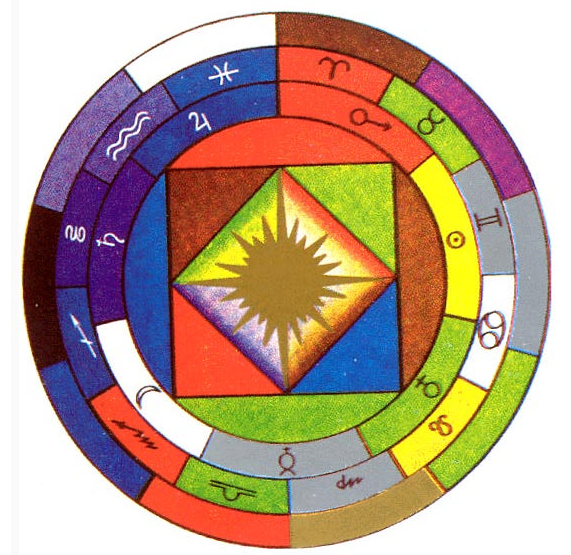
Quite simply, the master course is basically the 60 fundamental skills you need to perform the work contained in Bardon’s canon. The main additions to this involve the use of pranayama and body training, which are largely absent from Franz Bardon’s original work Initiation into Hermetics. That said, once you have those Sixty skills down, if you look at what I call Bardon’s mandala, this inner part represents the elements, then you have the planets, then you have the zodiac, and then you have the sephiroth. The coursework in the Sixty Skills curriculum consists of the master course, again those basic skills. Then a course on letter magic or cabala, which is really elemental work fully expanded to the 27 letters. Then when we’re done with that, we move on to the planetary meditations. Then we move on to the zodiacal meditations, and then we move on to the sephirothic meditations.
This is the path of enlightenment or the upward arc, if you will. I’m currently working my way through the path of manifestation or what some would call the downward arc of that. But as you can see, the curriculum matches directly to what is contained in this drawing. By virtue of doing that, it takes you from more gross forms of reality to more refined forms of reality, i.e., enlightenment, and back down again. This in turn increases your ability to interact with your environment on your own terms as effectively as possible.
PAA: How have these very traditions influenced the design of the Sixty Skills curriculum, for example, where do Daoist energy practices or yogic techniques show up alongside the core hermetic exercises inspired by Bardon? Can you discuss how you’ve blended these influences to create a coherent system and why this eclectic approach enhances a practitioner’s development?
Here’s the thing. The big thing that we get from Franz Bardon’s hermetics is a series of definitions. These definitions allow you to clearly identify what phenomenon you’re dealing with meditatively or yogically. This is generally lacking in most other traditions where you’re expected to figure things out. So you might work with a lot of energy in, say, a Chi Kung system, but they’re not breaking that down into vital or etheric, astral, mental, akashic forces, or non-dual light. They kind of expect you to figure that out. If you look at the actual techniques that Bardon employs, they’re all derivative. You can find them someplace else.
He did a tremendous service to us by putting them all in one place. But this is the key, and it’s something a lot of people tend to have issues with. Nothing original has been done in the hermetic or yogic or magical field in thousands of years because the techniques are all the same, and you can find them throughout antiquity. They’re just not well organized, and they’re frequently very poorly defined. What I’ve done is I’ve taken all of the best approaches to these individual techniques that I’ve seen, regardless of tradition, and I’ve included them in one set system. The actual techniques involved don’t change a whole lot. How you perform them can.
As I’ve said many times before, I take a clairsentience or subtle sense of touch approach to teaching. Why? Because this is the easiest of these subtle senses to develop. There are other ways to do this, but this is the way I’ve chosen to do it. Where do Daoist energy practices show up? Well, most clearly in the chi circulation form, which, as far as I can tell, comes out of various southern Chinese Daoist lineages. Where exactly? Hard to say, but you see a lot of this in things like white crane or vibrating crane type techniques. Also, I would say I’ve blended these influences because there are definite shortfalls in Bardon’s curriculum. The most notorious of which is, of course, body training. It basically doesn’t exist.
Without this or having already accomplished it through another medium like military service, a professional-grade athletics, this kind of thing, you tend to get stuck being able to generate energy only at the mental or higher levels. You don’t have the pipes in the body, if you will, to bring it down very far into the astral or the vital. So that’s the reason why I’ve included this material amongst a bunch of others. It’s simply a more efficient way of doing things.
Accelerated Training and Spiritual Maturity
PAA: How do you ensure the depth of character, self-transformation, ethical understanding keeps pace with the fast skill development? What is your response to those who are skeptical that genuine enlightenment can be accelerated this way?
First of all, most of what you hear about spiritual masters in terms of their personal behavior is, to be blunt, complete bullshit. Every spiritual guru that I’ve met has had severe character flaws of one kind or another. All of them. I can’t think of a single exception. What they do all have in common, however, is the ability to overcome those in their quest for enlightenment. The path of ennoblement, as some would call it, is really a matter of losing the more destructive of your bad habits over time in order to facilitate your practice. But this only tends to occur in terms of losing those things that directly interfere with your practice. If it’s something you can overcome and still practice, people generally retain that bad habit.
Now, that said, I’ve never met anybody who can shoot heroin or do meth and get anything done esoterically speaking. But again, people have allowed pop culture to incorrectly influence their view of what an enlightened master is. These are frequently not very nice people. They are frequently people who have a variety of problems. But through sheer force of will, they’ve managed to make contact with the divine. That said, the more bad habits you have, the harder it is to do all of this. So generally speaking, most people lose the, let’s call them, grosser of their negative behaviors over time because it simply interferes with practice too much to do so.
Now, that said, this takes a while. This is not a fast process. I’m going to be very critical of most lay practitioners. What is your response to those who are skeptical that genuine enlightenment can be accelerated in this way? Simply put, they’re using suboptimal methodology. Look at athletic performance. Every generation, we find better ways of doing things. In engineering, we generally find better ways of doing things. People have this strange religious attachment to something wrote in the past as the only way to do something. This is complete and utter nonsense. Process improvement has been severely lacking in esoteric circles. Rights of secrecy, not the least of which, being responsible for this garbage.
If what we are dealing with is in fact in your nature as a human being, and if the phenomena we deal with are forces in nature, the idea that this should take decades to do is just complete garbage and gatekeeping by other people. I say this as someone who grew up in a time where the microcosmic orbit was like a really super secret technique. Yeah, it’s really not that hard to do. If you want to learn that, go talk to Tao Semko and Santiago Dobles. They have a wonderful system involving that technology, but it took them decades to put it together because the people who knew how to do it were being a bunch of jerks. Keep in mind, when it takes you 10 years to learn how to do something, that’s not because it takes 10 years to learn how to do it. It’s because people are being selfish regarding the methodology.
None of this requires anywhere near the amount of time people apply to it. People waste way too much time on suboptimal training or antiquated techniques that simply aren’t that effective. The Sixty Skills curriculum was designed to remedy a lot of this.
Get Started with the Curriculum -20% OFF
Sixty Skills does not want you to be stuck for decades. He wants you to be able to move through the 5 levels of the Curriculum as Franz Bardon intended. Try our FREE Course or join the curriculum with Coupon Code: 20%OFF
PAA: Why is self-sufficiency so critical in your system? How do you prepare students to reach that threshold of power, for instance, what ensures that they can produce akasha at will? Once achieved, how does being magically independent transform a practitioner’s relationship to magic? Do they still benefit from rituals and external aids, or does their practice become fundamentally different at that point?
First of all, self-sufficiency is critical because it reinforces yourself, your free will. If something creates dependency, it’s probably not good for you. This is true if you’re talking heroin, cigarettes, highly processed foods, bad relationships, or bad terms on a loan. It’s not any less true when it comes to your magical ability. Listen, I’m not negative on all ritual work. I’ve said it before. If the goals of egregore surrounding a ritual match yours, party on. That’s a great thing. But ultimately, enlightenment is about being free. You can’t do that if your ability to access the godhead, God, the true Dao, the Buddha nature, is dependent upon something or someone else. That’s why it’s important.
How do you prepare students to reach that threshold of power? Well, generally speaking, through the process of equilibrium, you know, using the four elements to establish equilibrium. If you do this often enough, over and over again, akasha will spontaneously arise. From a dawn to a light isn’t that big a jump. Now, in the beginning, this will be a fairly slow process, but with practice, you can do it instantaneously, which is true of any other skill you have, be it driving a car, for example, or cooking a meal. In the beginning, you have to think about the steps, and then with practice, it just becomes automatic.
Once a being magically independent transforms a practitioner’s relationship to magic, do they still benefit from rituals and external aids, or does their practice become fundamentally different at that point? It tends to be a couple of stages. You’ll have the ability to do it, but it’ll be slow. So you’ll use rituals, mostly self-created, to skip steps. Then, at a higher level of performance, you’ll just be able to will it to happen. That’s where your life can get pretty interesting. That’s the true nature of magic. Again, these things represent forces in nature, and you learn how to harness those. Why would you need anything intermediate in order to work with it? That said, being human beings, it takes a while to get there.
Addressing Character Development and Mirrors
PAA: What are your thoughts on the view that Sixty Skills does not take character development and ennoblement seriously as it does not cover the mirrors in the master course? Also, the idea that going through Initiation into Hermetics should be some arduous task and that anyone that makes it easier is somehow doing it wrong?
First of all, I don’t do the mirror exercises because, as I’ve said many times before, in a modern era, most people don’t know what their actual weak points are. We’re not a very critical society the way Bardon’s was, where in the 1930s in Bavaria and the Czech Republic, people made sure you knew what you were bad at. That’s not true today. Also, on a practical basis, the mirrors are incredibly slow for what you get, and people waste a tremendous amount of time on them. Just going to be blunt, I think it’s a waste of time.
If you work with the elements and you establish equilibrium long enough, over and over again, you will not only get the same effect, you’ll get a much stronger effect because the mirrors really only work at the mental level. Whereas equilibrium, when done properly, at a minimum, additionally works at the energetic level or astral level. It’s a deeper effect. So the short answer is people are generally not aware of what their actual faults are. So they don’t really work on the right things. But a more nuanced answer is it’s an easy way to spend a lot of time on something that’s not very effective that should be spent on other things.
Any idea on going through Initiation into Hermetics should be arduous, and one that makes it easier is somehow doing it wrong? Yeah, they’re just full of crap. The one thing you do not have more of in life is time. So anyone who gives you a suboptimal training methodology that requires hours a day for decades on end to work with is a bad person. They’re wasting your life. Period. Again, if these are phenomena in nature that we’re working with, it shouldn’t be that hard to do.
That doesn’t get into the issue of process improvement. Every other endeavor of human behavior—engineering, medicine, some would argue the arts—all of these things have gotten better over time. Why shouldn’t that happen with yogic practice? This is insane, this concept that things should be hard just to be hard. No, things that are hard need to be hard because there is no other way of doing it. That’s simply not true with most of this yogic training. The experience of going through it is difficult enough without a bunch of self-serving jerks limiting access to the good stuff to maintain position.
Quabalistic Training and Transmissions
PAA: Given this perspective, how does Sixty Skills incorporate Bardon’s cosmic letter magic into training? Do you guide students to work with the creative letters, the tetragrammatonic sounds early on, or only after they’ve built a foundation? For example, are they eventually learning to form multi-letter formulas and divine names as Bardon hinted they must, or intone the word in a practical way? Essentially, how far into Bardon’s Kabbalah does your curriculum take a student, and how do you make such high-level work possible?
First of all, we start with letter magic on day one. You, with the elements, S for fire, A for air, M for water, and loud A for earth. We’ll work all the way through four-letter combinations, and you’ll also learn after time how to tune things and come up with your own at various levels. Now, Bardon did us a good favor in that he gave us half of the two-letter combinations out there. Well, actually, no, that’s not true. About a fifth of the possible ones. But there’s a lot more work out there that you have to do on your own.
If you follow the training system I’ve set forward, you will learn how to decode these things and figure out what they do. From that standpoint, the system is in itself complete. Essentially, how far into Bardon’s Cabala does your curriculum take a student? How do you make such high-level work approachable? Again, if you look at letter magic as a tuning fork system, right, you’re learning how to generate the various elements. The hard part of this is actually bringing it down to the right level of reality. That takes a lot of body training, and there’s really no way to cheat that. But again, as elements, these represent fundamental forces in nature. They’re just not that hard to work with once you know how. From that standpoint, I’d like to think what I have is fairly complete.
PAA: Can you elaborate on how on what happens during these group transmissions and why they are so effective? How have attendees benefited? Do you see significantly faster or safer progress with the letters compared to those who practice alone? Also do you think Bardon intended for students to receive such external help since they didn’t explicitly mention it, or is this a modern adaptation you found necessary for success?
It’s a weekly class. Usually, we do one letter or one planet or one force per week, depending upon what we’re working on. There’ll be a brief Q&A where we go over the previous week’s work. I go through about a 10-minute read on just the theoretical background, what we’re going to do, show people how to do it. Then we lead them through the akashic, mental, astral, and vital aspects of the letter before projecting into the sphere, or, if you will, elemental sphere of that letter to interact with the various entities that live therein. So, from that standpoint, that’s kind of the mechanics of what we do.
The advantage in doing it this way is it takes away the guesswork of working by yourself where you’re going, did I get that right, did I not get that right? You know, again, Bardon’s book, third book, is pretty good. But if you don’t have a teacher to walk you through the process initially, it can be a little confusing. The main thing is you don’t miss nuance. People have practiced alone. I’ve frequently seen an issue with a failure to counterbalance that, causing problems over time or not understanding how the letters fit together globally in terms of a greater system. That’s generally where I’ve seen the problems come in. Also, because we have a lively online discussion forum for this kind of thing, it allows people to compare notes, and it allows people to progress much faster because, as I’ve said before many times, I only know what I know. I only experience these things through the lens created by my personal development.
If someone’s a musician, something that I’m very weak at, or has other training that I don’t have, which is pretty common, they’re going to have a slightly different experience with these forces, and that’s valuable. But you only know about these things if you work with other people. Otherwise, if you’re doing it by yourself, you only know what you know. First of all, Bardon learned this material from the Martinists. Let’s just get that out in the open. If you go into Martinism, they have their own kind of system of Cabala. I don’t think it’s taught very often, and I don’t think many people have much depth to it. But the idea that Bardon purely conjured this out of the ethers is complete garbage.
Letter magic was an underground minor phenomenon or skill set in Germanic and Eastern European magic in the region Bardon was in at the time. We’re not exactly sure who he learned from, but it’s very clear he got at least part of this from the Martinist and probably from a few other related groups. So the idea that you’re supposed to do this on your own is just garbage. Bardon set up the order of the books he did, we think, keeping in mind the second and third book were published after his death by his secretary. Bardon didn’t put those together because, if you can’t find a teacher, in theory, if your clairvoyance and clairaudience are good enough, you can make contact with a cabalistic entity at the planetary level. Radina happens to be a good one who can teach you Cabala. But as a practical matter, the vast majority of people who’ve ever learned this learned it from another human being who was alive and wore pants.
Post-Curriculum Achievements
PAA: Once someone completes the Sixty Skills course curriculum, what kind of real-world magical results have you seen them attain? What are some of the most noteworthy experiences or successes your students have had in the past year? For instance, has a student made verified contact with a particular spirit or accomplished feats like healing, influence, or clairaudience, clairvoyance that really stands out to you?
Well, first of all, an element of character. You know, I’ve seen people radically change who and what they are and their circumstances in life. Obviously, I can’t get too descriptive regarding this, but overcoming long-term dependencies, radically changing their relationships with other human beings, frequently becoming quite wealthy as a result of improvements in their work life. Pretty common. What I will say is the best magicians out there, you will probably never meet because there’s no incentive for them to be public figures. Only weirdos like me or Mark Rasmus or some of the other more common names out there try to make a living at this stuff. For most people, it simply greatly enhances their work and personal life.
I can’t really get too explicit about that because then you’d know who they are. But I’ve seen people reenter work spaces they’ve been gone from for a decade. I’ve seen people invent things. I’ve seen people radically clean up their personal lives. I mean, this is kind of what magic is supposed to do, right? You know, I’ve got one student who has some of the best internal clairvoyance and clairaudience of any human being I’ve ever met, who occasionally relays messages to me that other entities, mostly cabalistic entities, would like me to know. That’s pretty interesting because I’d worked with those entities years earlier.
PAA: So kind of curious how do these outcomes reflect on the effects of the training, and how do you advise students to stay grounded and responsible with their new abilities?
Well, again, as I’ve said many times before, the thing about being a magician that differentiates you from being just a normal person is you’re held to a different standard. You know the difference with being a magician is you know what you’re doing. You know the ramifications for taking shortcuts, cheating others, treating other people poorly. So, you get punished for that much more severely. I can give lots of examples of that, but suffice to say, the universe does not like anybody getting a free ride. So, if you think the path of the magician is the easy way of doing things, you’re wrong. It does put you in a much larger fishbowl, which allows you to accomplish much greater things.
If you look at a lot of figures from history, magicians tend to be pretty notable. You know, Newton, good example. I’ve given others. But it comes at the cost of your being liable for the decisions you make that most people get off easier on because they make them out of ignorance versus knowledge.
Spontaneous Enlightenment Cases
PAA: In hindsight, what do you think enabled that person to progress so rapidly? Were there specific qualities, prior training, karma, intensity of practicing, divine grace that made this spontaneous enlightenment possible in your program? Did it teach you anything about how quickly the techniques can work or the human potential more broadly? Do you believe others could replicate the pace under the right conditions, or do you view it as a one-off outlier that shouldn’t be deliberately aimed for?
He was built like a brick house. Yeah, semi-pro athlete. Really, really, really solid guy. Came from a deeply religious, faith-based background. Had the ability to focus like nobody’s business, and he just hit it running. It was pretty amazing. I really, really didn’t expect to see something like that. But, hey man, he made it work. That says to me that, again, if your enlightened nature really is your true nature, why should this take years and years and years?
PAA: Do you believe others could replicate the pace under the right conditions, or do you view it as a one-off outlier that shouldn’t be deliberately aimed for?
Again, if enlightenment is our true nature, it shouldn’t take very long to do.
So I look at the Sixty Skills program, if you will, as a continual loop of process improvement. If people are watching these videos 90 years from now and the material is exactly the same, I’ve failed. There has to be a better way of doing these things. If you look at the classical Buddhist and yogic universities in Northern India, from what we gathered, they were rarely longer than three or four years in length. Interesting point to contemplate.
Energetic Dangers of the Outer Planets
PAA: Were you expecting such a severe side effect, and what was it like managing that crisis in real time? Going forward, what precautions do you take or advise others to take when exploring extreme cosmic realms like Pluto or beyond so the practitioners stay psychologically safe? Has this changed how you approached the teaching of the astrospheres?
Well, first of all, know how to invoke Emnisut before you begin that training. I highly, highly, highly advise that. Two, don’t wait. The second that comes across your plate, the second you get that idea, immediately invoke Emnisut and start counterbalancing with solar energy. This isn’t something you want to gut check your way through. Initially, I thought this might have just been an oddity associated with me and my group. But I was contacted by various other practitioners who had worked with the outer planets. Many of them, to be blunt, said their survival of that process was seemingly random.
So learn how to invoke Emnisut. Do it frequently before you start working with the outer planets. That’s my most sincere advice, and that’s the best advice I can give. You know, when working with the extra-solar region, there are a couple of other precautions you can take, and I talk about them in the coursework. Mainly, you can contact some entities I detailed in there that will provide you protection in that realm and will teach you how to generate, generally, what I found to be a three-letter combination that’s specific to you that allows you to traverse those areas. Otherwise, when you look back historically at things like Lovecraft and the creator of the Cthulhu mythos, I suspect that’s what happens when somebody has an accidental ejection into the outer planets or extra-solar region. You notice a lot of those guys died. Yeah. So caveat Empor, right.
The Living Crystal Device
PAA: Can you share more about the living crystal, about what the living crystal does, how it aids one’s practice? Is it an amplifier of ambient energy, a tool for focus, or something else? Also, what have been the reactions or results among those who have used it in training, and does it significantly boost certain exercises or experiences?
Geometry for the living crystal is really important. The way we currently have it set up, it primarily generates mental and a little bit of astral energy. But that’s the thing, it actually generates more of it. One of the first discoveries we made in working with it was we found that most people, it takes a while to learn how to do the single-pointed focus exercises. We thought this had something to do with the body learning how to do it. No, it turns out the body needs a specific kind of energy to do that, and it doesn’t have much of it naturally. The living crystal device allows people to drop into those highly focused states and trance states almost immediately by providing something that closely resembles that energy that you can work with.
It’s really quite remarkable, and we’re continuing research on it to this day. Like I said, it’s not an amplifier so much as an addition. It gives you more of something. Now, what it can also do is you can take a sigil where you can project an energy into the crystal ball above the device, and it will begin mimicking that energy, and it will continue to do so until you shut it off. That’s another interesting thing that we found.
PAA: What have been some of the reactions amongst those who used it during training?
Everybody appreciates it. There are some people for whom it takes them a while to begin to feel the energy. It’s pretty rare and surprising. A lot of these people are really good at ChiKung. But everybody who’s worked with it long enough begins to feel the energy that it’s developing and then can use it to aid their other practices.
What I recommend in most cases is I recommend practicing with it one session and then not practicing it for another. That way, you don’t create a dependence on it. But it’s really quite remarkable.
This is the difference between an internal and external power practitioner. Both schools draw upon the body to generate the effects they do. With an internal power practitioner, you’re doing it intentionally, and you’re making efforts to strengthen that. So yeah, the body as a talisman describes exactly what we do.
Vibrating Letters Without Sound
PAA: How did this ability manifest in your group, and what does it indicate about the relationship between physical training and magical skill? I recall you noted it seemed linked to excessive to extensive ligament tendon training, strengthening the antenna of the body. Does the internal vibration technique change the way you teach letter magic now? For example, do you foresee new exercises that specifically train this skill used in the body as a talisman for the cosmic language?
We learned how to do this on Pluto, where you’re essentially vibrating the letters at a cellular level. I don’t know any other way to describe it than that. This ends up strengthening the overall ability at letter magic as you combine that internal vibration with all of your other techniques, be that breath holds or external vibration through voice or what have you. It simply makes things much stronger and allows you to draw on the resources of the body much more effectively, which can be a big help if you’re in a place where there isn’t much elemental basis for what you’re doing to allow it to function.
But again, it was largely a Plutonian invention that we found this.
Does it change the way you teach letter magic now? No, it’s an addition to it, and when people learn how to do that, they simply get much stronger. This is the thing about the body as a talisman is important. This is the difference between an internal and external power practitioner. Both schools draw upon the body to generate the effects they do. With an internal power practitioner, you’re doing it intentionally, and you’re making efforts to strengthen that. So yeah, the body as a talisman describes exactly what we do.
Advanced Planetary, Zodiac, and Sephirothic Work
PAA: Which of these discoveries surprised you the most, and how they expand our hermetic understanding of these spheres? For example, Pluto being the stepping-off point to realms beyond our solar system is a profound insight. What does working with Pluto and beyond entail for a magician, and did it require you to develop new methods of protection or perception?
The biggest surprise to me was probably Pluto. Aside from being a home from the dead, which you could guess from classical works, it’s the home of a Egregores. Any Egregore that’s ever been and will ever be, you can find there and work with directly. I don’t think this changes their ability to influence you. But on a certain level, it would allow you to resurrect things that are not extant in our current timeline. Now, whether this is a good idea or not is another question. I also think it would allow you to join a community of practice very quickly in a way that otherwise might take significantly longer. Again, whether that’s worth doing or not, well, that’s up to the practitioner.
But that, I think, was really the biggest surprise of all, and just the generic disinterest of Plutonian entities, you know, are being there. They all recognized that our being there was unusual and rare, but their kind of take on all of it is everybody shows up here eventually, so what’s the rush? The magic we learn inside our solar system is unique to each of those solar systems. The extra-solar realm is literally where you get into things like universal cabala, universal letter magic, universal forces. They’re typically pretty harsh. They’re generally not very safe to work with. You never want to bring them inside your body.
I don’t clearly understand yet what the ultimate point of that is because, again, by definition, the magic you need to influence things in our world is unique to our world, but it’s certainly an interesting point for consideration, and hopefully, a brighter student out there can get you a better answer on that one. But, as I’ve talked about before, you need specific protection for that because these forces are literally alien to our evolution.
PAA: Can you explain what the stacking involves, and what it might look like? Is it, for example, invoking a planetary force through a specific letter formula all at once or sequencing energies together in a single meditation? What kinds of results did you observe when you started stacking forces, and were the effects exponentially stronger or qualitatively different than working with one energy at a time, and ultimately did this inform how you approached the later stages of the curriculum, such as stacking zodiac signs or sephiroth in advanced practice?
At the end of the day, you’ll end up with an akashic force, a sephiroth, a zodiac force, which is mental, planetary force, which is astral, and a letter force, which is vital or etheric in nature. This is four-letter magic. This is why you learn four-letter combinations so you could combine these forces. Now, the reason why you want to do this is when you learn how to establish equilibrium using the letters and then the planets and then the zodiac and then finally the sephiroth, it results in a far more refined access to those energies. You get much stronger, and everybody who’s done this has recognized this.
You also develop a much higher ability to tune into a specific effect that you want. Man, there are some surprises out there. You know, when I generate the letter K through Gemini, you get this off-white colored energy that represents what most people would think of enlightenment if they haven’t experienced enlightenment. It’s this very high mental level aspect of non-dual light. Well, that makes it very easy to jump over to non-dual light itself because you’re that much closer to it. That’s one such example. Physical effects, such as, you know, weather control and the like, get much easier.
So yeah, there are lots of reasons to learn how to do this, but the way you want to look at it is it’s simply teaching you to tune your access to something much more specifically. Interestingly, the better you get at this, the less energy it takes to pull off a given effect. Because now, instead of painting with a really broad brush, right, using lots of energy, if you will, to cause an effect, now you’re using a laser-like focus to do it. You can be very specific.
PAA: How does working with the zodiac differ from planetary work? What will the upcoming zodiac course offer to students in practical terms as they are learning to enter each sign’s influence and gain specific abilities and insights from it, and have you found the zodiac forces are gentler or more beneficent than the planets since you noted the zodiac can temper the harsher planetary aspects? Any interesting experiences so far from the zodiac meditations you can share?
First of all, it’s very mental, and the planets are very energetic or astral. It’s the big note. From your blog, it appears that each zodiac sign’s meditation involves a combination of a constellation symbol sigil, its related planetary power, and an elementalist sensation, effectively creating a three-part formula. Combine the three, and you get letter magic with direction. So, as you wrote, yeah, you get a three-letter combination. This is why, again, when you’re learning letter magic, you want to learn the primary letters and then the two-letter and then the three-letter and four-letter combinations so you can do this work more effectively.
The zodiac is largely mental in nature. Now, whether it’s the source of mental energy writ large or simply something so similar that it works as an equivalent, that I can’t answer to you. But it allows you to access things directly at the mental sphere without having trained any of the other spheres, which is why we’ll be offering a short course in the zodiac meditations that people without a background in any of the other Sixty Skills work can access directly, and you can use it for all normal things to use magic for—healing, wealth, martial arts, you name it—because that dribbles through.
One of the interesting things that we found that we didn’t expect was that, in some ways, astrology gets it wrong. The planets don’t control the zodiac. The zodiac tempers the planets. So, after doing the zodiacal meditations, the planets become much softer, and the higher nature of the zodiac essentially guides the rougher or cruder or more astral forces of the planets. This, in turn, makes them much easier to work with, which also makes you, as a magician, much more effective. The entities at the planetary level essentially look up to the entities at the zodiacal level as being their gods or their leadership, if you will.
It’s definitely a hierarchy, and they look up to those entities. So, if you’ve worked with them, the planetary beings tend to be much more receptive to your needs in a much softer manner. Maybe this is because you’re simply able to tune in with more fidelity now regarding those planetary forces, but everybody’s noticed this, and as an adjunct, you also get stronger at it.
Any interesting experiences so far from the zodiac meditations that you can share? Yeah, basically, my suspicion as to why Buddhism did so well with the ancient Greeks is because they were already doing these high-level mental meditations on the zodiac. So, it really wasn’t that big a shift for them. Additionally, the tempering effect of the zodiac on the, let’s call them, lower forces or more terrestrial forces is really quite profound. Pretty amazing, actually, and makes everything much easier to do afterwards.
PAA: Can you outline your approach to the sephirothic series? Are you activating multiple sephirothic spheres in consciousness simultaneously or moving up the tree in secession and then combining their influences? I’m also curious about any surprises you’ve encountered. For example, you mentioned that during Daath work, you had to go back a little due to something involving Sirius, perhaps an insight that Daath connects to the star Sirius? What was this about, and generally, how do the sephirothic meditations compare to the previous planetary, zodiac ones in terms of intensity and outcome? Will there eventually be a dedicated sephiroth course for students, and what prerequisites would you require someone tackling the tree of life through your method?
Actually, we’re doing both. We start with Malkuth, then go to Yesod, Hod, so on and so forth, on up to Kether as part of the path of enlightenment. Once you’re there, there’s an exercise you’ll learn where you invoke all of the sephiroth at a time in a kind of circle, generating an akashic level equilibrium that’s quite profound and makes that skip to non-dual light pretty short. By basically stacking all these forces—first at the vital with the letters, then at the astral with the planets, and then at the mental with the zodiac, and then at the akashic level with the sephiroth—you take all these independent pieces of reality, disparate pieces of reality, and you combine them back together again.
This creates an intense light sphere that you end up projecting into. But that’s not the end. Once there, you’ll notice this almost band of reality. It’s hard to describe that the light can’t go past. Then, using single-pointed focus, you bore a hole through that and punch your way to the other side. That’s where you experience non-dual light in true form. What that is, I can’t really tell you because it can only be experienced by definition. Anything that’s not bound by physicality, time, or space would be something that human beings would have a hard time describing. But this is certainly the fastest and most reliable way I’ve found to experience that state.
When we got to Daath, did that meditation, we were instructed to meditate upon Sirius. We went there. We were given a specific set of yogic exercises that seemingly activated some latent magical potential in the body. Everybody discovered that they were much stronger energetically after that, by the way. Then we went on to Binah. So that was an important part of that that was completely unexpected. I don’t know where any of that came from, but it was important. We learned a lot of valuable lessons there. So good stuff. Yes, there will eventually be a sephiroth course out when I finish with the zodiac course.
Magic Camp and Future Projects
PAA: What do these immersive camps provide that is different from solo or online study? Can you share any memorable transformations or feats achieved by attendees during Magic Camp, for example, breakthroughs in concentration, energy work, or evocation that happen on site? Also, what are your future plans for Magic Camp? Do you envision increasing their frequency, doing region-specific themes, or perhaps creating advanced alumni-only camps for deeper work?
Basically, we focus a lot on physical techniques—rebounding. Rebounding will be a part of the basic course for Magic Camp every single time because it’s hard to learn that from video. It’s not a terribly difficult technique to implement, but it does take a couple of hours typically for most people to kind of get it, and people will see how quickly that improves their practice. It’s really quite remarkable. Rebounding is by far the best body training technique I found anywhere. In terms of what happened at camp, spontaneous examples of weather control, you know, rain during a dry season location. Huge breakthroughs with many people, some people actually hearing spirits for the first time.
One individual who had struggled with clear sentience for about a year and a half, by day three, he had it, you know. So, these are all things that you can expect there, specifically because when you work in this intense one-on-one environment, you get the etheric or near-physical energetic effects that you’re not going to get from video working by yourself, and they’re quite profound, and it just gives you another tool to work with. Future plans for Magic Camp? Yeah, plan on doing this four to five times a year. It’ll be regionally based. Ideally, you’ll have US-based events for North America, probably in Mexico mostly, although we are having one in Maryland this year, so you can check that out.
We’re going to be doing one every year in Europe, probably Spain or Portugal. We’ll be doing one every year in Southeast Asia, again probably Bali. Then we’ll also be doing one every year probably in Antalya in Turkey. So students who are from Eastern Europe or Russia who have trouble getting visas elsewhere can come join in and all the fun. So that’s the goal. We’ll probably have advanced coursework an additional one to two times per year just based upon desire. Unfortunately, that’ll probably be limited to a single session a year for things like evocation or stellar magic or the zodiac just because the number of people involved in that level of practice aren’t that big. Hopefully, that’ll change, and it’ll be something that we can do on a regular basis. But that all depends upon you good people joining the show.
PAA: Do you still plan to roll out these teachings? If so, what can students expect from the Emei training? Will it be integrated into Sixty Skills as a module or internal martial arts or offered as a standalone for energy cultivation? As for the alchemy course, are we talking about internal alchemy, external laboratory alchemy, or a blend of both? These areas are quite extensive. How will you condense and structure them for practitioners already familiar with the rest of the Sixty Skills curriculum?
First of all, the breath retention part, which is the most important part of the course, will be included in the various levels of the master course, the planetary and zodiacal courses, and the sephiroth course. But the Emei course itself will get into all of the chikung and the energetic healing and the hands-on work that will not be included in the other hermetic training. So, from that standpoint, it will be quite valuable. Additionally, the Emei system is a healing system, but it didn’t come about as a healing system. It was a more complete system of magical practice from Emei mountain in western China.
I teach the medical portion of it because that’s what I know. An enterprising individual out there might be able to find the missing parts of this. My suspicion is this is one of the surviving portions of one of those defunct Vajrayana systems everybody talks about in Vajrayana Buddhism, but that is up to you to determine because I only know what I know. But it’s quite profound, and yes, that will be coming out at some point. As for the alchemy course, we’re talking about spagyrics, which some people argue isn’t alchemy at all, but essentially, it will be a short course on the seven basics where you learn to use plant-based alchemically derived liquids suspended in alcohol mostly to improve your magical progression.
I’ve done these. I’ve had several of my students do these, and it’s very helpful at the mental and high astral level for developing a lot of those abilities. The idea being you take one of these every day for a year as it opens these things up within you. It’s pretty profound stuff. It’s taken longer because I’ve just been busy. Kind of the way it goes, guys. But have no doubt, it will be forthcoming.
The Four-Part Quest and Beyond
PAA: Without asking you to divulge anything premature, can you give us a glimpse of what the remaining two parts might involve? Are there higher tiers of reality you intend to explore, perhaps the realm of fixed stars and constellations beyond the zodiac or the primal elemental chaos or even something like direct work with divine providence and unity? Alternatively, is the latter half more about integrating everything achieved so far, for example, combining elemental, planetary, zodiacal, and sephirothic magic into a single universal mode of operation? Essentially, what do you foresee as the next frontier for your personal practice and teachings once the current curriculum is fully mapped out?
Once you finish that path of enlightenment, the upward stroke, if you will, going from letters to planets to zodiac to sephiroth into non-dual light, which is all covered, will be covered in coursework. You then have what’s called the path of manifestation, what some would call the path of return. This is where you take this now very diffuse unified energy and you start breaking it down into individual pieces so it can be utilized in the phenomenal world. So far, we’ve just about finished the downward arc of the sephiroth and are about to start our year work with the zodiac. Pretty profound, you know, a lot of magic triangle work. Learning how to focus and clear the mind in increasingly interesting ways.
A far different understanding of the role of akasha. As one, a couple of the entities mentioned, when it came to understanding akasha, me and my compatriots were basically, in their words, we were missing half the point of what was involved. Whether this will eventually result in our being able to do physical magic or not, I don’t know. What I will say is, increasingly, we can leave out the steps when doing things and simply will things to happen. It’s pretty remarkable how that works. But this also leads to needing to be in control of yourself. That’s a whole other discussion.
Publications and Legacy
PAA: Do you have plans for any new books or written works? For instance, as your curriculum reaches its culmination, do you intend to publish a detailed explanation of the entire Sixty Skills system or perhaps a memoir-style account of these extraordinary experiments—outer planets, etc.? The community would greatly benefit from your insights in print. Additionally, how do you approach writing versus video or in-person teaching? Do you find the writing allows you to capture nuances of these teachings differently?
There will be books. In fact, I’ll basically end up rewriting all three of Bardon’s first three books. There’ll be a book on unified letter magic, absolutely. The upcoming planetary magic book is almost done. So expect to see that sometime, hopefully, before the end of this year or probably the beginning of 2026. There will be a memoir at some point, just discussing how various things unfolded. Upon my death, all of my personal journal practice journals will be published as well. Those aren’t very exciting, I’m afraid. They just basically list techniques that I discovered when doing things.
The writing is very time-consuming versus video, which is kind of amazing to think about, but it allows for being specific in a way that video sometimes does not. That said, video is, generally speaking, a far better teaching medium than writing is. So, you know, mixed bag, right? But there’ll be something there for everybody because, ultimately, when I die and reincarnate, I don’t want to have to go through the trouble of spending 30 years of my life to figure out a bunch of things that I could have done in a year and a half. Call me selfish, but, of course, everybody gets to benefit from that, so why not?
The Adept’s Path Forward
PAA: Finally, what do you see as the endgame for a Sixty Skills trainee? Suppose someone has worked through the master course and all the advanced courses—Cabala, planetary, zodiac, sephiroth, whatever comes next. In your eyes, what level of adeptship will they have reached? What capabilities should they have mastered at that point, for example, full command of elemental energy, the ability to converse with any spiritual entity, profound realization of their own divine nature? What would you advise such a graduate to do thereafter? Is it simply a matter of pursuing one’s personal spiritual missions with the skills acquired, or are there specific higher goals like true enlightenment, service to humanity, or joining the ranks of the inner planet adepts that you encourage them to aim for? In essence, when someone combines the entire Sixty Skills journey, how do you envision them contributing to the world or the tradition, and what is next on the horizon for them?
First of all, at that point, they will definitely have encountered non-dual light. Hopefully, they’ll have some ability to fully project into that non-dual state on their own with reliability. With me right now, it’s about one session in eight and one session in nine. But that’s been improved from a whopping three experiences with that over a 30-year period previously. So I think that’s pretty good. What I’m beginning to see is the ability to generate magical effects, strength strictly through force of will. You think about it, and it happens.
Now, there’s still the energetics and all the other stuff that have to go along to support that. That’s what we spend a lot of time building up to in the system. But increasingly, what I’m seeing is people have the ability to impact the reality around them by simply thinking about it. It’s pretty amazing. Absolutely true. All three—full command of elemental energies, the ability to converse with any spiritual entity, profound realization of their own divine nature. You will end up pursuing your spiritual mission. You may end up changing what that is. There will typically be an aspect of service to what you do because people need help, and you have the ability to give them help in a way that most can’t.
So all of that’s true. What I will say is people who have been through this process are remarkably grounded and remarkably physical at the end of the day. So it’s not this airy-fairy kind of mental-level imagination kind of phenomenon. People who’ve gone the distance are remarkably real and remarkably devoted and connected to the here and now. If someone isn’t, well, that’s probably a warning sign. Really, that’s up to them and the divine, but everyone who’s done this that I’ve met has led a most remarkable life. They are not, as I frequently mention, grandma basement dwellers. They are vigorous participants in reality. If someone isn’t, well, you might want to think about that. But otherwise, as per usual, train hard and be well.
PAA: Thank you so much this I think is one of the best looks at the scope of the Sixty Skills curriculum. The depth, logic and interconnectedness of it all is clear to see, and as we keep saying completely in line with Franz Bardons description of the 3rd Tarot Card. For clarity I list it below showing all 5 stages of the curriculum, check your copy of KTQ.
The Symbolism of the Third Tarot Card
The picture on the opposite page is the graphic representation of the Third Tarot Card. The first (or outer) circle has ten sections symbolizing the ten quabbalistic keys. These ten quabbalistic keys (v. their color symbolism) are identical with the ten Hebrew Sephiroth.
Since these ten keys, or Sephiroth, comprise the knowledge of the whole universe with all its ways of existence, methods and systems, they are placed in the outer circle.
The fact that these ten keys refer to the micro- as well as the macrocosm becomes evident also by the fact that the next, i.e., the second circle, reflects the signs of the zodiac of the whole universe, again in the relevant color symbolism.
The third circle (going from the outside to the inside) is the planetary circle, which is identified by the planetary symbols and the colors analogous to the planets. All three circles enclose a large square symbolizing the four elements represented in the relevant color symbolism. This square, indicating the realization of the elements, symbolizes the material world.
The inner, smaller square signifies the tetragrammatonic mystery, the Jod-He-Vau-He or quabbalistic fourfold Key necessary for mastering the elements and their influences.
The sun in the center of the picture represents Divine Providence, the Akasa Principle, the origin of all that exists.
Thus not only man (i.e., the microcosm), but also the whole macrocosm is graphically represented by this picture. Furthermore, all keys are drawn in it, the fourfold key being especially dominant, since it is the key to the realization, the materialization of things. Everything that the quabbalah teaches us, i.e., its whole system, all analogies, follows clearly from this picture and its clear symbolism. The meditating quabbalist will therefore deduce all analogies from the Third Tarot Card.
In this video, the founder shares insights into the Sixty Skills material. With over 30 years on this path, the founder has traveled the world in search of living traditions, gathering invaluable knowledge along the way. The Sixty Skills curriculum is the result of that extensive exploration.
For a deeper dive, check out the interviews below and visit his about page on his website. This page is designed to give prospective students all the information they need about the teacher and their teachings.
If you have any questions, feel free to reach out via our contact page.
The Master Course is an 18-Month Curriculum leading to Magical Independence. If you intend to take this training as far as you can and actually experience what so many can only read about then the Master Course is a rare opportunity to access everything you need. Regardless of your experience, if you follow the instructions in each course and invest the recommended number of hours into your practice then in 18-Months you will be pleasantly surprised with what you are now capable of.
The Master Course allows you to purchase ALL of the courses in the 18-month curriculum, the reason to do this is to obtain a big saving and secure access to everything you need to take you from zero experience to a level of proficiency where you can generate your own Akasha and Non Dual Light (See the importance of that here), as well as invoke and evoke with a full understanding of the underlying mechanisms leaving you free to explore the magical universe. You will know how to wield the elements, create rituals, charge objects and magical spaces, perform evocations and so much more…you will know how to do these things and most importantly you will know why it works.
Each level of the curriculum is listed below. We also wrote about the benefits of the Master Course here, and here we provided an extended preview of each course – up to 30 mins for many of the courses – this provides enough information to make an informed choice as to whether the material is for your or not.
Level 1
Mental: How to Concentrate
Astral: Building the Chi Ball, What is the Secret Smile
Physical: What are the Electric and Magnetic Lines of Force?
Level 2
Mental: Auto Suggestion: What is the Mala Method?
Astral: How to Breathe Astral Energy?, Developing Clairvoyance, Clairaudience, and Claireaugstance
Physical: Training the Electric/Magnetic Lines of Force with Movement
Level 3
Mental: How to Generate Mental Energy
Astral: Creating Your Life’s Movie
Physical: Training the Electric/Magnetic Lines of Force with Movement
Level 4
Mental: Creating Your Life’s Movie
Astral: Training the Four Elements (Fire, Air, Water, and Earth), Room Impregnation: Filling Your Sacred Space
Physical: Resistance Training for Magicians: The Yoga of Strength
Level 5
Mental: The Three Transformations: How to Convert Your Energies
Astral: Establishment of Equilibrium: The Four Elements and Magic
Physical: Training the Electric/Magnetic Lines of Force with Movement
Level 6
Mental: Transference of Consciousness and the Grain of Sand
Astral: Room Impregnation: Filling Your Sacred Space
Physical: Astral Walking
Level 7
Mental: Transference of Consciousness and the Grain of Sand
Astral: Establishment of Equilibrium: The Four Elements and Magic
Physical: Power Walking with Weights: The Walk of the Magicians
Level 8
Mental: The Zero Point: Out of Body Projection for People Who Can’t
Astral: Creation of Elementaries
Physical: Walking with the Elements
Level 9
Mental: Mental Wandering: Intelligence Gathering and the Real OBE
Astral: The Void Meets Infinity: Akasha and Non-Dual Light Breathing
Physical: Rebounding: Fah Jin, Empty Force, and Fascia Development
Level 10
Mental: The Void Meets Infinity: Akasha and Non-Dual Light Breathing, How to Learn Kabbalah from the Spirit World Via Evocation
Astral: The Chi Circulation Method, Advanced Clairvoyance Training
Physical: Volting: Expressing Your Will in the Universe, The Void Meets Infinity (Akasha and Non-Dual Light Breathing)
Franz Bardon’s Kabbalah (Quabbalah) is a system of three-point meditation, is a universal teaching of great antiquity and depth. Throughout the ages, adepts of every time and place have achieved the highest levels of magical attainment through the understanding of sound, color, number and vibration as embodied in the Kabbalah. It involves working with 27 letters that represent different energies on multiple levels. This Kabbalah serves as an internal system of cultivating personal abilities to harness natural forces, rather than relying on external rituals or entities.
1. Introduction
Discord Group
Introduction
2. Theory
How to Train the Letters
How to Ventilate
Requirements
How to Counterbalance
Progression with the Letters
3. Build the Ball
Introduction
Introduction – Three Primary Exercises
Introduction – How to Perform the Exercises
Theory and Practice – Organization of the Phenomenal World
Theory and Practice – Energetic Realm
Theory and Practice – How To Pore Breath
BTB Techniques – Building The Ball
BTB Techniques – How To Move Energy Through The Body
BTB Techniques – How To Use The Fingers
BTB Techniques – How to Cup Energy Along The Body
Last Thought and Course Conclusion – The Roll of Will Power
Last Thought and Course Conclusion – Conclusion
4. Astral Energy
Introduction
Things Needed to Practice
Theory and Practice – MEST and Suspension of Time
Theory and Practice – Need for Body and Breath
Theory and Practice – Connection to the Body
Theory and Practice – Astral versus Mental
How To Astral Breathe – Preparation and Practice
How To Astral Breathe – Astral Breathing Practice
How To Astral Breathe – Different Ways to Practice
Conclusion – Things Not Covered in this Course
Conclusion – Ending and Thanks
5. Mental Energy
Introduction
Requirements
Theory and Practice – Suspension of Space
Theory and Practice – Concentration and Will Power
Theory and Practice – Relationship to the Body
Theory and Practice – Astral Versus Mental Wandering
How to Practice – Preparation
How to Practice – Posture
How to Practice – Mental Expansion
How to Practice – Different Ways to Practice
How to Practice – Energies and How They Can Be Used
Conclusion – Things Not Covered Here
Conclusion – Ending and Thanks
6. The Three Transformations: How to Convert Your Energies
Introduction
Requirements
Theory and Practice – Why Perform the Three Transformations?
Theory and Practice – Going Up and Coming Down the Energetic Pathway
Theory and Practice – Vital Energy as Your Base
Theory and Practice – Passive Conversion of Energy
Theory and Practice – Do Not Mix Energies
Theory and Practice – Different Manifestations of Energies
Theory and Practice – Clairsentience
How to Practice – How to Go Up the Path of Enlightenment
How to Practice – How to Go Down the Chain of Manifestation
How to Practice – Things to Think About
Conclusion – Things Not Covered Here
Conclusion – Ending and Thanks
7. Mother Letters
Sch/Fire
A/Air
M/Water
Umlaut A/Earth
E/Akasha
8. Equilibrium
Introduction
Requirements
Theory and Practice – What is the Establishment of Equilibrium?
Theory and Practice – Akasha and Non-Dual Light with Equilibrium
Theory and Practice – Power Building and Equilibrium
Theory and Practice – Practice Design
How To Practice – Fire to Head
How To Practice – Air to Chest
How To Practice – Water to Abdomen
How To Practice – Earth to Legs
How To Practice – Establishment of Equilibrium
How To Practice – Things to Think About
Conclusion – Things Not Covered Here
– Conclusion – Ending & Thanks
9. Fire Letters
FLS Fire Letter Variants Preview
FLS Introduction
FLS Requirements
FLS Reading on the Letter C
FLS Reading on the Letter D
FLS Reading on the Letter K
FLS Reading on the Letter R
FLS Reading on the Letter S
FLS Letter C Invocation
FLS Letter D Invocation
FLS Letter K Invocation
FLS Letter R Invocation
FLS Letter S Invocation
FLS Letter T Invocation
FLS Things to Think About
FLS Things Not Covered
FLS Conclusion
10. Air Letters
ACL Air Letter Variants Preview
ACL Introduction
ACL Requirements
ACL Why Learn H, L, and Z
ACL Letter H Reading
ACL Letter L Reading
ACL Letter Z Reading
ACL Letter H Invocation
ACL Letter L Invocation
ACL Letter Z Invocation
ACL TNCH
ACL TTTA
ACL Conclusion
11. Water Letters
Invocation of the Letter W
Invocation of the Letter N
Invocation of the Letter J
Invocation of the Letter Ch
Invocation of the Letter G
Letter W Reading
Letter N Reading
Letter J Reading
Letter Ch Reading
Letter G Reading
12. Earth Letters
Earth Variants Course Preview
ELTS Introduction
ELTS Requirements
ELTS Why Learn
ELTS Posture and Counterbalance
ELTS Letter B Reading
ELTS Letter F Reading
ELTS Letter I Reading
ELTS Letter O Reading
ELTS Letter P Reading
ELTS Letter B Invocation
ELTS Letter F Invocation
ELTS Letter I Invocation
ELTS Letter O Invocation
ELTS Letter P Invocation
ELTS Things to Think About
ELTS Things Not Covered – ELTS Conclusion
13. Akashic Letters
Akashic Letters Preview
AKL Introduction
AKL Requirements
AKL Why Train Y, Umlaut O, and U
AKL Invocation of the Letter U
AKL Invocation of Umlaut O
AKL Invocation of the Letter Y UE
AKL Karma and Akasha
AKL Letter E Reading
AKL Letter U Reading
AKL Umlaut O Reading
AKL Letter Y UE Reading
AKL TNCH
AKL TTTA
AKL Conclusion
14. The Four Letter Combinations
Four Letter Element Theory
Four Letter Fire
Four Letter Air
Four Letter Water
Four Letter Earth
Four Letter Akasha
Four Primary Energies
Four Letter Mental
Four Letter Astral
Four Letter Vital
15. Master Meditation
20 Letter Theory
20 Letter Stack
16. Additional Information & What Comes Next
Four Corners Theory
Four Corners Elemental Meditation
Charging Substances Theory
EN
BH
17. Invocation of Radina
Introduction
Requirements
Theory and Practice – Why Evoke Radina?
Theory and Practice – The Planetary Path of Advancement
Theory and Practice – Ball Above Head and the Head
Theory and Practice – How Spirits Manifest
Theory and Practice – Different Levels of Development
Theory and Practice – Mediumship Versus Evocation
How to Practice – Evocation of Radina
How to Practice – Things to Think About
Conclusion – Things Not Covered Here
Conclusion
Sigil
18. Sixty Skills Question and Answer
April 2024 – Q&A for Master Course and Kabbalah Students
October 2024 – Q&A for Master Course and Kabbalah Students
Planetary Kabbalah is an advanced esoteric practice that involves placing the energetic essences or “power aspects” of planets within different parts of one’s body in order to generate specific effects. This is akin to working with multi-letter Kabbalistic practices from the Franz Bardon lineage. However, to even begin studying Planetary Kabbalah, one must first master the foundational “mother letters” representing the elemental forces of fire, air, water, earth, and akasha, as well as develop the ability to discern between the vital, astral, mental, and akashic emanations of energy.
After gaining mastery over the elemental forces, the next step is to work through a series of planetary meditations, starting from the near-Earth planets out to at least Jupiter, or ideally all the way out to Pluto if taking a more modern approach. This process, which can take 18-36 months, allows the practitioner to intimately understand the individual effects of each planet’s energy upon the human body. Only then can one begin the actual practice of Planetary Kabbalah by emplacing the spirits or power aspects of planets, rather than their associated intelligences, into specific areas of the body.
One basic Planetary Kabbalah technique described is the “kabbalist’s or magician’s prayer,” where the Moon’s power aspect is placed at the solar plexus to generate an astral field, and the Sun’s power aspect is placed at the heart center to create a balanced, unified force. More advanced practices involve placing multiple planets within the body in specific configurations to produce desired effects, which is akin to “playing chords” with these planetary energies. After mastering Planetary Kabbalah, even higher levels exist, such as Zodiac Kabbalah, followed eventually by working with the energies of the Sephiroth itself. But first comes Planetary Kabbalah, something you will rarely see discussed let alone practically explained in the way Sixty Skills does in this course.
1. Planetary Kabbalah Series
Planetary Kabbalah Discord Group
Introduction
Requirements
Why?
Esoteric Hygiene
The Need to Counterbalance
Dangers of the Outer Planets
Sigils
2. Near Earth Zone Block
NEZ Theory – The Planetary Path of Development
NEZ Theory – Sigils
NEZ Theory – Ball Above Head and the Head
NEZ Theory – How Spirits Manifest
NEZ Theory – Different Levels of Development
NEZ Theory – Mediumship versus Evocation
NEZ – Power Aspect
NEZ – Intelligence (Radina)
3. Lunar Zone Block
Excerpt from future book about Lunar
Lunar Zone Theory – The Function of the Lunar Realm in Energetic Development
Lunar Zone Theory – The Kabbalah Spirit of Luna
Lunar Zone Theory – How to Practice with Lunar Power
Lunar Zone Theory – Planetary Structure and Development Writ Large
Lunar Zone – Power Aspect
Lunar Zone – Intelligence (Ezhobar)
4. Mercury Zone Block
Mercury Zone Theory – The Energetics of Mercury
Mercury Zone Theory – Kabbalah Spirit Reading
Mercury Zone Theory – How to Practice with Mercury
Mercury Zone Theory – The Grand Library and the 72 Spirits of Mercury
Mercury Zone – Power Aspect
Mercury Zone – Intelligence (Nith Hal’ah)
5. Venus Zone Block
Venus Zone Theory – How Venus Works Energetically
Venus Zone Theory – The Relationship Between Venus, Wealth, and Health
Venus Zone Theory – How to Work with Venus Energy
Venus Zone Theory – Dangers of Working with Venus
Venus Zone Theory – Mars and Venus
Venus Zone – Power Aspect
Venus Zone – Intelligence (Podme)
6. Solar Zone Block
Solar Zone Theory – Energetic Effects of the Sun Sphere
Solar Zone Theory – Use of the Sun Sphere as a Counterbalance
Solar Zone Theory – The Need for Purity When Engaging the Sun Sphere and Inherent Dangers
Solar Zone Theory – The Sun Sphere and Kabbalakh
Solar Zone Theory – The Sun Sphere as an Endpoint
Solar Zone – Power Aspect
Solar Zone – Intelligence (Levum)
7. Mars Zone Block
Mars Zone Theory – The Energetics of Mars
Mars Zone Theory – Differences in Dealing with the Outer Planets
Mars Zone Theory – Classical Misunderstandings of Governing Mars
Mars Zone Theory – Why Mars is Hard
Mars Zone Theory – Mars and Venus
Mars Zone – Power Aspect
Mars Zone – Intelligence (Mirvellion)
Mars Zone – Intelligence (Wizol)
Mars Zone – Intelligence (Barrae)
8. Jupiter Zone Block
Jupiter Zone Theory – The Energetics of Jupiter
Jupiter Zone Theory – How to Train with Jupiter
Jupiter Zone Theory – Side Effects of Working with Jupiter
Jupiter Zone Theory – Using Jupiter to Work Kabbalah
Jupiter Zone Theory – Jupiter as a Checkpoint
Jupiter Zone – Power Aspect
Jupiter Zone – Intelligence (Nisin)
9. Saturn Zone Block
Saturn Zone Theory – The Energetics of Saturn
Saturn Zone Theory – The Dangers of Saturn
Saturn Zone Theory – Dissolution of Boundaries
Saturn Zone Theory – The Home of Karma
Saturn Zone Theory – Problems with Bardon’s Second Book The Practice of Magical Evocation
Saturn Zone – Power Aspect
Saturn Zone – Intelligence (Sirene)
10. Uranus Zone Block
Uranus Zone Theory – The Energetics of Uranus
Uranus Zone Theory – The Realm of Technology
Uranus Zone – Power Aspect
Uranus Zone – Pericline
Uranus Zone – Daniz
11. Neptune Zone Block
Neptune Zone Theory – The Energetics of Neptune
Neptune Zone Theory – Neptune: The Realm of Fame and Media
Neptune Zone – Power Aspect
Neptune Zone – Evanura and Shemtom
12. Pluto Zone Block
Pluto Zone Theory – (Overview)
Pluto Zone Theory – Energetics of Pluto
Pluto Zone Theory – The Realm of Hidden Magics, Nuclear Power, and the Underworld
Pluto Zone Theory – The Kabbalah Machines
Pluto Zone Theory – The Planetary Libraries
Pluto Zone – Egregores and Pluto
Pluto Zone – Plutonian Spirits Horens and Sonal
Pluto Zone – Invocation of Horens
Pluto Zone – Invocation of Sonal
13. Extra Solar Zone Block
Extra Solar Zone Theory – Energetics of the Extra Solar Region
Extra Solar Zone Theory – Extra Solar Kabbalah
Extra Solar Zone Theory – Dead Worlds, Rogue Planets, and Events Lost to Time
Extra Solar Zone Theory – Extra Solar Egregores
Extra Solar Zone Theory – Hadcu and Elhowar
Extra Solar Zone – Power Aspect of the Extra Solar Region
Extra Solar Zone – Invocation of Elhowar
Extra Solar Zone – Invocation of Hadcu
14. Emnasut Block
Emnasut Block Theory – A Brief Discussion of Emnasut
The ancient Chinese sages spoke of jing, chi and shen. The Hermeticists of old spoke of vital, astral and mental energies. Both spoke of ways to convert one energy into another. And the Three Transformations were born!
Ever wonder how to do this exactly? Wonder no more. It turns out this is not some mysterious thing that exists only for the greatest of saints. All the details behind how to convert one of the basic natal energies into another, why you would want to perform the Three Transformation and the various issues involved are included in this SixtySkills course.
At Perseus we offer a range of education from our in-depth interviews with many being from 5-10k words to our free courses that allow new students to start building a foundation with absolutely no cost. We then have more serious in-depth curriculums for those that wish to build specific skill sets based on the experiences of our teachers. These are all very much one way traffic in that you are provided with the material and then have to get on and do it. Now what you will see here with The School of Visionary Hermeticism is that it is a format that is built on a two-way traffic system. Teachings are provided and students need to do the work and obtain their own results in order to progress to the next semester. The school is led by Andre Consciencia and is the result of ongoing discussions between Perseus and Andre.
About the School
The School of Visionary Hermeticism is a specialized learning institution dedicated to exploring the mystical, philosophical, and esoteric traditions. It offers a structured curriculum for seekers interested in personal mastery. Drawing from magic, mysticism, and philosophy, students align with universal principles through technique and theory.
The school’s courses range from foundational spirituality and philosophy to advanced magical practices like ceremonial magic, quantum magick, and shamanism, paired with scientific principles and creative exploration.
Mission
The School of Visionary Hermeticism aims to guide persons to connect to Hermetic principles and share their knowledge through creative expressions like grimoires and magical systems, eventually integrating them as teachers.
The School of Visionary Hermeticism doesn’t promise answers. Instead, it offers keys to doors you may not yet have noticed and the knowledge to open them.
For those willing to explore, to reflect, and to engage, the question is not, “What will I learn?” but rather, “Who will I become?”
This is the heart of the School of Visionary Hermeticism: a place where the seeker transforms into the seer, and the seer into the visionary.
The Learning Curve
Students ground themselves in universal wisdom by connecting to humanity and the evolution of thought. Here, introspection becomes the mirror through which the seeker gazes into the world and finds the self reflected back.
Deepening the process, esoteric practices, astral exploration, and elemental integration guide the student into the heart of Hermeticism.
Then, students are led to the dance of Hermetic elements with quantum forces.
The Method
What sets the school apart is its fusion of structure and freedom. Every course is meticulous yet invites each student to bring their individuality into the fold. The student is not a passive recipient but an active co-creator.
In the curriculum below you will see two courses in each semester, these are completed at the same.One semester is 6 months.
Curriculum
Course Title: Unified Wisdom: Spirituality, Philosophy, and Human Evolution (four months)
Module 1: Foundations of Unified Thought
Lessons:
Introduction to Collective Consciousness
Exploring the concept and its relevance in today’s world.
Universal Experiences and Values of Humanity
Nine universal experiences (e.g., relationships, joy, fear).
Key human values (e.g., empathy, fairness, honesty).
Understanding Global and Universal Issues
Topics: poverty, pollution, migration, and conflict resolution.
Evaluation:
Reflective essay: “How do personal experiences contribute to collective consciousness?”
Write a discussion on global challenges and potential solutions.
Module 2: Religion, Spirituality, and Human Potential
Lessons:
History of Religions: Animism, Polytheism, and Monotheism
Comparative analysis of major traditions.
Commonalities in Religious Practices
Prayer, meditation, and rituals as universal expressions.
The Role of Spirituality in Personal and Collective Growth
Practices for self-awareness, union with the divine, and transcendence.
Evaluation:
Design and perform a simple ritual template that integrates elements from different traditions.
Journaling to reflect on personal spirituality.
Module 3: Philosophy and the Evolution of Thought
Lessons:
Philosophical Traditions: From the Greeks to Modern Thinkers
How philosophical systems influence society.
Practical Applications of Philosophical Ideals
Justice, balance, and ethical decision-making.
The Interplay of Philosophy, Science, and Art in Shaping the Future
Evaluation:
Write a debate with the title: “Is philosophy essential for societal progress?”
Analysis paper: “Choose a philosophy that aligns with your vision of a unified humanity.”
Module 4: The Golden Age and Human Evolution
Lessons:
Double Consciousness: Bridging Personal and Collective Realities
Telepathy, empathy, and collective awareness.
Homo Veritas: The Next Evolutionary Step
Traits and responsibilities of a unified human species.
Creative project: Write a short story or create an artwork envisioning the Homo Veritas stage.
Presentation: Propose strategies for fostering empathy and double consciousness in modern society.
Sixth Month: Evaluation and Assessment
Supplementary Materials
Books:
Relevant texts from major world religions and philosophies.
Audio-Visuals:
Documentaries on collective consciousness and human evolution.
Guided meditation tracks.
Course Title: The Way of Cosmic Alignment
Lecture 1: Understanding Abrahadabra
Overview
In this lecture, we will explore the foundational formula of Abrahadabra, its symbolism, and its relevance to Hermetic practice. This ancient word, reimagined by Aleister Crowley, encapsulates the interplay between the unmanifest and the manifest, the microcosm and the macrocosm, and the transformations of the magician.
Key Concepts
Abrahadabra as a Formula:
Derived from “Abracadabra,” Crowley’s version incorporates the holy spirit as a visionary agent.
Represents the dynamic union of force and matter, symbolizing cosmic creativity.
The Five Symbols:
The Crown: Mind’s dominion over phenomena.
The Wand: The magician’s tool for perceiving spirit through layers of experience.
The Cup: The capacity to consciously channel infinity.
The Sword: Fusion of individual and cosmic will.
The Rosy Cross: The orgasmic union of cosmic and individual consciousness.
The ISIS Formula:
A tantric cycle representing the interplay of perception and matter.
Continuous evolution: Mind molds impulses, gains consciousness, and integrates with the world.
Evaluation
Meditate on the formula of Abrahadabra, visualizing its symbols.
Reflect on how these symbols manifest in your personal experiences.
Lecture 2: The Pentagram and Elemental Balance
Overview
The Pentagram symbolizes human perfection and equilibrium, aligning the elements under the conscious will. In this lecture, we explore the Pentagram’s role in achieving balance within the microcosm and its correspondence to the macrocosm.
Key Concepts
The Pentagram and Elements:
Air (Top Left): Intellect and intuition.
Earth (Bottom Left): Stability and physicality.
Water (Top Right): Emotions and adaptability.
Fire (Bottom Right): Passion and transformation.
Spirit (Center): The unifying force.
Elemental Interaction:
Force (right column) and Matter (left column) balance through the interplay of elements.
Spirit’s connection to extremes enables transcendence.
Practical Application:
Mnemonics to memorize elemental correspondences.
Exercises to visualize the flow of elements in your body and surroundings.
Evaluation
Meditate on the Pentagram, assigning qualities to each element.
Practice balancing these elements within your thoughts and emotions.
Lecture 3: The Antinomian Spark
Overview
This lecture introduces the antinomian spark, a method to ignite creative and transformative energy by uniting opposites within oneself.
Key Concepts
Merging Opposites:
Holding two opposing thoughts, emotions, or sensations simultaneously.
Discovering unity and stability in duality.
The Role of the Magician:
Transcending instincts and automatisms through conscious will.
Using this balance to create inner and outer harmony.
Evaluation
Identify an instinct or thought and consciously counter it with its opposite.
Practice holding both until they stabilize into a higher understanding.
Record your observations in a journal.
Lecture 4: Astral Projection and Mental Travel
Overview
Astral projection allows the magician to navigate the mental, astral, and etheric realms, expanding consciousness and exploring the connections between self and universe.
Key Concepts
The Mental, Astral, and Etheric Bodies:
Mental: Thoughts, reason, and cognition.
Astral: Emotions, sensations, and vibrational light.
Etheric: The energetic counterpart of the physical body.
Techniques for Projection:
Relaxation and detachment from the physical body.
Movement through willpower and visualization.
Exploration of Realms:
Mental: Accessing zones of memory, reason, intuition, and cognition.
Astral: Navigating feelings, emotions, and pure light.
Evaluation
Lie down, relax, and visualize leaving your physical body.
Explore the mental plane’s zones and document your findings.
Lecture 5: Binding Vices and Harnessing Virtues
Overview
In this lecture, students will learn to identify and transmute vices into virtues, creating a balanced inner foundation for the Great Work.
Key Concepts
Personification of Vices:
Vices manifest as mental or astral entities.
Binding these entities transforms them into allies.
Harnessing Virtues:
Virtues are masters of guidance, balancing inner energies.
Sigil Creation:
Symbols representing vices and virtues aid in transformation.
Evaluation
Meditate on a personal vice, visualize its essence, and transform it into an animal guide.
Create a sigil representing the transmutation and document its effects.
Lecture 6: Electromagnetic Volts and Energy Circulation
Overview
This lecture explores the body’s electromagnetic properties and teaches students how to create and circulate energy for personal transformation.
Key Concepts
Electromagnetic Dynamics:
Nervous system (electric), bones (magnetic), and blood (electromagnetic).
Understanding these dynamics as a foundation for Hermetic practice.
Creating Volts:
Combining passive (magnetic) and active (electric) forces within the body.
Quadripolar structure: memory, meaning, cognition, and light.
Evaluation
Perform visualization and breathing exercises to circulate energy.
Map your body’s energy centers and practice aligning them through focused will.
Lecture 7: Elemental Integration Through Ritual
Overview
This lecture focuses on connecting with elemental forces through rituals and advanced visualization techniques.
Key Concepts
Advanced Elemental Asanas:
Fire: Heat and transformation.
Water: Coolness and fluidity.
Air: Lightness and openness.
Earth: Stability and grounding.
Ritual Practice:
Creating elemental circles and invoking elemental energies.
Techniques for maintaining balance during ritual work.
Evaluation
Perform the asanas for each element, visualizing their qualities.
Create an elemental circle and invoke the elements for alignment.
Lecture 8: The Council of Eight (completion unlocks Esoteric Practices for Spiritual Mastery)
Overview
In this lecture, students will learn to balance their virtues and seek guidance from the archetypal Council of Eight.
Key Concepts
The Council of Eight:
Symbolizes the eight virtues necessary for balance.
Guides students in refining their strengths and aligning their energies.
Balancing Virtues:
Using virtues to counter and complement one another.
Integrating their wisdom into daily practice.
Evaluation
Pathwork to meet the Council of Eight in meditation.
Record insights and tasks given by each archetype.
Lecture 9: The Sword and the Wand
Overview
This lecture delves into crafting and mastering the Sword and the Wand, essential tools in Hermetic practice, representing cosmic authority and creative willpower, respectively.
Key Concepts
The Sword as a Symbol of Authority:
Represents justice, balance, and alignment with cosmic principles.
Functions as the bridge between individual and universal will.
The Wand as a Creative Extension of Will:
A channel for focused energy and manifestation.
Symbolizes the magician’s ability to direct creative forces.
Crafting and Consecrating the Tools:
The importance of intention and focus during the creation process.
Techniques for imbuing tools with personal and universal energy.
Evaluation
Create or consecrate a personal Wand or Sword, focusing on its symbolic significance.
Perform a ritual using the tool to align with cosmic authority or creative will.
Lecture 10: Crossing the Abyss
Overview
In this lecture, students will engage with the concept of the Abyss—a state of formlessness and infinite potential that defies personal identity and facilitates spiritual growth.
Key Concepts
Understanding the Abyss:
Represents the threshold between finite existence and infinite possibility.
Symbolizes the dissolution of the ego and reunion with the All.
Navigating Chaos and Void:
Techniques for embracing uncertainty and tapping into creative formlessness.
Using meditation to align with higher cosmic principles.
Evaluation
Meditate on the Abyss, visualizing yourself dissolving into its vastness.
Record insights and emotional responses during this practice.
Lecture 11: Manifesting the Great Work
Overview
The culmination of Hermetic practice is the realization of the Great Work, the alignment of personal will with universal creation.
Key Concepts
The Great Work Defined:
Integrating microcosmic and macrocosmic energies.
Achieving harmony with the universal flow.
Steps to Manifestation:
Applying all learned principles in a cohesive manner.
Performing advanced rituals for creation and alignment.
Evaluation
Design a personal ritual representing your Great Work.
Perform the ritual and reflect on its effects in a detailed journal entry.
Break – 2 Months (during which the teacher evaluates, gives feedback, and allows passage to the second semester or asks you to repeat)
Course Title: Esoteric Practices for Spiritual Mastery
Module 1: Foundational Concepts of Esoteric Practices
Lecture 1: Overview of Aeonic Systems of Magick
Introduction to the Aeons: Nameless Aeon, Aeon of Isis, Aeon of Horus, Aeon of Maat.
Key principles: Creativity, analogy, imagination, and material applications.
Preparatory texts: “Psychonaut Field Manual.”
Lecture 2: The Role of the Magician as a Shaman
Understanding pre-historic magickal practices.
The paradigm of observer/observed.
The significance of negotiation with spirits.
Evaluation 1:
Reflective diary entries on truth, balance, and justice.
Submission of a “magician’s tree of life” exercise.
Module 2: Practical Exercises for Personal Mastery
Lecture 3: Perceiving and Interacting with Non-Ordinary Realities
Exercises on randomness, patterns, and the web of connections.
Practices to shift paradigms of dominion, submission, and continuity.
Lecture 4: Entering the Lower, Middle, and Upper Worlds
Techniques to interact with spirits in these realms.
Using imagination and physical spaces for exploration.
Evaluation 2:
Completion and documentation of Exercises 1-10 from the text.
Guided feedback from instructor.
Module 3: Advanced Techniques of Shamanism and Magick
Lecture 5: Healing and Divination Practices
Diagnosing ailments and using consciousness transference.
Divination techniques: Bone throwing, scrying, and prophecy.
Lecture 6: Interacting with Elemental and Astral Forces
Understanding and invoking elemental forces.
Advanced visualization and energy redirection techniques.
Evaluation 3:
Practical assessment: Create a totem using stones and plants.
Journal entry: Reflection on interactions with astral forces.
Module 4: Interactions with Higher and Cosmic Forces
Lecture 7: Entities of the Nameless Aeon
Study of the beings described: spider entities, ancient gods, and extraterrestrial forces.
Practical techniques for contacting these beings.
Lecture 8: Practices of Sexual Magick and Vital Energy Manipulation
Techniques for channeling sexual energy into spiritual growth.
Exercises for activating the body’s energy rivers.
Evaluation 4:
Create and submit a guided meditation or ritual plan using these techniques.
Module 5: Integration of Esoteric Practices
Lecture 9: Integrating the Natural Kingdoms
Working with minerals, trees, plants, and animals.
Combining elements to form magical invocations.
Lecture 10: Accessing Akashic Realms and Dream Worlds
Exercises to access dreams and enter akashic states.
Connecting the microcosm with the macrocosm.
Evaluation 5:
Final project: Design a complete ritual incorporating elemental, mineral, and akashic principles.
Instructors review and feedback.
Module 6: Advanced Rituals and Exercises
Lecture 11: Final Practices and the Holy Guardian Angel
Exercises to connect with cosmic energies (Exercises 29-47).
The role of the Holy Guardian Angel and final visionary practices.
Lecture 12: Necromancy and Communication with Saints
Advanced necromantic practices, including evocation and conjuration.
Interactions with historical figures and saints for magical guidance.
Evaluation 6:
Practical: Perform a necromantic ritual or visionary exercise (e.g., Exercise 35).
Reflective essay: “The Role of Liberated Will and Transcendent Ecstasy in My Journey.”
Final Examination (during the seventh month)
Module 7: Culmination and Great Work
Lecture 13: The Crystal Sphere and Visionary Integration
Engaging with the crystal sphere and cosmic energies (Exercises 45-47).
Visualizing and embodying the Great Work.
Lecture 14: The Path to Immortality
Exploring the final exercises related to the tree of life and divine connection.
Immortality through legacy and the “starseed” teachings.
Evaluation 7:
Comprehensive ritual integrating all practices learned.
Presentation of the magician’s “Great Work.”
Supplementary Materials
Recommended Texts:
“Book 4” by Aleister Crowley.
“Initiation into Hermetics” by Franz Bardon.
“Psychonaut Field Manual” by Arch-Traitor Bluefluke.
Meditative Practices:
Guided audio tracks for visualization and akashic exercises.
Interactive Tools:
Digital diagrams for the magician’s tree of life.
Virtual representations of elemental forces and spirits.
Course Completion Requirements
Participation in all modules and submission of all evaluations.
Completion of at least one personalized magical ritual.
Final reflective essay: “How Esoteric Practices Have Transformed My Perception of Reality.”
Course Title: Ancient Practices for Modern Magicians: A Grimoire-Based Approach
Module 1: Introduction to Lusitanian Magic
Lesson 1.1: Historical Context of the Lusitanians
Overview of pre-Roman Iberian culture and Celtic influences.
Introduction to Lusitanian deities and cosmology.
Supplementary Materials:
Timeline of Lusitanian history.
Map of Lusitanian territories and key archaeological sites.
Evaluation:
Short essay: Analyze the impact of Roman conquest on Lusitanian traditions.
Lesson 1.2: Principles of Lusitanian Cosmology
Understanding the three planes: Earth, Ocean, and Underworld.
Role of the warrior and ampilua (priestess) in rituals.
Supplementary Materials:
Diagram of Lusitanian cosmology with the warrior, wolf, and serpent symbolism.
Guided meditation script: Journey through the three planes.
Evaluation:
Practical exercise: Perform the guided meditation and document your experience.
Printable chart of warrior traits with definitions and applications.
Evaluation:
Reflective journal: Identify which warrior traits resonate with you and how you plan to embody them.
Lesson 2.2: Tools and Symbols
Crafting and using the pentacle, falcata, and Tongo (altar).
Supplementary Materials:
Diagram of the Patera de Perotito (pentacle).
Tutorial: Crafting and consecrating a Tongo.
Evaluation:
Practical task: Create your own Tongo or pentacle and write a report on its symbolism and use.
Module 3: Ritual Techniques
Lesson 3.1: Foundational Techniques
Angom (trance), Enetom (consciousness transfer), and Ailatio (idol impregnation).
Supplementary Materials:
Step-by-step guide: Performing Angom safely.
Meditation practice: Enetom with a chosen object.
Evaluation:
Demonstration: Perform Enetom with an object and document your observations.
Lesson 3.2: Evocation and Invocation
Steps to invoke deities using seals, canti (incantations), and praisom (pacts).
Supplementary Materials:
Sample seals for practice (Reve, Nabia, Ataegina).
List of Lusitanian phonemes with their meanings.
Evaluation:
Practical exercise: Invoke Nabia using her canti and seal, and reflect on the experience.
Module 4: The Lusitanian Pantheon
Lesson 4.1: Deities of the First Order
In-depth exploration of Reve, Nabia, Trebraruna, Ataegina, and Endovelico.
Supplementary Materials:
Profiles of each deity with descriptions, best sites, and rituals.
Guided visualization: Meeting a Lusitanian deity in the Oceanic Plane.
Evaluation:
Creative project: Compose a new canti or prayer for one of the first-order deities.
Lesson 4.2: Deities of the Second Order
Overview of Quangeio, Arentio, Munidis, and others.
Supplementary Materials:
Comparative chart: First-order vs. second-order deities.
Guided exercise: Identify the deity best aligned with your current goals.
Evaluation:
Practical task: Prepare an idol and invoke a second-order deity of your choice.
Lesson 4.3: Working with Ancestors
Techniques for necromancy and communion with Sintamom.
Supplementary Materials:
Instructions for crafting offerings (bread, chestnuts, alcohol).
Mask-making guide: Creating a horned mask for ancestor rituals.
Evaluation:
Ritual documentation: Conduct an ancestor ritual and reflect on the outcomes.
Module 5: Magical Tools and Language
Lesson 5.1: Sorcery of Articulate Phonemes
Indo-European phonemes and their applications.
Supplementary Materials:
Phoneme flashcards with meanings and pronunciations.
Audio recordings for practicing Lusitanian phonemes.
Evaluation:
Master key phonemes and explain their uses in rituals.
Lesson 5.2: Crafting Sacred Objects
Techniques for engraving seals and preparing idols.
Supplementary Materials:
Tools and materials checklist for creating idols.
Engraving seals safely and effectively.
Evaluation:
Hands-on project: Engrave a seal for a deity and prepare a ritual using it.
Module 6: Practical Applications
Lesson 6.1: Seasonal and Elemental Rituals
Aligning rituals with natural cycles and weather conditions.
Supplementary Materials:
Ritual calendar based on Lusitanian cosmology.
Seasonal altar setup guide with examples.
Evaluation:
Design a ritual for an equinox or solstice.
Lesson 6.2: Advanced Techniques
Sexual magic (Teucaecom), marriage with deities (Murim), and rebirth rites.
Supplementary Materials:
Guided meditation: Entering the Oceanic Plane for rebirth rituals.
Ethical guidelines for advanced magical practices.
Evaluation:
Final project: Design and perform a full ritual, incorporating advanced techniques. Document your process and results.
Break – 3 Months (during which the teacher evaluates, gives feedback, and allows passage to the third semester or asks you to repeat), the first being occupied with the seventh module of Esoteric Practices for Spiritual Mastery.
Course Title: Mastery of the Aeon of Maat
Course Overview:
Advanced course designed for adept magicians to delve into the practical applications of the Aeon of Maat, quantum magick, and hermetic wisdom. The course blends mystical insights, scientific principles, and magical practices, empowering practitioners to achieve mastery over their inner and outer realities.
Curriculum Outline:
Module 1: Foundations of the Aeon of Maat
Lesson 1: Introduction to the Aeon of the Daughter
Understanding timeless and spaceless trance states
Practical exercises in transferring consciousness and elemental manipulation
Lesson 2: Exploring Yin-Yang and Elemental Mastery
Applying natural breath-like magical practices
Integration of elemental wisdom through experiential methods
Evaluation: Written reflection on trance states and a guided visualization log.
Supplementary Material: Excerpts from “The Way of Abrahadabra” and “The Path of Ipsos Vol I.”
Module 2: Symbolism and Guardians of Maat
Lesson 1: The Lion-Flower and Eagle-Bee Hybrids
Mental and astral assumptions of courage, liberation, and love
Creating electromagnetic volts using symbolic hybrids
Lesson 2: Tuning Perception with Emanations and Colors
Learning sephirothic correspondences to colors and oscillations
Applications of the kabbalistical periodic table
Evaluation: Color meditation journal and quiz on correspondences.
Supplementary Material: Color charts, meditation audios, and diagrams of hybrids.
Module 3: Magickal Periodic Table
Lesson 1: Introducing the Elements as Magical Forces
Solid, liquid, gaseous, and akashic categories
Anchoring elements through talismans and volts
Lesson 2: Noble Gases as Archetypes of Kether
Mental emanations of Helium, Neon, Argon, and beyond
Stabilizing and materializing elements through akashic trances
Evaluation: Creation of talismans for noble gases and peer-reviewed demonstrations.
Supplementary Material: Periodic table visualization and talisman templates.
Module 4: Combining Elements for Mystical Operations
Lesson 1: Synergizing Elements for Magical Applications
Developing the CHONPS cycle (Carbon, Hydrogen, Oxygen, etc.)
Applications in healing, transformation, and elemental evocation
Lesson 2: Quantum Magick and Elemental Interaction
Working with astral fluids and higher-dimensional correspondences
Case studies: Elemental combinations for practical results
Evaluation: Presentation on elemental combinations and their uses.
Supplementary Material: Case studies and a formula reference guide.
Module 5: Advanced Elemental Practices
Lesson 1: Mastering Semi-Metals and Non-Metals
Applications of Silicon, Boron, and Germanium
Harnessing electromagnetic fields and akashic alignments
Lesson 2: Dynamic Forces of the Post-Transition Metals
Working with Antimony, Tellurium, and advanced elementals
Techniques for astral and physical material manipulation
Evaluation: Individual project involving the creation of a multi-elemental magical tool.
Supplementary Material: Experimental reports.
Module 6: The Wordless Aeon and Future Pathways
Lesson 1: Understanding the Wordless Aeon
Historical exploration of the Horus-Maat Lodge
Experiencing mystical insights through meditation and scrying
Lesson 2: Preparing for the Wordless Aeon
Techniques for direct perception of authentic mystical states
Cultivating divine intuition and creative liberation
Evaluation: Self-reflective essay and recorded guided meditation.
Supplementary Material: Recordings of Horus-Maat rituals and historical texts.
Evaluation Methods:
Reflective journals and logs
Quizzes on theoretical foundations and correspondences
Presentations and discussions
Creation of physical talismans and magical tools
Peer-reviewed demonstrations of practical techniques
Final self-assessment essay or video presentation
Supplementary Materials:
Books:
“Maat Magick” by Nema
Visual Aids:
Color-coded periodic table of elements
Diagrams of hybrid guardians and their assumptions
Templates and Charts:
Talisman design templates
Sephirothic and elemental correspondence charts
Conclusion:
This course curriculum offers a structured yet experiential pathway for adepts to achieve mastery over advanced magical principles.
Course Title: Mystical Technology and Esoteric Consciousness
The course will be divided into four primary modules:
Foundations of Mysticism and Esotericism
Introduction to Lam and its significance
Role of imagination in mysticism
The concept of Baphomet and its relationship to humanity
Techniques for Self-Initiation
The heart as the center of transformation
Regulation of bodily processes (temperature, balance)
Meditation techniques for self-awareness and cosmic connection
The Lodges and Advanced Practices
Exploring the Red, Black, and White Lodges
Meditation techniques for solar and void energies
Aligning with the forces of emanation and withdrawal
The Mystical Gates
Understanding and working with the Tunnels of Set
Engaging with preterhuman intelligences
The Ultraterrestrials and their mystical significance
3. Curriculum Details
Module 1: Foundations of Mysticism and Esotericism
Lesson 1: The Mystery of Lam
History and interpretations of the Lam painting
Kenneth Grant’s influence and the ALW Cipher
Practices for connecting with Lam’s energy.
Lesson 2: Imagination as a Tool of Transformation
Exercises to integrate logic and imagination in mystical practice.
Lesson 3: Symbolism of Baphomet
Study of universal lifeforms and their metaphysical representation.
Module 2: Techniques for Self-Initiation
Lesson 1: Solar Heart Meditation
Cultivating the heart’s energy as the center of the aura.
Lesson 2: Regulating Temperature and Balance
Exercises for internal bodily awareness and control.
Lesson 3: Developing the Beastly and Human Selves
Practices to awaken animal instincts and integrate higher consciousness.
Module 3: The Lodges and Advanced Practices
Lesson 1: Introduction to the Lodges
Differences and connections between the Red, Black, and White Lodges.
Lesson 2: Liminal Meditation Techniques
Embracing the space between subject and object.
Lesson 3: Gnosis
Engaging with the solar and void aspects of consciousness.
Module 4: The Mystical Gates
Lesson 1: The Tunnels of Set
Meditation and visualization practices for traversing the tunnels.
Lesson 2: Engaging with Ultraterrestrial Intelligence
Using sex magick and meditation to open gateways to preterhuman entities.
Lesson 3: The Final Integration
Reaching a state of perpetual awareness and connection with higher intelligences.
4. Evaluations
Reflection Essays: Students write essays on their experience with key practices (e.g., heart meditation or balance exercises).
Meditation Logs: Students keep a journal of their meditations, noting insights and progress.
Creative Visualization Task: Design a visualization exercise based on lessons learned from the course.
5. Supplementary Materials
Primary Text:The Inner Gates of Lam by André Consciência
Audio Companion:Flute of Lam album by André Consciência
Recommended Readings:
Initiation Into Hermetics by Franz Bardon
Maat Magick by Nema
Book Four by Aleister Crowley
Interactive Tools: Access to gematria calculators and visualization tools.
Completion
Completing a program like the “School of Visionary Hermeticism” will optionally include you in The Priesthood of the Secret Fire (informal group),your mission in it is to yourself, and do it in your unique language and creative angle:
We will help you build and publish:
A Grimoire: Compile your learnings and experiences into a grimoire. This book includes insights, rituals, meditative practices, and reflections developed during the course.
Capstone Ritual or Ceremony: Design, perform and share a unique ritual (in as many parts as it takes) that encapsulates your personal transformation throughout the course.
Masterpiece Artwork or Artifact: Create a symbolic artifact, such as a consecrated wand, pentacle, or painting, that represents you as an Adept.
Community Project: Host workshops, lectures, or guided meditations for others, sharing your knowledge and practices.
How to Join
As you can see the teachings are very involved and really cover every subject you could hope to learn, setting you up upon completion of the 3rd Semester as someone with true ownership over the material and ready to start the next phase of your journey in helping others.
Cost: The cost for each semester is $349, this includes materials, examinations, one on one discussion with Andre. Each semester is planned for 6 months but you may spend longer if you do not pass on the first attempt, private community (planned Q2 2025). Payment for this school is by WIRE transfer only.
Due to popular demand we opened this up – Semester 1 will determine the seriousness with which students approach the work.
It is with great sadness that we acknowledge the passing of Rawn Clark, a guiding light to so many in the Franz Bardon community. Rawn’s unwavering dedication to Bardon’s teachings and his selfless efforts to support others on their spiritual journeys have left an enduring legacy. When I began studying Hermetics in 2008, Rawn’s work and insights that he expressed in the online communities at the time were a tremendous help, I read through A Bardon Companion numerous times when working on the first steps.
Through his website, A Bardon Companion, Rawn shared resources that have helped students around the world. His contributions include:
A Bardon Companion: Commentaries on Bardon’s three core books — Initiation Into Hermetics, The Practice of Magical Evocation, and The Key to the True Kabbalah.
These works reflect Rawn’s lifelong commitment to making Hermetic teachings approachable and practical.
His book, A Bardon Companion, is particularly valuable for anyone following Bardon’s system of initiation. The updated second edition offers thoughtful insights and practical advice that many have found indispensable in their studies.
Rawn’s generosity and dedication have been a source of inspiration to countless people, and his teachings will continue to guide others for years to come.
Rest in Peace Rawn.
Gratitude should go to the ‘Blue Magician’ for hosting a snapshot of Rawns website after it became unavailable several years ago. See the site here.
In this interview, we explore Alex’s journey through the world of ceremonial magic and mystical practices. From a childhood surrounded by subtle spiritual influences to a deeper study of ritual magic and self-discovery, they share insights into their experiences, the traditions they’ve explored, and the personal transformations along the way.
PAA: Could you share some insights into your background and what initially drew you to magic and mystical practices?
I grew up with two parents who had a certain mystical background. On the surface they were very down to earth and ordinary people, but they had been part of a Magical circle which felt it was conducting spiritual warfare on the side of light. My Dad was a deep trance medium in the group and my Mum was an astral traveller. I had no idea about this background until I started to have certain unusual experiences as a teen and my Mum said “Talk to your father”. As I grew up, I had several ghostly encounters and helped resolve a few hauntings. On one such occasion I watched in disbelief as scratches appeared out of nowhere on my Dad’s skin as he attempted to ‘move on’ an unpleasant spirit. So although my upbringing was in most ways very normal, it was peppered with incidents that were totally bizarre. As I got older I read more and trained in various spiritual disciplines but never forgot my first lessons with my father.
As an adult I was a fan of Grant Morrison and his works on Chaos Magic and sigils were my first exposure to ritual magic beyond the few things that my parents had taught me.
Over time I scaled up my practise and started carrying out larger workings, drawing on sigils, ritual magic, long meditations, mantras, offerings and anything else I could think of. During the pandemic I was really struggling as my industry had been hit hard, so I called on a deity to help me get back on my feet. The rite lasted several days and one week after it was done I was approached by a company that actually had that same deity’s symbol as its logo. That company offered me the best job I’ve ever had, completely transforming my life for the better and I worked with them for the next three years.
I came to realise that magic could affect both the external and internal landscape of my life, and both “results” magic and internal alchemy have their place.
PAA: What are some of the magical paths and traditions you’ve explored along your journey, and how have these shaped your current practice?
I spent the longest time in the Eastern traditions. I was a half decent martial artist for most of my life and learned Qigong from a Shaolin master who had a big influence on me. I later spent some years involved with plant medicine and Ayahuasca in particular. This was highly transformative for me and gave me some incredible insights about the world and myself, but I felt it wasn’t enough to simply take the medicine, there needed to be real action taken in tackling the problems that the medicine revealed. I ended up refocusing on practices that didn’t require any external stimuli. Eventually I also noticed that in every group I was ever involved with, group dynamics became a problem and even in martial arts groups the familial structure can become cult-like. So, I resolved to be a solo practitioner which led me to self-initiation.
PAA: How did you discover Franz Bardon’s work, and what aspects of his teachings have resonated with you the most?
I was part of Jason Louv’s original “Adept Initiative” course which was my first structured exploration of magic. Jason was a big proponent of Bardon’s Black and White Mirror practice and encouraged us to do this as part of the course. The idea of delving into one’s psyche and facing up to every little grubby part of one’s character and systematically uprooting it seemed pretty revolutionary to me. It also resonated with something I learned during an Ayahuasca ceremony, that there should be no part of your own mind where you’re afraid to venture. There are hidden reserves of energy that are clogged up in that darkness, if we can only be brave enough to delve down into them. There is a certain sense of courage that comes with Bardon work which really appeals to me.
PAA: Mental wandering is a key exercise in Bardon’s approach, requiring focus and self-control. How did you find this practice? Did it come naturally, or was it something you developed over time?
I had always been prone to experimenting with my mind and had developed certain techniques of my own that could be described as mental wandering. I would lie on my bed and focus on creating gateways in my mind that I would then mentally walk through. Those gates might be tattvas into the elemental realms (as described in the Golden Dawn curriculum) or simple doorways that I would draw a symbol on that represented the subject I wanted to investigate.
Several years ago I became a qualified hypnotherapist and found many of the trance induction techniques could be applied to mental wandering. “The Staircase deepener” where you imagine yourself walking down a flight of stairs, doubling your sense of relaxation with each step, is one that I successfully adapted to mental wandering. In my case I substituted the stairs for a huge desert of colossal rolling sand-dunes that I would walk up and down, sending myself deep into trance. Bardon stresses the importance of using of all the senses, as did my hypnosis teacher, so I would focus on feeling the sinking sensations and the warmth of the sand on my feet and the blowing of the winds. I would draw symbols in the sands to represent the object of my investigation, then keep walking until that landscape started to shift and change.
Just a couple of weeks ago I found good use for mental wandering when my partner complained about hearing a lot of spooky noises in an empty house where she was working. The owner of that house had also said they were starting to think it might be haunted. So one evening I built a mental double for myself and walked to the house in real time, making the world as real and vivid as I could. When I reached the house I began wandering around and asking if anyone was there. I began receiving answers in the form of symbols that guided me to a trapped spirit. I eventually found this strange, sad man ranting about something from his past. He gave me the feeling of being trapped in a sack that he was desperately trying to claw his way out of. I asked for help from the higher powers in assisting him and something light, white and comforting descended and wrapped itself around us. This was very similar to the kind of work I once watched my Dad carry out, although at the time I couldn’t really see what he was doing. So I’m very glad to have learned to follow in his footsteps now that he’s gone.
PAA: Approach to Soul Mirror- MMI and Andres ‘Through the Soul Mirror to the Sphere of the Sun‘ are much more in depth approaches to soul mirror work. Can you discuss some of the challenges and benefits that this brings with it?
Andre’s focus on breaking things down into tiny details has been really powerful for me. The very first exercise of ‘Thought Observation’ in Bardon’s IIH was something I never really paid much attention to until working with Andre. I thought I was already beyond that level and didn’t need to bother. But Andre had me spend time watching my thoughts and actually speaking aloud anything I noticed, recording my findings into my phone. This was the first step in building the mirror of thoughts. This was unbelievable to experience and showed me how much I was missing. Speaking aloud became a kind of fishing-net that allowed me to capture so much more than I had previously been aware of. There were layers of thoughts, and thoughts of different types. Thoughts that were barely noticeable ripples of feeling on the surface of my mind, thoughts that were simple awareness, and then awareness of that awareness. And on and on it goes! After just a few sessions of this training, the thoughts weren’t just coming from inside me but seemed to be coming from elsewhere. I would be listening back to my recordings and writing down all the mundane thoughts popping up, when suddenly my voice would change slightly and I would say something bizarre like “An owl with a crown!” or “A being of light!” or “A man with blue skin!” and would have no memory of saying that at all. This practise showed me how much we miss and how we really only detect the barest sliver of reality. We are transmitting and receiving, but we’re mostly unaware of the difference.
I already had a sense that the Golden Dawn methods could be done in a much more in-depth way than was commonly practiced. I had been practicing the LBRP for some time and doing it exactly as Israel Regardie instructed and found it cleansing and grounding. Yet I also began to practice it in my astral temple in my mind, and amping up the theatrics as much as I could. In my mind I found I was able to boom the God names across the universe in ways my vocal cords could never achieve, and the pentagrams could expand to become the size of suns. When practicing physically I always felt good and clear headed at the end, yet when practicing internally I began to have actual visitations from the spirits I was calling out to. On one memorable occasion two beings turned up who looked so alien as to be terrifying. One had a burning pyramid for a head and the other had a flaming crater where its face should have been.
So when I saw that Andre was teaching a method of practising the Golden Dawn rituals in the more granular, Bardon-like way, I had to jump at it. I am still working through the ‘Grand Ritual of Purification’ (which ties in with the Middle Pillar of Golden Dawn), as I’m determined not to rush through it, but the results have already been fascinating.
Just the practise of colour oscillation, where you focus on varying colours of light has been incredible. I initially thought I was failing the practise as each colour was causing me to experience some quite distinct mental phenomena so I thought I was getting distracted, but Andre explained that I was actually connecting to the energy of the planets that the colours represented, and that these experiences were a sign of progress.
PAA: How important do you think it is to have a guide to work with on this material?
This is one of the great things with working with Andre. His courses feel more like a mentorship than simply running through a bunch of video recordings. He actually encourages you to email him regularly and he really takes the time to go through your reports and feedback. I’ve not had that before with other teachers as it’s more common that they write back a single line response, if at all. The other benefit of having a personal tutor is that Andre has been actively tailoring the training to my needs. By reading my reports he was able to gauge my level and get a sense of what instruction I might need besides just having me follow the course material blindly. He’s provided individual extra-curricular exercises to support me and my development, which I’m truly grateful for.
PAA: Thank you, Alex, for sharing your journey, I am sure these answers will inspire many in their practice.
Cath Thompson is a multifaceted artist and occultist who has dedicated her life to exploring the intersections of creativity, spirituality, and esoteric knowledge. In this interview, she shares insights into her journey, from early artistic inspirations to groundbreaking work with English Qaballa and Tarot. Her unique perspective offers a glimpse into the world of modern occultism and its potential for personal and spiritual growth. Huge thanks to Cath for spending the time to answer our questions, if you have found these subjects interesting then let us know in the comments and have a look at a book that Cath has written on these subjects here.
Interview
PAA: What inspired your early interest in art and writing?
My mother showed me how to mix colours with a simple primary colour palette when I was big enough to hold a brush, and that was a wonderful and exciting thing, so making pictures became my favourite occupation. My interest in writing developed in the course of my education, doing essays and suchlike, my English grades were always pretty good.
PAA: How do you describe your creative process? It just happens, an idea comes along, an image in the mind’s eye, and I’ll put it on paper and see if I can capture the emotional content and compose a picture to express that. Or a subject I feel strongly about might suggest a sentence, which I’ll expand. Or occasionally a set of words, a rhyming couplet or something with a rhythm to it, and I’ll try a poem. There’s always an imperative, an urgency, and I’ll have a go at satisfying it. Doesn’t always work, of course. Admitting defeat is important. It keeps you honest. But once the idea is brought into a manifest form, a sketch, or a line of writing, there’s the work of research and development, to turn it into something coherent, accurate, and pleasing, and then the thing can be properly made.
PAA: How do you balance your artistic and occult practices?
They inform each other. Decorating an altar or making a talisman take a certain amount of creative flair and hand/eye coordination, improvisation, knowing when to stop. Making a picture requires a stillness of mind and concentration of will, a contemplative focus that is an occult ability, I think.
PAA: What do you hope to achieve with your work?
My ambition as an author was (and still is) to put Jim’s work into a form that will last into the future, and to introduce it to a wider audience in the public domain.
PAA: How did you first encounter occultism?
I was introduced to an occultist by a mutual friend, who knew him only as a mildly eccentric person with some interesting books and periodical magazines. He was in fact a member of the occult group led by James Lees, and actively involved in the group’s research into the English Qaballa and in the production of the magazine (The New Equinox/British Journal of Magick) in which the first results of their work were published.
PAA: What was your initial impression of James Lees’ group?
I was rather in awe of them. They spoke a slightly different language using frames of reference I’d never heard of, and they all had a certain glow about them, a shared knowledge of having been there and seen it.
PAA: How did the Book of the Law influence your path?
I first saw the text as it had been prepared by the group, typewritten and photocopied, and with all the word-values under the words, and the sub-totals of phrases and sentences and verses all in there with the punctuation, and it lit me up like a flare. It was so unlike anything I’d ever encountered. I felt an intense curiosity and desire to understand what this Book was, what it meant, what relevance it had, and that became my path.
PAA: How has your understanding of occultism evolved over time?
I think occultism is generally a great adventure in search of Truth, it’s always seemed like that to me since I first started.
PAA: Can you explain the significance of English Qaballa? Gematria functions through mathematical patterns inherent in alphabetical language. Letters are given numerical values, word-combinations are added up, and words having the same total have shared energies or parallel meanings. The numbers are incontrovertible, they cannot be false. English Qaballa is significant because it demonstrates this mathematical certainty through the English language and the 26-letter alphabet, and it can be used with any system that is expressible in English.
PAA: How does it differ from Hebrew Qaballa?
The Hebrew system is used to interpret the Hebrew holy books to elucidate their deeper meanings and expand the understanding of life, the universe, and everything, seen from the Jewish point of view. It’s a system that’s been developed and used by Jews for centuries. It relates to Judaism and to Jewish mysticism, history and mythology.
PAA: What were the key discoveries made by James Lees?
I think his most important contribution to modern occultism is the cycle of rituals known as the 418. It’s a nine month endeavour designed to prepare the ritualist for the final journey into the afterlife.
PAA: How do you apply English Qaballa in your work?
Mostly the calculation of word values and the use of numeric correspondences to put words and phrases together.
PAA: What are the main challenges in studying English Qaballa? EQ presents some unusual ideas which can be very disturbing to rational logical mentation.
PAA: Can you explain the significance of the number 286 in English Qaballa?
286 is the sum of both 22×13 and of 26×11 and thus makes a link between the English Alphabet of 26 letters and the Hebrew Alphabet of 22 letters. When the Key was discovered in 1976 the number 286 repeatedly appeared in the calculations, even when it was the wrong result, with separate calculators used by different people or the sums worked out on paper. The importance of the number 11 in EQ was made clear.
PAA: What is the ALW sequence, and why is it important?
Counting every eleventh letter of the common ABC, with the first letter remaining as A with the numeric value 1, the next letter is L, having 2 as its value, the third is W with the value 3, followed by H=4, then S=5, and D=6, and continuing through to P=26. This is the English Qaballistic Alphabet and it makes a neat unicursal 26-point star from the common alphabet written on the circumference of a circle.
PAA: How is astrology integrated into English Qaballa?
We add up the values of planetary names, Zodiac signs, and so on, and look at the correspondences, other words with the same numeric values, to elucidate both the meanings of those words and the significance of the astrological factors.
PAA: Can you explain the significance of the number 93?
93 is how the impossible becomes necessary, which is the essence of magic. SCORPIO adds to 93, in divinatory astrology it’s very unfortunate to find the Moon there because it makes the future unpredictable so the divination won’t work. The unpredictability is the key factor. Scorpio is the House of Death, it’s the season of remembrance and celebration of the dead in the Solar cycle, and in the Lunar cycle it’s the menstrual period. It’s like a full stop in the Zodiac. 93 is how and where the most unexpected things happen. It’s the formula of Unity by Denial or Division by Affirmation, where both UNITY and DIVIDE add to 93. It’s how NATURE=93 works, and it’s the characteristic of TIME=93. The number also symbolises the paradox of how the VIRGIN=93 is also the MOTHER=93.
PAA: What are some examples of gematria calculations you use?
Counting well, a calculation to elucidate the combined meaning of two words, is a method peculiar to EQ. The value of the first word is multiplied by the number of letters in the second word and the value of the second word is multiplied by the number of letters in the first word, and the two results are added together. Example: I=23 AM=22 counted well is 23×2=46, 22×1=22, 46+22=68 = LIFE. The reversal of a number in EQ shows its reward, thus WATER=65 is the reward of CUP=56.
PAA: How do you view the relationship between numbers and occultism?
I think numeracy is a magical skill, and being able to turn symbols into numbers with gematria can be magically educational in enabling and enhancing the understanding of particular words. Numbers don’t lie or bear false witness. With numerological analysis the occultist can develop reliable working theories and practices that other people can use with confidence, because the foundation is in solid reality and mathematical logic rather than artifice or invention.
PAA: What role does astrology play in modern occult practices?
The grimoirists use planetary days and hours and pay attention to planetary aspects and lunar phases according to the instructions in the various source texts available to them. From what I see online, few occultists practise astrology, and not many astrologers are occultists.
PAA: How do you incorporate astrological principles into rituals?
In the English Qaballistic tradition we time our rituals to synchronise with beneficial planetary aspects.
PAA: What is Stellar magic, and how is it practiced?
Stellar magic is astrologically synchronised magic, magic timed to coincide with stellar configurations and the movements of the stars. When we began to experiment with ritual astrological synchronicity and compiling notes we called our work “Stellar Magic.”
PAA: How have you revised traditional rituals in your work?
I’ve done a few rewrites of the Qaballistic Cross, swapping out the Hebrew GodNames for alternative words of power, and I’ve done a version of the LBRP which I think is rather good.
PAA: Can you describe the process of creating a revised version of the LBRP?
It was a seed that grew rapidly. To begin with, I wanted alternative imagery and Names to use in the four quarters instead of those described by Israel Regardie. Planetary deities came to mind, and I realised that the vertical plane could be included by indicating that which is above and that which is below the central axis of the compass delineated in the horizontal circle of Elements and Quarters. This would take four planets around the circumference, plus two top and bottom, plus one at the centre of the sphere. Then it was a matter of planetary attributes and appropriate positions. Mars for Fire, for example, and Mercury for Air, didn’t take too long to place them, and Water being the most feminine Element was comfortable with Venus. Jupiter for the abundance of Earth seemed suitable, leaving the Moon for the position above as the closest celestial object and link to the cosmos, and Saturn below for a solid foundation. The Sun naturally is at the solar plexus. I tinkered with the attributions for a while but found these to be the best, the balancing of the six opposites being harmonious. It took me one whole night, and the work was inspired from start to finish.
PAA: How have you adapted Tarot imagery based on English Qaballa?
By increasing the number of Trumps or Greater Arcana from 22 to 26 to align with the English letters. Each one has the appropriate English letter in its design, and they’re numbered accordingly. I made cards for Uranus (The Magician), Neptune (The Mystic), Pluto (The Threshold), and the Earth, to match the present knowledge of the outer planets and of our own planet. The Earth card is called The Hanged Man, and the image is a baby upside down and ready to be born. BABE has the same value as EARTH. I made a new image for Water because WATER=GODDESS. I made a lot of changes, based on EQ and magical experience and common sense and consultation with my Muse. I made a lot of new images, within some strict compositional boundaries to make the whole deck consistent. I wanted to create a memory tool incorporating the 12 Zodiac Signs, 10 planets, and 4 Elements. So I looked at the astrological symbolism of the Trumps, as well as the traditional imagery. I made a centaur the image of the Art card, because Sagittarius is the attributed Zodiac sign, and there seemed to be no definite traditional image. I asked questions like “Why is the face of the charioteer hidden, and why is the card attributed to Cancer, the Mother of the Zodiac?” and after a few hours I got the answer, “The chariot is the womb,” so I made the image of a pregnant woman for The Chariot. I asked whether the Hermit has to be an old man when the Zodiac Sign is traditionally female, and the answer was “women can be hermits too,” so I made an image of a young woman in robes and veil. And so on. Some of the images are more or less traditional, the Jupiterian Wheel of Fortune has a wheel, the Lovers card shows identical twins, for instance.
PAA: How do you interpret the concept of the divine feminine?
The divine feminine is the ideal archetypal Woman, the image of the Goddess. Beautiful, sensuous, wise, and so on, and very complicated, because all the goddesses are represented, from Kali and Hecate to Aphrodite and Venus. So she must be approached carefully and with great respect.
PAA: What are your views on the future of occultism?
Occultism is in an interesting place, it has become socially acceptable in recent decades, and the knowledge base has broadened by exposure to magical traditions from around the world. I see occultism continuing to evolve. I hope it will develop a cosmopolitan philosophy that accepts our planetary home as something to be venerated rather than dominated. I hope it will develop a spiritual dimension to serve the magical purpose of religion, which is the preparation for death.
PAA: How do you see the balance between masculine and feminine energies?
One hand throws, the other hand catches.
PAA: What advice do you have for modern occult practitioners?
Always be honest.
PAA: In terms of Spirits and Entities have you had experiences with these? If so do you see them as existing externally from our own psyche?
I think they are external but made of the same stuff as the psyche and able to permeate through the physical boundaries by something like osmosis.
PAA: It is a personal question but are you able to tell us anything about the breakthroughs or peak experiences?
The big ones are the mystical visionary type events, mostly internal, with great emotional content of joy and love and so forth, and light blossoming in one centre or another. The most significant experiences have been without imagery, consisting of pure pinkish-white light. Significant to me, you understand, in that they permanently altered my consciousness.
Thank you. ALways Cath Thompson August 2024
PAA: Thank you for sharing with us, greatly appreciated.
Imagine being in your late teens or early twenties and you make the decision to defer college and societies expectations and instead travel for extended periods of time in SE Asia working on the Internal Martial Arts, Initiation into Hermetics, Evocation and Kabbalah. Imagine being able to do this under the tutelage of one the main public teachers of this material, a teacher who is known for his generosity and ensuring his students really ‘get it’.
Would this not be the ideal start to a life dedicated to Mastery of Franz Bardon’s teachings?
This is the foundation that Jake has had, it has resulted in someone who is young and has their whole life ahead of them yet has a wealth of experience and thousands of hours invested in this practice in a semi retreat setting. This is rare, most of us find this material while we have other responsibilities.
To get even a glimpse into what Jake has invested would require getting on a plane and heading over to Thailand to stay with Sifu Mark Rasmus. Just staying for a week or two would costs you thousands in flight and training costs. Well worth it but a huge commitment. It is a huge commitment, as this kind of training though wonderful is not something you can put on your resume later on in life, so there is also a cost of opportunity in doing this.
So, Jake understands as do I, the difficulties of being able to do this while having a life and /or family. To solve this and to share with the community Jake has put his approach to these teachings down in a format that he calls the ‘Masterclass’.
I REALLY appreciate these Masterclasses; I actually flew out to train with Sifu Mark Rasmus for the first time in 2012. The training was absolutely game changing and transformed my approach to the work. But in the week that I spent in Thailand I treated it as an intensive retreat, when I was not in class with Sifu Mark I was practicing in my room. But despite this intense and practiced focus approach there was still so much information and knowledge that went in one ear out the other. I just could not absorb it all.
This is something I think Jake is aware of so in these Masterclass courses he teaches every minute detail, everything you may wonder about, Jake filmed a lesson on it. Add to that if there is subject that you feel needs more information, all you need do is let Jake know and he creates the lesson for you. The more you ask the more you get in these, constantly expanding courses.
Previously in another post I explained two routes the engineering approach which is used by Sixty Skills, it is more like college it is hands off. You get on with the work and communicate if you need help. Then you also have a much more communicative and mentorship style which is what you get with Andre Consciencia’s approach. I would position Jakes material somewhere in the middle of these two approaches. He does everything he can to assist.
Who is Jake?
Though I have written a little at the beginning of this post I wanted to provide more resources, it is important to know who you are dealing with.
I think if you were considering a trip to study with a teacher or you would like to but life, schedule, family responsibilities mean you just cannot get away, then I think these Masterclasses are the perfect answer. As you can get the bundle for less than a flight, tuition and accommodation of just a week’s training. So, it really makes sense as you have access to these courses for as long as the internet exists. Plus, you have access to someone who has genuine experience but is also young enough to be very flexible and adaptable in how they teach. From the internal arts I know working with the young and energetic teachers was always better than working with the Grandmaster who was often stuck in their ways. So, this is a great opportunity to work alongside Jake, it suits someone who wants to make the most of Jakes openness. His accessibility is a huge added bonus to these courses. Someone who has done the work who is willing to create customized videos just for you, on any aspect of the training! Where else will you get that?