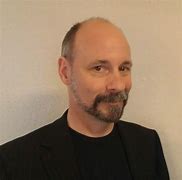
Magic isn’t just about rituals and books—it’s about understanding the forces at work, both seen and unseen. In this interview, we are grateful for Sam Webster for sharing about their journey through magic, academia, and initiation. From their time at Starr King School for the Ministry to earning a PhD in Pagan history, they’ve worked to uncover what really lies beneath Western esotericism.
There’s a lot here for anyone serious about their practice, whether you’re just starting out or deep in the work. If you enjoy this interview share it with others and let us know your thoughts in the comments.
PAA: How has your education at Starr King School for the Ministry influenced your approach to magic and spirituality?
Upon completing my Golden Dawn work to become an adept and a Hierophant, I realized I did not have the skills to care for souls. For this, and a somewhat vain hope to get hired as a minister by the Unitarian Universalists, I entered Starr King School for the Ministry. There I discovered the true western esotericism, the difference between those who know the ‘higher criticism’ (contemporary biblical scholarship) and those who only know what is taught in church. Let’s just say that if more folks knew what we know about the Bible and its characters, the fewer people would be Christians. This fully empowered me to abandon any Christian or even Yahwistic elements in my spirituality and teaching. My focus became the pre-Christian practices of the Mediterranean basin. Also, it was during this time that I was exposed to the Buddhadharma, which clarified what we were doing spiritually and has deeply informed my practice ever since.
PAA: What motivated you to pursue a PhD in Pagan history, and how does this academic work inform your magical practice?
A variety of factors in my life left me with the opportunity to get a doctorate and on examination, I realized that all of my data was coming through historical channels and I did not have the tools to evaluate what I was looking at. Now I do. By studying the ancient methodologies as preserved in the very limited record, I was able to reconstruct the practice of theurgy, which underlies all western magic.
Initiatory Traditions
PAA: Can you discuss the significance of your various initiations across different traditions and how they contribute to your identity as a mage?
Each of the various traditions that have welcomed me contribute a different part of my overall understanding. Each initiation brought me into the current of that tradition, and it empowers and illuminates my work from a specific angle. A short summary would include:
Wicca instructed me in the pedagogy of theurgy, which I then discovered was widespread.
Druidry gave me a home while in England and helped me tie to land and place.
Buddhism showed me the deeper aspects of what we have been trying to achieve and many fixes for the damaging parts of our practice.
Hinduism taught me Raja Yoga and meditation, and recovered for me the heart of play.
All of these boons have been invaluable in forming me as an initiator, hierophant, and a priest, which all together is the way of the magi.
Magical Practice and Philosophy
PAA: You describe yourself as a practitioner of theurgy; can you elaborate on what that means in the context of your work?
Theurgy is the underlying God-Working that illuminates and empowers our practices. It was the secret kept very quiet while displaying it publicly. Those who understand can easily interpret it, and it goes right over the head of those who can’t. My favorite example of this is in Heinrich Cornelius Agrippa’s “Three Books of Occult Philosophy”, where he hid his meaning in diverse places where only the “sons of the wise” could find them. In other words, look for when he is quoting the Greeks and assemble that into a set of practices. Those practices are theurgy.
Community and Leadership
PAA: As a cofounder of the Chthonic-Ouranian Templar order, what vision did you have for this organization, and how has it evolved over time?
Originally the Chthonic-Ouranian Ordo Templi Orientis (C-OTO), we formed during a collapsing time for the Caliphate OTO partly as a way to preserve the current. The C-OTO survived its crisis, and so we changed the name on the outer to not cause confusion. The function of the CO-TOT is to transmit the Templar or ‘warrior’ lineage in Thelema in a non-linear, collectivist way, appropriate to Thelemic antinomian principles. It was created so that no one could control it, and so it is still out there being used by those who need it. We who started it moved on to other work, leaving the Order to self-govern, as we intended from the start.
PAA: What motivated you to establish the Open Source Order of the Golden Dawn, and what impact has it had on practitioners?
To a certain extent, it was an accident. I taught a class on the Golden Dawn at PantheaCon 2001 and offered more if anyone desired. Seventeen people showed up at my house a few weeks later and the Order got started. It was intended from the beginning to be Thelemically inflected, Buddhist-informed, non-Christian, and non-Yahwistic. We’ve initiated well over 100 people, and about 10% made it to adeptship. We’ve shown that good scholarship can improve our practices and that chops are more important than lineage. We demonstrated the compatibility of the Buddhadharma with western practice. Some folks have followed in our path, others reject it.
Publications and Contributions
PAA: Can you share the inspiration behind your book Tantric Thelema and its significance within the broader context of magical literature?
When studying the Buddhadharma in seminary, I learned first that my understanding of it was quite wrong (the focus is not really on suffering as it appears). Then I learned that the monks had a number of the same problems we have with our practices. Then I learned how they fixed them with means that make perfect sense to a Pagan. So, in 1992, I began building out a practice based in the Yoga-Tantra methods to invoke Ra-Hoor-Khuit by reading The Book of the Law as a tantra. The practice is very powerful and an amazing support in life. Most magical literature today is old, vague, incomplete, or out-and-out fantasy. Meeting the clarity of purpose and practice in the Tibetan contemplative tradition inspired me to attempt to upgrade our work by learning from our elders. Now, some thirty years later, I am pleased with the impact this work has had on all those I’ve taught it to.
PAA: In what ways do you hope to contribute to the ongoing discourse about magic through both academic research and public teaching?
On the one hand, I firmly believe that Pagans have the possibility of saving this civilization, or priming the next one to be harmonious with the planet we live on. That said, the Pagan community seems to be either self-destructing or rendering itself trivial. My task is to help Pagans realize our place in the world, and to strengthen the spiritual power of our practices and to sharpen them to enable more to achieve adeptship and mastery
Personal Reflections
PAA: What advice would you give to those who are exploring their own paths in magic but feel overwhelmed by the variety of traditions available?
Find people to work with in person. Most of what we can really do only works that way. That will also limit your choices. Then, study, but more importantly practice! Ask always, what is in this for you. If you are unclear on what or why you are doing it, stop. Figure that out and get to work. Also, find elders and learn from them. They may not see the world or operate as you think they should, but they are still at it, and their depth of knowledge is precious.
PAA: Looking ahead, what goals do you have for both your personal practice and contributions to the field of magic?
I’m not so goal oriented as strategic, so I figure things to do and get to work, then evaluate if I like the results. Right now, I’m studying and practicing in the Bon tradition of Tibet. They are a kind of ‘pagan’ Buddhist, so I’m finding many congenial elements. I’m also being tapped to run a center for spiritual exploration here in Berkeley, so I’ll have a community to teach. Further, I am continuing to publish others’ work as well as my own. My hope is to improve the quality of our practices and scholarship. We have so much, and so much to grow. Even in the fading light, I have hope for us.
PAA: Thank you very much for your time in answering our questions.
A Guide to Sphere Quabbalah
This book covers aspects of The Key to True Quabbalah, by Franz Bardon, and expands them. It is divided into four parts that serve the magician, the theurgist and the learning quabbalist.
This interview features a practitioner with nearly 15 years of experience in Thelema, an esoteric spiritual system developed by Aleister Crowley. Arthur Magnus discusses his journey into Thelema, experiences with rituals and meditation, and explorations of related traditions such as Tantra and Advaita Vedanta. He shares insights on integrating spiritual practices into daily life, his work as an artist, and how his understanding of concepts like True Will and non-dual reality has evolved over time. The interview covers a range of topics including personal magical experiences, the balance between individualism and community in Thelemic practice, and Arthur’s perspectives on consciousness and reality shaped by their spiritual work.
Arthur Magnus
Interview
Thelema
PAA: How did you first discover Thelema, and what initially drew you to this spiritual path?
I discovered Thelema through an article about Anton LaVey, wherein he travels to Seattle, I believe, and had visited some thelemites there. He found them to be too “white light.” I did not know what a thelemite was and began my research into the matter. What started my interest in the occult world was typical of many shmucks like me. I was rebelling against social norms and rigid religious establishments. Once I grew up I started to appreciate a wider range of religious, spiritual, and philosophical avenues. I am an eclectic in most every part of my being and in my nearly 15 years of work I have assimilated many systems and interests into my ontic sphere.
PAA: Who were your primary teachers or mentors in Thelema, and how did they influence your practice?
The best example I can give of an early mentor is my late best friend Aaron. We met as a result of inquires online in my appeal to find thelemites in my local area. We began to hold meetings at his apartment and discuss Thelema and the O.T.O. This was highly fruitful and this is where I truly began to learn both things mystical/magical as well as practical life lessons, as he was older and wiser than I was. He was a Virgo and I am a Pisces so he would always give me the categorized and highly practical instruction on all matters and I was the mystic who regarded all in a deep insight of an emotional and intuitive light. In this regard we had a lot to teach each other and I miss him every day. He was highly spiritist and often eclectic in his own right, maybe not as much as I, but certainly willing to entertain many insights no matter what they were. He was always willing to give you his perspective, which I treasured. We engaged on more than a few magical operations of spiritual evocation, early in our knowing each other and later in our many years of friendship. These operations would be the gateway into much broader and wider aspects of my mystical and magical experience.
PAA: Can you describe your first significant ritual experience in Thelema? How did it impact your understanding of the tradition? Since I adopted the Law of Thelema I would say that every ritual experience has been significant, but if I had to quantify it I would say that the first time I realized a greater significance was when I finally understood what the Book of the Law was giving me, the knowledge of self-responsibility. It is often a common misconception to read that book and to think that it is giving you absolute freedom. It is and it is not. This completely changed the trajectory of my work and my outlook on life at the time and was met with many disastrous results! This immediate effect has softened over time and now I can truly say I have complete control over what we call life.
PAA: Have you had any experiences with Thelemic evocation? If so, what entities did you work with, and what was the outcome?
I have evoked and invoked the gambit of the thelemic pantheon. I find them particularly useful in the evocation of what you could call lesser spirits, not to detract from their importance. The act of embodying a particular God/Goddess or spirit is an extremely powerful form of elevating the mundane self into a better position to more significantly achieve certain aims and lead a more meaningful life. One essentially rises above the mundane world and chooses to look through the eyes and work with the aspects of something greater than themselves. The counterbalance to this practice would be shadow work, wherein one investigates the hidden and often maligned aspects of themselves in order to balance these dualistic forces. If one were to focus solely on one and neglect the other, the result would be unbalanced and could lead to a skewed and unhealthy living condition.
PAA: How has your interpretation of Aleister Crowley’s works evolved since you began your Thelemic journey?
Well, when I first began this journey I was looking at the works of Aleister Crowley with flawed eyes. I was raised in a generally Baptist household and interpreted his works as something infallible; true for all. This was remedied rather quickly, but it is a constant pitfall that can easily be tripped into at any time if you’re not careful. Crowley’s works are, for lack of a better word, suggestions, especially when it comes to magical pursuits. His magick was based primarily on his work with the Golden Dawn and his work with Samuel Liddell MacGregor Mathers. Crowley was essentially laying an outline for those who knew nothing of ceremonial magick or any form of magick that they could work on themselves to inevitably arrive at the conclusions that he had. This is not to say that his works are unimportant, because they are, it is just so important to not lock yourself into the thought that magick HAS to be done a certain way in order for it to be considered thelemic. I often scoff at the word thelemic. Thelema means Will and all acts are essentially magical acts in some sense. I am a massive proponent of the works of Kenneth Grant and Michael Bertiaux who have expanded the understanding of many realms of magick beyond the purely ceremonial and have elevated all aspects of thelemic thought beyond our solar system and the rigid freemasonic structures to which Crowley was deeply embedded. BUT, one should definitely explore all aspects of work by the sages of the past. Doing so can only benefit the understanding overall. Thelema is a magical continuum that is neither copyrighted or owned or confined to any O.T.O. or AA or other organization that may claim otherwise. This Law is for All. One need only embrace it and whatever you choose to do after that is the Great Work itself.
PAA: Can you share an experience that convinced you of the reality of magick or the supernatural within the Thelemic framework?
The reality of magick is intrinsic to all reality. Reality is not subjective or objective. There is only subjectivity. No experiencer, no experienced, just the experiencing. Magick is done, period. As far as the so-called supernatural I have seen unidentified flying objects. I have seen ghosts. I have had spirits materialize before my very eyes. I have spoken with so-called angels and so-called demons. I have walked in cosmic cathedrals with Gods/Goddesses. I have explored inside and outside the galaxy inside the head of an extra-terrestrial. I have evoked characters from books and had them regale me with stories of their universes. The list goes on and on. If all of this sounds unbelievable to you, then it is.
Don’t allow yourself to believe that you’ve reached the pinnacle of understanding. Always push the envelope and keep exploring!
Arthur Magnus
PAA: How do you balance the individualistic aspects of Thelema with community involvement or group rituals?
I mostly work alone and have done so for the majority of my time in the occult world. I am married now and there is a routine that is being built that involves the both of us, but I mostly have my work and she has hers. What you often find in the thelemic community, or at least in my case, is a lot of pressure to fit into individualistic models or perceptions that may directly contradict our own understanding or interpretations. This is a good thing, but is seldom seen that way and some would rather argue than work and I have no time for such things. Whenever I present my theories and speculations these days they are often met with the battle cry of, “Bullshit!” I encourage those with the strong inclination to community and group work to diligently seek out those individuals who are willing to put aside their own BS in order to reach new plateaus of thought. I would also encourage everyone to find that same thing in themselves as well. Don’t allow yourself to believe that you’ve reached the pinnacle of understanding. Always push the envelope and keep exploring!
PAA: Have you ever experienced direct communication with your Holy Guardian Angel? If so, how did this change your practice?
I experienced Knowledge and Conversation in 2015. Since then I have every day been in direct communication. This was a significant turning point in my understanding of Self and my work. What this means exactly can never be positively defined. The theories of what the HGA is and what K&C means is pervasive and I am not going to attempt to elucidate them all as the exercise would serve no one. Is it a spirit? Is it an angel? Is it the Self? All I can say for sure is that whatever your experience is when the time comes I cannot say what it will be. I don’t even refer to my HGA as my HGA anymore and in my experience Knowledge and Conversation required neither! I know this sounds confusing and doesn’t really offer any resolutions on the matter, but once it happens for you I’m sure you will understand and you can reach out to me and we can share a hearty laugh about it together.
PAA: What challenges have you faced in integrating Thelemic principles into your daily life, and how have you overcome them?
Early on there was a struggle with balancing these forces with a mundane life, but it is quite essential to find this balance. Crowley knew and anticipated this based on his writings, in particular “Liber Librae.” Based on my own experience I wish to impart my well wishes in navigating this perilous road. Many friendships may become distant or irreconcilable. Family may shun you. Some will not understand this new light in which you have found yourself enswathed. I encourage anyone going through this to be resolute and not lose hope for reconciliation in any matter. This is the Law of the strong! God gives us nothing we can’t handle. On the other side be mindful that while you have discovered this new life and are proud of what you’ve become that one still needs to do the dishes! I have every confidence that you will succeed. I recommend a book by David Shoemaker called “Living Thelema” for different avenues for balancing your magical life and your daily life. The struggles we face in the human experience are mostly common to us all and I would encourage you to build as best you can a close network of friends and colleagues that understand what you may be going through. Also, it may be beneficial to seek a therapist who is sympathetic to your particular situation.
PAA: How has your understanding of “True Will” developed over time, and can you share a pivotal moment in this understanding?
When I first began to explore the nature of True Will it was merely an exercise of knowing what was best for myself and what was not and going about removing those noxious things that were antithetical to it. In my talks with Michael Staley he reminded me of a quote in one of Kenneth Grant’s books where he paraphrased Yeats when he spoke about the fact that every man has a myth and how this could be equated to the True Will. True Will is more than a negation of all that does not empower you, but also a discovery process whereby our explorations of our connections to the universe and our own magical and mystical experience distils a unique gnosis. I scoff at the term “unverified personal gnosis” as all gnosis is personal and unverified. The implication that all gnosis must be verified in some book or by some person with clear and present attributions is pure poppycock. It is also folly to setup some impenetrable ideal within yourself that which can never have new attributions or insights assimilated with it. To quote Crowley, “It is the mark of the mind untrained to take its own processes as valid for all men, and its own judgments for absolute truth.”
Artist
PAA: When did you first recognize the connection between your art and spirituality? What sparked this realization?
When I began my occult work I more truly recognized that I possessed the powers of creation and destruction, same as God or the universe. Wielding this power is a much overlooked area in occult exploration I feel. Art is the direct expression of the divine through the gross body. It comes from a higher source than the mind. Used effectively it can be a powerful tool used to distil ones mystical and magical experience.
PAA: Who or what inspired you to pursue the path of an Artist? Were there any particular artists or spiritual figures who influenced you?
I always had an interest in music and poetry in my youth and to a smaller extent paintings and photographs. These days I have a much greater respect and desire to explore the art of painting and using them to explore higher strata of consciousness. Michael Bertiaux is currently a major influence in this regard, but there have been others who have struck the chord prior to my discovering Michael’s work. I will list some of them below. Valin Matthias, Adam Burke, Steffi Grant, Kyle Fite, Giselle Bolotin, Aleister Crowley, Austin Osman Spare, Margaret E. Ingalls, Ithell Colquhoun, Rosaleen Norton, Zdzisław Beksiński, and Bernard Hall.
PAA: Can you describe a transformative experience you’ve had while creating art as a spiritual practice?
Pretty much all things that I make or dedicate to the process of spiritual work I would consider artwork and by creating, consecrating, and dedicating them to a higher service is a transformative process. I have many tools and instruments that I’ve made along the way that all easily fit this idea. They are then used on myself and my work thereby cross consecrating me and my work, they being an extension of the divine. When the artwork is something as simple as a painting it can also be a transformative process. I have a painting I made of LAM accompanied by sigils made in a typical fashion that imbues the room it’s in with certain powers. This painting was a direct transmission from beyond. It was invading my imagination all day and more or less created itself through me. I find the process of making artwork so much easier when I let the art come through me in this fashion and push the process of thought and idealization out of process all together. I find that the results are far more to my liking than attempting to make something I want at the outset. This is a difficult exercise and could be equated to eliminating the thought process from your meditations.
PAA: How has your artistic medium or style evolved as your spiritual practice has deepened?
At the outset I was very rigid and overly judgmental of my work and attempting to clearly define my work in equal measure I viewed the work of others. I’ve since learned to trust the process and the instruments themselves to do the work and take my ego out of the equation. The results could be said to be much less clear or less quantifiable, but this is only surface level interpretation. The work of deciphering divinity through art is more advanced than can be easily surmised through simple viewing. It requires highly intuitive and meditative techniques to fully explore this medium.
PAA: Have you ever experienced altered states of consciousness during your artistic process? If so, how would you describe them?
Absolutely I have. I equate it with spiritual evocation or peering through cosmic windows to realms beyond everyday awareness. I use the image of LAM as a vehicle from one side to the other. There are many vehicles that can be used for the same purpose. If you were to ask me how many, I would ask you how many can you think of?
PAA: What specific spiritual techniques or practices do you incorporate into your artistic process?
Kundalini magick is quite effective in elevating consciousness to those realms in which you want to draw from. I often use an exercise called the ‘Lam-Serpent Sadhana” to activate my body’s power zones and effectively clearing out blockages in my awareness. Other mental and meditative exercises can be applied. Anything to rise above your own mind and thought processes are going to be a most effective method. The intuitive magician will have no trouble in discovering what these are and are most likely already using them elsewhere in their practice.
PAA: Have you ever created art that seemed to predict future events or reveal hidden truths? What was this experience like?
One of my first magical artworks I made was a painting of Nuit, who represents the universe. If one were to interpret it thus I, in fact, created the whole universe. So, I have in fact predicted all future events! I know this is not the answer that was sought with this question per se, but I felt the need to demonstrate the art of looking beyond the common notions with which we navigate the everyday awareness. I do not view time and space in a typical fashion and I do not consider time linear. The now encapsulates all events and happenings. The vast reaches of interstellar space are right here and now!
Tantra/Advaita
PAA: What led you to explore Tantra or Advaita? Was there a specific event or realization that initiated your journey?
The works of Kenneth Grant really got the ball rolling in this regard, but even before I knew who he was I was studying the works of Nisargadatta Maharaj. Kenneth Grant’s background in Eastern Mysticism is pervasive and interpreting the work of Aleister Crowley and Thelema through this lens one garners a more profound understanding. Advaita I can consider my primary spiritual understanding of life and is how I interpret my surroundings as I navigate life. I couple this understanding with the Law of Thelema.
PAA: Who have been your most influential teachers in these traditions, and how did you come to study with them?
I came to know many of these names primarily through my studies of the works of Kenneth Grant. I will list some of them below.
Ramana Maharshi, Nisargadatta Maharaj, Mike Magee, Arthur Avalon/Sir John Woodroffe, Wei Wu Wei, Jan Fries, and Atmananda Krishna Menon.
PAA: Can you describe your first Kundalini awakening experience? How did it change your perception of reality?
My first kundalini experience came through the work with the Lam-Serpent Sadhana. The experience was surprisingly physical and caused some maladies such as stiffness, odd breathing, ringing in the ears, dry mouth. It felt as if there were maladies already present and the Kundalini fire was scorching them all away and clearing blockages in the chakras. This alleviated body-awareness and cleared the path towards cosmic-consciousness. At the pinnacle of the work the entirety of the universe was revealed and stood before my eyes in all its immense glory. It felt as if my body was left behind and on returning and following the chakras back down to the base it felt as if it was in some new body. This feeling of separateness of body is a result of the understanding that there is in fact no body at all. It proceeds from consciousness as all things do. Understanding this it is entirely possible in returning into something so alien that it could be hard to believe that any travel or return ever took place!
PAA: What has been your most powerful experience with deity evocation or invocation in your practice?
The one that immediately comes to mind is a several month long ritual that I studied online as result of my interest in the Greek Magical Papyri. The culmination of this ritual saw me blinded with a special black cloth called “The Black of Isis”, crowned with a wreath of ivy, and shrouded completely in a white sheet. I lay down before the sun was set to rise above the crest of the Earth. I spoke a set line of Greek vowels until delirium took over and the recitation became nonsense. I was then transported via a hawk to a grand hall where many Gods and Goddesses stood on either side, facing me. I was led to the God Set where he welcomed me and dedicated me a priest of Set, an arbiter of the outsider, and a cherished friend of the Gods. I stayed encapsulated in his dry black flames for a time until I was aroused by the sight of the sun over the horizon and arose like the twice born Dionysus.
PAA: How has your understanding of the relationship between Shiva and Shakti evolved through your practice?
Their separation is one of pure convenience and in the understanding of active and passive dynamics within such things a sex magick. In fact, one cannot venerate one without venerating the other as they are one. This understanding in itself is pretty standard in my work thus far, although I equate them with Nuit and Hadit in the thelemic pantheon and that leads to some interesting results when worked with in this regard. I highly recommend to everyone with an interest in these apparent opposites to venture into working with Ardhanarishvara.
PAA: Can you share an experience where you felt a direct connection with the Divine Mother or cosmic consciousness?
Every experience is a direct connection with the Divine Mother. She is power and nothing can exist without her.
PAA: How has your practice affected your perception of time, space, and causality in daily life?
I now navigate through life and see that I am not in the universe or the world, they are in me. This is a profound change of perception that can be quite intimidating at first, but also very empowering. It requires constant attention as well as the mind will try its utmost to define itself and the body as the truth and it is not. Consciousness precedes everything. Keeping this in check is the exercise taught by Ramana known as Jnana Yoga wherein the yogi continually asks the question, “Who am I?” Continue to pursue this self-inquiry to its source and one will inevitably arrive at the truth.
PAA: What interesting answers, thank you very much for sharing with us.
Meta Magick Tarot
Forest of Life Venus calendar
The Meta Magick Tarot is a unique, 3-part course which can be pursued on your own time, or synchronized with the 32 week calendar of Venus, the Forest of Life. The entire Tarot is covered in 32 lessons with PDFs, Video Support, and guided meditation for each class. The meta-magick philosophy is future oriented, and understands magickal thinking in a way similar to an engineer’s perspective. How can we build a uniquely powerful philosophy of creative tarot practice that we can live INSIDE? The content and materials will range from the basic to the advanced, and there are insights and innovations that you will find nowhere else.
This is the third installment exploring the depths of Thelemic practice. In this post “The Joy of Dissolution,” is the subject of discussion which is a book authored by J. Edward Cornelius, Christopher Reed Johnson and Erica Johnson. This post goes deep, diving deep into the complexities of sexual alchemy, Buddhist influences on Thelema, and the ultimate goal of channeling the True Will. A big thank you to Chris and Erica for continuing to push the boundaries of Thelemic literature and providing much-needed guidance for those ready to take on the challenges of the Inner Adept. Whether you’re a seasoned practitioner or simply curious about advanced magical practices, “The Joy of Dissolution” promises to be an eye-opening read.
I highly recommend reading the previous two posts from Christopher Reed Johnson.
Sexual Alchemy, I Do Not Exist, and Thelema’s Buddhist Roots
by
Erica Johnson and Christopher Reed Johnson
Do what thou wilt shall be the whole of the Law. –AL, I:40
The Joy of Dissolution
PAA: Please introduce this book and what benefits it brings to practitioners.
The Joy of Dissolution is one of the few books that casts a spotlight on the second half of the Thelemic path: ego dissolution. This is the task of the Inner Adept. In this second “half of the equation” (AL, I:56), the aspirant converts his or her own lifetime into an alchemical vessel for the Angelic self, the One who took the incarnation. Thelema (“Will”) refers to the law of the New Aeon as disclosed in The Book of the Law, which was received by the British Magician and prophet Aleister Crowley (1875–1947) in 1904. According to this nondual philosophy, every one of us must uncover and live one’s own Angelic nature. Ego dissolution involves becoming dynamically receptive to the Universal Will—the Will of the True Self. As we wrote in the Introduction:
We wrote the entirety of this book to illustrate the simple truth that all knowledge you acquire in the quest to know thyself and all conversations you have herald the Knowledge and Conversation of your Holy Guardian Angel. Every phenomenon is a dealing of God with your soul, and thus every conversation, every perception, and every experience of pain or pleasure is simply an instance of your ongoing dialogue with God.
The importance of the principle to know thyself is aptly described in The Secret High Degree Rites of the Masonic Rite of Memphis by John Yarker:
Whoever shall penetrate into this vault alone will be purified… He will come out perhaps…from the bosom of the earth, and his Soul will be prepared for the revelation of the Mysteries. Child of Earth, sound the most secret corners of thy heart—Know Thyself.1
Today, the maxim “Know Thyself” is more important than ever. Anxiety, loss of faith in something higher, and the fixation on science as the Truth have created an imbalance whereby our connection to nature and God has been usurped by the vision of a cold, mechanistic universe. The realization that we are all Microcosms of the Macrocosm is slowly receding into the background. Only a foggy memory remains as a vestige of our essential connection and unity with the Universe. This sacred, holistic understanding has been supplanted by isolation, alienation, and materialism. Yet with Knowledge of the Self arises an increase in self-confidence and a diminishing of fear, anger, and sadness. Through following the law of Thelema wherever it may lead, you can heal yourself—but only if you realize that any perceived threats emerge largely from within.
Such seeming threats are transparent only because they are functions of the ego.2 Therefore the advanced spiritual aspirant must make the ego transparent to itself. Crowley writes:
One wants to become like a mighty flowing river, which is not consciously aiming at the sea, and is certainly not yielding to any external influence. It is acting in conformity with the law of its own nature, with the Tao. One can describe it, if necessary, as “passive love”; but it is love (in effect) raised to its highest potential. We come back to the same thing: when passion is purged of any “lust of result” it is irresistible; it has become “Law.”3
You must discipline the ego so that you can obey your internal Law, which is necessarily the Universal Law. Again, this requires you “Know Thyself.” Using the “method of science”, you must know your strengths and faults, both actual and potential, both inherited and acquired. Working with an objective knowledge of the vehicle, you can and must discipline the ego so that it becomes quiet. Only in Silence can it acquiesce to the universal currents coursing through it.4
PAA: You state that this is no beginners book, and it is finally something appropriate for advanced students, can you provide more details as to why this is so?
As a Thelemic beginner, you study, strengthen, and balance your outer self so it can eventually function safely as a vehicle for the True Will—which is always unconscious. Only as an advanced practitioner do you reverse the process: you progressively relinquish control so that the divine current can work through your outer self. In other words, as an advanced practitioner you dissolve your ego. Relatively little has been written for the few who are ready to start channeling the divine current. Our book begins there.
As a beginner, you might, for example, carefully test your own physical, mental, and emotional nature and limits by recording the results of magickal and mystical exercises. What are your strengths and weaknesses? You must find out. How have the events of your life led you to pursue the Great Work in the specific way that you do? What is your outer self all about? This type of work is without a doubt the most important part of every Thelemite’s path.
In fact, even as an advanced practitioner, you have to keep on going back and shoring up the foundation of your Temple. Naturally, then, a lot has been written on these early stages of the path that occupies most aspirants for their entire lives. Rightly so. Yet as critical as these early stages are, more and more aspirants today are reaching the point that they can begin to put their lifetime to the universal function for which They took it. We wrote The Joy of Dissolution for these “few & secret” servants (AL, I:10).
PAA: What are the practical implications of inhabiting a state of pure Love beyond the confines of the ego, and how might this state of being inform and transform one’s relationships, creative expression, and engagement with the world?
Even at the beginning of your Thelemic path, you discover that “freedom is a two-edged sword”. The magician and rocket scientist Jack Parsons wrote brilliantly about how there’s no such thing as exercising your Will without allowing everyone else to do their Will first.
The Thelemic path may appear selfish and immoral to those who try to impose rules from the outside—or to those who mistake it for a ticket to harm others without consequence. However, this is the furthest thing from the truth. There is only one Will—the divine Will. If two Stars collide, at least one of them has deviated from doing the True Will into doing whatever they “want”. Thelema immediately requires you to treat others with great respect.
You eventually learn to “Love all things” and people—whether you like them or not. Everything is part of your Universe. The world is your playground. You can advance only if you don’t sell your soul for any of them. Thus, one of the first and, in some ways, most important questions upon contemplating your spiritual journey is this: Are you willing to give up the quest for worldly desires for the chance to serve something higher than yourself? (Letting worldly goods come without trying.)
If so, are you furthermore ready to even give up your fundamental sense of self in the end?
If, upon examining yourself closely, you find that the answers to these questions are “Yes”, then the inner journey is for you.
In the end, those who are ready for simplicity will understand, whereas those who remain entangled in the nets of words, viewpoints, and concepts will inevitably see only what they wish to see.
The aim of all magick is to unify the Above and the Below to channel the True Will. However, to receive and transmit this high amount of energy requires a properly prepared incarnational vessel. Otherwise, the magician’s chakra system may be damaged irreparably.5
Ego dissolution represents an advanced stage of the Work. Only those who have developed certain abilities can approach it safely. You must have an ego receptive to Will. By “receptive to Will”, we mean an ego confident, open to revision and the unknown, and generally ready to be guided. We refer to the process by which the ego becomes receptive as “ego dissolution”:
“This is the creation of the world, that the pain of division is as nothing, and the joy of dissolution all” (AL, I:30).
PAA: How does the practice of sexual alchemy facilitate the dissolution of the ego, and what are the specific techniques and rituals involved in this process?
Properly spiritual sexual alchemy represents one of the most potent practices for dissolving the ego. To succeed, it requires of the individual not only a high pitch of sincere spiritual devotion, but also perfect samadhi (concentration) developed through meditation and magickal knowledge of how to wield soul and body—particularly the phallus (penis) or the kteis (vagina)—as an organ of God. In The Joy of Dissolution itself, we go more deeply into both the requirements and the basis of practice. Unfortunately, it is not possible to discuss the practical side adequately in the short space of this interview. Here we shall instead try to convey how sexual alchemy overflows the space of physical sex and occupies the entire life of its practitioners.
Although not everyone can, or should, practice sexual magick, Thelema is an irreducibly sexual and creative path. It recognizes that only those who freely embrace their sexual nature can throw off the slavery of false gods.
Furthermore, the Thelemic pantheon involves two Gods whose unceasing sexual congress creates the knowable Universe. The Father Principle, Chaos, the Will of God, is a high-level avatar of the infinitesimal and omnipresent God Hadit, whose principal Force is “to go”. On Earth, He is represented by prince-priest—the Beast—and his phallus. Likewise, the Mother Goddess, Babalon, is a high-level avatar of Nuit, the Goddess of “Infinite Space, and the Infinite Stars thereof” (AL, I:22). The Sacred Whore, Babalon, originates all Form. On Earth, She is represented by the priestess, or Scarlet Woman, and her kteis.
Even though Crowley continued to agree with Gautama Buddha that duality causes pain at times, he urged the Thelemic adventurer to view those transitory pains as “but sharp Sauce to the Dish of Pleasure” (“De Comedia Universa, Quae Dictur Pan”, Liber Aleph). Indeed, such duality stands as the prerequisite for divine “love under will” (AL, I:57), which creates joyfully everywhere and all times: “For I am divided for love’s sake, for the chance of union. This is the creation of the world, that the pain of division is as nothing, and the joy of dissolution all.”
Through Thelemic sexual alchemy, the practitioners dissolve their separateness, not only from one another, but in general. Through their yoga (union) they become the very bed of the Gods (see AL, I:66).
Although sexual alchemy involves what most people would recognize as sex, it is a 24-hour-a-day pursuit that involves the dissolution of all separateness and opposition in general. It culminates in the marriage of Self and non-self—of Heaven and Earth:
Yet rest not in the Joy of the Destruction of each complex in thy Nature, but press on to that ultimate Marriage with the Universe whose Consummation shall destroy thee utterly, leaving only that Nothingness which was before the Beginning. So then the Life of Non-Action is not for thee; the Withdrawal from Activity is not the Way of the Tao; but rather the Intensification and making universal every Unit of thine Energy on every Plane. (Aleister Crowley, “De Nuptiis Mysticis”, Liber Aleph)
PAA: What are the potential risks and challenges associated with the practice of sexual alchemy, and how can practitioners navigate them safely and ethically?
When an Adept earths out his or her sexual energy in physical lust or in the unconscious urge for security and protection, the sexual energy that should have been consecrated to union with the divine is wasted.
The occult path is more dangerous than others for many reasons, one being that any premature encounter with the Real can induce psychosis—sometimes permanently. Another danger is the phenomenon of the Adept who overdevelops the ego to such an extent that he or she becomes unbalanced—a phenomenon all too evident in the rantings and ravings of personal greatness and the delusions of grandeur found in the discourses of individuals in most, if not all, occult communities.
[H]uman beings need the ego to protect them from the unbearable energies of the Real—what magicians worship as God. Anyone who experiences reality unmediated by a proper ego will find their psychic system burnt out. Such a person will typically become psychotic or might even die. Thus, we need an ego to survive in our socially structured world.6
By contrast, the Adept who exercises his or her sexuality without Restriction while dedicating it to his or her own inner divinity may yet touch wonder.
PAA: In what ways does Thelema’s understanding of the nature of the self and the process of ego dissolution align with or diverge from Buddhist teachings on the concepts of anatta (non-self) and nirvana?
As we touch upon in The Joy of Dissolution, Aleister Crowley embraced Buddhism as a young man, and he never strayed far from its basic tenets. Yet, after he received The Book of the Law, he tweaked his essentially Buddhist metaphysics in an action-oriented, dynamic, and joyful direction.
For example, he identified as a Buddhist in March of 1902 when he wrote “Berashith” (published in 1903). This was his foundational essay on ontology, which is the study of Being. There he provided a theory of the universe as Nothing “conceived as (illusory) pairs of contradictories” (Confessions). Crowley made his theory explicitly compatible with Buddhist meditation. To him at the time, meditation was the ideal practice for spiritual attainment, albeit untenable for most Westerners. Thus, he also made his theory friendly to magick and Qabalah. He wanted to motivate Western practitioners to lay for themselves the groundwork for later meditation. When he wrote “Berashith”, he regarded the ultimate spiritual goal as Nirvana, which he defined there as “extinction of all that exists, knows, or feels”—the gateway to enlightenment. Once he received The Book of the Law, he still believed in extinguishing the seeds of cause-and-effect, but not to escape conscious experience. Indeed, he urged Thelemites to revel in the adventure of life—simply without attachment.
Similarly, he consistently adhered to the doctrine of Anatta. However, by “non-self” he understood no unchanging self. Thus, he wrote:
Whom Men call Gotama, or Siddartha, or the Buddha, was a Magus of our Holy Order. And His Word was ANATTA; for the Root of His whole Doctrine was that there is no Atman, or Soul, as Men ill translate it, meaning a Substance incapable of Change. Thus, He, like Lao-Tze, based all upon a Movement, instead of a fixed Point. And His Way of Truth was Analysis, made possible by great Intention of the Mind toward itself, and that well fortified by certain tempered Rigour of Life. And He most thoroughly explored and mapped out the Fastnesses of the Mind, and gave the Keys of its Fortresses into the Hand of Man. But of all this the Quintessence is in this one Word Anatta, because this is not only the foundation and the Result of his whole Doctrine, but the Way of its Work. (Aleister Crowley, “De Gotama”, Liber Aleph)
Crowley came to see Thelema as a pathway, not off the wheel of existence, but rather onto the axis of that wheel—the center of all. For him, the Thelemite cultivates Pure Joy in existence, without “lust of result” (attachment), without falling “down into the pit called Because” (AL, I:44; II:27).
PAA: How can the practices and insights of Buddhism inform and enrich the Thelemic path, and what unique contributions does Thelema offer in terms of its approach to self-realization?
Buddhist-derived meditation and mysticism continue to be necessary to the Thelemic path, as a counterbalance to its action-oriented, magickal nature. As Frater Perdurabo (Crowley) and Soror Virakam (Mary Desti) point out in Book Four, Part I, “the contemplative life is generally opposed to the active life, and it must require an extremely careful balance to prevent the one absorbing the other.”
Both mysticism and magick are necessary to realize the Nothingness in the Something and the Somethingness in the Nothing—the True Self. That is why we recommend that everyone take at least one 10-day immersion course of Vipassana meditation, where they use the Buddha’s original teachings as they were preserved in Burma through the school of S.N. Goenka and his teacher, Sayagyi U Ba Khin.
Thelema uniquely offers a sophisticated understanding and wide array of practices for realizing the True Self whose essence is Change. Ego dissolution is what we call the process by which an advanced aspirant realizes his or her True Self. The True Self may be apprehended through the three divine aspects of Absolute Nothingness: Hadit, Nuit, and Ra Hoor Khuit. These three-in-one constitute the ever-changing Self of all.
Hadit is the omnipresent, divine, dynamic, infinitesimal Point of Nothingness that “goes”. “I am the axle of the wheel, and the cube in the circle. ‘Come unto me’ is a foolish word: for it is I that go” (AL, II:7).
The God Hadit makes love continually with the Goddess Nuit, the infinitely great Nothingness. She says, “I am Heaven, and there is no other God than me, and my lord Hadit” (AL, I:20). In doing so, Hadit and Nuit actively manifest the ever-changing phenomena, centered in Ra Hoor Khuit—Nothingness that is equally Something, having been brought down through the mind into the realm of duality “below the Abyss” that separates the purely potential from the actual.
Before someone dissolves the ego, they suffer the torments of the ego’s defenses against the Truth of the seemingly separate self’s nonexistence. Thus, Ra Hoor Khuit says, “Now let it be first understood that I am a god of War and of Vengeance” (AL, I:3). Only by embracing all phenomena as Self can the aspirant enjoy the underlying bliss of existence: “There is no bond that can unite the divided but love: all else is a curse. Accursed! Accursed be it to the aeons! Hell. Let it be that state of manyhood bound and loathing. So with thy all; thou hast no right but to do thy will” (AL, I:41-42).
After dissolving the ego, the Adept basks in Pure Joy, recognizing the Universal Self in the Many/One/None. “Remember all ye that existence is pure joy; that all the sorrows are but as shadows; they pass & are done; but there is that which remains” (AL, II:9). The aspirant who thus succeeds in dissolving the ego illusion has “crossed the Abyss” between Something and Nothing—meaning that he or she now knows with certainty the Somethingness of Nothing and the Nothingness of Something.
Liberated from the illusion of separateness, he or she exercises the divine creativity that is everyone’s birthright—for we are all God. This unconscious, divine creativity is known as the True Will. It is the Will of the True Self. Because we are all organs of the body of God, the only law of Thelema is “Do what thou wilt” (AL, I:40; III:60). Again, “with thy all; thou hast no right but to do thy will” (AL, I:42).
PAA: What are the key insights and experiences that J. Edward Cornelius shares in his final work, “I Do Not Exist”, and how do they shed light on the ultimate goal of Thelemic practice?
In his final piece, J. Edward Cornelius (1951–2023) discloses explicitly for the first time the female, or “N”, formula within Crowley’s general formula of ON. The N formula allows an Adept to “dissolve” his or her ego. In other words, N allows us to use the personal self as a vehicle for channeling the True Will of humanity without Restriction—namely, “crossing the Abyss”. Cornelius thereby shares the secrets of the ultimate goal of Thelemic practice.
Jerry’s piece outlines the formula of “N” in its connections with Speech and Silence, the Holy Guardian Angel (as the foundation to becoming an Avatar), the Abyss, Nothingness, Nuit, Babalon, the ego, Coagula, the Woman, and Death, to name a few—topics that even Aleister Crowley was reticent to discuss for the most part.7
Cornelius was a Thelemic Magus and the heir of Crowley’s immediate student, Grady Louis McMurtry. He was our teacher and the Inner Head of our branch of Crowley’s Inner School, the A.A., until he died and Christopher Reed Johnson (Laus Priapo Deo 217) grabbed the sword. A brilliant writer and thinker, Jerry was himself an astral magician who excelled above all in channeling the unconscious Will of God. Jerry’s major contribution was to explicate and develop Aleister Crowley’s magickal formula of ON, about which Crowley wrote only cautiously since it relates to sexual magick.
Crowley discusses ON in Liber Aleph, in the chapters on the Tarot trumps of the Devil (connecting Hod-8 and Tiphareth-6) and Death (connecting Netzach-7 and Tiphareth-6). These two paths correspond respectively to the Man’s formula and the Woman’s formula. The so-called Man’s formula pertains directly to the man in sexual magick, but it also pertains to the left-hand, descending paths on any aspirant’s microcosmic Tree of Life. The difference is that anyone with a female vehicle works the left-hand paths indirectly, through her seemingly external Universe, while she works the right-hand paths directly. The opposite is true for a male; while working the left-hand paths directly, he works the right-hand, ascending paths indirectly. Thus, Adepts of either sex who have been called, like Atlas, to shoulder a particular determination for all humanity and cross the Abyss must learn how to work the N formula.
Whereas Cornelius spent his life discussing O, the phallic side of Crowley’s ON formula, he had never before openly discussed N, the kteic side. In doing so in The Joy of Dissolution, he hammers the fact that crossing the Abyss and fulfilling the True Will is by invite only. No one who attempts to apply the N formula by force can succeed. Yet, since each of us takes incarnation after incarnation, slow and steady wins the race. There’s no rush. If and when it’s time to dissolve the ego, you’ll know.
In the Joy of Dissolution, Cornelius reveals how the central sphere of Tiphareth encodes the final secrets (and pitfalls) of the N formula regarding how to “cross the Abyss”. In addition, he discusses the practical necessity of correctly working upper Tiphareth along with the other two spheres of the upper Ruach, or mind—Geburah-5 and Chesed-4. The Adept must understand that consciousness cannot rise above Tiphareth in the first two worlds (the top of the lower Ruach). Thus, any visions of Gods, Angels, and so forth are creations of the mind. Such phantasmagoria serves at best as conscious vehicles of something unconscious and unknowable. They are only as useful as the mind is pure.
Cornelius introduces both the paradox and the solution of the N formula for channeling the True Will. The Will swims deep in the ocean of Nothingness rooted in our unconscious mind (upper Ruach), which you must control if you are to channel God’s Will purely. But how do you control something that is by nature unconscious to channel the Nothingness from above the Abyss? The simple answer is Love. Of course he refers to the impersonal, Universal Love also known as Bhakti (devotion). Cornelius discusses Love in terms of the three spheres of the upper Ruach. Bottom line: unless the Adept has mastered the unselfish Love known as Bhakti, he or she has no chance of crossing the Abyss.
…simply because you’ve taken the Oath of the Abyss doesn’t guarantee accomplishments. Any Tom, Dick, or Harry can swear the Oath, but only a magician can live it. Also remember: NO magician remains functioning above the Abyss; a successful crossing allows the MT [Magister Templi] to pick and choose his foundation below… I must be absolutely clear and remind you that unless you can solidify your claims above the Abyss then Qabalistically nature will automatically ‘right the wrong’ and it’ll be out of my hands; nature will choose your foundation below and it is always in relationship to where you are stumbling. (J. Edward Cornelius, Cornelia No. 13, 2007, p. 39)
Yarker, J. (1993). The Secret High Degree Rites of the Masonic Rite of Memphis. Montana: Kessinger Publishing Company, p. 33. ↩︎
Johnson, C. and Johnson E. (2024). The Joy of Dissolution. Woodstock, GA: Privately Published, pp. 7, 20. ↩︎
3 “Chapter XVII: Astral Journey: Example, How to Do it, How to Verify Your Experiences” in Crowley, A. (1973/1991). Magick Without Tears (I. Regardie, ed.). Tempe, AZ: New Falcon Publications p. 142. ↩︎
Johnson, C. and Johnson E. (2024). The Joy of Dissolution. Woodstock, GA: Privately Published, p. 18. ↩︎
Johnson, C. and Johnson E. (2024). The Joy of Dissolution. Woodstock, GA: Privately Published, p. 20. ↩︎
Johnson, C. and Johnson E. (2024). The Joy of Dissolution. Woodstock, GA: Privately Published, p. 16, 21. ↩︎
Johnson, C. and Johnson E. (2024). The Joy of Dissolution. Woodstock, GA: Privately Published, p. 22. ↩︎